

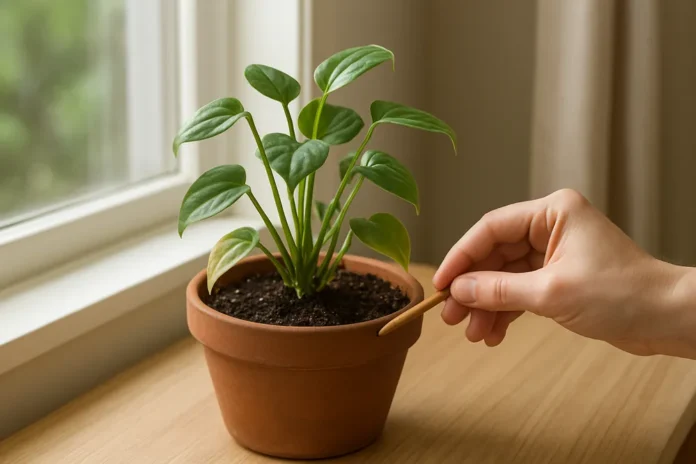
A philodendron usually stops growing because it is not getting enough light, warmth, root space, or consistent moisture. Slow growth can also be normal during winter or right after repotting.
When a philodendron not growing just sits there for weeks, it can be frustrating, especially if it used to push out leaves regularly. In most homes, stalled growth points to a few common issues: light that is too dim, watering that swings too wet or too dry, compacted roots, or indoor conditions that are cooler than this tropical plant prefers.
I usually remind gardeners that slow growth and unhealthy growth are not always the same thing. A philodendron may pause naturally in winter, after a move, or after repotting. But if your philodendron growth has stalled during the active season and the plant also looks pale, droopy, crowded, or unchanged for a long stretch, it is worth troubleshooting.
What Normal Growth Looks Like for Philodendrons
Philodendrons are not all equally fast growers. A heartleaf philodendron can vine steadily in bright indoor conditions, while larger self-heading types may grow in shorter bursts. Healthy growth usually means new leaves appear during spring and summer, stems extend gradually, and fresh foliage unfurls without staying tiny or distorted.
If your plant looks firm, evenly green, and well-rooted, but simply is not producing much in late fall or winter, that may be a seasonal slowdown rather than a problem. Indoors, lower daylight and cooler rooms can put a noticeable brake on growth even when the plant is otherwise healthy.
When I am deciding whether a philodendron is truly stuck, I look at the newest growth point rather than the oldest leaves. If the tip is still swelling, even slowly, the plant is alive and working. If the tip has not changed at all for a month in bright growing conditions, I start looking for a care issue.
Low Light Is the Most Common Reason Growth Slows Down
Philodendrons are often described as low-light plants, but that label causes a lot of confusion. They tolerate lower light better than many houseplants, yet they grow best in bright indirect light. In a dim room, they may survive for quite a while without actually growing much.
Signs that light is too low include long gaps between leaves on vining types, smaller new leaves, slow unfurling, stems leaning toward a window, and a general lack of vigor. Dark corners, rooms with heavy blinds, and spots far from windows are especially common trouble areas.
- Best placement is often near an east window or a few feet back from a bright south or west window with filtered light.
- North windows may be enough for survival, but many philodendrons grow very slowly there.
- Artificial grow lights can help if natural light is limited, especially in winter.
If low light is the issue, improvement is not instant. Once you move the plant, judge success by healthier new growth rather than expecting old leaves to change.
Watering Stress Can Stall Roots and Slow the Whole Plant
Too Much Water
Overwatering is not just about frequency. It also happens when soil stays wet too long because the pot is too large, drainage is poor, or the room is cool and dim. Constantly soggy roots lose oxygen, and once roots are stressed, top growth often stops.
A philodendron with wet roots may look limp even though the soil is moist. Yellowing lower leaves, a heavy pot that never dries, and a musty smell from the mix are common clues.
Too Little Water
Underwatering can slow growth too. When a philodendron repeatedly dries out too far, it has to keep recovering instead of actively growing. The leaves may curl slightly, turn crisp at the edges, or look dull. Vining stems can also stay thin and stop extending.
The goal is not constant moisture. It is a steady rhythm where the top inch or two of the mix dries, then the root ball is watered thoroughly before the plant becomes bone dry for long periods.
I prefer lifting the pot rather than watering on a fixed schedule. A philodendron in summer near a bright window can dry much faster than the exact same plant in winter across the room.
Root Problems Often Hide Behind Stalled Growth
If light and watering seem reasonable but nothing is happening, check the roots. A rootbound philodendron may dry out very quickly, push out smaller leaves, or stop growing because the roots have filled most of the pot. On the other hand, rotted roots from excess moisture can leave the plant unable to take up enough water or nutrients.
Healthy roots are usually pale, firm, and fresh-looking. Rotted roots are brown, mushy, or easy to pull apart. Severely compacted roots may circle tightly around the pot, leaving very little soil left.
- Repot if roots are densely circling and the pot dries unusually fast.
- Trim away obviously rotted roots before repotting into fresh mix.
- Choose a pot only one size larger to avoid keeping extra soil wet for too long.
- Make sure the container has drainage holes.
After repotting, expect a short adjustment period. A plant may pause for a couple of weeks before resuming growth, especially if roots were disturbed.
The Potting Mix May Be Too Dense or Worn Out
Philodendrons prefer an airy, fast-draining mix that still holds some moisture. If the potting soil has broken down into a dense mass, roots can struggle even if you water correctly. Old peat-heavy mixes often compress over time, especially in frequently watered houseplants.
A tired mix can cause two opposite problems: it may stay wet too long in the center, or it may become hydrophobic and resist taking up water evenly once it dries. Either condition slows root function and, in turn, leaf production.
A good philodendron mix often includes standard potting soil plus chunky additions like orchid bark, perlite, pumice, or coco chips. The exact recipe matters less than the result. Water should move through the pot freely, and the roots should still have access to air.
Temperature and Humidity Affect Growth More than Many People Expect
Philodendrons are tropical plants, so they grow best in warm indoor conditions. If your home regularly dips below about 65 degrees Fahrenheit, growth may slow sharply. Chilly windows, air conditioning vents, drafty doors, and winter nights near glass can all hold a plant back.
Humidity matters too, though it is usually a supporting factor rather than the main cause of stalling. Very dry air can make leaves unfurl poorly, brown at the edges, or emerge smaller than usual. This is more noticeable in winter when heating systems dry the air.
- Ideal growing temperatures are roughly 70 to 85 degrees Fahrenheit.
- Keep the plant away from heating and cooling vents.
- Avoid letting leaves press against cold glass.
- If humidity is low, grouping plants or using a humidifier can help.
Nutrient Issues Can Limit New Leaves
A philodendron that has been in the same pot for a long time may simply be low on available nutrients. During active growth, these plants benefit from light, regular feeding. Without enough nutrition, new leaves may come in smaller, paler, or less often.
That said, overfertilizing can also backfire. Salts can build up in the soil and stress the roots, which leads to weak growth or brown leaf tips. More fertilizer is not a shortcut to faster growth.
For most home gardeners, a balanced liquid houseplant fertilizer at a diluted rate during spring and summer is enough. If you recently repotted into fresh mix, you may not need to feed right away because new potting soil often contains some nutrients already.
If a philodendron looks pale and stalled, I do not reach for fertilizer first unless the light is decent. Feeding a plant that is sitting in dim conditions usually gives disappointing results because the plant does not have the energy to use those nutrients well.
Pests and Disease Can Quietly Sap Growth
Some philodendrons stop growing because they are spending energy coping with pests. Spider mites, mealybugs, scale, and thrips can all weaken a plant over time. Early infestations are easy to miss, especially on the undersides of leaves and around new growth.
Look for stippling, sticky residue, tiny cottony clumps, fine webbing, distorted new leaves, or a generally dull appearance. Thrips are especially troublesome because they target tender new growth, which can make a plant seem frozen even when older leaves still look acceptable.
Root disease is another possibility when a plant remains wet for too long. If you notice a sour smell, yellowing with no new growth, and mushy roots, rot may be part of the problem.
Recent Changes Can Trigger a Temporary Pause
Philodendrons often slow down after being moved, repotted, propagated, pruned heavily, or brought home from a greenhouse. Even a healthy plant can pause while it adjusts to different light, temperature, and humidity. This is especially common after purchase, because greenhouse conditions are usually brighter and more humid than a typical house.
A newly repotted or relocated plant may not push growth immediately, but if the foliage stays firm and the stems remain sound, patience is usually part of the solution. Constantly changing care during this adjustment period can make things worse.
How to Get Your Philodendron Growing Again
Once you identify the likely cause, focus on correcting the biggest limitation rather than changing everything at once. Most philodendrons rebound when they have enough light, an airy root zone, steady watering, and warm conditions.
- Move the plant to brighter indirect light if it is currently in a dim spot.
- Check the soil moisture and adjust watering so the mix is not staying soggy or going bone dry too often.
- Inspect the roots if the plant has been in the same pot for a long time or shows signs of rot or crowding.
- Repot into a chunky, well-draining mix if the old soil is compacted.
- Keep room temperatures comfortably warm and protect the plant from drafts.
- Feed lightly during spring and summer if the plant has not been repotted recently.
- Inspect regularly for pests, especially on new leaves and leaf undersides.
After you make a correction, give the plant time. New leaves are the best evidence that your changes are working. Old damage rarely reverses, so do not judge recovery by older yellow, scarred, or undersized leaves.
When Slow Growth Is Actually Normal
Sometimes the answer is simply timing. Philodendrons often slow down in winter, after propagation, and in the weeks following repotting. Smaller plants may also establish roots before they put much energy into visible top growth. If the plant still looks healthy overall, a pause is not necessarily a warning sign.
Different species and cultivars also behave differently. A vining heartleaf philodendron and a compact self-heading hybrid should not be expected to grow at the same pace. Compare your plant to its own past performance more than to photos online.
FAQ
How Long Can a Philodendron Go Without Growing?
A philodendron can grow very slowly for several weeks in winter or after repotting and still be fine. If it shows no new movement for a month or more during spring or summer in decent conditions, I would start checking light, roots, and watering.
Should I Repot My Philodendron if It Is Not Growing?
Only if the plant is rootbound, sitting in compacted old soil, or dealing with root rot. Repotting a plant that already has adequate space can add stress without fixing the real problem.
Can Low Humidity Stop a Philodendron From Growing?
Low humidity usually slows growth indirectly rather than stopping it completely. It is more likely to cause smaller leaves, crispy edges, or poor unfurling, while low light and root problems are usually bigger causes of a full stall.
Why Is My Philodendron Healthy-looking but Not Putting Out New Leaves?
That often happens in winter, after a recent move, or when the plant is in lower light than it really wants. A healthy-looking plant that is simply paused is often conserving energy rather than declining.
Will Fertilizer Make My Philodendron Grow Faster?
Fertilizer helps only if nutrition is actually limiting growth. If the plant is in dim light, cold conditions, or poor soil, extra feeding will not solve the problem and may even stress the roots.
Do Philodendrons Grow Faster when Climbing?
Many vining philodendrons produce larger, stronger growth when given a moss pole or other support. Climbing does not fix poor care, but it can encourage more vigorous growth once light and watering are already on track.
Can Too Large a Pot Make a Philodendron Stop Growing?
Yes, it can contribute. An oversized pot holds more wet soil around the roots, which can slow oxygen flow and increase the risk of rot, especially in lower light.
Want a healthier, faster-growing houseplant? Read our guide to the best philodendron soil mixes and top-rated grow lights so you can fix stalled growth with the right setup.
