

Note: This article contains affiliate links. If you click on these links and make a purchase, I may earn a small commission at no extra cost to you. This helps support my research and content. Read my full affiliate disclosure here.
If you mow regularly and want to turn grass clippings into useful compost, a purpose-made compost bin makes the process cleaner and faster. The right bin helps manage moisture, keeps odors low, and prevents nutrient loss from your clippings while fitting the space you have, whether a small yard or a larger garden. This guide shortlists seven top compost bins for grass clippings and evaluates them on airflow, moisture control, ease of turning, durability, and pest resistance. Read on to see which features matter most for your lawn-to-compost routine and why these options made our list.
Top Picks at a Glance
| Best Overall The best all-around choice for most situations | Good Ideas Compost Wizard Jr. Tumbling Composter, 7 cu ft (50 gal) |  |
| Best Quality Built to a higher standard if you want something more solid | Miracle-Gro Dual Chamber Compost Tumbler (2 × 18.5 gal) |  |
| Best Value The sweet spot between price and what you get | VEVOR 220‑Gallon Outdoor Expandable Compost Bin |  |
| Best Budget The cheapest option that still gets the job done reliably | JupiterForce 80 Gallon Garden Compost Bin (Polypropylene) |  |
| Highest Rated A top-rated pick with lots of positive feedback | Vego Garden 125‑Gallon Metal Compost Bin (30" x 30" x 32") |  |
| Most Popular A crowd favorite that many people choose with confidence | VIVOSUN Outdoor Tumbling Composter, Dual-Chamber 43 Gallon |  |
| Best Seller A high-volume bestseller chosen again and again | GEOBIN 246‑Gallon Expandable Backyard Compost Bin |  |
Good Ideas Compost Wizard Jr. Tumbling Composter, 7 cu ft (50 gal)

| Capacity | 50 gallons (7 cubic feet) |
|---|---|
| Drum finish | Heat-absorbing black |
| Lid | 12-inch twist closure |
| Base | Wheeled for mobility |
The Good Ideas Compost Wizard Jr. is a single-chamber tumbling composter sized to handle kitchen scraps and yard waste in a compact footprint. Intended to sit on a wheeled base, the black drum absorbs heat to help speed breakdown and the molded handholds double as internal agitators so you can tumble and mix material without tools. Its 50-gallon (7 cubic foot) capacity makes it practical for regular loads of grass clippings and small amounts of yard debris while the 12-inch twist lid seals help retain heat and moisture for active composting. The plastic construction is low maintenance and the unit ships fully assembled so you can start using it right away. Because it is a single chamber, you will need to manage staging and curing separately if you want continuous output, and very large volumes of wet grass may require more frequent tumbling or pre-drying to avoid compaction. For balanced home gardeners who want a low-fuss tumbling option, this unit converts common green waste into compost efficiently while staying easy to move and operate.
Best for: Home gardeners who want a straightforward, low-maintenance tumbling composter to process regular batches of grass clippings and kitchen waste without complex setup.
Less Ideal for: Large-scale lawns or users who need continuous, high-volume composting without pausing for curing should consider multi-chamber or larger systems.
- 50-gallon capacity suitable for routine loads of grass clippings and kitchen scraps
- Wheeled base and molded handholds make tumbling and relocation easy
- Black drum design absorbs heat to accelerate decomposition
- Arrives fully assembled for quick setup and low maintenance
- Single-chamber design requires separate staging for curing finished compost
- Plastic drum can compact wet grass if not tumbled frequently
Verdict: A compact, easy-to-use tumbling composter that balances capacity and convenience for gardeners processing regular batches of grass clippings.
Miracle-Gro Dual Chamber Compost Tumbler (2 × 18.5 gal)

| Capacity | 37 gallons |
|---|---|
| Material Type | Alloy Steel (frame) and UV-protected plastic (barrel) |
This dual-chamber Miracle-Gro tumbler is a user-friendly solution for gardeners who want a steady supply of finished compost without manual turning. Each chamber holds 18.5 gallons, so you can load one side while the other finishes curing; the barrel rotates on a galvanized steel frame for easy turning and faster aeration. The molded, UV-protected plastic and side-locking seals are designed to resist weather and help keep pests out, and the maker claims finished compost in roughly 4 to 6 weeks under good conditions. Typical use is adding balanced green and brown materials, rotating the tumbler every few days, then unlocking the sliding door to remove cured compost. Practical benefits include reduced physical labor compared with pile turning and a continuous workflow from dual chambers. Limitations to note are modest total capacity for very large gardens and reliance on correct moisture and feedstock balance to hit the faster decomposition times; very cold winters will slow processing. Assembly and placement on a level spot are important for smooth rotation.
Best for: Gardeners who value steady, low-effort compost production backed by a well-known brand and want the assurance of a proven dual-chamber system for regular use.
Less Ideal for: People needing very large-volume commercial composting or those who prefer an open windrow or in-ground hot compost system for maximum throughput.
- Dual-chamber design lets you add fresh material while another batch cures for continuous compost supply
- Rotating barrel on a galvanized steel frame makes aeration easy with minimal physical effort
- UV-protected plastic and tight side locks help resist weather and reduce pest access
- Produces finished compost relatively quickly when fed and moistened correctly
- 37-gallon combined capacity may be small for very large or heavy-production gardens
- Performance depends on proper moisture, material mix, and ambient temperature to reach claimed speed
Verdict: Choose this dual-chamber tumbler if you want a simple, low-labor way to produce a steady stream of finished garden compost with reliable pest protection.
VEVOR 220‑Gallon Outdoor Expandable Compost Bin

| Capacity | 220 gal / 1000 L |
|---|---|
| Material | HDPE |
| Ventilation | Perforated panels for air circulation |
| Assembly time | About 5 minutes |
This VEVOR compost bin is a lightweight, expandable outdoor unit intended for bulk yard waste like grass clippings, leaves and kitchen scraps. It assembles in minutes and uses perforated panels to promote airflow across the pile, which helps the materials break down faster than in a closed container. The HDPE construction resists corrosion and heat so the bin can sit outdoors season to season, and the roughly 220 gallon capacity means you can store large volumes of clippings before turning or transferring to a tumbler or pile. Because the unit is lightweight, it needs to be anchored or weighted to prevent tipping in wind or when loading heavy wet clippings. There is no built-in turning mechanism or base, so you will need to manage moisture and oxygen by hand and remove compost through the top or by disassembling panels. For gardeners who want a simple, high-capacity receptacle to bulk up and aerate grass clippings, this is a practical, weatherproof option that favors storage and passive aeration over mechanical mixing or finished-compost harvesting features.
Best for: Gardeners who collect large amounts of grass clippings and want a low-effort, durable outdoor container for passive composting and storage.
Less Ideal for: People who need a compact bin for small yards or who prefer a tumbler or bin with built-in turning and easy-to-access harvest doors.
- High 220 gallon capacity suitable for collecting large volumes of grass clippings
- Perforated panels promote air circulation to accelerate aerobic composting
- HDPE material is corrosion and heat resistant for multi-season outdoor use
- Quick and simple assembly usable without tools
- Lightweight construction requires anchoring or weighting to stay stable
- No integrated turning or access door for easy removal of finished compost
Verdict: Choose this bin if you need a simple, weatherproof, very high-capacity container to collect and aerate large volumes of grass clippings.
JupiterForce 80 Gallon Garden Compost Bin (Polypropylene)

| Capacity | 80 gallons |
|---|---|
| Material Type | Polypropylene (PP) |
| Compost Completion Time | 4 to 5 weeks |
This JupiterForce compost bin is a basic, budget-friendly outdoor composter designed to turn kitchen scraps and yard waste into usable soil over several weeks. It assembles without tools and sits directly on the ground so you load materials through the top lid, rely on molded ventilation panels for airflow, and retrieve finished compost via a sliding bottom door. The molded polypropylene construction makes the unit lightweight and weather resistant while the included gloves are a helpful touch for handling material. Because it lacks a base, the bin depends on contact with soil and moisture for decomposition and will be easiest to use on bare ground rather than a hard patio. The relatively large 80 gallon capacity means less frequent emptying for small to medium gardens, but the plastic construction is basic compared with heavier-duty metal or insulated tumblers, so it will not retain heat as well in cold climates. For gardeners who want an inexpensive, simple way to compost and collect finished material, this does the job with minimal fuss.
Best for: Gardeners on a tight budget who need an easy, low-maintenance way to compost kitchen scraps and yard waste and who will place the bin on soil or garden beds.
Less Ideal for: People who need a compost system for a paved patio, require rapid high-heat composting year-round, or prefer heavy-duty insulated tumblers for faster results.
- Generous 80 gallon capacity reduces how often you need to empty it
- Tool-free assembly makes setup quick and straightforward
- Top lid plus sliding bottom door simplifies loading and removing finished compost
- Molded ventilation on each side improves airflow to speed decomposition
- Lightweight, weather-resistant polypropylene construction resists rot and rust
- No integrated base so it must sit on soil to compost efficiently
- Plastic construction offers limited insulation so composting slows in cold weather
Verdict: A simple, inexpensive 80‑gallon polypropylene composter that lets budget-minded gardeners turn yard and kitchen waste into usable compost with minimal setup.
Vego Garden 125‑Gallon Metal Compost Bin (30" x 30" x 32")

| Capacity | 16.7 cubic feet |
|---|---|
| Material Type | Metal |
| Panel thickness | 0.8–0.9 mm galvanized steel |
| Bin options | 1‑bin, 2‑bin or 3‑bin modular setups |
The Vego Garden metal compost bin is a durable, modular outdoor composter built for season‑to‑season use. It is constructed from galvanized steel with a double‑sided powder coating so it resists corrosion better than typical wooden bins. The modular design lets you set up one, two, or three adjacent bins to match your household waste volume, and removable slats and bottom panels make removing finished compost straightforward and relatively tidy. Assembly is simple and does not require complex tools, so getting the bin operational is quick. In everyday use it handles kitchen scraps and yard waste while offering good ventilation when managed correctly. Expect a long service life and low maintenance compared with wood or plastic alternatives, but plan for manual turning and standard compost management since there are no mechanical aids included. The bin is roomy for most home gardens but its metal panels can be hot to the touch in direct sun and may require gloves during handling and harvest.
Best for: Buyers who prioritize a long‑lasting, low‑maintenance composting solution for an established garden and want a bin they can rely on year after year.
Less Ideal for: People who want a hands‑off, rapid composting system with mechanical turning or those who need a compact indoor/countertop composter.
- Galvanized steel with powder coating increases corrosion resistance and longevity
- Modular 1/2/3‑bin configuration adapts to different garden sizes and compost volumes
- Removable slats and bottom panels simplify harvesting finished compost
- Straightforward assembly with no complex DIY required
- No built‑in aeration or turning mechanism, so active management is needed
- Metal panels can become hot in direct sun and may be uncomfortable to handle
Verdict: Choose this galvanized, modular metal composter if you want a rugged, low‑maintenance outdoor bin built to last.
VIVOSUN Outdoor Tumbling Composter, Dual-Chamber 43 Gallon
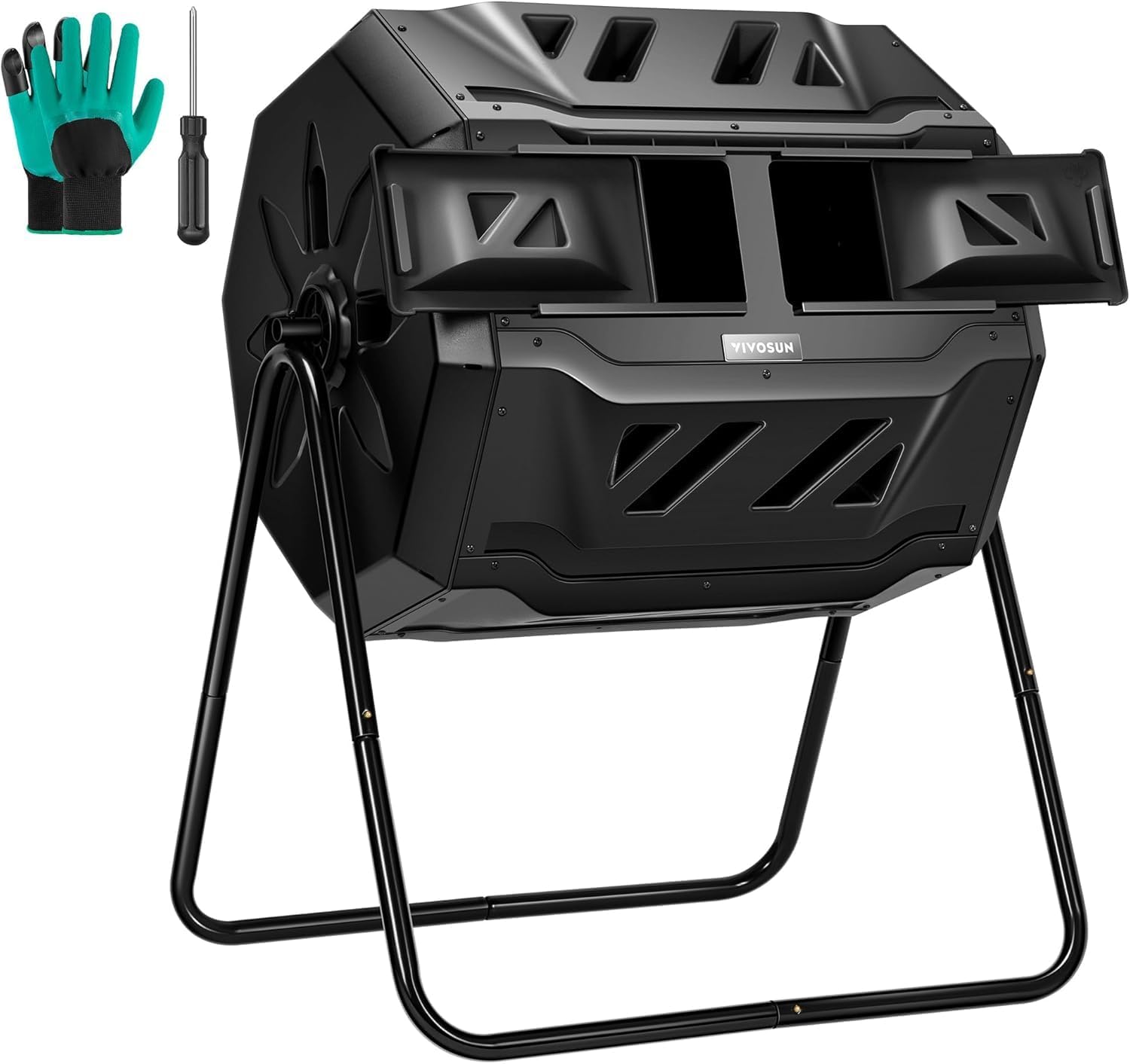
| Material Type | galvanized steel |
|---|---|
| Capacity | 43 gallons |
This VIVOSUN tumbling composter is a practical backyard unit built around two rotating chambers so you can add fresh waste to one side while the other finishes breaking down. The 360 degree tumbling design with deep internal fins makes turning the pile simple and helps break up clumps without digging. Ventilation slots around the drum promote airflow for aerobic decomposition, and the metal frame with a PP plastic barrel is designed to resist corrosion and outdoor weathering. It comes with waterproof garden gloves and small digging claws to make loading and aerating easier. At 43 gallons it is sized for a family garden or vegetable patch but is compact enough for a patio or small yard. Limitations to note are that it requires occasional manual turning to maintain activity and that the plastic drum means it will warm less in cold climates than insulated models, so composting speed will vary by season. Assembly and placement on a level spot are also important for smooth rotation.
Best for: Gardeners who want a hands-on, efficient system to produce regular batches of compost without digging a pile and who prioritize continuous output and easy turning.
Less Ideal for: People who need a completely hands-off hot composter or who compost only very large volumes; those in very cold climates seeking year-round rapid breakdown should consider insulated or electric options.
- Dual chambers let you load new material while another batch finishes, ensuring continuous compost production
- 360 degree tumbling with deep fins makes mixing and aeration easy without manual digging
- Galvanized steel frame and PP plastic barrel designed for outdoor durability and corrosion resistance
- Ventilation slots support aerobic breakdown for faster, less smelly composting
- Plastic drum offers less insulation than insulated or fully metal units, slowing composting in cold weather
- Requires manual turning and regular management to maintain heat and moisture for fast results
Verdict: If you want steady, manageable batches of compost with easy tumbling and continuous use, this dual-chamber VIVOSUN tumbler delivers practical, durable performance.
GEOBIN 246‑Gallon Expandable Backyard Compost Bin

| Capacity | 246 gallons |
|---|---|
| Material Type | High Density Polyethylene (HDPE) |
The GEOBIN 246‑gallon compost bin is a simple, high-capacity system designed for homeowners who want an easy route to turn yard and kitchen waste into usable compost. It assembles quickly using connection keys and expands to about 4 feet tall to accept large volumes of leaves, grass clippings, and food scraps. The HDPE construction is weather-resistant and inert so it will not leach into the compost, while the perforated design provides good airflow to speed decomposition. In practice it is best used as a single large pile rather than a multi-bin rotation system, and periodic turning with a pitchfork or aerator will keep the pile active. The bin lacks a built-in access door for finished compost, so harvesting requires collapsing or tipping the container or reaching in from the top. For gardeners who want a low-maintenance, long-lived outdoor composter that handles bulk material, this GEOBIN provides a cost-effective solution; buyers who need staged composting or easy bottom access should consider alternative designs.
Best for: Homeowners who want a low-maintenance, high-capacity outdoor composter for bulk yard waste and occasional kitchen scraps and prioritize durability and simple setup.
Less Ideal for: Gardeners who need a multi-stage or easy-bottom-access system for continuous small-batch composting or those with very limited backyard space.
- Very large expandable capacity suitable for whole-yard seasons of leaves and clippings
- High density polyethylene construction resists weathering and will not leach into compost
- Perforated design and ventilation promote faster decomposition
- Simple assembly with connection keys makes setup quick for nontechnical users
- No built-in access door for easy removal of finished compost
Verdict: Choose this GEOBIN if you want a durable, large-capacity backyard composter that is easy to assemble and handles big volumes of yard waste.
Choosing the Right Compost Bin for Grass Clippings: Key Factors to Consider
Airflow and Ventilation
Good airflow keeps grass clippings aerobic so they break down quickly and without foul odors. Bins with vented walls, internal channels, or removable slats help oxygen reach the pile and prevent slimy, smelly conditions. When airflow is limited, decomposition slows and you risk producing anaerobic pockets that attract flies or create unpleasant smells.
Consider how vents are positioned and whether they are likely to clog with wet clippings. Designs that maintain circulation while still protecting material from rain strike the best balance in an outdoor yard setting.
Moisture Control
Grass clippings are high in water content and can become soggy, which inhibits microbial activity and causes odors. A compost bin should offer ways to shed excess rainwater, allow liquid drainage, or provide means to layer drier carbon materials with wet clippings.
Look for bins with raised floors, drainage holes, or included access panels so you can monitor and remove excess moisture. Managing the wet-dry balance by mixing in shredded paper, dry leaves, or straw will keep decomposition active and reduce the need for cleaning or remedial turning.
Capacity and Scalability
The volume of clippings you produce determines the bin size you need. Small bins fill quickly and require frequent emptying, while very large bins may be hard to mix thoroughly. Choose a capacity that matches your mowing frequency and yard size so you can maintain proper carbon-nitrogen ratios without overflowing.
Some systems offer modular stacking or removable segments so you can add capacity as your composting habit grows. Consider whether you want a single static bin for occasional mows or a multi-chamber setup that allows staged composting and easier harvesting.
Ease of Turning and Access
Turning accelerates breakdown by reintroducing oxygen and redistributing moisture and heat. Bins that provide easy access-through front doors, lift-off lids, or removable panels-make turning simpler and reduce strain. If a bin is awkward to open or reach into, you may skip regular turning and slow the process.
Assess how much physical effort is required to access and mix the contents. Features like sliding panels, wide openings, or compatibility with a compost aerator tool make routine maintenance quicker and more likely to be done consistently.
Durability and Weather Resistance
Outdoor compost bins are exposed to sun, rain, freezing temperatures, and repeated handling. Materials that resist UV degradation, corrosion, and cracking extend a bin's useful life and reduce the chance of structural failure when full of heavy clippings.
Check for robust construction, sturdy fastenings, and finishes that stand up to moisture. Durable bins often require less maintenance and keep pests out more effectively than flimsy alternatives.
Pest Resistance and Containment
Compost with fresh grass can attract rodents and insects if it is easily accessible. A good compost bin should deter pests through secure lids, raised designs, or fine-mesh vents that allow airflow but block entry. Proper containment also prevents windblown clippings from escaping and keeps the garden tidy.
Consider how seals, latches, and vent sizes affect pest access. Regular turning and maintaining proper moisture levels also reduce attraction for unwanted animals.
Managing Fresh Grass to Avoid Compaction
Freshly cut grass can mat together and exclude air if added in large, unbroken layers. To prevent compaction, alternate thin layers of clippings with dry carbon sources like shredded leaves or cardboard. Breaking up clippings before adding them-either by spreading them thinly or mixing them with other green waste-helps maintain airflow and speeds decomposition.
If you regularly add a large volume at once, consider building the pile in smaller batches or using a bin with internal channels that keep material from settling into a dense mass.
- Spread clippings in thin layers rather than dumping a single dense layer
- Mix in dry carbon materials every few inches to keep the pile porous
- Use a bin with venting or internal structure to reduce settling
Balancing Carbon and Nitrogen When Using Lawn Clippings
Grass clippings are a high-nitrogen ingredient and need carbon-rich materials to balance the composting process. Typical carbon additions include dry leaves, straw, shredded paper, or small wood chips. Aim to mix in enough carbon so the overall pile is not too wet or compacted.
If you do not have ready carbon sources, collect fallen leaves in autumn or save cardboard scraps to layer with clippings. Regular monitoring of moisture and odor will tell you when additional carbon is required.
- Target a mix that feels like a wrung-out sponge, not soaking wet
- Add carbon incrementally and observe changes over a week
- Store dry carbon materials near your bin for quick access
Placement and Site Considerations
Choose a level, well-drained spot for your compost bin that receives partial sun and is convenient to reach from your lawn. Too much sun can dry out clippings; too much shade may slow microbial activity. Proximity to water and carbon storage makes maintenance easier.
Avoid placing bins directly against wooden structures to prevent moisture transfer, and leave enough clearance to access vents and perform routine turning. A firm base or simple pallets can improve drainage and airflow under the bin.
- Place the bin on compacted soil or gravel for drainage
- Allow 18 to 24 inches of clearance on at least one side for access
- Keep the bin within a short walk of your lawn mower area
Seasonal Care and Winter Management
Cold weather slows composting but does not stop it entirely. In winter, insulate the bin with extra browns or a straw cover, and avoid opening the pile frequently, which releases heat. If you want active composting through colder months, aim for larger batches and tighter packing to retain heat.
In early spring, turn and aerate the pile and add fresh greens as grass growth resumes. Check for soggy, frozen pockets that may need to be redistributed once temperatures moderate.
- Add an insulating layer of dry material before heavy freezes
- Minimize disturbance in deep cold to conserve internal heat
- Resume regular turning once temperatures stay consistently above freezing
Tools and Accessories That Help
A compost fork, aerator tool, or a long-handled mixing tool reduces effort when turning heavy, moist clippings. A simple cover or tarp helps control rain input, while a moisture meter can take the guesswork out of managing dampness. Consider a bin with removable panels to pair with your preferred tools.
Collect basic accessories like a pair of gloves, a small rake, and a container for dry carbon near the bin to streamline the process so maintenance becomes quick and routine.
- Use a long-handled fork for less bending and easier turning
- Keep dry carbon stored in a ventilated container near the bin
- A moisture meter can save time diagnosing wet or dry conditions
How We Chose the Best Compost Bin for Grass Clippings
We evaluated products that are specifically suited to processing grass clippings and other high-nitrogen yard waste. Key filters eliminated containers that lack ventilation or are too small for regular mowing volumes, as well as designs with materials prone to rapid deterioration in outdoor conditions. Selection criteria focused on airflow and aeration features that prevent anaerobic smells, moisture-management options such as drainage or absorbent layers, construction durability for season-long outdoor exposure, and ease of mixing or turning to speed decomposition. We also considered capacity and modularity so a bin can handle a typical weekly mow without constant emptying, plus pest-resistance features like secure lids or enclosed vents. Excluded from the list were open piles and simple mesh bags that do not offer containment or moisture control, and novelty designs that lack long-term durability. The final picks balance practical garden performance with build quality and user-friendly maintenance.
FAQ
Can I compost only grass clippings in a bin?
You can, but pure grass piles often become too wet and compact. Mixing in carbon materials like dry leaves or shredded paper keeps the pile porous and prevents odors. If you add only clippings, expect to turn and monitor the pile more frequently.
How often should I turn a bin that contains grass clippings?
Often turning every one to two weeks speeds decomposition and prevents anaerobic spots, but frequency depends on pile size and moisture. Larger or wetter piles need more frequent turning to maintain airflow.
Will fresh grass clippings attract pests in a compost bin?
Fresh clippings can attract insects and rodents if left exposed or soggy. Secure lids, fine vents, and proper moisture management reduce attraction. Regular turning and keeping the pile aerated also makes it less hospitable to pests.
Should I dry grass clippings before adding them to the bin?
Drying clippings first reduces compaction and excess moisture, but it is not always necessary. If you can spread clippings thinly and mix them with dry carbon, you can add them fresh. Drying is useful when adding large volumes at once.
How long does it take for grass clippings to become usable compost?
It usually takes a few months under active management and turning. With frequent aeration and good carbon balance, clippings can break down faster. Passive, unturned piles may require many more months to stabilize.
Final Verdict
Choosing a compost bin for grass clippings comes down to controlling moisture, maintaining airflow, and picking the right capacity for how much lawn you cut. Prioritize bins that make turning easy and provide ventilation without letting rainwater flood the pile. Balance tradeoffs between size and manageability: larger bins hold more material but need more effort to mix, while smaller units are easier to handle but fill quickly. Focus on a design that matches your weekly mowing volume, offers good aeration, and keeps pests out so you get steady, usable compost with minimal fuss.
