

Note: This article contains affiliate links. If you click on these links and make a purchase, I may earn a small commission at no extra cost to you. This helps support my research and content. Read my full affiliate disclosure here.
A good drum compost bin can cut composting time, reduce smells, and keep your yard tidy. If you want finished compost without constant stirring or a messy pile, the right rotating drum design makes active backyard composting simpler. This guide covers six shortlisted drum compost bins chosen for typical yard and patio situations. We evaluated each option for capacity, build, and how easy it is to turn and maintain. Read on to compare the core features and pick the drum that fits your space and composting rhythm.
Top Picks at a Glance
| Best Overall The best all-around choice for most situations | Marcytop 45 Gallon Dual-Chamber Compost Tumbler |  |
| Best Quality Built to a higher standard if you want something more solid | Miracle-Gro Dual Chamber Compost Tumbler (2 × 18.5 gal) |  |
| Best Value The sweet spot between price and what you get | Nazhura Dual-Chamber 43 Gallon Compost Tumbler Bin |  |
| Best Budget The cheapest option that still gets the job done reliably | F2C 43‑Gallon Dual‑Chamber Rotating Compost Bin with Steel Frame |  |
| Highest Rated A top-rated pick with lots of positive feedback | Cozurra 45‑Gallon Dual‑Chamber Compost Tumbler |  |
| Most Popular A crowd favorite that many people choose with confidence | VIVOSUN Outdoor Tumbling Composter, Dual-Chamber 43 Gallon |  |
Marcytop 45 Gallon Dual-Chamber Compost Tumbler

| Capacity | 45 gallons |
|---|---|
| Material Type | Polypropylene (PP) |
The Marcytop 45-gallon dual-chamber compost tumbler is built for homeowners who want faster, neater composting without turning piles by hand. It has two 22.5-gallon chambers so you can load fresh scraps into one side while the other finishes breaking down, and the rotating drum with internal fins and aeration holes helps mix oxygen into the material for quicker decomposition. Construction pairs thick polypropylene panels with a powder-coated steel frame to resist sun exposure and corrosion, and a wide removable door makes loading and harvesting straightforward. Assembly is reportedly simple and uses buckles and a few screws, letting most people finish setup in about 30 minutes. Practical limitations include the 45-gallon total capacity, which is right for small to medium yards but too small for larger garden waste streams, and the plastic drum means it will warm less than heavy-duty insulated units in cool climates. For balanced users wanting ease of use, continuous composting, and a tidy backyard solution, this tumbler delivers reliable performance with minimal fuss.
Best for: Home gardeners who want a low-fuss, continuous composting solution for kitchen scraps and moderate yard waste and who prioritize ease of use and tidy backyard appearance.
Less Ideal for: Large-scale gardeners or landscapers who produce heavy volumes of green waste or need a high‑capacity insulated composter for cold-season processing.
- Dual 22.5-gallon chambers allow continuous composting without manual pile turning
- Aeration holes and internal fins promote oxygen circulation for faster breakdown
- Thick polypropylene drum and powder-coated steel frame resist sun and corrosion
- Large removable door and wide openings make loading and removing compost easy
- 45-gallon capacity may be insufficient for large properties or heavy garden waste
- Plastic construction offers less thermal mass than insulated or metal tumblers in cold climates
Verdict: This dual-chamber 45-gallon tumbler is the practical choice for backyard gardeners who want continuous, easy-to-manage composting without manual turning.
Miracle-Gro Dual Chamber Compost Tumbler (2 × 18.5 gal)

| Capacity | 37 gallons |
|---|---|
| Material Type | Alloy Steel (frame) and UV-protected plastic (barrel) |
This dual-chamber Miracle-Gro tumbler is a user-friendly solution for gardeners who want a steady supply of finished compost without manual turning. Each chamber holds 18.5 gallons, so you can load one side while the other finishes curing; the barrel rotates on a galvanized steel frame for easy turning and faster aeration. The molded, UV-protected plastic and side-locking seals are designed to resist weather and help keep pests out, and the maker claims finished compost in roughly 4 to 6 weeks under good conditions. Typical use is adding balanced green and brown materials, rotating the tumbler every few days, then unlocking the sliding door to remove cured compost. Practical benefits include reduced physical labor compared with pile turning and a continuous workflow from dual chambers. Limitations to note are modest total capacity for very large gardens and reliance on correct moisture and feedstock balance to hit the faster decomposition times; very cold winters will slow processing. Assembly and placement on a level spot are important for smooth rotation.
Best for: Gardeners who value steady, low-effort compost production backed by a well-known brand and want the assurance of a proven dual-chamber system for regular use.
Less Ideal for: People needing very large-volume commercial composting or those who prefer an open windrow or in-ground hot compost system for maximum throughput.
- Dual-chamber design lets you add fresh material while another batch cures for continuous compost supply
- Rotating barrel on a galvanized steel frame makes aeration easy with minimal physical effort
- UV-protected plastic and tight side locks help resist weather and reduce pest access
- Produces finished compost relatively quickly when fed and moistened correctly
- 37-gallon combined capacity may be small for very large or heavy-production gardens
- Performance depends on proper moisture, material mix, and ambient temperature to reach claimed speed
Verdict: Choose this dual-chamber tumbler if you want a simple, low-labor way to produce a steady stream of finished garden compost with reliable pest protection.
Nazhura Dual-Chamber 43 Gallon Compost Tumbler Bin

| Capacity | 43 gallons |
|---|---|
| Material Type | Plastic and Galvanized Steel |
| Manufacturer Warranty Description | 1 Year |
The Nazhura dual-chamber compost tumbler is a practical outdoor bin that speeds up backyard composting by combining insulated rotating chambers with internal mixing when turned. You load kitchen scraps and yard waste into either chamber, let material heat and break down, then rotate the tumbler occasionally to aerate and mix the pile; one chamber can be active while the other finishes so you can compost continuously. Notable features include the side-by-side dual chambers for staggered batches, a slide-open access door for easy removal of finished compost, and construction using plastic with galvanized steel supports for weather resistance. In practice the unit makes managing smaller household volumes straightforward and keeps material off the ground to reduce pests and mess. Limitations are its 43 gallon capacity, which suits small to medium households but may require more frequent emptying for heavy gardeners, and the plastic body means very hot internal temperatures are harder to maintain than in larger insulated systems. Assembly and periodic turning are required to get the fastest results.
Best for: Gardeners who want a tidy, space-efficient way to turn household scraps into usable compost on an ongoing schedule and who value ease of use and continuous batches.
Less Ideal for: People with very large yards, frequent high-volume green waste, or those who need professional-scale hot composting results should consider larger or purpose-built insulated systems instead.
- Dual-chamber design allows continuous composting by loading one side while the other finishes
- Rotating tumbler and internal mixing accelerate decomposition compared with static bins
- Slide-open access door makes removing finished compost quick and tidy
- Plastic body with galvanized steel support resists outdoor weathering and reduces direct contact with pests
- 43 gallon capacity may be small for large yards or heavy kitchen waste producers
- Plastic construction limits maximum internal heat compared with larger insulated or insulated-metal systems
Verdict: A compact, easy-to-use dual-chamber tumbler that lets practical gardeners run continuous small-batch composting with minimal mess and effort.
F2C 43‑Gallon Dual‑Chamber Rotating Compost Bin with Steel Frame

| Capacity | 43 gallons |
|---|---|
| Material Type | PP and powder-coated steel |
This F2C 43‑gallon dual‑chamber tumbler is built to make backyard composting more efficient and less fussy. The two separate chambers let you keep finished compost on one side while adding fresh scraps to the other, so you do not need to wait to harvest usable material. The barrel has aeration holes and internal fins to break up clumps and introduce oxygen while the black exterior helps absorb heat to speed decomposition. Assembly is straightforward with included hardware and basic tools, and the powder‑coated steel frame plus interlocking PP panels provide decent stability when spinning. The sliding access doors make it simple to add or remove material without disassembling the barrel. Expect faster results than a stationary bin, but plan to turn the tumbler and monitor moisture for best performance. It is compact enough for typical yards but not suited for large-scale or heavy wet loads, and moving a full chamber requires effort despite the rotating design.
Best for: Home gardeners who want a compact, efficient system to speed backyard composting and prefer a practical setup that reduces downtime between batches.
Less Ideal for: People managing large quantities of yard waste or those who need a low‑effort, stationary hot compost system for commercial or very large‑scale beds.
- Dual chambers let you harvest finished compost while continuing to add new material
- Aeration holes and internal fins improve oxygen mixing and reduce clumping
- Powder‑coated steel frame with interlocking PP panels gives stable construction
- Sliding doors provide easy access for adding scraps and removing finished compost
- Rotating a full chamber can be physically demanding for some users
- Capacity (43 gallons) may be small for very large gardens or heavy organic waste streams
Verdict: Choose this dual‑chamber rotating tumbler if you want a space‑saving, faster backyard composter that lets you produce usable compost more continuously.
Cozurra 45‑Gallon Dual‑Chamber Compost Tumbler

| Capacity | 45 gallons |
|---|---|
| Material Type | Polypropylene (PP) |
This Cozurra compost tumbler is a dual‑chamber, 45‑gallon spinner built to make backyard composting straightforward. You use one chamber for fresh scraps while the other side breaks down, so you can produce compost continuously without waiting to empty a single bin. Rotation is easy thanks to the 360° tumbling system and interior mixing ribs that break up clumps and improve aeration; adjustable vents further help control moisture and odors. The unit snaps together for tool‑free assembly and sits on a reinforced steel frame for stability when turning. Constructed from BPA‑free polypropylene, it resists weathering and is sized to handle kitchen waste, grass clippings, and leaves for an average household. Limitations to note are that plastic construction can feel less heavy‑duty than metal alternatives and the two smaller 22.5‑gallon chambers may require frequent turning in very large gardens to keep decomposition active. The tumbler works best when you follow recommended turning and moisture guidelines to speed composting and avoid smells.
Best for: A gardener who wants an easy, low‑effort system to convert kitchen and yard waste into usable compost on a regular schedule and values continuous output over maximum single‑load capacity.
Less Ideal for: Large properties or commercial users who need very high single‑batch capacity or a metal industrial tumbler should consider heavier duty alternatives.
- Dual 22.5‑gallon chambers allow continuous composting without downtime
- 360° tumbling with internal mixing ribs makes turning simple and improves breakdown
- Adjustable vents and airflow control reduce odors and help regulate moisture
- Snap‑together assembly and ergonomic openings simplify setup and loading
- Weather‑resistant BPA‑free polypropylene on a reinforced steel frame for year‑round outdoor use
- Plastic body is less robust than heavy gauge metal and may be more prone to UV wear over many years
- Total capacity split across two chambers means each chamber fills faster than a single large drum
Verdict: Choose this dual‑chamber Cozurra tumbler if you want a simple, weather‑resistant spinner that makes continuous home composting easy and low maintenance.
VIVOSUN Outdoor Tumbling Composter, Dual-Chamber 43 Gallon
| Material Type | galvanized steel |
|---|---|
| Capacity | 43 gallons |
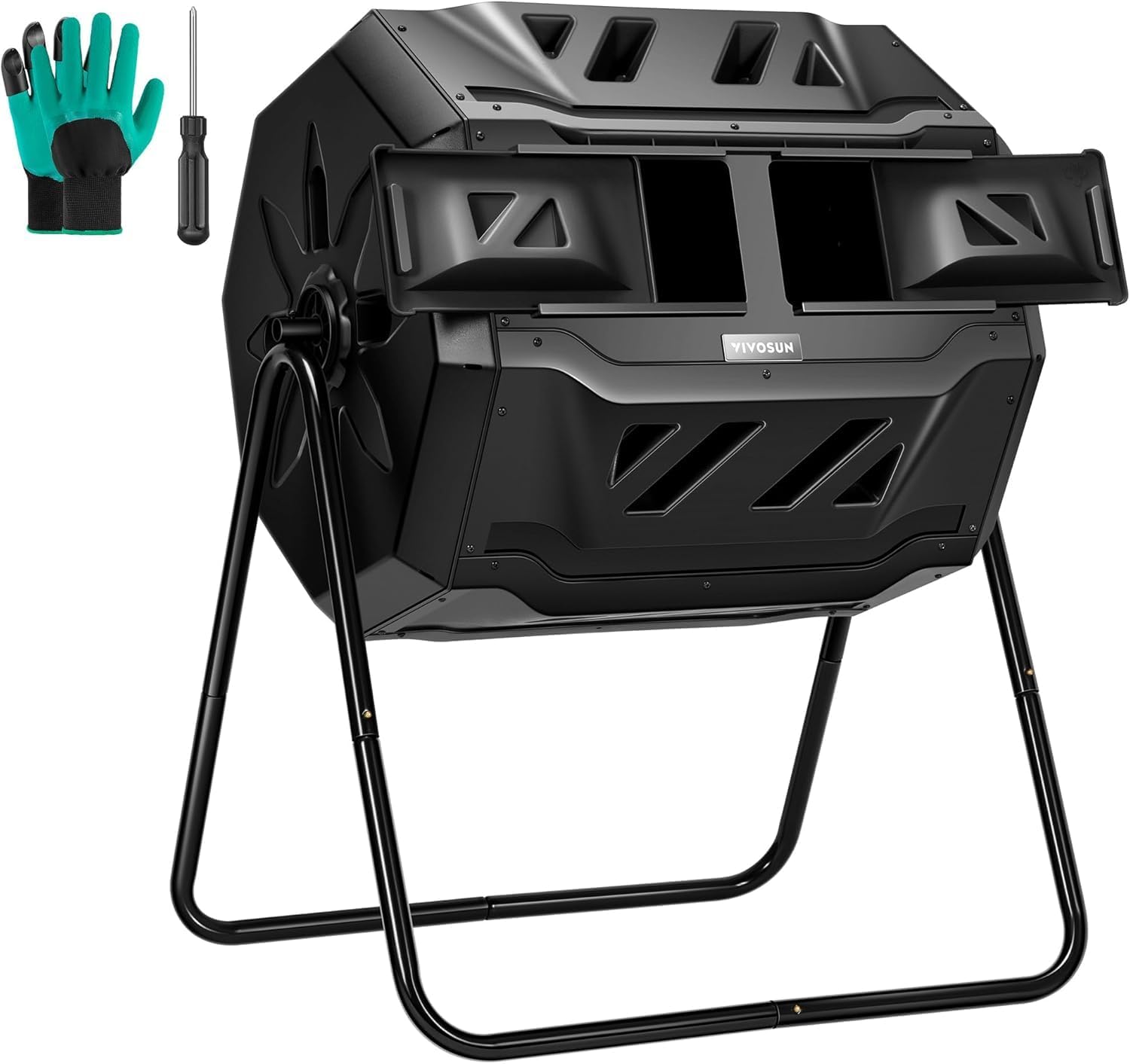
This VIVOSUN tumbling composter is a practical backyard unit built around two rotating chambers so you can add fresh waste to one side while the other finishes breaking down. The 360 degree tumbling design with deep internal fins makes turning the pile simple and helps break up clumps without digging. Ventilation slots around the drum promote airflow for aerobic decomposition, and the metal frame with a PP plastic barrel is designed to resist corrosion and outdoor weathering. It comes with waterproof garden gloves and small digging claws to make loading and aerating easier. At 43 gallons it is sized for a family garden or vegetable patch but is compact enough for a patio or small yard. Limitations to note are that it requires occasional manual turning to maintain activity and that the plastic drum means it will warm less in cold climates than insulated models, so composting speed will vary by season. Assembly and placement on a level spot are also important for smooth rotation.
Best for: Gardeners who want a hands-on, efficient system to produce regular batches of compost without digging a pile and who prioritize continuous output and easy turning.
Less Ideal for: People who need a completely hands-off hot composter or who compost only very large volumes; those in very cold climates seeking year-round rapid breakdown should consider insulated or electric options.
- Dual chambers let you load new material while another batch finishes, ensuring continuous compost production
- 360 degree tumbling with deep fins makes mixing and aeration easy without manual digging
- Galvanized steel frame and PP plastic barrel designed for outdoor durability and corrosion resistance
- Ventilation slots support aerobic breakdown for faster, less smelly composting
- Plastic drum offers less insulation than insulated or fully metal units, slowing composting in cold weather
- Requires manual turning and regular management to maintain heat and moisture for fast results
Verdict: If you want steady, manageable batches of compost with easy tumbling and continuous use, this dual-chamber VIVOSUN tumbler delivers practical, durable performance.
Choosing the Right Drum Compost Bin: Key Factors to Consider
Capacity and How Much You Compost
Capacity dictates how much kitchen and yard waste the drum will hold between emptying. Choose a size that fits the amount of material you generate each week so the drum fills at a steady pace rather than languishing half full or overflowing.
A drum that is too large may sit idle and cool, slowing decomposition. A drum that is too small will require frequent emptying and more handling. Think about seasonal changes in yard waste: autumn leaf volumes and spring pruning can temporarily increase what you need to process.
Turning Mechanism and User Effort
How the drum rotates is central to the experience. Look at the axle and handle layout, how much force is required to spin a loaded drum, and whether the drum rotates smoothly when partly full or wet.
A well-designed turning mechanism encourages regular agitation, which speeds decomposition and reduces odors. Consider whether a rotating system can be operated comfortably from ground level and whether it locks in place for safety when not being turned.
Aeration, Drainage, and Moisture Control
Compost microbes need oxygen and the right moisture balance to thrive. Drum designs vary in venting patterns and drain provision, which directly affect how easily excess moisture leaves the bin and how well air circulates through the mass.
Poor aeration leads to anaerobic pockets and odors, while inadequate drainage makes materials soggy and slow to break down. Evaluate vent placement, perforation size, and whether the drum rests with gaps or seals that influence airflow.
Materials, Weather Resistance, and Longevity
Drums are exposed to repeated moisture, temperature swings, and physical stress from turning. Common materials include powder-coated steel, galvanized metal, and UV-stabilized plastics. Each has tradeoffs between strength, weight, and corrosion resistance.
Consider how seams and fasteners are protected from rust, whether plastic components resist cracking in sun and cold, and if replacement parts or simple repairs are possible. A slightly heavier, sturdier drum often lasts longer in an outdoor setting.
Access for Harvesting and Cleaning
Harvesting finished compost and cleaning the inside of a drum are often overlooked until you need to remove material. Check how the drum opens or is dismounted, whether there is a hatch for partial emptying, and if the design allows easy scooping of finished compost.
Cleaning access affects how you handle sticky or partially decomposed material and whether you can rinse or scrape the interior when necessary. Designs that permit straightforward removal without tipping the entire unit save effort and reduce mess.
Stability, Placement, and Site Needs
Where you plan to put a drum affects what features matter. A free-standing drum on uneven ground needs a stable base or frame. Patio and balcony composters should limit drips and odors, while ground-mounted units can contact soil and draw in beneficial organisms.
Think about sunlight, wind exposure, and proximity to water for occasional rinsing. If you have limited space, a compact vertical drum may work better than a wide tumbler. Also factor in access for turning and emptying without awkward lifting or reaching.
How Drum Composting Speeds Decomposition
Drum composters accelerate breakdown by making it easy to mix materials and maintain even aeration. Regular rotation redistributes air pockets, moves fresh material into contact with microbes, and helps break clumps so bacteria and fungi can colonize more surface area.
Because the mass is contained, drums retain heat more consistently than small open piles, which promotes faster microbial activity. That concentrated heat plus frequent turning often reduces composting time from many months to several weeks under active management.
- Turning frequency affects speed: more frequent tumbling maintains oxygen levels but requires effort.
- Balanced green and brown materials remain important even in a drum to avoid wet, slimy conditions.
- Containment reduces pest access compared with open piles but does not eliminate the need for proper moisture and temperature control.
Sizing a Drum for Households and Gardens
Match drum size to household waste generation and yard work patterns. A two-person household with modest yard trimmings will need much less usable volume than a family that cooks frequently and has a large garden.
Also consider how often you are willing to empty partially finished compost. A slightly larger drum that you turn weekly and empty monthly may be more convenient than a small drum that requires near-daily attention.
- Estimate weekly kitchen waste by counting typical compostable items to get a practical sense of volume.
- If you plan seasonal bulk composting from leaves or brush, look for a drum that can handle short bursts or let you supplement with an external pile.
Placement, Sun Exposure, and Microclimate
Sun exposure raises internal temperatures and speeds activity, but too much direct sun can overheat a drum or dry out materials. Partial sun or morning sun with afternoon shade is ideal in many climates.
Windy sites can cool a drum and increase evaporation, requiring more frequent moisturization. Also plan placement for convenient access to kitchen scraps and garden areas to minimize transport effort.
- Avoid placing drums directly on soft soil if you want to limit pest access; a raised frame can help.
- Ensure there is space to rotate and remove compost without moving surrounding plants or structures.
Maintaining Moisture and Carbon-to-Nitrogen Balance
Drum composting does not remove the need to balance greens and browns. Wet kitchen scraps and fresh grass clippings are rich in nitrogen and can create anaerobic conditions if added without dry carbon such as shredded paper or dry leaves.
Test the moisture by squeezing a handful of compostable material: it should feel like a wrung-out sponge. If it drips, add dry brown material and increase aeration through turning. If it is too dry, add small amounts of water and turn to distribute moisture evenly.
- Layering heavier materials near the center and lighter, drier material along the edges helps maintain airflow.
- Chopping or shredding large pieces speeds breakdown inside the confined drum space.
Winter Use and Year-Round Composting
In colder climates, drums retain heat better than open piles but microbial activity still slows in winter. To keep composting through chillier months, insulate the drum by situating it out of prevailing winds and adding extra brown material to retain heat.
If you rely on year-round output, choose drums with good seals to protect from heavy rain and snow while still allowing controlled ventilation. Turning remains necessary to prevent freezing pockets and to maintain oxygen levels.
- Wrap or shelter the drum in extreme cold, but avoid sealing it so tightly that ventilation stops.
- Plan for easier access in winter so you can turn the drum even during snow or ice.
How We Chose the Best Drum Compost Bin
We focused on practical, hands-on attributes gardeners rely on with drum-style composters. Key evaluation criteria included drum capacity and usable volume, turning mechanism and ease of rotation, ventilation and aeration design, build materials and corrosion resistance, and maintenance features such as access for removing finished compost and cleaning. We also considered stability and mounting so drums handle wet loads or winter conditions without tipping. To keep recommendations relevant, we excluded open piles, stationary bin designs that do not turn, and small countertop tumblers aimed at indoor use. Models were favored when they balanced accessible capacity for average households with straightforward operation and durable materials suited to outdoor exposure. Performance expectations emphasized real-garden factors like airflow, moisture control, and how often a gardener needs to intervene to keep the process active.
FAQ
How often should I turn a drum compost bin?
Often depends on loading and moisture, but spinning the drum two to four times per week keeps oxygen available and speeds decomposition. If materials feel very wet or compacted, turn more frequently until airflow improves.
Can I put meat or dairy in a drum composter?
Meat and dairy are generally discouraged because they attract pests and create strong odors when not processed quickly. If you do add small amounts, ensure the drum seals well, turn frequently, and balance with ample dry carbon to control smell.
Will a drum composter attract rodents or pests?
Properly sealed and elevated drums are less likely to attract rodents than open piles, but entry points and gaps can invite pests. Keep lids and hatches closed, avoid adding easily scented meat scraps, and maintain a dry, aerated mix to reduce attraction.
How do I know when compost is finished in a drum?
Finished compost is dark, crumbly, and earthy-smelling with no recognizable food pieces. In a drum, you may need to empty a portion to inspect the interior. Finished material will pass a simple sieving test and feel cool to the touch compared with actively composting masses.
Can I compost leaves and large yard trimmings in a drum?
Large, woody materials benefit from shredding before adding to a drum because the confined space limits breakdown of big pieces. Mix leaves with nitrogen-rich greens to keep activity high and consider pre-shredding branches so they decompose faster.
Do drum composters need special maintenance?
Maintenance is straightforward: check seals, clear vents of buildup, and ensure the turning mechanism remains lubricated or free of debris. Periodic inspection for rust or cracked plastic will extend life and prevent failures during heavy use.
Final Verdict
Choose a drum compost bin that matches how much organic material you produce and how hands-on you want to be. Prioritize ease of turning and good aeration because those features most directly speed composting and reduce odors. Balance capacity with access and durability so the drum fits your placement and seasonal needs. If you want faster results with less daily work, favor drums with smooth, low-effort rotation and thoughtful venting. If longevity in an outdoor setting matters most, prioritize materials and construction that resist corrosion and allow easy maintenance.
