

Note: This article contains affiliate links. If you click on these links and make a purchase, I may earn a small commission at no extra cost to you. This helps support my research and content. Read my full affiliate disclosure here.
Choosing the right early season lawn fertilizer sets the tone for the whole growing season. In cool or transitioning climates, the first application helps grass green up, recover from winter stress, and build roots that carry through summer heat and drought. This guide focuses on top-rated early season options that suit yards, small lawns, and larger properties alike. We shortlisted the best products based on nutrient formulation, ease of application, and turf response. Below you will find concise evaluations of each pick and clear criteria we used to judge them, so you can match a fertilizer to your turf type, timing window, and maintenance routine.
Top Picks at a Glance
| Best Overall The best all-around choice for most situations | Scotts Turf Builder Liquid Starter Lawn Food, 32 fl. oz. |  |
| Best Quality Built to a higher standard if you want something more solid | The Andersons PGF Balanced 10-10-10 Granular Fertilizer with Micronutrients and 2% Iron (18 lb, 5,000 sq ft) | 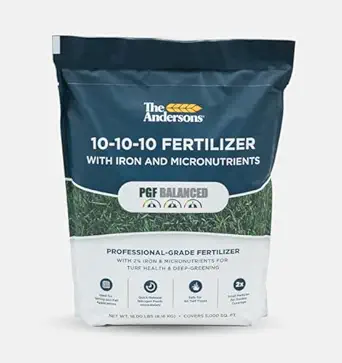 |
| Best Value The sweet spot between price and what you get | Milorganite 6-4-0 Slow-Release Fertilizer, 32 lb (with Feeding Tips Brochure) |  |
| Best Budget The cheapest option that still gets the job done reliably | Jonathan Green Veri-Green Starter Fertilizer for Seeding & Sodding, 1,500 Sq Ft |  |
| Highest Rated A top-rated pick with lots of positive feedback | Espoma Turf-Tone All Season Organic Lawn Food, 14 lb |  |
| Most Popular A crowd favorite that many people choose with confidence | Scotts Turf Builder Starter Food for New Grass, 15 lb |  |
| Best Seller A high-volume bestseller chosen again and again | Scotts Turf Builder Weed & Feed 3, Granular Lawn Fertilizer and Weed Killer, 14.29 lb |  |
Scotts Turf Builder Liquid Starter Lawn Food, 32 fl. oz.

| Item Form | Liquid |
|---|---|
| Specific Uses For Product | Lawn Grass Seedling Establishment |
| Target Species | Lawn Grass |
| Unit Count | 32 Fluid Ounces |
This Scotts Turf Builder Liquid Starter Lawn Food is a hose-end liquid lawn fertilizer designed specifically for new grass establishment. It comes in a translucent 32 fl. oz. bottle with a reusable applicator that connects to a garden hose so you can water and feed at the same time. The 7-12-15 NPK formula emphasizes phosphorus to promote early root development while nitrogen encourages shoot growth and greening and potassium supports turf resilience. Typical use is three weekly feedings starting after seedlings sprout; one bottle covers three applications for roughly a 600 sq. ft. area. The key practical benefits are speed and simplicity: setup takes minutes, the translucent bottle removes guesswork, and the applicator can be reused with refills. Limitations to note are coverage—this pack is sized for small to medium patches rather than large lawns—and the product is intended only for new seedlings, so you will need a different maintenance fertilizer after establishment. Also the hose applicator requires a compatible hose and careful spraying to ensure even application.
Best for: Homeowners planting a new lawn or repairing bare patches who want a low-effort, low-risk way to feed seedlings and speed establishment.
Less Ideal for: People caring for large acreage or those looking for an ongoing season-long fertilizer solution should choose a product with greater coverage or a maintenance formula.
- Ready-to-spray hose-end applicator makes feeding and watering simultaneous and fast
- NPK 7-12-15 formula formulated to support root development and quick seedling growth
- Translucent bottle helps monitor remaining product and application amount
- Reusable applicator reduces single-use plastic when used with refills
- One 32 fl. oz. bottle only covers three feedings for about 600 sq. ft., which is small for larger lawns
- Designed specifically for new seedlings so not ideal as a long-term maintenance fertilizer
Verdict: A quick, easy hose-end starter fertilizer built to give new grass seedlings a dependable nutrient boost for faster, thicker establishment.
The Andersons PGF Balanced 10-10-10 Granular Fertilizer with Micronutrients and 2% Iron (18 lb, 5,000 sq ft)

| Item Form | Granules |
|---|---|
| Application Method | spreader |
| Coverage | 5000 square feet |
| Mixing Ratio | 10-10-10 |
| Target Species | Lawns and Gardens |
The Andersons PGF Balanced 10-10-10 is a fine-particle granular fertilizer designed for broad, even coverage across lawns and garden beds. It is typically applied with a broadcast spreader and then watered in to activate the quick-release nutrients. The unusually small particle size means a single 18 lb bag claims coverage up to 5,000 sq ft and helps reduce patchy feeding compared with coarse granules. The formula is balanced for nitrogen, phosphorus and potassium and includes micronutrients plus 2% iron for enhanced greening. It works well for spring and fall applications, for establishing new turf or boosting established lawns, and can be worked into soil for vegetable or flower beds. Users should sweep or blow product off paved surfaces to avoid iron staining and store any leftover in a dry area. Because the fertilizer is quick-release, expect faster visible response but shorter duration between applications than slow-release products.
Best for: Homeowners who prioritize consistent, dependable feeding and want a straightforward granular option that gives quick visible results across lawns and planting beds.
Less Ideal for: Gardeners seeking a long-duration, slow-release feeding program or those who need a no-iron product to avoid any risk of surface staining.
- Very fine particle size for more even coverage and less patchy feeding
- Balanced 10-10-10 formula with added micronutrients and 2% iron for deeper greening
- Suitable for lawns, gardens, trees and shrubs and can be applied at planting or during the season
- Covers up to 5,000 sq ft from a single 18 lb bag when applied as directed
- Quick-release nutrients mean results appear sooner but may require more frequent reapplication versus slow-release formulas
- Contains iron that can stain sidewalks and driveways if not cleaned off immediately
Verdict: Choose this fine-particle 10-10-10 if you want a reliable, fast-acting granular fertilizer that delivers even coverage and deeper greening for summer lawn care.
Milorganite 6-4-0 Slow-Release Fertilizer, 32 lb (with Feeding Tips Brochure)

| Item Form | Pelletized |
|---|---|
| Application Method | Broadcast, Rotary or Manual |
| Coverage | 2,500 Square Feet |
| Specific Uses For Product | Lawns, Flowers and Gardens, Education |
Milorganite 6-4-0 is an organic, pelletized slow-release fertilizer intended for routine lawn and garden feeding. It is typically broadcast with a rotary or manual spreader and provides nitrogen slowly over 8 to 10 weeks, which reduces the need for frequent applications and lowers burn risk. The product contains organically complex iron for greening without the strong staining associated with iron salts and is low in soluble salts, so it performs well in warm or drier conditions. The 32 lb bag covers roughly 2,500 square feet and comes with a printed feeding and spreader tips brochure to simplify seasonal timing and application rates. Because it is made from heat-dried microbes, it also adds organic matter to improve soil structure in heavy clay or sandy soils. Limitations are that nutrient release is gradual so it is not suited to quick color fixes or rapid turf recovery, and users seeking tightly controlled N-P-K ratios or fast-acting synthetic performance may prefer a different product.
Best for: Buyers who want a low-maintenance, environmentally minded fertilizer that steadily feeds established lawns and mixed garden beds with minimal risk of burn and fewer repeat applications.
Less Ideal for: If you need rapid turf recovery, immediate color correction, or precise synthetic nutrient control for athletic fields or newly sodded lawns, choose a fast-release or specialty fertilizer instead.
- Slow-release nitrogen feeds lawns and plants for 8–10 weeks, reducing application frequency
- Low-salt formulation minimizes fertilizer burn and streaking in hot or dry conditions
- Organically complex iron promotes deep greening without heavy staining of concrete
- Pelletized form works with broadcast, rotary, or manual spreaders for easy application
- Adds organic matter that can improve drainage and soil structure in clay or sandy soils
- Not fast-acting, so it will not deliver an immediate green-up after application
- Contains biosolids which some buyers may prefer to avoid for personal or local reasons
Verdict: Pick this if you want a reliable, low-salt slow-release fertilizer that feeds lawns and gardens for weeks with minimal maintenance.
Jonathan Green Veri-Green Starter Fertilizer for Seeding & Sodding, 1,500 Sq Ft

| N-P-K ratio | 12-18-8 |
|---|---|
| Application method | Spreader |
| Form | Granules |
| Coverage | 1,500 sq ft |
| Included components | Grass Seed, Plant Fertilizer |
Jonathan Green Veri-Green Starter Fertilizer is a granular lawn starter designed to be applied the same day as seeding or sodding to help new grass establish quickly. It delivers a 12-18-8 N-P-K blend that emphasizes phosphorus for root development and includes humates and micronutrients to improve nutrient availability. Use it with a rotary, drop, or handheld spreader over the area being seeded; a 5 lb bag covers up to 1,500 sq ft and feeds seedlings for roughly two months. Practically, this product speeds germination, encourages deeper roots, and helps new grass withstand early stressors like temperature swings and light drought. Its granule form is easy to apply and safe for kids and pets to re-enter the lawn after treatment. The main limitations are coverage and longevity for larger projects since a single 5 lb bag suits only small yards or spot repairs, and it is specifically a starter fertilizer so additional feeding with a general lawn fertilizer will be needed later in the season.
Best for: Homeowners who need an affordable, purpose-built starter fertilizer for seeding, overseeding, or laying sod on small lawns or repair patches and who prioritize quick germination and strong root development.
Less Ideal for: People caring for large properties or seeking a season-long all-purpose fertilizer should consider larger coverage or multi-application products instead.
- High-phosphorus 12-18-8 formula targeted to promote seed germination and root growth
- Granular form works with rotary, drop, or handheld spreaders for even application
- Includes humates and micronutrients to improve nutrient uptake and early vigor
- Feeds new grass for up to two months, supporting initial establishment
- 5 lb bag only covers about 1,500 sq ft so multiple bags are needed for larger lawns
- Designed as a starter fertilizer so it does not replace regular seasonal feedings
Verdict: A cost-effective, phosphorus-rich starter fertilizer that speeds germination and builds strong roots for new or repaired lawns up to 1,500 sq ft.
Espoma Turf-Tone All Season Organic Lawn Food, 14 lb

| Item Form | Granules |
|---|---|
| Specific Uses For Product | Lawn Feeding |
| Application Method | Spread |
| Target Species | Lawn Grass |
| Unit Count | 224 Ounce |
Espoma Turf-Tone All Season is a granular organic lawn fertilizer intended for routine feeding of home lawns. It applies with a drop or broadcast spreader to a dry, mowed lawn and is formulated with slow-release nitrogen (9-0-1) plus a Bio-tone microbial formula to encourage deeper, longer-lasting greening without harsh chemicals. The product lists feather meal and poultry manure among ingredients and is advertised as safe for spring, summer, or fall use on common grasses like fescue, bluegrass, rye, St. Augustine, and zoysia. A single 14 lb bag covers up to about 2,500 sq ft, so it is practical for small to medium yards or as a spot treatment on larger areas. Because it is organic and slow-release, it reduces burn risk and tends to feed steadily rather than causing a quick flush of growth, but it will act more slowly than synthetic high-nitrogen fertilizers and may require repeat applications for rapid greening. Expect reliable, gradual improvement in color and turf health when used as part of regular seasonal feeding.
Best for: Buyers who prioritize organic, low-risk lawn care and want steady, long-term improvement in turf color and soil health rather than rapid, high-growth results.
Less Ideal for: People who need fast, dramatic greening after lawn damage or who manage large acreage on a tight budget should consider faster-acting or bulk synthetic options instead.
- Certified organic ingredients and no synthetic sludges or harsh chemicals listed
- Slow-release nitrogen (9-0-1) promotes longer-lasting greening
- Includes Bio-tone microbial formula to support soil and root health
- Suitable for use in spring, summer, or fall on a wide range of common turfgrasses
- 14 lb bag covers up to 2,500 sq ft, convenient for small to medium lawns
- Lower immediate nitrogen availability than synthetic fertilizers, so results are slower to appear
- Single 14 lb bag may be insufficient for large properties without multiple purchases
Verdict: Choose this product if you want a dependable, purely organic slow-release fertilizer that improves lawn color and soil health over the season.
Scotts Turf Builder Starter Food for New Grass, 15 lb

| Item Form | Powder |
|---|---|
| Application Method | spreader |
| Specific Uses For Product | Starting |
| Coverage | 5000 square feet |
| Mixing Ratio | 24-25-4 |
Scotts Turf Builder Starter Food for New Grass is a powder starter fertilizer with a 24-25-4 NPK formulated specifically for new lawns. It is applied with a broadcast or drop spreader at planting and again 2 to 4 weeks later to encourage root development and faster, thicker turf. The high phosphate content is intended to fuel early root growth, which helps seedlings and newly laid sod establish more reliably than seed alone. Practical benefits include clear application guidance for Scotts spreaders, coverage of roughly 5,000 square feet per 15 lb bag, and compatibility with all grass types. Users should plan two timed applications and maintain consistent watering until seedlings are 2 inches tall, so it works best for owners willing to follow a short feeding schedule. Limitations are that it is a starter-only formula meant for initial establishment rather than ongoing maintenance and that proper spreader settings and watering are important for results, otherwise performance will be diminished.
Best for: Homeowners starting a lawn or reseeding patches who want a proven, easy-to-follow starter fertilizer to improve root establishment and germination success.
Less Ideal for: Gardeners looking for a year-round fertilizer or a combined weed-and-feed product should consider maintenance blends or targeted weed control options instead.
- High phosphate 24-25-4 formula designed to promote early root development
- Covers up to 5,000 sq. ft. per 15 lb bag, suitable for modest lawns
- Clear instructions for spreader settings and a recommended two-application schedule
- Safe for use on any grass type and applicable to seed, sod, plugs, or sprigs
- Starter-only formula so you must switch to a maintenance fertilizer after establishment
- Requires careful spreading and consistent watering to realize the claimed results
Verdict: Use this starter fertilizer if you want a straightforward, phosphate-rich feed to help new seed or sod establish stronger roots and fill in faster.
Scotts Turf Builder Weed & Feed 3, Granular Lawn Fertilizer and Weed Killer, 14.29 lb

| Item Form | Granule |
|---|---|
| Coverage | 5000 square_feet |
| Active Ingredients | 2,4-D 1.220%, Mecoprop 0.081% |
Scotts Turf Builder Weed & Feed3 is a granular lawn product that combines a fertilizer with broadleaf weed control for routine lawn maintenance. It is applied with a broadcast or drop spreader to a wet lawn when daytime temperatures are between 60 and 90°F, and it uses WeedGrip technology to help granules stick to weed leaves for better uptake. In practice it kills common weeds such as dandelion and clover while delivering nutrients to thicken grass, so treated areas often green up and look fuller over a few weeks. The package covers about 5,000 sq. ft. and manufacturer instructions recommend avoiding certain grass types and keeping people and pets off the lawn until dust settles. Important limitations are that it is not safe for some turf species and must not be watered for 24 hours after application; timing and correct spreader settings affect results. For homeowners wanting a combined feed-and-weed treatment for standard lawns, it simplifies two tasks into one application, but it requires following the label closely for safe and effective use.
Best for: Homeowners seeking a straightforward, combined fertilizer and weed-control treatment to maintain and thicken common cool- and warm-season turf in a typical yard.
Less Ideal for: Specialist turf managers, owners of sensitive turf varieties (listed on the label), or those who need spot treatment only rather than whole-lawn applications.
- Combines fertilizer and broadleaf weed control in one granular product
- WeedGrip formulation helps granules adhere to weed leaves for improved herbicide contact
- Covers approximately 5,000 sq. ft. per 14.29 lb bag, suitable for many small to medium lawns
- Clear application guidance for use with common spreaders and specific temperature/wetting windows
- Contains active herbicide ingredients not appropriate for all turf types and must be avoided on listed grasses
- Requires strict timing and no watering for 24 hours after application to be effective and safe
Verdict: A practical one-step weed-and-feed for typical lawns that feeds turf while targeting common broadleaf weeds across a 5,000 sq. ft. area.
Choosing the Right Early Season Lawn Fertilizer: Key Factors to Consider
Nutrient Ratio and Source
The guaranteed analysis tells you how much nitrogen, phosphorus, and potassium a product delivers. In early-season feeding, moderate nitrogen with some supporting phosphorus helps green-up and root growth without pushing excessive top growth. Pay attention to the form of nitrogen listed. Quick-release nitrogen produces fast color but can burn weakened turf and require more frequent mowing. Slow-release or coated nitrogen gives steadier growth and longer coverage.
Consider whether the fertilizer includes secondary nutrients or micronutrients such as iron or magnesium. Iron can darken turf and boost color, but it does not replace the need for balanced N-P-K. For lawns with known soil deficiencies, choose a product that addresses those specific shortfalls or plan to amend the soil separately after testing.
Release Profile and Feeding Schedule
Release profile determines how fast grass responds and how long the effect lasts. Water-soluble formulations act quickly and are useful for rapid green-up, but they often need reapplication sooner. Controlled-release products extend feeding for weeks and reduce the risk of burning. Decide if you want a one-time early feeding or a product that feeds through the entire spring.
Also evaluate how weather interacts with release. In a wet spring, soluble nutrients can leach if applied too early; controlled-release sources buffer that risk. Read label timing recommendations for your region and match the product to your likely soil temperatures and rainfall patterns.
Application Method and Equipment Compatibility
Ease of application affects accuracy and evenness of coverage. Granular fertilizers require a broadcast or drop spreader and perform best when the spreader settings are reliable and the operator follows recommended overlap patterns. Liquid fertilizers can be sprayed for more uniform coverage and are often quicker to apply on smaller areas but require mixing and a sprayer.
Check label guidance on spreader settings, tank-mixing restrictions, and whether re-wetting after application is needed. If you have irregular beds, slopes, or narrow strips, a product that pairs well with a handheld spreader or hose-end sprayer may save time and reduce waste.
Turf Type and Safety
Different grasses respond differently to early feedings. Cool-season grasses benefit from spring applications that encourage leaf growth and root recovery, while warm-season grasses may be more sensitive until they are fully active. Choose a fertilizer formulation and timing that matches your turf species to avoid scorching or premature top growth.
Labels typically indicate suitability for cool- or warm-season lawns; when in doubt, check local extension guidance for recommended spring temperatures and soil conditions. Also consider products with low salt index or slow-release nitrogen to reduce the risk of plant stress.
Environmental Impact and Runoff Risk
Where runoff reaches storm drains or water bodies, selecting a fertilizer with reduced leaching potential matters. Controlled-release formulas and products with lower soluble phosphorus reduce the immediate risk to nearby waterways. Timing applications when soil can absorb the nutrients and avoiding application before heavy rain are practical steps to lower runoff.
Also consider the presence of buffer requirements in your area. Some municipalities restrict phosphorus use unless testing shows a deficiency. Choosing a product with the appropriate nutrient makeup can help you stay compliant while protecting local ecosystems.
Value of Coverage and Longevity
Calculate how much lawn area a bag or container covers at the recommended application rate. A product that advertises long season coverage may cost more up front but reduce the number of applications needed. Compare per-application coverage and expected weeks of feed to determine the true value for your lawn size.
Factor in how often you plan to fertilize during spring and whether you prefer a single visit or multiple light feedings. Longer-lasting products reduce labor but may delay any corrective changes in nutrient levels that soil testing would reveal.
When to Apply in Spring
Timing your early season application is about soil temperature and turf activity more than calendar dates. For cool-season grasses, target early spring when the soil consistently reaches about 50 degrees Fahrenheit at the root zone. For warm-season grasses, wait until visible signs of growth and green-up are evident after dormancy.
Apply when the turf is dry and before heavy rainfall is forecast so granules do not wash away and liquids have time to penetrate. If you are overseeding, coordinate the fertilizer choice with seeding recommendations to avoid excessive nitrogen that can hinder root establishment of new seedlings.
- Check soil temperature rather than relying solely on date
- Avoid applications before heavy rain to prevent runoff
- Coordinate with overseeding and post-seed feeding instructions
How to Measure and Spread Accurately
Measure your lawn area before buying and follow the label coverage rates. Over-application increases burn risk and wastes product, while under-application delays results. For granular products, calibrate your spreader using a measured test strip to match the bag's recommended setting.
Walk at a steady pace and overlap swaths slightly for even distribution. For liquids, ensure your sprayer is delivering the correct volume per area and that nozzle types are appropriate for the product to avoid streaking or pooling.
- Calibrate spreader with a test area
- Apply in perpendicular passes for even coverage
- Rinse equipment after use to avoid clogging
Managing Lawn Response After Application
Expect to see green-up within days for soluble products and more gradual improvement for controlled-release formulas. Plan your mowing schedule to avoid cutting too short immediately after feeding; allow the turf to grow slightly so you remove less than a third of the blade at a time.
Monitor for signs of scorch such as brown tips or patchy thinning. If scorch appears, water the area deeply to dilute salts and reduce stress. Otherwise, anticipate improved color and density and follow up later in the season with maintenance feedings as dictated by your overall lawn program.
- Mow at recommended heights to protect new growth
- Water deeply but infrequently to encourage roots
- Inspect for uneven green-up and correct application issues
Soil Testing and Adjusting Your Plan
A soil test gives the clearest guidance on phosphorus and pH needs and prevents unnecessary applications. If a test shows adequate phosphorus, choose an early-season product with lower or no phosphorus to comply with many local stewardship recommendations.
Use test results to adjust your fertilization frequency and to decide if additional amendments such as lime or sulfur are necessary. Incorporating soil data into your early season plan improves long-term turf health and reduces waste.
- Perform testing every few years for best results
- Match fertilizer phosphorus to soil test recommendations
- Use pH adjustments before major fertilizer programs when needed
Practical Care Tips for Small Lawns and Urban Yards
Small lawns and urban properties often require precise application to avoid affecting adjacent plants or paved areas. Use targeted tools like a shaker spreader or hose-end sprayer to limit drift and concentrate product where it is needed.
Consider smaller package sizes or concentrated liquids so you can apply accurately without storing large leftovers. Also be mindful of municipal regulations that may restrict certain nutrients during particular seasons.
- Use smaller applicators for tight spaces
- Sweep granules off sidewalks to prevent runoff
- Store leftover product sealed and dry to maintain effectiveness
How We Chose the Best Early Season Lawn Fertilizer
We prioritized fertilizer attributes that matter in real early-season lawn care. First, nutrient formula and release profile were essential. We looked for balanced starters that offer appropriate nitrogen levels for green-up combined with sources designed to limit rapid top growth while encouraging root development. Second, ease of application mattered because homeowners need predictable spread patterns and clear instructions for safe timing. Third, timing flexibility and season length were evaluated. Early season products should be effective across the typical spring transition without forcing multiple follow-up applications. Fourth, turf compatibility and safety were considered to reduce scorch risk on cool-season versus warm-season grasses. Fifth, environmental considerations such as reduced burn potential and low-salt formulations were reviewed to limit runoff and stress. We excluded any products whose label directions conflicted with common spring application windows or that required complex mixing that home gardeners cannot easily replicate. Our filters removed formulations aimed solely at late-season feeding, overseeding-only mixes, and products with ambiguous nutrient guarantees. The criteria above align with the scoring metrics used for each entry and reflect practical gardener priorities like nutrient balance, application control, and turf response.
FAQ
Can I apply early season fertilizer before the grass is green?
Often it depends on soil temperature and turf type. Many early-season products are designed for application as soil warms and before full green-up, but applying too early when the turf is dormant can increase leaching risk. Check label timing and local soil temperature guidelines.
Is a quick-release fertilizer better for immediate green-up?
Quick-release fertilizers do produce faster color because nutrients are immediately available, but they can raise burn risk and require more frequent mowing. Controlled-release options give steadier results and lower short-term stress on the lawn.
Should I use phosphorus in the spring application?
Phosphorus helps root establishment but is unnecessary if soil tests show adequate levels. Many regions recommend limiting phosphorus unless testing indicates a deficiency to reduce environmental runoff.
How long after fertilizing should I water the lawn?
Follow label directions. For granular products, a light watering after application helps move nutrients into the root zone. For liquids, watering is usually not needed immediately unless directed by the product instructions or to reduce burn risk in hot conditions.
Can I apply early season fertilizer when overseeding?
It depends on the seed and fertilizer formulation. Some starter fertilizers are formulated for overseeding, while high-nitrogen quick-release products can harm seedlings. Use a fertilizer labeled safe for new seed or delay feeding until seedlings have established.
How often do I need to reapply during spring?
Frequency depends on the product's release profile. A soluble feed may need repeat applications every 4 to 6 weeks, whereas a controlled-release product can last 8 to 12 weeks. Match reapplication to turf response and product guidance.
Final Verdict
Prioritize nutrient balance, release profile, and turf compatibility when choosing an early season lawn fertilizer. Think about how quickly you want green-up, whether you need longer-lasting feeding, and how your turf type tolerates spring applications. Match application method and timing to your lawn size and weather patterns to maximize benefit and minimize risk. By focusing on these tradeoffs you can select an option that delivers a healthy spring start and sets up stronger turf for the rest of the season.
