

Note: This article contains affiliate links. If you click on these links and make a purchase, I may earn a small commission at no extra cost to you. This helps support my research and content. Read my full affiliate disclosure here.
If you need an electric chainsaw for cutting logs, picking the right model changes how quickly and cleanly you finish work in the yard or at the woodpile. Electric saws behave differently from gas models: they deliver instant torque, have simpler maintenance, and weigh less, but power delivery and bar length determine how well they handle larger rounds. This guide shortlists five top-rated electric chainsaws for cutting logs and evaluates each on motor strength, chain and bar durability, safety features, and handling. Below we explain what mattered when choosing these saws and give practical advice to help you pick the right tool for the size and moisture of the wood you cut.
Top Picks at a Glance
| Best Overall The best all-around choice for most situations | Oregon CS1500 18" Corded Electric Chainsaw with PowerSharp Self-Sharpening |  |
| Best Quality Built to a higher standard if you want something more solid | EGO POWER+ CS1611 16" Cordless Chainsaw with 56V 2.5Ah Battery and Charger |  |
| Best Value The sweet spot between price and what you get | SEESII 12-inch Cordless Chainsaw with Two 4.0Ah Batteries |  |
| Best Budget The cheapest option that still gets the job done reliably | SENIX 18" Corded Electric Chainsaw (CSE15-M) |  |
| Best Seller A high-volume bestseller chosen again and again | SEESII 12-Inch Cordless Brushless Chainsaw |  |
Oregon CS1500 18" Corded Electric Chainsaw with PowerSharp Self-Sharpening

| Power Source | Corded Electric |
|---|---|
| Horsepower | 2400 watts |
| Chain Length | 18 inches |
| Manufacturer Warranty Description | 2 year |
The Oregon CS1500 is a homeowner-focused corded electric chainsaw designed for regular tree trimming, limb removal, and general yard cleanup. It delivers strong electric power and starts instantly so you avoid engine maintenance or gas mixing. The standout feature is the integrated PowerSharp self-sharpening system that sharpens the chain in a few seconds without removing it, which cuts downtime and keeps cuts consistent. Tool-less chain tensioning and an automatic oiler simplify upkeep, making the saw easy to maintain between uses. Safety-oriented elements such as a chain brake and a lower-noise corded motor suit suburban settings and neighbors. Limitations include dependence on a power cord, which restricts reach compared with cordless or gas saws, and a fixed 18-inch bar that is less suitable for very large trunks. For routine tree cutting on a small to medium property this model balances power, low maintenance, and safety in a package aimed at cautious, practical users.
Best for: Homeowners who want a reliable, low-maintenance chainsaw for regular pruning, limb removal, and small-to-medium tree cutting without dealing with gas engines.
Less Ideal for: Landscapers, remote jobs, or users who need cordless portability or a saw for frequent heavy-duty felling of very large trees.
- Integrated PowerSharp self-sharpening sharpens the chain in seconds without removal
- Instant corded electric start avoids gas mixing and engine maintenance
- Automatic oiler keeps bar and chain lubricated during use
- Tool-less tensioning makes chain adjustments quick and simple
- Lower noise and built-in chain brake improve safety for residential use
- Corded power limits mobility and requires access to an extension cord
- 18-inch bar is not ideal for cutting very large tree trunks
Verdict: If you want a safe, low-maintenance chainsaw for routine tree cutting around the yard, the Oregon CS1500 delivers instant corded power and a unique self-sharpening chain that keeps you cutting with minimal fuss.
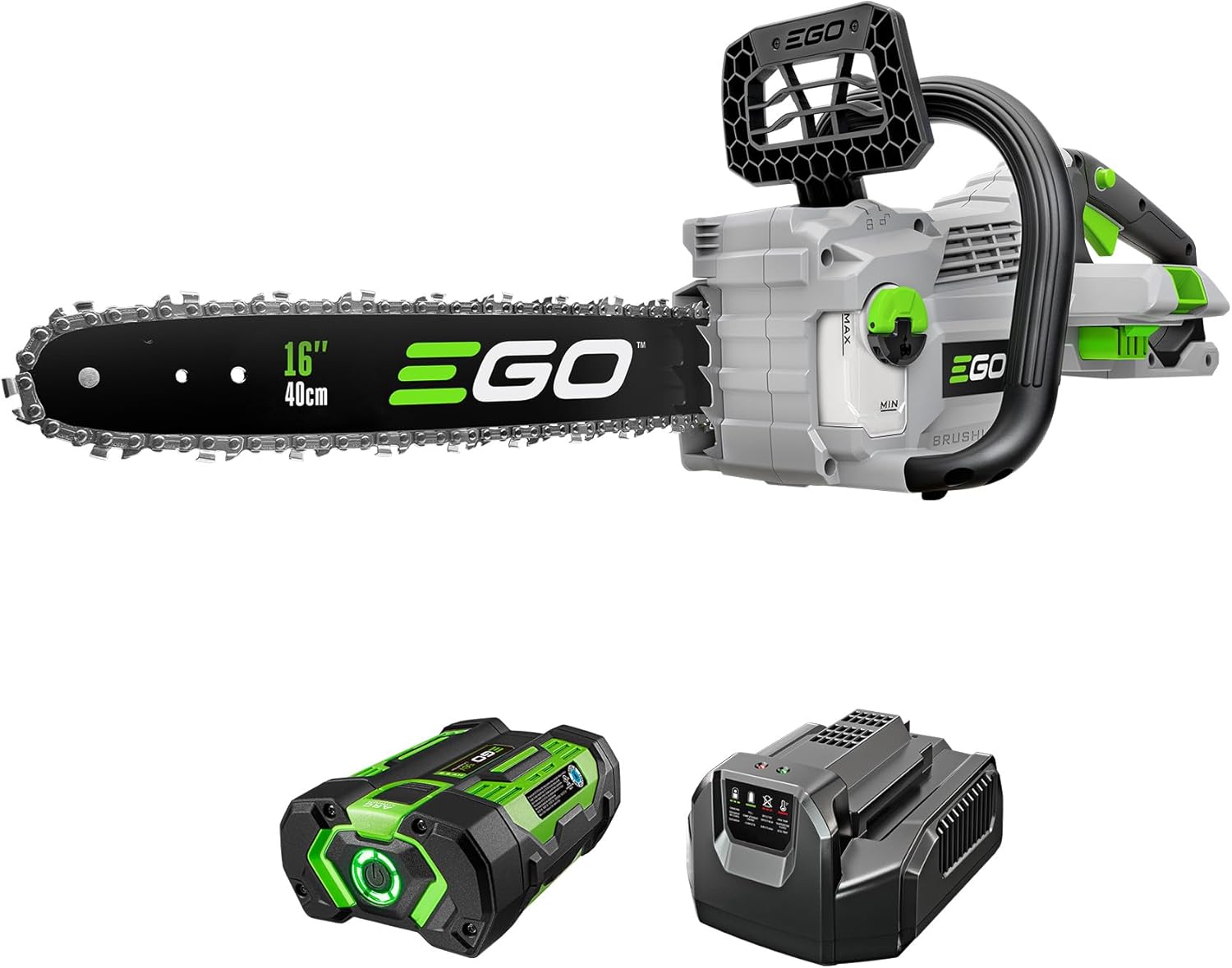
EGO POWER+ CS1611 16" Cordless Chainsaw with 56V 2.5Ah Battery and Charger
| Power Source | Battery Powered |
|---|---|
| Horsepower | 2.3 |
| Chain Length | 16 inches |
| Included Components | 2.5Ah Battery and Standard Charger |
| Chain Speed | 20 m/s |
The EGO POWER+ CS1611 is a battery-powered 16-inch chainsaw built to give prosumer-level cutting performance without gas. It uses a high-efficiency brushless motor rated as a 40CC equivalent and runs on the included 56V 2.5Ah ARC Lithium battery, which the manufacturer says delivers up to about 130 cuts through a 4×4 on a single charge. Notable features include a 20 m/s chain speed for efficient cuts, a tool-free chain-tensioning dial for quick on-the-job adjustments, automatic oiling with a spill-free reservoir, metal bucking spikes for secure cutting, and an IPX4 weather resistance rating. In real use this means quieter, low-maintenance operation compared with gas saws, fast setup between cuts, and enough runtime for routine property work like limb removal, small tree felling, and firewood prep. Limitations are battery runtime for very heavy or continuous commercial use and the saw’s 16-inch bar, which restricts maximum cut diameter compared with larger pro gas models.
Best for: Buyers wanting a low-maintenance, gas-free alternative that still delivers near-gas power for regular property maintenance, pruning, and medium-duty cutting tasks.
Less Ideal for: Users who need long uninterrupted runtime for commercial logging or must cut very large-diameter timber should consider larger gas or higher-capacity battery systems.
- Brushless motor with 40CC gas-equivalent power for strong cutting performance
- Includes 56V 2.5Ah battery and charger so it is ready to use out of the box
- Tool-free chain tensioning lets you adjust the chain quickly on site
- Automatic oiling with a spill-free reservoir keeps the chain lubricated during work
- IPX4 weather resistance and metal bucking spikes add durability and control in outdoor conditions
- 16-inch bar limits maximum cut diameter compared with larger pro chainsaws
- Runtime depends on battery capacity and may be insufficient for long, continuous heavy-duty jobs
Verdict: A ready-to-use cordless chainsaw that gives near-gas power and easy on-the-job adjustments, ideal for homeowners and pros doing regular medium-duty cutting.
SEESII 12-inch Cordless Chainsaw with Two 4.0Ah Batteries

| Power Source | Battery Powered |
|---|---|
| Horsepower | 1200 watts |
| Chain Speed | 34.8FT/S |
| Chain Length | 12 inches |
| Included Components | 2 × 4.0Ah batteries, charger, spare chain, gloves, goggles, blade cover, oil bottle, screwdriver |
The SEESII 12-inch cordless chainsaw is built for routine homeowner tasks like pruning, storm cleanup, and cutting small logs for firewood. Its 1200W brushless motor and up to ~39 ft/s chain speed deliver efficient cutting while brushless design reduces internal wear. The kit includes two 4.0Ah batteries that together offer roughly 50+ minutes of runtime and enough cuts through 4×4 wood to finish common jobs without constant recharging. Practical features that matter day-to-day include a 150 ml automatic oiler to keep the bar and chain lubricated, tool-assisted chain tensioning for easy maintenance, and dual safety protection with a chain brake and start lock. The saw is lighter and more maneuverable than gas models, and its cordless electric operation removes fuel mixing and exhaust. Limits to know: the 12-inch bar caps maximum log diameter, so it is not intended for heavy commercial felling, and real-world runtime will vary with cut type and user technique. For homeowners who value straightforward performance and lower upkeep, this is a capable cordless option.
Best for: Homeowners and garden keepers who want a low-maintenance, cordless saw for pruning, cutting firewood, and general yard cleanup and who prioritize practical runtime and easy upkeep.
Less Ideal for: Professionals or landowners who need to fell large trees or perform heavy continuous cutting should choose a larger bar or gas/pro-level model.
- Brushless 1200W motor for efficient cutting with less internal wear
- Two 4.0Ah batteries included to extend uninterrupted runtime for typical homeowner jobs
- 150 ml automatic oiling reduces manual lubrication and extends chain life
- Tool-assisted chain tensioning and included screwdriver make routine maintenance simple
- Built-in chain brake and safety lock add protection during operation
- 12-inch bar limits the maximum log diameter and heavy-duty felling capability
- Actual runtime and number of cuts depend on wood density and cutting technique
Verdict: A practical, low-upkeep cordless chainsaw that gives homeowners the runtime and convenience to handle pruning, storm cleanup, and small firewood jobs without gas or complex maintenance.
SENIX 18" Corded Electric Chainsaw (CSE15-M)

| Power Source | Corded Electric |
|---|---|
| Horsepower | 0.73 hp |
| Chain Length | 18 inches |
The SENIX 18" corded electric chainsaw is a straightforward, high-power tool for homeowners who need continuous cutting without battery downtime. It uses a 15-amp motor to deliver steady torque for felling small trees, cutting firewood, and heavy pruning, and because it plugs into a standard 120V outlet runtime is unlimited for long jobs. Practical touches include an automatic chain oiler with a visible oil window, tool-less chain tensioning, a handle-mounted trigger lockout and a kickback chain brake for safer operation. At about 11 pounds it is lighter than many gas models, which reduces fatigue during extended use, and the included scrench and bar cover make basic maintenance easier. Limitations are that being corded it requires a nearby outlet or heavy-duty extension cord and is not suited to remote jobs where gasoline or battery power would be required. Also the power is lower than mid-size gas saws, so the biggest hardwoods will need multiple passes or a larger machine.
Best for: Homeowners who want a powerful, low-maintenance 18" saw for regular yard work, storm cleanup, and firewood cutting without dealing with batteries or gas.
Less Ideal for: Landscapers or users who need cordless mobility for remote sites or who regularly cut very large trees should consider gas or higher-voltage battery models instead.
- 15-amp corded motor provides consistent, unlimited runtime for long projects
- Automatic chain lubrication with visible oil window reduces maintenance guesswork
- Tool-less chain tensioning and included scrench simplify setup and upkeep
- Built-in safety features including trigger lockout and kickback brake improve user protection
- Corded design limits use to areas with access to a heavy-duty extension or outlet
- Less peak cutting power than larger gas chainsaws for very large hardwoods
Verdict: If you want an affordable, powerful 18" saw that runs indefinitely for big yard jobs without batteries or gas, this corded SENIX model is a practical choice.
SEESII 12-Inch Cordless Brushless Chainsaw

| Power Source | Battery Powered |
|---|---|
| Horsepower | 1200 watts |
| Chain Length | 12 inches |
| Included Components | chainsaw |
The SEESII 12-inch cordless chainsaw is designed for homeowners and pros who need portable, high-power cutting without a generator. It pairs a 1200W brushless motor with two 4.0Ah batteries to deliver sustained cutting power for pruning, cutting storm debris, and working on small to medium logs. The tool-free chain tension system and automatic lubrication reduce downtime and routine maintenance, and the 60 mL oil tank helps keep the chain running smoothly during longer sessions. Because it is cordless and relatively lightweight for its class, it is easy to move around the yard or use at remote sites where cords are impractical. Important limits to note are the 12-inch bar, which constrains maximum log diameter compared with full-size saws, and battery reliance for very long jobs where alternating charged packs or a backup power source is needed. For straightforward woodcutting tasks this model balances cutting performance, convenience, and low maintenance.
Best for: Buyers who prioritize efficient, portable wood cutting for yard cleanup, pruning, and medium DIY projects and want a low-maintenance cordless saw they can move around the property easily.
Less Ideal for: Contractors or users who regularly need to fell large trees or process large-diameter logs should choose a full-size gas or professional electric chainsaw instead.
- 1200W brushless motor provides strong, efficient cutting power for hardwood and storm debris
- Two 4.0Ah batteries extend runtime for longer jobs and include a built-in charge indicator
- Automatic oiling with a 60 mL tank reduces frequent stops for lubrication
- Tool-free chain tensioning simplifies on-the-job adjustments
- Cordless, relatively lightweight design improves portability and use at remote sites
- 12-inch bar limits the maximum log diameter compared with larger professional chainsaws
- Runtime depends on battery swapping for extended heavy-duty cutting sessions
Verdict: A powerful, low-maintenance cordless 12-inch saw that maximizes portable cutting performance for homeowners and weekend woodworkers.
Choosing the Right Electric Chainsaw for Cutting Logs: Key Factors to Consider
Motor Power and Continuous Torque
Motor power drives how quickly an electric chainsaw will cut through large-diameter logs. Higher continuous torque prevents bogging when cutting green or knotty wood, so you spend less time stalling and re-positioning. For corded units, stable line voltage and motor cooling affect sustained cutting performance during long sessions. For battery models, battery discharge curve and motor efficiency determine how long peak power lasts under load.
When choosing, match motor capability to the typical log diameters you expect. Underpowering the saw leads to slow, dangerous cuts where the chain can bind, while oversized motors add unnecessary weight if you only split small rounds.
Bar Length and Construction
Bar length determines the maximum log diameter you can cut in a single pass and affects reach in awkward positions. Longer bars give more capability but add weight and change balance. Bar construction and rigidity matter because a flexible bar increases the chance of uneven cuts and binding in dense wood.
Consider the types of logs you handle most often. If you frequently cut rounds wider than the bar, you will need to flip and make double passes, which increases cutting time and risks. A solid, well-supported bar reduces deflection and improves cut consistency.
Chain Quality and Ease of Sharpening
A sharp, appropriately pitched chain cuts more efficiently and produces cleaner faces for stacking or splitting. Chain tooth geometry and material affect how long a cutter stays sharp when facing abrasive bark or soil. The ability to quickly tension and re-sharpen the chain in the field reduces downtime.
Look for chains with replaceable teeth profiles and clear tensioning systems. For battery models, spare chains or an easy re-tensioning mechanism matter because power loss compounds the effect of a dull chain, making the saw feel sluggish.
Safety Features and Kickback Reduction
Cutting logs exposes you to kickback risk, chain snags, and unexpected bar pinching. Functional safety features such as an effective chain brake, reduced-kickback chain profiles, inertia-activated stops, and hand guards meaningfully reduce injury risk. Vibration damping and low-kickback nose designs also help keep control during heavy cuts.
Evaluate how easy safety systems are to engage and whether they perform reliably under wet or dirty conditions. A saw that is safe to operate across common log-handling scenarios is worth a small tradeoff in speed.
Ergonomics, Weight, and Balance
Handling large logs requires a saw that feels balanced and comfortable for both short bursts and longer cutting sessions. Weight distribution influences how fatigued your arms and back become when making repetitive bucking cuts. Good handle placement and anti-vibration features let you maintain control and accuracy.
Consider whether you will be cutting overhead or on the ground and how often you will reposition heavy logs. A lighter saw reduces fatigue but may transmit more vibration; a heavier saw can be steadier but tiring over a full day of work.
Power Source Practicalities
Corded electric chainsaws offer consistent power but limit mobility and require safe extension cord management around logs and debris. Battery models provide portability but differ in how long they sustain cutting power as the pack depletes. Battery capacity, charge time, and compatibility with other tools can affect how practical a cordless saw is for extended log work.
Think about where you will be cutting logs most often. If access to mains power is impractical, factor in whether spare batteries or a rapid charging workflow fits your schedule. Also consider environmental factors such as wet conditions and how the saw's electrical protection is rated.
Matching Bar Length to Log Size and Cutting Technique
Selecting the right bar length is about matching the saw to the task rather than picking the longest bar available. If you mostly process rounds under the bar length, a shorter, lighter bar will speed handling and reduce fatigue. For larger logs that exceed the bar, plan for double-pass bucking or use a longer bar to make single, cleaner cuts.
Think about cutting technique too. If you often need to cut near stumps or into tight corners, a shorter bar improves maneuverability. For full-length rounds and milling prep, a longer, rigid bar gives reach and reduces the number of repositionings.
- Short bars increase control and reduce weight
- Long bars enable single-pass cuts on larger logs
- Bar rigidity reduces binding on dense wood
Corded Vs Battery: When Portability Beats Runtime
Corded saws give steady power for long sessions but require careful cord management and nearby power. They are best where you process many logs in one spot, such as near a woodpile or a workshop with an outdoor outlet. Battery saws let you move between downed trees and remote stacks but plan for battery swaps or lower cutting speed as packs deplete.
If you choose battery power, prioritize battery capacity and quick swapping. Carrying a charged spare can be the difference between finishing a cord of wood in a day and stopping halfway through.
- Corded units offer constant output for extended cutting
- Battery units provide freedom of movement and lighter weight
- Spare batteries or a charging plan are essential for large jobs
Maintenance Tips to Keep the Chain Cutting Well
Routine chain sharpening, correct tensioning, and keeping the bar groove free of debris keep cutting efficient and safer. Sharpen at the correct angle and depth for the chain type, and inspect drive links and sprockets for wear. A dull chain increases motor load and can cause early battery drain or overheating on corded models.
Also keep the bar oiled and check the automatic oiler function regularly. Clean saws of sawdust and sap buildup after long sessions to reduce corrosion and wear on moving parts.
- Sharpen chain at the factory-recommended angle
- Check and correct chain tension before each long cut
- Keep the bar groove and oil ports clean
Safety Practices for Bucking and Limbing Logs
Safe log cutting is as much about technique as equipment. Use wedges to prevent pinching on longer logs and plan your cuts to avoid binding the bar. Keep a secure footing and clear escape routes in case a log shifts. Wear appropriate PPE including eye protection, hearing protection for louder battery or corded motors, and chainsaw-rated gloves.
Position helpers out of the immediate cutting area and communicate cut plans. Regularly inspect the chain brake and kickback protection before starting work to ensure they engage quickly when needed.
- Use wedges to prevent bar pinching on long logs
- Maintain firm footing and clear escape paths
- Inspect safety systems before each session
How Environmental Conditions Affect Cutting Performance
Wet, frozen, or dirty wood changes cutting behavior. Wet wood gums the bar and chain and can accelerate dulling, while frozen wood can be harder and cause more kickback. Cold battery performance also drops in low temperatures, reducing runtime and peak power.
Anticipate these conditions by keeping spare chains, more frequent sharpening intervals, and planning for lower cutting rates in adverse weather. For repeated wet-wood jobs, choose chains and bars with corrosion-resistant coatings and check oiling more often.
- Expect faster dulling in abrasive or dirty bark
- Battery output reduces in cold weather
- Extra lubrication and corrosion resistance help in wet conditions
How We Chose the Best Electric Chainsaw for Cutting Logs
We focused on features and performance aspects that matter when cutting logs with an electric chainsaw. Primary evaluation criteria included continuous motor power and torque, because steady cutting force affects how quickly a saw feeds through dense or wet wood. Bar length and bar construction were assessed for reach and resistance to bending during long cuts. Chain quality and ease of sharpening were considered to judge how long a saw remains effective between maintenance sessions. Safety and control features such as chain brakes, kickback reduction, and vibration damping were weighed to reduce injury risk during heavy log work. Ergonomics and overall weight were evaluated because sustained cutting and repositioning large logs require a saw that is comfortable to hold and maneuver. For exclusions we removed lightweight garden trimmers and small pole saws that lack sufficient bar length or motor output for typical log sizes. Models intended solely for limbing rather than bucking were not considered. We prioritized saws whose specifications match common homefirewood and small-timber tasks and excluded specialty industrial units and gas-only machines.
FAQ
What bar length should I pick to cut firewood efficiently?
Bar length should match the largest log diameter you want to cut in a single pass. For typical home firewood, mid-length bars handle most rounds; longer bars are useful for big logs but add weight and reduce maneuverability.
Can battery electric chainsaws handle green or knotty logs?
Often they can, but success depends on battery size and motor torque. High-capacity battery packs and efficient motors maintain cutting speed better under load; smaller packs may slow or drain quickly when tackling dense wood.
How often should I sharpen the chain when cutting many logs?
It depends on wood type and dirt content, but many gardeners sharpen after several hours of continuous cutting or at the first sign of increased feed resistance. Sharpen more frequently when cutting dirty or sandy wood.
Are corded electric chainsaws safer than battery models?
Neither power source is inherently safer. Safety depends on features like chain brakes, kickback reduction, and operator technique. Cord management adds a hazard unique to corded saws, while battery packs can change weight distribution.
What maintenance keeps an electric chainsaw reliable for log work?
Regular chain sharpening and correct tension, clean bar groove and oil ports, inspection of the sprocket and drive links, and keeping lubricants topped up will extend service life. For battery saws, follow manufacturer guidance for battery care and storage.
Final Verdict
When choosing an electric chainsaw for cutting logs, match motor power and bar length to the typical diameters and species you will process. Prioritize chain quality and safety features because they directly affect cutting speed, control, and injury risk. Balance portability and runtime needs when deciding between corded and battery units. Focus on the tradeoffs: a longer, more powerful saw makes single-pass cuts on large logs but costs more in weight and handling; a lighter model improves maneuverability but may require additional battery capacity or more passes. Use the criteria in this guide to pick the saw that fits your log sizes, work location, and maintenance comfort level.
