

Note: This article contains affiliate links. If you click on these links and make a purchase, I may earn a small commission at no extra cost to you. This helps support my research and content. Read my full affiliate disclosure here.
If you grow black eyed susans, the right fertilizer can mean fuller summer blooms, stronger stems, and better resilience through heat and drought. These native perennials do not need heavy feeding, but targeted nutrition at the right time will reward you with longer bloom windows and healthier foliage. This guide covers seven top fertilizer options suited for black eyed susans, shortlisted for garden practicality. We evaluate nutrient balance, delivery method, and ease of use so you can pick a product that matches your soil, time, and maintenance style.
Top Picks at a Glance
| Best Overall The best all-around choice for most situations | Miracle-Gro Water Soluble Bloom Booster Flower Food, 10-52-10, 1 lb |  |
| Best Quality Built to a higher standard if you want something more solid | FoxFarm Tiger Bloom Liquid Plant Food (1 pint) |  |
| Best Value The sweet spot between price and what you get | Osmocote Smart-Release Plant Food Flower & Vegetable, 1 lb. |  |
| Best Budget The cheapest option that still gets the job done reliably | Miracle-Gro Pour & Feed Singles Ready-to-Use Plant Food |  |
| Highest Rated A top-rated pick with lots of positive feedback | Miracle-Gro Water Soluble All Purpose Plant Food, 12.5 lb |  |
| Most Popular A crowd favorite that many people choose with confidence | Miracle-Gro Water Soluble All Purpose Plant Food, 1.5 lb |  |
| Best Seller A high-volume bestseller chosen again and again | Miracle-Gro Water Soluble All Purpose Plant Food, 3 lb |  |
Miracle-Gro Water Soluble Bloom Booster Flower Food, 10-52-10, 1 lb

| Item Form | Liquid |
|---|---|
| Application Method | Water Soluble |
| Coverage | 500 square feet |
| Target Species | all blooming plants |
| Mixing Ratio | 1 tablespoon/gallon (1.5 tsp for indoor plants) |
This Miracle-Gro bloom booster is a water-soluble plant food designed for flowering annuals and perennials, and it is typically mixed into a watering can or used with a garden feeder. The 10-52-10 formula supplies a high phosphorus dose aimed at increasing bud set and flower production, and it starts working quickly through root and foliar feeding when applied as directed. Practical features include a simple mixing ratio (1 tablespoon per gallon for outdoor use, reduced rate for indoor plants) and compatibility with the Miracle-Gro garden feeder for easy coverage up to about 500 square feet per refill. For gardeners focused on colorful displays, the concentrated phosphorus and repeat feeding schedule (every 7 to 14 days during bloom) deliver noticeably fuller flower shows. Limitations are that it is specifically a bloom booster rather than an all-purpose fertilizer and should be used only during bud set and bloom to avoid nutrient imbalance; following label rates is important to prevent overfeeding. For basic container or bedding displays, it is an easy-to-use option that targets bloom performance without complicated application steps.
Best for: Gardeners who want an affordable, straightforward booster to increase flower production on annuals and container displays and who plan to feed regularly during the bloom period.
Less Ideal for: Those seeking an all-in-one, season-long fertilizer or a slow-release product for hands-off maintenance should look elsewhere.
- High phosphorus 10-52-10 formula to promote more blooms and better bud set
- Water-soluble for quick uptake and easy mixing in a watering can or garden feeder
- Clear mixing instructions with lower indoor rate to reduce risk of burning when used as directed
- Covers a substantial area per feeder refill, useful for beds and multiple containers
- Focused on bloom boosting rather than providing a balanced, all-season nutrient program
Verdict: If you want an inexpensive, easy-to-use booster that reliably increases blooms on annuals and containers, this is a strong, no-frills choice.
FoxFarm Tiger Bloom Liquid Plant Food (1 pint)
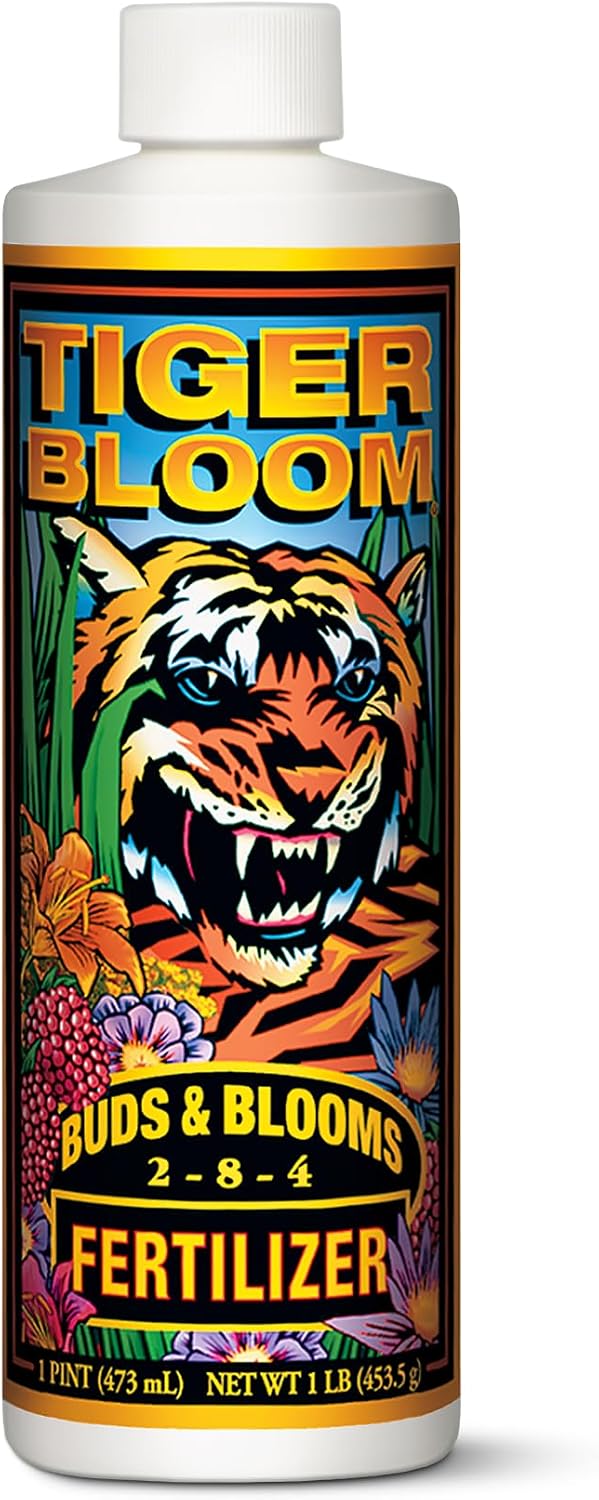
| Item Form | Liquid |
|---|---|
| Specific Uses For Product | Hydroponic |
| Application Method | Watering; Foliar spraying |
| Target Species | Flowering Plants |
| Mixing Ratio | 1:200 or 1:300 |
Tiger Bloom is a liquid, high-phosphorus fertilizer designed to push plants into a strong flowering and fruiting phase. You mix a small amount into the irrigation water or use it as a foliar spray and apply from first signs of flowering through harvest. The 2-8-4 formula and included micronutrients support bud set and larger blooms, and the concentrate mixes at 1:200 to 1:300 for routine feeding or 2 to 4 teaspoons per gallon for heavier feeding. It works in both soil and hydroponic setups and is formulated for quick nutrient uptake and stable micronutrient availability during storage. Practical benefits include flexible application methods, suitability for intensive flowering cycles, and a small bottle that lasts when used at recommended dilutions. Important limitations are that it is bloom-focused rather than an all-purpose feed so it may not meet vegetative needs, and the phosphorus content means users near waterways should follow local regulations to avoid runoff issues.
Best for: Serious growers who prioritize maximizing flower and bloom performance and want a concentrated, fast-acting bloom booster for soil or hydroponic environments.
Less Ideal for: Casual gardeners seeking a single all-purpose fertilizer for every growth stage or those managing turf or non-flowering lawns where phosphorus restrictions apply.
- High phosphorus NPK (2-8-4) concentrated for stronger bud development
- Works in soil and hydroponic systems for versatile use
- Liquid concentrate mixes easily for foliar or watering applications
- Formulated for quick nutrient uptake and stable micronutrient availability
- Focused on flowering so it is not a balanced all-stage fertilizer
- Contains phosphorus which may be restricted near waterways
Verdict: Choose Tiger Bloom when you need a concentrated, fast-acting bloom booster to maximize flower and fruit production.
Osmocote Smart-Release Plant Food Flower & Vegetable, 1 lb.

| Item Form | Granules |
|---|---|
| Specific Uses For Product | Root Development |
| Application Method | Mix into soil |
| Target Species | vegetables and perennials |
| Unit Count | 16 Ounce |
Osmocote Smart-Release Flower & Vegetable is a granular, slow-release fertilizer with a balanced 14-14-14 NPK designed to support both root development and vigorous top growth. Typical use is mixing the granules into the top 1–3 inches of soil or incorporating into raised-bed mix before planting; one pound covers about 40 sq ft and feeds for up to four months based on soil temperature. The included applicator and mistake-proof slow-release formulation make it easy to apply without frequent refeeding, and the product is intended for edible gardens, perennials, and ornamentals. For rhubarb specifically, the balanced nutrients support leafy growth and steady root development without sharp spikes of soluble fertilizer. Limitations are that this is a general-purpose, season-long feed rather than a rhubarb-specific formula and nutrient release depends on soil temperature, so uptake can be slower in cool conditions early in the season.
Best for: Gardeners who want a low-maintenance, season-long feed for vegetable beds and perennials and prefer a straightforward, mistake-resistant product that reduces repeat applications.
Less Ideal for: Growers seeking a specialty fertilizer formulated specifically for rhubarb or those who need quick-release nutrient boosts during cool weather should consider alternative products.
- Balanced 14-14-14 NPK supports both roots and leafy growth
- Slow-release formula feeds up to four months, reducing reapplications
- Granular form and included applicator make soil mixing straightforward
- Mistake-proof release that is unlikely to burn plants if slightly overapplied
- Release rate is temperature dependent and may be slow in cool soils
- Not tailored specifically to rhubarb or high-potassium needs that some growers prefer
Verdict: A simple, low-maintenance slow-release fertilizer that supplies balanced nutrients for a full season, ideal for gardeners wanting steady growth without frequent feeding.
Miracle-Gro Pour & Feed Singles Ready-to-Use Plant Food

| Item Form | Liquid |
|---|---|
| Application Method | Pour |
| Coverage | Medium |
| Unit Count | 2 Ounce |
| Specific Uses For Product | Plant Food |
Miracle-Gro Pour & Feed Singles are single-use, pre-measured liquid doses that you snap open and pour onto the soil of container plants, so there is no mixing, measuring, or long-term storage. Each 2-ounce single is formulated for potted plants and is intended to feed 12 to 18-inch containers every 10 to 14 days, making it convenient for quick top-ups on vegetables grown in pots. The cap-measure instructions and pour application simplify regular feeding, and the ready-to-use format reduces the chance of over- or under-dosing. Practically, these work well for growers who rotate several small vegetable containers or need an easy solution when juggling many plants. Limitations are that the singles are sized for medium pots only, so very small or very large containers may need adjusted amounts or additional applications, and the format creates more single-use packaging than bulk concentrates. For gardeners prioritizing simplicity and predictable dosing, the product streamlines weekly feeding for container vegetables, but those managing large numbers of pots may prefer a concentrated liquid or granular option for lower per-application cost and less waste.
Best for: Ideal for hobby gardeners growing a few container vegetables who want a no-fuss, predictable feeding routine and value convenience over lowest cost.
Less Ideal for: Not the best choice for producers managing many pots or those focused on minimizing packaging waste or per-application cost.
- Ready-to-use pre-measured singles eliminate mixing and measuring
- Simple pour application designed for container plants
- Labels recommend a clear 10 to 14 day feeding schedule for consistency
- Portable single doses are convenient for spot feeding or travel
- Singles are sized for 12–18 inch pots and may not match very small or very large containers
- Single-use packaging generates more waste than concentrated formulas
Verdict: An easy, no-mix feeding solution that makes consistent fertilizing of medium container vegetables fast and foolproof.
Miracle-Gro Water Soluble All Purpose Plant Food, 12.5 lb

| Item Form | Powder |
|---|---|
| Specific Uses For Product | Plant Food |
| Coverage | general purpose, suitable for various plants |
| Mixing Ratio | 1 tablespoon per gallon of water |
Miracle‑Gro Water Soluble All Purpose is a powder fertilizer designed to dissolve in water and deliver fast nutrients to indoor and outdoor plants. Gardeners mix the recommended scoop with a watering can or use a compatible garden feeder to apply directly to the soil around roots; the product gives routine feedings every 7 to 14 days outdoors or every 2 weeks for houseplants. Notable features include an NPK of 24‑8‑16 for strong vegetative growth, a quoted coverage of about 5,000 sq ft from a 12.5 lb container, and an included scoop with separate measuring ends for indoor and outdoor rates. In practice this means quick uptake for leafy growth and an easy, repeatable dosing routine for reliability across container and in‑ground Clusia specimens. Limitations are that it is a general‑purpose formula rather than a Clusia‑specific mix and frequent applications are required during the growing season, so you will need to follow the label closely to avoid overfeeding.
Best for: Buyers who want a dependable, easy‑to‑measure fertilizer to keep Clusia healthy with consistent, repeatable feedings and straightforward application routines.
Less Ideal for: Growers seeking a slow‑release or custom‑formulated Clusia fertilizer or those who prefer lower‑frequency, hands‑off feeding strategies.
- Fast‑acting water‑soluble formula for near‑instant nutrient availability
- Simple mixing ratios and included scoop make dosing consistent
- Large 12.5 lb container covers a lot of garden area for routine feedings
- Suitable for both container and in‑ground use so it works with potted Clusia and landscape plantings
- General all‑purpose NPK may not match specialized nutrient needs of Clusia at every growth stage
- Requires regular applications during the season rather than a slow‑release schedule
Verdict: A reliable, easy‑to‑mix water‑soluble fertilizer that delivers fast, consistent feedings for Clusia in both pots and landscape settings.
Miracle-Gro Water Soluble All Purpose Plant Food, 1.5 lb

| Item Form | Powder |
|---|---|
| Application Method | Watering Can |
| Target Species | For all flowers, vegetables, trees, shrubs and houseplants |
| Mixing Ratio | 24-8-16 |
Miracle-Gro Water Soluble All Purpose Plant Food is a powder concentrate you mix with water to give a quick nutrient boost to flowers, vegetables, houseplants, shrubs and trees. It is typically dissolved in a watering can or used with a compatible garden feeder to soak soil at the base of plants, delivering nitrogen-heavy nutrition that shows effects faster than granular fertilizers. Notable features include an easy scooping method for indoor and outdoor dosing, compatibility with containers and in-ground planting, and clear directions for feeding every one to two weeks. In practice this makes the product a convenient option when you want visible growth and greener foliage quickly, and the 1.5 lb container covers roughly 600 sq. ft. Important limitations are that it is a fast-release, high-nitrogen formula best used as a regular quick feed rather than a long-term slow-release solution, and it requires careful measuring to avoid overfeeding. For routine maintenance combine with good watering and follow the label to avoid nutrient imbalance.
Best for: Buyers who prefer proven, easy-to-use feeding routines and want noticeable growth quickly for a variety of garden and houseplants, guided by established usage directions and broad user experience.
Less Ideal for: Gardeners seeking a single, long-term slow-release solution or those who prefer organic or low-nitrogen fertilizers for sensitive plantings should consider alternative products.
- Water-soluble powder starts working quickly at the roots when mixed and applied
- Clear, simple dosing for indoor and outdoor use with included scoop guidance
- Suitable for a wide range of plants including vegetables, flowers, shrubs and houseplants
- Covers a large area from a small container (about 600 sq. ft. per 1.5 lb)
- Fast-release formula means benefits are short-term compared with slow-release granular fertilizers
- Requires precise measuring and regular reapplication to avoid overfeeding
Verdict: A reliable, fast-acting water-soluble plant food for gardeners who want easy, repeatable feeding and quick visible results.
Miracle-Gro Water Soluble All Purpose Plant Food, 3 lb

| Item Form | Powder |
|---|---|
| Application Method | Mix with water in a watering can |
| Fertilizer Analysis (N‑P‑K) | 24-8-16 |
| Unit Count | 48 Ounce |
| Coverage | Feeds approximately 1,200 sq. ft. |
Miracle‑Gro Water Soluble All Purpose Plant Food is a powdered NPK 24‑8‑16 formula that dissolves in water to give plants a quick nutrient boost. You mix measured scoops into a watering can and apply to the soil at the base of plants every 7–14 days for outdoor use or every 14 days for houseplants. Notable features include a high nitrogen content for leafy growth, compatibility with containers and in‑ground beds, and guidance for use with a Miracle‑Gro Garden Feeder for larger areas. In practical terms this is a fast‑acting feed that encourages bigger, greener foliage and works well in regular maintenance of perennials like hostas. Limitations are that it is a fast‑release fertilizer rather than a slow‑release option, so it requires regular reapplication and careful measuring to avoid overfeeding. Also, the 24‑8‑16 balance is geared toward vegetative growth, so it is not optimized if you want to prioritize flowering or bloom boosting.
Best for: Buyers who want a reliable, fast‑acting feed to maintain lush, leafy perennials and container plants and who value proven products with broad user endorsement.
Less Ideal for: Gardeners seeking a single, long‑lasting granular fertilizer or a bloom‑focused formula should consider alternative slow‑release or high‑phosphorus products.
- Water‑soluble powder mixes easily for quick uptake by roots
- High nitrogen formula promotes robust leafy growth ideal for shade plants
- Clear mixing and application instructions for both indoor and outdoor use
- Suitable for containers and in‑ground gardens and compatible with garden feeders
- Requires frequent applications so it is not a low‑maintenance, slow‑release option
- High nitrogen ratio is less suitable when the primary goal is more flowers than foliage
Verdict: A fast‑acting, water‑soluble fertilizer that reliably produces bigger, greener hosta leaves when used as directed.
Choosing the Right Fertilizer for Black Eyed Susans: Key Factors to Consider
Nutrient Ratio and Flowering Needs
Black eyed susans respond best to balanced feeding that supports blooms without encouraging leggy growth. A fertilizer with a modest nitrogen level paired with adequate phosphorus and potassium encourages bud set and strong stems. Too much nitrogen early in the season can produce lush foliage at the expense of flowers, while too little phosphorus can limit bloom production.
Look for products that specify their N-P-K numbers and explain timing for bloom support. Granular slow-release formulas with a moderate middle number are often a good fit for containers and borders where you want steady flowering rather than a single flush.
Release Profile and Frequency
How a fertilizer releases nutrients will determine how often you need to fertilize and your risk of overfeeding. Slow-release granular fertilizers and coated pellets provide a steady supply over weeks to months, which reduces the chance of burning roots and produces consistent blooms. Water-soluble feeds deliver a rapid nutrient boost ideal for quick recovery or when you need to stimulate blooming, but they require more frequent applications.
Match the release profile to your gardening routine: choose slow-release for low-maintenance beds and soluble feeds for container or potted plants where nutrients wash out faster. Check label guidance on seasons and maximum application rates to avoid cumulative excess.
Soil Health and Organic Content
Fertilizers that contribute to soil life help black eyed susans thrive year after year. Organic inputs such as composted manures, bone meal, or kelp not only supply nutrients but also feed microbes that improve soil structure and nutrient cycling. Over time, building organic matter reduces reliance on frequent feeding and improves drought resilience.
Synthetic granular blends can supply precise nutrients quickly but may not improve long-term soil biology. Consider alternating or combining organic amendments with targeted fertilizers to balance immediate bloom needs and long-term bed health.
Salt Content and Burn Potential
Some fertilizers contain high soluble salts that can harm shallow-rooted perennials or container plants if applied incorrectly. Salt buildup in pots or heavy applications in poorly drained beds can cause leaf-tip browning, stunted growth, or root injury. Products that list low salt index or slow-release formulations typically present lower burn risk.
Flush container soil periodically and follow label rates to avoid salt accumulation. If you notice leaf scorch after feeding, reduce concentration and increase irrigation to leach excess salts.
Application Method and Practicality
Gardeners have different time and equipment constraints, so application method matters. Granular top-dressings and spikes are quick and low-effort for larger beds. Water-soluble concentrates and liquid feeds allow precise control and are convenient for container-grown plants. Foliar sprays can supply trace elements quickly but are not a substitute for root feeding.
Choose a form that matches how you garden. If you prefer a set-and-forget approach, select a controlled-release granular product. If you tend to hand-water frequently or manage many pots, a soluble feed will integrate easily into your routine.
Timing and Seasonal Considerations
The timing of applications affects bloom timing and plant hardiness. A light spring feeding as growth begins gives black eyed susans a nutrient foundation. Avoid heavy applications late in the season that encourage tender growth before frost. Some gardeners apply a bloom-boosting feed at the first flower set to extend flowering, while others top-dress with organic matter in fall to support winter recovery.
Follow season-specific guidance on product labels and adjust for local climate. In hot, dry summers you may need more frequent, lighter applications, especially in containers.
Choosing Between Organic and Synthetic Feeds
Organic fertilizers release nutrients more slowly and often improve soil structure and microbial activity. They are a good match for gardeners who want to build long-term bed health and reduce chemical inputs.
Synthetic fertilizers deliver predictable nutrient ratios and faster effects when you need to correct a deficiency or boost blooms. They are useful for timed feeding but should be used carefully to avoid salt buildup.
- Organic: improves soil life, usually slower acting
- Synthetic: precise N-P-K, faster response
- Consider alternating or combining to balance quick results and soil improvement
Feeding Schedule for Black Eyed Susans
A simple approach is a light feeding in early spring when shoots emerge, followed by a single bloom-time boost if needed. Many gardeners find that one or two well-timed applications are sufficient for vigorous flowering.
Container-grown plants often need more frequent, lighter feedings because nutrients leach with each watering. Use a water-soluble feed every two to four weeks during the growing season for containers, and a slow-release granular product for in-ground beds.
- Spring: light foundational feeding
- Bloom period: optional targeted boost
- Late season: avoid heavy feeding near dormancy
Adjusting Nutrition for Soil Tests
A soil test provides the clearest picture of nutrient levels and pH. If your soil is deficient in phosphorus or potassium, choose a product that addresses those specific needs rather than a generic high-nitrogen mix.
pH influences nutrient availability. Most black eyed susans prefer neutral to slightly acidic soil. If pH is outside the ideal range, correct it before relying solely on fertilizer to fix nutrient issues.
- Test before major amendments
- Match fertilizer to identified deficiencies
- Correct pH to improve nutrient uptake
Practical Tips to Avoid Overfeeding
Follow label rates and err on the side of underfeeding with perennials that are naturally low-maintenance. More is not always better and can lead to weaker plants or fewer blooms.
Water in granular feeds thoroughly to move nutrients into the root zone, and avoid applying dry granules directly onto crowns or stems. For containers, occasional soil replacement or top-dressing with compost reduces the need for heavy fertilization.
- Stick to recommended rates
- Water after application to reduce burn risk
- Use compost to supplement nutrients gently
Supporting Pollinators and Beneficials
Black eyed susans are valuable for pollinators, so choose fertilizers and application timings that minimize harm to bees and other beneficial insects. Avoid foliar sprays during active bloom and apply granular products well before flowers open whenever possible.
Organic options that enhance soil life can also support a healthy insect ecosystem by fostering diverse microbial communities and flower longevity.
- Avoid foliar feed on open blooms
- Apply granular feeds before peak flowering when possible
- Prefer soil-friendly products that encourage biodiversity
How We Chose the Best Fertilizer for Black Eyed Susans
We focused on attributes that directly affect the health and flowering of black eyed susans in home gardens. Key evaluation criteria included nutrient ratio and slow-release characteristics, because correct N-P-K balance and controlled release reduce leaf scorch and encourage consistent blooms. Delivery method and application frequency were examined to reflect common gardener routines across containers, borders, and wildflower meadows. Soil friendliness and organic content mattered for long-term bed health and beneficial soil life. Ease of use and clear labeling were included so gardeners can follow directions without guesswork. We excluded products formulated strictly for lawns, acid-loving plants, or trees because their nutrient profiles and application rates are inappropriate for Rudbeckia culture. Products that required professional equipment or specialty licensing for application were also excluded. Final selections favored fertilizers with track records for supporting perennials, transparent ingredient lists, and predictable release behavior.
FAQ
How often should I fertilize black eyed susans in containers?
Containers lose nutrients faster, so a light water-soluble feed every two to four weeks during the growing season is common. Use weaker concentrations than the label maximum and flush pots occasionally to prevent salt buildup.
Can I use a general-purpose lawn fertilizer on black eyed susans?
Lawn fertilizers often have high nitrogen ratios that can encourage foliage instead of blooms. It is better to choose a feed formulated for flowering perennials or adjust application rates and timing to avoid excessive vegetative growth.
Will feeding increase how long black eyed susans bloom?
Appropriate feeding, especially providing phosphorus and potassium at bud set, can encourage more sustained and abundant flowering. However, genetics and environmental factors like sunlight and water also strongly influence bloom duration.
Are organic fertilizers sufficient for vigorous blooms?
Organic fertilizers can support strong blooms, particularly over time as they improve soil health. For a quicker bloom response some gardeners supplement organics with a targeted, low-rate soluble feed during flowering.
What signs indicate I might be overfeeding?
Signs include excessive lush, floppy foliage, leaf tip burn, reduced flowering, or brown edges on leaves. If you suspect overfeeding, cut back applications, water well to leach salts, and consider a soil test.
Final Verdict
Choose a fertilizer based on how you grow black eyed susans and how much maintenance you want. Prioritize a nutrient ratio that supports blooms rather than excessive leafy growth, and pick a release profile that fits your watering and care routine. Balance short-term bloom needs with long-term soil health by combining targeted feeds with organic amendments when appropriate. With attention to timing, application rates, and soil condition, you can extend flowering, reduce stress, and keep plants resilient season after season. Focus on matching form and timing to your garden situation to choose confidently.
