

Note: This article contains affiliate links. If you click on these links and make a purchase, I may earn a small commission at no extra cost to you. This helps support my research and content. Read my full affiliate disclosure here.
If you want more abundant, longer-lasting bougainvillea blooms, the right fertilizer makes a visible difference in bract production and vine vigor. Bougainvillea responds best to formulas that support flowering rather than just leafy growth, and different products suit potted plants, espaliered vines, and landscape specimens differently. This guide shortlists seven top fertilizers for bougainvillea to flower and explains how each type performs in typical garden conditions. We evaluated options with an eye to nutrient balance, ease of use, and how quickly gardeners can expect to see more blooms. Read on to match a fertilizer style to your planting situation and flowering goals.
Top Picks at a Glance
| Best Overall The best all-around choice for most situations | Jack's Classic Blossom Booster Water‑Soluble Fertilizer 10-30-20, 8 oz |  |
| Best Quality Built to a higher standard if you want something more solid | Nelson Plant Food NutriStar Bougainvillea Granular Fertilizer (17-7-10) |  |
| Best Value The sweet spot between price and what you get | FoxFarm Big Bloom Liquid Plant Food, 16 fl oz |  |
| Best Budget The cheapest option that still gets the job done reliably | RAINFLOW 10-30-20 Blossom Booster Water-Soluble Fertilizer (11.28 oz) |  |
| Highest Rated A top-rated pick with lots of positive feedback | Miracle-Gro Water Soluble Bloom Booster Flower Food, 10-52-10, 1 lb |  |
| Most Popular A crowd favorite that many people choose with confidence | TPS NUTRIENTS Bougainvillea Liquid Fertilizer, 8 oz |  |
| Best Seller A high-volume bestseller chosen again and again | Miracle-Gro Water Soluble Bloom Booster Flower Food, 5.5 lb |  |
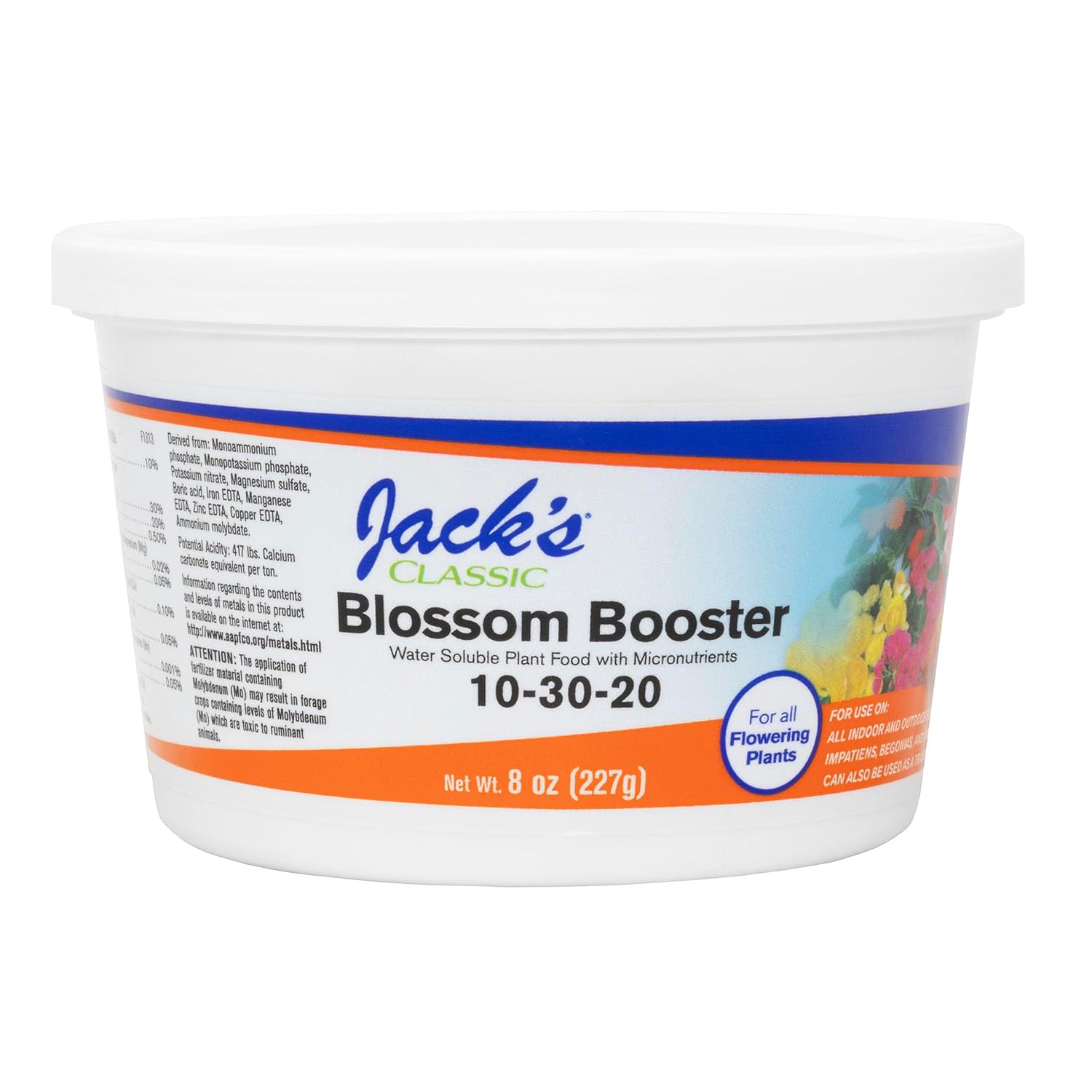
Jack's Classic Blossom Booster Water‑Soluble Fertilizer 10-30-20, 8 oz
| Item Form | Powder |
|---|---|
| Mixing Ratio | 10-30-20 |
| Application Method | watering or spraying on leaves |
| Target Species | flowering plants |
| Unit Count | 8 Ounce |
Jack's Classic Blossom Booster is a concentrated, water‑soluble powder designed to increase bloom production and color in flowering plants. You mix the powder with water using the included measuring spoon, then apply as a soil drench or foliar spray depending on your routine. The 10-30-20 formula supplies high phosphorus to encourage flower set while supplying micronutrients that support overall plant health. Because it is a powder you can make multiple gallons of feed from a single tub, which is convenient for regular feeding or for treating several bougainvillea plants. Practical benefits include flexible application, easy measuring, and consistent soluble nutrients that are suitable for outdoor containers, hanging baskets, and garden beds. Limitations are that it is a concentrated chemical fertilizer so it requires careful measuring and regular monitoring of plant response and soil conditions, and it does not include specific instructions tailored to bougainvillea varieties or soil pH adjustments.
Best for: Gardeners who want a straightforward, flower‑focused fertilizer they can mix to feed multiple outdoor flowering plants and containers on a regular schedule.
Less Ideal for: Growers seeking organic or slow‑release options or those who prefer a ready‑to‑use liquid formulation without measuring and mixing.
- High phosphorus 10-30-20 formulation targeted to boost flowering and fruit set
- Water-soluble powder stretches a small tub into many gallons of feed
- Includes micronutrients to support overall plant health
- Can be applied as a soil drench or foliar spray for flexible feeding routines
- Concentrated powder requires accurate measuring and mixing to avoid overfeeding
- No product guidance specific to bougainvillea or soil pH management
Verdict: Use this high‑phosphorus, water‑soluble powder when you want a concentrated, easy‑to-mix fertilizer to promote bigger, more plentiful blooms on bougainvillea and other flowering plants.
Nelson Plant Food NutriStar Bougainvillea Granular Fertilizer (17-7-10)

| Item Form | Granules |
|---|---|
| Mixing Ratio | 17:7:10 |
| Target Species | Flowers |
| Coverage | Medium |
Nelson Plant Food NutriStar Bougainvillea is a granular, slow-release fertilizer designed to encourage bigger, more frequent blooms on bougainvillea and similar flowering vines. You apply the dry granules to the soil surface of potted, hanging, or in-ground plants and feed every 14 days until blooming, then reduce to monthly applications for maintenance. The 17-7-10 formula includes four nitrogen sources plus epsom salt, sulfur, and gypsum to acidify soil slightly and improve root-zone structure, which helps color intensity and sustained bloom production. As a performance-oriented choice this product provides concentrated nutrients in a low-mess format and supports extended feeding so you do not need frequent liquid applications. Practical limitations are that it is a general granular feed rather than a tailored foliar or bloom-boost foliar spray, and users must follow the schedule to avoid overfeeding; handling precautions are also advised. For gardeners who want an easy, repeatable program to maximize flowering, this is a straightforward option.
Best for: Gardeners focused on maximizing bloom performance who prefer a concentrated, low-maintenance granular program for bougainvillea and other flowering vines.
Less Ideal for: Growers seeking an immediate foliar feed or those who want a custom micronutrient blend for non-vine specialty plants should consider other options.
- 17-7-10 slow-release formula formulated specifically for flowering vines to encourage larger and more frequent blooms
- Includes sulfur, gypsum, and epsom salt to help acidify soil and improve root-zone structure
- Granular form is low-mess and easy to apply to hanging, potted, or in-ground plants
- Extended feeding schedule reduces how often you need to fertilize once established
- Not a foliar or liquid bloom booster so effects are soil-mediated and may act more slowly
- Requires adherence to the feeding schedule to avoid under- or overfeeding
Verdict: A performance-focused slow-release granular fertilizer that simplifies feeding while boosting bloom size and frequency on bougainvillea and other flowering vines.
FoxFarm Big Bloom Liquid Plant Food, 16 fl oz

| Item Form | Liquid |
|---|---|
| Specific Uses For Product | Organic |
| Application Method | watering can, sprayer, or drip system |
| Unit Count | 16 Fluid Ounces |
| Mixing Ratio | 4 |
Big Bloom is a ready-to-mix liquid plant food intended for flowering and fruiting plants; you dilute 4 tablespoons per gallon of water and apply with a watering can, sprayer, or through drip systems. The formula centers on natural inputs such as bat guano and earthworm castings and is OMRI listed for organic gardening, so it supplies readily available nutrients that can boost blooms and help struggling plants recover quickly. Because it is a low-NPK, bloom-focused concentrate it is useful through multiple growth stages without overwhelming foliage with high nitrogen. Practical benefits include easy integration into existing irrigation, fast uptake for visible response, and suitability for organic beds, containers, and fruiting ornamentals. Important limits are that it contains phosphorus, which some local regulations restrict for turf or lawns, and the small 16 fl oz bottle means frequent refills for larger plantings. Users should follow dilution guidance and local rules to avoid runoff issues.
Best for: Buyers focused on maximizing blooms and fruit on ornamentals, container plants, and small fruiting crops who prefer organic, fast-acting feeding and want a product that fits existing watering systems.
Less Ideal for: People managing large turf areas, large-scale vegetable plots, or those who need a high-nitrogen general-purpose fertilizer should look for formulations designed specifically for those uses.
- Organic certified and OMRI listed, suitable for certified organic gardens
- Natural nutrient sources (bat guano and earthworm castings) that support flowering and fruit set
- Versatile application: watering can, sprayer, hose-end, or drip irrigation compatible
- Low-NPK bloom-focused formula that can be used throughout flowering stages without excessive foliage growth
- Contains phosphorus, which may be restricted by local regulations for some lawn or turf applications
- Smaller 16 fl oz bottle may require frequent repurchasing for medium to large gardens
Verdict: Choose Big Bloom if you want an OMRI-listed, easy-to-use liquid fertilizer that reliably boosts flowering and fruiting in small to medium organic gardens.
RAINFLOW 10-30-20 Blossom Booster Water-Soluble Fertilizer (11.28 oz)

| Item Form | Granules |
|---|---|
| Application Method | Water-soluble |
| Target Species | Flowers |
| Unit Count | 11.28 Ounce |
This RAINFLOW 10-30-20 Blossom Booster is a small, water-soluble granule fertilizer formulated to push bloom production and enhance flower color for azaleas, hydrangeas, bougainvillea and similar ornamentals. You mix measured granules into water and apply to soil or potted plants, where the high phosphorus ratio supports bud set and visible flowering without complex application. The blue granules dissolve quickly for fast absorption, making it handy for seasonal feeding or targeted bloom boosts before shows or heavy flowering periods. Its compact 11.28 ounce package is convenient for home gardeners and greenhouse users who need a single-season supply or want to test a bloom-specific feed. Expect noticeably stronger bloom development when used during the flowering stage, but you will need to reapply according to plant needs since the small unit covers limited area compared with larger commercial bags. Also it is focused on flowering benefits rather than balanced all-season nutrition, so pair it with general-purpose feeds for vegetative growth if needed.
Best for: Home gardeners on a budget who want an easy-to-mix bloom booster for potted plants, beds, or seasonal flowering displays and who prioritize visible flower production over all-purpose feeding.
Less Ideal for: Large-scale gardeners or those seeking a single all-purpose feed for both foliage and long-term soil building should consider bulk or balanced fertilizers instead.
- High phosphorus NPK (10-30-20) targets bud set and stronger blooms
- Water-soluble granules dissolve quickly for fast nutrient uptake
- Compact 11.28 oz package is easy to store and carry for home gardeners
- Blue granules make measuring and mixing more straightforward
- Small unit size provides limited coverage for larger gardens
- Formulation emphasizes flowering so it is not a complete all-season fertilizer
Verdict: Choose this compact 10-30-20 water-soluble booster when you want an inexpensive, easy-to-apply feed that quickly increases bloom size and color.
Miracle-Gro Water Soluble Bloom Booster Flower Food, 10-52-10, 1 lb

| Item Form | Liquid |
|---|---|
| Application Method | Water Soluble |
| Coverage | 500 square feet |
| Target Species | all blooming plants |
| Mixing Ratio | 1 tablespoon/gallon (1.5 tsp for indoor plants) |
This Miracle-Gro bloom booster is a water-soluble plant food designed for flowering annuals and perennials, and it is typically mixed into a watering can or used with a garden feeder. The 10-52-10 formula supplies a high phosphorus dose aimed at increasing bud set and flower production, and it starts working quickly through root and foliar feeding when applied as directed. Practical features include a simple mixing ratio (1 tablespoon per gallon for outdoor use, reduced rate for indoor plants) and compatibility with the Miracle-Gro garden feeder for easy coverage up to about 500 square feet per refill. For gardeners focused on colorful displays, the concentrated phosphorus and repeat feeding schedule (every 7 to 14 days during bloom) deliver noticeably fuller flower shows. Limitations are that it is specifically a bloom booster rather than an all-purpose fertilizer and should be used only during bud set and bloom to avoid nutrient imbalance; following label rates is important to prevent overfeeding. For basic container or bedding displays, it is an easy-to-use option that targets bloom performance without complicated application steps.
Best for: Gardeners who want an affordable, straightforward booster to increase flower production on annuals and container displays and who plan to feed regularly during the bloom period.
Less Ideal for: Those seeking an all-in-one, season-long fertilizer or a slow-release product for hands-off maintenance should look elsewhere.
- High phosphorus 10-52-10 formula to promote more blooms and better bud set
- Water-soluble for quick uptake and easy mixing in a watering can or garden feeder
- Clear mixing instructions with lower indoor rate to reduce risk of burning when used as directed
- Covers a substantial area per feeder refill, useful for beds and multiple containers
- Focused on bloom boosting rather than providing a balanced, all-season nutrient program
Verdict: If you want an inexpensive, easy-to-use booster that reliably increases blooms on annuals and containers, this is a strong, no-frills choice.
TPS NUTRIENTS Bougainvillea Liquid Fertilizer, 8 oz

| Item Form | Liquid |
|---|---|
| Specific Uses For Product | Bougainvillea Growth |
| Coverage | Bougainvillea plants |
| Target Species | Bougainvillea |
| Liquid Volume | 8 fluid ounces |
This 8 oz liquid formula from TPS Nutrients is designed for bougainvillea and aims to boost blooming, foliage health, and root development. You use it as a water-soluble feed for potted or in-ground bougainvillea, applying per the included directions to support more abundant bracts and stronger vine growth. Notable features are its high-potassium focus for flowering, liquid form for easy mixing and even distribution, and packaging sized for hobby or small-plot use. In practice it makes feeding straightforward for container growers and gardeners training vines on trellises or fences, and the small bottle is handy for spot treatments or seasonal bloom pushes. Limitations to keep in mind are the small 8 oz volume if you manage multiple large plants and the formula being targeted to bougainvillea so it is less versatile for general-purpose fertilizing. Expect visible bloom improvement with regular, properly diluted applications but plan to buy multiple bottles for larger gardens.
Best for: Buyers who want a plant food tuned to coax bigger, brighter blooms on bougainvillea and prefer a simple liquid feed for containers or single vines.
Less Ideal for: Gardeners managing many large bougainvillea specimens or seeking a multi-purpose fertilizer for a variety of plant types should consider larger or broader-use options.
- Formulated specifically to increase flowering in bougainvillea
- Liquid concentrate for easy dilution and even application
- Supports root and foliage health in addition to blooms
- Small 8 oz bottle may require multiple purchases for several or large plants
- Product is targeted to bougainvillea and not formulated as a general-purpose fertilizer
Verdict: A compact, easy-to-use liquid feed focused on producing bigger, more vibrant bougainvillea blooms.
Miracle-Gro Water Soluble Bloom Booster Flower Food, 5.5 lb

| Item Form | Powder |
|---|---|
| Application Method | Mix with water |
| Target Species | Flower |
| Mixing Ratio | 1:Water |
Miracle‑Gro Water Soluble Bloom Booster is a powdered, water‑mix fertilizer designed to be dissolved and applied every 7 to 14 days to flowering plants. It carries a high middle number NPK (10‑52‑10) so it delivers an extra boost of phosphorus to encourage bud set and larger blooms, and it can be used for in‑ground beds, containers and indoor flowering plants when diluted to the package directions. The included mixing guidance and scoop make it straightforward to dose for small containers or larger garden areas, and one 5.5 lb container covers a substantial area. Practical benefits include fast uptake when watered in at the base of plants and compatibility with common feeders or a watering can. Limitations are that the concentrated phosphorus focus is for flowering performance rather than overall foliage growth and it requires regular reapplication through the blooming season rather than a single slow‑release feed. Also users should follow safety directions when handling and avoid overfeeding sensitive or newly transplanted plants.
Best for: Gardeners who prioritize showy, frequent blooms and want a product they can apply regularly to flower beds and containers during the flowering season.
Less Ideal for: People looking for an all‑season, low‑maintenance slow‑release fertilizer or those who need a balanced feed for foliage and establishment of new transplants.
- High phosphorus NPK (10-52-10) targets bud set and bloom production
- Water‑soluble powder mixes quickly for fast feeding and easy use in a watering can or garden feeder
- Suitable for both in‑ground beds and container flowering plants including roses and hydrangeas
- Covers a large area from a single 5.5 lb container when used to label directions
- Requires frequent applications during bloom period rather than providing long‑term slow release
- Formulation focuses on flowering so it is less balanced for leafy growth or general maintenance
Verdict: Choose this bloom booster if your goal is bigger, more frequent flowers by feeding a high‑phosphorus, fast‑acting soluble fertilizer during bloom season.
Choosing the Right Fertilizer for Bougainvillea to Flower: Key Factors to Consider
Nutrient Ratio and Bloom Focus
Bougainvillea flowers best when the fertilizer encourages reproductive growth rather than excessive leafy growth. Look for formulas with moderate to low nitrogen paired with higher phosphorus and adequate potassium. Phosphorus supports bud set and root energy for flowering, while potassium helps bract color and stress tolerance.
A fertilizer labeled for flowering shrubs or with an NPK geared toward bloom development will usually outperform a high-nitrogen lawn or foliage feed. For gardeners, the ratio determines how soon you see more bracts versus more leaves.
Formulation and Release Rate
Liquid feeds deliver nutrients quickly and are useful when you need a fast bloom response before a showy flush. Granular and slow-release fertilizers provide longer-term nutrient availability and reduce the need for frequent applications, which is helpful for landscape bougainvillea or busy gardeners.
Consider seasonal timing: use soluble feeds to kick-start blooms in spring or after pruning, and slow-release formulas for maintenance through the growing season. The choice affects how often you handle plants and the predictability of flowering.
Suitability for Containers Versus In-Ground
Bougainvillea grown in pots has a much smaller root volume, so fertilizers that are low-salt or designed for containers are safer and more effective. In-ground specimens tolerate different release patterns and may benefit from higher-dose granular applications that slowly feed a larger root system.
Container growers should prioritize soluble, well-diluted feeds applied more frequently, while in-ground gardeners can use controlled-release granules or periodic liquid feedings depending on soil type and rainfall.
Salt Content and Risk of Fertilizer Burn
High-soluble-salt fertilizers can accumulate in potting mixes and dry soils, causing leaf-tip burn and reduced flowering. Products formulated for acid-loving or salt-sensitive ornamentals often have lower soluble salt indexes and are safer for container use.
Regular flushing of container soil and careful adherence to labeled dilution rates reduce burn risk. Gardeners in dry climates should watch salt buildup more closely and choose low-salt or slow-release options when possible.
Application Practicality and Timing
The easiest fertilizer is the one you will actually apply correctly. Consider how much time you have and whether you prefer monthly granular top-dressings, weekly liquid feeds, or an initial slow-release application that lasts months.
Clear instructions for frequency and timing matter for reliable bloom cycles. Also factor in pruning and flowering calendars: many gardeners combine a bloom-focused feed after hard pruning or in early spring to stimulate bract production.
pH Influence and Micronutrients
While NPK is central, soil pH and micronutrient levels influence nutrient availability. Bougainvillea prefers slightly acidic to neutral conditions; some fertilizers contain chelated micronutrients that stay available in a wider pH range, reducing the risk of deficiencies that can limit flowering.
If your soil is particularly alkaline or has known micronutrient gaps, choose a formula that addresses those issues or plan to correct pH alongside fertilization for consistent blooms.
When to Start Feeding for Better Blooms
Begin with lighter, bloom-focused applications in early spring as new growth appears. A soluble feed can jump-start bud set, while a timed slow-release can carry the plant through busy bloom months without overfeeding.
Pause or reduce feeding during the plant's dormancy or when temperature and light levels are low, because excess nutrients then promote weak, non-flowering growth.
- Use a soluble feed 4 to 6 weeks after major pruning to encourage a strong bud set.
- Switch to maintenance dosing after the initial flush of bracts to avoid excessive vegetative growth.
Pruning and Fertilizer Timing
Bougainvillea often flowers on new growth, so coordinated pruning and feeding can improve bloom timing. A light hard prune followed by a bloom-focused feed stimulates vigorous shoots that produce abundant bracts.
Avoid heavy nitrogen applications immediately after pruning. That encourages soft foliage at the expense of blooms. Instead, choose a formula with balanced phosphorus and potassium for the post-prune feed.
- Prune to shape and remove spent wood before the main flowering season.
- Apply a bloom-oriented fertilizer within two weeks of pruning to support bud development.
Adjusting Fertilizer Strategy by Climate
In warm climates with long growing seasons, periodic feeding throughout the year can sustain continuous blooms. In cooler climates, concentrate feeding during the warmest months when growth and flowering are active.
Dry, hot conditions increase salt buildup in pots and raise burn risk, so prefer low-salt or slow-release formulations and flush container soil occasionally.
- In mild climates, maintain light feedings all season for steady bracting.
- In temperate regions, limit feeds to the active growth window to avoid stimulating late-season shoots that frost can damage.
Organic Versus Synthetic Options
Organic fertilizers release nutrients more slowly and often improve long-term soil structure and microbial life, which benefits root health and sustained flowering. They tend to be gentler in containers but may not produce as rapid a bloom response as soluble synthetics.
Synthetic solutions can deliver quick results and are easier to dose precisely for a targeted bloom boost. Many gardeners combine both approaches: organic base amendments for soil health and periodic synthetic or soluble feeds focused on flowering.
- Use organic inputs for long-term vigor and soil improvement.
- Use soluble synthetics when you need a fast, measurable boost in bract production.
Common Application Mistakes to Avoid
Overapplying fertilizer is one of the most frequent errors. Excessive nitrogen or too-frequent dosing leads to lush foliage and poor flowering, and it increases the risk of salt buildup. Follow label directions and err on the side of lighter applications when unsure.
Another common mistake is neglecting to adjust for container-grown plants. Containers need smaller, more frequent doses and periodic flushing to prevent salt accumulation.
- Do not assume 'more is better' with bloom fertilizers.
- Always water well after granular application to move nutrients into the root zone.
How We Chose the Best Fertilizer for Bougainvillea to Flower
We focused on features that matter for stimulating bougainvillea flowering and sustaining vigorous vines. Key evaluation criteria included nutrient ratio and bloom-focused NPK balance, form and release rate (liquid, granular, slow-release), ease of application for common planting situations, and whether the formulation minimizes excess foliage at the expense of bract production. We also considered compatibility with container culture, soil pH impact, and how predictable bloom response is under typical watering regimes. Exclusions: products marketed primarily for general-purpose houseplants or shade plants were excluded if their nutrient profile did not emphasize bloom-promoting phosphorus and potassium or if directions encourage heavy nitrogen use. We also excluded specialty mixes that require complex premixing or professional equipment to apply. What mattered in practice: nutrient ratios that favor flowering over leaf growth, soluble versus slow-release performance in warm growing seasons, salt content and fertilizer burn risk for container-grown bougainvillea, and clear, gardener-friendly application instructions. These filters ensured the list favors products that reliably support more bracts and sustained flowering across common garden setups.
FAQ
How often should I feed bougainvillea to encourage continuous flowering?
It depends on the product form. Soluble liquid feeds often work on a two- to four-week schedule during the active growing season. Slow-release granules may only need application every three to four months. Adjust frequency for containers with more frequent, lower-dose applications.
Will a high-phosphorus fertilizer guarantee more blooms?
High phosphorus helps bud formation, but it is not the only factor. Balanced feeding that reduces excessive nitrogen and supplies adequate potassium and micronutrients, along with proper light and pruning, produces the best flowering results.
Can I use general-purpose houseplant fertilizer on bougainvillea?
You can, but many general-purpose formulas emphasize foliage growth. For reliably better bracts, choose a fertilizer with a bloom-oriented nutrient balance and follow application rates to avoid over-fertilizing.
How can I tell if fertilizer burn is affecting my bougainvillea?
Signs include brown leaf tips, wilted new growth, and poor flowering despite regular feeding. For potted plants, flush the potting mix with water to reduce salt buildup and cut back on application strength or frequency.
Should I change fertilizer strategy after bougainvillea finishes a major bloom?
After a major flush of bracts, switch to a light maintenance feeding or pause to let the plant rest, depending on the product used. Avoid heavy nitrogen applications that encourage non-flowering shoot growth immediately after peak blooming.
Final Verdict
Prioritize a fertilizer that encourages reproductive growth over foliage by focusing on bloom-oriented nutrient balance, appropriate release rate, and suitability for your planting situation. Containers require low-salt, more frequent feeds, while in-ground plants can use longer-lasting granules or periodic liquid boosts. Balance the tradeoffs between quick soluble responses and the convenience of slow-release products, and coordinate feeding with pruning and seasonal timing to maximize bract production. With the right strategy, you can reliably increase bougainvillea flowering and maintain healthier vines.
