

Note: This article contains affiliate links. If you click on these links and make a purchase, I may earn a small commission at no extra cost to you. This helps support my research and content. Read my full affiliate disclosure here.
If you grow spring or fall salads, picking the right fertilizer for lettuce and spinach changes how quickly plants put on tender leaves and how flavorful those leaves taste. Lettuce and spinach need steady, soluble nitrogen without salt buildup, plus enough phosphorus and potassium for root health and disease resistance. This guide shortlists seven top options gardeners rely on for leafy crops, with attention to nutrient ratios, application methods, and how each fits into raised beds, containers, or in-ground rows. Below you'll find the practical reasons these products made the list and the key criteria used to evaluate them, so you can match a fertilizer to your planting style and harvest goals.
Top Picks at a Glance
| Best Overall The best all-around choice for most situations | General Hydroponics MaxiGro Powder Plant Food, 2.2 lb |  |
| Best Quality Built to a higher standard if you want something more solid | Greenway Biotech Lettuce Fertilizer 8-15-36 Powder (1 lb) |  |
| Best Value The sweet spot between price and what you get | YARDi Brassicas & Greens Liquid Plant Food 32 oz (8-3-3) |  |
| Best Budget The cheapest option that still gets the job done reliably | PowerGrow Systems MasterBlend Lettuce Fertilizer Formula 8-15-36 (1 lb) |  |
| Highest Rated A top-rated pick with lots of positive feedback | Burpee Organic Blood Meal Fertilizer, 3 lb |  |
| Most Popular A crowd favorite that many people choose with confidence | MasterBlend 4-18-38 Complete Combo Kit Fertilizer (12.5 lb) |  |
| Best Seller A high-volume bestseller chosen again and again | TPS Nutrients Liquid Plant Food for AeroGarden and Hydroponics, 8 oz |  |
General Hydroponics MaxiGro Powder Plant Food, 2.2 lb

| Item Form | Powder |
|---|---|
| Specific Uses For Product | Hydroponics |
| Coverage | Medium |
| Mixing Ratio | 1-2 teaspoons per gallon |
General Hydroponics MaxiGro is a concentrated, water-soluble powder designed to feed seedlings, cuttings and plants through the vegetative stage. Mixed at 1 to 2 teaspoons per gallon, it supplies primary, secondary and micronutrients in a pH-buffered formula that works in both hydroponic reservoirs and soil-based applications. You can use it weekly or twice weekly depending on plant vigor, and the powdered form makes storage and dosing compact and economical. Notable features include complete nutrient coverage for vegetative growth and clear mixing instructions that make it straightforward to add to a reservoir or watering can. Practical benefits are faster early growth, easier foliar uptake in dilute mixes, and lower shipping/storage footprint compared with bulky liquids. Important limitations are that it is a single-stage vegetative formula so you will need a complementary bloom nutrient for flowering and careful handling is required because the dry concentrate can irritate skin and lungs if inhaled.
Best for: Growers who prioritize efficient, reliable vegetative feeding for hydroponic or soil starts and want a concentrated, easy-to-store nutrient they can dose precisely.
Less Ideal for: Gardeners who need an all-in-one grow-to-bloom program or who prefer pre-mixed liquid nutrients for no-mess handling should consider other options.
- Complete primary, secondary and micronutrients formulated for vegetative growth
- Powdered, water-soluble concentrate is compact to store and easy to mix
- pH-buffered formula helps stabilize nutrient solution in hydroponic systems
- Flexible dosing (1–2 teaspoons per gallon) lets you tailor strength to plant vigor
- Formulated specifically for vegetative growth and not intended as a standalone bloom/flowering feed
- Dry concentrate requires care when handling to avoid inhalation or skin/eye contact
Verdict: Choose MaxiGro when you want a concentrated, pH-buffered vegetative nutrient that is economical to store and simple to dose for hydroponic or soil-based growth.
Greenway Biotech Lettuce Fertilizer 8-15-36 Powder (1 lb)

| NPK | 8-15-36 |
|---|---|
| Item Form | Powder |
| Specific Uses For Product | Hydroponics |
| Target Species | Leafy greens |
| Mixing Ratio | 1 tablespoon per gallon |
This powdered 8-15-36 formula is designed to supply the nutrient balance leafy greens need, with moderate nitrogen for steady leaf growth and a high potassium level to improve texture and shelf life. It dissolves completely in room-temperature water, so it is easy to mix for foliar sprays, soil drenches, or hydroponic reservoirs and is labeled safe for NFT, DWC, aeroponics, ebb-and-flow and drip systems. The blend includes EDTA-chelated iron, manganese, zinc and copper plus boron and molybdenum, which helps micronutrients stay available across a wide pH range common in home and commercial systems. Directions and mixing ratios are provided, making routine feedings straightforward for backyard beds or small-scale hydroponics. Expect good results on spinach when applied as directed, though users managing calcium-related tip burn should still supplement calcium-magnesium separately. The product is tested for heavy metals and comes from a company with an established fertilizer line, but it is a single-salt powdered concentrate so careful measuring is required to avoid overfeeding sensitive plants.
Best for: Gardeners who want one reliable, water-soluble fertilizer to feed spinach and other leafy greens across both soil beds and small hydroponic setups, prioritizing consistent texture and nutrient availability.
Less Ideal for: Growers seeking an all-in-one cal-mag solution or those who prefer slow-release granular fertilizers for low-maintenance beds should consider other products.
- High potassium content to improve leaf texture and postharvest shelf life.
- EDTA-chelated micronutrients maintain availability across a wide pH range.
- Fully water-soluble powder suitable for foliar, soil drench, and common hydroponic systems.
- Clear mixing ratios provided for both soil and hydroponic applications.
- Does not include calcium-magnesium so additional supplementation may be needed to prevent tip burn.
- Single-concentrate powder requires accurate measuring to avoid nutrient imbalances.
Verdict: If you need a soluble, pH-tolerant feed that improves texture and supports vigorous spinach growth, this 8-15-36 powder is a dependable choice.
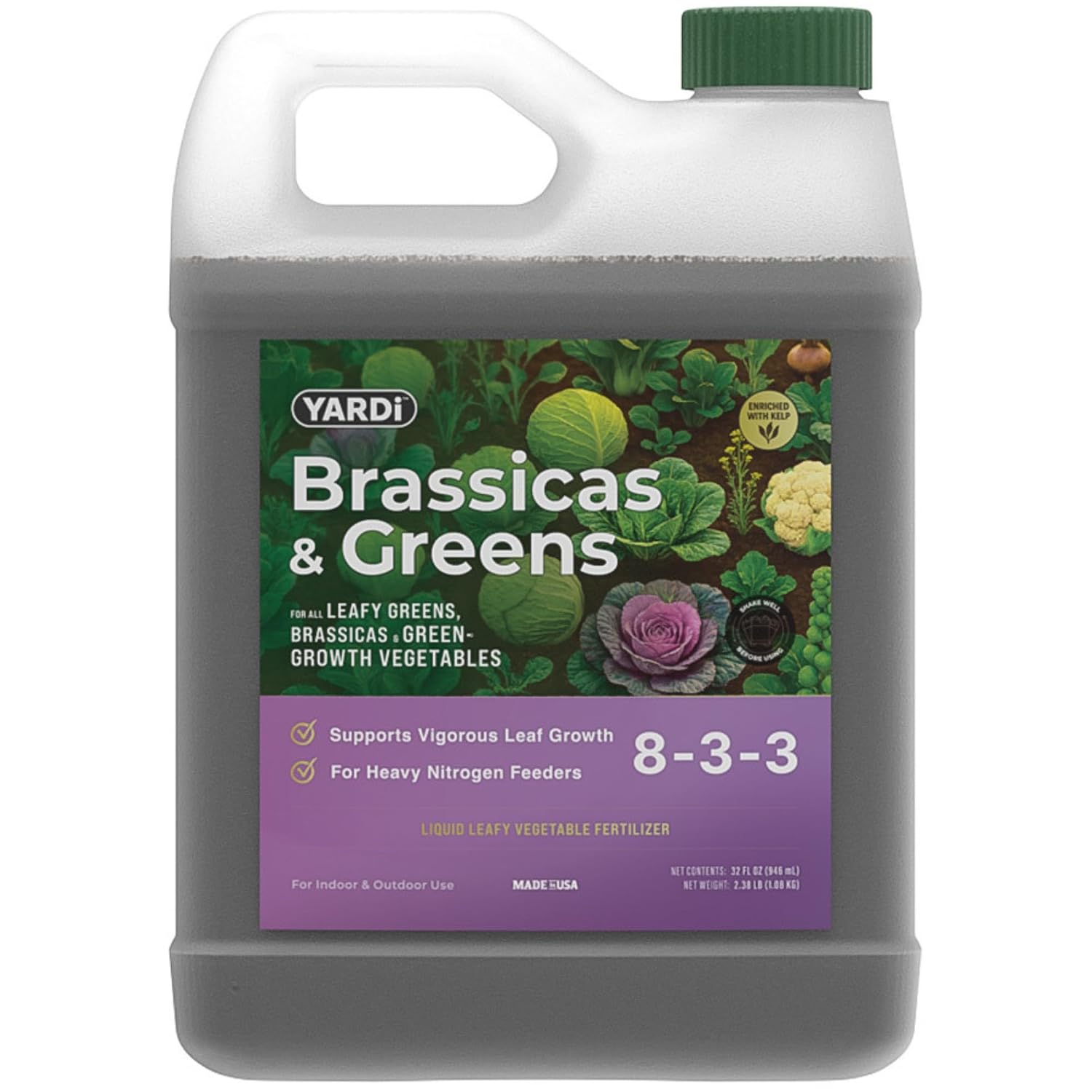
YARDi Brassicas & Greens Liquid Plant Food 32 oz (8-3-3)
| Item Form | Liquid |
|---|---|
| Specific Uses For Product | Leafy Greens |
| Target Species | Vegetables |
| Unit Count | 32 Fluid Ounces |
This 32-ounce YARDi liquid plant food is a nitrogen-forward 8-3-3 concentrate designed for outdoor brassicas and salad greens. It mixes easily with water (the label suggests 1–2 teaspoons per gallon) and can be applied as a soil drench, foliar spray, through drip irrigation, or with a hose-end applicator, making it flexible for beds, raised planters, and small-scale vegetable plots. The higher nitrogen ratio promotes lush, dark green foliage and sustained leafy growth in crops like kale, cabbage, broccoli, spinach and lettuce, and the formula includes micronutrients to support overall plant vigor. Practical benefits include straightforward dilution instructions and multiple application methods so you can feed regularly every 2–3 weeks during the growing season. Limitations are that the product is targeted to leafy vegetables and may be less appropriate for fruiting or flowering stages where balanced or phosphorus-heavy feeds are preferred, and frequent foliar or high-nitrogen use can require monitoring to avoid excess vegetative growth at the expense of yield.
Best for: Gardeners who prioritize big, healthy leaves on brassicas and salad greens and want a simple liquid feed they can use across beds and containers throughout the season.
Less Ideal for: Growers focused on flowering or fruiting crops or those who prefer granular slow-release fertilizers for low-maintenance feeding.
- High nitrogen 8-3-3 formula tailored for vigorous leafy growth
- Liquid concentrate that dilutes easily for foliar, soil drench, drip, or hose-end use
- Clear directions for regular feeding every 2–3 weeks during the season
- Includes micronutrients to support plant vigor beyond basic NPK
- Formulated specifically for leafy greens so not ideal as an all-purpose or bloom-promoting fertilizer
- Requires regular applications and careful dosing to avoid excessive leafy growth
Verdict: Choose this liquid 8-3-3 feed when your goal is consistently lush, vigorous leafy growth in brassicas and salad greens.
PowerGrow Systems MasterBlend Lettuce Fertilizer Formula 8-15-36 (1 lb)

| Item Form | Powder |
|---|---|
| Application Method | Water Soluble |
| Specific Uses For Product | Plant Growth |
| Target Species | Lettuce |
| Mixing Ratio | 1:1:1:1:1 |
PowerGrow Systems MasterBlend Lettuce is a water-soluble powder fertilizer designed for lettuce, especially in hydroponic systems but also usable in soil. It supplies an 8-15-36 NPK profile that emphasizes higher potassium for root development and head formation while providing readily soluble nutrients that dissolve into feeding solutions. Typical use is mixing the powder with water according to the provided ratios and applying as a nutrient solution or side-dress for foliar or drip feeding. Notable features include a commercial-grade formulation trusted by growers and a clear mixing ratio for consistent dosing. In practice it delivers concentrated feeds, so a little goes a long way and it is convenient for regular scheduled feedings. Important limitations are that it is a single-component blend that the maker recommends pairing with calcium nitrate and magnesium sulfate for a complete program, so additional supplements may be required for balanced micronutrients and calcium management. Also it is sold in small unit counts that may require buying multiple units for larger plantings.
Best for: Shoppers who want a purpose-built, water-soluble fertilizer for lettuce or hydroponic leafy greens and who plan to follow a planned feeding regimen.
Less Ideal for: Casual gardeners who prefer an all-in-one complete fertilizer or those who want a granular slow-release product for low-maintenance beds.
- Formulated specifically for lettuce with an 8-15-36 NPK ratio suited to leafy head development
- Water-soluble powder mixes easily for hydroponic and soil feeding
- Concentrated commercial-grade formula used by growers for consistent results
- Clear mixing ratio provided for reproducible nutrient solutions
- Not a complete program by itself and recommended to be used with calcium nitrate and magnesium sulfate
- Sold in small unit count which may be inconvenient for larger gardens
Verdict: Buy this if you want a concentrated, water-soluble fertilizer tuned for lettuce that lets you build consistent hydroponic or soil feeds.
Burpee Organic Blood Meal Fertilizer, 3 lb

| Item Form | Granules |
|---|---|
| Specific Uses For Product | Organic,Potting |
| Coverage | 450 Square Feet |
| Mixing Ratio | 3:1 (potting soil:blood meal) |
| Target Species | vegetables, flowers |
Burpee Organic Blood Meal is a concentrated 12-0-0 granular nitrogen source designed for feeding leafy vegetables and supporting vigorous early growth. Gardeners typically mix it into potting soil at the recommended ratio or side-dress established beds to boost nitrogen-hungry crops like lettuce and spinach. Notable features include its OMRI listing for organic use and a mixing ratio provided for potting mixes, plus reported coverage for small garden areas. The product promotes greener, faster leaf production and can help increase yield when used as part of a regular feeding plan. It also doubles as a mild animal repellent because many critters avoid the scent. Limitations to consider are that it supplies only nitrogen so other nutrients must come from additional fertilizers or compost, and because it is concentrated you need to measure carefully to avoid burning seedlings or overfeeding mature plants.
Best for: Gardeners who prioritize reliable, organic nitrogen feeding for leafy greens and want a straightforward amendment to boost lettuce and spinach growth.
Less Ideal for: Growers seeking an all-in-one balanced fertilizer or those who prefer slow-release complete nutrient formulas should consider other options.
- High nitrogen concentration (12-0-0) for rapid leafy growth
- OMRI listed so it fits organic gardening practices
- Clear mixing ratio for potting mixes and guidance for side-dressing
- Granular form is easy to apply and measure for small beds and containers
- Provides only nitrogen and does not supply phosphorus or potassium
- Concentrated product can burn plants if overapplied
Verdict: Choose this OMRI-listed blood meal when you need a dependable, fast-acting organic nitrogen boost to green up lettuce and spinach quickly.
MasterBlend 4-18-38 Complete Combo Kit Fertilizer (12.5 lb)

| Item Form | Powder |
|---|---|
| Specific Uses For Product | Plant Growth |
| Mixing Ratio | 1:1:0.5 |
| Unit Count | 200 Ounce |
This MasterBlend combo kit bundles concentrated MasterBlend 4-18-38 with calcium nitrate and Epsom salt in the proportions used by the classic MasterBlend recipe. You dissolve each powdered component separately to make a balanced nutrient solution for general plant growth, following the supplied mixing ratio. The kit is designed for growers who mix their own fertilizer solution for hydroponics or soil feeding and saves time by supplying the three ingredients in a single package sized for multiple batches. Practical benefits include complete macro and secondary nutrients needed to correct calcium and magnesium needs, 100% water solubility for easy uptake, and clear directions for the standard 12g/12g/6g per 5 gallons recipe. Limitations are that it is a concentrated powdered system that requires accurate weighing and measuring and separate dissolution of components, so beginners will need a scale and careful handling; there is no single pre-mixed liquid formula and safety precautions are required when handling concentrated salts.
Best for: Growers who follow established nutrient recipes and want a reliable, professional-grade dry kit to mix custom solutions for leafy greens like lettuce and spinach.
Less Ideal for: Casual gardeners who want ready-to-use bottles or those unwilling to measure and mix concentrated powders.
- Includes MasterBlend, calcium nitrate, and Epsom salt in the classic recipe proportions for balanced feeding
- Powdered, fully water soluble components for efficient nutrient uptake
- Packed in quantities that cover multiple 5-gallon nutrient batches
- Provides calcium and magnesium alongside primary N-P-K to prevent common deficiencies
- Requires precise weighing and separate mixing of components which adds steps and needs a scale
- Not a ready-to-use liquid; unsuitable if you prefer a simple premixed feed
Verdict: Buy this kit if you want a professional, water-soluble dry nutrient set that lets you mix the classic MasterBlend recipe for consistent, controllable feedings of lettuce and spinach.
TPS Nutrients Liquid Plant Food for AeroGarden and Hydroponics, 8 oz

| Item Form | Liquid |
|---|---|
| Specific Uses For Product | Plant Growth, Root Development |
| Target Species | Herb, Vegetable |
| Mixing Ratio | 5 mL (1 tsp) per quart of feedwater |
| Unit Count | 8 Fluid Ounces |
This 8 oz liquid plant food provides concentrated, reservoir-safe nutrition intended for AeroGarden and comparable hydroponic units. It is used by mixing the recommended 5 mL per quart of feedwater into the system reservoir on a regular feeding schedule to supply macro and micronutrients for herbs, greens, and other compact edible plants. Notable features include a liquid formulation that dissolves easily, a focus on root development, and explicit compatibility with indoor hydroponic gardens. In practice it simplifies feeding for small indoor crops because a measured teaspoon per quart is straightforward to dose and store. Important limitations are the small bottle size, which will require frequent repurchasing for larger or multiple units, and the need to follow dilution directions carefully to avoid overfeeding. Safety handling is necessary because the concentrate should be kept away from children and pets. For risk-averse growers, the product’s clear mixing ratio and hydroponic focus make predictable feeding simple, but you should track reservoir concentrations rather than guessing frequency or volume adjustments.
Best for: Buyers who want a simple, low-risk feeding routine for indoor green onions and other small edible hydroponic crops and prefer clear dosing instructions they can follow reliably.
Less Ideal for: Growers managing large hydroponic setups, outdoor beds, or those who need a detailed NPK profile for tailored nutrient programs should look for larger or fully specified concentrates.
- Designed specifically for AeroGarden and similar hydroponic systems for straightforward compatibility
- Liquid formula mixes easily for even nutrient distribution in the reservoir
- Clear mixing ratio (5 mL per quart) simplifies dosing and repeatable feeding
- Targets root development and steady growth for herbs and vegetables
- Small 8 oz bottle may not last long for multiple or larger units
- No full nutrient analysis or NPK breakdown provided on the product listing
Verdict: A compact, easy-to-dose liquid fertilizer that makes predictable feeding of indoor green onions simple and low risk.
Choosing the Right Fertilizer for Lettuce and Spinach: Key Factors to Consider
Nutrient Ratio and Timing
Lettuce and spinach are leafy crops that respond strongly to the right balance of nitrogen, phosphorus, and potassium. A formula slightly higher in nitrogen promotes lush leaf growth, but too much nitrogen can cause plants to be soft, prone to disease, or to bolt prematurely. Look for fertilizers that supply modest phosphorus for root development and adequate potassium for overall plant vigor.
Timing matters because these greens have short cycles. Fast-acting, soluble nutrients let you correct deficiencies quickly during active growth, while gentler slow-release options reduce the need for frequent feeding. Decide whether you need quick boosts for established plants or steady feeding for fast succession crops.
Formulation and Solubility
How the fertilizer dissolves and becomes available to plants affects flexibility and risk. Water-soluble fertilizers deliver nutrients immediately and are ideal for foliar feeding or quick soil applications, which is useful for container-grown lettuce and spinach. Controlled-release granules reduce frequent handling but can be less precise for short-season plantings.
Solubility also influences salt buildup. Highly soluble salts can concentrate in small containers or poorly draining beds, so gardeners must balance immediate uptake against the need to flush media periodically.
Application Method and Ease
Ease of measuring and applying fertilizer matters when you are planting successive crops or managing many small containers. Liquid concentrates that dilute easily, granular formulas with clear spread rates, and pre-measured water-soluble packets reduce dosing errors. Foliar sprays can correct deficiencies quickly but should be used carefully to avoid leaf scorch.
Clear instructions for seedlings through maturity are valuable. Products that work across transplant and mature stages simplify routine feeding and lower the chance of over-application.
Salt Index and Root Safety
High soluble salt levels can damage tender lettuce and spinach roots, especially in small pots or dense beds. A low salt index reduces the risk of osmotic stress and leaf tip burn. When growing in containers or shallow raised beds, choose fertilizers formulated to minimize salt buildup and follow recommended leaching practices between applications.
Salt safety is especially important for frequent feeding schedules. If you fertilize weekly, opt for gentler formulas or reduce concentration to protect roots.
Compatibility with Growing System
Growing medium and system shape which fertilizer works best. In containers and shallow raised beds you need products that release predictably and are easy to flush. In in-ground rows with good soil life, organic amendments and slower-release formulations can supply steady nutrition while supporting soil biology.
Consider whether you use drip irrigation, overhead watering, or foliar feeds. Water-soluble options pair well with drip or fertigation, while granular slow-release types suit hands-off bed applications. Match the fertilizer to how you water and manage your plot.
Environmental and Food-Safety Considerations
Because these crops are eaten fresh and often raw, gardeners should be mindful of fertilizer quality and any potential contaminants. Look for clear labeling on nutrient analysis and limits on heavy metals or additives. Organic-certified or low-salt formulations can reduce chemical residues and are better suited to gardeners focused on minimal inputs.
Also consider runoff risk and the proximity of beds to waterways. Choosing slow-release or targeted application methods lowers nutrient losses and reduces environmental impact.
Feeding Schedules for Rapid Harvests
Lettuce and spinach grow quickly, so feeding schedules need to match short life cycles. For seeds or transplants, a light starter feed at thinning or transplanting supports root establishment. Resume regular light feeds every one to two weeks with a soluble fertilizer during active leaf production to maintain steady growth without pushing plants to bolt.
Adjust concentration for young plants: dilute solutions are safer for seedlings, while mature plants can handle full-strength applications within recommended ranges. Always factor in existing soil fertility from compost or previous amendments when planning your schedule.
- Seedlings: very dilute feeds every 7-10 days
- Transplants: light starter feed at planting
- Mature plants: regular light feeds every 7-14 days
Using Fertilizer in Containers and Micro-Gardens
Containers concentrate salts and nutrients, so use low-salt, water-soluble formulas or gentle slow-release granules designed for pots. Monitor the root zone moisture and flush the potting mix occasionally to prevent buildup. Organic liquid feeds can work well but may require more frequent applications.
Pay attention to potting mix fertility at the start. A balanced base with compost reduces the need for heavy feeding and gives seedlings a buffer while they establish.
- Choose low-salt formulas for small pots
- Flush media periodically to avoid salt accumulation
- Start with compost-amended mix to reduce feeding frequency
Foliar Feeding: When and How to Use It
Foliar feeding delivers nutrients directly to leaf tissue and can be a fast corrective measure for visible deficiencies. Use finely diluted solutions and apply during cool parts of the day to avoid leaf scorch. Foliar applications are best for micronutrient correction or quick nitrogen boosts rather than as a sole nutrition source.
Rotate foliar feeding with soil applications. Overreliance on foliar sprays can mask root-zone problems, so use sprays as a supplement when you need rapid correction.
- Apply in early morning or late afternoon
- Use dilute solutions to avoid leaf burn
- Reserve foliar feeds for quick corrections and micronutrients
Balancing Organic and Synthetic Options
Organic fertilizers release nutrients more slowly and build soil biology, which benefits long-term fertility for leafy greens. Synthetic, water-soluble options give faster, more predictable results and can be easier to control for short-season crops. Choose based on your management style: organic for soil health and sustainability, synthetic for precise, rapid feeding.
You can combine approaches by using compost or low-release organics as a base and supplementing with light soluble feeds during peak growth to keep harvest quality high.
- Organic: builds soil, gentler release
- Synthetic: quick uptake, precise control
- Hybrid approach: compost base plus light soluble feeds
Troubleshooting Leaf Issues Related to Nutrition
Yellowing inner leaves, stunted growth, or tip burn can indicate nutrient imbalance, salt damage, or water stress. Conduct a simple assessment: check watering practices first, then consider recent fertilizer strength and frequency. Reduce concentration or flush soil if salt damage is suspected.
For persistent symptoms, try a balanced soil test and adjust nutrient inputs accordingly. Keep in mind that pests, cold stress, and disease can produce similar symptoms, so diagnose carefully before changing fertilizer routines.
- Flush media to address salt buildup
- Lower fertilizer concentration if leaf burn appears
- Use soil testing for long-term correction
How We Chose the Best Fertilizer for Lettuce and Spinach
We screened options that are specifically suitable for cool-season leafy greens and excluded general-purpose formulas that deliver excessive salts or are formulated only for blooms. Our primary filters favored fertilizers with nutrient ratios appropriate for rapid leaf development, soluble forms that are safe for frequent feeding, and clear application guidance for small-scale vegetable plots and containers. We prioritized products with predictable release behavior, whether water-soluble or controlled-release, so gardeners can avoid nitrogen spikes that cause bolting or leaf burn. Ease of application and accurate dosing were important since lettuce and spinach are often grown in succession and require repeat feedings. Environmental considerations such as low salt index, minimal heavy metal content, and compatibility with organic or reduced-input systems were also included. Finally, we checked formulation versatility for use in seedlings, transplants, and mature plants. Exclusions included fertilizers designed only for flowers, high-phosphorus bulb formulas, or items lacking clear nutrient analysis.
FAQ
How often should I feed lettuce and spinach?
Often the best approach is light feeding every 7 to 14 days during active growth. Frequency depends on the fertilizer type and your soil; water-soluble feeds can be used more frequently in dilute doses, while slow-release products require fewer applications.
Can I use the same fertilizer for seedlings and mature plants?
You can use the same formulation if you adjust concentration. Seedlings need much weaker solutions to avoid root or leaf damage, while mature plants can handle recommended strength. Products with clear seedling instructions are easiest to use across stages.
Is organic fertilizer better for lettuce and spinach?
Organic fertilizers benefit soil biology and reduce synthetic residue, which is desirable for salad greens. They tend to release nutrients more slowly, so you may need to supplement with light, soluble feeds for fast growth or successive plantings.
What fertilizer ratio is best for leafy greens?
Formulas with a modestly higher nitrogen component relative to phosphorus and potassium typically support leaf production. Avoid very high phosphorus blends, which are more suited to flowering or root crops.
How do I avoid fertilizer burn in small containers?
Use low concentrations, choose low-salt formulations, and flush pots occasionally. If you notice tip burn or stunted growth, stop fertilizing briefly and water thoroughly to leach accumulated salts.
Can I foliar feed lettuce and spinach safely?
Yes, when done correctly. Use dilute solutions, spray in cool hours, and avoid application during full sun to prevent scorch. Foliar feeds are best for quick micronutrient corrections rather than routine sole nutrition.
Final Verdict
Choose a fertilizer that matches how you grow lettuce and spinach: quick-soluble, low-salt options for containers and rapid cycles, or gentler slow-release and organic inputs for in-ground beds and soil-building goals. Prioritize nutrient balance and a feeding schedule that keeps nitrogen steady without causing salt stress or premature bolting. With the right formulation and application routine, you can produce tender, flavorful greens reliably across multiple plantings.
