

Note: This article contains affiliate links. If you click on these links and make a purchase, I may earn a small commission at no extra cost to you. This helps support my research and content. Read my full affiliate disclosure here.
Choosing the right fertilizer for outdoor potted flowers changes how your containers perform through the growing season. Pots have limited soil and fast nutrient depletion, so the fertilizer you pick affects bloom frequency, plant health, and how often you must repot or top-dress. This guide covers the top shortlisted fertilizers suited to outdoor container use and explains the criteria gardeners should weigh when choosing between quick feeds, slow-release blends, and organic options. Expect clear, practical notes on nutrient balance, feeding cadence, and how products behave in real pots and planters.
Top Picks at a Glance
| Best Overall The best all-around choice for most situations | Osmocote Smart-Release Plant Food Plus Outdoor & Indoor, 1 lb |  |
| Best Quality Built to a higher standard if you want something more solid | FoxFarm Big Bloom Liquid Plant Food, 16 fl oz |  |
| Best Value The sweet spot between price and what you get | Miracle-Gro Watering Can Singles All Purpose Plant Food, 24 Packets |  |
| Best Budget The cheapest option that still gets the job done reliably | Jobe's Flowering Plant Food Spikes, 30-Count |  |
| Highest Rated A top-rated pick with lots of positive feedback | Miracle-Gro Water Soluble All Purpose Plant Food, 12.5 lb |  |
| Most Popular A crowd favorite that many people choose with confidence | Miracle-Gro Water Soluble All Purpose Plant Food, 1.5 lb |  |
| Best Seller A high-volume bestseller chosen again and again | Miracle-Gro Water Soluble All Purpose Plant Food, 3 lb |  |
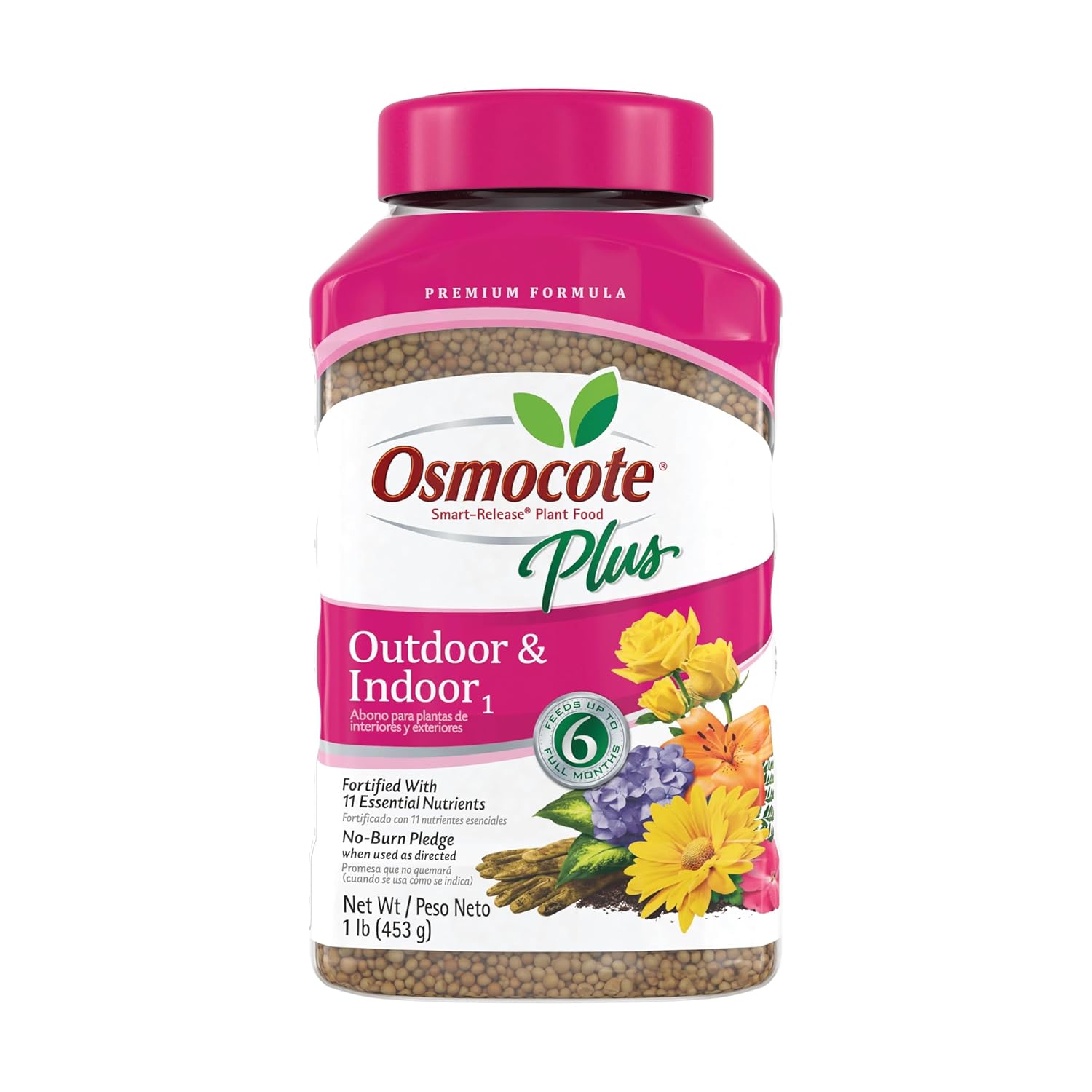
Osmocote Smart-Release Plant Food Plus Outdoor & Indoor, 1 lb
| Item Form | Granules |
|---|---|
| Specific Uses For Product | Plant Food |
| Application Method | sprinkle around the base and work into the soil |
| Unit Count | 16 Ounce |
Osmocote Smart-Release Plant Food Plus is a resin-coated granular fertilizer designed to deliver steady nutrition to a wide range of plants for up to six months from a single application. You apply it by sprinkling the recommended scoop into the top inch or so of potting mix for containers or around plants in garden beds, then watering to activate the coating. The product contains 11 essential nutrients and is formulated to release based on soil temperature, which helps reduce overfeeding and supports consistent bloom and foliage performance in hanging baskets. Its no-burn pledge makes it easy to use at the recommended rates for mixed annuals, trailing plants, and container veggies. Limitations are that coverage is modest from a 1 lb. container so frequent use on many large baskets will require buying more, and release timing still depends on temperature so plants in cool, shaded spots may receive nutrients more slowly than those in warm sun.
Best for: Gardeners who prioritize steady, low-maintenance feeding for hanging baskets and containers and want consistent bloom and foliage without frequent fertilizing.
Less Ideal for: Those who need immediate, short-term nutrient boosts or precise liquid feeding schedules for plants that demand fast correction.
- Resin-coated granules provide controlled release of nutrients for up to six months
- Formulated with 11 essential nutrients suitable for a wide variety of plants
- No-burn pledge when used as directed reduces risk of damaging roots in containers
- Simple sprinkle-and-water application works well for hanging baskets and pots
- 1 lb container covers a limited area so multiple baskets will need additional product
- Release rate depends on temperature so nutrient delivery can be slower in cool conditions
Verdict: An easy, low-maintenance slow-release fertilizer that keeps hanging baskets fed for months with minimal effort.
FoxFarm Big Bloom Liquid Plant Food, 16 fl oz

| Item Form | Liquid |
|---|---|
| Specific Uses For Product | Organic |
| Application Method | watering can, sprayer, or drip system |
| Liquid Volume | 16 fluid ounces |
| Mixing Ratio | 4 |
Big Bloom is a concentrated liquid bloom fertilizer aimed at boosting flowers and fruit by supplying readily available organic nutrients. It mixes into water (manufacturer recommends 4 tablespoons per gallon) and can be applied with a watering can, sprayer, hose-end siphon, or through drip systems, so you can feed potted plants, beds, or containers without changing your routine. Notable features are its OMRI listing for organic use and the inclusion of bat guano and earthworm castings, which provide phosphorus and organic matter to encourage blooms and seed set. Because it is liquid and fast-acting, you can expect visible perk-up within a short time after feeding, and it is suitable for regular use at watering times to extend flowering. Limitations to consider are the small 16 fl oz size for larger gardens and the presence of phosphorus, which may be restricted in some locales and requires careful application to avoid runoff.
Best for: Gardeners focused on maximizing blooms and fruit who want an organic, fast-acting feed they can add to routine watering for container and bed-grown flowering plants.
Less Ideal for: Large-scale landscapers or very large perennial beds who need bulk fertilizer solutions or want to avoid phosphorus-based products due to local regulations.
- OMRI-listed organic formula with natural inputs like bat guano and earthworm castings
- Liquid concentrate allows fast nutrient uptake and flexible application methods
- Works with watering cans, sprayers, hose-end siphons, and drip systems for easy integration
- Small 16 fl oz bottle may require frequent repurchasing for larger flower beds
- Contains phosphorus so local restrictions on phosphorus fertilizers may apply
Verdict: Choose Big Bloom when you want an OMRI-listed, easy-to-apply liquid fertilizer that delivers fast organic nutrients to boost flowering and fruiting.
Miracle-Gro Watering Can Singles All Purpose Plant Food, 24 Packets

| Number of Packs | 24 |
|---|---|
| Unit Count | 10.24 Ounce |
| Item Form | SOLID |
| Application Method | watering can |
| Mixing Ratio | 1 teaspoon per 1 gallon of water |
Miracle-Gro Watering Can Singles are single-use, pre-measured fertilizer packets intended to make feeding roses and other garden plants simple and reliable. To use, tear a packet into a watering can, add the specified amount of water, then apply the solution while watering; the manufacturer recommends feeding every 7 to 14 days during active growth. The packets remove measuring errors and mess, which helps prevent accidental overfeeding. Because the formula is labeled for all flowers, vegetables, trees and shrubs, it fits into regular rose care routines for bloom and bush development. Practical benefits include instant solubility, clear application instructions for outdoor and indoor containers, and consistent coverage per packet for about 10 sq. ft. of garden. Limitations are that you must keep up with the every-1–2-week schedule for best results and that the product is sold as a general-purpose feed rather than a rose-specific bloom booster, so dedicated rosarians seeking targeted NPK ratios might prefer a specialized rose fertilizer.
Best for: Gardeners who want a low-risk, no-mess way to feed roses and mixed flower beds as part of routine watering and prefer simple, foolproof dosing.
Less Ideal for: Specialist rose growers seeking a targeted bloom-boosting formula or those who want a single, slow-release application instead of frequent liquid feedings.
- Pre-measured packets eliminate measuring and reduce mess and dosing errors
- Water-soluble formula mixes quickly in a watering can for immediate application
- Labeled for use on flowers, roses, shrubs, trees and vegetables so it suits mixed beds
- Clear directions for indoor and outdoor application and coverage per packet
- General all-purpose formula rather than a rose-specific NPK for bloom boosting
- Requires regular reapplication every 7–14 days to maintain results
Verdict: If you want a safe, fuss-free way to feed roses while you water, these pre-measured soluble packets make regular feeding simple and consistent.
Jobe's Flowering Plant Food Spikes, 30-Count

| Item Form | Sticks |
|---|---|
| Specific Uses For Product | Plant Food |
| Application Method | Insert spikes into soil |
| Target Species | Flowering houseplants |
Jobe's Flowering Plant Food Spikes are premeasured sticks you push into potting soil to feed flowering plants without mixing or measuring. Each spike slowly releases nutrients at the root zone and is intended to feed plants for about two months, which makes them handy for routine maintenance of outdoor container flowers and patio planters. The biggest practical benefit is convenience: no mess, no liquid fertilizer to dilute, and less chance of overfeeding because each spike contains a set dose. They are most useful for medium coverage areas like individual pots or a cluster of containers rather than large garden beds. Limitations include less flexibility in dosing compared with granular or liquid fertilizers and the need to remember reapplication roughly every two months. Also, spikes can be less evenly distributed in dense root balls, so light-handed placement and occasional repositioning help ensure even feeding.
Best for: Gardeners who want a low-effort, no-mess way to keep outdoor containers and patio flowers fed on a budget and prefer set-and-forget maintenance.
Less Ideal for: People who manage large flower beds, need customizable nutrient schedules, or want rapid feeding responses should consider granular or liquid fertilizers instead.
- Premeasured spikes eliminate mixing and reduce mess
- Provides slow-release nutrition at the root zone for about two months
- Easy application by inserting into potting soil
- Compact 30-count pack suitable for multiple pots or seasonal rotations
- Not ideal for precise or adjustable dosing compared with liquids
- Less effective for large garden beds where even distribution is needed
Verdict: A fuss-free, low-cost way to keep patio pots and container flowers steadily fed with premeasured spikes.
Miracle-Gro Water Soluble All Purpose Plant Food, 12.5 lb

| Item Form | Powder |
|---|---|
| Specific Uses For Product | Plant Food |
| Coverage | general purpose, suitable for various plants |
| Mixing Ratio | 1 tablespoon per gallon of water |
Miracle‑Gro Water Soluble All Purpose is a powder fertilizer designed to dissolve in water and deliver fast nutrients to indoor and outdoor plants. Gardeners mix the recommended scoop with a watering can or use a compatible garden feeder to apply directly to the soil around roots; the product gives routine feedings every 7 to 14 days outdoors or every 2 weeks for houseplants. Notable features include an NPK of 24‑8‑16 for strong vegetative growth, a quoted coverage of about 5,000 sq ft from a 12.5 lb container, and an included scoop with separate measuring ends for indoor and outdoor rates. In practice this means quick uptake for leafy growth and an easy, repeatable dosing routine for reliability across container and in‑ground Clusia specimens. Limitations are that it is a general‑purpose formula rather than a Clusia‑specific mix and frequent applications are required during the growing season, so you will need to follow the label closely to avoid overfeeding.
Best for: Buyers who want a dependable, easy‑to‑measure fertilizer to keep Clusia healthy with consistent, repeatable feedings and straightforward application routines.
Less Ideal for: Growers seeking a slow‑release or custom‑formulated Clusia fertilizer or those who prefer lower‑frequency, hands‑off feeding strategies.
- Fast‑acting water‑soluble formula for near‑instant nutrient availability
- Simple mixing ratios and included scoop make dosing consistent
- Large 12.5 lb container covers a lot of garden area for routine feedings
- Suitable for both container and in‑ground use so it works with potted Clusia and landscape plantings
- General all‑purpose NPK may not match specialized nutrient needs of Clusia at every growth stage
- Requires regular applications during the season rather than a slow‑release schedule
Verdict: A reliable, easy‑to‑mix water‑soluble fertilizer that delivers fast, consistent feedings for Clusia in both pots and landscape settings.
Miracle-Gro Water Soluble All Purpose Plant Food, 1.5 lb

| Item Form | Powder |
|---|---|
| Application Method | Watering Can |
| Target Species | For all flowers, vegetables, trees, shrubs and houseplants |
| Mixing Ratio | 24-8-16 |
Miracle-Gro Water Soluble All Purpose Plant Food is a powdered, water-soluble fertilizer formulated to deliver fast nutrition to a broad mix of plants. You mix the powder into a watering can or a garden feeder and apply every 1 to 2 weeks depending on whether plants are indoors or out. The 24-8-16 NPK ratio supplies a strong nitrogen boost for leafy growth along with phosphorus and potassium to support flowering and fruit set. For pepper growers this means it can help produce vigorous plants and encourage fruit development when used at the recommended strengths. Notable features include clear mixing guidance for both indoor and outdoor use and compatibility with container and in-ground plantings. Practical benefits are quick uptake by roots and flexible application options. Important limitations are the high nitrogen proportion, which can favor foliage over fruit if overused, and the need to follow dilution instructions to avoid nutrient burn. This product is best used as a regular boost within a balanced feeding plan rather than the only fertility source for long-term soil health.
Best for: Home gardeners looking for an affordable, easy-to-use boost to support vigorous pepper plant growth and quick results in both containers and garden beds.
Less Ideal for: Growers who want a low-nitrogen or slow-release fertility plan for long-term soil building should consider specialized or organic alternatives.
- Water-soluble powder that feeds plants quickly through the roots
- Clear mixing instructions for indoor and outdoor applications
- Broadly labeled for use on flowers, vegetables, trees, shrubs and houseplants
- Feeds approximately 600 sq. ft. from the 1.5 lb container
- High nitrogen ratio may encourage foliage more than fruit if used too frequently
Verdict: A budget-friendly, fast-acting soluble fertilizer that gives bell pepper plants a regular nitrogen-rich boost to promote vigorous growth and quicker results.
Miracle-Gro Water Soluble All Purpose Plant Food, 3 lb

| Item Form | Powder |
|---|---|
| Application Method | Mix with water in a watering can |
| Fertilizer Analysis (N‑P‑K) | 24-8-16 |
| Unit Count | 48 Ounce |
| Coverage | Feeds approximately 1,200 sq. ft. |
Miracle‑Gro Water Soluble All Purpose Plant Food is a powdered NPK 24‑8‑16 formula that dissolves in water to give plants a quick nutrient boost. You mix measured scoops into a watering can and apply to the soil at the base of plants every 7–14 days for outdoor use or every 14 days for houseplants. Notable features include a high nitrogen content for leafy growth, compatibility with containers and in‑ground beds, and guidance for use with a Miracle‑Gro Garden Feeder for larger areas. In practical terms this is a fast‑acting feed that encourages bigger, greener foliage and works well in regular maintenance of perennials like hostas. Limitations are that it is a fast‑release fertilizer rather than a slow‑release option, so it requires regular reapplication and careful measuring to avoid overfeeding. Also, the 24‑8‑16 balance is geared toward vegetative growth, so it is not optimized if you want to prioritize flowering or bloom boosting.
Best for: Buyers who want a reliable, fast‑acting feed to maintain lush, leafy perennials and container plants and who value proven products with broad user endorsement.
Less Ideal for: Gardeners seeking a single, long‑lasting granular fertilizer or a bloom‑focused formula should consider alternative slow‑release or high‑phosphorus products.
- Water‑soluble powder mixes easily for quick uptake by roots
- High nitrogen formula promotes robust leafy growth ideal for shade plants
- Clear mixing and application instructions for both indoor and outdoor use
- Suitable for containers and in‑ground gardens and compatible with garden feeders
- Requires frequent applications so it is not a low‑maintenance, slow‑release option
- High nitrogen ratio is less suitable when the primary goal is more flowers than foliage
Verdict: A fast‑acting, water‑soluble fertilizer that reliably produces bigger, greener hosta leaves when used as directed.
Choosing the Right Fertilizer for Outdoor Potted Flowers: Key Factors to Consider
Nutrient Ratio and Concentration
Flowering potted plants need an N-P-K balance that supports blooms without causing excessive leaf growth. Higher phosphorus or formulations labeled for flowering often promote bud set and showier blooms, while too much nitrogen can delay or reduce flowering. Concentration matters because containers have small soil volumes; highly concentrated feeds can burn roots if misapplied.
Check the product's analysis and recommended dilution rates. For repeated weekly feeds, a lower concentration is safer. For occasional applications, a stronger but less frequent product may be appropriate. Always consider how concentrated the fertilizer is relative to your pot size and watering routine.
Release Type and Feeding Cadence
Fertilizers come as quick-release soluble concentrates, slow-release granules, and organic amendments. Soluble feeds give a rapid nutrient boost and let you correct deficiencies quickly, which is useful during peak bloom. Slow-release granules reduce how often you must feed and lower the risk of overfeeding, but their release rate depends on temperature and moisture.
In containers, predictable release matters because potting media dry and wet more quickly than garden beds. Choose a release type that matches how often you want to tend containers and how reliably you can water. For vacation periods, slow-release products reduce risk; for fine-tuning bloom color or size, soluble feeds offer greater control.
Compatibility with Potting Mix
Potting mixes vary in organic content, moisture retention, and buffering capacity, and those differences affect how fertilizers deliver nutrients. Lightweight mixes with high drainage may require more frequent feeding, while mixes rich in organic matter can hold nutrients longer and release them slowly.
Look for fertilizers with instructions specific to container use and ensure the product will not cause salt buildup in small soil volumes. If you use a soilless mix, choose a formulation designed for those media to avoid nutrient lockup or uneven release.
Ease of Measuring and Applying
Accurate dosing is critical for potted flowers because small errors scale up in limited soil volumes. Products with clear measuring tools, simple dilution instructions, or pre-measured tablets or spikes reduce user error. Liquid concentrates that require mixing can be efficient but demand consistent measuring.
Also consider how easy the product is to apply outdoors. Granules that need even distribution and watering in can be messy on patios, whereas water-soluble packets or ready-to-use sprayers may be neater for balcony gardeners.
Salt Sensitivity and Weather Stability
Containers can accumulate salts from frequent fertilizing and tap water, which stresses roots and reduces flowering. Some formulations produce higher soluble salt levels, so gardeners must flush pots periodically or use gentler feeds. Weather stability is also important: heavy rain can leach soluble feeds quickly, while high heat can speed up slow-release granule breakdown.
Select products with guidance on leaching, flush frequency, and performance under typical outdoor conditions in your area. If you garden in a hot, rainy climate, choose formulations that remain effective without causing rapid nutrient loss or salt buildup.
Choosing Between Organic and Synthetic Options
Organic fertilizers release nutrients as microbes break down organic matter. That process improves potting soil biology and can reduce the risk of salt burn, but release rates are slower and less predictable, which can be a drawback when you need a quick bloom response.
Synthetic fertilizers provide predictable nutrient availability and faster plant response. They are useful when you want to correct deficiencies or trigger a flush of blooms, but they require careful dosing and occasional flushing to avoid salt buildup in containers.
- Organic: gentler, soil-building, slower release
- Synthetic: fast acting, predictable, needs precise dosing
How Watering Patterns Change Feeding Needs
Watering frequency and method strongly influence fertilizer choice. Containers that dry quickly demand more frequent, lighter feeds because nutrients are washed through or depleted faster. Conversely, consistently moist pots may retain nutrients longer and accept less frequent applications.
Adjust feeding schedules to match your irrigation. If you water daily, use a diluted weekly feed to maintain steady nutrition. For pots that stay moist, monthly slow-release granules can simplify care.
- Daily watering favors diluted soluble feeds
- Infrequent watering pairs well with slow-release options
Timing Feeds for Peak Bloom
For many flowering annuals and perennials, an initial boost at planting followed by a steady schedule encourages consistent bloom. Apply a balanced starter feed when repotting or planting, then switch to a bloom-focused schedule as buds form. Be cautious of overfeeding during bud set; moderate, regular nutrition often yields better flower production than sporadic heavy feeding.
Monitor plants visually. Pale leaves or reduced flowering commonly indicate underfeeding, while scorched leaf edges or wilting after feeding suggest salt stress from over-application.
- Starter feed at planting helps root establishment
- Switch to bloom-targeted ratios as buds appear
Practical Tips for Applying Fertilizer on Patios and Balconies
Measure feeds near a sink or use a tray to avoid spills on decking. Keep dosing tools dedicated to fertilizer to prevent cross-contamination with pesticides or other products. When using granules, distribute evenly and water in gently to avoid runoff.
Store fertilizers in a dry, shaded spot and follow label guidance for outdoor exposure. For balcony gardens, consider the form factor: compact, low-mess packaging and measured pods can save time and reduce waste.
- Use trays or mixing buckets to minimize spills
- Store products out of direct sun and where pets cannot access them
Signs Your Container Soil Needs Refreshing
Even with regular feeding, potting mix degrades over time, loses structure, and accumulates salts. If water no longer soaks in evenly, roots circle the pot, or plants fail to respond to fertilizing, it may be time to repot with fresh mix. Replacing the top few inches and flushing with water can also restore balance for a season.
Plan to repot or refresh annual containers at least once per year for heavy feeders. Lighter-feeding perennials in larger pots may go longer before needing fresh media.
- Poor drainage or uneven wetting indicates degraded mix
- Repotting resets nutrient levels and improves root health
How We Chose the Best Fertilizer for Outdoor Potted Flowers
We shortlisted fertilizers that are designed to work reliably in containers and outdoor conditions. Selection emphasized nutrient profiles tailored to flowering plants, predictable release behavior in confined potting media, and formulation types suitable for container gardeners, such as soluble feeds, slow-release granules, and organic concentrates. We examined directions for use on container-grown ornamentals, compatibility with common potting mixes, and how feeding frequency affects labor and plant stress. Editorial filters excluded fertilizers formulated exclusively for lawns, trees, or edibles unless the label clearly recommended use on flowering containers. We also excluded products with insufficient application guidance for pots or those lacking basic nutrient analysis. Key dimensions that mattered were nutrient ratio and concentration, release type and predictability, ease of application for routine container care, and formulation stability outdoors under heat and rain. Packaging and dosing clarity were considered because accurate, repeatable feeding matters in small soil volumes.
FAQ
How often should I feed outdoor potted flowers?
It depends on the fertilizer type. Water-soluble feeds are often applied weekly at a diluted rate, while slow-release granules can last several months. Adjust frequency based on plant response and how quickly the potting mix dries.
Can I use garden fertilizer in containers?
Some garden formulations are suitable, but many are tailored to beds and release differently in small pots. Choose products labeled for container use or follow much lower dilution rates to avoid burning roots.
Will organic fertilizers provide enough nutrients for heavy bloomers?
Organic fertilizers can support heavy flowering, but they release nutrients more slowly. For fast or abundant bloom cycles you may need to supplement with a soluble bloom feed occasionally.
How do I prevent salt buildup in pots?
Leach containers periodically by running water through the pot until it drains freely, and avoid over-fertilizing. Use lower-concentration feeds and follow label guidance about flushing to reduce salt accumulation.
Is it better to use liquid feed or granules for balcony planters?
Liquid feeds offer precise control and quick results for small planters, while granules reduce maintenance by releasing nutrients over time. Choose based on how often you can tend plants and how neat you need applications to be.
Final Verdict
For outdoor potted flowers, prioritize nutrient balance, predictable release, and compatibility with your potting mix and watering routine. Decide whether you want the control of soluble feeds or the convenience of slow-release granules, and match the feeding cadence to how often you water and check containers. Balance tradeoffs between speed of response and risk of salt buildup. With the right feeding approach and routine potting mix care, you can keep containers flowering consistently throughout the season.
