

Note: This article contains affiliate links. If you click on these links and make a purchase, I may earn a small commission at no extra cost to you. This helps support my research and content. Read my full affiliate disclosure here.
When broadleaf weeds already pop up in an established lawn, a targeted post emergent lawn weed killer can save turf without stripping it bare. You need a solution that kills visible weeds quickly, limits scorch or stress to desirable grasses, and fits your lawn care rhythm for mowing, irrigation, and overseeding. This guide shortlists the top-performing options across common lawn types and weed pressures. We evaluated application flexibility, selectivity for typical turfgrasses, and instructions for safe timing and follow-up care. Read on to see which choices match your lawn situation and how each was evaluated.
Top Picks at a Glance
| Best Overall The best all-around choice for most situations | Roundup for Lawns Ready-to-Use with Extend Wand, 1.33 gal |  |
| Best Quality Built to a higher standard if you want something more solid | Syngenta Tenacity Herbicide, 8 fl oz (Pack of 2) |  |
| Best Value The sweet spot between price and what you get | Ortho WeedClear Lawn Weed Killer Ready-to-Spray, 32 fl. oz. |  |
| Best Budget The cheapest option that still gets the job done reliably | Spectracide Weed Stop for Lawns Plus Crabgrass Killer, Ready-to-Use, 1 Gal |  |
| Highest Rated A top-rated pick with lots of positive feedback | Target 6 Plus MSMA 48.3% Post-Emergent Turf Herbicide, 2.5 Gallon |  |
Roundup for Lawns Ready-to-Use with Extend Wand, 1.33 gal
| Coverage | 5,000 square feet |
|---|---|
| Item Form | Liquid |
| Liquid Volume | 1.33 gallons |
| Active Ingredients | Mcpa, Dimethylamine Salt, Quinclorac, Dicamba, Satrentrazone |
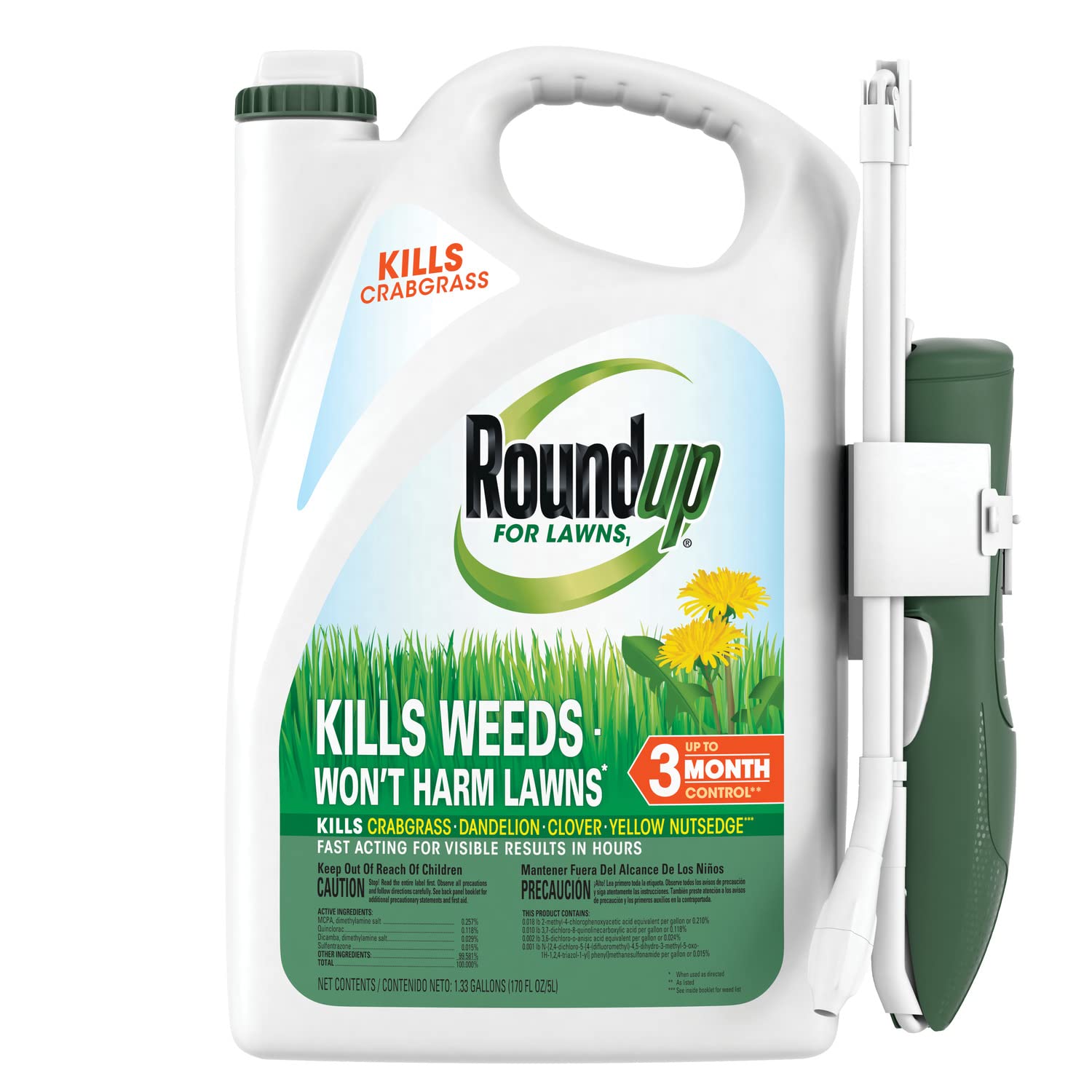
Roundup for Lawns Ready-to-Use is intended as a homeowner spot-treatment herbicide for northern turf grasses. The 1.33 gallon jug includes an extendable spray wand and continuous spray delivery so you can treat patches of clover, dandelions, crabgrass and many other listed weeds without mixing. It starts working quickly with visible effects in hours and is rainproof in about three hours, which helps when weather windows are short. The formula is labeled for use on common northern grasses such as Kentucky bluegrass, perennial ryegrass, fescues and zoysiagrass and claims up to three months of control on certain weeds when used as directed. Practical limits are that it is for spot applications rather than blanket lawn renovation, and it should only be used when weeds are actively growing and daytime temperatures are within the labeled range. Users must keep people and pets off treated areas until sprays have dried and follow the included weed list and directions for repeat treatments if needed.
Best for: Homeowners with northern cool-season lawns who want an easy, targeted solution to remove clover and other common lawn weeds without mixing concentrate.
Less Ideal for: People seeking an all-purpose product for southern warm-season turf or those wanting to treat an entire lawn uniformly should consider a different approach or professional options.
- Ready-to-use formulation requires no mixing for quick spot treatments
- Extendable spray wand and continuous spray make targeted application easier
- Starts working quickly and becomes rainproof in about three hours
- Labeled for control of many broadleaf and grassy weeds commonly found in northern lawns
- Designed for spot treatment rather than full-lawn broadcast application
- Restricted to listed northern grass types and specific temperature windows
Verdict: A convenient ready-to-use spot-treatment that effectively targets clover and other common weeds in northern cool-season lawns with minimal prep.
Syngenta Tenacity Herbicide, 8 fl oz (Pack of 2)
| Unit Count | 16 Fluid Ounces |
|---|---|
| Item Form | Liquid |
| Coverage | broad-leaf weeds and grass species |
| Active Ingredient | Mesotrione |
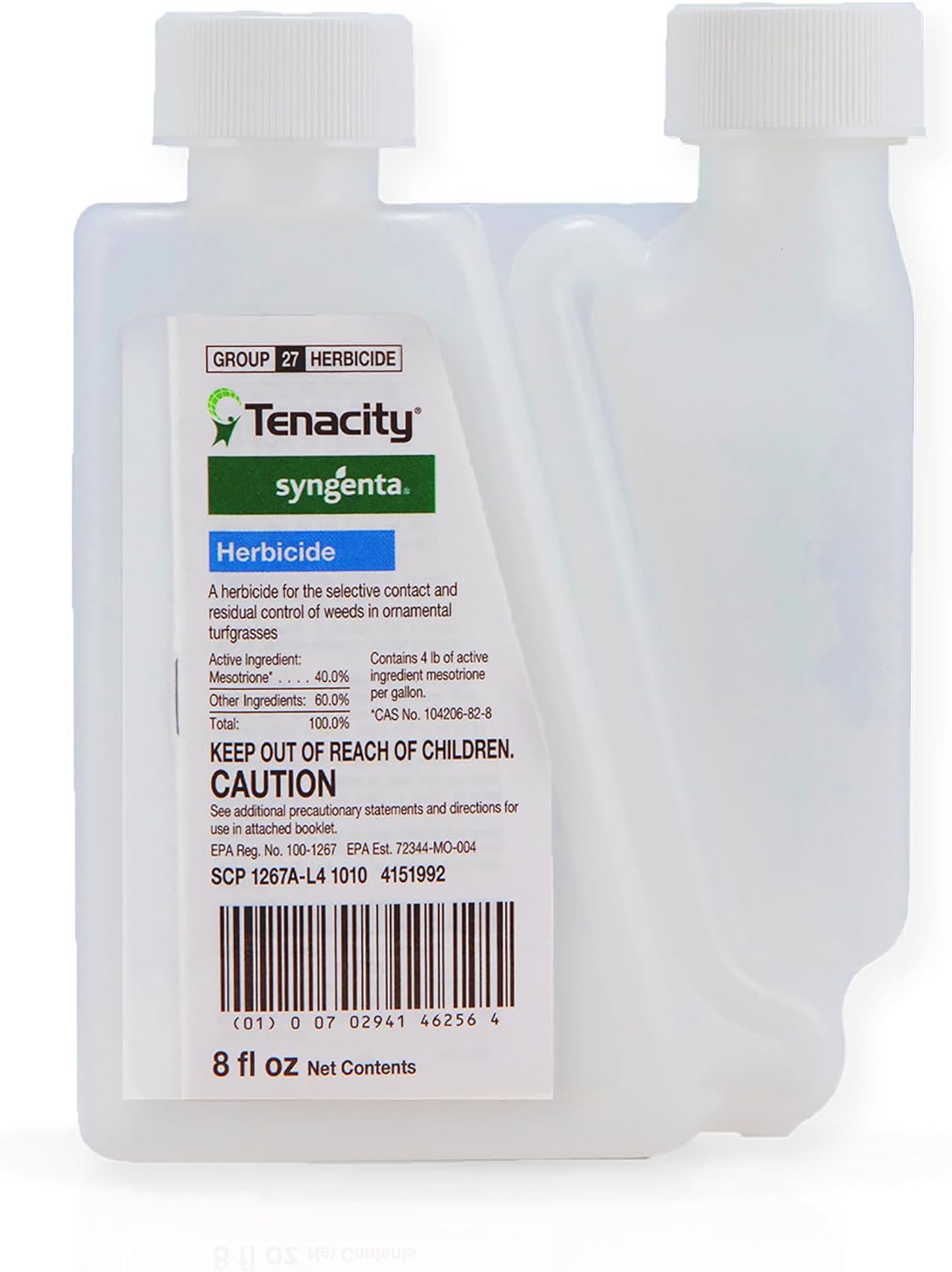
Tenacity is a concentrated liquid herbicide formulated to prevent new weeds from emerging and to selectively knock back existing broadleaf weeds and some grassy weeds in turf. It is typically mixed with water and applied as a spray; the bottle’s built-in dispensing chamber makes measuring straightforward for small jobs. Notable features include activity on both pre- and post-emergent targets and a labeled list of about 46 problem species such as crabgrass, clover, dandelion, oxalis and unwanted bentgrass. A key practical benefit is that it can be used at seeding or overseeding, which lets you treat sites where many other herbicides are restricted. The product is based on mesotrione, a proven active ingredient, and is designed to be selective so desirable turf survives when applied according to the label. Important limitations are that specific application rates, timing, tolerant turf species and safety precautions must be followed from the label and safety data sheet, and the concentrated liquid requires careful handling to avoid skin or eye contact.
Best for: Gardeners and turf managers focused on strong, reliable weed control who need a selective herbicide they can use when seeding or overseeding and who follow label directions closely.
Less Ideal for: Casual users who prefer ready-to-use sprays or those unwilling to read and follow label safety and application requirements.
- Controls both pre-emergent and post-emergent weeds including many broadleaf and certain grassy species
- Can be applied at seeding or overseeding where most herbicides are restricted
- Built-in dispensing chamber simplifies accurate measuring for small-volume mixes
- Concentrated liquid that requires careful handling and following detailed label safety directions
Verdict: Choose Tenacity when you need a selective, mesotrione-based herbicide that works both before and after weed emergence and is safe to use during seeding.
Ortho WeedClear Lawn Weed Killer Ready-to-Spray, 32 fl. oz.

| Coverage | 5000 square_feet |
|---|---|
| Item Form | Spray |
| Liquid Volume | 32 fluid ounces |
| Active Ingredients | 2,4-D; Quinclorac; Dicamba |
Ortho WeedClear Ready-to-Spray is a hose-attached weed killer made for treating common lawn weeds without mixing concentrates. Attach the sprayer to a garden hose, switch it on, and spray evenly until the lawn surface is wet; the formula is rainproof in about an hour and claims visible results within hours. It lists active ingredients including 2,4-D, quinclorac, and dicamba, which target broadleaf species such as dandelion, clover, chickweed and creeping charlie as well as some grassy weeds like crabgrass. The product covers up to 5,000 sq. ft. from a 32 fl. oz. bottle, so one container treats a typical medium lawn in a single pass. Practical benefits are ease of use, fast action, and compatibility with many northern lawn grasses when used as directed. Important limits are that it is not labeled for several turf types (for example St. Augustine and centipedegrass) and there are temperature restrictions for safe bermudagrass use; following safety directions to keep people and pets off treated areas until dry is necessary. For persistent infestations multiple applications or a targeted spot treatment may still be needed.
Best for: Homeowners who want a simple, ready-to-use spray to quickly knock back creeping charlie and other broadleaf weeds across a typical lawn and prefer an easy hose-end application.
Less Ideal for: People with warm-season lawns not listed on the label, organic-only gardeners, or those wanting a long-term preemergent solution should consider other approaches.
- Ready-to-use hose-end applicator for quick, no-mixing treatment
- Fast-acting formula that becomes rainproof within about one hour
- Targets common broadleaf weeds including creeping charlie and crabgrass
- Covers up to 5,000 sq. ft. from a single 32 fl. oz. bottle
- Works on many northern lawn grasses when directions are followed
- Not safe for several turf types and restricted on some grasses like St. Augustine and centipedegrass
- Contains synthetic herbicides requiring careful handling and keeping people and pets off until dry
- May require repeat or spot treatments for heavy or mature infestations
Verdict: If you need a fast, no-mix hose-end spray to reduce creeping charlie and common broadleaf weeds across a medium lawn, this product delivers quick, easy coverage.
Spectracide Weed Stop for Lawns Plus Crabgrass Killer, Ready-to-Use, 1 Gal

| Item Form | Spray |
|---|---|
| Coverage | Up to 5,000 sq ft |
| Liquid Volume | 1 gallons |
Spectracide Weed Stop for Lawns Plus Crabgrass Killer is a one-gallon, ready-to-use spray formulated to kill a wide range of lawn weeds by contact down to the root. You use it by spraying affected areas after mowing and when daytime temperatures are between 45 and 90 degrees F; the label warns about possible temporary discoloration on Bermudagrass at higher temperatures. Notable features include a no-mix formulation, advertised coverage up to 5,000 square feet, and a contact-action formula that produces visible wilting in about five hours. For clover in lawns this product is effective because it is designed to kill broadleaf weeds without harming turf when applied as directed. Important limitations are that it kills on contact, so complete coverage of foliage is necessary, and timing and temperature restrictions must be followed to avoid lawn stress on certain grass types. Also, as a spray it treats only visible weeds and does not provide residual preemergent control.
Best for: Buyers who want a simple, ready-to-use spray to remove visible clover and other broadleaf weeds quickly without mixing chemicals, and who prefer following label directions to protect their lawn.
Less Ideal for: People seeking long-term prevention of new weed growth or a solution for large commercial turf areas where broadcast application and residual control are needed should consider alternative products.
- Ready-to-use spray requires no mixing and is easy to apply to spot infestations
- Claims visible results in about five hours, so you can confirm effectiveness quickly
- Broad spectrum label lists 470+ weed types including clover and crabgrass
- Advertised coverage up to 5,000 sq ft from the one-gallon container
- Kills by contact so it requires thorough leaf coverage to be effective
- Temperature restrictions and potential temporary yellowing on Bermudagrass limit when it can be used safely
- No residual or preemergent activity so it will not prevent new weed germination
Verdict: A user-friendly, ready-to-use spray that quickly kills clover and other listed broadleaf weeds when applied carefully and at the right temperatures.
Target 6 Plus MSMA 48.3% Post-Emergent Turf Herbicide, 2.5 Gallon
| Active Ingredients | Monosodium acid Methanearsonate MSMA |
|---|---|
| Unit Count | 320 Fluid Ounces |
| Item Form | Liquid |
| Coverage | Selective: Crabgrass, Dallisgrass, Johnsongrass, Nutsedge, Pigweed, Chickweed |
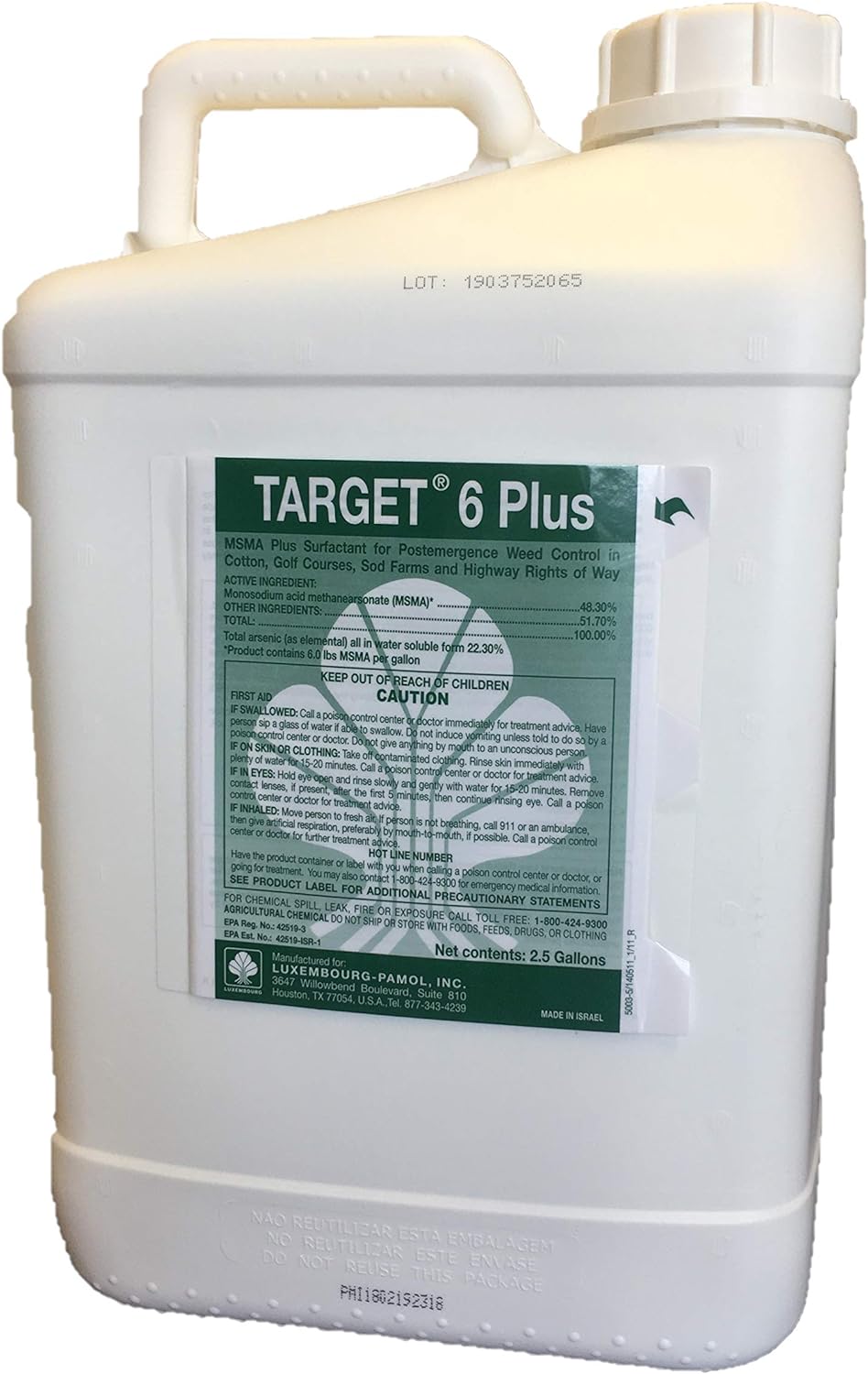
Target 6 Plus MSMA is a concentrated post-emergent herbicide intended for selective control of crabgrass, dallisgrass, johnsongrass, nutsedge, pigweed, and chickweed in turf. It is mixed at about 2 ounces per gallon and applied as a coarse spray, so most users will use it with a pump sprayer to spot-treat or cover larger areas such as golf course turf, sod farms, or established lawns. The primary strength is its active ingredient, monosodium acid methanearsonate (MSMA), which is effective on weeds that many general lawn products struggle to suppress. The product comes in a 2.5 gallon jug, which provides a substantial supply for repeated treatments across medium to large lawns. Important practical considerations are safety and label directions: the product can be harmful if absorbed or swallowed and must not be applied where food is grown, and protective equipment and careful handling are required. This makes it suitable for experienced users or contractors who follow label instructions, while casual gardeners should exercise caution or seek professional application.
Best for: Buyers who prioritize reliable, contractor-grade control of stubborn post-emergent turf weeds and who are comfortable following strict label safety and application procedures.
Less Ideal for: Casual gardeners, small-plot vegetable or edible growers, or anyone unwilling to use personal protective equipment or follow restricted-use safety guidance.
- High concentration of MSMA effective on hard-to-control grassy weeds
- Large 2.5 gallon volume supports multiple treatments for medium to large turf areas
- Selective post-emergent activity targets both grassy and some broadleaf weeds listed on the label
- Simple mix rate (2 oz per gallon) makes dilution and repeat applications straightforward
- Contains an arsenical active ingredient that requires strict safety precautions and may have regulatory restrictions
- Not intended for use where food is grown and requires protective equipment during handling and application
Verdict: Choose this concentrated MSMA formulation when you need proven, contractor-grade post-emergent control of tough turf weeds and will follow label safety and application requirements.
Choosing the Right Post Emergent Lawn Weed Killer: Key Factors to Consider
Weed Type and Growth Stage
Different post emergent chemistries work better on certain categories of weeds. Broadleaf weeds, clovers, dandelions, chickweed, and plantain respond differently to selective herbicides than grassy weeds such as crabgrass or foxtail. Prioritize a product labeled for the specific species you see.
Growth stage matters. Most post emergent products are most effective on actively growing, young weeds rather than mature plants that have flowered or set seed. Treat when weeds are green and actively growing for quicker, more reliable control.
Turfgrass Type and Safety
Your lawn species affects which formulations are safe to use. Cool-season grasses and warm-season grasses tolerate different active ingredients and application timings. A product labeled safe on one turf type can cause discoloration or injury on another if misapplied.
Check label guidance for maximum application rates, temperature restrictions, and any wait periods for mowing or irrigation related to turf safety. When in doubt, choose a product explicitly labeled for your predominant lawn grass.
Application Timing and Weather Constraints
Post emergent herbicides are generally most effective when weeds are actively growing and when conditions are calm and dry. Windy or rainy conditions can reduce efficacy and increase off-target movement.
Temperature thresholds matter. Many products advise against spraying during heat stress or when temperatures exceed a specified maximum to avoid turf injury. Plan applications for calm mornings or evenings with several hours of dry weather ahead.
Mixing, Coverage, and Equipment
Some products are ready-to-use spray bottles suitable for spot treatments, while concentrated formulations require measuring and a pump sprayer for whole-yard coverage. Coverage rate and droplet size affect how evenly weeds are hit and how much product you need.
Proper calibration of a sprayer and use of recommended water volumes per area are important for consistent results. Consider whether you prefer spot treatment convenience or the flexibility to treat large areas with a concentrated product.
Environmental and Safety Restrictions
Label precautions protect people, pets, and sensitive plants. Many products specify minimum reentry intervals, personal protective equipment, and restrictions near water or desirable ornamentals to reduce off-target impacts.
If you have pollinator-sensitive plantings, water features, or steep slopes that can cause runoff, select formulations with lower off-target movement and follow buffer recommendations. Always follow label disposal and storage guidance to minimize environmental risk.
Follow-up Actions and Turf Recovery
Effective post emergent control often requires follow-up mowing, spot treatments, or reseeding of bare patches. Some herbicides permit overseeding within a short window while others require waiting several weeks or months to avoid harming new grass seedlings.
Plan a recovery schedule that includes watering, fertilization, and timing of any reseeding. Knowing the allowed interval for reseeding or renovation helps you decide between fast-acting products that delay overseeding and gentler options that allow earlier lawn repair.
When to Use Post Emergent Control
Use post emergent herbicides once weeds are visible and actively growing rather than as a preventive measure. They are intended to stop or weaken established weeds that escaped preemergent protection or that germinated from seed bank disturbances.
Apply at the labeled growth stages and avoid applications during drought stress or extreme heat. For spot outbreaks, targeted sprays minimize chemical use and reduce risk to nearby desirable plants.
- Best for visible broadleaf weeds and some annual grasses
- Not a substitute for a spring preemergent strategy for annual grassy weeds
- Ideal for targeted spot control or follow-up after cultural practices
Application Best Practices
Mix and apply according to label directions, matching the recommended water volume and nozzle type. Proper dilution and spray pattern help ensure full coverage of leaf surfaces without runoff.
Avoid mowing 24 to 48 hours before application so plants are leafy and can absorb the herbicide. After application, minimize irrigation for the time specified on the label to allow foliar uptake unless the product requires activation by moisture.
- Calibrate sprayer for even coverage
- Spray in calm, dry conditions
- Follow any post-application reentry and mowing restrictions
Spot Treatment Versus Whole-Lawn Programs
Spot treatment is the most efficient approach for small, isolated outbreaks and reduces overall chemical use. Ready-to-use trigger sprays or small-mix concentrates work well for scattered patches of broadleaf weeds.
Whole-lawn applications are useful when weeds are widespread or when a pre-planned renovation or maintenance program is in place. Concentrates offer cost savings for large areas but require careful calibration to avoid overapplication.
- Spot treat visible patches to limit product volume
- Use a backpack or hose-end sprayer for larger, consistent coverage
- Plan whole-lawn timing to coordinate with fertilization and reseeding windows
Integrating Herbicide Use with Cultural Practices
Cultural practices are the long-term defense against weed pressure. Proper mowing height, appropriate irrigation, balanced fertility, and aeration strengthen turf and reduce space available to weeds.
Combine targeted post emergent treatments with cultural improvements to reduce repeat outbreaks. Address underlying causes such as compaction, thin turf, or shade to make herbicide applications more effective and less frequent.
- Raise mowing height to shade out weed seedlings
- Repair thin areas promptly after allowed wait periods
- Use soil testing to tune fertility and promote dense turf
Safety Around People, Pets, and Water
Observe label reentry intervals and keep children and pets off treated areas until the product has dried or until the specified time has elapsed. Some products include specific pet safety instructions that affect when animals can return to the lawn.
Avoid applications near surface water and follow buffer recommendations to prevent runoff. If your yard drains into sensitive areas, choose sprays with lower mobility and follow measures to reduce drift and runoff.
- Keep treated turf dry for the label-specified period
- Store and dispose of unused product per label
- Avoid drift onto flower beds or vegetable gardens
How We Chose the Best Post Emergent Lawn Weed Killer
We focused on products formulated for treating actively growing broadleaf weeds in established lawns and evaluated each entry against practical, gardener-facing criteria. Primary evaluation dimensions included weed control speed and spectrum, which measures how quickly and how many common lawn weeds a product controls. Turf safety and selectivity assessed risk of damage across common cool- and warm-season grasses when label directions are followed. Application flexibility covered tank mixing, spray rates, and suitability for spot treatment versus whole-yard use. Persistence and re-treatment interval looked at residual activity and how soon you can reseed or overseed after treatment. Ease of use and label clarity examined how understandable directions, mixing instructions, and safety precautions are for noncommercial users. We excluded products intended only for non-turf areas, preemergent-only chemistries, or those lacking clear lawn-label guidance. Results emphasize real-world handling, timing, and the kinds of weeds controlled rather than controlled-environment claims.
FAQ
Can I use a post emergent product while my lawn is being overseeded?
It depends on the product. Some post emergent herbicides allow overseeding after a short wait, while others require a longer interval to avoid harming seedlings. Check the label for specific reseeding or overseeding wait times and plan timing accordingly.
Will a post emergent treatment kill turfgrass?
Most selective post emergent products are formulated to spare common turf species when applied at label rates, but turf injury can occur under stress or with misapplication. Observe temperature and mowing restrictions to reduce the chance of scorch or thinning.
How soon will I see weeds die after spraying?
Visible effects vary by weed species and product, but many broadleaf weeds show yellowing or wilting within days and die back over one to three weeks. Tough or perennial weeds may take longer or require repeat treatments.
Can I combine a post emergent herbicide with fertilizer?
Some products allow tank mixes with certain lawn fertilizers, but compatibility depends on formulation. Read label mixing instructions and perform a small compatibility test before treating the entire lawn.
Is spot treatment better than treating the whole lawn?
Spot treatment minimizes chemical use and is usually preferable for isolated patches. Whole-lawn treatment may be appropriate for widespread infestations or as part of an integrated maintenance plan.
What precautions should I take to avoid off-target drift?
Spray during calm weather, use larger droplet nozzles, and avoid high-pressure misting. Maintain buffer zones from ornamental beds and follow label guidance about wind speed and sensitive plants.
Final Verdict
Choose a post emergent lawn weed killer based on the weeds present, your turf type, and how quickly you need visible control. Prioritize products with clear label instructions for your grass species, reasonable reseeding intervals, and flexible application methods that match the size of the treated area. Balance quick knockdown with turf safety and environmental precautions. When in doubt, start with targeted spot applications and combine herbicide use with cultural practices to reduce future weed pressure and support lawn recovery.
