

Note: This article contains affiliate links. If you click on these links and make a purchase, I may earn a small commission at no extra cost to you. This helps support my research and content. Read my full affiliate disclosure here.
Yews respond best to predictable, steady nutrition that supports evergreen foliage, dense branching, and winter resilience. Choosing the right fertilizer for yews matters because incorrect ratios or improper timing can encourage weak new growth or stress the plants before cold weather. This guide shortlists seven top options suited to yews, and evaluates them against the practical concerns gardeners face: nutrient profile, release type, ease of application, and winter safety. Read on to find a feeding approach that fits your planting situation and maintenance routine.
Top Picks at a Glance
| Best Overall The best all-around choice for most situations | TreeHelp Premium Liquid Fertilizer for Yew |  |
| Best Quality Built to a higher standard if you want something more solid | Espoma Organic Evergreen-Tone 4-3-4 Fertilizer for Evergreen Trees & Shrubs, 18 lb |  |
| Best Value The sweet spot between price and what you get | Southern Ag All Purpose Granular Fertilizer 10-10-10 (5 lb) |  |
| Best Budget The cheapest option that still gets the job done reliably | Ironite Plus Granular Plant Food 12-10-10 (3 lb) |  |
| Highest Rated A top-rated pick with lots of positive feedback | Winchester Gardens Evergreen Fertilizer Spikes 12-10-10 (Bucket) |  |
| Most Popular A crowd favorite that many people choose with confidence | Miracle-Gro Water Soluble All Purpose Plant Food, 3 lb |  |
| Best Seller A high-volume bestseller chosen again and again | Jobe's Evergreen Fertilizer Spikes, Slow-Release, 15 Count |  |
TreeHelp Premium Liquid Fertilizer for Yew

| Item Form | Liquid |
|---|---|
| Specific Uses For Product | Root Development |
| Coverage | Full |
| Target Species | Yew |
| Unit Count | 52.9 Ounce |
TreeHelp Premium Liquid Fertilizer is a yew-specific liquid feed designed to encourage strong root development and steady growth over the season. It is typically applied according to the included directions to the root zone of established or newly planted yews; one bottle treats a large tree or several smaller specimens. Notable features include a formulation targeted for yew and a slow-release nitrogen component that helps sustain feeding rather than producing a short-lived flush. In practice this makes it useful after planting or during the growing season to support recovery and long-term vigor. The liquid form allows even application where roots are accessible and mixes easily with water for drenching. Limitations are that it is specialized for yew so it is not a universal feed for mixed-species beds and the product weight means it is a single mid-size bottle rather than a bulk supply for large plantings. Directions are included, which helps ensure correct dosing for root-focused treatments.
Best for: Gardeners who maintain yew shrubs or trees and want an easy-to-apply, root-focused feed to support establishment and steady seasonal growth.
Less Ideal for: People managing mixed-species beds who need a single all-purpose fertilizer or those needing large-volume bulk fertilizer for many plants.
- Formulated specifically for yew to address species needs
- Liquid presentation mixes and distributes evenly for root zone applications
- Slow-release nitrogen provides extended feeding through the season
- Includes complete directions for correct dosing and application
- Specialized product not intended as a general-purpose fertilizer for many other plant types
Verdict: Choose this product when you want a yew-specific, easy-to-apply liquid fertilizer that supports root development and season-long feeding.
Espoma Organic Evergreen-Tone 4-3-4 Fertilizer for Evergreen Trees & Shrubs, 18 lb

| Item Form | Granules |
|---|---|
| Application Method | Ready to use |
| Target Species | Evergreen trees and shrubs |
| Mixing Ratio | 4:3:4 |
Espoma Organic Evergreen-Tone is a granular, ready-to-use fertilizer aimed at promoting steady growth and color in evergreen trees and shrubs. You apply it at planting and as a regular feed in early spring and late fall to supply balanced nitrogen, phosphorus, and potassium along with organic matter and Bio-tone microbes that support root development. Because it is formulated specifically for needleleaf and broadleaf evergreens, it is useful for young ornamental pines, firs, rhododendrons, azaleas, and camellias where steady, gradual feeding and improved soil biology matter. The product is certified for organic production and contains no sludges or fillers, so it suits gardeners who want natural inputs. Limitations are that coverage is described as medium, so an 18 lb bag may not be sufficient for large plantings, and the granules provide slower nutrient release compared with soluble feeds when immediate greening is required. For performance-focused gardeners, this delivers reliable, low-risk nutrition while emphasizing long-term root health.
Best for: Gardeners who prioritize steady, long-term performance and healthier root systems for young evergreen trees and shrubs, and who prefer organic inputs over quick-release chemical feeds.
Less Ideal for: People needing fast-visible results or feeding large numbers of trees quickly should consider concentrated soluble fertilizers or bulk commercial products instead.
- Balanced 4-3-4 NPK formulated for evergreen growth and color
- Contains Bio-tone microbial formula to support root development
- Ready-to-use granular form requires no mixing
- Approved for organic gardening with natural ingredients
- Medium coverage means the 18 lb bag may require multiple purchases for larger landscapes
- Slower nutrient release than water-soluble fertilizers when rapid correction is needed
Verdict: A performance-minded organic granular fertilizer that supports steady growth and root health in young evergreen trees and shrubs.
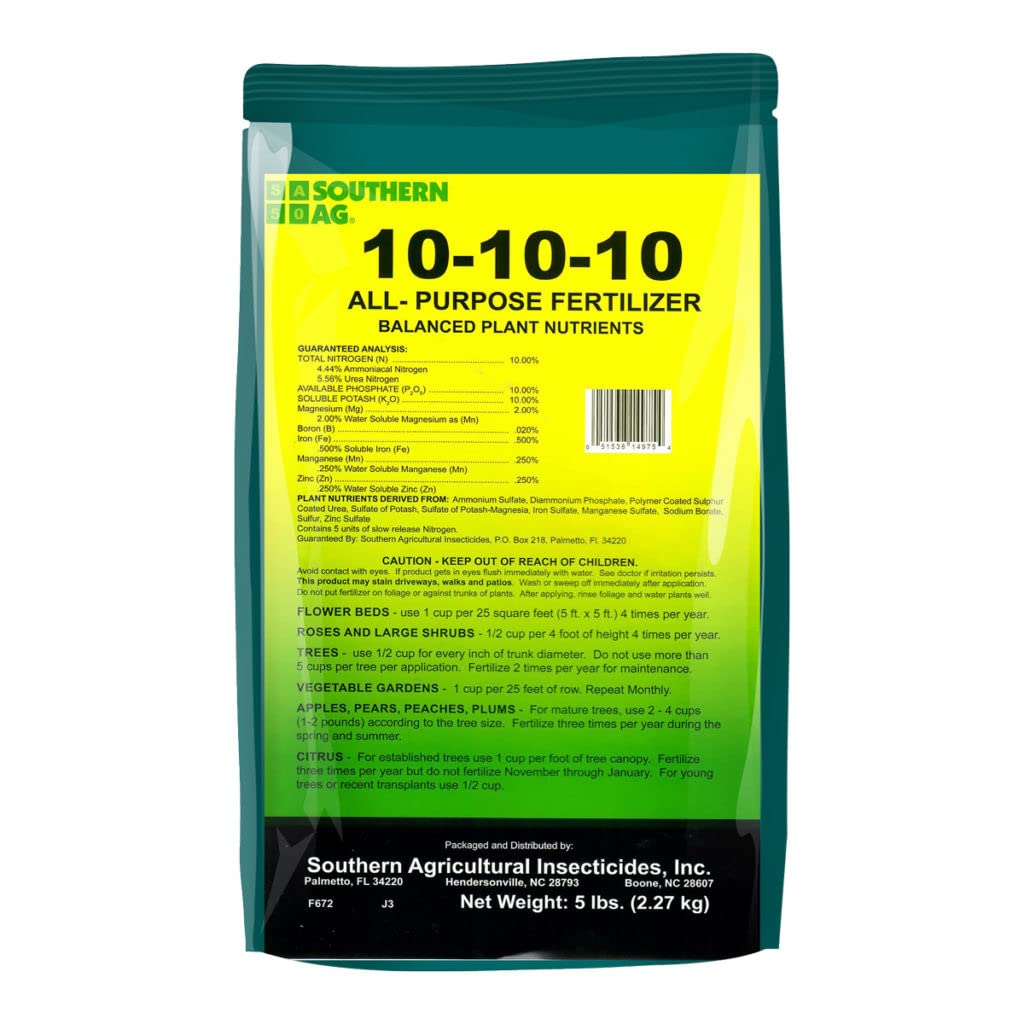
Southern Ag All Purpose Granular Fertilizer 10-10-10 (5 lb)
| Item Form | Granules |
|---|---|
| Specific Uses For Product | Citrus and Fruit Trees, Flowerbeds, Roses, and Large Shrubs, Vegetable Gardens |
| Application Method | Broadcast evenly over area and water in. |
| Mixing Ratio | 10:10:10 |
This 5 lb bag of Southern Ag 10-10-10 granular fertilizer is a straightforward, balanced all-purpose feed for vegetable beds, fruit trees, roses, and shrubs. You spread the granules uniformly over soil or beds and water them in; directions and recommended cup measurements are printed for common uses so dosing is easy. The formula supplies equal parts nitrogen, phosphorus, and potassium plus trace minerals like magnesium, iron, manganese, zinc, and boron, which supports steady vegetative growth and overall plant health. For asparagus specifically it can be used as a periodic maintenance feed during the growing season to support fern growth and energy storage in crowns. The product is simple to store and apply, and the small bag size is convenient for trialing on a single bed or patch. Limitations are that it is a general blend rather than a tailored asparagus formula, so heavy feeders or soils needing specific nutrient correction may require additional amendments, and granular broadcast feedings require careful placement to avoid contact with foliage or runoff risks described on the label.
Best for: Gardeners on a budget who want a simple, balanced fertilizer to maintain small asparagus patches and other mixed beds without buying specialty formulas.
Less Ideal for: Growers managing large asparagus plantings, or who need a targeted high-potassium or soil-specific amendment, should choose a crop-specific or soil-test-driven fertilizer.
- Balanced 10-10-10 N-P-K supports general growth and root development.
- Includes micronutrients (iron, manganese, zinc, boron) for broader plant nutrition.
- Clear application instructions and coverage rates for common garden uses.
- Small 5 lb size is convenient for testing on a single asparagus bed or small garden.
- Not formulated specifically for asparagus so may lack the higher potassium or phosphorus some heavy beds benefit from.
- Granular broadcast application can stain hard surfaces and requires watering after application to activate nutrients.
Verdict: A low-cost, easy-to-use balanced granular fertilizer that is a practical maintenance feed for small asparagus beds and mixed gardens.
Ironite Plus Granular Plant Food 12-10-10 (3 lb)

| Item Form | Granules |
|---|---|
| Specific Uses For Product | Outdoor |
| Application Method | Pour |
| Coverage | 100 square feet |
| Target Species | Shrubs, Trees, Flower gardens |
Ironite Plus is a small-bag granular fertilizer intended for routine feeding of shrubs, trees, and flowering beds. You spread or pour the granules around the root zone following package directions; the 12-10-10 N-P-K ratio supports leafy growth early in the season while phosphorus encourages stronger roots and better blooms. The formula also includes iron, sulfur, and other micronutrients that can help correct minor iron deficiencies and improve color. A 3 pound unit is easy to store and convenient for spot treatments or for homeowners with a few specimens rather than large landscapes. Coverage is listed at about 100 square feet, so it is best used on a handful of trees or concentrated flower beds rather than broad lawns. Limitations are the modest package size and the nitrogen-forward ratio, which may not be ideal if you need a lower-nitrogen bloom booster or long-term slow-release feeding for large plantings. Follow the label rates to avoid overapplication near young roots.
Best for: Home gardeners who want an affordable, easy-to-apply granular fertilizer for a few flowering trees, shrubs, or concentrated beds and who prefer quick visible results over long-term slow-release feeding.
Less Ideal for: People managing large landscapes or beds who need coverage from a single purchase or gardeners seeking a specialized low-nitrogen bloom booster should consider larger bags or different formulas.
- Balanced 12-10-10 N-P-K that supports growth, root development, and flowering
- Includes iron and micronutrients to help correct minor deficiencies and improve foliage color
- Granular form is easy to apply by hand and suitable for spot treatments
- Small 3 lb bag is convenient and reduces waste for homeowners with a few trees or beds
- Small package covers limited area so multiple purchases are needed for larger gardens
- Not a low-nitrogen bloom-specific formula for gardeners seeking a dedicated flowering booster
Verdict: A budget-friendly, easy-to-use granular 12-10-10 fertilizer that supplies iron and micronutrients for a few flowering trees and shrubs.
Winchester Gardens Evergreen Fertilizer Spikes 12-10-10 (Bucket)

| Item Form | Sticks |
|---|---|
| Application Method | Spikes |
| Mixing Ratio | 12:10:10 |
| Unit Count | 96 Ounce |
These Winchester Gardens Evergreen Fertilizer Spikes are premeasured 12-10-10 sticks meant to be pushed into the root zone around shrubs and evergreens for steady nutrient delivery. They are typically used by inserting spikes around the dripline of yews and other evergreen shrubs at recommended spacing, which eliminates frequent measuring and reduces the risk of overfeeding. The product comes in a 6 lb reusable bucket that stores unused spikes and keeps them dry. Practical benefits include convenient, low-mess application, consistent slow-release feeding that supports foliage health, and suitability for homeowners who prefer a set-and-forget approach. Limitations are that spikes offer less flexibility for spot-feeding specific nutrient deficiencies and do not allow precise custom NPK adjustments beyond the provided 12-10-10 formulation. Also, spikes need to be placed correctly to reach active roots, so application still requires basic horticultural judgment.
Best for: Home gardeners and property owners who want a reliable, low-maintenance feeding method for yews and other evergreens and value consistent, preset nutrient delivery.
Less Ideal for: Gardeners who need precise soil-specific nutrient management or who prefer water-soluble feeds for immediate correction of deficiencies should consider other formulations.
- Premeasured spikes reduce measuring errors and make application quick and tidy
- Slow-release 12-10-10 formula supplies balanced NPK for evergreen foliage over time
- Reusable bucket provides dry storage and keeps unused spikes organized
- Simple spike application is low‑mess and suitable for routine seasonal feeding
- Fixed 12-10-10 ratio limits ability to correct specific nutrient deficiencies
- Less effective for targeted spot treatments compared with soluble fertilizers
- Requires correct placement around root zone to be fully effective
Verdict: A convenient, reliable slow‑release spike fertilizer for homeowners who want steady, low‑effort feeding for yews and other evergreens.
Miracle-Gro Water Soluble All Purpose Plant Food, 3 lb

| Item Form | Powder |
|---|---|
| Application Method | Mix with water in a watering can |
| Fertilizer Analysis (N‑P‑K) | 24-8-16 |
| Unit Count | 48 Ounce |
| Coverage | Feeds approximately 1,200 sq. ft. |
Miracle‑Gro Water Soluble All Purpose Plant Food is a powdered NPK 24‑8‑16 formula that dissolves in water to give plants a quick nutrient boost. You mix measured scoops into a watering can and apply to the soil at the base of plants every 7–14 days for outdoor use or every 14 days for houseplants. Notable features include a high nitrogen content for leafy growth, compatibility with containers and in‑ground beds, and guidance for use with a Miracle‑Gro Garden Feeder for larger areas. In practical terms this is a fast‑acting feed that encourages bigger, greener foliage and works well in regular maintenance of perennials like hostas. Limitations are that it is a fast‑release fertilizer rather than a slow‑release option, so it requires regular reapplication and careful measuring to avoid overfeeding. Also, the 24‑8‑16 balance is geared toward vegetative growth, so it is not optimized if you want to prioritize flowering or bloom boosting.
Best for: Buyers who want a reliable, fast‑acting feed to maintain lush, leafy perennials and container plants and who value proven products with broad user endorsement.
Less Ideal for: Gardeners seeking a single, long‑lasting granular fertilizer or a bloom‑focused formula should consider alternative slow‑release or high‑phosphorus products.
- Water‑soluble powder mixes easily for quick uptake by roots
- High nitrogen formula promotes robust leafy growth ideal for shade plants
- Clear mixing and application instructions for both indoor and outdoor use
- Suitable for containers and in‑ground gardens and compatible with garden feeders
- Requires frequent applications so it is not a low‑maintenance, slow‑release option
- High nitrogen ratio is less suitable when the primary goal is more flowers than foliage
Verdict: A fast‑acting, water‑soluble fertilizer that reliably produces bigger, greener hosta leaves when used as directed.
Jobe's Evergreen Fertilizer Spikes, Slow-Release, 15 Count

| Unit Count | 15 Count |
|---|---|
| Item Form | Sticks |
| Application Method | Insert spikes into soil |
| Target Species | Evergreen Trees |
| Ingredients | 13% Nitrogen, 3% Phosphorus, 4% Potassium |
Jobe's Evergreen Fertilizer Spikes are premeasured slow-release sticks designed to feed acid-loving evergreens like arborvitae, cypress, pine, and cedar. You insert the spikes around the tree dripline twice a year using a hammer and cap; the spikes release nutrients slowly at the root zone so there is minimal runoff or surface mess. The 13-3-4 NPK formula supports foliage color and general growth while reducing the risk of overfertilizing because each spike contains a controlled dose. Practical benefits include simple twice-yearly application, no mixing, and targeted delivery that is easy to manage on multiple trees. Limitations are that coverage is medium so larger or densely planted specimens will need more spikes, and spikes must be placed correctly around the dripline and kept at the recommended distance from the trunk. This product is best as a low-effort maintenance feed rather than a quick corrective treatment for nutrient deficiencies.
Best for: Homeowners who want a low-maintenance, no-mess way to maintain arborvitae and other acid-loving evergreens with predictable twice-yearly feeding.
Less Ideal for: Gardeners needing rapid correction of nutrient deficiencies or feeding large specimen trees that demand heavier or more frequent fertilization.
- Slow-release formula delivers nutrients directly to active root zones, reducing runoff
- Premeasured spikes eliminate mixing and make twice-yearly application quick and tidy
- Formulated for acid-loving evergreens, supporting foliage color and steady growth
- Minimal surface mess or odor compared with granular or liquid fertilizers
- Medium coverage means larger trees require many spikes for adequate feeding
- Must be driven into soil at correct depth and spacing for effectiveness
Verdict: A simple, low-effort slow-release feeding option that keeps arborvitae healthy with twice-yearly, no-mess applications.
Choosing the Right Fertilizer for Yews: Key Factors to Consider
Nutrient Ratio and Micronutrient Balance
Yews are evergreen shrubs that need enough nitrogen for healthy foliage without excessive soft growth that is vulnerable to cold. A balanced N-P-K ratio with modest nitrogen and adequate potassium helps support both foliage color and winter hardiness.
Micronutrients matter because yews can show subtle deficiencies, especially iron and magnesium, which cause yellowing between veins. Choosing a fertilizer that includes trace elements or planning periodic micronutrient supplements reduces the risk of chlorosis and maintains dense, dark green foliage.
Release Type and Feeding Schedule
Slow-release granular fertilizers provide a steady supply of nutrients over weeks or months, which is often preferable for yews to avoid spurts of tender growth late in the season. Controlled-release formulations reduce the chance of overfeeding and simplify seasonal timing.
Water-soluble feeds allow for quick correction of deficiencies and greater control of nutrient strength, but they require more frequent applications. Consider soil temperature and growth cycles when choosing release type so that feeding supports active growth in spring and early summer without stimulating late growth that could be damaged by frost.
Salt Index and Winter Safety
Fertilizers with high soluble salt content can desiccate evergreen foliage and harm roots, especially in cold, dry winter conditions. Low-salt or slow-release products are less likely to cause root stress and winter burn on yew branches.
If you garden in areas with cold winters or frequent freeze-thaw cycles, prioritize formulations tested for use on evergreens or labeled as safe for shrubs. Proper application rates and timing also reduce salt buildup in the root zone.
Application Method and Practicality
How you apply fertilizer affects coverage around the root zone of yews, which often have shallow, spreading roots. Granules worked into the topsoil or banded around the dripline give even feeding. Liquid or soluble feeds can be watered in to reach finer roots but require more regular attention.
Consider your garden routine and tools. If you prefer low-maintenance care, a long-lasting granular or slow-release product reduces the number of visits needed each season. For container-grown yews, soluble feeds allow finer control but demand careful dosing.
Suitability for Plant Age and Size
Young transplants have different nutritional needs than large, established yews. Newly planted shrubs need gentle feeding to encourage root establishment without forcing rapid top growth, while mature plants benefit from maintenance-level nutrition to support foliage and structure.
Choose formulas and application rates appropriate for the planting stage. Some products are labeled for newly set shrubs with lower nutrient concentrations, and others are designed for annual maintenance on established specimens.
Soil Type and pH Considerations
Soil texture and pH influence nutrient availability for yews. Heavy clay holds nutrients and moisture differently than sandy soils, which may leach soluble fertilizers faster. Yews generally prefer slightly acidic to neutral soils; if pH drifts alkaline, micronutrients like iron become less available.
Test soil before committing to a program. Adjust fertilizer type and schedule based on drainage and pH. In high pH soils, select products or supplements that include chelated micronutrients to avoid deficiency symptoms.
When to Feed Yews During the Year
Timing matters more than frequency for yew feeding. The main feeding window is early spring, as growth resumes, when plants can use nutrients to expand foliage and strengthen branches. A second, lighter application in late spring or early summer can support midseason vigor but avoid feeding late in the growing season to prevent tender new shoots before winter.
If you use slow-release products, apply according to label timing so nutrients are available during active growth. For soluble feeds, follow a conservative schedule that supports steady growth without causing late-season flushes. Always consider your local climate and frost dates when planning applications.
- Feed in early spring after the worst frost has passed.
- Avoid high-nitrogen applications in late summer or fall.
- Adjust timing for container plants, which may need more frequent feeding.
Applying Fertilizer Around the Root Zone
Yew roots are typically shallow and spread beyond the canopy dripline. Distribute granular fertilizer evenly in a ring from the trunk to beyond the outer branches rather than piling it at the base. Lightly work granules into the topsoil and water in to move nutrients toward feeder roots.
For liquid feeds, apply evenly across the root area and water thoroughly so nutrients reach the fine roots. Avoid disturbing the rootball of established plants; surface applications or shallow banding are safer and effective.
- Measure the spread of the shrub and apply fertilizer across that area.
- Do not place concentrated piles against the trunk.
- Water after application to reduce burn risk and activate nutrients.
Addressing Common Nutrient Problems in Yews
Yellowing foliage or interveinal chlorosis often points to micronutrient deficiencies like iron or magnesium rather than missing macronutrients. If fertilization does not correct yellowing, test soil pH and consider targeted micronutrient treatments or foliar sprays for quicker correction.
Excessive, leggy growth can result from too much quick-release nitrogen. If you notice weak new growth, reduce feeding frequency and switch to slower-release formulations to encourage denser branching and more robust wood development.
- Test soil before adding corrective treatments.
- Use targeted micronutrient supplements if chlorosis persists.
- Reduce soluble nitrogen if growth becomes overly soft and leggy.
Feeding Container-Grown and Hedge-Planted Yews
Containers dry and deplete nutrients faster than in-ground plantings, so container yews need more frequent, lighter feedings. Use soluble feeds at lower concentrations or slow-release pellets formulated for containers to maintain steady nutrition without salt buildup.
For hedged yews planted in a line, consider banding fertilizer along the planting row rather than spot application. This ensures even nutrition for consistent growth and uniform appearance across the hedge.
- Containers: prefer diluted liquid feeds every few weeks or controlled-release granules at recommended lower rates.
- Hedges: band applications along the root zone of the row for uniform results.
Organic Options and Soil-Building Approaches
Organic fertilizers and amendments release nutrients more slowly and improve soil structure, which benefits yews over the long term. Compost, well-rotted manure, and organic granular blends supply steady nutrition and feed soil life, enhancing root health and moisture retention.
If you prefer organic approaches, plan for longer-term results and consider supplementing with targeted micronutrients if deficiencies appear. Combining organic amendments with regular pH testing and occasional mineral supplements gives a balanced strategy for healthy evergreens.
- Use compost or aged manure to improve soil organic matter.
- Organic blends may need supplemental micronutrients in alkaline soils.
- Expect slower, steadier changes compared with soluble chemical feeds.
How We Chose the Best Fertilizer for Yews
We focused on fertilizer characteristics that directly affect yew health and long-term structure. Key evaluation criteria included nutrient ratio and micronutrients, release mechanism (slow-release granules versus soluble feeds), application convenience and flexibility, salt index and winter safety, and suitability for established shrubs versus newly planted specimens. We prioritized formulas that supply balanced nitrogen for foliage without excessive stretch, adequate potassium for hardiness, and micronutrients like iron where chlorosis risk is present. Release mechanism mattered because yews prefer steady feeding rather than quick spikes of growth that can be vulnerable to frost. Ease of application and clear instructions were included since timing and method influence outcomes in home gardens. Exclusions included fertilizers formulated only for turf, those with very high salt content unsuitable for evergreens, and specialty mixes meant for unrelated plant types. The final list highlights options that match real-world planting scenarios and seasonal care routines for yews.
FAQ
How often should I fertilize established yews?
Established yews usually do well with one thorough feeding in early spring and an optional light follow-up in late spring or early summer. Using a slow-release fertilizer can reduce the need for multiple applications.
Can I use a general shrub fertilizer on yews?
Often you can, provided the formula has a balanced nutrient ratio and a low salt index suitable for evergreens. Check that the product includes potassium and micronutrients appropriate for evergreen health.
Will too much fertilizer damage my yew?
Yes. Excessive nitrogen or overapplication can cause soft, tender growth that is vulnerable to cold and can also increase salt buildup in the root zone. Follow label rates and water in applications to minimize burn risk.
Do yews need different feeding in containers versus the ground?
Yes. Containers lose nutrients and moisture faster, so container-grown yews need more frequent, lighter feedings or a formulation designed for pots. In-ground yews often get by with less frequent applications and benefit from soil amendments.
How can I tell if my yew needs micronutrients like iron?
Look for interveinal yellowing on newer growth while veins remain green. If pH is neutral to alkaline, micronutrients can be less available. Soil or tissue testing helps confirm deficiencies before treating.
Final Verdict
Prioritize a fertilizer program that provides steady nutrition without forcing late-season growth. Focus on a balanced nutrient ratio that supplies modest nitrogen, adequate potassium, and necessary micronutrients, applied with a release type that matches your maintenance habits and climate. Consider plant age, container versus in-ground situations, and soil pH when selecting a product so you support dense foliage and winter-hardiness rather than quick, vulnerable flushes of growth.
