

Note: This article contains affiliate links. If you click on these links and make a purchase, I may earn a small commission at no extra cost to you. This helps support my research and content. Read my full affiliate disclosure here.
Picking the right fertilizer can make the difference between sparse blooms and a full, colorful flower garden. Fertilizer affects not just flower size and color but also soil health, plant vigor, and how often you need to intervene during the growing season. This guide covers seven shortlisted options that suit common flower bed situations, from new beds to established perennials. We evaluated choices across concrete garden concerns like nutrient ratios, application method, and long-term soil impact to help you choose the right formula for your garden. Read on for practical notes on use, whether you need quick feeding or sustained nutrition.
Top Picks at a Glance
| Best Overall The best all-around choice for most situations | Miracle-Gro Water Soluble All Purpose Plant Food, 1.5 lb |  |
| Best Quality Built to a higher standard if you want something more solid | Osmocote Smart-Release Plant Food Flower & Vegetable, 8 lb. |  |
| Best Value The sweet spot between price and what you get | Miracle-Gro Water Soluble All Purpose Plant Food, 10 lb | 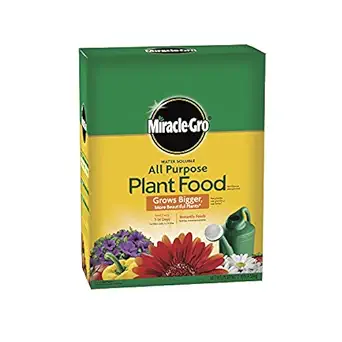 |
| Best Budget The cheapest option that still gets the job done reliably | Miracle-Gro Water Soluble Bloom Booster Flower Food, 10-52-10, 1 lb |  |
| Highest Rated A top-rated pick with lots of positive feedback | Miracle-Gro Water Soluble All Purpose Plant Food, 12.5 lb |  |
| Most Popular A crowd favorite that many people choose with confidence | Miracle-Gro Water Soluble All Purpose Plant Food, 3 lb |  |
| Best Seller A high-volume bestseller chosen again and again | Miracle-Gro Shake 'N Feed All Purpose Plant Food, 4.5 lb |  |
Miracle-Gro Water Soluble All Purpose Plant Food, 1.5 lb

| Item Form | Powder |
|---|---|
| Application Method | Watering Can |
| Target Species | Flowers, vegetables, trees, shrubs and houseplants |
| Mixing Ratio | 24-8-16 |
Miracle-Gro Water Soluble All Purpose Plant Food is a fast‑acting powdered fertilizer intended for use with a watering can or compatible garden feeder to feed flowers, vegetables, shrubs, trees and houseplants. You mix the powder into water (different scoop sizes for indoor versus outdoor use) and soak the soil at the base of plants every 1 to 2 weeks to deliver nutrients directly to the roots. Its 24-8-16 formula is high in nitrogen for leafy growth while still providing phosphorus and potassium for blooms and overall vigor. Practical benefits include rapid uptake compared with granular fertilizers, clear dosing guidance for containers and beds, and broad compatibility across plant types. Limitations are that it is a quick‑release feed so it requires regular reapplication rather than a long‑lasting single treatment and repeated use without attention to soil needs can lead to overfeeding if directions are ignored. It comes in a small 1.5 lb container that covers roughly 600 sq ft, making it a convenient choice for small to medium flower gardens and mixed beds.
Best for: Gardeners who want a reliable, easy-to-use fertilizer to boost growth and blooms in mixed flower beds and container plants and who do regular, scheduled feedings.
Less Ideal for: People looking for a slow‑release, low‑maintenance fertilizer for large landscapes or infrequent feeding schedules should consider a granular or controlled‑release product instead.
- Fast water‑soluble formula that delivers nutrients quickly to roots
- Clear mixing and application instructions for both indoor and outdoor use
- Broadly labeled for almost all flowers, vegetables, shrubs and houseplants
- High nitrogen content encourages noticeable leafy growth and vigor
- Quick‑release formula requires feeding every 1–2 weeks rather than providing long residual nutrition
- Small 1.5 lb container may be consumed quickly on larger gardens
Verdict: A fast-acting, easy-to-mix all‑purpose feed that delivers quick growth and bloom improvements for small to medium flower gardens and containers.
Osmocote Smart-Release Plant Food Flower & Vegetable, 8 lb.

| Item Form | Granules |
|---|---|
| Unit Count | 128 Ounce |
| Item Type Name | Flower & Vegetable |
| Mixing Ratio | 1:22 (1 lb.:1 cubic foot) |
Osmocote Smart-Release Flower & Vegetable is a granular, slow-release fertilizer designed to feed perennials, ornamental flowers, and vegetable beds for up to four months. You apply it by sprinkling the included scoop dose over the planting area and working it into the top 1–3 inches of soil or mixing into raised-bed mix at the recommended ratio. Its 14-14-14 NPK formula supplies balanced nutrients that support both root development and vigorous top growth without frequent reapplication. The nutrient release is temperature-dependent, which helps match feeding to active plant uptake and reduces the chance of burn even if slightly overapplied. Practical benefits include predictable long-term feeding for seasonal crops and coverage estimates (1 lb covers about 40 sq ft) that make planning straightforward. Important limitations are that release rate varies with soil temperature so performance can be slower in cool soils, and granular application is less convenient than liquid feeds for foliar feeding or quick corrections during a bloom flush.
Best for: Gardeners who prioritize steady, reliable nutrient delivery for seasonal flower beds and vegetable plots and want fewer midseason feedings and predictable results.
Less Ideal for: Growers who need rapid, corrective nutrient boosts, frequent foliar feeding, or precise, adjustable liquid feeds for week-to-week performance tuning.
- Slow-release formula feeds up to four months, reducing reapplications
- Balanced 14-14-14 NPK supports both roots and above-ground growth
- Includes applicator and clear coverage guidance for easy planning
- No-burn formulation tolerates accidental overapplication better than many quick-release fertilizers
- Release depends on soil temperature so uptake is slower in cold conditions
Verdict: Choose this product when you want a dependable, long-lasting granular fertilizer that feeds flowers and vegetables for months with minimal effort.
Miracle-Gro Water Soluble All Purpose Plant Food, 10 lb

| Item Form | Granules, Powder |
|---|---|
| Application Method | watering can |
| Target Species | For all flowers, vegetables, trees, shrubs and houseplants |
| Unit Count | 160 Ounce |
| Fertilizer Analysis | 24-8-16 |
Miracle-Gro Water Soluble All Purpose Plant Food is a granular powder you dissolve in water to give plants an immediate nutrient boost. It is typically mixed in a watering can or used with a garden feeder and applied to the soil at the plant base every 1 to 2 weeks for houseplants and every 7 to 14 days for outdoor plants. The formula (NPK 24-8-16) supplies a high proportion of nitrogen for leafy growth plus phosphorus and potassium to support blooms and root development. Practical features include an included scoop with clear dosing guidance and the ability to feed roughly 4,000 sq ft from a 10 lb container when used as directed. Because it is water-soluble it acts faster than slow-release granular products, which is useful during active growth or bloom periods. Limitations are that frequent applications are required to maintain results and it is not a slow-release option, so users wanting low-maintenance, long-duration feeding will need to supplement with granular or controlled-release fertilizers.
Best for: Buyers who want a reliable, fast-acting fertilizer to optimize flower and garden performance during the growing season and who are willing to follow a regular feeding schedule.
Less Ideal for: Gardeners seeking a low-maintenance, once-or-twice-per-season slow-release feed or organic-only growers should consider alternative products.
- Fast-acting water-soluble formula that feeds plants quickly
- All-purpose NPK profile suitable for flowers, vegetables, trees, shrubs and houseplants
- Includes scoop and clear mixing directions for easy, repeatable use
- Large 10 lb container covers a substantial garden area (~4,000 sq ft) when used as directed
- Requires regular reapplication every 1–2 weeks for indoor plants or 7–14 days outdoors
- Not a slow-release fertilizer so it does not provide long-term feeding without repeated applications
Verdict: Use this if you want a dependable, fast-acting all-purpose fertilizer to boost flower and garden growth quickly when you can apply feedings regularly.
Miracle-Gro Water Soluble Bloom Booster Flower Food, 10-52-10, 1 lb

| Item Form | Liquid |
|---|---|
| Application Method | Water Soluble |
| Coverage | 500 square feet |
| Target Species | all blooming plants |
| Mixing Ratio | 1 tablespoon/gallon (1.5 teaspoons/gallon for indoor) |
Miracle-Gro Bloom Booster is a water-soluble fertilizer designed to increase flower production and color in containers and garden beds. You mix the powder with water (1 tablespoon per gallon for outdoor use or 1.5 teaspoons per gallon for indoor plants) and apply every 7 to 14 days during bud set and bloom. The high middle number in the N-P-K ratio (10-52-10) means it supplies extra phosphorus, which supports stronger bloom development and visible results quickly. It is easy to use with a watering can or the Miracle-Gro garden feeder and covers roughly 500 square feet per included refill guidance. Practical benefits include faster bloom response and suitability for both in-ground and container flowering plants. Limitations are that the formulation is targeted specifically at flowering plants rather than general-purpose feeding, and frequent use requires attention to label rates to avoid overfeeding. This product is best used as a focused bloom booster alongside a basic feeding program rather than as the sole fertilizer for overall plant health.
Best for: Gardeners who want an affordable, easy-to-use fertilizer to maximize flower production in annuals and perennials and who prefer quick, visible bloom results.
Less Ideal for: Those seeking an all-purpose or slow-release fertilizer for overall plant health and soil improvement should consider broader formulations instead.
- High phosphorus formula specifically promotes more and bigger blooms
- Water-soluble for quick uptake and visible results within feeding cycles
- Simple mixing instructions and compatible with watering cans or garden feeders
- Covers a large area per product guidance, suitable for beds and containers
- Focused on flowering so it does not provide balanced nutrition for foliage or long-term soil building
- Requires regular reapplication every 7–14 days during bloom period
Verdict: Choose this if you want a straightforward, budget-friendly water-soluble booster that reliably increases bloom size and number.
Miracle-Gro Water Soluble All Purpose Plant Food, 12.5 lb

| Item Form | Powder |
|---|---|
| Unit Count | 200 Ounce |
| Target Species | all plants |
| Mixing Ratio | 1 tablespoon per gallon of water |
Miracle‑Gro Water Soluble All Purpose Plant Food is a powdered NPK fertilizer designed for routine feeding of flowers, vegetables, houseplants, shrubs and trees. You mix the powder into water (manufacturer directions list 1 tablespoon per gallon) and apply with a watering can or compatible garden feeder every 1 to 2 weeks, which makes it convenient for regular maintenance across many plant types. Notable features include its broad “for all plants” formulation and a large 12.5 lb container that the brand says covers roughly 5,000 sq. ft., so it lasts through a full season on typical flower beds. Practical benefits are fast availability of nutrients to roots, straightforward mixing instructions, and flexibility to use on both container and in‑ground plantings. Important limitations are that it is a general purpose formula rather than a bloom‑boost or specialty mix, so gardeners seeking high‑phosphorus bloom feeding or organic options will want a supplement or different product. Also it requires regular reapplication, so it suits planned feeding schedules rather than one‑time treatments.
Best for: Gardeners who want a dependable, easy‑to‑use weekly or biweekly feeder that improves overall plant vigor across flower beds and mixed borders.
Less Ideal for: Growers looking for an organic fertilizer, a specialized bloom booster, or a slow‑release one‑time treatment should consider targeted or organic alternatives.
- Water‑soluble powder delivers nutrients to roots quickly when mixed and applied
- Simple mixing directions suitable for watering cans or garden feeders
- Broadly labeled for indoor and outdoor use across flowers, vegetables, shrubs and trees
- Large 12.5 lb container provides coverage for extensive garden areas
- General purpose NPK formula is not optimized specifically for flowering boost or specialty crops
Verdict: A reliable, easy-to-mix all‑purpose fertilizer that makes scheduled feeding simple for flower gardens and mixed plantings.
Miracle-Gro Water Soluble All Purpose Plant Food, 3 lb

| Item Form | Powder |
|---|---|
| Application Method | Mix with water in a watering can |
| Target Species | All indoor and outdoor plants |
| Fertilizer Analysis (NPK) | 24-8-16 |
| Coverage | Feeds approximately 1,200 sq. ft. |
Miracle-Gro Water Soluble All Purpose Plant Food is a powdered fertilizer you mix with water to feed flowers, vegetables, houseplants, trees, and shrubs. It is used by dissolving measured scoops into a watering can or a garden feeder and applying to the soil at the base of plants every 7 to 14 days depending on indoor or outdoor use. Notable features include a high-nitrogen 24-8-16 formula that delivers a fast nutrient boost, clear mixing directions for both indoor and outdoor applications, and compatibility with container or in-ground beds. In practice this product promotes quick green-up and more vigorous growth compared with unfed plants, and one 3 lb. container covers roughly 1,200 sq. ft. when used as directed. Important limitations are its rapid-action formulation, which makes it better suited for regular, frequent feeding rather than long-term slow release, and the need to measure carefully to avoid overfeeding. It also requires dissolving before use, so it is less convenient than a granular slow-release option for low-maintenance gardeners.
Best for: Gardeners who want visible, fast improvements in flower beds and potted plants and are willing to follow a regular feeding schedule to maintain bloom and foliage vigor.
Less Ideal for: People who prefer low-maintenance, infrequent feeding or want a slow-release fertilizer that needs less frequent application.
- Fast-acting water-soluble formula for quick nutrient uptake
- Clear, simple mixing and application instructions for indoor and outdoor use
- Broad compatibility with flowers, vegetables, houseplants, trees, shrubs, container and in-ground plantings
- Requires regular reapplication every 1–2 weeks for best results
- Must be dissolved and measured each time rather than a set-and-forget granular product
Verdict: If you want faster, noticeable growth and more blooms and will feed regularly, this water-soluble all-purpose fertilizer delivers quick results.
Miracle-Gro Shake 'N Feed All Purpose Plant Food, 4.5 lb

| Item Form | Granules |
|---|---|
| Application Method | Shake onto soil and work into top 1-3 inches |
| Target Species | flowers, vegetables, herbs |
| Unit Count | 72 Ounce |
Miracle-Gro Shake 'N Feed is a granular, continuous-release plant food designed for both in-ground and container flower beds. You apply it by shaking the granules over soil, working them into the top 1 to 3 inches, then watering to activate a three-month feed cycle. The formula includes natural ingredients and micronutrients intended to support soil microbes and root development, which can help produce stronger plants and bigger blooms when used as directed. Its simplicity is a big practical benefit: no mixing required and a predictable reapply interval makes seasonal care easier for busy gardeners. Coverage is broad enough for typical flower beds and container groupings. Limitations to note are that it is a general-purpose fertilizer rather than a bloom-specific formula and that overapplication can harm plants, so careful measuring and following the label are important. For gardeners who prefer predictable, low-effort feeding, this product reduces the need for frequent applications but will not replace targeted bloom-boosters for specialty flowering needs.
Best for: Gardeners who want a low-maintenance, reliable feed for mixed flower beds and container plantings and prefer predictable seasonal schedules over frequent treatments.
Less Ideal for: Specialist gardeners seeking maximum flowering performance or those who need a fertilizer tailored to a specific plant type should consider targeted bloom or species-specific formulas.
- Continuous-release granules feed plants for up to three months with a single application
- Works for both in-ground beds and container plants with simple shake-and-work-in application
- Contains micronutrients and organic inputs intended to support soil microbes and root health
- No mixing required and straightforward dosing makes it easy for less-experienced gardeners
- All-purpose formulation is not optimized for maximizing flower bloom color or size compared with specialized bloom boosters
- Requires careful measuring and correct incorporation to avoid fertilizer burn
Verdict: Use this for easy, low-effort seasonal feeding when you want steady three-month nutrition for mixed flower beds and containers.
Choosing the Right Flower Garden Fertilizer: Key Factors to Consider
Nutrient Ratio and Flower Focus
Flowering plants need a balance of nitrogen, phosphorus, and potassium, but the ideal ratio shifts depending on whether you want lush foliage or abundant blooms. A higher middle number often signals bloom support, while more nitrogen favors leaf growth. Understanding the N-P-K balance helps you pick a formula that steers plant growth toward the outcome you want.
Labels and guaranteed analysis are important because they let you compare formulas directly. Some blends also include secondary nutrients such as magnesium and trace elements that can correct common deficiencies visible as yellowing or poor petal development.
Release Type and Longevity
Fertilizers come as quick-release, slow-release, or a mix. Quick-release options show fast results but require more frequent application and can risk nutrient runoff if overapplied. Slow-release formulas feed steadily over weeks or months, reducing labor and smoothing growth cycles.
Think about your maintenance routine and rainfall patterns. In heavy-draining beds or areas of frequent rain, a controlled-release product prevents leaching and keeps nutrients available longer, while quick feeds are useful for a fast bloom boost before an event.
Formulation and Application Method
Granular, water-soluble, and liquid fertilizers perform differently in garden beds. Granules are easy to broadcast or side-dress and can be combined with mulching; water-soluble and liquid feeds allow targeted foliar or root feeding and often deliver visible results faster.
Choose a delivery method that fits how you garden. Hand-watered containers and raised beds often work well with soluble feeds, while mixed perennial borders benefit from granular or slow-release treatments that need less frequent attention.
Soil Health and Long-Term Effects
Fertilizers influence more than immediate plant growth; they affect soil biology and structure over time. Some products include organic matter or microbial amendments that build soil resilience and nutrient-holding capacity. Others are mineral-focused and may require you to supplement organic matter separately.
Consider how a fertilizer fits into your overall soil-improvement plan. If your beds are already low in organic matter, choose a formula or complementary practice that helps rebuild soil rather than relying solely on soluble nutrients.
Safety for Ornamental Foliage and Nearby Plants
Certain fertilizers can burn tender foliage if applied incorrectly or at too-strong a concentration. Salt buildup from repeated use of soluble feeds can stress shallow-rooted ornamentals. Safety considerations also include runoff into lawns, adjacent beds, or pollinator areas.
Follow label directions for rates and timing, and account for the sensitivity of companion plants. For mixed borders with bulbs, shrubs, and perennials, lean toward gentler, steady-release options that reduce the risk of foliage damage.
Seasonal Timing and Bloom Goals
When you apply fertilizer matters as much as what you apply. Early spring feeding supports leaf and stem growth, while feeding later in the season can encourage additional rounds of blooming. Some formulations are intended as maintenance feeds, others as bloom boosters used mid-season.
Plan your feeding schedule around bloom cycles and local frost dates. Overfeeding late in the season can push growth that is vulnerable to cold, while well-timed nutrition can extend flowering and improve bud set.
Matching Fertilizer to Garden Soil Tests
A simple soil test gives immediate direction for fertilizer choice by showing pH and nutrient levels. If phosphorus is already abundant, a bloom-focused high-phosphorus mix is unnecessary and can create imbalances. Adjust the fertilizer plan to correct documented deficiencies rather than guessing.
Use test results to decide whether to prioritize corrective amendments, like lime or sulfur for pH, or to add trace nutrients. Testing annually or every few years helps you avoid repeated blanket feeding that can mask deeper soil problems.
- Compare soil phosphorus and potassium before selecting bloom-focused formulas
- Adjust pH first when it is outside the preferred range for flowering ornamentals
- Target trace element supplements only when tests show specific shortfalls
Application Timing and Frequency
Regular light feedings often give more consistent bloom performance than infrequent heavy applications. For long-season bloomers, plan a baseline slow-release application in spring with supplemental quick feeds during peak bloom periods.
Follow label directions for intervals. If you hand-water pots or small beds weekly, soluble feeds can be added more often at lower concentrations to avoid burn while keeping nutrient levels steady.
- Spring baseline then spot-feed during key bloom windows
- Avoid strong late-season feeding that stimulates tender growth near frost
- Adjust frequency for heavy rainfall or sandy soils that leach nutrients
Using Fertilizer Safely Around Bulbs and Young Plants
Bulbs and seedlings are prone to fertilizer burn from high-salt or high-nitrogen formulas. For planting time, use gentle starter blends or incorporate organic matter rather than concentrated feeds. When side-dressing established bulbs, apply fertilizer after growth begins and avoid direct contact with emerging shoots.
For young transplants, give priority to root establishment with balanced, lower-rate feeds rather than bloom boosters, which can divert energy away from root growth.
- Place granular feeds away from direct contact with roots and shoots
- Use diluted soluble feeds for newly transplanted annuals
- Delay aggressive bloom feeding until plants are established
Combining Organic and Synthetic Approaches
Many gardeners blend organic amendments like compost or bone meal with targeted synthetic feeds to get both steady nutrient release and immediate availability. The organic matter improves soil structure and water retention while small amounts of soluble nutrients correct shortages quickly.
If you adopt a mixed approach, reduce the rate of synthetic inputs to avoid overfeeding. Monitor plant response and soil tests to refine the balance season to season.
- Use compost to build long-term fertility and reduce reliance on repeat synthetic feeds
- Reserve synthetic jumps for quick corrections or timed bloom pushes
- Track plant response to combined programs and adjust rates as needed
Practical Tips for Applying in Different Garden Settings
Raised beds, containers, and in-ground borders each change how nutrients behave. Containers require more frequent feeding because they hold less soil and wash nutrients out faster. Raised beds with amended soil may need less frequent top-ups, while in-ground beds with heavy clay hold nutrients differently than sandy sites.
Match the product form to the setting. Liquids or soluble feeds give precision in containers. Granular or slow-release options work well in borders where reapplication is less convenient.
- Prefer soluble feeds for pots and small planters
- Choose slow-release for large mixed borders
- Adjust rates for soil texture and irrigation frequency
How We Chose the Best Flower Garden Fertilizer
We focused on traits gardeners can verify and use in the yard rather than marketing claims. Selection started by screening products and formulas commonly used for flower beds and excluding mixes aimed only at lawns, vegetables, or houseplants. We prioritized options that provide clear nutrient labeling and consistent release profiles. Evaluation criteria included nutrient ratio clarity and tailoring for flowering plants, release type and longevity in garden soils, application ease for beds and borders, and soil health effects including organic matter or beneficial microbes. We also considered safety for nearby ornamental foliage and compatibility with common mulches and irrigation methods. Exclusions included specialized professional-grade formulations requiring licensing and blends intended solely for turf or agricultural crops. These filters ensured the list emphasizes practical performance: predictable bloom support, manageable application schedules, and minimal negative impact on long-term soil structure.
FAQ
How often should I feed perennial flower beds?
It depends on the product. Slow-release granular fertilizers typically need once-per-season or twice-per-season applications, while soluble feeds may be applied every 3 to 6 weeks. Base timing on plant vigor and soil tests rather than a fixed calendar.
Can I use a lawn fertilizer on my flower beds?
Often lawn fertilizers are formulated for grass needs with higher nitrogen and different release profiles. Using them can promote foliage more than blooms. If you use a turf product, choose one with balanced nutrients and follow reduced rates for ornamentals.
Is organic fertilizer always better for flowers?
Organic fertilizers improve soil biology and release nutrients slowly, which benefits long-term soil health. They may not deliver as rapid a bloom response as soluble synthetic feeds. Many gardeners use organics for baseline fertility and supplement with targeted quick feeds when needed.
When should I stop fertilizing in the season?
Stop or greatly reduce fertilizing as plants near dormancy or the expected frost date. Late-season high-nitrogen feeding can encourage tender growth that is vulnerable to cold. Continue light maintenance feeds for summer bloomers but taper off well before the first hard freeze.
How do I avoid fertilizer burn on tender ornamentals?
Avoid overapplication and do not place granular fertilizer directly against stems or crowns. Use lower concentrations for soluble feeds and water in granular applications thoroughly to move nutrients into the root zone. Choose slow-release or organic options for sensitive plants.
Final Verdict
Focus on the concrete tradeoffs: do you need fast-acting nutrition for a bloom boost or steady feeding that supports soil health and reduces maintenance? Prioritize clear nutrient labeling and a release profile that matches how often you want to apply fertilizer. Account for soil test results, planting type, and seasonal timing when finalizing your plan. A confident choice balances immediate bloom goals with long-term soil improvement. Match the formula and application method to your garden setting, and adjust rates with observation and periodic soil testing to keep flowers healthy and flowering reliably.
