

Note: This article contains affiliate links. If you click on these links and make a purchase, I may earn a small commission at no extra cost to you. This helps support my research and content. Read my full affiliate disclosure here.
If joint pain limits how long you can work in the garden, the right pair of shears can make pruning, deadheading, and light trimming far less painful. This guide focuses on tools designed specifically for gardeners with arthritis or reduced hand strength. We shortlisted seven top-rated garden shears for arthritic hands and evaluated them on comfort, cutting efficiency, and durability. Read on for practical notes about grip types, cutting mechanisms, and daily handling so you can pick shears that let you enjoy gardening longer.
Top Picks at a Glance
| Best Overall The best all-around choice for most situations | Decerk 8.5" Bypass Pruning Shears with Cushioned Foam Grips |  |
| Best Quality Built to a higher standard if you want something more solid | FELCO F2 Pruning Shears — Swiss-Made Bypass Hand Pruner (F2) |  |
| Best Value The sweet spot between price and what you get | GEROSSI Ratchet Pruning Shears — Heavy-Duty Anvil Pruners |  |
| Best Budget The cheapest option that still gets the job done reliably | Craft911 Titanium-Coated High-Carbon Steel Bypass Pruning Shears |  |
| Highest Rated A top-rated pick with lots of positive feedback | Kimura 8" Pro Bypass Pruning Shears (Japanese SK5 Steel blades) |  |
| Most Popular A crowd favorite that many people choose with confidence | VOTREK VT-C800 8.5" Bypass Pruning Shears with SK5 Teflon-Coated Blade |  |
| Best Seller A high-volume bestseller chosen again and again | Decerk 8.5" Bypass Pruning Shears with Titanium-Coated SK5 Blade |  |
Decerk 8.5" Bypass Pruning Shears with Cushioned Foam Grips

| Blade Type | Bypass |
|---|---|
| Hand Orientation | Ambidextrous |
| Blade Material | Titanium |
| Included Components | 8.5" Bypass Hand Pruner |
| Size | 3/4" |
These Decerk bypass pruning shears are built to make routine pruning easier for gardeners with weak or arthritic hands. The 5mm cushioned foam grips spread pressure across the palm to reduce squeeze effort, while one-piece metal handles provide a rigid backbone for stable cutting. A hardened SK5 blade with titanium and PTFE coatings delivers sharp, clean bypass cuts to about 3/4 inch and resists sap and corrosion for easier cleaning. The spring returns smoothly between cuts and a thumb lock keeps the tool closed for safe storage. In practical use they work well for deadheading, trimming shrubs and cutting fresh growth with noticeably less hand strain than basic pruners. Limitations to note are the 3/4 inch cutting capacity, which is fine for small branches but not for larger limbs, and a metal handle design that, while strong, adds less ergonomic contouring than multi-piece cushioned models. The shears include a spare return spring and are presented as a durable, gardener-focused tool for regular yard tasks.
Best for: Gardeners who need a comfortable, reliable pruner that reduces hand strain during frequent deadheading and light pruning and value durable cutting performance.
Less Ideal for: People who regularly cut thicker branches or who want heavily contoured, multi-material ergonomic handles tailored to severe joint issues should consider other pruning tools.
- 5mm cushioned foam grips reduce palm pressure for easier squeezing
- Hardened SK5 blade with titanium and PTFE coatings for sharp, low-stick cuts
- One-piece metal handles add strength and stable leverage during cuts
- Smooth return spring and thumb lock support comfortable single-hand use
- Includes a spare return spring for simple maintenance
- 3/4 inch maximum cutting capacity limits use to small stems and branches
- Handle shape is straight metal beneath the foam rather than fully contoured for additional ergonomic support
Verdict: If you want a durable, low-pressure pruner that makes clean cuts on small stems while easing hand discomfort, these shears are a practical choice.
FELCO F2 Pruning Shears — Swiss-Made Bypass Hand Pruner (F2)

| Blade Length | 2 inches |
|---|---|
| Cutting width | 1 inches |
| Hand Orientation | Right |
| Blade Material | Metal,Steel |
| Handle Material | Metal,Rubber,Steel |
The FELCO F2 is a heavy-duty, precision pruning shear designed for regular use by serious gardeners and professionals. It delivers clean cuts up to about 1 inch thanks to a hardened steel cutting blade and anvil/bypass-style geometry that reduces crushing and promotes plant health. Forged aluminum handles keep the tool lightweight while providing strong, long-lasting support and a rubberized grip that helps reduce hand fatigue during extended sessions. Every part is replaceable which makes the F2 a tool you can service for years rather than replace. Practical benefits include very reliable cutting performance, comfortable ergonomics for right-handed users, and the ability to maintain sharpness and replace worn parts. The main limitations are that it is offered in a large size and right-hand orientation only, so it will not suit left-handed users or gardeners who need a smaller pruner for fine detail work.
Best for: Gardeners and landscapers who prioritize durable, professional cutting performance and want a serviceable tool they can rely on for frequent pruning.
Less Ideal for: Casual gardeners who need a budget or ambidextrous pruner or anyone who requires a small-size tool for fine trimming and delicate work.
- Hardened carbon steel blade produces clean, precise cuts up to 1 inch
- Forged aluminum handles offer strength with a lightweight feel
- Rubberized ergonomic grip reduces hand and wrist strain during long sessions
- All parts are replaceable so the tool can be maintained for decades
- Right-hand orientation and large size limit suitability for left-handed or small-handed users
- No blade coating or locking thumb catch on this model
Verdict: Buy the FELCO F2 if you want a professional, serviceable pruning shear that delivers precise, long-lasting cutting performance.
GEROSSI Ratchet Pruning Shears — Heavy-Duty Anvil Pruners

| Blade Material | High Carbon Steel |
|---|---|
| Blade Edge | Compound Bevel |
| Blade Type | Anvil |
| Hand Orientation | Ambidextrous |
| Cut Capacity | 3/4 inch |
These GEROSSI ratchet pruning shears combine an anvil blade with a three-step ratchet mechanism to make cutting thicker, dried, or fibrous stems considerably easier. You switch between a single-cut mode for everyday trimming and a ratchet mode that multiplies hand power up to three times, which is useful for people with weaker grip or arthritis. The blade is high carbon steel with a corrosion-resistant Teflon coating for cleaner cuts and reduced rust risk, while the aluminum handles have ergonomic rubber grips and a safety lock for one-handed use. Included hang rope and a simple user manual add convenience for storage and basic maintenance. Practical limits: the anvil-style cutting is best for dead wood and tougher material rather than precision pruning of live shoots, and the 3/4-inch claimed cut capacity means you will still need loppers for larger limbs. The tool is solid for heavy home-garden tasks but not a replacement for bypass secateurs when you need very clean cuts on live branches.
Best for: Buyers who value proven performance and want a durable, easy-to-use pruner that reduces hand strain for routine heavy trimming and garden cleanup.
Less Ideal for: Gardeners who prioritize the cleanest cuts on live stems or who regularly prune branches thicker than 3/4 inch should consider bypass pruners or loppers instead.
- Ratchet mechanism increases cutting power for thick or dried branches
- High carbon steel blade with corrosion-resistant coating for durability and cleaner cuts
- Ergonomic aluminum handles with non-slip rubber grip for comfortable use
- Ambidextrous design and safety lock allow secure one-handed operation
- Includes hang rope for easy storage
- Anvil cutting style is less suitable for precise cuts on live green wood compared with bypass pruners
- 3/4-inch maximum cut capacity limits use on larger limbs
Verdict: If you need a robust, low-effort pruner for cutting dried or thicker branches, this ratchet anvil shear delivers reliable power and comfort.
Craft911 Titanium-Coated High-Carbon Steel Bypass Pruning Shears
| Blade Material | High Carbon Steel |
|---|---|
| Blade Edge | Straight |
| Blade Type | Bypass |
| Hand Orientation | Ambidextrous |
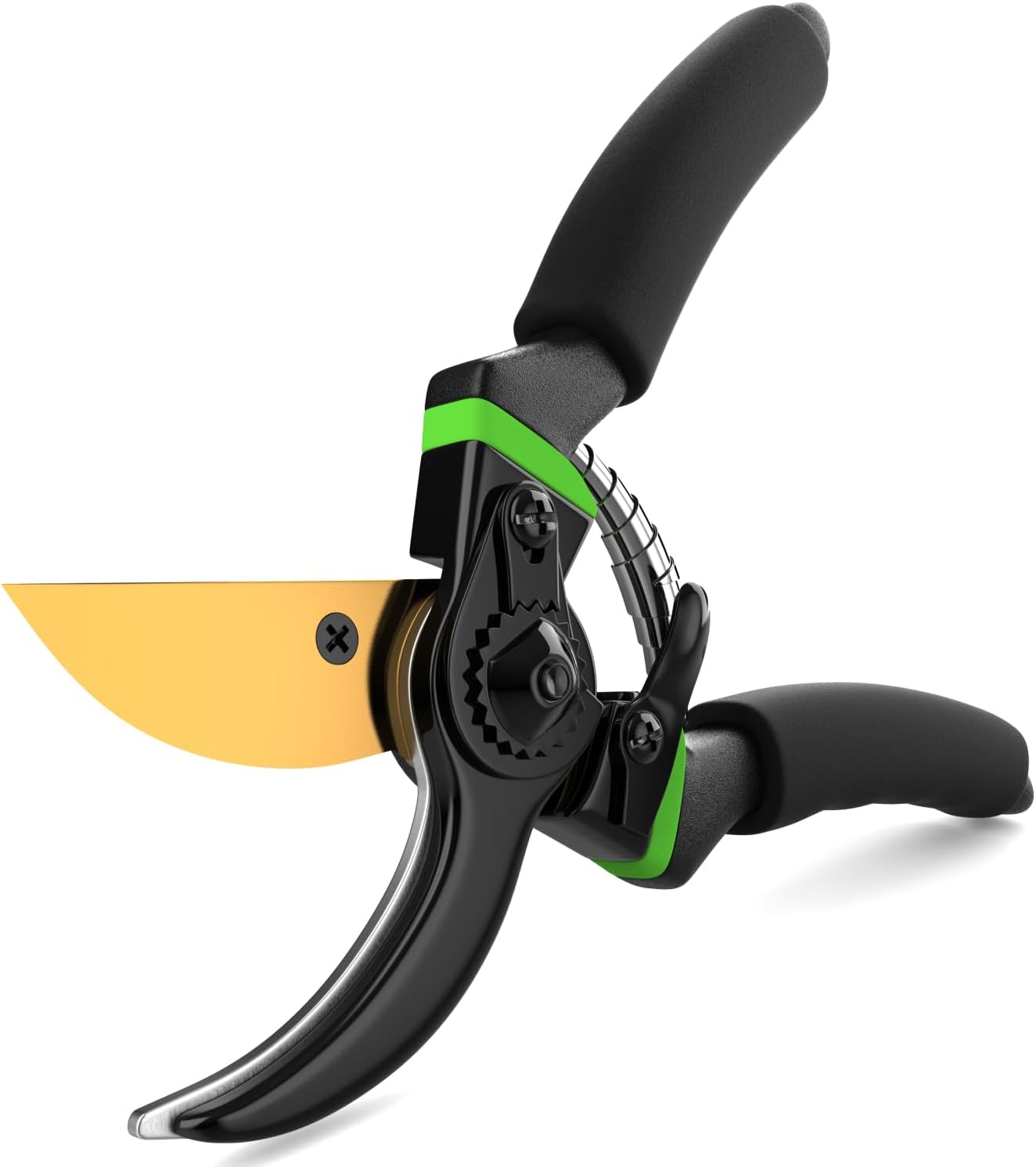
These Craft911 pruning shears are a small, easy-to-hold bypass pruner built for routine garden work from deadheading and trimming shrubs to light branch pruning. The SK5 high-carbon steel blades with a titanium coating promise sharp, durable cuts while the straight bypass edge produces clean shears that help plants heal. The ambidextrous plastic/rubber handles have a non-slip texture and an ergonomic shape aimed at reducing grip strain, which makes them practical for gardeners with weaker hands or arthritis. A one-handed safety lock keeps the blades closed for safe storage. Because the cutting capacity is modest, these shears are best for stems and small branches rather than heavy pruning tasks. They are lightweight and low-maintenance and resist rust, but serious users will still need to sharpen the blade after extended use. For someone who wants an affordable, arthritis-friendly pruner for everyday trimming, these offer a solid balance of comfort, blade performance, and convenience.
Best for: Buyers who need an affordable, easy-to-grip pruner for frequent light trimming and who prioritize comfort over heavy-duty cutting power.
Less Ideal for: If you routinely prune thick branches or need industrial-grade leverage, choose a larger bypass pruner or anvil lopper instead.
- Sharp SK5 high-carbon steel blade with titanium coating for longer edge life
- Ambidextrous, non-slip plastic/rubber handles designed to reduce hand fatigue
- Safety lock allows one-handed closure and secure storage
- Bypass blade produces clean cuts that promote plant health
- Cutting capacity is limited to small stems and light branches, not for heavy pruning
- Handles are plastic/rubber rather than cushioned aluminum or compound-leverage design
Verdict: A budget-friendly, arthritis-conscious pruning shear that delivers sharp, comfortable everyday trimming for light garden work.
Kimura 8" Pro Bypass Pruning Shears (Japanese SK5 Steel blades)

| Blade Material | Japanese SK5 Steel |
|---|---|
| Cutting width | 25 millimeters |
| Blade Type | Bypass |
| Hand Orientation | Ambidextrous |
| Size | 8" |
These Kimura 8" Pro bypass pruners are built for performance-focused gardeners who need a durable, precise tool for regular pruning. The SK5 Japanese steel blades are heat treated to a high hardness and PTFE coated to resist sap and reduce friction, so cuts stay clean and require less frequent sharpening. With a stated 1" cutting capacity the shears handle rose canes, woody stems and general deadheading without bogging down. The aluminum handles are lightweight, non-slip PVC coated and shaped for ergonomic control, which helps during longer sessions and for users with grip issues. Ambidextrous orientation and a simple safety lock make them easy to use and safe to carry. The construction uses riveted joints and anti-rust components aimed at longevity, though very heavy-duty or professional vineyard use may push the limits over time. Overall these pruners trade the extra features of specialty rose snips for a robust, all-purpose cutter that prioritizes sharpness and lasting edge retention.
Best for: Gardeners who prioritize clean, durable cuts for roses and mixed borders and want a dependable, ergonomic tool for frequent pruning sessions.
Less Ideal for: Those needing to cut very large woody branches or who want specialized floral snips for delicate deadheading should consider different tools.
- High-hardness Japanese SK5 steel blades for sharp, long-lasting cuts
- PTFE coating reduces sap buildup and makes slicing smoother
- Ergonomic, lightweight aluminum handles with non-slip PVC for comfortable extended use
- Ambidextrous design and simple safety lock for ease of use and transport
- Cut capacity limited to about 1 inch, so very large branches require a saw or lopper
Verdict: If you want sharp, long-lasting bypass pruners that make clean cuts on rose canes and everyday garden stems, these Kimura professional shears deliver reliable performance.
VOTREK VT-C800 8.5" Bypass Pruning Shears with SK5 Teflon-Coated Blade

| Blade Material | High Carbon Steel (SK5) |
|---|---|
| Cutting width | 20 millimeters |
| Hand Orientation | Ambidextrous |
| Handle Material | Aluminum, Rubber |
The VOTREK VT-C800 is a straightforward hand pruner aimed at routine garden pruning, rose trimming, bonsai work, and light tree maintenance. It uses an SK5 high-carbon steel blade with a Teflon coating to resist sap buildup and keep cuts clean, while a sealed spring reduces debris jams and improves blade return in damp conditions. The ambidextrous thumb lock can be operated one-handed and works with gloves, which helps with safe carrying between jobs. Ergonomic aluminum and rubber handles and a non-slip grip reduce wrist strain for longer sessions and make the tool easier for users with weaker hands. The cutter is rated to slice branches up to about 20 mm (0.8 in), so it is best for live growth and small stems rather than large-diameter pruning. Buyers should expect to sharpen the blade occasionally to maintain peak performance and to avoid using it on dry, very hard wood where bypass pruners are less efficient. For routine backyard pruning where reliable, jam-resistant action and comfortable handling matter, this model delivers consistent, low-fuss performance.
Best for: A practical gardener who prioritizes reliable, low-maintenance tools and wants comfortable, safe shears for everyday pruning tasks around the yard.
Less Ideal for: People who need to cut thick, dry, or woody branches frequently should choose a larger anvil or powered pruner instead.
- Sharp SK5 high-carbon steel blade with Teflon coating reduces sap adhesion and keeps cuts cleaner
- Sealed jam-proof spring design resists debris and improves blade return in wet or dirty conditions
- Ambidextrous one-handed thumb lock that works with gloves for safer handling and storage
- Ergonomic aluminum and rubber handles with non-slip grip minimize wrist fatigue during extended use
- Cut capacity is limited to about 20 mm (0.8 in), so not suitable for larger branches
- Requires periodic sharpening to maintain optimal cutting performance
Verdict: If you want dependable, jam-resistant garden shears with a sharp, low-stick blade and comfortable grip for routine pruning, this is a solid, low-fuss choice.
Decerk 8.5" Bypass Pruning Shears with Titanium-Coated SK5 Blade

| Cutting width | 20 millimeters |
|---|---|
| Blade Type | Bypass |
| Blade Material | Titanium |
| Hand Orientation | Ambidextrous |
| Included Components | Replacement Spring |
These Decerk pruning shears are built for regular garden tasks like deadheading, stem trimming, and cutting small branches up to about 3/4 inch. The SK5 high-carbon steel blade is nano-polished and titanium-coated to resist rust and hold an edge longer, while the lever-action design multiplies cutting force so thicker stems go through with less hand strain. Aluminum handles with a rubberized grip make the tool comfortable to hold and the ambidextrous layout and one-hand safety lock simplify use and storage. The pruner ships with a spare spring and the straight bypass blade produces clean cuts that help plant health. Expect a compact, durable tool that suits routine pruning and light shrub work; it is not intended for heavy woody pruning beyond its stated cut capacity. As with any bypass pruner, keeping the blade clean and occasionally oiling the pivot will preserve performance over time.
Best for: Gardeners who prefer reliable, low-effort tools for routine pruning and want a durable, easy-to-use shear that reduces hand fatigue.
Less Ideal for: People who need a tool for heavy woody pruning or for frequent commercial-scale cutting should choose larger pruning tools or loppers instead.
- Titanium-coated SK5 bypass blade for longer edge life and corrosion resistance
- Lever-action design increases cutting force and reduces hand effort
- Ergonomic rubberized handles for a secure, comfortable grip
- Includes spare spring and one-hand safety lock for convenience and safer storage
- Cut capacity limited to about 20 mm (3/4 inch), not suitable for larger woody branches
- Blade care required to prevent sap buildup and maintain sharpness
Verdict: A comfortable, rust‑resistant bypass pruner with lever-action power that makes everyday garden cuts easier and gentler on the hands.
Choosing the Right Garden Shears for Arthritic Hands: Key Factors to Consider
Grip Style and Size
Handle shape and diameter directly affect how much force and control you need to hold shears. A handle that fits the natural curve of your hand reduces pinch points and concentrates pressure across broader surfaces, which cuts down on localized pain. For arthritic hands, larger-diameter grips or anatomically molded handles can lower required finger flexion and decrease the tendency to overgrip.
Material matters too. Soft but resilient padding can cushion joints, yet if the covering compresses too much it increases the travel distance between blade open and closed positions. Look for grips that balance cushioning with firm support so you do not have to squeeze harder to close the blades.
Cutting Mechanism
Different mechanisms change how much hand force is needed for each cut. Bypass shears use a scissor-like action that is ideal for live stems but can require steady pinch strength. Ratcheting or compound-leverage systems multiply user input so you apply less hand force to produce the same cutting result.
Consider the plants you prune. For frequent light deadheading, low-resistance bypass shears with an aided lever may be fine. For thicker stems or longer sessions, a ratcheting or multi-stage compound-action design reduces fatigue and distributes effort over several shorter squeezes rather than one high-force motion.
Blade Style and Edge Geometry
Sharp blades cleanly sever plant tissue with less crushing, which reduces the hand effort per cut and helps plants heal faster. Bypass blades are preferable for live-wood pruning because they produce a clean slice. Anvil-style blades compress and can require more force for the same stem diameter, so they are less ideal for arthritic users unless paired with a strong leverage system.
Blade material and heat treatment determine how long the edge holds. Blades that accept easy sharpening or simple replacement reduce the long-term effort required to maintain low cutting force.
Locking and Safety Features
A secure, easy-to-operate locking mechanism prevents accidental opening and makes tool storage safer when hand dexterity is reduced. Locks should require minimal finger strength and wide motion to engage and release. Simple sliding or thumb-operated locks with a positive stop are easier to operate than small twist mechanisms.
Safety placement is important. Controls located in the natural grip path or on the back of the handles minimize the need to reposition your hand to operate the lock. Consider whether the mechanism can be used with arthritic joints or limited dexterity.
Weight and Balance
Heavier shears can increase shoulder and wrist fatigue during extended pruning sessions, even if the hand force per cut is low. Conversely, very light tools may transfer more vibration or require more grip stabilization. Balance between blade and handle reduces wrist torque and helps smaller hands control the tool with less strain.
When testing tools, notice how the center of mass feels. A well-balanced pair of shears lets you guide blades precisely without overgripping, which is especially helpful when fine pruning or shaping plants.
Maintenance and Sharpening
Keeping blades sharp lowers the force needed for each cut and preserves the ergonomic benefit of a low-resistance mechanism. For gardeners with limited hand strength, maintenance steps should be simple: few screws, accessible pivot pins, and reachable blade surfaces for quick sharpening.
Consider whether blades are easy to remove for sharpening or replacement and whether the tool tolerates simple cleaning to prevent sap build-up. Low-maintenance finishes that resist rust and sticky residue extend comfortable use without frequent, difficult upkeep.
How Different Mechanisms Help Arthritic Hands
Ratcheting, compound-leverage, and assisted-spring designs each reduce the physical force per cut in different ways. Ratcheting tools break a single large cut into smaller steps so your hand never needs to produce the full force at once. Compound-leverage multiplies a single squeeze mechanically, delivering more cutting power with less input.
Spring-assisted or coil-spring shears help open the blades after each cut, reducing the need to actively pry them apart and lowering wrist strain during repetitive tasks. Match the mechanism to the common tasks you do in the garden so you get the right balance of power and smooth operation.
- Ratcheting: best for thicker stems and limited grip strength
- Compound-leverage: smooth, powerful single-squeeze action
- Spring-assisted: reduces repetitive opening effort for fast deadheading
Practical Tips for Using Shears With Joint Pain
Adjust your technique to protect sensitive joints. Use your forearm and shoulder to position stems rather than twisting the wrist. Hold the tool where it balances, not at the very end of the handle, to reduce torque. When possible, let the tool perform the work: select a shear with mechanical advantage so you can use gentler finger pressure.
Take frequent short breaks during long sessions and rotate tasks so the same joints are not repeatedly stressed. If a particular pruning chore requires sustained force, use a tool with a ratchet or compound action rather than forcing multiple cuts with a low-leverage pair of shears.
- Position work at waist height to avoid awkward reaches
- Use the non-dominant hand to steady stems to reduce gripping time
- Keep movements slow and deliberate to avoid sudden torque on the thumb
Care and Edge Maintenance Without Strain
Regular cleaning and light sharpening preserve low cutting effort. Wipe sap and dirt from blades after use and apply a thin film of oil to pivot points to keep the mechanism smooth. If sharpening is difficult because of limited dexterity, choose tools with easily removable blades or those that accept simple sharpening jigs.
When you must replace parts or sharpen, use aids such as bench-mounted sharpening guides or stabilization clamps that hold the tool while you work. Small maintenance steps done weekly prevent tasks from becoming physically demanding later on.
- Wipe blades after each use to prevent sticky build-up
- Oil pivot joints monthly for smooth action
- Use sharpening aids that secure the tool to reduce hand strain
Accessories and Add-Ons That Make Pruning Easier
Simple accessories can enhance ergonomics without changing your primary tool. Padded strap wraps or handle covers increase grip surface area and reduce pinch pressure. Quick-release blade covers protect stored tools and make handling safer when dexterity is reduced.
Long-handled pruners and pole attachments reduce the need to bend or reach extensively. While these do not change hand mechanics directly, they decrease overall session length and the cumulative load on your joints.
- Padded handle wraps spread pressure over a larger area
- Protective covers reduce accidental handling and enable safer storage
- Extension handles and pole pruners reduce bending and overhead strain
When To Consider Replacing Vs Repairing Shears
If a tool's mechanism becomes stiff or the blade is badly nicked, maintenance may restore function but could require more manual effort than is comfortable for arthritic hands. Assess how much force you need to operate the tool after a standard tune-up. If hand effort remains high, replacement with a mechanically aided design may be the better option.
Look for models with replaceable blades and simple pivot hardware. Repairable tools can extend life for gardeners who can perform or arrange occasional maintenance, but the priority for arthritic hands is preserving low operating force over long-term cost saving.
- Repair when pivot and springs restore smooth, low-force action
- Replace if repairs still require high hand force or complex maintenance
- Favor designs that allow easy part swaps to minimize handling during repairs
How We Chose the Best Garden Shears for Arthritic Hands
We selected tools that address the specific challenges gardeners with arthritis face: minimizing grip force, reducing repetitive-motion strain, and delivering clean cuts without excessive wrist torque. Editorial filters prioritized ergonomic handle shapes, low-effort cutting mechanisms such as ratcheting or compound leverage, and secure, non-slip materials that stay comfortable during wet or sweaty use. We also considered blade quality and edge geometry because a sharp, well-ground blade reduces the force needed for each cut and prolongs comfortable use. Products were excluded if they relied solely on cosmetic comfort claims without demonstrable mechanical advantage, or if they required unusual maintenance steps that would negate ergonomic gains. Durability and maintenance needs were weighed against ease of cleaning and simple blade replacement. The final picks balance mechanical assistance, handle ergonomics, and blade performance to help gardeners with limited hand mobility manage common pruning tasks safely and efficiently.
FAQ
Are ratcheting shears better for people with arthritis?
Ratcheting shears often reduce the peak force needed per cut by breaking the cut into smaller steps, which helps many gardeners with limited grip strength. They work well on thicker stems but may be slower for many small cuts.
Is a cushioned grip always best for arthritic hands?
Cushioned grips reduce pressure points but can sometimes increase handle travel and reduce tactile control. A slightly firmer, anatomically shaped grip that spreads pressure is usually more effective than very soft padding.
How often should I sharpen shears to keep effort low?
Frequency depends on use, but a light touch-up every few weeks during active seasons and a thorough sharpening once or twice per year keeps cutting force low. Clean blades after each use to prevent sticky residue that increases effort.
Can I add handle padding to my existing shears?
Yes, padded wraps or custom handle sleeves can increase grip surface area and reduce pinch pressure. Make sure any addition does not make the grip too large to hold comfortably or interfere with the tool's locking mechanism.
Should I choose bypass or anvil blades if I have arthritis?
For live-wood pruning, bypass blades are typically preferable because they slice cleanly and require less force. Anvil blades can be easier for very coarse deadwood but often need more hand strength unless paired with strong leverage.
Are spring-assisted shears helpful for repetitive tasks?
Spring-assisted shears reduce the effort required to open the blades after each cut, which can significantly lower wrist and finger strain during repetitive tasks such as deadheading. They do not change the closing force but reduce recovery effort between cuts.
Final Verdict
Prioritize tools that reduce the force per cut and distribute pressure across the hand when choosing shears for arthritic hands. Focus on grip comfort, a mechanical advantage suited to the stems you prune, and blades that stay sharp with minimal maintenance. Tradeoffs are common: very lightweight models may lack leverage, while stronger mechanical systems can be slightly heavier. Choose the balance that lets you prune comfortably and consistently.
