

Note: This article contains affiliate links. If you click on these links and make a purchase, I may earn a small commission at no extra cost to you. This helps support my research and content. Read my full affiliate disclosure here.
Picking the right shovel makes planting trees faster, safer, and less tiring. For tree planting you need a tool that reaches deep, cuts through roots and compacted soil, and gives you stable leverage for prying and levering seedlings into position. This guide covers six shortlisted garden shovels for planting trees chosen for their digging performance, durability, and ergonomic handling. Below we explain the practical tradeoffs and the objective criteria used to evaluate each option so you can match a shovel to your soil type, tree size, and planting frequency.
Top Picks at a Glance
| Best Overall The best all-around choice for most situations | Fiskars 44" Pro D-Handle Digging Shovel |  |
| Best Quality Built to a higher standard if you want something more solid | Spear Head Spade SHFD3 40" Garden Spade with Spear Blade and Fiberglass Handle |  |
| Best Value The sweet spot between price and what you get | KOLEIYA 45" Heavy-Duty Sharp Shooter Shovel with Fiberglass Handle |  |
| Best Budget The cheapest option that still gets the job done reliably | HANTOP Drain Spade with Serrated Blade and Wooden Handle, 44 in |  |
| Highest Rated A top-rated pick with lots of positive feedback | Xinmeto 45-Inch Trenching Spade with Wood D-Handle |  |
| Most Popular A crowd favorite that many people choose with confidence | Root Slayer Garden Shovel with Serrated V-Tip |  |
Fiskars 44" Pro D-Handle Digging Shovel

| Material Type | Alloy Steel, Aluminum |
|---|---|
| Blade Material | Alloy Steel |
| Handle Material | Aluminum, Metal |
| Grip Type | Ergonomic |
The Fiskars 44" Pro D-Handle Digging Shovel is built for regular garden and landscaping tasks that require strength and control. Its heavy-gauge alloy-steel blade has a sharpened edge and extended shank to pierce and pry in compact or clay soils, while the teardrop-shaped shaft and softgrip touchpoints make repeated digging more comfortable. The aluminum D-handle keeps the wrist in a neutral position for better leverage when planting, turning soil, or digging holes for shrubs and trees. This model is intended for frequent use rather than occasional light tasks, and the robust construction should resist separation and wear over time. The main compromises are its weight and single-purpose design: it is optimized for digging and prying rather than delicate or multi-tool tasks, and the longer handle requires storage space. For gardeners who value durability, ergonomic design, and a blade that stays sharp through heavy use, this shovel performs reliably across most garden digging jobs.
Best for: Gardeners who want a durable, ergonomic digging shovel for regular planting, hole digging, and soil turning and who prioritize long-term performance over minimal weight.
Less Ideal for: People who need a lightweight or compact tool for occasional light-duty tasks or who have very limited storage space.
- Heavy-gauge alloy-steel blade with sharpened edge for easier penetration in compact soil
- Aluminum D-handle and teardrop shaft provide ergonomic grip and better wrist alignment
- Large step and extended shank increase leverage for digging and prying
- Durable construction meant for frequent, long-term use
- Long 44" length makes storage more awkward in small sheds
- Heavier construction can be tiring for users seeking a lightweight option
Verdict: Choose this shovel if you want a tough, ergonomically designed digging tool that holds up to frequent use in compact or heavy garden soils.
Spear Head Spade SHFD3 40" Garden Spade with Spear Blade and Fiberglass Handle

| Material Type | Alloy Steel, Fiberglass |
|---|---|
| Handle Material | Fiberglass |
| Blade Material | Hardened Carbon-Manganese Steel |
| Grip Type | Ergonomic |
This Spear Head Spade SHFD3 is designed for tough digging tasks like planting, transplanting, and breaking compacted or rocky soil. The spear-shaped, hardened carbon-manganese steel blade concentrates force on a narrow point so it cuts into soil and roots more easily than a blunt spade, and the powder-coated, self-sharpening finish helps keep the edge effective over time. A steel-reinforced fiberglass handle keeps the tool lightweight while resisting weather and flex, and the UV-resistant D-grip with cushioned ergonomic shaping improves control when levering or lifting full scoops. Typical use is kneeling or standing digs for holes, edging, and removing perennial clumps where a narrow, pointed blade is helpful. The practical benefits are durability under heavy use, easier penetration in rocky ground, and reduced hand fatigue thanks to the grip and handle design. Limitations to note are the 40-inch length may be shorter than long-handled digging spades for deep leverage, and the spear profile is less suited to moving loose bulk soil compared with a flat square-point shovel.
Best for: Gardeners who need a dependable, durable digging spade for planting and working in compact or rocky soil and who prioritize tools that stay serviceable under regular outdoor use.
Less Ideal for: Users who primarily move large amounts of loose soil, sand, or gravel or who need maximum leverage for very deep digging should consider a square-point shovel or a longer-handled digging spade instead.
- Spear-shaped hardened carbon-manganese steel blade that penetrates compacted and rocky soil
- Steel-reinforced fiberglass handle delivers strength with lower weight and weather resistance
- UV-resistant cushioned D-grip and ergonomic footrest for improved control and comfort
- Powder-coated, self-sharpening finish that helps maintain a sharp edge through use
- Spear profile is less efficient for moving large volumes of loose soil compared with a square-point shovel
- 40-inch overall length gives less leverage than longer-handled spades for very deep digging
Verdict: Choose this spade when you want a reliable, heavy-duty digging tool that easily pierces compact or rocky soil and holds up to regular outdoor use.
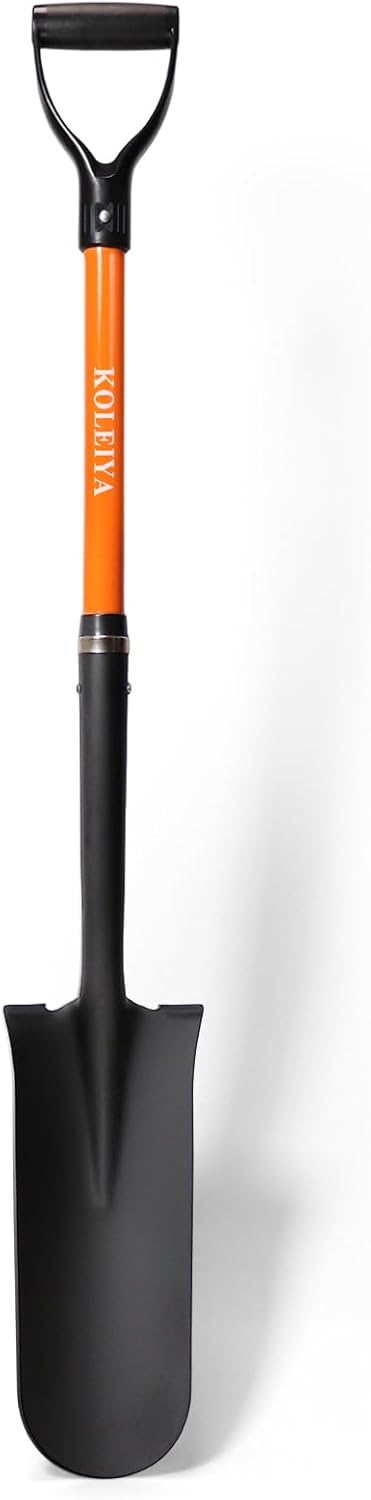
KOLEIYA 45" Heavy-Duty Sharp Shooter Shovel with Fiberglass Handle
| Handle Material | Fiberglass |
|---|---|
| Blade Material | High Carbon Steel |
| Grip Type | Contoured |
| Style Name | Pointed |
The KOLEIYA 45-inch sharp shooter shovel is a purpose-built digging tool for gardeners who need reach and precision when planting trees, transplanting shrubs, and cutting trenches. Its long fiberglass handle keeps the tool lightweight while resisting rot and breakage, and the narrow, pointed high-carbon steel blade slices into compacted clay and root-filled soils for deep holes and clean trenches. The contoured D-grip and ergonomic footrest let you apply pressure comfortably when driving the blade, which is useful for staking out deep root balls or clearing drainage lines. Expect reliable durability for regular yard work since the steel blade is reinforced and the fiberglass shaft avoids the common failure modes of wooden handles. The main compromises are that the narrow blade trades off scoop capacity for penetration, so moving large volumes of soil is slower than with a full-size round-point shovel, and the longer handle can be unwieldy in very tight beds or raised planters. For practical gardeners focused on efficient, long-term use, this shovel covers most planting and trenching tasks well.
Best for: Gardeners who prioritize durability and efficient deep digging for planting trees and shrubs and want a low-maintenance tool that reduces back bending.
Less Ideal for: If you mostly move large volumes of loose soil, fill wheelbarrows, or work exclusively in tight raised beds, a wider or shorter shovel would be a better choice.
- Long fiberglass handle resists rot and reduces chance of breakage compared with wooden shafts
- Pointed high-carbon steel blade penetrates compacted soil and cuts through roots
- 45-inch length provides reach for deep holes and reduces bending strain
- Contoured D-grip and footrest improve control and leverage during heavy digging
- Narrow blade limits how much soil can be moved per scoop compared with wider shovels
- Long handle can be awkward to maneuver in very tight or crowded planting beds
Verdict: Choose this shovel when you need a durable, long-reach tool that cleanly penetrates compacted soil for planting trees and deep transplanting.
HANTOP Drain Spade with Serrated Blade and Wooden Handle, 44 in

| Blade Material | 1050MN steel |
|---|---|
| Handle Material | Wood |
| Grip Type | Ergonomic |
| Blade Length | 7 inches |
The HANTOP drain spade is built for digging narrow trenches, transplanting small trees, and slicing through roots where a regular shovel struggles. Its long 44 inch wooden handle and narrow 7 inch head concentrate force for deep, controlled cuts, while the serrated edge speeds through fibrous roots. A widened metal ring at the head-to-handle junction and a powder-coated blade improve durability and resist rust during regular garden use. Practical touches include a large foot plate to help drive the blade into compacted soil and a Y-shaped grip that fits gloved hands comfortably. The tool is fairly heavy for its size, which helps penetration but may tire smaller users during prolonged work. It is optimized for concentrated digging tasks rather than moving large volumes of loose soil, so expect slower progress when backfilling big holes. Keep the blade sharp and follow basic safety precautions around buried utilities.
Best for: Buyers who want an affordable, durable tool for planting trees in tight or root-filled spots and for making narrow trenches with precision. Ideal for homeowners prioritizing a single versatile spade for transplanting and root work rather than bulk digging.
Less Ideal for: Not a good choice for landscapers or gardeners who need to move large volumes of soil quickly or for users who prefer ultralight tools for extended use.
- Serrated 1050MN steel blade cuts roots and slices through compacted soil more easily
- Powder-coated blade resists rust to extend service life
- Narrow head and long handle concentrate force for deep, precise digging and trenching
- Wide foot plate and ergonomic Y-grip improve user control and make planting less strenuous
- More suited for trenching and root cutting than for moving large amounts of loose soil
Verdict: A solid, budget-friendly drain spade that excels at trenching and cutting roots when planting trees in tight or root-choked sites.
Xinmeto 45-Inch Trenching Spade with Wood D-Handle

| Blade Material | Manganese Steel |
|---|---|
| Handle Material | Wood |
| Grip Type | D-Grip |
| Item Weight | 3 pounds |
This Xinmeto 45-inch spade is built as a heavy-duty trenching and transplanting tool for gardeners who need a reliable digging implement. The long, narrow manganese/high-carbon steel blade is sharpened for slicing through roots, clay, and compacted soil and the blade’s anti-rust coating helps it withstand wet conditions. Its wooden D-handle and ergonomic D-grip give good leverage for prying and lifting, while the widened corrugated foot pedal provides stable foot placement when driving the blade into hard ground. Typical uses include digging narrow tree planting trenches, transplanting perennials without damaging adjacent plants, carving drainage channels, and working in tight beds where a wider shovel would be awkward. The reinforced handle-to-blade joint and quenched steel promise durability for repeated outdoor use, but the slim blade is not ideal for moving large volumes of loose soil quickly and the wooden handle will need occasional care to avoid weathering. For planting larger trees or shifting many wheelbarrows of soil, a broader shovel or spade may be more efficient.
Best for: Buyers who prioritize a durable, dependable hand tool for frequent digging, trenching, and transplanting tasks and who prefer a tool that withstands tough soil conditions.
Less Ideal for: Not the best choice for contractors or users who need to move large amounts of loose soil or dig very wide holes for large root balls.
- Narrow high-carbon/manganese steel blade cuts roots and penetrates clay effectively
- Anti-rust coating increases blade longevity in wet soil
- Reinforced handle-to-blade joint improves durability under heavy use
- Ergonomic D-grip and widened non-slip foot pedal for better leverage and stability
- Slim trenching blade is slower for moving large volumes of loose soil compared with a standard square spade
- Wooden handle requires occasional maintenance to prevent weathering
Verdict: A sturdy, narrow high-carbon spade built for reliable trenching and transplanting when durability matters most.
Root Slayer Garden Shovel with Serrated V-Tip

| Blade Material | Carbon Steel |
|---|---|
| Handle Material | Carbon Steel |
| Blade Length | 13 inches |
| Grip Type | Ergonomic |
The Root Slayer is a purpose-built digging shovel that combines a sharpened inverted-V tip, sawtooth edges, and a sturdy carbon steel blade so you can cut through roots and packed soil without switching tools. In use it functions as a spade, root saw, and hatchet for tasks like digging planting holes, removing stubborn grasses, and trenching in clay or compacted ground. The resin-encased steel shaft and ergonomic O-handle give good leverage and a comfortable grip during repeated digs, while the powder-coated carbon steel resists rust and holds up to heavy garden work. Because the blade focuses force on a narrow point it penetrates hard-packed areas more easily than a flat shovel, and the serrated sides let you slice roots instead of yanking them. Expect a robust, long-lasting tool suited to regular backyard landscaping, but be mindful it is built for cutting and digging rather than prying or levering large stones, and the heavier construction adds noticeable weight compared with lightweight trowels or fiberglass-handled alternatives.
Best for: Gardeners who need a single robust tool for digging in compacted soil and cutting roots while valuing proven design and positive user feedback.
Less Ideal for: If you mainly need a lightweight transplanting trowel, long-handled pry tool, or a shovel for moving large volumes of loose material, this specialized root-cutting shovel is not the best match.
- V-shaped sharpened tip concentrates force to penetrate compacted soil and break through roots
- Serrated blade edges allow cutting through roots without switching tools
- Powder-coated carbon steel blade offers durability and rust resistance for repeated outdoor use
- Ergonomic O-handle and resin-encased steel shaft provide good leverage and a comfortable grip
- Heavier construction makes it less convenient for prolonged overhead or fine-detail tasks
- Not designed for heavy prying or levering large rocks
Verdict: Buy this if you want a durable, root-cutting shovel that makes digging holes in compacted soil and slicing roots significantly easier than a standard spade.
Choosing the Right Garden Shovel for Planting Trees: Key Factors to Consider
Digging Power and Blade Geometry
How easily the shovel penetrates different soils makes a huge difference when planting trees. A pointed or slightly rounded blade concentrates force for breaking through compacted clay and cutting fibrous roots, while a wider blade helps move loose backfill. The angle between blade and shaft affects levering and prying; a stiffer, flatter angle gives better force transfer when you need to pry a root ball or lift a sod plug.
Consider blade thickness and taper. Thin blades slice easier but risk bending under heavy leverage. Reinforced or rolled edges resist deformation during repeated prying. For tree planting, choose a geometry that balances initial penetration with the ability to form a clean, deep planting hole.
Blade Material and Strength
The blade material determines long-term durability under hard use. Heat-treated steel or alloyed steel holds an edge and stands up to hitting buried rocks and roots. Lower-grade steel may deform or crack when used as a pry bar. Protective finishes help resist surface corrosion from wet soils and fertilizers.
Also think about edge treatment. A sharpened or beveled edge makes initial cutting easier but can wear faster; a rolled or boxed blade edge increases stiffness for levering. For planting trees, prioritize blade strength and edge design that lets you cut roots without compromising the blade under load.
Handle Design and Ergonomics
Handle length, grip shape, and material affect comfort on long planting days. Longer shafts give better reach and leverage for deeper holes, reducing the need to kneel. A comfortable D-grip or ergonomic T-grip helps when pulling soil or twisting the shovel. Shock-absorbing grips and non-slip textures reduce blisters and slipping in wet conditions.
Balance handle stiffness against weight. Fiberglass or composite shafts reduce vibration and resist moisture, while hardwood shafts offer natural feel and shock absorption but can be heavier and susceptible to rot if not sealed. Choose a handle that suits the number of trees you plan to plant and the typical duration of each planting session.
Head-to-Handle Joint and Build Quality
How the blade attaches to the shaft is one of the most common failure points. Welded, boxed, or threaded ferrule joints provide secure connections that resist working loose when levering or prying. Riveted joints can be strong if properly made, but poorly finished rivets or weak welds will fail under heavy loads.
Inspect how the shaft is seated into the socket and whether the design spreads stress across the joint. For planting trees, favor shovels with proven joint construction and clear reinforcement where users will apply levering force.
Reach, Shaft Length, and Working Posture
Shaft length controls how upright you can work and how much leverage you generate. A longer shaft helps you reach deeper without bending over and reduces back strain when lifting root balls. However, overly long shafts can be unwieldy in tight spaces or raised beds.
Match shaft length to your height and the planting task. Shorter shafts are better for precise shallow work and tight spaces, while mid- to long-length shafts are preferable for deep planting holes and tasks that require more leverage.
Corrosion Resistance and Long-Term Care
Shovels live in wet, acidic, and abrasive environments. A corrosion-resistant finish, such as powder coating or rust-inhibiting paint, slows surface degradation. Stainless or alloyed heads resist rust but may add cost and change edge-holding characteristics. Proper maintenance, like drying and light oiling after use, extends life regardless of finish.
Also consider replaceable parts or easily serviceable joints. If you plan to store tools outdoors or use them frequently in wet soils, prioritize finishes and materials that simplify maintenance and resist pitting or flaking over time.
Best Shovel Shapes for Different Soils
Soil texture drives the most useful blade shape. Pointed blades excel in compacted clay and sod because the tip concentrates force for penetration. Rounded or square-point blades are better for moving backfill and shaping the planting hole. If your site has a mix of clay and loam, a hybrid blade with a pointed tip and broader belly gives the most flexibility.
Consider blade width when you plant root balls versus bare-root trees. Narrower blades make deeper, narrower holes with less disturbance, while wider blades speed up backfilling and soil moving. Match the shape to the job rather than defaulting to a single form for every planting.
- Pointed blades for breaking compacted soil and cutting roots
- Rounded blades for shaping and moving backfill
- Square-point blades for scooping and leveling soil
Handle Materials Compared
Wooden shafts offer a natural grip and absorb shock well, but they need periodic sealing to prevent moisture damage. Fiberglass provides a durable, moisture-resistant option that reduces vibration, while steel shafts are extremely strong but can transmit more shock to the hands.
Composite materials combine benefits of stiffness and weight savings but vary across manufacturers. Think about storage conditions and how much maintenance you are willing to do when choosing a handle material.
- Wood: comfortable, repairable, needs sealing
- Fiberglass: corrosion-resistant, lighter, reduces vibration
- Steel: very strong, heavier, transmits shock
Sharpening, Edge Maintenance, and Safety
Keeping the blade edge in good shape reduces effort and improves cutting through roots and sod. Use a file or grinder to restore a clean bevel, and remove rust with a wire brush before sharpening. Wear gloves and eye protection when working on edges.
A well-maintained edge and a rust-free surface also help prevent unexpected slippage when you plant. Regular inspections for cracks or bends in the blade prevent failures during heavy leverage tasks.
- Use a mill file or grinder for dull edges
- Clean and oil the blade after use to prevent rust
- Inspect joints and welds before heavy prying
Ergonomic Tips for Planting Trees
Planting multiple trees in a day can be physically demanding. Use a shovel with a comfortable grip and the right shaft length for your height to minimize back strain. Alternate tasks – digging, placing the tree, backfilling – to vary muscle groups and reduce fatigue.
Leverage proper body mechanics: use your legs and hips when applying force, keep the shovel close to your body, and avoid overreaching. Use the shovel as both a digging and prying tool where appropriate, but avoid using it as a pry bar beyond its designed capacity to prevent breakage.
- Choose shaft length to match your height
- Rotate tasks to avoid repetitive strain
- Use leg power, not just upper body strength
Storing and Caring for Your Shovel
Proper storage prolongs a shovel's life. Clean off soil before storage, let the tool dry, and apply a light coat of oil to steel parts to slow rust. Hang shovels off the ground to prevent moisture from soaking into wooden handles.
If the handle becomes loose, address it promptly with tightening methods or replacement ferrules. Regular care prevents minor issues from becoming failures on a planting day.
- Dry and oil blades before storage
- Hang tools to keep handles dry
- Repair loose heads promptly
How We Chose the Best Garden Shovel for Planting Trees
We focused on real-world planting tasks gardeners face when setting large seedlings or small landscape trees. Selection prioritized digging efficiency in varied soils, durable head construction that resists bending when prying roots, and handle ergonomics for sustained use during multi-tree jobs. We also looked for shovels with secure head-to-handle attachment methods and corrosion-resistant finishes that stand up to damp soil and long-term outdoor storage. Weight and balance were assessed to reduce strain during deep digs and levering tasks, while shaft length and blade shape were evaluated for reach and clean hole shaping. Tools that were clearly better suited only to light transplanting or ornamental bed work were excluded, as were shovels with fragile head attachments or inadequately described materials. The criteria below guided the shortlist and are reflected in the scoring labels.
FAQ
What shovel blade shape is best for planting trees in clay soil?
Pointed blades are often best in clay because the tip focuses force and cuts through compacted soil. A slightly narrower profile helps reach deeper without excessive digging.
How long should the shovel shaft be for planting small ornamental trees?
A mid-length shaft that lets you work mostly upright is usually best. Match shaft length to your height so you do not have to bend excessively when digging deeper holes.
Can I use a regular garden spade for planting larger trees?
Regular spades can work for small transplants, but larger trees need shovels with stronger blades and reinforced joints for prying and cutting roots. For frequent tree planting, choose a tool designed for heavier-duty use.
How do I maintain the shovel edge without damaging the blade?
Remove rust and burrs with a wire brush and use a mill file along the original bevel to restore the edge. Avoid removing too much metal; the goal is to sharpen, not reshape the blade.
Is a wooden or fiberglass handle better for long planting sessions?
Fiberglass handles resist moisture and reduce vibration, which can be easier on the hands during long sessions. Wooden handles absorb shock well and feel natural but need sealing and occasional maintenance.
Final Verdict
Choose a shovel that balances digging power with comfortable handling for the size of tree you plant and the soil you dig in. Prioritize a strong blade and secure head-to-handle joint if you will be cutting roots or levering heavy root balls. For occasional planting, a lighter, easier-to-store option may be sufficient, but for repeated, large-tree work invest in a durable blade, the right shaft length, and good corrosion protection so the tool remains reliable over many seasons. Focus on the tradeoffs between weight, leverage, and durability to make a confident choice that fits your planting routine.
