

Note: This article contains affiliate links. If you click on these links and make a purchase, I may earn a small commission at no extra cost to you. This helps support my research and content. Read my full affiliate disclosure here.
Getting water distribution right when you first seed a lawn matters more than most gardeners expect. A dedicated garden sprinkler for seeding grass delivers gentler droplets, wider overlap, and easy adjustability so fragile seedlings are not displaced and dry patches do not appear. This guide covers six shortlisted sprinklers chosen for how they handle coverage pattern, droplet size, and flow control in real lawn-seeding situations. Below we explain the practical differences that matter when establishing turf, how each pick was evaluated, and what to look for to match a sprinkler to your yard size and water source.
Top Picks at a Glance
| Best Overall The best all-around choice for most situations | Melnor XT Turbo Oscillating Sprinkler (4,500 sq ft) |  |
| Best Quality Built to a higher standard if you want something more solid | Orbit H2O-Six Gear-Drive Sprinkler on Metal T-Spike |  |
| Best Value The sweet spot between price and what you get | Eden Adjustable 4-Way Mini Turbo Oscillating Sprinkler with Quick Connect Starter Set |  |
| Best Budget The cheapest option that still gets the job done reliably | Rocky Mountain Goods Rotary Circle Sprinkler (plastic) |  |
| Most Popular A crowd favorite that many people choose with confidence | Joeys Garden Rotary Lawn Sprinkler — 360° Rotating Sprinkler |  |
| Best Seller A high-volume bestseller chosen again and again | Eden Weighted Essential Oscillating Sprinkler with Quick Connect Starter Set |  |
Melnor XT Turbo Oscillating Sprinkler (4,500 sq ft)

| Coverage | 4,500 sq. ft. |
|---|---|
| Nozzles | 20 precision nozzles |
| Maximum Pressure | 90 psi |
| Material Type | Plastic |
The Melnor XT Turbo Oscillating Sprinkler is a user-friendly lawn sprinkler designed to water medium to large yards up to about 4,500 square feet. It uses 20 precision nozzles and TwinTouch width and range controls so you can set left, right or both-side coverage and change the length of the spray pattern. The Zoom Flow Control lets you reduce output for newly seeded areas or increase it to reach farther sections of lawn. A durable InfinityDrive Turbo Motor and dirt-resistant drive are built to keep the oscillation smooth even if your water contains grit. Practical benefits include clear watering-width indicators for repeatable settings and a QuickConnect starter set for fast hookup to hoses and accessories. Limitations are that the unit is plastic so it is best stored indoors through winter, and like most oscillating sprinklers it delivers a broad, gentle spray rather than a narrow high-pressure jet for very long reach or targeted irrigation.
Best for: Homeowners who want a reliable, easy-to-adjust sprinkler for broad, repeatable coverage of medium to large lawns and prefer straightforward controls over complex programming.
Less Ideal for: Gardeners who need a sprinkler for very long, targeted spray distances or a permanently installed, heavy-duty metal irrigation head should consider other options.
- Covers up to 4,500 sq ft with 20 precision nozzles for even distribution
- Three-way adjustment (width, range, flow) for flexible watering patterns
- Dirt-resistant drive and InfinityDrive motor for reliable operation with sedimented water
- Watering width indicators make it easy to reproduce preferred settings
- Includes QuickConnect starter set for fast hose and accessory changes
- Plastic construction requires winter storage to avoid cracking in freezing conditions
- Not suitable if you need a very narrow high-pressure stream for long, targeted reach
Verdict: Choose this sprinkler if you want dependable, easy-to-adjust long-range coverage for up to 4,500 sq ft with clear controls and sediment-tolerant operation.
Orbit H2O-Six Gear-Drive Sprinkler on Metal T-Spike

| Maximum Pressure | 65 psi |
|---|---|
| Material Type | Metal, Plastic |
| Included Components | Sprinkler only |
| Number of Packs | 1 |
The Orbit H2O-Six Gear-Drive Sprinkler is a practical spike-mounted sprinkler built for covering large lawns and landscaped areas. It connects to a standard hose and stakes into the ground on a metal T-spike for a stable, ready-to-use setup. The sprinkler offers six selectable spray patterns and an adjustable collar plus a four-position diffuser so you can fine-tune arc and distance from partial coverage to a full 80-foot diameter circle. The gear-drive head runs quietly and the flow-through outlet lets you daisy-chain additional sprinklers for even wider coverage. Construction mixes metal and durable plastic for reliable outdoor use, and the head adjustments require no tools which makes repositioning and pattern changes fast. It does rely on water pressure rather than a timer or automation, so you will need to manage watering schedule externally and performance depends on your home supply pressure. For homeowners who want a dependable, low-maintenance sprinkler for large areas, this model delivers predictable coverage and straightforward controls.
Best for: Homeowners who want a reliable, easy-to-use sprinkler to cover large lawns and landscaped zones without complicated setup or frequent maintenance.
Less Ideal for: People who need automated timing, smart controls, or precise micro-irrigation for small planting beds should consider alternatives tailored to those needs.
- Six spray patterns and adjustable collar provide flexible arc and distance control
- Gear-drive head operates quietly for low-noise watering
- Metal T-spike offers stable, tool-free setup and easy repositioning
- Flow-through outlet allows connecting multiple sprinklers to extend coverage
- No built-in timer or automation so scheduling must be handled separately
- Performance depends on household water pressure and may not reach advertised radius if pressure is low
Verdict: A straightforward, durable gear-drive spike sprinkler that delivers flexible, quiet coverage for large lawns when you want a low-maintenance, dependable solution.
Eden Adjustable 4-Way Mini Turbo Oscillating Sprinkler with Quick Connect Starter Set

| Maximum Pressure | 125 psi |
|---|---|
| Maximum Flow Rate | 12.56 liters per minute |
| Inlet Connection Size | 0.5 inches |
| Material Type | Acrylonitrile Styrene |
This Eden mini turbo oscillating sprinkler brings the performance of a larger oscillating head into a compact, easy-to-position unit. It sprays from a set of 16 clog-resistant nozzles and is adjustable in four ways: width, length, flow, and a full 360 degree rotation so you can target narrow strips or broad lawn areas up to roughly 4,069 sq. ft. The turbo-drive motor maintains smooth operation across low and high water pressures while the integrated flow control dial lets you fine-tune output to avoid runoff or overspray. Practical touches include a heavy weighted H-shaped base for stability, a water filter to reduce nozzle clogs, and a quick-connect starter kit with a swivel to prevent hose kinks and allow fast tool swaps. Because the body is molded ABS plastic, it is lightweight and rustproof but not as heavy-duty as metal-drive commercial heads, so it is best for residential yards rather than heavy professional use. The included quick-connect and replacement filter make maintenance straightforward for regular seasonal watering routines.
Best for: Home gardeners who want precise, easy-to-adjust watering for mixed lawns, flower beds, and narrow strips and who value straightforward setup and low maintenance guided by other shoppers' positive experiences.
Less Ideal for: Large commercial lawns or contractors who need metal gear-drive durability and maximum long-term wear resistance.
- Adjustable width, length, flow, and 360° rotation for precise coverage of different lawn shapes
- Turbo-drive motor for consistent operation at low and high water pressures
- Includes quick-connect starter set and swivel to prevent hose kinks and simplify tool changes
- Weighted H-shaped base and impact-resistant ABS shell provide stable, rustproof performance
- Inline filter and clog-resistant nozzles reduce maintenance and nozzle blockages
- Plastic construction is less durable than metal gear-drive sprinklers for heavy commercial use
- Coverage claims apply under ideal conditions and may be lower on low-pressure systems
Verdict: Choose this Eden mini turbo oscillating sprinkler if you want a compact, highly adjustable residential sprinkler with reliable performance and easy quick-connect setup.
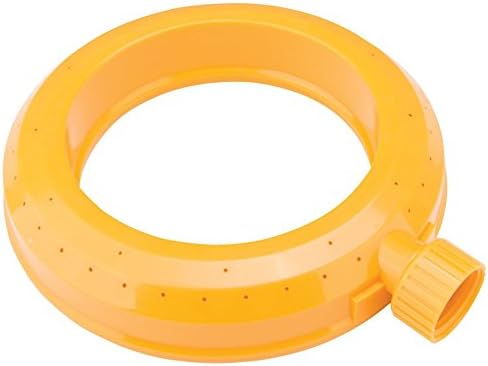
Rocky Mountain Goods Rotary Circle Sprinkler (plastic)
| Material Type | Plastic |
|---|---|
| Maximum Flow Rate | 2 gpm |
| Style Name | Rotary |
This rotary circle sprinkler is a basic, budget-friendly option for watering new sod and medium-sized lawns. Made from high-impact plastic, it is lightweight and easy to move so you can position it where young grass needs the most attention. The sprinkler throws water up to about 30 feet across, producing a fixed, consistent spray pattern that helps establish even moisture without complicated settings. It is rated to run with both low and high household water pressure and has a modest maximum flow rate of 2 gpm, which helps keep water use reasonable. Because it is a straightforward rotary head with no adjustable diffusers or multiple spray modes, you trade advanced customization for simplicity and reliability. Expect good performance for regular coverage on a budget, but plan to reposition it for irregular lawn shapes or to avoid overwatering in one spot.
Best for: Homeowners laying or caring for new sod who want an inexpensive, no-frills sprinkler that is easy to move and use regularly.
Less Ideal for: People with large or unusually shaped lawns who need adjustable spray patterns or automated coverage should consider more versatile sprinkler heads or timed systems.
- Covers up to 30 foot diameter suitable for establishing new sod
- High-impact plastic resists outdoor wear while keeping cost low
- Works with low and high household water pressure for flexible use
- Fixed spray style with no adjustable patterns limits fine-tuning of coverage
Verdict: A low-cost, easy-to-use rotary sprinkler that reliably wets new sod across a roughly 30-foot area without fuss.
Joeys Garden Rotary Lawn Sprinkler — 360° Rotating Sprinkler

| Material Type | Plastic |
|---|---|
| Item Type Name | Sprinkler |
| Unit Count | 1 Count |
| Item Highlight | Rotates 360° for Even Coverage — Great for Kids & Pets Too |
The Joeys Garden Rotary Lawn Sprinkler is a simple rotating sprinkler designed to give even coverage across lawns and play areas. It uses three adjustable spinning arms to deliver a full 360 degree spray pattern, which helps avoid the dry strips you get from oscillating heads and makes it suitable for seeding and establishing turf. The unit is molded from ABS plastic and has a weighted base so it stays put on grass, patio, or gravel at typical household water pressures. Setup is tool-free with a screw-on hose connection that fits standard garden hoses, and you can daisy-chain multiple units to cover larger areas. Practical benefits include uniform watering useful for seed germination and an easy, kid-friendly design that doubles as a play sprinkler. Limitations are the plastic construction and reliance on steady household pressure for best range, so it will not perform like heavy-duty metal impact or pop-up sprinkler systems and may require repositioning for very large or oddly shaped lawns.
Best for: Homeowners wanting an affordable, easy-to-use sprinkler to evenly water newly seeded lawns or small to medium yards who value reliable coverage and simple setup.
Less Ideal for: People installing a permanent or professional irrigation system or those who need high durability and precision zone control for very large properties.
- True 360° rotation with three adjustable arms provides more uniform coverage for seeding
- Weighted ABS plastic base holds steady on grass, patio, or gravel
- Screw-on connection fits any standard garden hose for quick, tool-free setup
- Can be daisy-chained with additional sprinklers to expand coverage
- Plastic construction is less durable than metal professional sprinklers
- Performance depends on steady household water pressure for maximum spray distance
Verdict: Choose this rotary sprinkler if you want an inexpensive, easy-to-set-up option that gives uniform 360 degree coverage ideal for seeding and small to medium lawns.
Eden Weighted Essential Oscillating Sprinkler with Quick Connect Starter Set

| Maximum Pressure | 60 psi |
|---|---|
| Maximum Flow Rate | 30 gpm |
| Nozzle Count | 16 precision nozzles |
| Coverage | Up to 3,600 sq. ft. |
The Eden Weighted Essential Oscillating Sprinkler delivers steady, even watering across mid‑to‑large lawns and garden beds up to about 3,600 square feet. It mounts on a weighted base so it stays put while a sealed turbo drive motor oscillates a bar with 16 precision nozzles for consistent spray distribution. Sliding range tabs let you limit how wide the spray is, and a built‑in nozzle cleaning tool helps clear clogs without disassembly. The included quick connect starter set and stainless steel filter washers simplify hookups and let you swap tools without shutting off the water. In practice this model is quiet, simple to position, and keeps water patterns uniform on level turf. Expect best results on relatively flat lawns where the coverage matches the stated footprint; very large properties will need multiple units or a different sprinkler type to avoid gaps. The unit is plastic, so durability under heavy seasonal use may lag behind metal alternatives, but the design and filters reduce maintenance and leaks for routine garden watering needs.
Best for: Buyers who want a reliable, easy‑to‑use sprinkler that produces uniform coverage for medium to large lawns and value social proof and low maintenance features when choosing a dependable product.
Less Ideal for: Not a great choice for very large estates or professional irrigation needs where metal, higher‑capacity, or multi‑zone systems are preferred.
- Even coverage from 16 precision nozzles for consistent watering patterns
- Weighted base provides stability during operation
- Adjustable range tabs allow precise area control to target lawns or beds
- Quick connect starter set and stainless steel filters simplify hookups and reduce leaks
- Built‑in nozzle cleaning tool makes maintenance fast and simple
- Plastic construction may wear faster than metal sprinklers under heavy seasonal use
- Coverage limited to about 3,600 sq. ft., so large properties may need multiple units
Verdict: A user‑friendly oscillating sprinkler that combines even coverage, a stable weighted base, and quick‑connect hookups for dependable mid‑sized lawn watering.
Choosing the Right Garden Sprinkler for Seeding Grass: Key Factors to Consider
Coverage Pattern
Coverage pattern determines how evenly water lands across the seeded area. For seeding grass you want overlap between passes so there are no dry bands that inhibit germination. Rectangular, circular, and oscillating patterns each have tradeoffs: circular heads are good for rounded beds and small lawns, oscillating bars cover rectangular strips well, and adjustable-pattern heads let you limit spray to lawn edges without wetting walkways.
When planning layout, think about how patterns overlap at typical spacing and whether the sprinkler allows partial arcs. Small adjustments in pattern shape can fix uneven germination without moving the sprinkler repeatedly, which reduces disturbance to fragile seed.
Droplet Size and Output Intensity
Droplet size is one of the most important factors when seeding. Large, forceful droplets can displace seed and erode loose soil, while very fine mist may evaporate before reaching the soil, especially in windy conditions. The ideal sprinkler for seeding produces a gentle, medium-fine droplet that soaks in slowly without creating runoff or washing seed away.
Look for sprinklers with flow control or low-impact modes that let you reduce pressure or change nozzle openings. That control helps you match output to current conditions: gentler output during germination, and slightly stronger spray when seedlings can tolerate more force for deeper watering.
Adjustability and Range Control
Adjustability covers how easily you change the radius, arc, and spray intensity. A good seeding sprinkler lets you dial down range so you do not overwater edges or waste water. Variable-range features are also valuable when different sections of the lawn need different coverage because of slope, soil type, or proximity to structures.
Range control also matters for water-source compatibility. If a sprinkler needs higher pressure to reach full radius, you should be able to scale it back for lower-pressure faucets. Look for persistent, predictable response when you tweak the controls rather than abrupt changes that make fine-tuning difficult.
Durability and Materials
Sprinklers spend long days outdoors, so material choices affect longevity and performance. Metal fittings and corrosion-resistant components last longer when left connected to hoses. UV-stabilized plastics are less likely to become brittle and crack after seasons of sun exposure.
Beyond raw materials, structural design matters. Sturdy bases resist tipping and shifting on uneven ground, and robust connector threads reduce leak points. Consider how easily replacement parts can be sourced or whether the unit is serviceable in the garden.
Ease of Setup and Positioning
When seeding you want to set up sprinklers quickly and reposition them without disturbing newly laid seed or soil. Features that matter include a stable stake or weighted base, simple connection to standard hoses, and intuitive controls for arc and range. Quick-release or tool-free adjustments save time during the daily or twice-daily watering regime new lawns require.
Also consider how simple it is to level and aim the head. A sprinkler that swivels or tilts smoothly lets you avoid wetting hardscapes and concentrate water where it promotes germination.
Compatibility With Water Pressure and Flow
Residential water supplies vary. A sprinkler that performs well at both low and moderate pressure is more versatile during seeding, because you may need lower intensity while still covering the intended area. Matching a sprinkler's flow requirements to your faucet and any attached hose or splitter prevents weak coverage or excessive pressure that could damage seed.
Some models include built-in flow restrictors or adapters to help match performance. If you plan to run multiple heads from one line, account for combined flow so each head still produces gentle droplets suitable for germination.
Preparing Your Lawn Before You Begin Watering
Surface preparation influences how a sprinkler performs. Rake the seedbed to remove clods and create a fine, firm surface so droplets can be absorbed rather than bouncing or causing displacement. Lightly firming the seedbed helps small seeds stay put when the sprinkler first runs.
Mark out sprinkler positions to ensure consistent overlap. A quick walk-through while the sprinkler runs for a minute shows wet and dry zones so you can adjust spacing rather than guessing. If your lawn has slopes, stage watering from the top down to avoid runoff.
- Seed into a fine, even seedbed to minimize movement from droplets
- Test-spray briefly to reveal coverage and adjust spacing
- Water from higher ground first on sloped areas to reduce runoff
Best Watering Schedule for New Seed
Newly sown grass seed needs frequent, light waterings to keep the topsoil consistently moist but not saturated. Short sessions multiple times per day are usually better than a single long soak because they reduce erosion and seed displacement. As seedlings emerge and develop roots, you can lengthen sessions and lower frequency to encourage deeper rooting.
Adjust schedule for temperature and sun exposure. Hot, windy afternoons increase evaporation so shift sessions to early morning and late afternoon when possible. On cool or overcast days, reduce frequency to avoid waterlogging.
- Start with short, gentle sessions several times daily
- Move to longer, less frequent sessions as roots develop
- Prefer early morning and late afternoon for lower evaporation
Managing Wind and Microclimates
Wind changes how droplets land. In breezy conditions use lower-range settings or move sprinklers closer together to preserve overlap. For exposed sites consider using spray heads that produce slightly larger droplets to reach the ground before drifting.
Microclimates like shade pockets or heat islands may need different watering amounts. Inspect emerging seedlings across these zones and adapt run times rather than treating the lawn uniformly.
- Reduce range or increase overlap in windy conditions
- Use larger droplets when wind consistently skews fine mist
- Adjust run times by microclimate rather than globally
Avoiding Common Seeding Watering Mistakes
Overwatering is as harmful as underwatering: saturated soil deprives seeds of oxygen and encourages crusting. Conversely, letting the surface dry between sessions can halt germination. Test the seedbed with your finger to verify that the top inch remains moist but not soggy.
Another common mistake is leaving stationary sprinklers in the same spot for too long on loose seedbeds. Frequent repositioning is better, but do it gently and only when surface conditions allow to avoid disturbance.
- Check soil moisture manually rather than relying solely on timer settings
- Avoid long runs on a single spot when soil surface is loose
- Reduce watering after seedlings show uniform emergence
Tools and Accessories That Help During Establishment
Simple accessories can improve the sprinkler experience. A hose splitter with individual valves lets you run multiple heads sequentially from one faucet without repeatedly disconnecting. Stakes or weighted bases keep heads steady on soft soil. Flow-control valves at the head make fine-tuning easier in the field.
A handheld moisture meter or a small garden trowel helps check moisture depths so you can move from frequent shallow waterings to deeper, less frequent ones at the right time.
- Use a splitter to manage multiple heads from one source
- Stakes or weighted bases maintain stable positioning
- Carry a simple moisture tester to time the transition to deeper watering
How We Chose the Best Garden Sprinkler for Seeding Grass
We shortlisted products that make real differences during lawn establishment rather than generic lawn watering. Our selection filtered for sprinklers that offer adjustable spray patterns and fine-output settings that limit seed displacement, plus reliable coverage at common residential water pressures. We favored units that let you control droplet size or use low-impact modes, because seed and delicate sprouts are easily washed away by hard jets. Durability under outdoor use was another key filter, including corrosion resistance for metal components and UV-stable plastics. We considered ease of setup and aim so gardeners can get even overlap without complex calibration. Flow compatibility across typical hose and faucet pressures and the ability to vary range without reshaping the spray pattern were essential performance criteria. We excluded novelty or toy-style sprinklers, products intended only for high-pressure irrigation systems, and units lacking adjustability. The final picks represent a balance of coverage control, seed-safe output, build resilience, and simple field adjustments for establishing new grass.
FAQ
How long should I run a sprinkler when first seeding grass?
Run short sessions several times a day to keep the topsoil moist without causing runoff. Typical sessions are 5 to 15 minutes, but exact duration depends on soil texture, sprinkler output, and weather. Monitor the surface and adjust so the top inch stays consistently damp.
Can I use a regular lawn sprinkler for seed, or do I need special features?
You can use many regular sprinklers if they allow low-intensity settings and pattern control. What matters is gentle droplet size and predictable range. Sprinklers without adjustable flow or arc are harder to tune for seeding and may increase the risk of seed movement.
How close should sprinklers be spaced for even seed germination?
Spacing depends on the spray radius and pattern. Aim for overlap so water from one head reaches into the next head's dry zone. A quick test run and visual inspection of wet edges will show if spacing is correct; adjust until wet bands disappear.
What should I do if strong rain occurs right after seeding?
Heavy rain can wash seed away or cause crusting. If substantial runoff happens, you may need to re-seed affected areas after the soil surface is repaired. Lighter rain often supplements your schedule, so inspect the seedbed and reduce artificial watering accordingly.
When can I reduce watering frequency after seedlings emerge?
Once seedlings have several true leaves and the root zone begins to hold moisture at deeper depths, usually after two to four weeks depending on species and conditions, shift to longer, less frequent sessions to encourage deeper rooting. Use moisture checks to confirm the transition.
Final Verdict
When establishing a lawn, prioritize a sprinkler that lets you control droplet intensity, pattern overlap, and range so you can protect delicate seed while ensuring even moisture. Tradeoffs are common: very long range often requires higher pressure, which can be harsher on seed, while ultra-gentle outputs may need closer spacing. Focus on coverage pattern control, adjustable output, and a stable setup to match your yard's size and microclimates. Choosing a sprinkler with those characteristics will make germination more uniform and reduce rework. Use frequent, short waterings at first, adjust for wind and slope, and transition to deeper watering once roots are established.
