

Note: This article contains affiliate links. If you click on these links and make a purchase, I may earn a small commission at no extra cost to you. This helps support my research and content. Read my full affiliate disclosure here.
Replacing lawn grass with a ground cover can cut mowing, reduce water use, and open up attractive, low-maintenance planting options across lawns, slopes, or areas under trees. If you want a tidy, resilient alternative to turf-whether for a small yard, sloped site, or drought-prone landscape-choosing the right ground cover matters for long-term appearance and maintenance. This guide shortlists six top-rated grass replacement ground covers and explains the practical differences that matter in a real garden. We evaluate sun and moisture tolerance, spread and maintenance needs, and how each option performs under foot traffic so you can pick the best fit for your site and gardening style.
Top Picks at a Glance
| Best Overall The best all-around choice for most situations | Lawn Seed Feed Micro Clover Seed, 1 lb Resealable Pouch (Coated) |  |
| Best Quality Built to a higher standard if you want something more solid | ALTRUISTIC Premium Artificial Grass Turf with Drainage Holes and Rubber Backing |  |
| Best Value The sweet spot between price and what you get | Pennington Clover & Grass Mix Seed, 7 lb |  |
| Best Budget The cheapest option that still gets the job done reliably | BuggyBeds Creeping Thyme Herb Seeds (17500 Count) |  |
| Highest Rated A top-rated pick with lots of positive feedback | Pennington No Mow Mix Fine Fescue Grass Seed, 3 lb |  |
| Most Popular A crowd favorite that many people choose with confidence | Outsidepride White Dutch Clover Seed, 2 lb |  |
Lawn Seed Feed Micro Clover Seed, 1 lb Resealable Pouch (Coated)

| Indoor Outdoor Usage | Outdoor |
|---|---|
| Other Special Features of the Product | Drought Tolerant |
| Sunlight Exposure | Partial Sun |
| Moisture Needs | Low |
| Material Features | Eco-Friendly, Nitro-Coated |
This micro clover seed is sold in a resealable 1 lb pouch and is intended as a low-maintenance alternative to traditional turf. The nitro-coated seed is formulated to retain moisture, resist harsh weather, and speed germination so you get faster establishment and denser coverage. Once established the micro clover needs less watering and mowing than grass, fixes nitrogen to improve soil fertility, and produces small white flowers that add visual interest. Practical uses include replacing patchy lawn sections, overseeding thin turf, or creating a soft, low-growing ground cover in partial sun. The coating and resealable packaging support better shelf life and higher survival rates in dry conditions, but full coverage can take a season to develop in shaded or heavily compacted sites. Because this is a seed product, successful results depend on proper soil contact, light raking, and follow-up watering during establishment rather than instant results like sod or pre-grown mats.
Best for: Gardeners seeking a low-maintenance, eco-friendly lawn alternative who prioritize reduced watering, less mowing, and improving soil health over instant turf appearance.
Less Ideal for: Homeowners who need an immediate, full-coverage lawn or those with heavily shaded properties where partial-sun plants will struggle.
- Coated seeds for faster germination and improved moisture retention
- Resealable pouch preserves seed viability and extends shelf life
- Drought-tolerant once established, reducing irrigation needs
- Fixes nitrogen in soil to lower fertilizer requirements
- Creates dense growth that helps suppress weeds and soft texture with small blooms
- Establishment still requires correct seeding technique and consistent watering until established
- Not an instant lawn solution like sod or pre-grown turf
Verdict: Choose this coated micro clover seed if you want an easy-care, waterwise ground cover that builds soil fertility and reduces mowing compared with traditional grass.
ALTRUISTIC Premium Artificial Grass Turf with Drainage Holes and Rubber Backing

| Material Type | Polypropylene |
|---|---|
| Pile Height | 1.38 Inch |
| Total Weight | 70 oz per square yard |
| Usage | Indoor decoration, pet areas |
This ALTRUISTIC turf is a high-density synthetic grass mat made to give year-round green coverage for patios, balconies, and pet areas. It installs as a rolled turf that you trim to fit and secure with landscape staples or seam tape; the manufacturer recommends brushing, sun exposure, or hot water to remove creases after unrolling. The product pairs polypropylene/PE face fibers with a latex-reinforced backing that includes drainage holes so liquids pass through instead of pooling. In practice that means it is easy to hose off and tolerant of pet traffic and weather exposure, and the four-tone yarn and thick pile make it look natural underfoot. Important limits are that it is a decorative turf rather than a specialized heavy-duty pet system with antimicrobial infill or dedicated odor channels, so for very heavy chewing or frequent indoor urine without regular cleaning you may want a pet-specific option. Expect straightforward DIY installation and low maintenance for a balanced, multiuse ground cover.
Best for: Buyers who want an attractive, low-maintenance ground cover for a dog run, patio, or balcony that balances realistic appearance with easy cleaning and DIY installation.
Less Ideal for: Owners looking for a commercial-grade pet surface for heavy chewing, indoor kennels with constant urine exposure, or built-in odor-neutralizing systems should consider purpose-built pet turf alternatives.
- High-density 1.38-inch pile gives a soft, realistic look and feel
- Reinforced latex rubber backing with drainage holes lets water and urine pass through
- Polypropylene/PE fibers are UV resistant for long-lasting color stability
- Easy to trim and install as a rolled turf for DIY projects
- Not marketed as a specialized pet turf with antimicrobial treatments or built-in odor control
- Backing and pile may still trap odors if not rinsed and maintained regularly
Verdict: A realistic, easy-to-install artificial turf that balances looks, drainage, and low maintenance for everyday dog areas and outdoor living spaces.
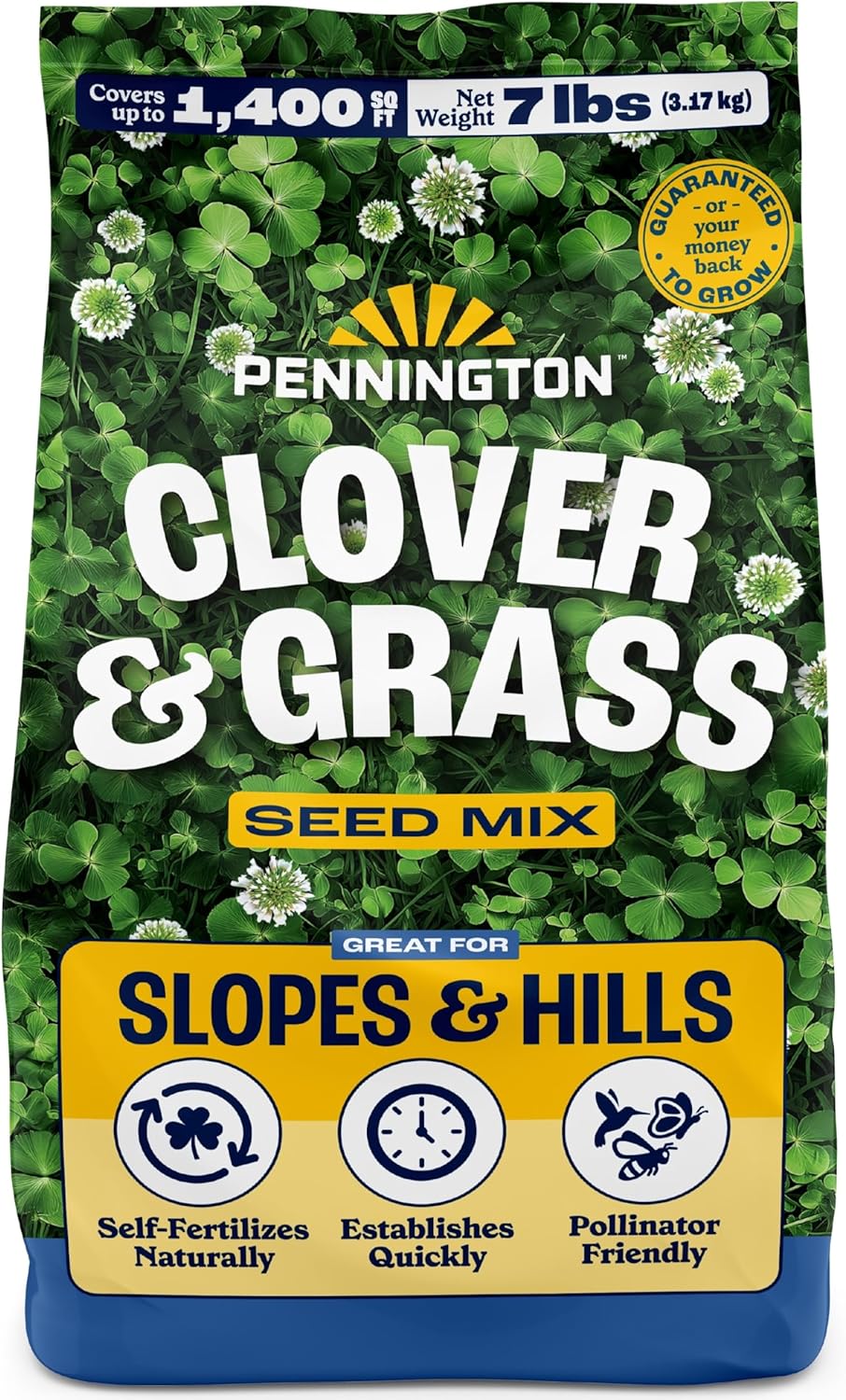
Pennington Clover & Grass Mix Seed, 7 lb
| Expected Planting Period | Fall |
|---|---|
| Sunlight Exposure | 4-6 Hours of Sun Per Day |
| USDA Hardiness Zone | 1-12 |
| Moisture Needs | Regular Watering |
| Unit Count | 112 Ounce |
Pennington Clover & Grass Mix combines Durana white clover with water-conserving grass varieties to establish a low-input ground cover that functions as a lawn alternative. It is typically broadcast or spread with a drop or rotary spreader in fall, raked lightly into soil, and kept moist until seedlings reach about 2 inches. The blend is marketed as drought and disease tolerant, self-fertilizing through clover nitrogen fixation, and suitable for slopes where erosion is a concern. For homeowners aiming to reduce irrigation, fertilizer and mowing frequency, this mix delivers a green, pollinator-supporting surface that requires less ongoing maintenance than traditional turf. Limitations to expect are a shorter expected plant height (about 2 inches) so it does not mimic dense turf grass, and establishment still needs daily watering until rooted; areas with heavy foot traffic may wear the cover down. Success also depends on proper site prep and following spreader settings to achieve even coverage.
Best for: Homeowners who want a practical, lower-maintenance lawn alternative that reduces watering and fertilizer needs while supporting pollinators and controlling erosion on slopes.
Less Ideal for: Those who need a traditional dense, high-traffic turf look or want an instant lawn; not recommended for frequently used play fields or sports lawns.
- Includes Durana white clover for natural nitrogen fixation and reduced fertilizer needs
- Water-conserving grass varieties that improve drought tolerance compared with conventional turf
- Suitable for slopes and hills with lower erosion risk when combined with proper seeding techniques
- Supports pollinators by incorporating clover into the mix
- Requires regular watering during establishment and will not instantly replace established turf
- Lower, finer growth habit around 2 inches so it will not match the look of thick turf grass
Verdict: Choose this mix if you want a low-input, pollinator-friendly ground cover that replaces conventional turf with less water and fertilizer.
BuggyBeds Creeping Thyme Herb Seeds (17500 Count)

| Unit Count | 17500 Count |
|---|---|
| Indoor Outdoor Usage | Outdoor |
| USDA Hardiness Zone | 5-9 |
| Expected Blooming Period | Late Spring To Early Fall |
| Moisture Needs | Low |
These BuggyBeds creeping thyme seeds are sold in a very large 17,500-count packet and are aimed at establishing a fragrant, low-growing ground cover that suppresses weeds and attracts pollinators. Typical use is direct sowing in spring or fall where you want a carpet-like planting between stones, on slopes, or in areas that are hard to mow. The seeds produce a drought-tolerant perennial that blooms from late spring through early fall and performs best in partial shade to full sun in zones 5 to 9. Practical benefits include minimal ongoing care once established, strong weed suppression, and a pleasant aroma when walked on. Because the packet contains so many seeds, it is cost-effective for covering large areas or multiple projects. Important limitations are that success depends on proper soil contact and site preparation, and germination rates can vary so you may need time and patience to get a uniform stand; very heavy clay with poor drainage will still need amendment for best results. This is a straightforward option for gardeners who want an inexpensive, attractive ground cover for drier, well-drained spots.
Best for: Gardeners looking to cheaply establish a fragrant, low-care ground cover over large or difficult-to-mow areas and who prioritize value and low ongoing maintenance.
Less Ideal for: Gardeners seeking an instant lawn-like cover or planting in permanently waterlogged clay sites where drainage cannot be improved.
- Very large 17,500 seed count makes it economical for covering large areas
- Drought-tolerant perennial habit reduces watering once established
- Low-maintenance growth habit that helps suppress weeds
- Attractive, fragrant ground cover that attracts pollinators
- May require site prep and soil amendment for heavy clay to ensure good drainage
- Germination and uniform coverage can be variable, so establishment may take time
Verdict: If you need an inexpensive, drought-tolerant ground cover to seed large areas, this high-count creeping thyme pack offers strong value and low long-term care.
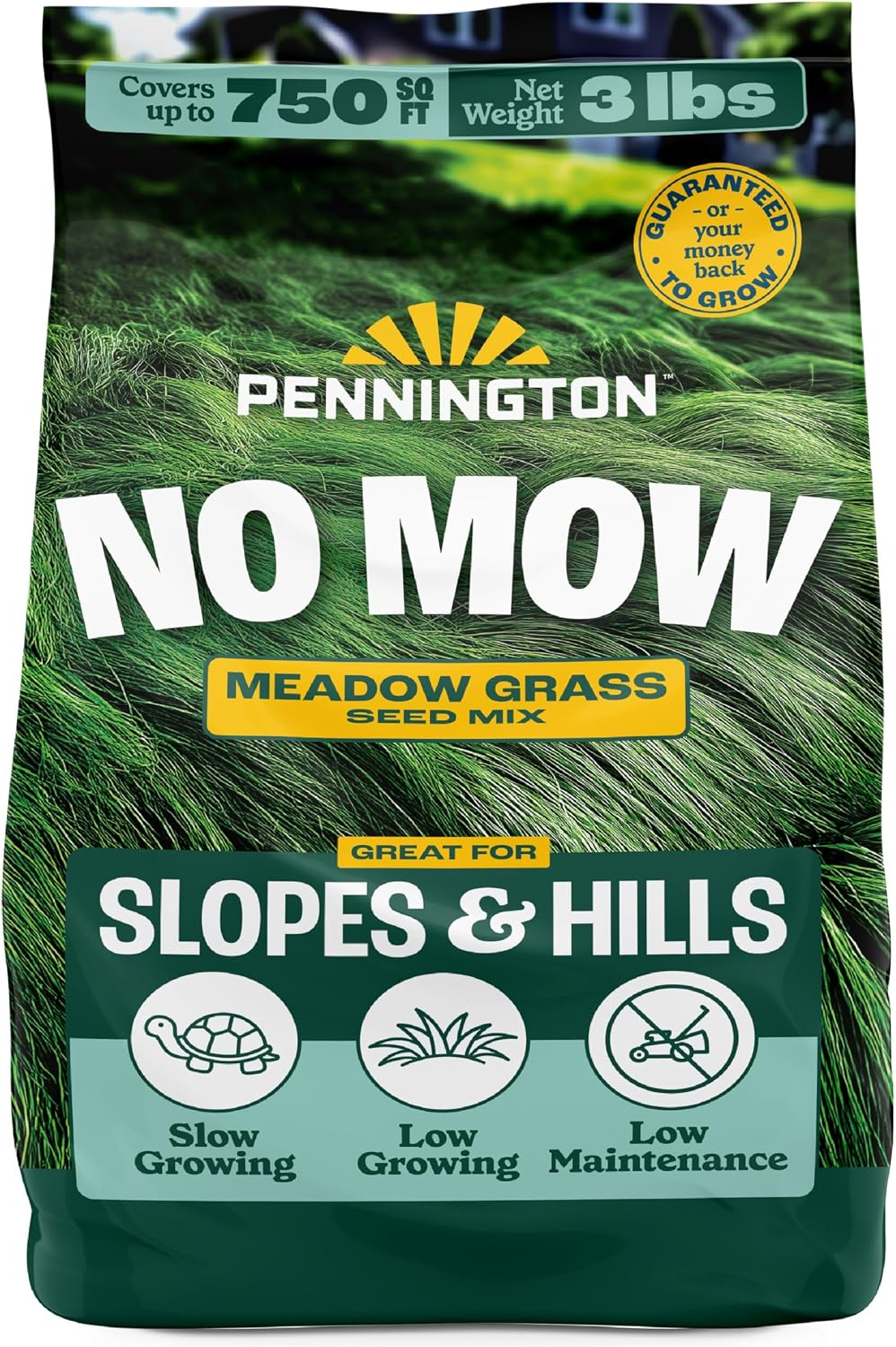
Pennington No Mow Mix Fine Fescue Grass Seed, 3 lb
| Sunlight Exposure | 4-6 Hours of Sun Per Day |
|---|---|
| Expected Planting Period | Fall |
| USDA Hardiness Zone | 1-12 |
| Material Features | Fine fescue blend including creeping red fescue and chewings fescue |
Pennington No Mow Mix is a ready-to-plant fine fescue blend intended to create a low-maintenance meadow-style ground cover that needs no regular mowing once established. Typical use is seeding residential lawns, slopes, or erosion-prone areas in spring or fall: prepare and level the soil, spread seed with a spreader at the recommended rate, and keep the soil consistently moist until seedlings are established. The mix contains creeping red and chewings fescues that grow up to about 12 inches and then naturally flop to roughly 6 inches for a soft, meadow look. Practical benefits include drought tolerance after establishment, good adaptability across USDA zones 1–12, and reduced maintenance compared with traditional turf. Important limitations are a slower initial establishment period than fast-germinating turf grasses and a taller meadow appearance that may not suit formal lawns or high-traffic play areas. It requires 4–6 hours of sun and regular watering during establishment to perform reliably.
Best for: Buyers who want a dependable, low-maintenance ground cover for slopes or hard-to-mow areas and prioritize long-term reliability over a manicured turf look.
Less Ideal for: Homeowners who need a traditional short, high-traffic lawn or who require rapid germination and immediate use of the area.
- Specifically formulated no-mow fine fescue blend for low-maintenance coverage
- Suitable for slopes, hills, and erosion-prone areas
- Drought tolerant once established for reduced irrigation needs
- Adaptable across a wide USDA hardiness range (zones 1–12)
- Slower to establish compared with typical turfgrass mixes
- Meadow-style growth may not be appropriate for formal, high-traffic lawns
Verdict: Choose this mix when you want a reliable, low-maintenance meadow-style ground cover that minimizes mowing and holds up on slopes.
Outsidepride White Dutch Clover Seed, 2 lb

| Indoor Outdoor Usage | Outdoor |
|---|---|
| Other Special Features of the Product | Attracts Pollinators |
| Sunlight Exposure | Full Sun |
| Moisture Needs | Little To No Watering |
| Material Features | Heirloom |
Outsidepride White Dutch Clover is a perennial clover seed sold in a 2 pound bag and treated (nitrocoated and inoculated) to support reliable germination and soil nitrogen fixation. It is typically broadcast or mixed with grass/cover-crop seed, lightly raked in, and kept moist until established; germination is expected within about two weeks under warm soil conditions. Notable features include drought tolerance from a deep root system, attractiveness to pollinators when it blooms in summer, and an ability to form dense ground cover that suppresses weeds and reduces erosion. Practical benefits for full-sun sites include low watering needs once established, weed suppression, improved soil fertility from nitrogen fixation, and a visually pleasing carpet of small white flowers. Important limitations are that it grows low to the ground (a few inches up to a foot) so it is not a turf substitute where heavy foot traffic or formal mowing height is required, and establishing a uniform stand requires correct seeding rate and initial moisture management. This seed is best used for informal lawns, slopes, pollinator strips, and pasture mixes rather than high-traffic ornamental lawns.
Best for: Gardeners and homeowners who want a low-maintenance, pollinator-friendly ground cover or lawn alternative for sunny areas and slopes and who prioritize ecological benefits and ease of establishment.
Less Ideal for: Property owners who need a formal, high-traffic turf or a grass lawn with traditional mowing and wear resistance should consider conventional grass seed blends instead.
- Treated (nitrocoated and inoculated) seed for improved germination and soil health
- Attracts pollinators with fragrant white summer blooms
- Forms dense ground cover that helps suppress weeds and control erosion
- Drought tolerant once established, suitable for low-water sites
- Not suited for heavy foot traffic or formal turf uses
- Requires initial moisture and correct seeding rate for an even stand
Verdict: A quick-establishing, pollinator-friendly ground cover seed that improves soil nitrogen and holds sunny slopes and informal lawns with minimal ongoing watering.
Choosing the Right Grass Replacement Ground Cover: Key Factors to Consider
Sun and Shade Tolerance
Understanding how much sun your planting area receives is the first step. Some ground covers thrive in full sun and will scorch or thin in shade, while others are adapted to deep shade beneath trees. Choosing a cover matched to your light conditions reduces thin patches and keeps the planting dense and low-maintenance.
Light tolerance also affects flowering, color, and spread. A sun-loving cover planted in heavy shade may never fill in, creating bare soil that invites weeds. Conversely, shade-adapted ground covers can become leggy in full sun and require more frequent pruning.
Moisture Needs and Drought Tolerance
Soil moisture and local rainfall patterns determine how often you will need to irrigate. Drought-tolerant covers minimize supplemental watering once established, which is ideal for dry climates or low-water landscapes. However, some drought-tolerant species establish slowly and need more attention the first season.
If your site tends to hold water or has poor drainage, pick covers that tolerate periodic wet feet. Matching moisture needs to site conditions reduces losses and subsequent replanting work.
Spread Habit and Invasiveness
Ground covers spread by runners, rhizomes, or by forming dense clumps. Fast-spreading types can fill a lawn replacement quickly but may encroach on borders and require edging. Conversely, slow-spreading covers are easier to contain but take longer to achieve full coverage and may allow weeds to invade during establishment.
Consider how much control you want. Some gardeners favor aggressive spreaders for rapid soil stabilization on slopes, while others prefer modest spreaders for tidy beds and defined plantings.
Tolerance of Foot Traffic
Think about how often people will walk across the area. Some ground covers handle light, occasional footsteps and will bounce back after compression. Others are best for purely decorative zones where foot traffic is minimal. If you plan paths or regular access, choose a durable, mat-forming species or plan stepping stones to protect the planting.
Durable covers reduce bare spots caused by repeated use and lower the need for repair plantings over time.
Maintenance Needs and Seasonal Care
Maintenance varies widely between species. Some ground covers require seasonal trimming, occasional division, or deadheading to prevent seeding; others need almost no attention beyond initial establishment. Consider how much time you can commit to upkeep.
Lower-maintenance options suit busy gardeners or low-care landscapes, but may sacrifice seasonal color or flowering. Higher-maintenance covers can reward with blooms or texture, but expect tasks like trimming and clean-up.
Soil and Site Preparation
Preparing the planting bed helps new ground covers establish quickly. Good soil contact, weed removal, and appropriate amendments improve root growth and reduce competition. For slopes, erosion control measures or staggered planting help young plants fill in before rains wash soil away.
Some covers tolerate poor soils, but even tough plants establish faster with reasonable soil preparation, which shortens the time to full coverage and reduces follow-up weeding.
Best Uses by Landscape Situation
Match the ground cover to the planting situation rather than forcing a single species across the whole property. For slopes and erosion-prone sites, choose a vigorous spreader with good root-holding ability. For small patios or narrow strips, pick a compact or mat-forming cover that stays tidy and does not overrun borders.
Under trees you will want a shade-tolerant, shallow-rooting cover that competes reasonably with tree roots. In sunny, dry yards aim for drought-hardy, sun-loving types to minimize irrigation.
- Slopes: choose rapid spreaders with good root networks
- Under trees: prioritize shade tolerance and shallow roots
- High-traffic areas: use durable, mat-forming species or install stepping stones
- Narrow borders: select compact, non-invasive varieties
Establishing a New Ground Cover
Good establishment reduces future maintenance. Clear weeds and grass, loosen the topsoil, and consider a light amendment if soil is extremely poor. Space plugs or plants according to the expected mature spread so they will knit together without excessive gaps.
Water regularly during the first season to help roots develop. After plants have filled in, taper watering to match the species' tolerance. Mulch lightly only if needed to suppress weeds; heavy mulch can slow spread and interfere with ground contact.
- Stagger planting on slopes to reduce runoff loss
- Avoid deep mulch that separates stems from soil
- Protect young plantings from foot traffic until established
Managing Spread and Edging
Plan for boundaries. Some ground covers can be contained by physical edging, regular trimming, or root barrier installation. If you want a clean line between beds and paths, install a low edging or maintain a planting-free buffer strip.
For aggressive spreaders, schedule occasional pruning or root removal at the borders. If containment is difficult, consider replacing aggressive species with a more restrained alternative in sensitive areas.
- Use edging to prevent lateral runners
- Trim runners back annually in border zones
- Place stepping stones to reduce temptation to walk across the planting
Seasonal Care and Long-Term Maintenance
Most ground covers need only light seasonal attention, such as an annual tidy-up or dividing crowded patches every few years. Monitor for weeds during establishment and remove invasive volunteers promptly to protect the cover's density.
Adjust care to your climate: in cold climates protect evergreen covers where necessary and in hot, dry regions plan for occasional supplemental irrigation during extended droughts.
- Divide overcrowded patches to rejuvenate growth
- Watch for pest or disease hotspots and treat early
- Replace small bare patches promptly to prevent weed invasion
Design and Aesthetic Tips
Think beyond a single species. Combining two or three complementary covers can add seasonal interest, texture, and better site coverage. Use taller, low-maintenance accents at focal points and let the ground cover fill between them for a layered look.
Color, leaf texture, and flowering habits affect the overall feel. Choose based on how much seasonal change you want versus a uniformly green, evergreen ground plane.
- Pair mat-forming covers with upright accents for contrast
- Use different textures to define paths or edges
- Consider flowering intervals if seasonal blooms are desired
How We Chose the Best Grass Replacement Ground Cover
We shortlisted ground covers based on real garden performance rather than styling alone. Our evaluation prioritized site-adapted resilience and low ongoing maintenance, because these are the traits that make grass replacements successful in yards, slopes, and under trees. Key criteria included sun and shade tolerance, drought tolerance and water needs, spread habit and aggressiveness, maintenance tasks like mowing or pruning, and tolerance of occasional foot traffic. We excluded ornamental groundcovers that require frequent deadheading or heavy seasonal care, and we did not include plants that are strictly indoor or container-only. We also filtered out options that are inappropriate for typical lawn-sized areas due to extreme invasiveness or very slow coverage rates. Final selections represent a balance of adaptability, predictable spread, and reduced upkeep for different landscape situations.
FAQ
Can ground covers replace a lawn completely?
Often yes, but it depends on site conditions and intended use. For purely ornamental areas without regular foot traffic, many ground covers will form a dense, lawn-like carpet. For high-traffic lawns, pairing durable ground covers with paths or using tolerant species is a better solution.
How long does it take for a ground cover to fill in?
It usually takes one to three seasons depending on the species, planting density, and growing conditions. Fast-spreading covers can knit together within a single season, while slower spreaders may need multiple years to achieve full coverage.
Do ground covers need fertilizer?
Usually ground covers need minimal feeding. A light application of balanced fertilizer in spring helps establishment in poor soils, but over-fertilizing can encourage excessive, weak growth and increase maintenance.
Will ground covers prevent weeds?
A healthy, dense ground cover suppresses many weeds by shading the soil, but weeds can still appear in gaps or along edges. Proper spacing, good establishment practices, and prompt removal of weed seedlings keep weed pressure low.
Are ground covers suitable for slopes?
Yes, many ground covers stabilize slopes and reduce erosion by forming a network of roots. Choose species with aggressive spread and good root systems for steep or erosion-prone sites and establish them well before heavy rains.
Final Verdict
Choosing the right grass replacement ground cover means matching plant habits to your site and maintenance expectations. Prioritize light and moisture tolerance, manage spread at borders, and select a species that tolerates the level of foot traffic you expect. With proper establishment and the right expectations about maintenance and spread, ground covers provide a durable, lower-maintenance alternative to traditional turf.
