

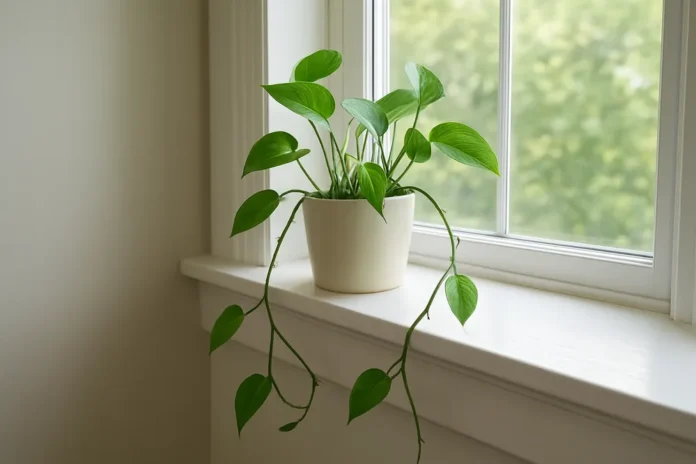
A pothos gets leggy most often because it is not getting enough light, so the vines stretch and produce fewer leaves. Age, inconsistent pruning, and uneven growing conditions can also make the plant look sparse.
A pothos is supposed to look lush, trailing, and full, so it can be frustrating when the vines get long but the leaves are few and far between. If your plant has lots of bare stem, wide gaps between leaves, or thin wandering growth, it is showing a classic leggy pothos pattern.
In most homes, legginess happens because the plant is stretching for better light. But lighting is not the only reason. Pruning habits, pot placement, aging stems, and general care can all affect how compact or sparse your pothos becomes. The good news is that pothos usually responds very well once the cause is corrected.
Below, you will find the most common reasons a pothos gets leggy, how to tell which one applies to your plant, and what helps it grow fuller again.
What Leggy Growth Looks Like On Pothos
Leggy growth means the plant is putting out stem length without enough leaf density to match. On pothos, this often shows up as long vines with empty sections, smaller leaves than usual, and noticeable spacing between each leaf node.
- Long stretches of vine with few leaves
- Large gaps between one leaf and the next
- Thin stems that look stretched rather than sturdy
- Small new leaves instead of broad, mature foliage
- Trailing growth that looks sparse from the top of the pot
Some trailing is normal, especially as a pothos matures. The problem is not the length itself. The issue is when the plant keeps extending without producing the full, leafy look most gardeners want.
Low Light Is The Most Common Cause
The most common reason pothos gets leggy is insufficient light. Pothos tolerates lower light better than many houseplants, but tolerance is not the same thing as thriving. In dim conditions, the plant stretches toward available light and spaces its leaves farther apart.
Why Low Light Changes Growth
Plants use light to fuel dense, balanced growth. When light levels are too low, pothos prioritizes reaching outward instead of filling in. That is why the vines become longer, thinner, and barer over time.
Signs Light Is the Issue
- The plant sits far from a window
- Growth leans strongly toward one side
- New leaves are smaller than older ones
- Variegated varieties lose color and look more green
- The pot looks thin at the crown while the vines keep lengthening
Pothos does best in bright, indirect light. An east-facing window is often ideal, while a few feet back from a south or west window can also work well if the light is filtered. In many rooms, what looks bright to your eyes is still too dim for compact pothos growth.
Not Pruning Lets Vines Get Sparse
Even healthy pothos can become leggy if it is never pruned. As vines elongate, the plant naturally directs energy into the tips. That can leave the top of the pot looking thin while all the visible growth sits farther down the trailing stems.
How Pruning Helps
Cutting back a vine encourages branching from nodes below the cut. Instead of one long stem continuing to stretch, the plant can produce new side growth that thickens the overall appearance.
When Lack of Pruning Is Likely
If your pothos is otherwise healthy, has decent color, and receives fair light, but still has bare, overextended vines, it may simply need regular shaping. This is especially common in hanging baskets and shelf plants that are allowed to trail for months without trimming.
Pothos handles pruning well. Trimming back a few vines often improves appearance faster than waiting for an old sparse stem to fill itself in.
Age And Growth Habit Can Make Older Vines Look Bare
Sometimes a pothos is leggy partly because it is mature. Older indoor vines do not always stay leafy all the way from the pot to the tip. Lower or older leaves can drop over time, especially after stress, seasonal changes, or previous inconsistent care.
This does not always mean something is seriously wrong. A plant that has been growing for years may have a mix of lush newer stems and tired, bare older ones. Once a stretch of vine has lost leaves, it usually does not refill the same way a newly branched stem will.
- Older vines may stay long but look woody or sparse
- The top of the container may thin with age
- Leaf drop from past stress can leave permanent gaps
- Refreshing the plant with pruning and propagation often works better than waiting
Uneven Light Causes Leaning And Stretching
A pothos placed beside a window often receives strong light from one direction only. Over time, the plant will lean or stretch toward that side. This can create a lopsided, leggy look even if overall light levels are not terribly low.
If one side is fuller and the other is sparse, uneven exposure is a strong clue. Rotating the pot every week or two helps balance growth. Without rotation, the plant keeps chasing the same light source and may stop developing evenly around the pot.
Water Stress Can Worsen Sparse Growth
Watering problems do not usually cause classic legginess by themselves, but they can make it worse. A pothos that swings between very dry and very wet soil often drops leaves, stalls, or produces weak new growth. That can leave long stems with missing foliage.
Underwatering Effects
When the potting mix stays dry too long, older leaves may yellow and fall. The plant may survive, but the vines can end up looking thinner and barer.
Overwatering Effects
When roots stay too wet, growth slows and the plant may struggle to support healthy foliage. Root stress can lead to smaller leaves, yellowing, and poor recovery after pruning.
For best growth, water when the top inch or two of soil feels dry, then water thoroughly so excess drains out. Do not let the pot sit in standing water.
Nutrient Issues Can Limit Full Growth
Pothos is not a heavy feeder, but a plant that has been in the same soil for a long time may run short on nutrients. When nutrition is lacking, new growth can be smaller, slower, and less able to support a full appearance.
This tends to be a secondary cause rather than the main reason for legginess. Most leggy pothos is reacting to light first. Still, if your plant has been in the same potting mix for years and has not been fertilized during active growth, nutrition may be part of the picture.
- Pale leaves
- Small new leaves
- Slow growth during spring and summer
- Thin vines despite otherwise decent conditions
A balanced houseplant fertilizer used at a light rate during spring and summer can help. Fresh potting mix at repotting time also restores nutrients.
Rootbound Or Crowded Conditions Can Slow Healthy Growth
A slightly snug pot is fine for pothos, but a severely rootbound plant may struggle to support vigorous, leafy growth. When roots circle tightly and soil volume is limited, water and nutrient uptake can become less consistent.
You might notice roots pushing from the drainage holes, water racing straight through the pot, or the plant drying out very quickly. These issues do not always create legginess directly, but they can lead to smaller leaves and weaker regrowth after trimming.
If the root ball is packed solid, move up just one pot size and use a loose indoor potting mix with good drainage.
How To Make A Leggy Pothos Fuller Again
The best fix depends on the cause, but most leggy pothos improves with a combination of better light and strategic pruning. The goal is to stop the stretching and encourage new branching closer to the pot.
- Move the plant to brighter indirect light.
- Rotate the pot regularly for balanced growth.
- Trim back the longest sparse vines just above a node.
- Water consistently without keeping soil soggy.
- Feed lightly during active growth if the plant has been in old soil for a long time.
- Repot if the roots are severely crowded.
Do not expect old bare sections to suddenly leaf out from every inch of stem. In many cases, the plant looks fuller because new branching starts from healthier nodes and because cuttings can be rooted and replanted back into the same pot.
Pruning Tips For A Bushier Pothos
Pruning is one of the fastest ways to improve a sparse pothos. Use clean scissors or pruners, and cut just above a node, which is the point where a leaf or aerial root emerges from the stem.
Where to Cut
If a vine is very long and bare, cut it back to a point closer to the main pot where there are still healthy nodes. That gives the plant a better chance to branch from lower down instead of only growing farther out.
How Much to Remove
You can remove several inches or even more from a healthy vine. If you are nervous, start with one-third of the longest growth. Pothos is forgiving, and moderate pruning usually stimulates fresh growth.
How Often to Prune
Light shaping during spring and summer works well. You do not need to constantly cut it back, but occasional trimming keeps the top of the plant denser and prevents runaway vines from becoming sparse.
Using Cuttings To Refill The Pot
If your pothos is very leggy, propagation is one of the smartest fixes. Instead of throwing away trimmed vines, root the cuttings and plant them back into the same container. This instantly increases the number of stems at the soil line and helps the pot look fuller.
- Cut vine sections with at least one or two nodes.
- Remove the lowest leaf if it would sit in water or soil.
- Root the cuttings in water or moist potting mix.
- Once roots develop, plant several cuttings around the edge of the original pot.
This method is especially useful when the mother plant has a few long, bare runners. Replanting cuttings gives you a fuller basket much faster than waiting for a single stem to branch heavily.
How Long Recovery Takes
Recovery is not instant, but pothos usually rebounds well. After moving to brighter light and pruning, you may see new growth points within a few weeks during the active growing season. A noticeably fuller look often takes a couple of months.
How To Prevent Leggy Growth In The Future
Once your pothos fills in again, a few simple habits will help keep it that way.
- Keep it in bright, indirect light year-round
- Rotate the pot regularly
- Prune long runners before they become very sparse
- Water when the top of the soil dries slightly
- Refresh potting mix or repot when the plant becomes crowded
- Feed lightly in spring and summer if growth is active
Think of pothos as adaptable but not maintenance-free. It can survive a wide range of indoor conditions, but it looks its best when light, trimming, and watering stay reasonably consistent.
FAQ
Can a Leggy Pothos Become Full Again?
Yes. A leggy pothos can become much fuller with brighter indirect light, pruning, and replanting rooted cuttings into the same pot. Existing bare sections may stay sparse, but new growth can come in denser.
Will Leaves Grow Back on Bare Pothos Vines?
Usually not in a full, even way along older bare stems. New growth is more likely to emerge from active nodes and vine tips, which is why pruning and propagation are often the best ways to improve appearance.
Does Pothos Need Direct Sunlight to Avoid Legginess?
No. Pothos prefers bright, indirect light rather than harsh direct sun. Too little light causes stretching, while too much direct sun can scorch leaves.
Should I Cut Off All the Long Vines?
Not necessarily all at once. Start with the longest and sparsest vines, especially those with wide gaps between leaves. Cutting some back encourages branching without overly stressing the plant.
Is a Trailing Pothos Always Leggy?
No. Trailing is a normal growth habit for pothos. It is only considered leggy when the stems are long and thin with too much space between leaves or too many bare sections.
Can I Put Pothos Under a Grow Light?
Yes. A grow light can help a pothos stay more compact and leafy, especially in darker rooms or during winter. It is a practical option when natural light is limited.
Why Is My Pothos Full at the Ends but Bare Near the Pot?
That usually happens when vines have been allowed to grow long without pruning. The plant keeps extending at the tips while the upper parts age, drop leaves, or fail to branch enough near the crown.
Want a fuller, healthier houseplant collection? Read our guide to the best grow lights and pothos care products so you can fix sparse growth faster and keep vines lush.
