

Note: This article contains affiliate links. If you click on these links and make a purchase, I may earn a small commission at no extra cost to you. This helps support my research and content. Read my full affiliate disclosure here.
Choosing the right ground cover for a retaining wall matters for both stability and appearance. The wrong plants can leave soil exposed, send shallow roots into mortar, or require constant trimming. The options shortlisted here are proven choices for slopes and wall fronts, balancing erosion control, root behavior, and visual interest. This guide covers six top ground covers for retaining wall plantings and explains how we evaluated spread habit, root strength, maintenance needs, and hardiness. Use the quick summaries and decision criteria to pick the best fit for your wall and growing conditions.
Top Picks at a Glance
| Best Overall The best all-around choice for most situations | Super Geotextile 6 oz Non-Woven Geotextile Fabric, 3 x 50 ft |  |
| Best Quality Built to a higher standard if you want something more solid | Sandbaggy 8 oz Non-Woven Geotextile Fabric, 6 ft x 50 ft Roll |  |
| Best Value The sweet spot between price and what you get | FEED GARDEN 4 ft x 50 ft Heavy Duty Woven Weed Barrier Fabric with 15 Staples |  |
| Best Budget The cheapest option that still gets the job done reliably | AGGAFA Heavy-Duty Woven Weed Barrier Fabric |  |
| Most Popular A crowd favorite that many people choose with confidence | Happybuy 13 ft x 60 ft Woven Geotextile Driveway Fabric (5 oz) |  |
| Best Seller A high-volume bestseller chosen again and again | Pterying Weed Barrier Landscape Fabric, 2.6ft x 100ft |  |
Super Geotextile 6 oz Non-Woven Geotextile Fabric, 3 x 50 ft
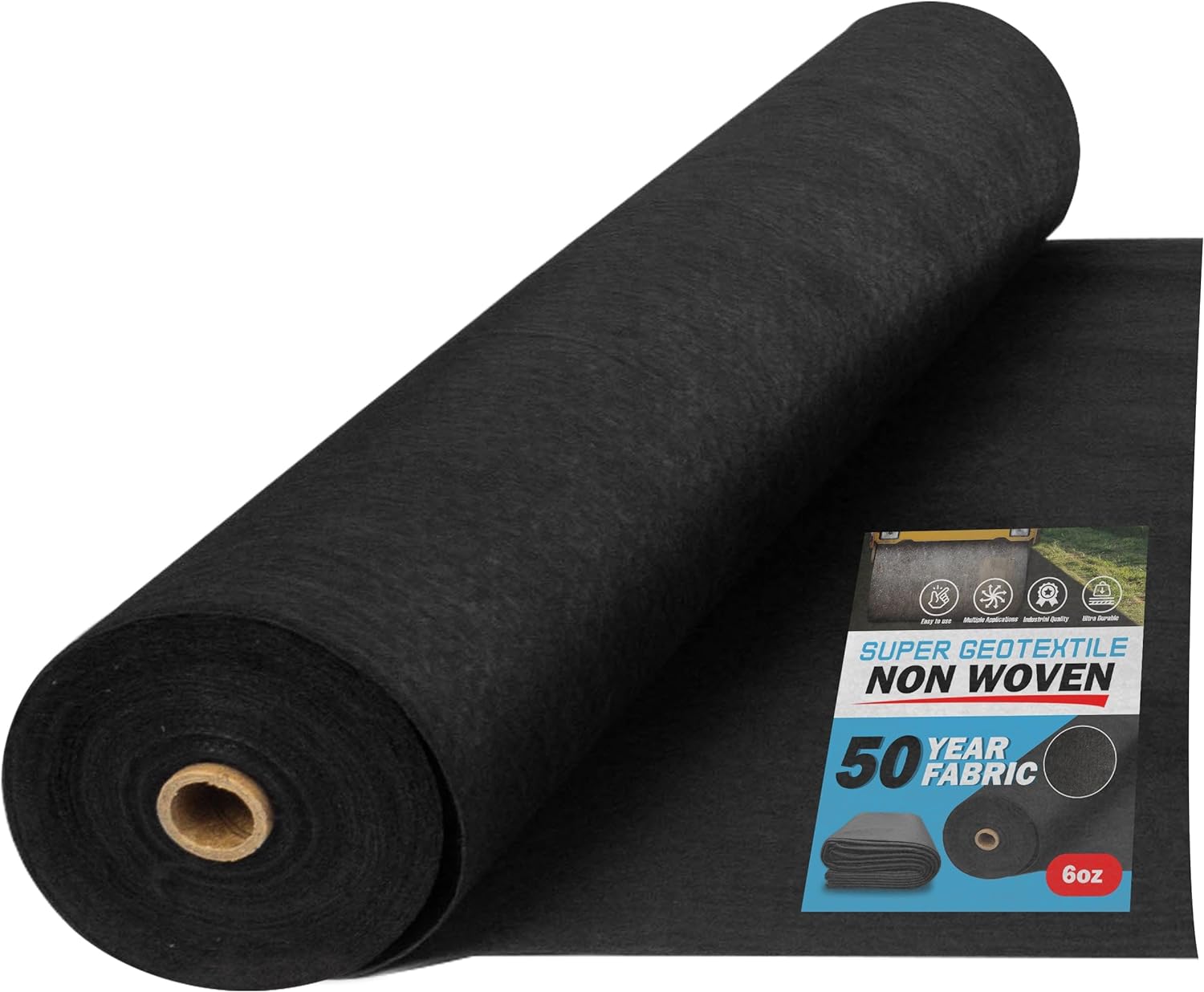
| Weight | 6 Ounce |
|---|---|
| Type | Non-woven geotextile |
| Sold as | 3 x 50 ft single piece |
| Resistances | UV and rot resistant |
This 6 ounce non-woven geotextile is a heavy-duty filter and separation fabric intended for landscaping, retaining wall underlayment, French drains and erosion control. It is supplied as one continuous 3 x 50 ft piece so you can cut it to fit footings and terraces without multiple seams. The material is engineered for strength and dimensional stability and is described as UV and rot resistant, which makes it suitable for long-term burial behind stone or soil where it separates backfill from soil while allowing water to pass. Typical use is laying the fabric behind a retaining wall, wrapping drainage aggregate, or lining trench drains before backfilling. Because it is non-woven and fairly heavy, it resists tearing during installation and anchors well under gravel. Limitations are that it comes in a single width and length so large projects may require additional seams and overlap, and the product description does not list puncture ratings or specific permeability numbers buyers sometimes need for engineered drainage work.
Best for: Gardeners or DIYers building small to medium retaining walls who want a durable, easy-to-handle fabric to separate soil and aggregate and reduce maintenance over time.
Less Ideal for: Engineers or contractors specifying geotextiles for large civil projects or situations that require certified permeability, tensile or puncture ratings.
- Heavy 6 oz weight offers greater tear resistance than lighter landscaping fabrics
- Sold as a single continuous piece to reduce seams and installation time
- Advertised UV and rot resistance for long-term buried applications
- Versatile for retaining wall backfill, French drains, pond underlayment and erosion control
- No technical specs provided for permeability or puncture resistance needed for engineered drainage design
- Single size may require joins for wider or longer retaining wall runs
Verdict: A robust 6 oz non-woven geotextile that gives DIY retaining wall builders a durable, low-maintenance underlayment option for separating soil and improving drainage.
Sandbaggy 8 oz Non-Woven Geotextile Fabric, 6 ft x 50 ft Roll

| Material Type | Non Woven Polypropylene |
|---|---|
| Unit Count | 300 Square Feet |
| Item Type Name | 8 oz Non Woven Geotextile Fabric |
| Flow Rate | 140 GPM per square foot |
| Tensile Strength | 205 LB |
This heavy-duty non-woven geotextile is built for performance uses around retaining walls and other drainage projects. It functions as a high-flow filter fabric that lets water pass through while keeping soil from migrating into aggregate, which helps maintain drain efficiency and reduce clogging over time. Typical installs include lining French drains, wrapping drainage stone behind retaining walls, and separating soil from rip rap or road base. Notable features are a 140 GPM per square foot flow rating, 205 lb tensile strength and a flexible non-woven construction that conforms to uneven backfill and slopes for easier placement. The material is made in the USA and is specified for long-term buried service when covered by at least a few inches of gravel or soil. Important limitations are that direct UV exposure will shorten lifespan so it must be buried, and the roll width and weight characteristics may require handling help for large runs. For contractors and homeowners focused on durable, high-flow filtration behind retaining walls this fabric is a practical choice.
Best for: Buyers who need reliable, performance-focused drainage and filtration for retaining walls or erosion-control projects and prioritize long-term buried durability.
Less Ideal for: People seeking a decorative surface cover or a temporary above-ground weed barrier should consider lighter landscape fabrics or mulches instead.
- High flow rate (140 GPM/ft²) for effective drainage behind retaining walls
- 205 lb tensile strength for good tear resistance during install and under load
- Flexible non-woven construction conforms to irregular surfaces for easier placement
- Engineered for long buried service life when properly covered
- Not UV-stable for long-term exposure so it must be covered to achieve rated lifespan
- Roll width may make handling and positioning awkward for a single person on larger jobs
Verdict: Choose this heavy-duty 8 oz geotextile when you need a high-flow, long-lasting filter fabric to protect drains and backfill behind retaining walls.
FEED GARDEN 4 ft x 50 ft Heavy Duty Woven Weed Barrier Fabric with 15 Staples

| Material | Woven polypropylene |
|---|---|
| Coverage | 4 ft x 50 ft (200 sq ft) |
| Includes | 15 U-shaped staples |
This FEED GARDEN woven weed barrier is a straightforward solution for reducing weeds under trees, in beds, and along paths. The heavy duty polypropylene weave resists tearing and stands up to foot traffic and surface mulch, while the fabric's permeability lets water and air reach tree roots so irrigation and drainage are not blocked. Guide lines printed on the fabric make measuring and cutting around trunks, root flares, and irregular beds faster, and the included 15 U-staples help keep the material flat during installation. For larger or irregularly contoured areas you will need multiple rolls and extra staples to prevent lifting where roots or slopes create gaps. The fabric does not eliminate the need to hand-pull persistent weeds or address root suckers, and it should be cut carefully near trunks to avoid girdling when trees grow. For gardeners who want low-maintenance ground cover under trees, this product offers durable, breathable coverage that simplifies repeated weeding and mulching tasks.
Best for: Buyers who want a practical, long-lasting way to reduce weeds and cut maintenance under trees and in landscaped beds, and who prefer a breathable fabric that works with watering and mulching routines.
Less Ideal for: People looking for a permanent root barrier or those who want a decorative, visible groundcover instead of a fabric under mulch should consider alternative solutions.
- Durable woven polypropylene resists tearing and holds up under mulch and foot traffic
- Breathable construction permits water and air to reach tree roots
- Printed guide lines simplify measuring and cutting around tree trunks and beds
- Includes 15 U-shaped staples to anchor fabric and reduce shifting
- Only 200 sq ft per roll, so larger tree canopies require multiple rolls
- Staple count may be insufficient for uneven ground or steep slopes
Verdict: A durable, breathable landscape fabric that makes it faster to suppress weeds and maintain clean groundcover under trees.
AGGAFA Heavy-Duty Woven Weed Barrier Fabric

| Material | PP woven fabric |
|---|---|
| UV treatment | Yes, UV coating |
| Intended use | Landscaping, gardening, farming |
| Claimed lifespan | Up to 4 years |
| Weight per area | 3.2 oz (product description) |
This AGGAFA woven weed barrier is a heavy-duty polypropylene fabric intended for under-mulch or gravel ground cover around retaining walls, garden beds, and orchards. Its woven construction provides good water and air permeability so rain and irrigation reach the soil while the fabric reduces sunlight and suppresses weed growth. The product is manufactured from 100% virgin PP and has a UV coating intended to slow degradation, with the brand claiming usable life up to four years. Installation is straightforward: measure, cut, overlap seams, pin the fabric, and cover with mulch or rock. Practical benefits for retaining-wall applications include reduced weed maintenance, improved moisture retention at the soil surface, and a stable base under decorative stone. Limitations are that it is a physical barrier so persistent weeds with deep roots can still grow through edges or seams, and the fabric will eventually break down under heavy abrasion or extended UV exposure beyond the rated life. Also it does not eliminate the need for proper edging or frequent inspection at joints.
Best for: Gardeners and homeowners who want an affordable, low-maintenance ground cover solution for retaining walls and adjacent beds and prioritize straightforward installation and seasonal weed reduction.
Less Ideal for: People seeking a permanent, maintenance-free barrier for aggressive perennial weeds or those who need a decorative finished surface without covering fabric should look at alternative containment or hardscape options.
- Woven PP construction allows air and water to pass while limiting sunlight to suppress weeds
- 100% virgin raw material for consistent strength and durability
- UV coating to extend usable life up to about four years
- Suitable for use under mulch or gravel and compatible with standard landscape pins and overlap installation
- Will not permanently stop deep-rooted perennial weeds that can grow at edges or through seams
- Eventually degrades with long-term UV and abrasion exposure and will need replacement after its service life
Verdict: A durable, budget-friendly woven landscape fabric that cuts sunlight and lets water through, making it a practical choice to reduce weed work around retaining walls.
Happybuy 13 ft x 60 ft Woven Geotextile Driveway Fabric (5 oz)

| Material | Polypropylene |
|---|---|
| Coverage | 780 sq ft (13 x 60 ft) |
| Tensile strength | 600 Pounds grab |
| Weight class | 5 oz woven |
This Happybuy woven geotextile is a heavy-duty landscape underlayment intended for stabilizing driveways and paving projects while limiting weed growth and allowing water to pass through. Installed under gravel, pavers, or base aggregate, the fabric separates subgrade from fill to reduce rutting and soil migration and is commonly used for driveways, paths, and French drains. Notable features include a 5 oz woven PP construction with a grab tensile strength of 600 pounds and a large 780 sq ft coverage that can be cut to fit irregular areas. The fabric’s high permeability helps drainage systems perform better and prevents washout without trapping moisture in the soil. Practical benefits are easier installation over uneven ground, reduced maintenance from fewer weeds, and improved longevity of paved surfaces. Limitations are that woven geotextile does not stop persistent weeds where light reaches between joints, it will require proper overlap and secure fastening to prevent shifting, and heavy compaction or sharp edges can eventually abrade the weave.
Best for: Owners planning paved or gravel driveways and paver installations who want a durable underlayment to stabilize base materials and improve drainage while cutting down on weed maintenance.
Less Ideal for: People who need a complete weed-proof barrier for tight jointed pavers or who prefer an adhesive or impermeable membrane for impermeable surfaces should consider other solutions.
- Heavy woven polypropylene construction (5 oz) offers durability for driveway and paving underlayment
- 600 lb grab tensile strength supports aggregate and vehicle loads without tearing easily
- High water permeability lets water drain through for use with French drains and permeable pavers
- Large single roll covers about 780 sq ft so fewer seams on medium projects
- Woven fabric does not completely block all light so persistent weeds can emerge at joints or seams
- Requires proper overlap and secure fastening to prevent movement during installation
Verdict: A robust, high-permeability woven geotextile that stabilizes base materials and improves drainage for pavers and gravel driveways.
Pterying Weed Barrier Landscape Fabric, 2.6ft x 100ft

| Material | Woven polypropylene |
|---|---|
| Weight | 2 oz per square yard |
| Permeability | Water- and air-permeable |
| Intended uses | Garden beds, gravel underlayment, pathways |
This woven polypropylene landscape fabric is intended as a durable, general-purpose weed barrier for flower beds, vegetable gardens, pathways, and under gravel. It blocks sunlight to prevent weed seed germination while remaining water- and air-permeable so irrigation reaches roots and the soil can breathe. Installation is straightforward: roll out, use the green alignment stripes for spacing, cut planting Xs, and secure edges with staples or U-pins; the manufacturer recommends taping cut lines to reduce fraying. At 2 to 2.4 ounces per square yard this is a midweight option that balances tear resistance with ease of handling, so it will support gravel underlayment and light driveway use but is not the heaviest commercial grade. The fabric is advertised as UV-stabilized for extended outdoor life and safe for use around edibles because it is polypropylene and non-leaching. Expect reliable weed suppression when seams are overlapped and edges are well anchored, but very aggressive perennial roots or weeds may eventually find weak points if not paired with proper edging and maintenance.
Best for: Buyers who want a reliable, easy-to-install weed barrier for beds, vegetable gardens, and light landscape underlayment and who prioritize predictable, low-risk performance over specialty heavy-duty options.
Less Ideal for: People needing the toughest commercial-grade fabric for heavy vehicle driveways or sites with persistent deep-rooted weeds should consider heavier-weight geotextiles or mechanical methods instead.
- Woven polypropylene construction blocks light while allowing water and air to pass
- Green alignment stripes simplify planting layout and spacing
- Midweight fabric with tear resistance suitable for garden beds and gravel underlayment
- UV-stabilized and described as non-leaching, making it safe for vegetable gardens
- Not the heaviest commercial grade so very aggressive roots or heavy vehicle traffic may require a heavier option
- Landscape staples or pins are sold separately and needed for reliable edge security
Verdict: A dependable midweight woven weed barrier that balances durability and breathability for low-risk garden and landscape projects.
Choosing the Right Ground Cover for Retaining Wall: Key Factors to Consider
Spread Habit and Coverage Rate
How quickly a ground cover spreads determines how fast exposed soil will be protected on a retaining wall. Fast-spreading species reduce erosion sooner but can require more trimming at edges and near steps or walkways. Slow-spreading or clumping plants provide neat edges and may be preferable where precise planting lines are needed.
Consider whether you want runners that root as they grow, mat-forming plants that fill in gradually, or loosely spaced clumps. The planting density and initial plug spacing will change the effective establishment time, so match plant habit to how quickly you need coverage and how much edge control you want.
Root Depth and Interaction With Wall Structure
Shallow, fibrous root systems are usually safer for retaining walls than deep taproots that can wedge stone or mortar. Ground covers with a dense network of small roots stabilize the topsoil without exerting excessive force against the wall face. Avoid species known for aggressive woody roots near masonry or stacked stone.
Also think about how roots behave in confined pockets of soil behind a wall. Some ground covers tolerate shallow soil and exposed rock pockets better than others. If your wall has thin planting pockets, choose plants with compact root plates rather than those needing deep anchoring.
Soil, Drainage, and Drought Tolerance
Retaining walls often create microclimates that are drier and better drained than surrounding beds. Choose ground covers suited to your soil type and moisture regime. Drought-tolerant species reduce irrigation needs on exposed slopes and are less likely to fail during summer heat.
If the wall has areas where water accumulates, pick plants tolerant of occasional wet feet. Conversely, for very sandy or rocky backfills, plants that prefer lean, well-drained soils will establish more reliably than moisture-loving types.
Maintenance Requirements and Accessibility
Maintenance demands vary widely. Some ground covers need frequent trimming to keep a tidy edge and to prevent encroachment onto paths or steps. Others are low-maintenance but may need annual thinning or division to renew vigor. Consider how easy it will be to access the wall for pruning, weeding, or replacing plants.
Also factor in how debris accumulates on wall tiers and whether leaf drop from adjacent trees will raise maintenance. Choose lower-maintenance species for hard-to-reach walls or steeper slopes where regular work is impractical.
Hardiness and Climate Fit
Local climate determines what ground covers will thrive. Check hardiness ratings and summer heat tolerance, and pick plants that reliably survive your coldest and hottest months. Some ground covers are evergreen in mild zones but die back in colder regions, which affects winter appearance and soil protection.
Microclimates created by the wall face, such as reflected heat or frost pockets, also matter. Select species known to handle those specific stresses rather than relying on general regional recommendations.
Aesthetic Traits and Seasonal Interest
Ground cover near a retaining wall contributes to the overall look of your landscape. Consider bloom timing, foliage color and texture, and whether the plant stays low and neat or forms a more relaxed cascade. Plants with seasonal flowers can add visual interest during certain months, while evergreen mats provide year-round coverage.
Balancing aesthetics with function means choosing a cover that complements the wall material, hides unsightly soil, and aligns with the maintenance level you are willing to provide.
Planting Tips for Steep Walls and Narrow Ledgers
When planting on tight ledges or steep slopes, prepare small pockets of soil with enough depth for the selected ground cover's root ball. Use a slow-release, well-draining planting mix rather than heavy topsoil that can slide. Position plugs or small plants to allow for their mature spread without crowding the wall edges.
On very narrow ledges, consider installing a shallow layer of coir or composted material to improve water retention while still allowing excess water to drain away. Water newly installed plants more frequently during establishment, then reduce irrigation as the cover roots in.
- Stagger planting to create overlapping coverage as plants spread.
- Avoid deep backfill at the wall face; keep soil stable to minimize slumping.
- Use hand tools or a small trowel to avoid dislodging stones or mortar during planting.
Managing Erosion During Establishment
New plantings are most vulnerable to erosion before roots take hold. Use temporary measures such as biodegradable erosion control blankets or light mulch to protect surface soil while plants establish. These materials break down and will not interfere with long-term root growth.
Direct seeding is sometimes used on large slopes but can be less reliable near retaining walls because seed may wash away. Plug plants or small divisions often provide a faster, more predictable result in confined wall conditions.
- Hold soil with jute or coir netting on very steep faces.
- Place plants at the top of a small berm to catch surface runoff where possible.
- Water gently after planting to avoid displacing soil.
Edge Control and Preventing Encroachment
Some ground covers will crawl onto adjacent paths, steps, or decorative stone. Plan intentional edging where needed with hard borders or physical barriers. Low metal or plastic edging can be set flush to the surface to stop runners without interrupting the visual flow.
Alternatively, choose naturally clump-forming or well-behaved mats for tight spaces. Regular, brief pruning in the first two years keeps aggressive spreaders in check and directs their growth away from undesired areas.
- Trim runners back in spring and late summer to maintain a tidy edge.
- Use a spade to cut root runners if they begin to invade planting pockets.
Combining Ground Cover With Accent Plants
Ground cover pairs well with larger perennials or small shrubs planted at intervals along a retaining wall. When combining, leave enough room so the ground cover does not smother the smaller plants before they establish. Use taller accents to break up long runs of uniform foliage and to add vertical interest.
Choose companion plants with compatible water and light needs. A water-thrifty ground cover will not pair well with moisture-loving accent plants unless irrigation is carefully managed.
- Stagger accents to avoid creating shaded trenches where ground cover struggles.
- Use mulch rings around larger plants to keep ground covers at a proper distance during establishment.
Seasonal Care and Renewal Practices
Most perennial ground covers benefit from light cleanup in spring and a periodic thinning every few years to maintain vigor. Remove dead material, divide overcrowded patches, and refresh soil where plants show decline. This keeps the mat dense and better at preventing erosion.
Monitor for pests and diseases that can create bare spots on a wall. Promptly replace failed plugs and reseed small gaps to prevent erosion from reappearing.
- Divide and replant every 3 to 5 years if the cover becomes woody or sparse.
- Topdress with compost in spring to replenish nutrients without disturbing roots.
How We Chose the Best Ground Cover for Retaining Wall
We focused on traits that directly affect how ground cover behaves on and around retaining walls. Our selection criteria prioritized spread habit and ground coverage speed to ensure rapid soil protection; root depth and strength to avoid damage to masonry and to stabilize the slope; drought tolerance and water-use characteristics because retaining walls often create fast-draining or dry microclimates; maintenance needs, including pruning and reseeding frequency, so plants remain manageable near structures; and seasonal interest, since aesthetic value matters for visible walls. We excluded aggressive vines and deep-rooted shrubs that can lift or crack mortar and removed annuals that lack long-term erosion control. The final picks emphasize perennial, low-spreading plants with predictable root systems and reliable ground coverage. Each candidate was assessed on practical metrics gardeners can verify, such as expected spread rate, typical rooting depth, hardiness, and routine care demands.
FAQ
Can ground cover roots damage a retaining wall?
Often ground covers have shallow, fibrous roots that stabilize soil without exerting strong forces on masonry. Deep, woody roots can cause damage, so choose species known for compact root systems and avoid shrubs or trees close to the wall face.
How long does it take for ground cover to control erosion on a slope?
It depends on the species and planting density. Fast-spreading covers can establish visible protection within a single growing season, while slower types may take two or more seasons. Proper spacing, watering, and temporary erosion control can speed establishment.
Is mulch helpful around ground cover on a retaining wall?
Light mulching helps retain moisture and protect roots while plants establish, but avoid deep mulch that can smother low-growing plants. Biodegradable erosion control mats are often better on steep faces where mulch might wash away.
What is the best way to replace a failed section of ground cover?
Remove any dead plant material and loosen the topsoil before planting new plugs. Match the replacement plants to the original species or choose one with similar moisture and light requirements. Firm the soil around new plants and water gently to settle roots.
Will ground cover reduce maintenance compared with turf near a wall?
Usually yes. Many ground covers require less mowing and can handle thin, rocky soils where turf struggles. However, some covers need periodic trimming or thinning, so maintenance can vary by species and site conditions.
Can I plant ground cover directly in the retaining wall joints?
Often small, non-invasive plants can be placed in mortar joints or between stacked stone, but avoid those with aggressive, woody roots. Choose species that tolerate shallow pockets and will not pry apart stones as they grow.
Final Verdict
Prioritize a ground cover that balances coverage speed, shallow root structure, and drought tolerance for most retaining wall situations. Think about maintenance access and the wall microclimate when selecting plants so the cover stabilizes soil without creating masonry problems. Tradeoffs are inevitable: faster spreaders protect soil quickly but may need more edge control, while slow or clumping forms demand less pruning but require patience. Use the evaluation criteria here to match plant habit to your wall conditions and maintenance willingness for a durable, attractive result.
