

Note: This article contains affiliate links. If you click on these links and make a purchase, I may earn a small commission at no extra cost to you. This helps support my research and content. Read my full affiliate disclosure here.
Choosing the right ground cover for vegetable gardens changes how your beds behave through the season. The right layer reduces erosion, suppresses weeds, and helps soil hold moisture without smothering shallow roots. Good ground covers also let water and air reach the soil while preventing sun-exposed weed seeds from taking hold. This guide presents seven shortlisted ground covers chosen for common vegetable garden situations. We explain how each type behaves in real beds and which features matter for established plots, new plantings, and season-long protection. Read on for the evaluation criteria and practical guidance to match a ground cover to your garden's needs.
Top Picks at a Glance
| Best Overall The best all-around choice for most situations | Happybuy 6 ft x 300 ft Heavy-Duty Weed Barrier Landscape Fabric |  |
| Best Quality Built to a higher standard if you want something more solid | Pterying 6.5 x 300 ft Heavy-Duty Weed Barrier Landscape Fabric, 3 oz |  |
| Best Value The sweet spot between price and what you get | FEED GARDEN 4 ft x 50 ft Heavy Duty Woven Weed Barrier Fabric with 15 Staples |  |
| Best Budget The cheapest option that still gets the job done reliably | Groweco Heavy-Duty Weed Barrier Landscape Fabric, 1.4 ft x 50 ft |  |
| Highest Rated A top-rated pick with lots of positive feedback | GardenMate 6 x 33 ft Weed Control Fabric, 100 g/m² UV-Stabilized Polypropylene |  |
| Most Popular A crowd favorite that many people choose with confidence | Pterying Weed Barrier Landscape Fabric, 2.6ft x 100ft |  |
| Best Seller A high-volume bestseller chosen again and again | Liaycco Natural Jute Burlap Fabric Roll, 40" x 5 ft |  |
Happybuy 6 ft x 300 ft Heavy-Duty Weed Barrier Landscape Fabric
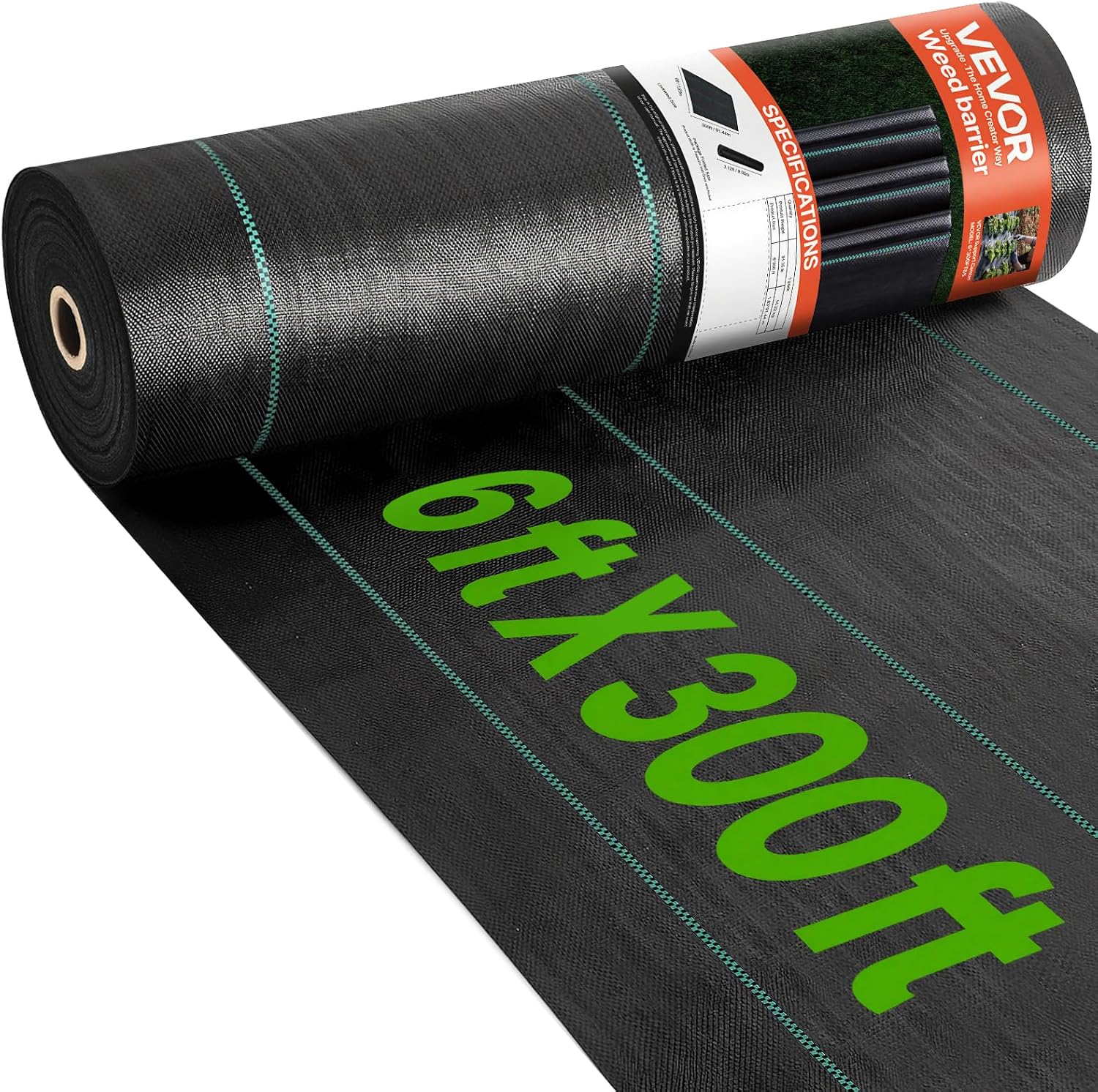
| Material | Polypropylene fabric |
|---|---|
| Size | 6 ft x 300 ft |
| Weight (fabric density) | 2.4 oz (density 12) |
This Happybuy landscape fabric is a heavy-duty woven polypropylene weed barrier sold as a 6 by 300 foot roll that covers roughly 1800 square feet when unrolled. It is used as an underlayer for beds, paths, driveways, and around plantings to suppress weeds while letting water and air reach the soil. Notable features include a tear-resistant woven construction, green guide lines for cutting and layout, and a breathable design that helps retain soil moisture without puddling. In practice the fabric is easy to cut and position and works well under mulch, gravel, or pavers; staples or landscape pins (not included) are recommended to keep edges secure. Limitations are that the black fabric will eventually show wear in high-traffic areas and persistent perennial weeds can grow through seams or holes, so occasional maintenance and careful overlap are needed. Also the roll is bulky to handle solo, so two people make installation faster on larger areas.
Best for: Gardeners or homeowners who want a practical, durable fabric to reduce routine weeding across medium to large beds and hardscape underlayers and who value easy installation and long coverage.
Less Ideal for: People needing a decorative surface finish as this is a functional underlayer rather than a visible landscape material and those with very small container or indoor plantings where a roll this large is impractical.
- Large coverage area reduces number of seams for medium to large beds
- Woven polypropylene construction offers tear resistance and weatherproofing
- Permeable design lets water and air through to protect soil health
- Printed guide lines make cutting and aligning plants easier
- Bulky roll can be awkward for one person to unroll and position
- Not a permanent barrier against aggressive perennial weeds that can exploit gaps or edges
Verdict: Choose this heavy-duty 6×300 ft woven polypropylene fabric when you need broad, breathable weed suppression that is easy to cut and lay for medium to large garden projects.
Pterying 6.5 x 300 ft Heavy-Duty Weed Barrier Landscape Fabric, 3 oz

| Fabric weight | 3 oz per square yard |
|---|---|
| Material | Woven polypropylene |
| Roll length | 300 ft |
| Tensile strength | 146 lb per 5 cm strip |
This Pterying landscape fabric is a woven polypropylene ground cover intended to suppress weeds in vegetable beds while allowing water and air to reach roots. In practice you unroll it over prepared soil, cut X-shaped planting holes, fold back flaps to set seedlings, and secure the edges with landscape staples. The 3 oz per square yard construction gives it notable tear resistance and tensile strength so it stands up to mulch and light foot traffic and can be used under gravel or around beds. Built-in alignment stripes speed row layout and the fabric is easy to trim with scissors; a simple tape-on cutting trick reduces fraying. Because it is permeable, irrigation and rain pass through without pooling, which supports healthy root growth. Limitations are that it does not stop persistent weeds at overlaps or roots from aggressive perennials unless overlapped and anchored carefully, and it requires correct installation and periodic inspection around plant stems to avoid girdling.
Best for: Gardeners who prioritize durable, performance-focused weed suppression in vegetable beds and want a breathable barrier that supports irrigation and root health.
Less Ideal for: People seeking a no-maintenance, permanent solution for aggressive, deep-rooted perennial weeds or those who prefer organic mulch-only approaches.
- Woven polypropylene construction provides good tear resistance and tensile strength for long outdoor use
- Permeable design lets water and air reach roots while blocking sunlight to prevent weed seed germination
- Alignment stripes and easy-to-cut fabric speed layout and planting
- Suitable under mulch, gravel, and around beds for versatile garden applications
- Does not eliminate weeds at poorly overlapped seams or where edges are unsecured
- Requires correct cutting around stems and periodic checks to prevent soil contact issues
Verdict: Choose this heavy-duty woven fabric if you need a durable, water-permeable weed barrier that performs under mulch and supports productive vegetable gardens.
FEED GARDEN 4 ft x 50 ft Heavy Duty Woven Weed Barrier Fabric with 15 Staples

| Material | Woven polypropylene |
|---|---|
| Coverage | 4 ft x 50 ft (200 sq ft) |
| Includes | 15 U-shaped staples |
This FEED GARDEN woven weed barrier is a straightforward solution for reducing weeds under trees, in beds, and along paths. The heavy duty polypropylene weave resists tearing and stands up to foot traffic and surface mulch, while the fabric's permeability lets water and air reach tree roots so irrigation and drainage are not blocked. Guide lines printed on the fabric make measuring and cutting around trunks, root flares, and irregular beds faster, and the included 15 U-staples help keep the material flat during installation. For larger or irregularly contoured areas you will need multiple rolls and extra staples to prevent lifting where roots or slopes create gaps. The fabric does not eliminate the need to hand-pull persistent weeds or address root suckers, and it should be cut carefully near trunks to avoid girdling when trees grow. For gardeners who want low-maintenance ground cover under trees, this product offers durable, breathable coverage that simplifies repeated weeding and mulching tasks.
Best for: Buyers who want a practical, long-lasting way to reduce weeds and cut maintenance under trees and in landscaped beds, and who prefer a breathable fabric that works with watering and mulching routines.
Less Ideal for: People looking for a permanent root barrier or those who want a decorative, visible groundcover instead of a fabric under mulch should consider alternative solutions.
- Durable woven polypropylene resists tearing and holds up under mulch and foot traffic
- Breathable construction permits water and air to reach tree roots
- Printed guide lines simplify measuring and cutting around tree trunks and beds
- Includes 15 U-shaped staples to anchor fabric and reduce shifting
- Only 200 sq ft per roll, so larger tree canopies require multiple rolls
- Staple count may be insufficient for uneven ground or steep slopes
Verdict: A durable, breathable landscape fabric that makes it faster to suppress weeds and maintain clean groundcover under trees.
Groweco Heavy-Duty Weed Barrier Landscape Fabric, 1.4 ft x 50 ft

| Material | Polypropylene (PP) |
|---|---|
| Weight | 3.2 OZ |
| Available widths | 1.4FT, 2.8FT, 6FT, 15FT |
| Available lengths | 50FT, 100FT |
| Intended use | Landscape weed barrier, underlayment for artificial grass |
The Groweco heavy-duty weed barrier is a woven polypropylene landscape fabric intended as a low-maintenance ground cover under mulch, gravel, artificial turf, or around planting beds. It comes with printed alignment lines to make straight cuts and installation easier and is sold in multiple widths and lengths to suit small garden runs or longer pathways. The fabric’s 3.2 oz weight gives it noticeable tear resistance for routine foot traffic and tool use, while its woven construction still permits water and air to reach the soil so plants do not suffocate. In practice it reduces weed germination by blocking light to seeds and simplifies mulching jobs, speeding up maintenance. Limitations are that it must be trimmed around plants and anchored properly to avoid movement, and it will eventually degrade under heavy UV exposure so it is better for mulched or covered applications than exposed decorative beds. For a budget-focused ground cover solution this fabric balances durability and breathability for many common garden uses.
Best for: Gardeners who need an inexpensive, practical ground cover to reduce weeding and speed up maintenance in beds, paths, or under artificial turf. Good for homeowners prioritizing straightforward installation and low upfront cost.
Less Ideal for: Those seeking a permanent, fully UV-stable solution for exposed driveways or decorative beds should consider heavier geotextiles or hard landscaping alternatives.
- Woven polypropylene construction blocks weed germination while allowing water and air through
- Printed green guide lines simplify alignment and cutting during installation
- 3.2 oz weight gives improved tear resistance for routine garden use
- Versatile for use under mulch, gravel, artificial turf, walkways and vegetable beds
- Will eventually degrade with prolonged UV exposure if left uncovered
- Requires edging or staples and trimming around existing plants during installation
Verdict: A cost-conscious, heavy-duty woven fabric that reliably blocks weeds while letting water and air through, making it a practical choice for everyday garden ground cover.
GardenMate 6 x 33 ft Weed Control Fabric, 100 g/m² UV-Stabilized Polypropylene

| Material Type | Polypropylene (PP) |
|---|---|
| Fabric Weight | 100 grams_per_square_meter |
| Item Thickness | 100 mils |
| Unit Count | 215.28 Square Feet |
This GardenMate woven landscape fabric is a straightforward heavy-duty weed barrier for garden beds, paths, and under mulch. Made from UV-stabilized polypropylene at about 100 g/m², it is tear resistant and intended for long-term outdoor use; the weave is breathable so water, air and nutrients reach the soil while light is blocked to suppress weed growth. Typical use is laying the fabric over prepared soil, overlapping edges by at least 10 cm and securing with pins or anchors before covering with mulch, gravel or soil. Notable features are the advertised UV protection and a weight that balances durability with easy cutting using household scissors. Because it is not fully waterproof, it will still allow drainage and is suitable under paving or in raised beds. Limitations are that visible seams must be properly overlapped to prevent weeds at joins and it will not stop deep-rooted perennial weeds without additional mechanical control. For buyers concerned about longevity and proven results, this product presents a practical, low-maintenance weed suppression option when installed correctly.
Best for: Gardeners who prioritize proven, low-maintenance weed suppression and want a durable, UV-stabilized fabric they can install under mulch, gravel, or paving.
Less Ideal for: People seeking a completely impermeable membrane for pond liners or projects that require a waterproof barrier should consider a different product.
- UV-stabilized polypropylene resists sunlight degradation for longer outdoor life
- Breathable weave allows water and air to reach soil while blocking light to suppress weeds
- Heavy woven construction (100 g/m²) offers good tear resistance and durability
- Easy to cut and shape with household scissors for custom beds and paths
- Not water resistant when a fully impermeable barrier is required
- Seams need careful overlap and securing to prevent weeds emerging at joins
Verdict: Choose this UV-stabilized, heavy woven polypropylene fabric if you want a durable, breathable weed barrier for long-term garden beds and paths.
Pterying Weed Barrier Landscape Fabric, 2.6ft x 100ft

| Material | Woven polypropylene |
|---|---|
| Weight | 2 oz per square yard |
| Permeability | Water- and air-permeable |
| Intended uses | Garden beds, gravel underlayment, pathways |
This woven polypropylene landscape fabric is intended as a durable, general-purpose weed barrier for flower beds, vegetable gardens, pathways, and under gravel. It blocks sunlight to prevent weed seed germination while remaining water- and air-permeable so irrigation reaches roots and the soil can breathe. Installation is straightforward: roll out, use the green alignment stripes for spacing, cut planting Xs, and secure edges with staples or U-pins; the manufacturer recommends taping cut lines to reduce fraying. At 2 to 2.4 ounces per square yard this is a midweight option that balances tear resistance with ease of handling, so it will support gravel underlayment and light driveway use but is not the heaviest commercial grade. The fabric is advertised as UV-stabilized for extended outdoor life and safe for use around edibles because it is polypropylene and non-leaching. Expect reliable weed suppression when seams are overlapped and edges are well anchored, but very aggressive perennial roots or weeds may eventually find weak points if not paired with proper edging and maintenance.
Best for: Buyers who want a reliable, easy-to-install weed barrier for beds, vegetable gardens, and light landscape underlayment and who prioritize predictable, low-risk performance over specialty heavy-duty options.
Less Ideal for: People needing the toughest commercial-grade fabric for heavy vehicle driveways or sites with persistent deep-rooted weeds should consider heavier-weight geotextiles or mechanical methods instead.
- Woven polypropylene construction blocks light while allowing water and air to pass
- Green alignment stripes simplify planting layout and spacing
- Midweight fabric with tear resistance suitable for garden beds and gravel underlayment
- UV-stabilized and described as non-leaching, making it safe for vegetable gardens
- Not the heaviest commercial grade so very aggressive roots or heavy vehicle traffic may require a heavier option
- Landscape staples or pins are sold separately and needed for reliable edge security
Verdict: A dependable midweight woven weed barrier that balances durability and breathability for low-risk garden and landscape projects.
Liaycco Natural Jute Burlap Fabric Roll, 40" x 5 ft

| Material | 100% natural jute |
|---|---|
| Weave density | 26 × 26 weave per inch |
| Width | 40 inches |
| Length | 5 feet |
This Liaycco burlap roll is a 40-inch-wide strip of natural jute with a tight 26×26 weave and reinforced selvage edges that gardeners can cut and drape over beds, wrap trunks, or lay as a temporary ground cover. In vegetable gardens it works best as a breathable weed barrier or frost shield—place it over soil between rows, anchor the edges with soil or staples, and remove it when you need access or during warmer weather. The fabric is breathable so it helps moderate moisture and temperature rather than sealing the soil, and the stitched edges reduce fraying when you cut pieces to custom sizes. Because the roll is only five feet long, it is easy to handle for small plots and DIY projects but requires more seams or more rolls for larger beds. The material is natural and compostable, which suits organic practices, but it will eventually break down and is not a permanent mulch replacement. For gardeners who want a reusable, natural temporary cover, this burlap is practical; for long-term, full-bed weed suppression you will need wider or longer coverage or a different heavy-duty fabric.
Best for: Gardeners who prefer low-risk, natural materials and need a breathable, temporary ground cover or trunk wrap for small vegetable plots and seasonal protection.
Less Ideal for: Large-scale growers or those seeking a long-term, heavy-duty weed block for entire beds should consider wider rolls or synthetic landscape fabric instead.
- Made from 100% natural jute so it is breathable and compostable
- Tight weave and stitched selvage edges limit fraying when cutting
- Helpful as a frost shield and lightweight weed barrier for small areas
- Easy to cut and shape for custom DIY uses and plant wraps
- Short 5-foot length means multiple pieces are needed for larger beds
Verdict: A natural, breathable burlap roll that gives risk-averse gardeners an easy, compostable temporary ground cover and frost shield for small vegetable beds.
Choosing the Right Ground Cover for Vegetable Gardens: Key Factors to Consider
Material Breathability and Soil Health
Ground covers differ in how much air and water they let reach the soil. Breathable woven fabrics and loose organic mulches allow water to infiltrate and oxygen to reach roots, which is essential for vegetable crops that need regular moisture cycles. Impermeable plastics can reduce evaporation and suppress weeds well but can also trap water and reduce oxygen, increasing the risk of root rot or shallow rooting.
Consider how often you water, how heavy your soil is, and whether your vegetables have shallow or deep roots. Breathable covers tend to support soil life, encouraging earthworms and microbes that help nutrient cycling. If you rely on drip irrigation, a less permeable cover might still work, but you will need to manage drainage and avoid pooling.
Weed Suppression Effectiveness
Effective ground cover prevents light from reaching weed seeds and creates a physical barrier to weed growth. Thick organic mulches, landscape fabrics, and heavy woven covers vary in how quickly weeds can work through or around them. Some lightweight fabrics degrade faster and let opportunistic weeds colonize, while denser options block more sunlight but may require careful cutting around plants.
Think about how many perennial weeds you have and whether you need a temporary seasonal solution or a longer-term barrier. Good weed suppression reduces hand-weeding time and lowers competition for nutrients and water, but aggressive suppression that also restricts planting access can complicate succession planting.
Durability, UV Resistance, and Longevity
Exposure to sun, foot traffic, and garden tools will determine how long a ground cover lasts. Synthetic woven fabrics often include UV stabilization and last multiple seasons, while organic mulches break down and need replenishing. Durability matters if you walk beds, use heavy mulches for winter, or want a cover that survives multiple cropping cycles.
If you plan to reuse a cover for several years, choose materials rated for UV resistance and mechanical strength. For temporary seasonal coverage, a cheaper or biodegradable option may be acceptable, but factor replacement labor into long-term planning.
Moisture Management and Irrigation Compatibility
Ground covers change how moisture moves through the bed. Some covers retain moisture by shading the soil and reducing evaporation, which can be helpful in hot, dry climates. Others shed water or channel it, which helps in heavy-rain areas to prevent waterlogging. Match the cover to your irrigation: drip systems under permeable covers work well, while above-ground sprinklers may need covers that shed or allow water through.
Also consider how a cover affects soil temperature; darker, insulating materials can warm beds in cool climates but may overheat roots in hot regions. Proper moisture management minimizes disease risk and supports steady vegetable growth.
Installation, Maintenance, and Planting Access
Some ground covers lay down in minutes and require occasional tucking or pinning; others need cutting, anchoring, or periodic top-ups. Ease of cutting to plant seedlings, patching tears, and accessing soil for amendments matters to gardeners who succession-plant or harvest frequently.
Choose a cover you can work with: if you transplant often, a cover that allows tidy planting holes or slits saves time. Maintenance also includes removing or refreshing mulch and repairing tears in fabrics; factor in how much time you are willing to spend each season.
Environmental Impact and Soil Safety
Because vegetables are edible, consider whether materials leach chemicals or inhibit soil life. Natural mulches improve organic matter as they break down, while some synthetic covers may not. Biodegradable options may sound attractive but check how quickly they decompose and whether fragments remain in the soil.
Also assess sourcing and end-of-life disposal. A durable synthetic fabric might reduce replacement frequency, but a compostable mulch can improve soil health. Balance longevity with ecological considerations for a sustainable garden practice.
When To Use Permanent Versus Seasonal Ground Covers
Permanent covers such as heavy woven fabric are best for beds you do not disturb often and where long-term weed suppression is a priority. They are useful for no-dig plots and paths where repeated disturbance would otherwise let weeds re-establish quickly.
- Permanent covers work well under mulched pathways or perennial beds.
- Seasonal covers are better for intensively planted vegetable beds with frequent replanting.
- Consider temporary covers for new beds to build soil before switching to planting.
Layering Ground Cover With Mulch and Living Covers
Combining a fabric or paper cover with a top layer of organic mulch can give the best of both worlds: a weed barrier underneath and moisture-retaining, nutrient-building material on top. Living ground covers such as low-growing clovers or chamomile can suppress weeds while fixing nitrogen or attracting beneficial insects.
- Use lightweight fabric under a thin composted mulch to slow decomposition of the fabric.
- Living covers can be mowed or cut back before planting to reduce competition.
- Avoid overly aggressive living covers that send runners into vegetable rows.
Adjusting Ground Covers For Different Vegetable Types
Shallow-rooted crops like lettuces and carrots need covers that let water and oxygen reach the topsoil. Heavier covers that block penetration can stunt these crops. Deep-rooted vegetables such as tomatoes and brassicas tolerate denser covers if planting holes are properly cut or irrigation is placed under the cover.
bullets':['Make planting holes just large enough to minimize weed entry while allowing the plant to establish.','For transplanted crops, consider temporarily removing a small area of cover to reduce transplant shock.']}]},{
How We Chose the Best Ground Cover for Vegetable Gardens
We shortlisted ground covers that suit vegetable garden use based on practical garden performance and measurable attributes. We prioritized breathability because vegetable roots need oxygen and water movement; covers that block airflow or trap water were excluded. Durability in sun and foot traffic was assessed so a cover lasts through a season or multiple seasons for heavy-use beds. We also evaluated weed suppression effectiveness, including how well a cover prevents light from germinating common garden weeds and whether it can be used with shallow-rooted vegetables. Ease of installation and maintenance was a factor because many gardeners will lay, cut, and tuck covers themselves. Environmental impact and material safety were considered; we excluded options with known harmful residues or materials unsuitable for food crops. Finally, we looked at moisture management-how well a cover conserves or sheds water depending on local rainfall and irrigation methods. Excluded items included covers designed only for ornamental beds or those that require complex professional installation. We focused on options that home gardeners can reasonably install and maintain in vegetable beds.
FAQ
Can ground cover be used in raised vegetable beds?
Yes. Raised beds benefit from ground covers that suppress weeds and reduce moisture loss. Choose breathable materials or leave planting holes for oxygen and water flow, and secure covers to avoid wind lift.
Will ground cover harm soil life and beneficial insects?
It depends on the material. Breathable fabrics and organic mulches support soil organisms, while impermeable plastics limit air and water movement. Living covers can attract beneficial insects if they flower, but dense synthetic covers will reduce habitat.
How do I plant through landscape fabric without harming seedlings?
Cut small X-shaped slits or a neat planting hole just large enough for the root ball. Fold fabric edges back during planting and press them down to reduce gaps where weeds can enter. Keep an eye on moisture levels around the new transplant.
Are biodegradable ground covers a reliable option?
Biodegradable covers can be useful for seasonal beds because they reduce cleanup and add organic matter. Their longevity varies with material and conditions, so choose one that matches how long you need coverage and check that fragments do not persist.
Can I use ground cover in winter to prevent erosion?
Yes. Ground covers can protect bare soil from winter erosion and nutrient loss. Use heavier or anchored materials that stay in place under wind and rain, and plan for removal or integration before spring planting.
Final Verdict
Match the ground cover to how you garden. Prioritize breathability for shallow-rooted vegetables and good weed suppression where labor is limited. Balance longevity against ease of planting and environmental impact. Think about irrigation method, foot traffic, and whether you want a seasonal or multi-season solution. With those tradeoffs in mind, you can pick a cover that reduces weeding, protects soil, and supports productive vegetable beds.
