

Note: This article contains affiliate links. If you click on these links and make a purchase, I may earn a small commission at no extra cost to you. This helps support my research and content. Read my full affiliate disclosure here.
Choosing the right evergreen ground cover matters because these plants do more than look good: they suppress weeds, protect soil from erosion, and keep beds attractive through winter. If you want continuous foliage without constant replanting or bare patches, the right species and habit will determine how well a planting performs in sun, shade, and on slopes. This guide shortlists seven top options for evergreen ground cover suited to a variety of garden situations. We evaluated them on hardiness, habit control, establishment speed, and maintenance needs so you can match the plant habits to your site and goals. Read on to find ground covers that fit your light, soil, and visual preferences.
Top Picks at a Glance
| Best Overall The best all-around choice for most situations | Florida Foliage Blue Rug Juniper (10 Live Plants) |  |
| Best Quality Built to a higher standard if you want something more solid | Groundcover Pachysandra terminalis Japanese Spurge — 100 Bare Root Plants |  |
| Best Value The sweet spot between price and what you get | Asiatic Jasmine Live Plants, 72-Pack of 3" Pots | 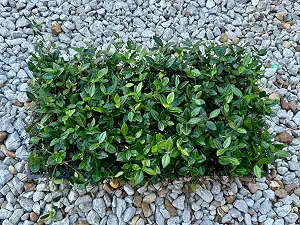 |
| Best Budget The cheapest option that still gets the job done reliably | Seedville Dichondra Repens (1000 seeds) Evergreen Groundcover |  |
| Highest Rated A top-rated pick with lots of positive feedback | CZ Grain Blue Spruce Sedum Live Starter Plugs (3 Plants) |  |
| Most Popular A crowd favorite that many people choose with confidence | Outsidepride Irish Moss (Sagina subulata) Ground Cover Seeds, 10,000 Pack |  |
| Best Seller A high-volume bestseller chosen again and again | Asiatic (Asian) Jasmine Live Plants — 18-Pack, 3-inch Pots |  |
Florida Foliage Blue Rug Juniper (10 Live Plants)

| Indoor Outdoor Usage | Outdoor |
|---|---|
| Other Special Features of the Product | Drought Tolerant, Low Maintenance |
| Sunlight Exposure | Full Sun |
| Soil Type | Sandy Soil |
| Moisture Needs | Moderate Watering |
The Florida Foliage Blue Rug Juniper comes as a 10-plant pack of Juniperus horizontalis intended to form a dense, silvery-blue carpet across rock gardens, slopes, borders, and other sunny areas. It is typically planted in full sun in well-draining or sandy soils and used for erosion control, weed suppression, and low-maintenance ground coverage. Notable features include drought tolerance, year-round evergreen foliage, and a prostrate spreading habit that creates continuous coverage with minimal pruning. In practice these junipers establish quickly in the right site and reduce maintenance compared with turf or high-care perennials, while the dense mat helps hold soil on banks and underplant slopes. Important limitations are site specificity and appearance: they need full sun and good drainage to keep their color and health, and they will not do well in shade or persist in wet, poorly drained soils. Also, as a slow-to-moderate spreader they may take a season or two to fully fill gaps, so plan spacing accordingly.
Best for: Gardeners who want a low-maintenance evergreen groundcover for sunny, well-drained sites and who prioritize soil stabilization and year-round color.
Less Ideal for: If you need groundcover for shaded areas, waterlogged soils, or want immediate full coverage without time for plants to spread, choose a different species or a pre-established mat.
- Drought tolerant and low maintenance, reducing irrigation and routine care.
- Evergreen, providing year-round ground cover and visual interest.
- Spreading, mat-forming habit good for erosion control on slopes and banks.
- Adaptable to sandy and rocky soils where many plants struggle.
- Requires full sun and good drainage to perform and keep its blue color.
- Will not establish well in shaded or consistently wet sites.
Verdict: A practical, low-care evergreen groundcover that stabilizes soil and delivers year-round blue-green color on sunny, well-drained sites.
Groundcover Pachysandra terminalis Japanese Spurge — 100 Bare Root Plants

| Quantity | 100 heavily rooted plants |
|---|---|
| Hardiness Zone | 5 to 9 |
| Height | 6 to 12 inches |
| Spread | 1 to 1.5 feet |
| Sun | Part shade to full shade |
This offering supplies 100 heavily rooted Pachysandra terminalis (Japanese spurge) plants designed to establish a dense, low-maintenance evergreen groundcover in part to full shade. Pachysandra spreads by underground stems to form a carpet of dark green foliage 6 to 12 inches high and about 1 to 1.5 feet across, producing small white April blooms. It is typically planted on 6 to 9 inch centers to close in quickly for erosion control, borders, or under trees where grass struggles. The key practical benefits are rapid lateral spread that suppresses weeds, year-round foliage in suitable zones, and very low maintenance once established. Important limits are climate and placement: it is suited to USDA zones 5 to 9 and prefers shady conditions, so it will not perform well in full sun or outside its hardiness range. Buyers should also plan spacing and quantity carefully because the pack size and recommended spacing determine how much area these 100 plants will cover and how long it takes to fill in.
Best for: Gardeners who need a reliable, low-maintenance evergreen groundcover for shaded beds or under trees and want to establish coverage quickly with a ready supply of plants.
Less Ideal for: People seeking a sun-loving groundcover, a flowering show-plant, or those with planting areas outside USDA zones 5 to 9 should look at other options.
- Evergreen foliage that provides year-round groundcover in shaded sites
- Spreads rapidly via underground stems to form a dense, weed-suppressing carpet
- Low maintenance once established, useful for erosion control and borders
- Large quantity (100 heavily rooted plants) lets you cover a substantial area or accelerate fill-in
- Only recommended for part shade to full shade and USDA zones 5 to 9
- Pack requires planning for spacing since 100 plants may not cover very large areas at tight spacing
Verdict: A straightforward, low-maintenance choice for quickly establishing an evergreen carpet in shaded garden areas.
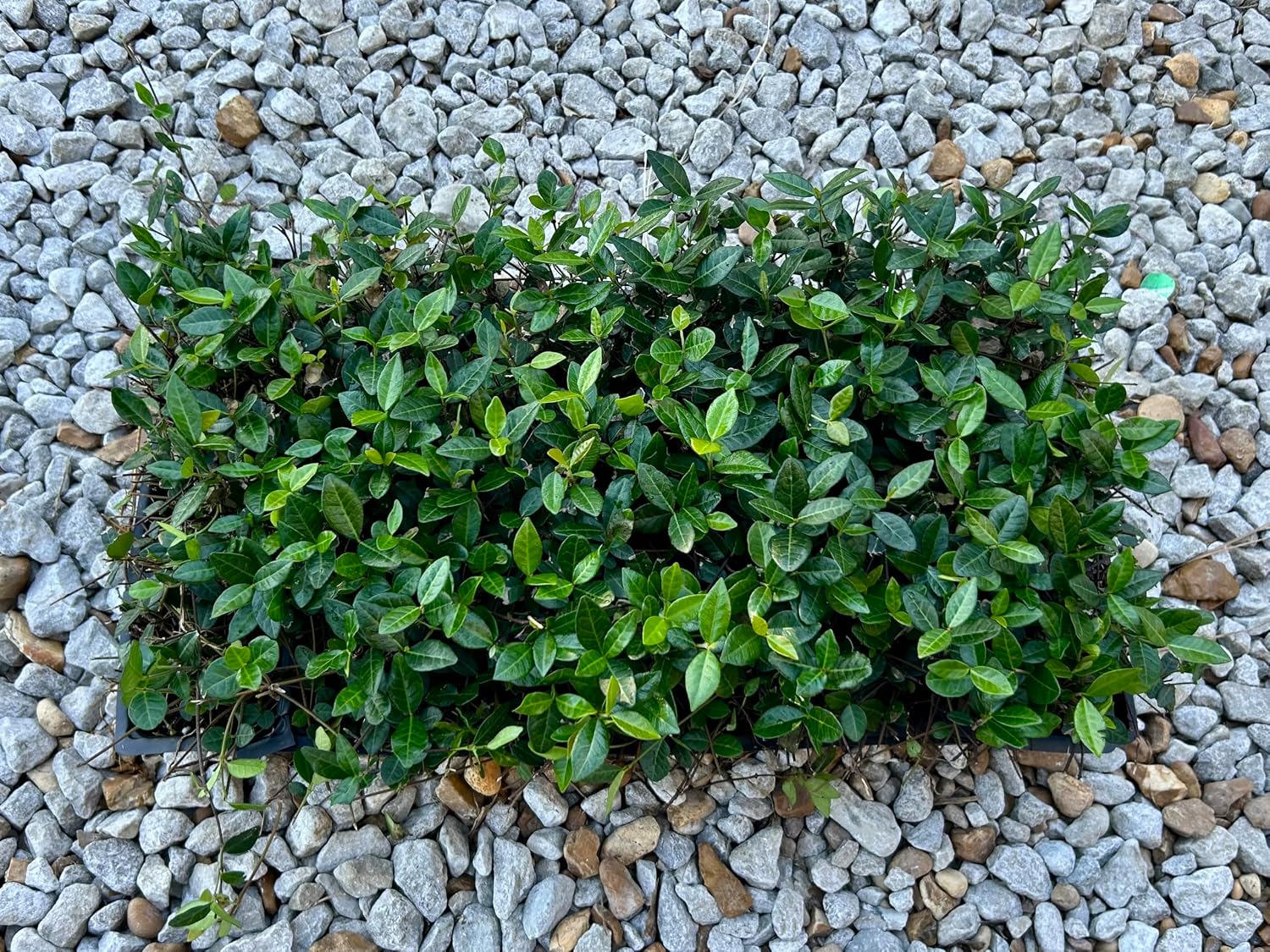
Asiatic Jasmine Live Plants, 72-Pack of 3" Pots
| Plant count | 72 plants |
|---|---|
| Pot size | 3-inch pots |
| Growth habit | Fast-growing evergreen vine |
| Mature height | 6-8 inches |
This 72-pack of Asiatic jasmine provides a straightforward way to establish a dense, evergreen ground cover quickly. Each tray contains 18 healthy plants in 3-inch pots that are ready to plant in groups for fast horizontal spreading; mature height stays low so it works well on slopes, borders, and under trees. The glossy dark green foliage is year-round, and the species tolerates a range of soil conditions, which reduces ongoing maintenance once established. Expect rapid coverage rather than a neat, formal lawn substitute, so plan for containment if you need clear edges. Plants are best used in mass plantings to minimize gaps and to capitalize on their spreading habit; they perform in both sun and shade but will fill in fastest with at least partial sun. If you want an easy, low-input evergreen mat for erosion control or to replace high-maintenance turf in beds, this pack is a practical choice, though you will need to plant and water the individual pots initially and manage spread over time.
Best for: Gardeners who want a cost-effective, low-maintenance evergreen ground cover to replace turf or stabilize slopes and who prefer planting in bulk to get quick coverage.
Less Ideal for: People seeking a formal, low-spread planting with rigid edges or those who want instant, maintenance-free coverage without planting effort.
- Large 72-plant quantity suitable for establishing quick, continuous ground cover
- Evergreen glossy foliage provides year-round landscape color
- Fast-spreading habit fills slopes, borders, and under-tree areas efficiently
- Tolerates a range of soil conditions and low-maintenance once established
- Requires initial planting and watering for individual 3-inch pots
- Spreading habit can require ongoing edge control to prevent encroachment
Verdict: A practical, large-quantity pack for quickly establishing an evergreen Asiatic jasmine ground cover that trims long-term maintenance compared with turf.
Seedville Dichondra Repens (1000 seeds) Evergreen Groundcover

| Indoor Outdoor Usage | Outdoor |
|---|---|
| Sunlight Exposure | Sun – Part Shade |
| Expected Planting Period | Spring or Fall |
| USDA Hardiness Zone | 8 – 11 |
| Unit Count | 1000 Count |
Seedville Dichondra Repens comes as a 1000-seed packet intended to establish a dense, low-maintenance ground cover that stays evergreen in mild climates. It is typically sown in spring or fall and forms a two-inch mat of foliage that chokes out weeds and can be used between stones, in rock gardens, or as a grass alternative for low-traffic lawns. The seeds produce a creeping plant that tolerates sun to part shade, requires only moderate watering, and blooms small yellowish-green flowers in summer. Practical benefits include rapid fill-in when planted at recommended spacing and low ongoing care once established, making it economical for covering larger areas. Limitations are climate sensitivity since it is hardy only to about 20°F and it will grow taller in shaded spots; it is also not a replacement for high-traffic turf and may need supplemental watering during drought. For gardeners seeking an affordable evergreen filler for warm climates, these seeds offer a straightforward option with simple care requirements.
Best for: Gardeners on a budget in warm climates who want an inexpensive, low-maintenance evergreen groundcover to fill beds, rock gardens, or replace turf in low-traffic areas.
Less Ideal for: Homeowners in cold climates or those needing a wear-resistant turf for play areas should choose a different groundcover or lawn grass.
- Large 1000-seed count for covering significant area from one packet
- Forms a dense, low-growing mat that suppresses weeds
- Suitable for sun to part shade and multiple landscaping uses like rock gardens and between stones
- Low maintenance once established with only moderate watering needs
- Hardy only to USDA zones 8–11 so it will not survive colder winters
- Not suited to high-traffic lawn use where a durable turf is required
Verdict: A cost-effective way to establish an evergreen, low-maintenance groundcover across warm-season landscapes.
CZ Grain Blue Spruce Sedum Live Starter Plugs (3 Plants)

| Sunlight Exposure | Full Sun |
|---|---|
| USDA Hardiness Zone | Zones 4,5,6,7 and 8 |
| Soil Type | Loam Soil |
| Moisture Needs | Moderate Watering |
| Expected Blooming Period | Summer to Winter |
Blue Spruce Sedum (Sedum reflexum) is a hardy, low‑growing succulent sold here as live starter plugs intended to establish a dense carpet of blue‑green, needle‑like foliage. You plant the plugs in full sun and well‑drained soil where they spread outward along stems to fill gaps between rocks, along paths, or on slopes. Key features are its drought tolerance once established, year‑round texture from evergreen foliage, and suitability for rock gardens, xeriscapes, containers, and borders. Practical benefits include low maintenance, good cold hardiness across USDA zones 4–8, and visual interest from its distinctive color and form. Because these are starter plugs rather than mature mats, expect some time before complete coverage and occasional hand weeding or edging while plants establish. It prefers loam or well‑drained mixes and moderate watering during establishment; it will not do well in heavy, constantly wet soils. For buyers prioritizing reliability, this sedum offers a proven, low‑input evergreen solution when planted in appropriate sunny, dry locations.
Best for: Gardeners who want a dependable, low‑maintenance evergreen ground cover for sunny, dry areas and prefer plants that establish and persist year after year.
Less Ideal for: People needing instant, full coverage or planting in shade or poorly drained soil should choose a different ground cover or use established mats instead.
- Distinctive blue‑green evergreen foliage that provides year‑round texture
- Drought tolerant once established, suitable for xeriscape and rock garden use
- Hardy across USDA zones 4–8 for reliable perennial performance
- Sold as starter plugs that make it easy to plant and expand ground cover
- Ships as small starter plugs so full ground‑cover effect takes time to develop
- Requires well‑drained soil and full sun and will decline in heavy, wet sites
Verdict: Choose this Blue Spruce Sedum if you need a reliable, low‑maintenance evergreen ground cover for sunny, well‑drained sites.
Outsidepride Irish Moss (Sagina subulata) Ground Cover Seeds, 10,000 Pack

| Unit Count | 10000 Count |
|---|---|
| USDA Hardiness Zone | 4 |
| Sunlight Exposure | Partial Sun |
| Expected Blooming Period | Spring to Fall |
| Moisture Needs | Moderate Watering |
Outsidepride Irish Moss seeds (Sagina subulata) are sold as a bulk packet intended to establish a dense, carpet-like ground cover that stays 1 to 2 inches tall. Typical use is surface-sowing in well-drained soil in spring, then keeping the seedbed consistently moist until seedlings are established; the packet claims coverage up to about 100 square feet when sown at recommended rates. Notable features include shade tolerance, small white spring-to-summer flowers, and suitability for light foot traffic between pavers or on pathways. Practically, it is a low-maintenance option that suppresses bare soil, helps retain moisture, and creates a soft, barefoot-friendly surface where a low-profile look is desired. Limitations are that it prefers consistent moisture and cooler conditions in warm regions, can be slow to fill in compared with faster-spreading lawn alternatives, and is intended only for light traffic situations rather than play areas or heavy use.
Best for: Gardeners and landscapers who need a tidy, low-profile ground cover for shaded paths, rock gardens, or between stepping stones and prioritize a neat, long-term carpet effect over rapid coverage.
Less Ideal for: Those needing an immediate, dense turf for heavy foot traffic areas or for locations with prolonged drought and high heat where moisture is difficult to maintain.
- Very low growth habit creates a neat, 1–2 inch living carpet ideal for filling gaps between stones
- Tolerates partial shade so it works in shaded borders and under trees
- Produces delicate white blooms that add seasonal interest without increasing height
- Bulk pack (10,000 seeds) can cover a substantial area when sown at recommended rates
- Requires consistent moisture and well-drained soil for reliable establishment
- Slower to establish and fill in than some aggressive ground covers
Verdict: Choose these Irish Moss seeds when you want a low-growing, shade-tolerant living carpet between pavers or in rock gardens that creates a soft, long-term ground cover.
Asiatic (Asian) Jasmine Live Plants — 18-Pack, 3-inch Pots

| Indoor Outdoor Usage | Outdoor |
|---|---|
| Sunlight Exposure | Partial Shade To Full Sun |
| USDA Hardiness Zone | 7-10 |
| Unit Count | 18 Count |
| Moisture Needs | Moderate Watering |
These Asiatic jasmine plants arrive as 18 healthy 3-inch pots intended to establish quickly into a dense, evergreen ground cover. They are typically planted 12 to 18 inches apart to create continuous coverage for slopes, under trees, or shady patio beds where grass struggles. Key features are shade tolerance, year-round glossy foliage, and a vigorous spreading habit that stabilizes soil and reduces mowing and weeding. In practice you will water regularly until the root systems are established, then expect low maintenance beyond occasional trimming to control spread. They tolerate a range of soils and perform across USDA zones 7 to 10, making them a practical choice for temperate to warm climates. Important limitations are that the plants can become invasive in confined beds without edging and they require protection from hard frost in cooler winters. Also, if you want a formal lawn alternative with uniform height, these will produce a more naturalized, spreading mat rather than a clipped turf.
Best for: Gardeners who need a performance-oriented ground cover for shady patio beds, slopes, or under trees and want rapid, low-effort coverage to reduce lawn maintenance.
Less Ideal for: Those seeking a formal, low-growing turf replacement that stays neatly contained without regular edge control or pruning.
- Shade tolerant and also performs in full sun, suitable for varied patio shade conditions
- Evergreen foliage provides year-round ground cover and visual consistency
- Fast-spreading habit quickly fills bare areas for erosion control and reduced maintenance
- Low maintenance once established, with only occasional trimming required
- Can spread aggressively and needs edging or trimming to prevent encroachment
- Requires frost protection in colder winters outside USDA zones 7 to 10
Verdict: Choose this 18-pack of Asiatic jasmine when you want a fast-establishing, low-maintenance evergreen ground cover that performs well in shady patio areas.
Choosing the Right Evergreen Ground Cover: Key Factors to Consider
Hardiness and Climate Fit
Choose evergreen ground cover that matches your USDA zone or regional climate. Hardiness influences whether a plant will keep foliage and vigor through winter and during temperature swings. A marginally hardy selection may die back and require replacement, leaving gaps and extra work.
Consider summer heat and humidity as well as winter cold. Some evergreen ground covers handle cold but struggle in hot, humid summers. Check species-level tolerance and pick plants used successfully in landscapes with similar season lengths and extremes.
Light Requirements
Different evergreen ground covers range from deep-shade performers to full-sun lovers. Planting a shade-preferring species in a sunny bed can scorch foliage and stunt growth, while a sun-lover in heavy shade will stretch and thin out, failing to suppress weeds.
Assess the actual light at the planting site through the day. For under-tree plantings evaluate root competition and filtered light. Choose species whose leaf texture and density will create the aesthetic and ground-holding effect you want in that light level.
Growth Habit and Spread Control
Growth habit determines how ground cover establishes and how much space it requires. Some species form tight mats and stay contained, while others spread by stolons or suckers and can move beyond intended areas. For planting near pathways, beds, or delicate borders prefer clump-forming or slow-spreading types to reduce edge maintenance.
Plan spacing to allow for mature spread without overcrowding. Consider using physical edging or root barriers for vigorous spreaders. Knowing whether a ground cover spreads by runners, rhizomes, or clumping tells you how often you will need to trim or thin to keep it tidy.
Soil and Drainage Compatibility
Soil texture and drainage affect establishment and long-term health. Many evergreen ground covers prefer well-drained soils and will suffer in standing water, while some tolerate heavier clay if amended or placed on a grade. Soil pH can influence leaf color and nutrient uptake for certain species.
Prepare the bed by improving structure where necessary, adding organic matter to sandy or compacted soils. For slopes, choose plants with strong root mats that anchor soil. Matching soil conditions to the plant reduces failure and the need for corrective maintenance.
Establishment Speed and Erosion Control
How quickly a ground cover fills in matters for weed suppression and slope stabilization. Fast-establishing species cover bare soil sooner and reduce erosion risk, but they may also require more frequent early pruning or thinning. Slower growers can be better for precise, low-maintenance designs once established.
On banks and erosion-prone sites prioritize species with rapid root development and dense surface coverage. Factor in how long you can tolerate bare soil while seedlings establish and plan temporary erosion controls if necessary.
Maintenance and Longevity
Maintenance expectations vary widely. Some evergreen ground covers require little more than occasional shearing or edge trimming, while others need seasonal pruning, division, or fertilization to stay healthy and attractive. Consider how often you want to intervene, especially in larger plantings.
Think about longevity in the landscape. Certain species may need periodic rejuvenation through division to prevent thinning and woody build-up. Choose plants whose maintenance profile matches the time and budget you can commit.
Best Sites for Evergreen Ground Cover
Evergreen ground covers are most effective in planting beds, under shrubs, along slopes, and as low borders where continuous foliage is desirable. Match the species to micro-site conditions: moist, protected beds take different plants than exposed slopes or salty coastal sites.
Use ground cover to reduce maintenance in large sweeps and to fill awkward areas where mowing is impractical. In tight spaces consider compact or slow-spreading forms to avoid constant edge work.
- Understory planting: select shade-tolerant species with shallow roots.
- Slopes and banks: prioritize strong root mats and quick groundcovering habit.
- Pathway edges: use low, contained forms to reduce overrunning onto walkways.
Planting and Establishment Tips
Prepare the bed by removing weeds, loosening soil, and adding compost to improve tilth. Follow recommended spacing to allow healthy air circulation and to reach desired coverage in the expected timeframe.
Mulch sparingly at planting to conserve moisture and limit weeds, but avoid deep mulch against stems which can promote rot. Water regularly during the first season to encourage root spread; after establishment many evergreen ground covers need only supplemental irrigation.
- Use staggered planting or blocks for faster visual coverage.
- Install temporary erosion-control fabric on steep slopes until plants establish.
Controlling Spread Without Chemicals
If you want to limit a vigorous ground cover without herbicides, use physical barriers such as shallow root barriers, edging, or planting in raised beds. Regular pruning of runners or mowing low-form species on an annual basis will also keep spread in check.
Hand-pulling new runners during the first few seasons prevents escape. For established plantings, periodic division reduces density and curbs lateral spread while revitalizing the bed.
- Edge with metal or plastic barriers buried a few inches deep.
- Trim runners promptly and compost or dispose of them to prevent re-rooting.
Seasonal Care and Problem Prevention
Evergreen ground covers usually need light seasonal care. Remove accumulated debris in spring to prevent fungal issues and thin plants that have developed woody crowns. Monitor for pests and address localized outbreaks early to prevent spread.
Adjust watering seasonally: reduce irrigation in winter for cold-hardy species, and increase supplemental water during extended summer droughts to maintain foliage color and density.
- Conduct a spring clean-up to improve air flow and reduce disease risk.
- Fertilize sparingly based on soil test results to avoid excessive, weak growth.
Designing with Texture and Color
Use evergreen ground cover to create year-round texture contrasts with deciduous perennials and shrubs. Low-mounded foliage works well beside upright stems, while fine-textured mats can soften hard edges.
Consider seasonal flower or berry interest as an added design layer, but prioritize foliage habit when the primary goal is continuous ground coverage and soil protection.
- Pair coarse-leaved ground covers with fine-textured perennials for contrast.
- Use a mix of species in large areas to stagger bloom and reduce uniform vulnerability to pests.
How We Chose the Best Evergreen Ground Cover
We focused on practical landscape performance that matters to gardeners using evergreen ground cover. Selection started with species and cultivars known for dependable winter foliage and continued with criteria that predict real-world success in beds, slopes, and underplanting. Key evaluation dimensions included cold hardiness range and drought tolerance to judge survivability across climates; growth habit and spread control to assess how easily plants stay where you want them; establishment speed and root structure to understand erosion control and weed suppression timelines; maintenance needs including pruning and rejuvenation frequency to estimate long-term labor; and disease and pest resistance to reduce the chance of replacement or intense care. We excluded annuals, non-evergreen ground covers, and highly invasive species that commonly escape cultivation. Preference was given to plants with documented landscape use and clear guidance on spacing and cultural needs. The final list emphasizes durable, garden-friendly options that fit the scoring criteria described below.
FAQ
How fast will evergreen ground cover fill in bare soil?
Fill-in time varies widely by species and conditions. Many established ground covers show significant coverage in the first growing season, while slower types may take two to three years to fully fill a bed. Soil fertility, water, and spacing all influence speed.
Can I use evergreen ground cover on a steep slope to prevent erosion?
Yes. Pick species with strong root mats and rapid lateral spread for slopes. Combine planting with temporary erosion controls during establishment, and avoid species that only form loose clumps without surface coverage.
Will evergreen ground cover survive under trees with root competition?
Some species tolerate root competition and filtered shade better than others. Choose shallow-rooted, shade-adapted ground covers and improve soil where possible. Expect slower establishment and plan for irrigation during establishment if the tree canopy limits water.
How do I control an overly aggressive ground cover without removing it all?
Containment tactics include installing shallow root barriers, cutting back runners regularly, and dividing dense patches to reduce vigor. Physical removal of new runners before they root helps limit spread without full removal.
Do evergreen ground covers need fertilizer every year?
Most do not need annual feeding. A light application based on soil test results in early spring can support growth, but excessive fertilizing often produces soft, weak foliage and increases maintenance. Organic matter incorporated at planting is usually sufficient for long-term health.
Final Verdict
Prioritize site match and growth habit when choosing evergreen ground cover. Assess hardiness, spread tendency, and establishment pace against your light, soil, and maintenance preferences to avoid surprises. For erosion control choose quick-rooting, dense forms; for low-maintenance ornamental sweeps pick slower-spreading, tidy types. Balancing these tradeoffs will help you pick a ground cover that provides year-round foliage, reduces weeding, and holds soil with minimal intervention. Focus on how the plant behaves in your garden conditions rather than appearances alone to make the best long-term choice.
