

Note: This article contains affiliate links. If you click on these links and make a purchase, I may earn a small commission at no extra cost to you. This helps support my research and content. Read my full affiliate disclosure here.
Starting seeds indoors changes the calendar for your garden and gives you stronger, earlier plants if you do it right. The right grow light for seed starting replaces weak window light, limits stretch, and helps seedlings develop sturdy stems and green leaves. This guide looks at seven shortlisted grow lights for seed starting, explaining how each type supports germination, leaf development, and transplant readiness. We evaluate units on light spectrum and output, footprint and adjustability, energy use and heat management, and build practicality. Read on to match a light to your available space and planting goals.
Top Picks at a Glance
| Best Overall The best all-around choice for most situations | FRGROW 3‑Head Tabletop LED Grow Light, 27W with Timer |  |
| Best Quality Built to a higher standard if you want something more solid | VIVOSUN LumaLight 100W LED Full Spectrum Grow Light |  |
| Best Value The sweet spot between price and what you get | FECiDA Flat Panel LED Grow Lights — 4-Pack, Full Spectrum, Under-Shelf Panels | 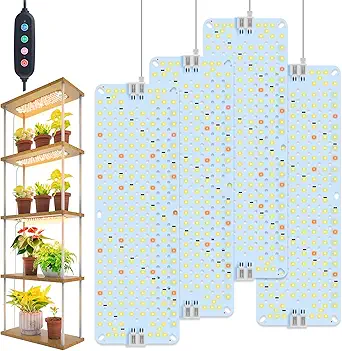 |
| Best Budget The cheapest option that still gets the job done reliably | DOMMIA Under-Shelf LED Grow Light Panel, 2-Pack |  |
| Highest Rated A top-rated pick with lots of positive feedback | Barrina T5 2ft Full Spectrum LED Grow Light — 8‑Pack |  |
| Most Popular A crowd favorite that many people choose with confidence | Briignite A19 Full Spectrum LED Grow Light Bulbs (2-Pack) |  |
| Best Seller A high-volume bestseller chosen again and again | Barrina T5 1 ft Full-Spectrum Grow Light, 4-Pack |  |
FRGROW 3‑Head Tabletop LED Grow Light, 27W with Timer

| Light Source Type | LED |
|---|---|
| Wattage | 27 watts |
| Mounting Type | Table Mount |
| Light Source Special Features | Grow Light with Timer |
| Number of Light Sources | 3 |
This FRGROW 3‑head tabletop LED grow light is built for supplemental and early-stage grow tasks like seed starting and foliage development. It provides a true 27 watts of sustained output across a full spectrum intended to support photosynthesis from seedling through vegetative stages. The three adjustable heads and 60° focused beam let you concentrate light on small trays or individual pots, and the height‑adjustable bracket helps avoid light burn while optimizing canopy coverage. A five‑mode auto timer (4/8/12/16/20 hours) makes scheduled lighting simple for consistent daily cycles without manual intervention. The metal construction feels sturdy for desktop use and it plugs directly into standard household power for quick setup. Practical limitations are its modest total wattage, which is ideal for a few seedlings or small plants but not large shelves or high‑light flowering setups, and the focused beam means you may need close placement or multiple units for even coverage of wider trays. For straightforward seed starting and desktop plant care it is an easy, reliable option.
Best for: Growers who want a compact, no‑fuss light for seed starting, single trays, or small desktop plants and value easy scheduling and targeted illumination.
Less Ideal for: People planning to light large grow shelves, multiple full trays at once, or high‑light flowering plants should choose a higher‑output or wider‑coverage fixture.
- True full spectrum LED output suited for seedling and vegetative growth
- Built‑in five‑mode timer simplifies daily lighting schedules
- Adjustable three‑head design with 60° beam to target small trays or pots
- Metal construction and plug‑and‑play setup for quick, durable desktop use
- 27W total output is relatively low for large trays or multiple seed flats
- Focused 60° beam can require repositioning or multiple units for even coverage
Verdict: A compact, easy‑to‑use full‑spectrum tabletop grow light that makes seed starting and small‑scale veg growth simple with an integrated timer and adjustable heads.
VIVOSUN LumaLight 100W LED Full Spectrum Grow Light

| Wattage | 100 watts |
|---|---|
| Light Source Type | LED |
| Number of Light Sources | 336 |
| Is Waterproof | True |
| Control Method | Remote, Bluetooth |
The VIVOSUN LumaLight 100W is a compact full-spectrum LED grow light meant to deliver intense, uniform illumination for seedlings through flowering. It combines white, blue, red and far-red diodes to cover the spectrum young plants and developing seedlings need, and the dense array of 336 LEDs helps provide even PPFD across the footprint. Typical use is hanging over seed trays or small grow tents where you can adjust intensity with the built-in dimming knob (25 to 100%) or remotely via Bluetooth and VIVOSUN control systems. The fixture is IP65-rated, so it tolerates humid seedling environments and occasional spraying without damage, and its aluminum construction helps keep operating temperatures low for long component life. Practical benefits include strong light output for faster seedling vigor, smart dimming for matching growth stages, and low heat to reduce burn risk. Limitations are that the 100W model is sized for small areas, so larger benches or multiple trays will need additional units, and advanced spectrum tuning beyond fixed diodes requires a different tunable model.
Best for: Growers who prioritize light performance and want a compact, controllable fixture to accelerate seedling establishment in small indoor setups.
Less Ideal for: Those needing to light large benches, multiple trays, or whole-room installations should consider higher-wattage or multiple-unit solutions.
- Full spectrum LED array (including far-red) suitable for seedling development
- Dimmable 25%–100% plus Bluetooth/remote control for easy intensity management
- IP65 waterproof rating safe for humid seed-starting conditions
- Low heat design with aluminum body for longer component life
- 100W power is best for single trays or small tents and may be insufficient for larger seed-starting benches
Verdict: If you need high-intensity, controllable full-spectrum light for faster, healthier seed starts in a small indoor space, this 100W VIVOSUN delivers reliable performance.
FECiDA Flat Panel LED Grow Lights — 4-Pack, Full Spectrum, Under-Shelf Panels

| Light Source Type | LED |
|---|---|
| Power Source | Corded Electric |
| Light Source Special Features | Natural Sunlight Full Spectrum LED Grow Light |
| Number of Light Sources | 4 |
| Wattage | 48 watts |
These FECiDA flat panel grow lights are a 4-pack of slim LED panels intended for mounting under shelves, inside cabinets, or over seed trays to give seedlings strong, consistent light. Each panel uses a high-density LED array claimed to deliver 12 W actual power and a full-spectrum blend (3000K, 5000K plus 660 nm) that supports plant development from seedling to early vegetative stages. The daisy-chain series and parallel connection options make wiring multiple panels tidy and allow you to scale coverage across a seed-starting rack. Built-in timer modes (4/8/12/16/20 hours) are convenient for set-and-forget schedules, and the aluminum housing with plastic diffuser keeps the units lightweight and easy to mount. Practical benefits include cleaner cable management, configurable run times, and broader, brighter coverage than many low-power shelf lights. Limitations are that the listed voltage is 220 V which may require checking compatibility with local outlets and the unit relies on the included driver rather than an integrated power supply, so placement is constrained by where the driver can sit. For focused seed-starting racks these panels provide efficient, modular light without complicated setup.
Best for: Practical home growers who want a compact, modular lighting solution to set up a neat seed-starting shelf or small indoor germination area and minimize daily fuss.
Less Ideal for: People needing a single high-intensity light for large grow tents or commercial propagation racks should choose a higher-wattage fixture designed for bigger footprints.
- Full-spectrum LED array with 3000K, 5000K and 660 nm targeting seedling growth
- Daisy-chain series and parallel connections for tidy wiring and scalable coverage
- Built-in 5-mode timer for automatic daily on/off routines
- Slim aluminum panels designed for under-shelf or cabinet mounting
- Specification lists 220 V which may require confirming compatibility with some power systems
- Includes external driver which limits exact placement and may add clutter if not hidden
Verdict: A tidy, modular four-panel full-spectrum LED kit that simplifies and brightens seed-starting shelves for hobby growers.
DOMMIA Under-Shelf LED Grow Light Panel, 2-Pack

| Wattage | 10 watts |
|---|---|
| Power Source | Corded Electric (USB 5V 2A) |
| Light Source Type | LED |
| Mounting Type | Under Cabinet Mount |
| Number of Light Sources | 2 |
The DOMMIA two-panel kit provides compact, full-spectrum LED lighting intended for seedlings and small indoor plants under shelves or in small grow spaces. Each 4" square panel is very thin and mounts with adhesive or magnets so you can place light close to trays and cells; the included convex optical lenses concentrate output for higher PPFD at short distances, which helps young seedlings develop without stretching. The controller has a built-in 6/12/16 hour auto timer, four brightness steps and power-loss memory so you can set a schedule without extra equipment. USB 5V power and a 6 ft cable let you run the lights from a phone charger, power bank, or USB plug near a shelf. Practical limits are its low total wattage and small coverage area—these panels are made for tight, localized setups rather than whole racks or larger flats—so you will need multiple units for bigger seed-starting trays. The lights are water repellent and suitable for humid propagation spaces but the USB adapter is not included.
Best for: Seed starters on a tight budget who need a slim, plug-and-play light for small shelves, cabinets, or single flats and prefer a simple timer/dimmer without extra hardware.
Less Ideal for: Growers needing to light multiple large flats, whole racks, or larger seedlings should choose higher-wattage fixtures with wider coverage instead.
- Very slim panels fit cramped shelves and small propagation boxes
- Built-in 6/12/16H auto timer and 4 brightness levels for set-and-forget scheduling
- Full spectrum LEDs with optical lenses give usable PPFD for seedlings at close range
- USB 5V power and 6 ft cable allow flexible placement without a dedicated outlet
- Includes two panels and basic mounting accessories for immediate setup
- Limited total output and small coverage area, so multiple units are needed for larger seed trays
- USB adapter is not included
Verdict: A budget-friendly, ultra-slim USB grow light for placing close to seed trays where concentrated, timer-controlled light is needed.
Barrina T5 2ft Full Spectrum LED Grow Light — 8‑Pack

| Wattage | 10W per light |
|---|---|
| Color temperature | 5000K Full Spectrum |
| Linkable | Link up to 16 lights |
| Pieces included | 8 lights |
These Barrina T5 fixtures are straightforward LED grow lights built for continuous indoor use and seed starting. Each 2‑foot bar is full spectrum at 5000K, draws about 10W per lamp and is bright enough to deliver high PPFD for seedlings and vegetative growth when mounted close to trays. The kit includes power cords with on/off switches, connecting cables to link up to 16 units, mounting clips, adhesive tape and cable ties, so setup on a shelf or in a small greenhouse is quick and tool‑light. Separate surface switches let you control individual bars to match light schedules for different trays. Practical benefits include low energy draw compared with older HID fixtures and the ability to scale by adding units in series. Limitations are the fixed 2‑ft form factor and modest integrated controls — there is no dimmer or timer built in — so you will need external timers or adjustable racks for advanced scheduling and height control. The magnetic note in some materials is inconsistent with the listed non‑magnetic design, so check mounting method before installation.
Best for: Buyers who prioritize a dependable, no‑fuss lighting solution for starting seeds and growing seedlings on shelves or in small indoor racks and who value energy efficiency and easy scaling.
Less Ideal for: Growers who need integrated dimming, timers, or custom spectral tuning or who require nonstandard lengths and mounting for larger commercial racks should consider more feature‑rich fixtures.
- Full spectrum 5000K output suitable for seedlings and vegetative growth
- Low power draw (about 10W per 2ft bar) while providing high PPFD for close‑range use
- Linkable design lets you run up to 16 lights in series for easy scaling
- Includes mounting clips, adhesive tape, connecting cables and on/off cords for fast plug‑and‑play setup
- No built‑in dimmer or timer so external controls are required for precise light cycles
- Fixed 2‑ft length and form factor may not fit every shelf or custom rack without modification
Verdict: A reliable, energy‑efficient plug‑and‑play T5 kit that scales easily and is ideal for dependable seed starting on shelves and small racks.
Briignite A19 Full Spectrum LED Grow Light Bulbs (2-Pack)

| Light Type | LED |
|---|---|
| Additional Features | Full Spectrum |
| Bulb Base | E26 |
| Light Output Maximum | 1000 lumens |
| Light Source Operating Life | 30000 hours |
These Briignite A19 full spectrum LED grow bulbs are an easy, low-effort option for starting seeds and growing small indoor plants. They screw into standard E26 fixtures and deliver about 1000 lumens while consuming roughly 11 to 12 watts, so you get bright, daylight-leaning light without a big energy draw. The 3500 K color temperature and full-spectrum output include red and blue wavelengths useful for germination and early vegetative growth while still appearing natural in a living space. Built-in features include app control and a push-button controller for basic on/off and timing, and the aluminum and plastic body is designed to dissipate heat for a long rated life. For seed starting you can position these in fixtures or inexpensive clamp lamps a few inches above trays; they provide broad 180-degree coverage for multiple flats. Limitations are that they are not a high-PPFD professional fixture, so very dense seed racks or deep canopy setups may need higher-output lights or dedicated fixtures, and some advanced users may miss full dimming or precision spectrum controls.
Best for: Buyers who want a simple, low-cost way to start seeds or grow small indoor trays using standard light sockets and value natural-looking light with energy efficiency and proven user feedback.
Less Ideal for: Growers running larger seed-starting operations, multi-tier racks, or who need high-intensity PPFD and fine spectrum/dimming control should consider higher-output fixture-style grow lights.
- Full spectrum output (3500 K) that supports germination and early vegetative growth while looking natural indoors
- Standard E26 base fits common fixtures for plug-and-play installation
- Low power draw (about 11–12 W) with high lumen output (1000 lm) for energy-efficient seed starting
- Aluminum and plastic housing with heat dissipation for a long operating life
- Not designed to deliver very high PPFD for large or dense seed racks
- Limited advanced controls and precision spectrum tuning compared with dedicated grow fixtures
Verdict: A convenient, energy-efficient full-spectrum A19 bulb that makes seed starting easy by fitting standard fixtures and providing natural-looking, plant-friendly light.
Barrina T5 1 ft Full-Spectrum Grow Light, 4-Pack

| Wattage | 5W per fixture |
|---|---|
| Color temperature | 5000K Full Spectrum |
| Linkable | Link up to 16 lights |
| Control | Separate on/off for each fixture |
The Barrina T5 1 ft grow light 4-pack is a compact, plug-and-play LED kit designed for starting seedlings and maintaining young plants. Each slim fixture delivers 5000K full-spectrum light and can be switched independently, so you can tailor run time and intensity across a seed tray or multi-shelf setup. Installation is straightforward: magnetic bars, clips and cable ties are included and lights can be linked in series up to 16 units to cover longer benches. At low power (about 5W per fixture) the strips offer a high density of LEDs and claim strong PPFD for seedlings and vegetative growth while staying energy efficient. Practical benefits include a discreet black housing and dark cords that blend into indoor shelving and simple separate controls for staged germination. Limitations are that the fixtures are short (1 ft), so covering wider trays requires multiple units and you may need to mount them close to plants for optimal intensity, which reduces headroom for taller seedlings.
Best for: Buyers who want a low-risk, easy-to-install grow light for seed starting and early growth and who prefer straightforward controls and modest energy use.
Less Ideal for: Growers who need a single wide fixture to cover large trays or who require high vertical clearance for taller seedlings should consider longer or higher-output fixtures instead.
- Full-spectrum 5000K output suited to seedling and vegetative stages
- Magnetic and clip mounting with plug-and-play setup for fast installation
- Linkable design lets you run up to 16 fixtures from one source for larger racks
- Separate on/off control for each 1 ft unit to customize light schedules
- Short 1 ft length means multiple fixtures are needed to cover larger seed trays
Verdict: A compact, energy-efficient full-spectrum kit that makes seed starting simple with easy mounting, separate controls, and scalable linkable units.
Choosing the Right Grow Light for Seed Starting: Key Factors to Consider
Spectral Quality and Color Temperature
Seedlings respond differently to blue and red wavelengths. For seed starting, blue-dominant or full-spectrum white light encourages short, sturdy stems and good leaf development. A light that lists its color temperature or spectrum helps you choose one suited for vegetative growth rather than flowering.
Understanding spectral output matters because a lamp that emits mostly red light can encourage elongation and weak stems in the seedling stage. Choosing a light with a broad spectrum or a dedicated seedling/veg mode reduces the risk of leggy starts and produces more transplant-ready plants.
Light Intensity and Uniform Coverage
Intensity determines how much usable light seedlings actually receive. Too low and seedlings stretch; too high and delicate cotyledons can scorch if the fixture is too close. Look for lights with advertised PAR, PPFD maps, or reliable lumen output and be prepared to measure distance from the canopy rather than rely on fixture wattage.
Coverage matters because a narrow beam creates hot spots and shadowing across flats. A fixture that spreads light evenly over the width and length of your trays reduces the need to rotate trays frequently and ensures more uniform growth across a flat of seedlings.
Adjustability and Mounting Options
Seedlings grow quickly, so being able to raise the fixture or lower trays is essential. Fixtures that include ratchet hangers, adjustable cords, or simple mounting brackets let you keep the recommended 2 to 6 inches from canopy as seedlings develop. A light with built-in dimming or multiple intensity settings extends useful life as plants progress from seedling to hardening off.
Mounting versatility also matters for different setups. Some gardeners start seeds on shelves, in propagation trays on benches, or on sunny windowsills. A fixture that adapts to these spaces reduces hassle and improves light placement consistency.
Heat Output and Ventilation
Close placement to seedlings means heat control is critical. High-heat bulbs require more clearance and can dry out flats or cook tender seedlings. LED panels typically run cooler, allowing closer positioning and more uniform canopy temperatures, which reduces watering frequency and stress.
Consider the ventilation around your seed area and whether the fixture needs active cooling or has built-in fans. Quiet, low-heat operation is preferable in indoor living spaces and small propagation tents to avoid temperature spikes that affect germination and early growth.
Energy Use and Daily Operating Cost
Seed starting is a multi-week process with lights on for 12 to 16 hours a day. Energy-efficient fixtures lower ongoing costs and are kinder to household circuits. Compare actual wattage draw at the fixture rather than the inflated 'equivalent' wattage some manufacturers use.
Efficient lights also produce less waste heat, which ties back to better canopy temperature control. If you start seeds regularly, investing in a more efficient fixture often pays off through lower electricity use and less need to manage heat stress.
Size, Footprint, and Expandability
Your seed-starting space determines the right footprint. Wide panels that span a 1020 tray will give even coverage, while smaller bars are useful for short runs or clustered cell trays. Consider whether you want a single wider light or multiple narrow fixtures you can arrange over staggered trays.
Expandability matters if you plan to increase the number of starts seasonally. Fixtures that are modular or can be daisy-chained simplify scaling without adding extra installation complexity.
Choosing Light Duration and Timers
Consistent day length is as important as intensity. Most seed starting benefits from 12 to 16 hours of light daily to mimic spring daylight and keep seedlings compact. A mechanical or programmable timer removes guesswork and prevents accidental over- or under-exposure.
Set the schedule based on species when possible. For example, brassicas and lettuces tolerate longer days early on, while some photoperiod-sensitive crops require slightly different timing. Timers also help maintain routine for busy gardeners and reduce the risk of human error.
- Use a plug-in timer for simple on/off scheduling.
- Combine dimming and timers to ease seedlings into higher light as they mature.
- Check that the timer supports the fixture's amperage and wattage draw.
Practical Setup Tips for Small Indoor Spaces
If you are working with a small bench or shelf, choose a fixture with a slim profile and low heat output. Mounting lights directly above trays with adjustable hangers maximizes usable vertical space and keeps seedlings at the ideal distance.
Reflective surfaces around the trays can improve light efficiency but avoid cramming trays so tight that airflow is blocked. Group similar species together to simplify height adjustments and watering routines.
- Use skinny LED bars for multi-shelf setups.
- Place heavier-seeded, faster-germinating crops together to stagger workload.
- Keep a small thermometer near the canopy to monitor temperature spikes.
Common Mistakes When Using Grow Lights for Seedlings
A frequent error is placing the light too far away, which causes stretching even under high-wattage fixtures. Measure effective light at seedling height and adjust rather than assuming fixture wattage equals adequate intensity.
Another mistake is running lights 24 hours a day. Seedlings benefit from a dark period to rest and develop normal physiology. Overexposure can lead to weak growth and inefficient energy use.
- Avoid relying solely on claimed wattage; consider real output numbers.
- Do not overcrowd trays; even light distribution matters more than packing more seedlings into one flat.
Adapting Lights for Hardening Off and Early Growth
As seedlings grow past the true leaf stage, you can increase light intensity or move fixtures higher to encourage thicker stems. Consider using dimmable fixtures or multi-stage settings so the same light can serve through early vegetative growth.
When hardening off, gradually reduce daily hours under the fixture and expose plants to natural sunlight increments. A fixture that can be raised higher or dimmed lets you simulate outdoor intensity changes while seedlings acclimate.
- Use lower intensity or increased distance before moving seedlings outside.
- Monitor leaf color and stem thickness to judge readiness for transplanting.
Maintaining and Replacing Grow Light Components
Keep fixtures free of dust and humidity to preserve light output and electrical safety. Wipe panels with a soft cloth when powered off and ensure ventilation ports are unobstructed.
LED diodes decline slowly over many hours. Track cumulative run time and follow manufacturer guidance for end-of-life indicators rather than waiting for catastrophic failure. Replace bulbs or panels when you notice uneven output across the canopy.
- Clean lenses or diffusers seasonally.
- Inspect power cords and mounting hardware before each spring seed run.
How We Chose the Best Grow Light for Seed Starting
We prioritized characteristics that most affect seedling success under artificial light. First, spectral quality and intensity were treated as primary filters because seedlings need blue-rich light early on and adequate lux or PAR to prevent stretching. Second, adjustability and mounting options were required so lights can be raised as seedlings grow and positioned over flats or cell trays without shadowing. Third, heat management and energy efficiency were assessed to ensure bulbs or panels do not cook young plants and keep running costs reasonable for long daily use. We also looked at footprint and uniformity, favoring lights that cover common seed tray sizes and deliver even light across the tray. Ease of setup and durability were included to reflect real garden use where growers may move lights between starts or into propagation benches. We excluded lights intended exclusively for flowering or full-cycle grows unless they had documented seed-start modes or controllable spectrums. Final selections balanced spectrum control, output, adjustability, efficiency, and build practicality.
FAQ
How close should grow lights be to newly germinated seedlings?
Distance depends on the fixture type and intensity but generally keep LEDs 2 to 6 inches above seedlings to avoid stretch while preventing heat stress. Start farther away for higher-output fixtures and move closer as needed, watching for leaf bleaching or curling.
Can I use regular household lights to start seeds?
Most household bulbs do not provide the spectrum or intensity seedlings need and can lead to leggy, weak starts. Dedicated grow lights or full-spectrum LEDs designed for horticulture deliver better wavelengths and control for reliable germination and compact growth.
How many hours of light do seeds need each day under a grow light?
Seedlings typically do well with 12 to 16 hours of light daily. The optimal duration depends on species and desired growth rate, but a consistent daily schedule with a timer is more important than occasional long runs.
Are LEDs better than fluorescent lights for seed starting?
LEDs generally run cooler and are more energy-efficient while offering adjustable spectra and long life. Fluorescent tubes can still work for small setups but may need to be kept very close to seedlings and replaced more often to maintain output.
Will a stronger light always speed up seedling growth?
Not always. Too much light too close can stress or scorch seedlings, while inadequate spectrum can cause stretch. Balance intensity with distance, spectrum, and a proper photoperiod for healthy, steady growth.
Final Verdict
Choose a grow light for seed starting by prioritizing spectral quality, adjustable positioning, and even coverage for your tray sizes. Balance intensity and daily run time with heat management so seedlings develop compact stems and healthy leaves. If you start seeds regularly, favor fixtures with good efficiency and mounting versatility. That approach reduces fuss, lowers operating costs, and gives you more predictable, transplant-ready seedlings each season.
