

Note: This article contains affiliate links. If you click on these links and make a purchase, I may earn a small commission at no extra cost to you. This helps support my research and content. Read my full affiliate disclosure here.
If you tend large beds, break new ground, or wrestle compacted clay, a heavy duty garden hoe changes how much you can get done in a day. The right hoe cuts through roots, chops hardened dirt, and resists bending so you can maintain rows, prep planting areas, and weed deeply without constant tool failure. This guide presents seven shortlisted heavy duty garden hoes chosen for durability, digging power, and worker comfort. We evaluate how construction, blade geometry, and handle ergonomics influence real garden performance so you can pick the tool that matches the type of soil and workload you face. Read on to see the top options and what to prioritize for tough gardening jobs.
Top Picks at a Glance
| Best Overall The best all-around choice for most situations | Truper Tru Pro Forged Garden Hoe with 60-Inch White Ash Handle |  |
| Best Quality Built to a higher standard if you want something more solid | Prohoe Rogue 7-Inch Heavy-Duty Garden Hoe |  |
| Best Value The sweet spot between price and what you get | VNIMTI 58-inch Heavy Duty Garden Hoe with Fiberglass Handle |  |
| Best Budget The cheapest option that still gets the job done reliably | COCONUT 65-inch Long-Handle Hollow Garden Hoe |  |
| Highest Rated A top-rated pick with lots of positive feedback | Edward Tools Heavy-Duty Double Action Stirrup Hoe with 54" Fiberglass Handle |  |
| Most Popular A crowd favorite that many people choose with confidence | DonSail Adjustable Long-Handle Stirrup (Scuffle) Hoe |  |
| Best Seller A high-volume bestseller chosen again and again | EUIJOIP 62-inch Stirrup Garden Hoe and Cultivator |  |
Truper Tru Pro Forged Garden Hoe with 60-Inch White Ash Handle

| Head material | High-carbon forged steel |
|---|---|
| Head width | 6 inches |
| Handle material | North American white ash |
This Truper Tru Pro forged garden hoe is built for demanding garden and landscaping work. The single-piece 6-inch forged, high-carbon steel head cuts through compacted soil, weeds, and light roots with minimal flex, while the 60-inch North American white ash handle gives extended reach to reduce bending and back strain during long sessions. A tab socket and steel collar secure the head to the handle so the tool stays solid under heavy use. Typical uses include breaking and cultivating hard ground, opening furrows for planting, and mixing small batches of concrete or mortar around the yard. The industrial-grade construction and reinforced socket make it appropriate for daily contractor or farm work rather than occasional light gardening. The trade-off is the tool’s weight and length, which favor power over maneuverability in tight beds and raised planters. Finish care such as keeping the head clean and occasionally oiling the wood handle will preserve performance and longevity.
Best for: Buyers who prioritize durability and power for frequent, heavy-duty cultivating, landscaping, or farm work and want a tool that holds up to daily use.
Less Ideal for: Casual gardeners with small raised beds or those who need a lightweight, highly maneuverable hoe should consider smaller or shorter-handled tools instead.
- Forged high-carbon steel head for strong soil penetration and long wear
- 60-inch premium white ash handle provides good reach and leverage to reduce bending
- Reinforced tab socket and steel collar create a sturdy, wobble-free connection
- Industrial-grade build suited for daily contractor, farm, or landscaping use
- Long, heavy design can be unwieldy in tight beds or for precise shallow weeding
- Wood handle requires occasional maintenance to prevent drying or splitting
Verdict: A professional-grade, forged hoe that delivers heavy-duty durability and reach for performance-focused gardeners and landscapers.
Prohoe Rogue 7-Inch Heavy-Duty Garden Hoe

| Blade width | 7 inch |
|---|---|
| Handle length | 60 inch |
| Suitable for | Clearing roots up to 1 inch diameter |
| Construction | Welded socket and riveted handle |
The Prohoe Rogue is a purpose-built heavy-duty hoe with a 7-inch cutting blade and a welded, riveted socket designed to stand up to professional use. It is used like a standard long-handled hoe for chopping through sod, loosening compacted soil, cultivating beds, and cutting through small roots or waste branches up to about 1 inch diameter. The robust blade is made from recycled disc steel and stays sharp for repeated strikes, while the welded socket and rivet through the handle give a strong connection that resists loosening under heavy leverage. Its 60-inch handle lets you work from a comfortable upright posture and apply force without stooping. The tool is focused on durability and power rather than finesse, so it excels when you need to break new ground or clear tough, compacted areas but is heavier to swing during light, precise weeding. If you want a long-lived, performance-oriented hoe for hard garden or field tasks, this model delivers the strength and cutting width to get those jobs done quickly.
Best for: Gardeners and landscapers who prioritize durability and power for breaking sod, clearing tough ground, and general heavy-duty bed preparation.
Less Ideal for: Casual gardeners who mainly do light weeding, container planting, or fine soil prep should choose a lighter, more maneuverable hoe instead.
- Sturdy welded and riveted socket-to-handle connection resists loosening under heavy use
- 7-inch cutting blade breaks sod and cultivates quickly across a wide swath
- Blade clears roots and woody waste up to about 1 inch in diameter
- 60-inch handle provides upright leverage to reduce back strain during heavy work
- Heavier construction makes it less suited for delicate, precision weeding
- Not optimized for very fine soil finishing or close planting-row work
Verdict: Buy this hoe if you need a rugged, performance-oriented tool that breaks sod and clears tough roots reliably on heavy-duty jobs.
VNIMTI 58-inch Heavy Duty Garden Hoe with Fiberglass Handle

| Handle Material | Fiberglass |
|---|---|
| Head Material | Carbon Steel |
| Head Size | 6-7 inches |
This VNIMTI 58-inch heavy duty garden hoe is built for straightforward weeding and light soil shaping across larger beds. The flat high-carbon steel blade is sharpened for slicing out shallow-rooted weeds and breaking crusted soil, while the long fiberglass handle and two non-slip grips let you work upright with less back strain. A riveted joint between head and handle promises a solid connection during repeated use, and the fiberglass shaft keeps the tool lighter than wooden alternatives and resists splitting. In practice it excels at sweeping through weedy rows, scraping soil, and edging beds where shallow roots are the target. It is not a digging or mattock replacement for deep roots or rocky ground, and the flat blade design is optimized for surface work rather than deep trenching. If you need a dependable, low-maintenance hoe for routine weeding and bed prep, this model covers those tasks cleanly and with minimal fuss.
Best for: Gardeners who want a reliable, low-maintenance hoe to speed routine weeding and surface soil work while minimizing back strain.
Less Ideal for: People needing a multi-purpose digging tool or power users who must remove deep roots or work in very rocky soil should choose a different implement.
- High-carbon steel blade provides a sharp edge for efficient removal of shallow-rooted weeds
- 58-inch fiberglass handle reduces bending and resists breakage compared with wood
- Two non-slip grips improve control in wet or sweaty conditions
- Reinforced riveted joint secures the head for heavy or repeated use
- Flat hoe blade is intended for surface weeding and is not suited for digging deep roots or rocky soil
Verdict: A sturdy long-handled hoe that makes fast, low-effort surface weeding and bed prep the primary chore it simplifies.
COCONUT 65-inch Long-Handle Hollow Garden Hoe

| Manufacturer | COCONUT |
|---|---|
| Item model number | Ct-3kx |
| Item Weight | 3.52 pounds |
This COCONUT long-handle garden hoe is a straightforward, no-frills tool for common yard tasks like weeding, loosening soil, and planting. Its 65-inch handle keeps you upright while working beds and borders, and the hollow blade design reduces resistance so the hoe penetrates soil with less effort. The handle breaks down into sections for adjustable length and easier storage, and the metal construction with a rust-resistant coating aims to hold up in outdoor conditions. Assembly is simple courtesy of twist-together rods and a screw-secured head. Expect a durable basic tool that covers everyday heavy-duty chores without specialty features. Limitations are its simple metal handle rather than a cushioned grip and the lack of telescoping adjustment—length changes require removing or adding sections. For gardeners prioritizing a tough, affordable hoe for regular weeding and bed prep, this delivers solid value, though users who want ergonomic grips or premium materials may prefer a higher-end model.
Best for: Budget-minded gardeners who need a simple, sturdy hoe for routine weeding and bed preparation and prefer a long handle to avoid stooping.
Less Ideal for: Those seeking premium ergonomics, vibration-dampening handles, or a lightweight alloy option for long daily use should consider higher-end models.
- Long 65-inch handle reduces bending and lets you work standing up
- Hollow blade design cuts into soil with less resistance for easier weeding
- Removable handle sections for adjustable length and compact storage
- Rust-resistant coated metal construction for outdoor durability
- Handle lacks a padded or ergonomic grip for extended use comfort
- Adjustable length requires adding or removing sections rather than quick telescoping
Verdict: A low-cost, durable long-handle hoe that makes standing weeding and basic soil work easier for everyday gardeners.
Edward Tools Heavy-Duty Double Action Stirrup Hoe with 54" Fiberglass Handle
| Handle Material | Fiberglass |
|---|---|
| Blade Material | Alloy Steel |
| Grip Type | Ergonomic |
| Item Count | 1 |
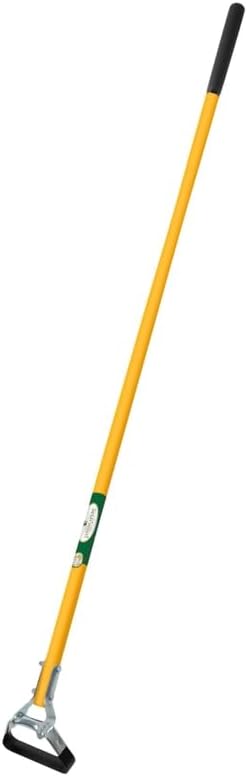
This Edward Tools double-action stirrup hoe is built for heavy garden and landscaping work where durability and efficiency matter. The sharpened 7-inch alloy-steel blade cuts on both the push and pull stroke, which speeds through surface weeds and light cultivation without having to flip or reposition the tool. A 54-inch fiberglass shaft keeps the tool lightweight while resisting weathering and breakage common to wooden handles, and the bolted blade connection looks robust for repeated seasonal use. The double-injected ergonomic grip improves control and reduces hand fatigue during longer weeding sessions. In practice this tool excels in garden beds, pathways, and larger yard areas where frequent weeding and soil disturbance are needed. It is not a precision edging tool and the stirrup blade is best for surface weeds rather than deep-rooted shrubs. Expect a reliable, low-maintenance hoe that focuses on longevity and straightforward performance rather than multi-function features.
Best for: Buyers who prioritize a dependable, long-lasting hand tool for frequent weeding and general soil cultivation in larger beds or landscape areas.
Less Ideal for: Gardeners who need a multipurpose tool for edging, deep digging, or removing large, deep-rooted plants should consider a different implement.
- Double-action sharpened blade cuts on both push and pull strokes for faster weeding
- Fiberglass handle resists weather, is lighter than wood, and stands up to heavy use
- Bolted blade connection designed for long-lasting durability under tough conditions
- Ergonomic non-slip grip reduces hand fatigue during extended use
- Stirrup blade is optimized for surface weeds and light cultivation, not for removing deep-rooted plants
Verdict: Choose this hoe when you want a tough, professional-grade push-pull weeder built to last through heavy seasonal use.
DonSail Adjustable Long-Handle Stirrup (Scuffle) Hoe

| Extendable Length | 30", 43", 60" |
|---|---|
| Material – Pole | Premium steel |
| Material – Blade | Premium steel |
| Handle Top Material | Plastic |
The DonSail adjustable stirrup hoe is a simple long-handle weeding tool built around a hollow, commercial-grade steel shaft and a looped cutting blade for push-pull scuffle weeding. It assembles by screwing three pole sections together and extends to several lengths so you can work from a more upright position and avoid bending. In use the stirrup blade slices weed roots with a short back-and-forth motion, making it efficient for row gardens, flower beds, and vegetable patches without disturbing nearby plants. The tool is lightweight yet made from thicker steel for durability, and the plastic top provides a comfortable grip for longer sessions. Limitations are that it is a single-purpose hand tool best for surface weeds and light cultivation rather than heavy digging or chopping roots, and the adjustable pole depends on threaded joints that should be checked periodically for tightness.
Best for: A cautious gardener who prefers dependable, low-effort tools for regular bed maintenance and wants to minimize bending and back strain while removing surface weeds.
Less Ideal for: Gardeners who need a multipurpose digging tool or who frequently tackle deep-rooted or woody weeds should choose a different heavy-duty hoe or digging implement.
- Adjustable handle length reduces bending and improves comfort for different heights
- Stirrup (scuffle) blade efficiently severs weeds with a push-pull motion
- Commercial-grade hollow steel construction balances strength with light weight
- Quick tool-free assembly by screwing three pole sections together
- Not suitable for heavy-duty digging or cutting large, established roots
- Threaded pole joints may loosen over time and require periodic tightening
Verdict: A practical, easy-to-use stirrup hoe that reduces bending and speeds routine weeding in garden beds.
EUIJOIP 62-inch Stirrup Garden Hoe and Cultivator

| Material Type | Stainless Steel |
|---|---|
| Power Source | manual |
| Operation Mode | Manual |
This EUIJOIP garden hoe combines a stirrup-style blade for slicing weeds with a four-prong cultivator for loosening soil, packaged as a single tool for routine garden maintenance. It is typically used standing up to reduce bending when weeding beds, creating shallow furrows for seeding, and breaking up loose to medium soil before planting. Notable features include a double-edged stirrup blade that can push or pull through weeds, a set of thick cultivator spurs for aerating and mixing soil, and a 62-inch steel handle with a non-slip rubber grip that improves leverage and comfort. Practical benefits are reduced effort when removing surface weeds, quicker prep of planting rows, and the convenience of one tool covering several common tasks. Limitations to note are that the blade and spurs are best for loose to medium soils and may struggle in heavy clay or with deep roots, and the fixed metal construction means occasional sharpening and rust prevention will be needed to keep performance high.
Best for: Gardeners who prioritize efficient, no-frills tools that handle routine weeding, shallow cultivating, and seeding prep while minimizing bending and tool clutter.
Less Ideal for: People who need a specialized tool for breaking hard clay, removing deep perennial roots, or those who prefer lightweight wooden or fiberglass handles for softer flex.
- Two-in-one design combines a stirrup hoe blade and four-prong cultivator for weeding and soil loosening
- Long 62-inch steel handle lets you work standing to reduce back strain
- Double-edged blade can cut on push or pull strokes for efficient weeding
- Non-slip rubber grip improves control and comfort during extended use
- Blade and tines perform best in loose to medium soils and can struggle in heavy clay
- Requires periodic sharpening and corrosion prevention to maintain cutting performance
Verdict: Buy this if you want a single, heavy-duty standing hoe that combines slicing weeding and light cultivator work to speed routine garden maintenance.
Choosing the Right Heavy Duty Garden Hoe: Key Factors to Consider
Blade Material and Thickness
The blade is the work face of a heavy duty hoe. Thicker steel resists bending and holds a sharp edge longer when chopping through compacted dirt and small roots. High-carbon steel options can be sharpened repeatedly, while some alloyed steels use heat treatment to improve toughness.
Thin stamped blades can warp or crumple under heavy leverage, so inspect blade thickness and ask about heat treatment or forging if possible. A heavier, thicker blade helps when forcing the tool into hard soil, but it must be paired with a secure attachment to prevent stress failures where the blade meets the handle.
Attachment Design and Fastening
How the blade attaches to the handle is a frequent failure point on heavy-use tools. Look for designs that fully encapsulate the tang, use through-bolts, rivets, or welded joints rather than simple ferrules that can loosen. A welded or forged socket distributes stress better than a thin pressed collar.
Fasteners should be corrosion resistant and accessible for maintenance. A poor attachment will loosen under repeated pounding or pry leverage, creating wobble that makes the tool inefficient and can become dangerous over time.
Handle Material and Ergonomics
Handles take most of the shock and determine comfort during extended use. Hardwood handles provide natural resilience and can be easy to replace if damaged. Fiberglass handles resist weathering and can reduce vibration reaching your hands, while composite handles can combine stiffness and comfort.
Grip shape and any cushioning should match how you use the hoe. Long handles give leverage for standing work and reduced bending, while shorter handles provide control in tight beds. Consider hand size, whether you usually use gloves, and whether the handle finish will become slippery when wet.
Weight, Balance, and Fatigue
A heavy blade improves penetration but increases the effort required to swing and maneuver the tool. Balance between blade and handle is crucial; a well-balanced hoe focuses force into the cutting edge without forcing you to control a head-heavy load.
Think about how long you will use the tool in a session. If you do short bursts of tough digging, a heavier tool can be beneficial. For prolonged weeding or light cultivation, a lighter balanced option will reduce fatigue. Factor in your strength and typical garden size when considering weight.
Blade Shape and Intended Use
Not all heavy duty blades are shaped the same. A broad square or flat blade is excellent for chopping and scraping, a pointed or triangular blade drives into compacted soil and cuts roots, and a hoe with a pronounced bevel can trench and slice effectively.
Match blade geometry to tasks you perform most often. Wide blades move more soil and are good for bed prep, while narrow or angled blades give more precision for row work and root cutting. Consider whether you need a multiuse design or a tool optimized for one primary task.
Corrosion Resistance and Maintenance
Tools used outdoors are exposed to moisture and soil acids that accelerate corrosion. Protective coatings, alloy choices, and the ability to resharpen all influence long-term usefulness. A painted or powder-coated head reduces rust risk, but scratches expose bare steel, so choose a finish you will maintain.
Regular cleaning, drying, and occasional oiling of metal parts and wooden handles extends service life. Consider whether replacement parts or handle swaps are straightforward, as that affects total lifecycle cost and sustainability of heavy-use implements.
When to Use a Heavy Duty Hoe Instead of a Lighter Tool
A heavy duty hoe earns its place when soil is compacted, laced with roots, or you are preparing new beds that require breaking and amending deep layers. In those situations a lighter gardening hoe simply bends or wears out faster and takes more passes to accomplish the same work.
For regular surface weeding in loose soil, a lighter hoe or short-handled tool is often faster and causes less fatigue. Reserve heavy duty hoes for demolition, turf edge renewal, trenching, and tasks where you need to drive the blade into resistant material without constant sharpening or tool replacement.
- Breaking compacted garden plots or new beds
- Cutting through thick root mats or old sod
- Creating trenches for irrigation lines or planting
- Edge work where you need a durable, sharp edge
Sharpening and Keeping an Edge
A sharp edge improves cutting efficiency and reduces the force you must apply. For heavy duty blades, use a flat file or bench grinder sparingly to restore a clean bevel. Maintain the original angle and remove any burrs after grinding.
After sharpening, clean and oil the metal to inhibit rust. Check the attachment area for movement, and tighten fasteners if the design allows. Regular maintenance prevents progressive wear that can turn a fixable wobble into a broken tool.
- Use coarse files for rust and nicks, fine files for finishing
- Avoid overheating steel when using a grinder; it can soften hardened edges
- Wipe dry and oil after each wet use to slow corrosion
Transport, Storage, and Safety
Store heavy hoes off the floor to prevent moisture-related wood rot and to protect edges from accidental knocks. Hang tools by the handle or keep them in a rack with heads covered. A sheath or head guard protects the blade and reduces the chance of injury.
When transporting in a vehicle, secure the tool to prevent movement. Wear gloves and eye protection when chopping heavily packed soil, and be mindful of footing when using leverage to avoid slips that could cause the blade to catch unexpectedly.
- Hang by the handle or place in a dry rack
- Cover edges for storage and transport
- Use protective gloves and stable footing when levering
Adjusting Technique for Tough Soil
In very compacted ground, start by loosening the soil with a pointed pick or fork if available, then use the heavy hoe to chop and remove loosened clods. Drive the blade into the soil at a shallow angle for slicing and at a steeper angle for levering out chunks.
Use your body weight rather than arm strength for repeated strikes. Take short breaks, and alternate tasks to avoid repetitive strain. Working methodically across a bed in overlapping passes yields cleaner results with less effort than trying to power through large swaths at once.
- Begin with loosening tools for extreme compaction
- Vary blade angle for slicing versus levering
- Use body weight and stance to reduce arm fatigue
Matching Tool to Garden Size and Soil Type
For small plots or container beds, a shorter handle with a dense, sharp head gives control without excess momentum. Larger plots benefit from a longer handle that lets you stand and use leg and torso leverage. Soil texture also guides choice: sandy soils need less heavy tooling, while clay or clay-loam often demands thicker blades and stronger attachments.
Consider how often you will perform heavy-duty tasks. If you only occasionally break ground, a tool that balances weight and replaceable parts might be best. For seasonal or continuous heavy work, prioritize proven attachment designs and thicker, serviceable steel.
- Short handle for small beds and precision work
- Long handle for larger areas and reduced bending
- Heavier blade for clay-rich soils, lighter for sandy dirt
How We Chose the Best Heavy Duty Garden Hoe
We looked for tools that show reliable durability and real-world usefulness in heavy garden tasks. Primary evaluation criteria included blade material and thickness, because those determine edge retention and resistance to bending when forcing through compacted soil or roots. Handle construction and attachment design were assessed to judge shock absorption and the likelihood of loosening or breaking under repeated leverage. Weight and balance were considered since a blade-heavy tool can make short work of breaking ground but causes fatigue over long sessions. We also considered blade shape and angle, which affect chopping, hoeing, and trenching versatility across different soil types. Ease of maintenance and corrosion resistance were checked to ensure tools remain serviceable after wet-season use. Tools with obvious manufacturing defects, inadequate fastenings, or materials unsuited to heavy workloads were excluded. The final picks balance robust build with practical ergonomics so the tools will hold up in heavy soil, large beds, and repeated seasonal use.
FAQ
How often should I sharpen a heavy duty hoe?
Sharpening frequency depends on use and soil conditions. For regular heavy use in gritty or rooty soil, a light touch-up every few weeks keeps the edge efficient. For lighter seasonal use, sharpen once or twice a year and touch up as needed.
Can I replace a wooden handle if it breaks?
Often yes. Many heavy duty hoes use a replaceable tang or socket design that accepts standard handles. Choose a handle with a compatible tang profile and secure it according to the tool's attachment method to maintain strength.
Is a heavier hoe always better for tough jobs?
Not always. Heavier blades penetrate and chop more effectively, but they increase fatigue and can slow repetitive tasks. Balance weight against how long you will use the tool in a session and whether you need precision or brute force.
How do I prevent the head from loosening over time?
Regularly inspect the attachment, tighten any accessible fasteners, and keep the handle dry to avoid shrinkage and movement. If the design uses wedges or rivets, check them periodically and replace worn parts before play develops.
What blade shape is best for cutting roots?
Pointed or triangular blades concentrate force and are more effective at driving between roots and cutting them cleanly. A narrow, wedge-like edge can slice and pry without moving excessive soil.
Final Verdict
Choose a heavy duty garden hoe by matching blade construction and attachment strength to the toughest tasks you expect to do. Prioritize thicker, heat-treated steel and a secure, serviceable connection between head and handle for long service in compacted or root-filled soils. Balance blade weight with handle ergonomics to manage fatigue during long sessions. In the end, the best option for you depends on soil type, the scale of work, and how you prefer to work. Focus on build quality and maintainability to get the most durable, practical tool for heavy garden jobs.
