

Note: This article contains affiliate links. If you click on these links and make a purchase, I may earn a small commission at no extra cost to you. This helps support my research and content. Read my full affiliate disclosure here.
Picking the right houseplant grow light matters because indoor plants respond to spectrum, intensity, and run time differently than outdoor specimens. The wrong lamp can cause leggy growth, faded foliage, or wasted electricity, while the right one makes houseplants fuller, healthier, and easier to maintain. This guide examines seven shortlisted options suited for a range of indoor setups, from single-shelf propagation to multi-pot windowsill arrangements. We evaluate each choice on practical garden-focused criteria like usable light output, footprint, energy draw, and durability so you can match a fixture to your space and plants.
Top Picks at a Glance
| Best Overall The best all-around choice for most situations | GLOWRIUM G2 Floor Grow Light with Adjustable Stand | 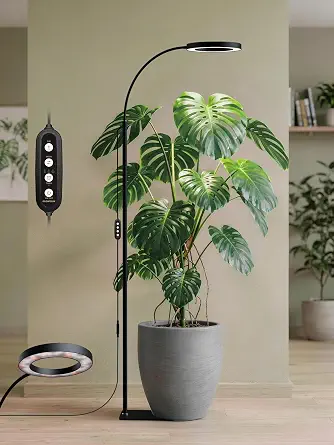 |
| Best Quality Built to a higher standard if you want something more solid | GLOWRIUM G2 Pro 48W Full‑Spectrum LED Floor Grow Light with Adjustable Stand |  |
| Best Value The sweet spot between price and what you get | Hywyimlait Dual-Head Full-Spectrum LED Clip Grow Light (2-Pack) |  |
| Best Budget The cheapest option that still gets the job done reliably | Kullsinss Halo 48-LED Full Spectrum Small Grow Light with Detachable Base |  |
| Highest Rated A top-rated pick with lots of positive feedback | GLOWRIUM Dual-Head 48W Full-Spectrum Tall Grow Light (Freestanding) |  |
| Most Popular A crowd favorite that many people choose with confidence | GooingTop HY-021 6000K Full-Spectrum Clip Grow Light |  |
| Best Seller A high-volume bestseller chosen again and again | Barrina T5 1ft LED Grow Lights, 5000K Full Spectrum — 4-Pack |  |
GLOWRIUM G2 Floor Grow Light with Adjustable Stand

| Light Source Type | LED |
|---|---|
| Additional Features | Adjustable Height, Dimmable, Flexible, Full Spectrum, Timer |
| Wattage | 20 watts |
| Number of Light Sources | 66 |
| Controller Type | Remote Control |
The GLOWRIUM G2 is a floor-style grow lamp designed to give large indoor plants reliable supplemental light without complicated installation. It uses 66 full-spectrum LEDs in a 20W fixture mounted on a three-section aluminum stand so you can raise the lamp to match a Monstera's canopy as it grows. Controls include stepless 10 to 100% dimming across six levels, a 3/9/12-hour auto timer, and a remote plus in-line push-button operation for quick adjustments. Practical features such as a wide base, anti-slip design, 13-foot power cord, and good heat dissipation make it easy to position near living-room plants and keep running safely for long periods. The lamp offers three light modes that combine warm, cool, and red spectrums to support rooting, vegetative growth, and flowering stages. Limitations are that it is meant for indoor use only and has a freestanding footprint, so it takes floor space and is less suitable for very small apartments or for growers who need wall- or ceiling-mounted fixtures.
Best for: Houseplant owners who want a straightforward, durable lamp to give a growing Monstera reliable, adjustable supplemental light without fussing with mounts or complex setups.
Less Ideal for: People with very limited floor space, those who need ceiling- or wall-mounted lighting, or growers who require IP-rated fixtures for humid rooms.
- Adjustable three-section stand lets you raise the light to match Monstera height and changing canopy needs
- Full-spectrum LED array with warm, cool, and red modes supports all growth stages
- Stepless 10–100% dimming and 3/9/12-hour timer add automation and precise intensity control
- Aluminum construction improves heat dissipation for longer runtime and durability
- Long 13-foot power cord and stable anti-slip base make placement flexible and secure
- Freestanding design requires floor space and may not fit very tight or high-shelf setups
- Specified as indoor use only so it is not suitable for humid outdoor or unprotected patio placements
Verdict: A practical, easy-to-use floor grow light that gives Monsteras adjustable full-spectrum illumination as they grow.
GLOWRIUM G2 Pro 48W Full‑Spectrum LED Floor Grow Light with Adjustable Stand

| Light Source Type | LED |
|---|---|
| Additional Features | Adjustable Height, Dimmable, Dual Heads, Full Spectrum, Timer |
| Power Source | Corded Electric |
| Voltage | 24 volts_of_direct_current |
| Mounting Type | Freestanding |
The GLOWRIUM G2 Pro is a freestanding floor grow light designed to provide consistent, full‑spectrum illumination for indoor plants from seedling through flowering. It uses LED strips and a wide lamp head on a four‑section adjustable pole so you can raise or lower the light for short seedlings or taller houseplants. Controls include stepless dimming, three color modes, and a built‑in timer with 3/9/12/16‑hour cycles, which makes daily scheduling simple. Notable extras are the plant care assistant functions such as light measurement, watering reminders, and growth records that help standardize care. The unit runs on a low‑voltage 24V supply and has an aluminum construction with a heavier base for stability, so it feels safer and more durable than cheaper clip lights. Expect good coverage for a small to medium cluster of pots, but the light is a floor lamp form factor so it takes floor space and is not ideal for mounting over wide racks or whole‑room installs. If you need app control or a wall/ceiling mounting solution, look at other form factors instead.
Best for: Buyers who prioritize a reliable, sturdily built grow light that maintains consistent schedules and plant care routines with minimal fuss, especially for small to medium indoor collections.
Less Ideal for: Growers who need ceiling or rack‑mounted fixtures to cover large multi‑shelf setups or who require integrated app/remote control for remote management.
- Full spectrum LED with stepless dimming and three modes to match seedling, vegetative, and flowering stages
- Adjustable four‑section pole and 360° gooseneck for precise positioning and wider coverage
- Built‑in timer and plant care assistant features for automated schedules and care reminders
- Aluminum construction with a heavier base and 24V low‑voltage supply for stable, durable, and safer operation
- Freestanding floor design requires floor space and is less suitable for wide or multi‑tier rack installations
- No explicit app or remote control on this model so remote scheduling options are limited
Verdict: Choose this GLOWRIUM floor grow light if you want a stable, full‑spectrum LED unit with adjustable height, dependable timer functions, and built‑in plant care tools for consistent indoor plant growth.
Hywyimlait Dual-Head Full-Spectrum LED Clip Grow Light (2-Pack)

| Light Source Type | LED |
|---|---|
| Additional Features | Dimmable, Full Spectrum |
| Power Source | Corded Electric |
| Control Method | App |
| Mounting Type | Tabletop |
This Hywyimlait dual-head grow light is designed to supplement sunlight for indoor plants using two adjustable LED bars per unit and strong clamp mounts. Each bar combines red and white LEDs to recreate a sunlike 6000K spectrum and the flexible 360 degree goosenecks let you aim light precisely across multiple pots or a single larger plant. The built-in timer with cycle memory supports 4, 8, 12 or 18-hour daily schedules and 10 dimming levels plus three spectral modes let you tune intensity for seedlings, veg or flowering. Practical touches include USB power, push-button controls, and clamps that open to about 2.76 inches for attaching to shelves or tables. Expect good coverage for small to medium houseplant setups, faster germination and improved flowering when positioned at the recommended distance. Limitations are typical for clip lights: they are best for spot lighting rather than whole-room illumination and light reach falls off with distance, so larger collections will need multiple units or a dedicated panel.
Best for: Buyers who want a practical, adjustable grow light to boost the health of a few houseplants or a small shelf garden and value controllable timers and dimming for routine care.
Less Ideal for: Not a great choice for growers who need to light large stands, full shelves, or multiple mature plants across a broad area in a single fixture.
- Full-spectrum LEDs with red and white diodes to support multiple growth stages
- 10 dimming levels and three spectral modes for precise control
- Cycle memory timer with 4/8/12/18-hour options for hands-off scheduling
- 360° flexible goosenecks and strong clamps for targeted positioning and stable mounting
- Designed for spot or small-area use so it may not evenly light large plant collections
Verdict: A flexible, timer-equipped clip grow light that gives practical, adjustable full-spectrum supplementation for small houseplant collections.
Kullsinss Halo 48-LED Full Spectrum Small Grow Light with Detachable Base

| Number of Light Sources | 48 |
|---|---|
| Wattage | 2.5 watts |
| Voltage | 5 volts |
| Control Method | Remote |
| Mounting Type | Tabletop |
The Kullsinss Halo is a small, budget-friendly full-spectrum LED grow light made for single pots and tabletop displays. It uses 48 high-efficiency LEDs to cover wavelengths from roughly 380 to 760 nm, and offers three color modes plus 10 dimming levels so you can tune light intensity for succulents at different stages. The lamp can be used perched on its detachable base or with a stake inserted into soil, and the telescoping pole adjusts from about 6.5 to 26 inches to change coverage area and distance from plant crowns. A built-in timer with 3, 9, and 12 hour cycles and remote or touch controls make hands-off scheduling easy. Practical benefits include low power draw, good heat dissipation from the aluminum body, and a compact head that fits small pots or crowded shelves. Limitations are that the base is lightweight and may need the pot to stabilize it, the unit is not waterproof so it must stay dry, and it is best suited for single small succulents rather than large groupings or tall specimens.
Best for: Succulent owners seeking an inexpensive, compact lamp to boost light for single small pots on a desk or shelf who prioritize simple controls and energy efficiency.
Less Ideal for: Growers who need to light multiple plants, large rosettes, or tall specimens; users who require weatherproof or outdoor-rated fixtures.
- Full-spectrum LED array suitable for all growth stages of small plants
- Height-adjustable pole (6.5"–26") and 90° adjustable head for flexible positioning
- 10 brightness levels plus 3 color modes and auto timers (3H/9H/12H) for easy control
- Low wattage (2.5W) with aluminum body for efficient operation and heat dissipation
- Lightweight base may not reliably support the unit without placing the pot on it
- Not water resistant so it cannot be used in humid or outdoor environments
Verdict: A low-cost, compact full-spectrum grow light that gives small succulents customizable light and timers without raising energy use.
GLOWRIUM Dual-Head 48W Full-Spectrum Tall Grow Light (Freestanding)

| Wattage | 48 watts |
|---|---|
| Light Source Type | LED |
| Number of Light Sources | 268 |
| Additional Features | Adjustable Arm, Adjustable Height, Dimmable, Full Spectrum, Timer |
| Power Source | Corded Electric |
The GLOWRIUM tall dual-head grow light is a freestanding LED lamp built to provide reliable, year-round supplemental light for indoor plants. It offers three preset spectrum modes for seedling, vegetative, and flowering stages and 268 LEDs driven by 48 watts for broad, efficient coverage. The pole extends to roughly 71 inches and each head has a 360° flexible gooseneck so you can direct light to multiple plants or taller specimens. The inline controller gives six preset brightness levels plus press-and-hold stepless dimming and selectable timers (3, 9, 12, 16 hours) so you can automate daily light cycles during the short days of winter. Practical advantages include a heavy iron base and metal pole for stability, a high light-transmitting cover over the LEDs, and claimed long life and energy efficiency. Important limits are that it is corded only and not water resistant, so it belongs indoors, and setup requires a small footprint for the base. For someone needing dependable, adjustable indoor lighting through winter, this model covers the essentials without complicated smart features.
Best for: Buyers who want a dependable, no-frills supplemental light that runs predictable timers and delivers adjustable coverage for winter plant care without needing app setup or complicated controls.
Less Ideal for: Growers who need outdoor-safe fixtures, integrated smart-home control, or a compact clip-on lamp for very small spaces should look elsewhere.
- Full-spectrum output with dedicated seedling, vegetative and flowering modes
- Adjustable height and dual 360° gooseneck heads for targeted coverage
- Built-in timers and multiple dimming options for automated daily schedules
- Sturdy metal pole and iron base improve stability for taller plants
- High LED count (268) and energy-efficient 48W power draw for sustained use
- Corded freestanding design is not water resistant so unsuitable for humid outdoor areas
- No smart app control for remote scheduling or grouping with other lights
Verdict: A sturdy, easy-to-use full-spectrum floor grow light that automates reliable winter lighting for indoor plants without extra smart features.
GooingTop HY-021 6000K Full-Spectrum Clip Grow Light

| Power Source | Corded Electric |
|---|---|
| Color Temperature | 6000 Kelvin |
| Light Output Maximum | 2500 lumens |
| Light Source Special Features | Dimmable |
| Number of Light Sources | 84 |
This GooingTop HY-021 is a compact clip-on grow light built for small houseplants, seedlings and shelf gardens. It uses 84 LEDs (white plus deep red) to deliver a 6000K full-spectrum output intended to mimic midday sun, with a high color-rendering output that also makes it pleasant as a reading lamp. Two flexible gooseneck heads and a strong clamp let you aim light precisely over pots and seed trays, while the attached remote provides 50%/100% dim levels and repeating timers at 4, 8 or 12 hours for hands-off scheduling. Practical benefits include low power draw (listed as roughly 10 W LED draw), a claimed 1 to 2 square meter coverage for seedlings, and an included timer that simplifies day/night cycles. Limitations are its design for small setups rather than large grow racks and the clip mounting limits placement compared with freestanding fixtures. The unit also relies on the corded remote instead of a smartphone app and the lifespan claim is typical of LEDs but not independently verifiable from the listing.
Best for: Buyers who want a simple, low-power, plug-and-play grow light to boost seedlings and a few houseplants on a desk or shelf and who value an easy-to-use timer and adjustable brightness.
Less Ideal for: Growers planning multi-shelf installations, larger vegetable grows, or who need networked or app-based control should consider larger bar lights or fixtures designed for commercial racks.
- Full-spectrum 6000K output with added 660 nm red LEDs to support vegetative growth and flowering
- Attached remote with dimming (50%/100%) and repeat timer settings (4/8/12 hours) for easy scheduling
- Flexible dual goosenecks and strong clamp enable precise positioning over small pots and seed trays
- High reported color rendering for comfortable viewing and accurate plant color assessment
- Low electrical draw around 10 W while covering small growing areas
- Clip-mount design and stated 1–2 m² coverage make it better suited to individual plants or small trays rather than large multi-shelf setups
- No smart app or wireless control option; remote is cord-attached which limits placement flexibility
Verdict: A compact, easy-to-use clip grow light that delivers full-spectrum light and convenient timer/dim controls for small indoor plant setups.
Barrina T5 1ft LED Grow Lights, 5000K Full Spectrum — 4-Pack

| Wattage | 5W |
|---|---|
| Color temperature | 5000K |
| Linkable | Link up to 16 lights |
| Control | Separate on/off switches |
The Barrina T5 1ft grow light 4-pack provides straightforward, energy-efficient supplemental lighting for seedlings, vegetative plants, and flowering houseplants. Each slim fixture produces a 5000K full spectrum output at 5W and includes an on/off switch so you can control lights individually or run them together. The lights are plug-and-play and come with power cords, connector cables, clips, double-sided tape, and cable ties for quick installation on shelves, racks, or small indoor shelving units. Because fixtures link up to 16 units, you can scale a multi-shelf setup without extra wiring. Practical benefits include low power draw, compact footprint that fits tight spaces, and a high PPFD-focused output that supports photosynthesis. Limitations are that these are short 1-foot fixtures intended for close-proximity use rather than lighting large rooms, the mounting relies on adhesive and clips rather than a heavy-duty mounting system, and they are not magnetic, which reduces some placement options. For growers who want an easy, modular lighting solution for small indoor setups, these deliver reliable light for everyday use.
Best for: Buyers who want a compact, energy-efficient grow-light system to brighten shelves or small indoor racks and who value easy installation and scalable setups.
Less Ideal for: Growers who need to light large rooms, tall plants, or wide benches should choose longer or higher-output fixtures instead.
- Full-spectrum 5000K output suitable for seedlings through flowering
- Individual on/off switches for each fixture allow flexible light scheduling
- Linkable design supports up to 16 lights for easy expansion
- Low power consumption (5W per 1ft fixture) reduces energy use
- Includes basic installation kit (power cords, connectors, clips, tape, cable ties)
- Short 1ft length limits coverage area per fixture
- Mounting depends on adhesive and clips rather than more secure hardware
- Not magnetic, reducing placement options on metal surfaces
Verdict: A compact, low-energy, and linkable 1ft grow light kit ideal for efficiently lighting shelves and small indoor plant setups.
Choosing the Right Houseplant Grow Light: Key Factors to Consider
Spectrum and Light Quality
Spectrum matters because plants use different wavelengths for leaf growth, stem elongation, and flowering. A balanced spectrum that includes blue and red peaks with a reasonable amount of green and far-red produces fuller foliage and better color. Grow lights marketed with plant-focused spectrums should provide a manufacturer PAR chart or at least a labeled spectrum so you can compare how much usable light plants receive at common hanging heights.
For most houseplants, a broad full-spectrum LED or a targeted white-plus-red configuration works well. Seedlings and succulents often benefit from stronger blue light to prevent stretching, while plants that flower indoors may respond to increased red output. Avoid fixtures that list only wattage without any spectral information because wattage alone does not indicate usefulness to plants.
Light Intensity and Coverage
Intensity determines which plants you can support and how far above plants the fixture must hang. Intensity is often expressed as PPFD or PAR; higher values allow stronger-light plants to thrive but can be overkill for shade-loving species. Measure or check the manufacturer charts for usable intensity at 6, 12, and 18 inches to match the fixture to your pot layout.
Coverage uniformity is equally important. A high-intensity light that creates hot spots and dark zones forces frequent rotating or repositioning of plants. Look for fixtures with diffusers, multiple diodes, or reflector designs that spread light evenly across the intended footprint so leaves all receive the same usable light.
Energy Use and Heat Management
LED fixtures vary widely in electrical efficiency. Better-performing units produce more plant-usable light per watt, which reduces long-term electricity costs for daily run times. Check rated power draw and, when available, photosynthetic photon efficacy (PPE) to estimate running costs.
Heat management affects both fixture longevity and plant safety. LEDs give off less waste heat than older lamp types, but poorly ventilated fixtures or compact units can still run hot. Good heat sinks and thermal designs protect diodes and keep leaves from burning when fixtures are hung close.
Build Quality and Mounting Options
Indoor environments vary from dry living rooms to humid bathrooms or bathrooms used as plant humidifiers. Corrosion-resistant housings and sealed electronics survive humidity better. Strong mounting hardware and adjustable hangers increase installation flexibility for shelves, window frames, and grow tents.
Consider the fixture footprint relative to your plant groupings. Slim bars and light strips fit narrow shelves, while panels or larger arrays work better for wide plant benches. Ease of cleaning is also important because dust can reduce light output over time, so accessible surfaces and simple assemblies are preferable.
Controls, Timers, and Ease of Use
Timable operation and dimming matter because different plant stages and species need variable daily light integrals. Built-in timers or compatibility with external timers lets you automate day-length without manual switching. Dimming helps fine-tune intensity without changing hanging height, which is useful for adjusting light as plants grow.
User-friendly controls, clear labeling, and reliable electronics make daily use straightforward. Wireless or smart controls add convenience but can introduce complexity; for many gardeners, straightforward, tactile controls are the most reliable option.
Matching a Fixture to Your Room and Plant Types
Start by assessing the light needs of the plants you want to grow. Low-light houseplants tolerate lower PPFD and can sit farther from a modest fixture, while high-light succulents and bloomers need higher PPFD and either a closer mount or a more powerful panel. Consider ceiling height, shelf depth, and the amount of natural light already available.
For compact spaces, choose slim bar lights or short panels that fit near windowsills and can be hung low without dominating the room. For a grouped display of multiple pots, wider panels with even coverage reduce the need to rotate plants frequently. Think about how you will arrange pots so the fixture footprint matches the plant layout and reduces wasted light.
- Measure shelf depth and ceiling height before selecting fixture dimensions
- Group plants by light need to make efficient use of a single fixture
- Account for future growth so you can raise the light without losing coverage
Placement and Mounting Best Practices
Position lights to deliver the intended intensity without scorching leaves. For many indoor species, hanging lights 6 to 18 inches above the canopy provides workable PPFD depending on fixture power. Use hangers or adjustable ratchets to simplify height changes as plants grow.
Ensure mounting hardware is rated for the fixture weight and compatible with your surface. Shelves, tension rods, or bracket systems each require different supports. Think about cable routing and keep cords away from water sources.
- Start high and move the fixture down in stages to avoid accidental leaf burn
- Use adjustable hangers to fine-tune distance as plants respond
- Secure electrical connections and keep controllers away from moisture
Timing and Light Schedules for Indoor Plants
Most houseplants do well with 10 to 14 hours of light per day, but specific needs vary. Succulents and sun lovers often need the higher end of that range, while many tropical shade plants thrive with shorter daily exposure. Combine natural sunlight and artificial light to approximate a plant-appropriate daily light integral.
Use timers to maintain consistent day-length and reduce stress from irregular lighting. Dimming during early morning or late evening can mimic natural dawn and dusk and reduce shock when lights switch on at full intensity.
- Set timers to maintain consistent schedules for seeding and vegetative growth
- Adjust duration seasonally if natural daylight hours change significantly
- Use dimming to avoid sudden light transitions for sensitive plants
Maintenance and Longevity of Grow Lights
Keep fixtures dust-free and check vents or heat sinks periodically. Dust accumulation on lenses reduces usable light and can create hotter operating temperatures. Simple wipes with a soft cloth are usually sufficient when the fixture is powered off.
Inspect hanging hardware, cord insulation, and control switches regularly. LEDs have long lifespans but poor ventilation or water exposure shortens service life. Replace worn mounting straps and ensure any adhesive or clip mounts remain secure.
- Clean lenses every few months or as dust accumulates
- Monitor fixture temperature during the first few weeks of continuous use
- Replace damaged cords and maintain strain relief on power connections
Using Grow Lights with Mixed Plant Collections
When you have plants with different light requirements, zoning and supplemental fixtures work well. Place sun-loving plants directly under the highest-intensity section of a panel and move shade-tolerant species to the periphery or onto a lower-power bar.
Consider using multiple fixtures with independent controls so you can vary intensity and daily schedule by zone. Portable clamp lights or small bars are useful for filling in darker corners without reinstalling the main fixture.
- Create zones based on plant light needs rather than pot arrangement
- Use small supplemental lights for isolated high-light plants
- Group plants by watering and humidity needs as well to simplify care
How We Chose the Best Houseplant Grow Light
We prioritized real-world gardening needs when narrowing the list of Houseplant Grow Lights. Our selection filters emphasized usable light characteristics rather than raw wattage, including spectrum balance for foliage and flowering, usable PAR or PPFD at typical hanging heights, and evenness of coverage across a common pot layout. Energy efficiency and thermal management were next: units that convert power into usable plant light with minimal heat buildup rate higher for safety and lower ongoing running costs. Build quality and mounting options were assessed to ensure fixtures will last in humid indoor environments and fit common setups such as shelves, hanging hooks, and grow tents. Usability factors such as dimming or programmable timers and clear control interfaces were also included because they affect day-to-day operation. We excluded devices designed only for seedlings or large horticulture rigs; the list focuses on fixtures practical for typical houseplant enthusiasts and indoor gardeners. Evaluation dimensions used in scoring reflect these priorities: light spectrum and intensity, coverage uniformity, energy and heat performance, build and mounting options, and user controls.
FAQ
How high should I hang a grow light for common houseplants?
Height depends on fixture output and plant type. Many houseplants do well with lights 6 to 18 inches above the canopy. Start higher and gradually lower the light while watching for stretch or leaf burn.
Can I run grow lights all night for plants?
Running lights continuously is usually unnecessary and can disrupt plant sleep cycles. Most species need a dark period. Aim for 10 to 14 hours of light per 24-hour period, adjusting by species and growth stage.
Will a grow light replace natural sunlight completely?
Grow lights can provide the light plants need, but natural sunlight also offers broad spectrum and intensity often hard to match cheaply. Using grow lights in combination with available daylight gives the best results in many indoor situations.
Do I need a timer or dimmer for a houseplant light?
Timers simplify consistent schedules and are highly recommended. Dimmers help fine-tune intensity without changing height and are useful when multiple species share a fixture. Both features increase convenience and control.
How long do LED grow lights typically last?
LEDs generally last many years under normal use, but longevity depends on thermal management and run hours. Proper ventilation and avoiding prolonged high-heat operation extend life. Manufacturer life ratings vary, so check thermal design rather than just rated hours.
Are special grow lights needed for seedlings versus mature plants?
Seedlings often need higher blue light and lower overall intensity to prevent stretching, while mature plants may require stronger and broader light. Adjustable intensity or separate seedling fixtures can help you meet different stage needs.
Final Verdict
Choose a Houseplant Grow Light based on the plants you grow, the space available, and how much control you want over light schedules. Prioritize spectrum and usable intensity for the species you keep, then match coverage footprint and mounting style to your shelf or display. Consider energy efficiency and thermal design to lower running costs and protect plants. Decide whether you need timers or dimming and whether a single panel or multiple zone fixtures fit your layout. Focusing on those tradeoffs will help you pick a fixture that supports healthy growth and fits your indoor gardening routine.
