

Note: This article contains affiliate links. If you click on these links and make a purchase, I may earn a small commission at no extra cost to you. This helps support my research and content. Read my full affiliate disclosure here.
If you want long-lasting weed suppression without constantly pulling or spraying, choosing the right landscape fabric for weeds changes the work you do in beds, borders, and around shrubs. The right fabric should block sunlight to prevent seed germination while still allowing water and fertilizer to reach roots and letting the soil breathe. This guide covers seven shortlisted landscape fabrics suited specifically for suppressing weeds. We evaluate durability, water permeability, UV resistance, and installation practicality so you can pick a fabric that fits your garden conditions and maintenance goals.
Top Picks at a Glance
| Best Overall The best all-around choice for most situations | EXTRAEASY Heavy-Duty Woven Landscape Fabric, 4 ft x 300 ft (3.2 oz) |  |
| Best Quality Built to a higher standard if you want something more solid | VEVOR 4 x 100 ft Heavy-Duty 5.8 oz Woven Weed Barrier Fabric |  |
| Best Value The sweet spot between price and what you get | Winisok 3.2oz Weed Barrier Landscape Fabric, 4 ft x 100 ft (2 Pack, 4 ft x 50 ft) |  |
| Best Budget The cheapest option that still gets the job done reliably | Groweco Heavy-Duty Weed Barrier Landscape Fabric, 1.4 ft x 50 ft |  |
| Highest Rated A top-rated pick with lots of positive feedback | DeWitt Earthmat Woven Landscape Fabric, 4 x 100 ft |  |
| Most Popular A crowd favorite that many people choose with confidence | LAVEVE Heavy Duty Weed Barrier Landscape Fabric, 4 ft x 100 ft (two 4×50 ft rolls) |  |
| Best Seller A high-volume bestseller chosen again and again | LGJIAOJIAO 3.2 oz Heavy-Duty Weed Barrier Landscape Fabric (3 ft x 50 ft) |  |
EXTRAEASY Heavy-Duty Woven Landscape Fabric, 4 ft x 300 ft (3.2 oz)

| Material | Woven PP |
|---|---|
| Weight | 3.2 oz |
| Covered area | 4 ft x 300 ft (1200 sq. ft.) |
This EXTRAEASY landscape fabric is a heavy-duty woven polypropylene weed barrier sold as a 4 ft by 300 ft roll that covers about 1,200 sq ft. It is meant to be laid over soil and held with staples, then covered with mulch, gravel, or wood chips. The 3.2 oz woven construction blocks most sunlight to suppress weeds while remaining permeable to water, air, and nutrients so plant roots can still breathe and receive moisture. In practice the fabric is easy to cut to shape and overlaps cleanly for full coverage; when protected by mulch it can extend service life to several years. Its tear resistance and tolerance of foot traffic make it suitable for high-use paths, driveways, and large beds. Limitations are that it still requires proper edge finishing and secure fastening to prevent lifting, and like all woven fabrics it can eventually allow fine weed roots through if soil and debris accumulate on top over time.
Best for: Buyers who want a durable, no-nonsense weed barrier for large beds, paths, or driveways and value longevity and ease of installation over decorative solutions.
Less Ideal for: Those looking for a decorative surface layer on its own or gardeners who plan frequent deep soil cultivation and turnover should consider alternatives that are easier to move or remove.
- Heavy-duty 3.2 oz woven polypropylene construction for good tear resistance
- Allows water, air, and nutrients to pass while blocking most sunlight to suppress weeds
- Large 4 ft x 300 ft roll covers about 1,200 sq ft for fewer seams and faster coverage
- Holds up under mulch, gravel, and light foot traffic for multi-year use when installed correctly
- Requires staples and proper overlapping/edge finishing to avoid lifting in wind or traffic
- Does not permanently eliminate deep or persistent weeds that can grow through accumulated soil and debris
Verdict: Choose this fabric when you need a robust, large-roll weed barrier that blocks light while letting water and air through for long-lasting landscape weed control.
VEVOR 4 x 100 ft Heavy-Duty 5.8 oz Woven Weed Barrier Fabric

| Material weight | 5.8 oz/sq yd |
|---|---|
| Construction | Woven + needle punched (dual layer) |
| Roll length | 4 x 100 ft |
This VEVOR weed barrier is a performance-focused landscape fabric built as a dual-layer construction: woven material bonded to a needle-punched nonwoven to give 5.8 oz/sq yd density and tear resistance. It is sold as a 4 ft by 100 ft roll that unrolls easily for beds, pathways, and under gravel or mulch. The fabric’s black color and high density provide strong shading to suppress weeds while still permitting water and air flow so soil moisture and root respiration are preserved. Practical details include ultrasonic-cut smooth edges and printed guide lines for straight cuts and plant spacing, and the material is simple to trim and secure with staples. Expect long-lasting weed suppression in heavy-use areas, but you will need to fix it with landscape staples and cut planting holes carefully so roots have room. It is not a decorative surface so it is typically covered with mulch or stone, and removing entrenched weeds under an old installation can be labor intensive.
Best for: Gardeners and landscapers who prioritize durable, high-performance weed suppression in vegetable beds, pathways, or under gravel and mulch and want a fabric that withstands heavy use.
Less Ideal for: People seeking a decorative standalone groundcover or an easy seasonal use option that will be frequently moved or removed.
- Dual-layer woven and needle-punched construction for increased tear resistance
- High density (5.8 oz/sq yd) provides strong light blocking to reduce weed growth
- Breathable design passes water and air to maintain soil moisture and health
- Ultrasonically cut edges and printed guide lines for accurate, easy installation
- Requires additional staples or anchors for secure long-term installation
- Visible and functional only when covered by mulch, gravel, or fabric-friendly groundcover
Verdict: Choose this fabric when you need a heavy-duty, high-density weed barrier that delivers long-lasting weed suppression while allowing water and air to pass through.
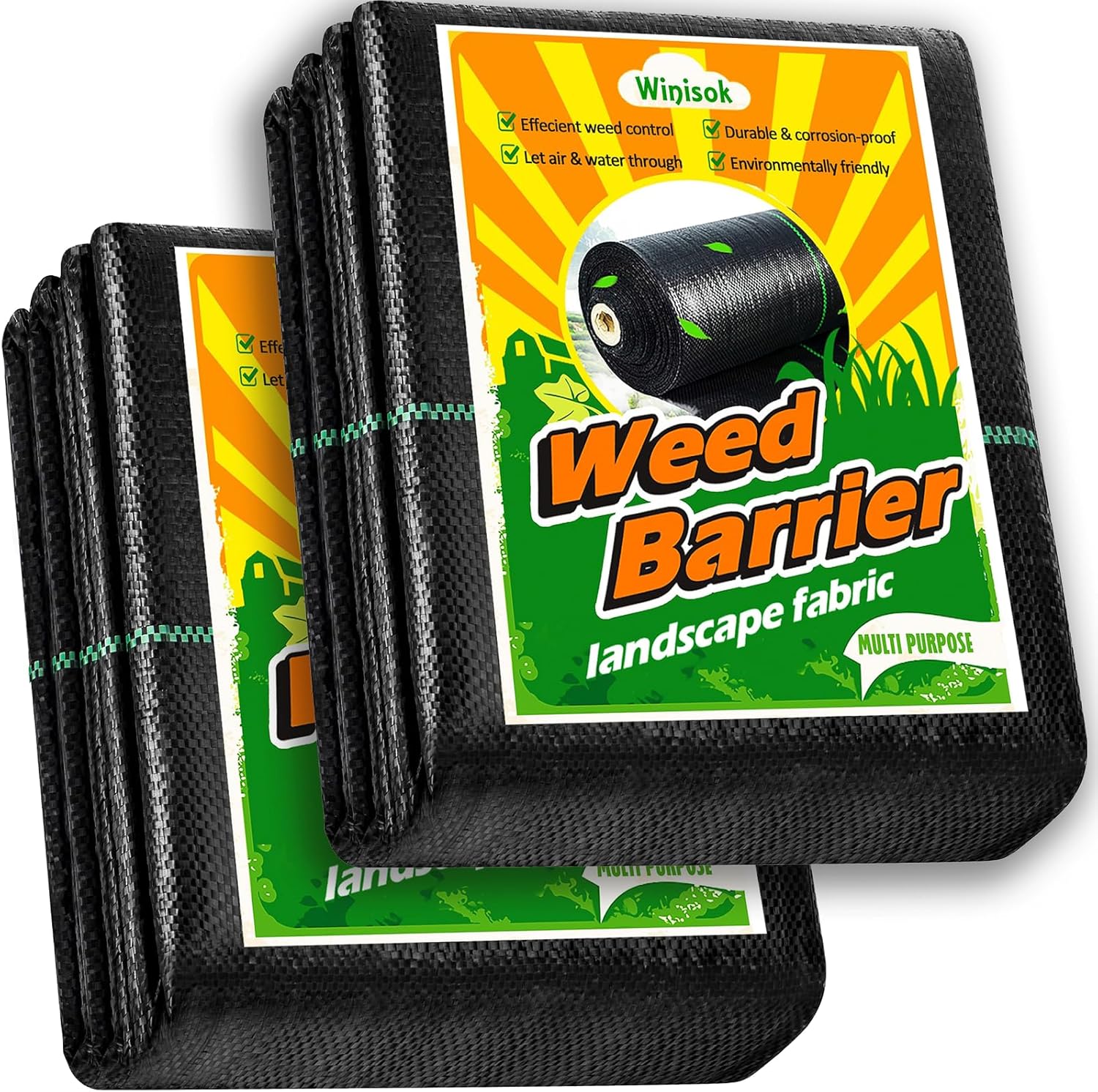
Winisok 3.2oz Weed Barrier Landscape Fabric, 4 ft x 100 ft (2 Pack, 4 ft x 50 ft)
| Manufacturer | Winisok |
|---|---|
| Item model number | 3.2 OZ weed farbic 4FTx100ft |
| Item Weight | 7.37 pounds |
This Winisok weed barrier fabric is a heavy-duty, tightly woven polypropylene cloth meant to suppress weeds while keeping soil breathable. Typical use is laying the fabric over prepared beds, cutting planting holes or slits where desired, and covering it with mulch or gravel to improve appearance and longevity. Notable features include UV protection for extended outdoor life, green planting guide stripes to simplify alignment, and high permeability so irrigation and rainfall pass through to roots. The material is described as tear-resistant and intended to provide several years of service when installed correctly. Practical benefits are reduced hand-weeding, less herbicide use, and clearer planting rows for vegetables or ornamentals. Important limitations are that it still requires correct installation and mulching to prevent surface weeds, it is not a permanent barrier for deep-rooted or aggressive perennials, and visible fabric edges can show if not well covered. Overall it is a straightforward, durable option for homeowners who want a low-maintenance way to manage weeds in garden beds and landscape projects.
Best for: Gardeners who prioritize efficient, low-maintenance weed control across beds and paths and who want a durable fabric that simplifies planting layout and irrigation.
Less Ideal for: People seeking a permanent solution for invasive, deep-rooted weeds or those who prefer completely fabric-free, no-mulch planting methods.
- Tightly woven polypropylene construction reduces weed penetration while remaining tear resistant
- High permeability lets water and air reach soil and irrigation systems
- UV protection increases outdoor lifespan for multi-year use
- Green planting guide stripes make alignment and cutting for plantings quicker
- Requires proper mulching and edge coverage or the fabric can become visible
- Not effective as a permanent barrier against aggressive perennial roots
Verdict: Choose this fabric if you want a durable, breathable landscape cloth that simplifies planting and cuts routine weeding for multi-year garden upkeep.
Groweco Heavy-Duty Weed Barrier Landscape Fabric, 1.4 ft x 50 ft

| Material | Polypropylene (PP) |
|---|---|
| Weight | 3.2 OZ |
| Available widths | 1.4FT, 2.8FT, 6FT, 15FT |
| Available lengths | 50FT, 100FT |
| Intended use | Landscape weed barrier, underlayment for artificial grass |
The Groweco heavy-duty weed barrier is a woven polypropylene landscape fabric intended as a low-maintenance ground cover under mulch, gravel, artificial turf, or around planting beds. It comes with printed alignment lines to make straight cuts and installation easier and is sold in multiple widths and lengths to suit small garden runs or longer pathways. The fabric’s 3.2 oz weight gives it noticeable tear resistance for routine foot traffic and tool use, while its woven construction still permits water and air to reach the soil so plants do not suffocate. In practice it reduces weed germination by blocking light to seeds and simplifies mulching jobs, speeding up maintenance. Limitations are that it must be trimmed around plants and anchored properly to avoid movement, and it will eventually degrade under heavy UV exposure so it is better for mulched or covered applications than exposed decorative beds. For a budget-focused ground cover solution this fabric balances durability and breathability for many common garden uses.
Best for: Gardeners who need an inexpensive, practical ground cover to reduce weeding and speed up maintenance in beds, paths, or under artificial turf. Good for homeowners prioritizing straightforward installation and low upfront cost.
Less Ideal for: Those seeking a permanent, fully UV-stable solution for exposed driveways or decorative beds should consider heavier geotextiles or hard landscaping alternatives.
- Woven polypropylene construction blocks weed germination while allowing water and air through
- Printed green guide lines simplify alignment and cutting during installation
- 3.2 oz weight gives improved tear resistance for routine garden use
- Versatile for use under mulch, gravel, artificial turf, walkways and vegetable beds
- Will eventually degrade with prolonged UV exposure if left uncovered
- Requires edging or staples and trimming around existing plants during installation
Verdict: A cost-conscious, heavy-duty woven fabric that reliably blocks weeds while letting water and air through, making it a practical choice for everyday garden ground cover.
DeWitt Earthmat Woven Landscape Fabric, 4 x 100 ft

| Material | Woven polypropylene |
|---|---|
| Fabric weight | 3.2 oz |
| Permeability | Allows water and dissolved nutrients through |
| Roll size | 4 x 100 ft |
The DeWitt Earthmat is a heavy-duty woven landscape fabric intended for long-term weed suppression in beds, paths, and driveways. Made from 3.2 oz woven polypropylene it resists tearing and has high tensile strength so it tolerates foot traffic, wheelbarrows, and repeated outdoor exposure. The fabric is permeable, so rain and dissolved nutrients pass to the soil while sunlight is blocked to inhibit weed growth. It comes as a 4 by 100 foot roll that you cut with ordinary shears to fit around flower beds, tree rings, and irregular edges. That roll size suits large landscaping jobs and long driveways and the woven construction typically lays flat and stays in place when pinned. Limitations are that it must be overlapped and secured properly to prevent weeds at seams, and like most woven fabrics it will slow but not eliminate deeply rooted perennial weeds without additional prep or herbicide treatment.
Best for: Gardeners and property owners who prioritize a long-lasting, low-maintenance barrier to reduce weeding on large beds, paths, or driveways and who plan to install a durable, professional-feeling solution.
Less Ideal for: Those looking for a temporary or decorative groundcover solution or gardeners who prefer organic/no-fabric methods for weed control may prefer alternatives.
- Woven 3.2 oz polypropylene construction for strong tear resistance and durability
- Permeable design allows water and nutrients to reach roots while blocking light to weeds
- Large 4 x 100 ft roll covers extensive areas without many seams
- Cuts easily with ordinary shears for clean installation around irregular edges
- Requires proper overlap and anchoring to prevent weed growth at seams or edges
Verdict: Choose this heavy-duty woven fabric when you need a durable, long-lasting weed barrier that tolerates foot traffic and large landscaping projects.
LAVEVE Heavy Duty Weed Barrier Landscape Fabric, 4 ft x 100 ft (two 4×50 ft rolls)

| Material | Polypropylene |
|---|---|
| Permeability | Breathable, allows water and air flow |
| UV resistance | Resistant to sun exposure |
| Package | Two rolls totaling 4 ft x 100 ft |
This LAVEVE landscape fabric is a heavy-duty woven polypropylene ground cover intended to suppress weeds while letting moisture and air reach the soil. It ships as two 4 ft x 50 ft rolls (total 4 ft x 100 ft) with printed guide lines that make cutting and alignment straightforward. In practice it is laid over prepared beds, cut for plantings, and secured with U-shaped pegs; the fabric’s permeability helps reduce erosion and allows irrigation to penetrate. The material is UV-resistant and built for typical garden uses such as flower beds, vegetable plots, gravel paths, and sidewalks. Because it is a woven polypropylene, it is sturdier than thin nonwoven mats and stands up to foot traffic when covered with mulch or gravel. Limitations to expect are that surface-seeded weeds or seeds blown onto mulch can still germinate on top, and long-term burial or heavy soil compaction can reduce effectiveness; occasional maintenance and proper installation around plants are required to keep beds weed-free.
Best for: Gardeners who want a durable, breathable ground cover to reduce routine weeding and tidy beds across medium-length runs of pathway or planting area, and who value a product with solid usage feedback.
Less Ideal for: People seeking a permanent, maintenance-free solution or those who prefer chemical weed control methods; also not the best choice for beds where frequent deep digging or planting changes are required.
- Woven polypropylene construction provides durable, tear-resistant coverage
- Permeable design allows water and air to reach soil, reducing erosion
- Printed guide lines make measuring and cutting easier during installation
- Suitable for multiple applications including beds, paths, and under gravel
- Comes as two rolls totaling 4 ft x 100 ft for extended coverage
- Does not prevent weeds that germinate in mulch or on top of the fabric
- Requires proper securing and occasional maintenance to stay effective
Verdict: A sturdy, breathable woven fabric that gives reliable, easy-to-install weed suppression for medium garden beds and paths backed by strong user approval.
LGJIAOJIAO 3.2 oz Heavy-Duty Weed Barrier Landscape Fabric (3 ft x 50 ft)

| Material | Polypropylene |
|---|---|
| Fabric weight | 3.2 oz |
| Available roll sizes | 3 x 50 ft (also other widths/lengths) |
This LGJIAOJIAO landscape fabric is a straightforward weed-control ground cover intended for flower beds, vegetable plots, pathways, and driveway underlayment. Made from 3.2 oz polypropylene, the woven material resists tearing and holds up to foot and occasional vehicle traffic when used as a stabilizing underlayer. It is typically rolled out over prepared soil, cut for plant holes, secured with pins or staples, and covered with mulch or gravel to hide the fabric and improve aesthetics. The fabric lets water and nutrients pass through while suppressing weeds by limiting light, and its heavier weight compared with lightweight options means it lasts longer before needing replacement. Expect easier seasonal maintenance and fewer weeds around plantings, but installation requires some cutting and anchoring work and it is not a permanent barrier for deep-rooted perennials that can work through or around the fabric over time. Also the darker woven surface can be visible through thin mulches unless covered adequately.
Best for: Buyers who want a reliable, heavier-weight fabric to reduce routine weeding and prefer products with established customer feedback and practical, multi-use performance.
Less Ideal for: If you want a zero-installation organic approach or need a temporary surface cover for seasonal planting beds, lighter-weight or biodegradable options may be a better fit.
- Heavy 3.2 oz polypropylene weave offers good tear resistance and longer lifespan than thin fabrics
- Allows water and nutrients to pass through so planted beds remain irrigated
- Versatile for beds, paths, vegetable gardens and as a driveway underlayment
- Comes in roll form that can be cut to fit irregular beds and layouts
- Requires cutting and securing during installation which adds labor
- May become visible under thin mulch and is less effective against deep-rooted weeds over many seasons
Verdict: Choose this heavier 3.2 oz woven polypropylene fabric if you want a durable, proven ground cover that substantially cuts down on hand-weeding across beds and paths.
Choosing the Right Landscape Fabric for Weeds: Key Factors to Consider
UV Resistance and Material Stabilizers
Landscape fabrics are exposed to sunlight and temperature swings. UV-resistant fibers or stabilizing treatments slow breakdown, which prevents the fabric from becoming brittle and tearing. A fabric with strong UV protection will hold up longer under direct sun and on south- or west-facing beds, reducing replacement frequency.
Without UV resistance, seams and cut edges weaken first, creating gaps where weeds can push through. For areas with extended sun exposure, prioritize fabrics that specify UV stabilization to maintain weed suppression for multiple seasons.
Water Permeability and Drainage
Blocking light is only part of weed control; the fabric must also let water and soluble nutrients reach plant roots. Permeable woven or nonwoven fabrics allow irrigation, rain, and fertilizer to pass through while preventing standing water on the surface. Poor permeability causes runoff during heavy rain and can lead to dry spots under mulch where plants struggle.
Check the fabric's flow rate or manufacturer guidance for use in planted beds versus under rock or pavers. For vegetable beds or shrub rows, choose fabrics that balance weed blocking with good drainage to keep soil biology active and roots healthy.
Tear Resistance and Puncture Strength
A fabric's strength determines how it performs during installation and over time. Thin, low-strength fabrics tear when staples are driven in, when perennial roots grow, or when tools accidentally catch the edge. Tears create openings that let light and weed seeds through, negating the fabric's purpose.
Look for fabrics with higher puncture and tear ratings if you expect heavy foot traffic, frequent planting changes, gravel installation on top, or use around woody roots. Stronger fabrics are easier to secure and maintain intact along edges and seams.
Edge Holding and Fastening Compatibility
Landscape fabric must be held taut and anchored so wind, frost heave, and garden activity do not lift it. Fabrics that grip staples or landscape pins without tearing make installation faster and reduce maintenance. The way edges behave when folded, trimmed, or overlapped affects how well seams resist weed intrusion.
Consider whether the fabric accepts common fasteners and works with your chosen edging, mulch, or paving approach. Fabrics that slip or curl at cut edges require more pins and rework, increasing labor over the season.
Longevity and Expected Service Life
How long a fabric lasts affects long-term cost and garden disruption. Longevity depends on material, UV protection, and installation quality. Some fabrics are designed for several years of use, others for a single season.
Factor in expected exposure and whether you plan to dig and replant often. A longer-lasting fabric is worth the extra effort when used in permanent beds, while short-term options can make sense for temporary projects or seasonal plantings.
Compatibility With Mulch and Planting Methods
Landscape fabric interacts with the surface material you place above it. Organic mulches break down and sink over time, which can reduce fabric effectiveness if seeds find soil pockets on top. Rock, gravel, or rubber mulches behave differently and can cause heat buildup that affects plant roots.
Think about how the fabric will be used with your mulch choice and planting style. Perennials, bulbs, and closely spaced annuals require more careful cutting and staking to avoid gaps. Choose a fabric that supports your maintenance routine and integrates with your planting method to minimize regrowth.
Preparing the Bed and Soil Before Laying Fabric
Proper bed preparation extends fabric life and improves weed control. Remove perennial roots, tall grasses, and large stones, then loosen the topsoil to a few inches where you will plant. A level, debris-free surface prevents punctures and lumps that stress the fabric.
- Pull or dig out deep-rooted weeds before installation.
- Rake the surface smooth and remove rocks that can puncture the fabric.
- Add a thin layer of compost or soil amendments before placing fabric if needed for planting health.
Cutting and Planting Through Fabric
Cutting holes or slits for plants is a common point of failure if done improperly. Make clean, fitted openings that minimize exposed soil and avoid creating long cracks that widen under mulch. For clustered plantings, use X-shaped cuts and fold the fabric back to create a snug collar around stems.
- Measure and mark planting spots before cutting.
- Avoid large flaps that invite weed seeds to accumulate in exposed soil.
- Fold fabric edges into the planting hole neatly so the root zone stays covered.
Using Fabric With Different Mulches
Natural and inorganic mulches change how fabric performs. Organic mulches like wood chips decompose and lower light penetration at the surface, but they also settle and expose soil over time. Rock or gravel keeps fabric flatter and reduces the need for reapplication, but it can increase heat at the soil surface and should be used with plants that tolerate warmer root zones.
- Apply a consistent mulch depth to limit surface seed contact with soil.
- Refresh organic mulch as it decomposes to maintain a protective layer over the fabric.
- If using stone over fabric, add a weed barrier grid or additional pinning for stability.
Common Installation Mistakes to Avoid
Stretching fabric too tight can cause tears when the ground freezes and thaws. Conversely, leaving fabric loose allows wind to lift edges and deposit seeds beneath overlaps. Overlapping pieces incorrectly creates channels for weed growth along seams. Use the recommended overlap width and secure the fabric with enough pins to keep it stable without tension.
- Do not use non-permeable plastic in planted beds; it blocks water.
- Trim excess fabric flush with edging to avoid catch points for tools.
- Avoid exposing cut edges to sun where possible; tuck or cover them with mulch.
Maintaining Fabric Over Seasons
Regular checks will prolong the fabric's utility. Inspect seams and edges annually, replace or patch torn sections, and refresh mulch to cover fabric and reduce seed fall. When planting new perennials or dividing clumps, cut carefully and reseal any openings to preserve the weed barrier.
- Check anchor points after heavy weather and re-pin lifted areas.
- Patch small tears with overlapping fabric and secure with pins.
- Plan for fabric replacement on a schedule that matches its rated UV and longevity specifications.
How We Chose the Best Landscape Fabric for Weeds
We focused on attributes that directly affect a fabric's ability to prevent weeds and keep plantings healthy. Our editorial filters prioritized material strength and UV resistance because tears or sun degradation create gaps where weeds reestablish. We also evaluated water permeability and drainage performance to ensure fabrics do not create runoff or suffocate roots in beds, and we considered ease of installation and longevity to reflect how much labor and replacement frequency a gardener will face. Practical durability was judged by expected tear resistance and edge-holding characteristics for staples or landscape pins. Permeability criteria included measured or specified flow rates and the fabric's behavior in heavy rain or slow-soak irrigation. UV stability and coating longevity were used to estimate outdoor lifespan. Installation and maintenance factors included how well fabric integrates with mulches, plantings, and edging, plus how easy it is to cut and secure without creating openings. We excluded temporary weed-control mats intended for single-season use, decorative geotextiles not specified for weed suppression, and non-porous plastic sheeting that blocks water. We also filtered out products with no durability or permeability specifications, since those details matter for long-term use in planted areas.
FAQ
Will landscape fabric stop all weeds permanently?
No. Landscape fabric significantly reduces weed germination by blocking light, but it does not eliminate all weeds. Windblown seeds can collect on top of mulch or in gaps around edges, and persistent perennial roots can eventually find small tears or seams. Proper installation and maintenance lower the chance of reinfestation.
Can I use landscape fabric under organic mulch?
Yes. Fabric works with organic mulch but needs maintenance. As the mulch decomposes it can settle and expose soil, so you will need to replenish mulch periodically to keep light from reaching seed and to maintain the barrier effect.
Is landscape fabric suitable for vegetable gardens?
It depends. Permeable fabrics that allow water and fertilizer can be used in some vegetable beds, but frequent digging and crop rotation make fabric less practical for intensive vegetable production. Raised beds or pathways are better candidates for fabric than areas where you will be planting and turning soil often.
How do I handle fabric around established shrubs and trees?
Cut a neat circular opening around trunks and anchor the fabric so it does not pull away as roots grow. Avoid piling mulch against tree bark, and leave a small bare ring or use thicker mulch near trunks to prevent moisture-related bark problems. Check periodically for fabric being pushed up by root growth.
Can landscape fabric cause drainage problems?
If you choose a non-permeable material, yes. Properly specified permeable fabrics allow water and soluble nutrients to pass through. Always choose a fabric rated for planted beds and check its permeability guidance for heavy rain or irrigation situations.
How do I patch torn fabric to prevent weeds?
Trim around the tear to remove ragged edges, then overlap a replacement patch of fabric by several inches and pin it securely. Use a patch material with similar permeability to avoid creating an impermeable spot, and cover the repair with mulch to protect the seams from sunlight.
Final Verdict
Prioritize fabrics that balance light blocking with good water permeability and strong UV resistance. Durable materials with solid edge-holding and puncture strength reduce maintenance and keep beds looking tidy for longer. Match the fabric type to your mulch choice and planting habits to avoid common failure points. Decide whether you need a long-life product for permanent beds or a shorter-term option for seasonal projects. With careful installation and regular mulch maintenance, landscape fabric for weeds is a practical tool to reduce pulling and keep planting areas cleaner between visits.
