

Note: This article contains affiliate links. If you click on these links and make a purchase, I may earn a small commission at no extra cost to you. This helps support my research and content. Read my full affiliate disclosure here.
Sandy soil loses nutrients and moisture faster than heavier soils, so the fertilizer you choose makes a real difference for lawn health. If you have a sandy yard or coastal property, the right lawn fertilizer for sandy soil helps feed roots steadily, reduce leaching, and improve recovery after stress. This guide covers five top options shortlisted for sandy conditions and explains the practical strengths gardeners need to weigh. We evaluate nutrient-release behavior, whether the formula helps retain nutrients in coarse soils, and how easy each product is to apply and maintain. Read on for the factors that matter and how each type of formula performs in real lawn care.
Top Picks at a Glance
| Best Quality Built to a higher standard if you want something more solid | Medina HastaGro SuperGro Plus 16-0-2 Liquid Lawn Fertilizer (1 Gal) | 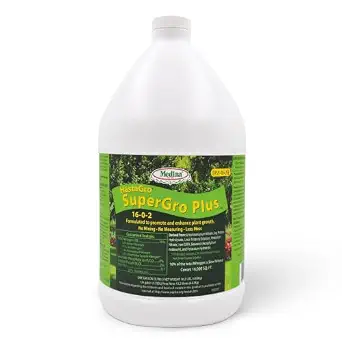 |
| Best Budget The cheapest option that still gets the job done reliably | O.M. Scott & Sons Natural Grass Food, 12.72 lb |  |
| Highest Rated A top-rated pick with lots of positive feedback | HyR BRIX Slow-Release 20-0-8 Phosphorus-Free Lawn Fertilizer, 45 lb |  |
| Most Popular A crowd favorite that many people choose with confidence | PETRAMAX Neighbor’s Envy Liquid Lawn Fertilizer Concentrate (1 gal) |  |
| Best Seller A high-volume bestseller chosen again and again | Scotts Turf Builder WinterGuard Fall Lawn Food, 10 lb. |  |
Medina HastaGro SuperGro Plus 16-0-2 Liquid Lawn Fertilizer (1 Gal)

| Item Form | Liquid |
|---|---|
| Specific Uses For Product | High-Traffic Lawn Recovery, Houseplant Nutrition, Phosphorus-Restricted Regions, Sandy Soil Fertilization, Tropical Plant Feeding |
| Application Method | Spray evenly onto leaves |
| Coverage | One quart covers 4,000 sq ft, One gallon covers 16,000 sq ft |
| Mixing Ratio | 16:0:2 |
Medina HastaGro SuperGro Plus is a ready-to-use liquid lawn fertilizer designed to deliver quick, visible green-up while supporting soil health in sandy, fast-draining lawns. The 16-0-2 formula supplies concentrated nitrogen for rapid leaf growth and color, and the product includes 15% cane molasses plus 1% humic acid to feed soil microbes and help retain moisture and nutrients in light soils. It is applied as a foliar or soil spray—one gallon covers up to 16,000 sq ft—and the label recommends applications every two weeks during the growing season, with mornings or evenings preferred to avoid leaf stress. Practical benefits for sandy soil include faster recovery in high-traffic or drought-stressed areas and improved short-term nutrient retention compared with plain soluble nitrogen. Limitations are that it contains no added phosphorus, so it is not suitable where phosphorus deficiency must be corrected, and foliar application requires attention to timing and drift precautions. Users should follow safety directions and wear gloves when handling.
Best for: Buyers who prioritize fast, visible lawn performance and want a product tuned for sandy, fast-draining soils and restricted-phosphorus areas. Ideal for homeowners repairing high-traffic or drought-stressed turf who value quick green-up and simpler hose-end application.
Less Ideal for: Gardeners trying to correct soil phosphorus deficiencies or those who prefer slow-release granular fertilizers for very low-maintenance schedules should consider alternatives.
- High 16% nitrogen delivers fast, noticeable green-up within 24 to 48 hours
- Phosphorus-free formula complies with restrictions in regulated regions
- Includes 15% cane molasses and 1% humic acid to support soil biology and moisture retention in sandy soils
- Large coverage per gallon reduces application time for bigger yards
- Ready-to-use hose-end application option simplifies mixing and application
- No added phosphorus so it will not address phosphorus deficiency
- Requires regular biweekly applications for sustained results
- Liquid foliar application can drift in windy conditions and needs cautious timing
Verdict: If you need rapid, phosphorus-free green-up and improved nutrient retention for sandy, high-traffic lawns, this liquid 16-0-2 formula delivers visible results quickly.
O.M. Scott & Sons Natural Grass Food, 12.72 lb

| Feeds up to | 10 weeks |
|---|---|
| Coverage | Up to 2,000 sq. ft. |
| Usage | Outdoor |
| Unit count | 203.52 Ounce |
O.M. Scott & Sons Natural Grass Food is a straightforward, natural lawn fertilizer meant for routine spring and seasonal feedings. You use it by filling a spreader, setting the dial per the bag directions, walking the lawn to apply, then lightly watering so the nutrients start working right away. The formula contains no added artificial ingredients or pesticides and is marketed as safe for people and pets when directions are followed. A single 12.72 lb. bag covers about 2,000 square feet and is formulated to feed for up to 10 weeks, so one bag can support a small-to-medium yard through the main growing season. The recyclable paper bag is a small eco-friendly plus. Limitations are its coverage and frequency: homeowners with larger lawns will need multiple bags and repeat applications every 8 to 10 weeks, and the product is not presented as a targeted solution for specific problems like weed control or soil pH correction. Still, for routine spring feeding on common grass types it delivers predictable, easy-to-follow results.
Best for: Homeowners who want a simple, natural spring feed for a small to medium lawn and prioritize easy application and pet-safe ingredients.
Less Ideal for: Those with large lawns, persistent weed issues, or who need specialty fertilizers for nutrient-deficient or pH-imbalanced soils should consider more targeted products.
- Natural formula without added artificial ingredients or pesticides
- Feeds immediately after watering and continues feeding up to 10 weeks
- Easy to apply with a standard spreader using bag dial settings
- Covers up to 2,000 sq ft per 12.72 lb. bag suitable for small to medium yards
- Recyclable paper packaging
- Limited coverage per bag so larger lawns require multiple purchases
- Not formulated to handle weeds or specific soil deficiencies
Verdict: A simple, pet-safe natural lawn food that makes spring feeding easy for small to medium yards.
HyR BRIX Slow-Release 20-0-8 Phosphorus-Free Lawn Fertilizer, 45 lb

| Item Form | Granules |
|---|---|
| Specific Uses For Product | Dense, Healthy Grass – Ideal for Clay & Sandy Soils |
| Application Method | broadcast spreader |
| Coverage | 4,000 Square Feet |
| Target Species | Lawns |
This 45 lb HyR BRIX 20-0-8 lawn fertilizer is a slow-release granular formula designed for straightforward broadcast application across home lawns, including sandy sites. It supplies nitrogen and potassium without phosphorus, and includes calcium, sulfur, iron and zinc plus humic acids to improve nutrient availability and soil function. In practice it is used with a broadcast spreader to cover up to 4,000 sq ft per bag and delivers steady feeding that reduces the need for frequent reapplications. The inclusion of micronutrients and slow-release nitrogen helps promote a deeper green and denser turf, which can suppress weeds over time. Because it is phosphorus-free it is a responsible choice for areas with runoff restrictions. Limitations are that it is not a starter fertilizer for new seedings and it requires correct spreader calibration to get even coverage; results depend on following the recommended rate and local soil conditions.
Best for: Buyers who prioritize reliable, low-maintenance feeding for established lawns on sandy or clay soils and who need a product that fits runoff-sensitive rules.
Less Ideal for: Those establishing new seed or sod or gardeners who prefer liquid or foliar feeds should consider alternative starter products or application types.
- Slow-release granules provide steady nutrition and reduce application frequency
- Formulated without phosphorus for use in environmentally sensitive or regulated areas
- Includes calcium, sulfur and micronutrients to support soil function and turf color
- Covers up to 4,000 sq ft per 45 lb bag for broad lawn coverage
- Not formulated as a starter fertilizer for new seed or sod
- Requires a broadcast spreader and correct calibration to ensure even application
Verdict: A dependable slow-release, phosphorus-free granular fertilizer that delivers steady nutrition and soil-supporting micronutrients for established lawns on sandy soils.
PETRAMAX Neighbor’s Envy Liquid Lawn Fertilizer Concentrate (1 gal)

| Item Form | Liquid |
|---|---|
| Application Method | Spray |
| Coverage | 16000 |
| Target Species | Lawn Grass |
| Liquid Volume | 128 fluid ounces |
Neighbor’s Envy is a concentrated liquid fertilizer designed to deliver rapid greening and improved turf vigor when applied with a sprayer or hose-end applicator. It combines a high nitrogen content with iron, humic and fulvic acids, potassium, sulfur and sea kelp so you can feed for color, root strength and stress resistance in a single application. Use it on Zoysia and other warm- and cool-season turfs; dilution and spray application let you treat large areas without spreading granular product. Practical benefits include visible color improvement within days, soil-conditioning ingredients that support longer-term health, and pet-safe labeling for everyday yards. Limitations are that performance depends on correct mixing and even spray coverage, and a liquid concentrate requires a sprayer and careful measurement to avoid overapplication. For gardeners focused on efficient, repeatable lawn maintenance, this product simplifies multiple inputs into one bottle but still requires basic application skill to get consistent results.
Best for: Homeowners who want a time-saving, all-in-one liquid treatment to improve Zoysia color and vigor across medium to large lawns while minimizing separate products.
Less Ideal for: People who prefer granular slow-release programs or those unwilling to handle dilution and spray application should consider alternative formats.
- High nitrogen plus iron formula for quick, deep greening of turf
- Includes humic/fulvic acids and sea kelp to support soil health and stress tolerance
- Liquid concentrate covers up to 16,000 sq ft for efficient large-lawn applications
- Designed for spray application so it distributes evenly when applied correctly
- Requires accurate dilution and a sprayer to avoid uneven coverage or overfeeding
- No specific N-P-K breakdown beyond listed ingredients for precise nutrient planning
Verdict: A single, spray-applied concentrate that combines nitrogen, iron and soil conditioners to quickly green and strengthen Zoysia with one convenient product.
Scotts Turf Builder WinterGuard Fall Lawn Food, 10 lb.

| Item Form | Granules |
|---|---|
| Specific Uses For Product | Lawn Fertilizer |
| Application Method | spread |
| Coverage | 4000 |
| Target Species | lawn grasses |
Scotts Turf Builder WinterGuard is a granular fall lawn food designed to build strong, deep roots and help turf recover from summer heat, drought, and regular wear. It is applied with a broadcast or drop spreader over a lawn in autumn and can be used on any grass type. The bag covers about 4,000 sq. ft., and the package directions include recommended spreader settings and note that watering-in is optional for fast results. In practice this product provides a straightforward, DIY-friendly way to add nutrients before winter; the granules are easy to spread and work with standard spreaders. Notable features are its all-grass compatibility and clear application guidance. Limitations are that it is a single-season bag sized for small to medium yards and it does not include weed or insect control functions found in some other Scotts formulas, so you may need additional products if those issues are a concern. For homeowners wanting a simple autumn boost to root strength, this is an effective, no-frills option.
Best for: Homeowners who want a simple, reliable fall fertilizer to strengthen roots and help lawns recover from summer stress without complicated application steps.
Less Ideal for: People managing large lawns who need wide-coverage bulk fertilizer or those who want combined weed or insect control in the same product.
- Formulated specifically for fall to build deep, winter-ready roots
- Works on all grass types so it fits mixed lawns
- Clear application instructions and spreader settings for easy DIY use
- Covers 4,000 sq. ft. from a single 10 lb. bag for small to medium yards
- No built-in weed or insect control so additional products may be needed
- Single 10 lb. bag may be small for larger properties
Verdict: Choose this bag if you want an easy-to-apply fall fertilizer that strengthens roots and helps your lawn recover before winter.
Choosing the Right Lawn Fertilizer for Sandy Soil: Key Factors to Consider
Nutrient Release Profile
How quickly a fertilizer releases nitrogen and other nutrients determines how much is available between waterings and rain events. In sandy soil a fast-release formula can give an immediate green-up but most of that nitrogen may move below the root zone after heavy irrigation or storms. A controlled-release or slow-release profile supplies nutrients over weeks, reducing the number of applications needed and lowering the risk of leaching.
When comparing products, check the label for coated granules, water-insoluble nitrogen, or polymer-controlled release descriptions. These features matter more on sand than on clay because they keep nutrients in the root zone longer and align availability with grass uptake.
Soil-conditioning Components
Sandy soils benefit when fertilizers include or are used with soil conditioners that increase cation exchange capacity or water-holding ability. Ingredients such as humic and fulvic acids, wetting agents, or biochar-compatible carriers help soil retain moisture and nutrients. These components do not replace organic topdressing but can improve the effectiveness of each feeding.
Evaluate whether a fertilizer is formulated to work alongside compost or compost teas, or whether it contains built-in conditioners. In many home-lawn situations, a combined approach of feeding plus organic matter additions will yield better long-term results than fertilizer alone.
Nutrient Balance and Trace Elements
Primary nutrients matter, but sandy soils often need attention to secondary and micronutrients that wash away easily. A fertilizer with balanced N-P-K appropriate for your grass type prevents excess nitrogen-driven growth that stresses shallow roots. Trace elements like iron, manganese, and zinc support color and metabolic function and can be depleted in coarse soils.
Read labels for guaranteed analysis and consider periodic soil tests to identify specific deficiencies. Products that provide a complete nutrient package reduce the need for extra supplements and simplify feeding schedules.
Application Rate and Timing
Because sandy soil drains quickly, timing and rate are crucial to avoid waste and environmental loss. Lower, more frequent feedings of controlled-release products often outperform single heavy applications. Pay attention to recommended application rates per 1,000 square feet and adjust for high rainfall or frequent irrigation.
Season matters too. Spring and fall feedings should align with your grass species growth cycles so nutrients go to root development and recovery rather than just top growth. Clear label instructions make it easier to follow a safe schedule on sandy sites.
Compatibility with Irrigation and Cultural Practices
How a fertilizer responds to irrigation patterns affects its performance in sandy soil. Some formulas require light irrigation after application to move nutrients into the root zone, while others are more rainfast. Match the product to how you water; if you rely on infrequent deep soakings, choose a fertilizer that remains available between events.
Cultural practices such as aeration, overseeding, and topdressing interact with fertilization. On sandy turf, combining fertilization with organic topdressings and proper mowing height improves root depth and nutrient uptake over time.
Understanding Sandy Soil Challenges
Sandy soil has large, coarse particles and low organic matter, which creates fast drainage and low nutrient-holding capacity. That means applied nutrients and water move quickly past grass roots unless paired with strategies to retain them.
Practical responses include choosing a fertilizer with slower nutrient release, adding organic matter through topdressing, and adjusting irrigation to shorter, more frequent cycles. Recognizing these constraints helps you pick a product that suits the site rather than one designed for heavier soils.
- Low cation exchange capacity increases leaching risk
- Rapid warming in spring can speed early growth but also increase nutrient demand
- Organic matter additions change fertilizer needs over seasons
Types of Fertilizer Formulas and How They Behave in Sand
Granular slow-release products release nutrients over weeks and are generally safer on sandy sites than straight soluble fertilizers. Polymer-coated or sulfur-coated materials moderate release with temperature and moisture.
Soluble fertilizers give fast color and growth but require careful timing to avoid losses. Liquid feeds can be effective for quick corrections but are less economical for routine maintenance on sandy turf.
- Slow-release granules: steady feeding, less leaching
- Soluble salts: immediate effect, higher leaching risk
- Liquids: targeted corrections, often used alongside solids
Practical Application Tips for Sandy Lawns
Calibrate your spreader and follow label rates. Overapplying increases the chance that excess nutrients will be lost below roots or create burn. Use the lower end of recommended rates on freshly topdressed or low-organic soils.
Water lightly after applying some products to move granules into the root zone, but avoid heavy watering that flushes nutrients away. For controlled-release formulas, follow label irrigation guidance to sync release with soil moisture.
- Check spreader calibration annually
- Apply when grass is actively growing and soil is moist, not waterlogged
- Consider split applications for long seasons
Combining Fertilizer with Organic Amendments
Adding compost or a thin layer of topdressing increases moisture and nutrient retention over time. Organic matter improves cation exchange and reduces the frequency you need to fertilize sandy turf.
Use fertilizers as a complement to regular organic inputs rather than a substitute. Over seasons, this combined approach builds more resilient turf with deeper roots that better access stored nutrients.
- Apply 1/4 inch compost after aeration for best incorporation
- Match fertilizer timing with topdressing to avoid nutrient lockup
- Organic amendments help buffer against rapid pH shifts
Common Mistakes to Avoid on Sandy Sites
Relying solely on fast-release, high-salt formulas leads to frequent leaching and wasted material. Similarly, applying heavy rates after a rainstorm risks runoff and poor uptake.
Ignoring irrigation adjustments is another common error. Because sandy soils need different watering patterns, using the same schedule as a clay lawn will undermine fertilizer performance.
- Avoid excessive single heavy applications
- Do not skip soil testing; sandy soils change quickly
- Avoid using products labeled only for ornamentals on turf
How We Chose the Best Lawn Fertilizer for Sandy Soil
We prioritized formulations and attributes that matter most in coarse, fast-draining soils. Key evaluation criteria included nutrient-release profile, presence of soil-conditioning agents, compatibility with common grass species on sandy sites, and ease of application for home gardeners. We favored products that deliver steady nitrogen release rather than quick flushes that leach away, and those that include or work well with organic matter or humic materials to improve cation exchange and water-holding capacity. We also checked label clarity for nutrient percentages and application rates so gardeners can match feedings to site conditions. Ease of spreading and safety for pets and children were included because frequent reapplication on sandy soil increases exposure risk. Exclusions removed products that only target ornamental beds or that rely solely on high-solubility salts unsuited to sandy turf. The final list balances performance in sandy conditions with practical handling and the potential to improve soil retention over multiple feed cycles.
FAQ
How often should I fertilize a sandy lawn?
Often depends on the fertilizer type and grass species. Controlled-release products usually allow fewer applications, while fast-release formulas may need repeat feedings every 4 to 6 weeks. Adjust timing for heavy rainfall and follow label guidance.
Can I use organic fertilizers on sandy soil?
Yes. Organic fertilizers release nutrients slowly and improve soil biology, which benefits sandy soils. They often work best combined with periodic compost topdressings to build organic matter over time.
Should I water immediately after applying fertilizer?
It depends on the product. Some granules require a light irrigation to activate and move nutrients into the root zone, while others are designed to be rainfast. Always follow the label instructions for best results on sandy soil.
Will fertilizer change the pH of sandy soil?
Most lawn fertilizers have limited short-term pH impact, but repeated applications of certain products can influence soil chemistry. A periodic soil test is the best way to monitor pH and determine if lime or sulfur is needed.
Are slow-release fertilizers worth the cost for sandy lawns?
They are often worth it because they reduce leaching and the need for frequent reapplication. Over a season, controlled-release products can provide steadier feeding that supports root health and uses less material overall.
Final Verdict
Pick a fertilizer that matches sandy soil behavior: controlled nutrient release, supportive soil-conditioning components, and a nutrient balance suited to your grass type. Prioritize formulas that limit leaching and pair well with organic topdressing to build long-term retention. Accept the tradeoff that sandy sites often need more attention to irrigation and organic matter. Focus on steady feedings and soil improvement rather than chasing rapid green-up, and you will get a healthier, deeper-rooted lawn over time.
