

Note: This article contains affiliate links. If you click on these links and make a purchase, I may earn a small commission at no extra cost to you. This helps support my research and content. Read my full affiliate disclosure here.
Spring is prime time to halt broadleaf weeds before they set seed and compete with young grass. The right spring lawn weed killer targets common invaders like dandelions, clover, and chickweed while preserving desirable turf and encouraging healthy recovery. In this guide we shortlist six top options that suit typical spring conditions, from cool soils to early warm spells. You will find practical notes on what each product type does, plus the decision criteria we used to evaluate them, so you can pick a treatment that fits your lawn type, timing, and tolerance for reseeding or overseeding. Read on for the factors that matter in spring applications and how each product performs against them.
Top Picks at a Glance
| Best Overall The best all-around choice for most situations | Scotts Turf Builder Halts Crabgrass Preventer with Lawn Food (covers 5,000 sq. ft.) |  |
| Best Quality Built to a higher standard if you want something more solid | Tenacity Turf Herbicide, 8 fl oz (Mesotrione) |  |
| Best Value The sweet spot between price and what you get | Spectracide Weed Stop for Lawns Concentrate, 40 oz |  |
| Best Budget The cheapest option that still gets the job done reliably | Spectracide Weed Stop for Lawns Plus Crabgrass Killer, Ready-to-Use, 1 Gal |  |
| Highest Rated A top-rated pick with lots of positive feedback | Quali-Pro Prodiamine Pre-Emergent Herbicide, 5 lb Granules |  |
| Most Popular A crowd favorite that many people choose with confidence | Scotts Liquid Turf Builder Plus 2 Weed Control, 32 fl. oz. |  |
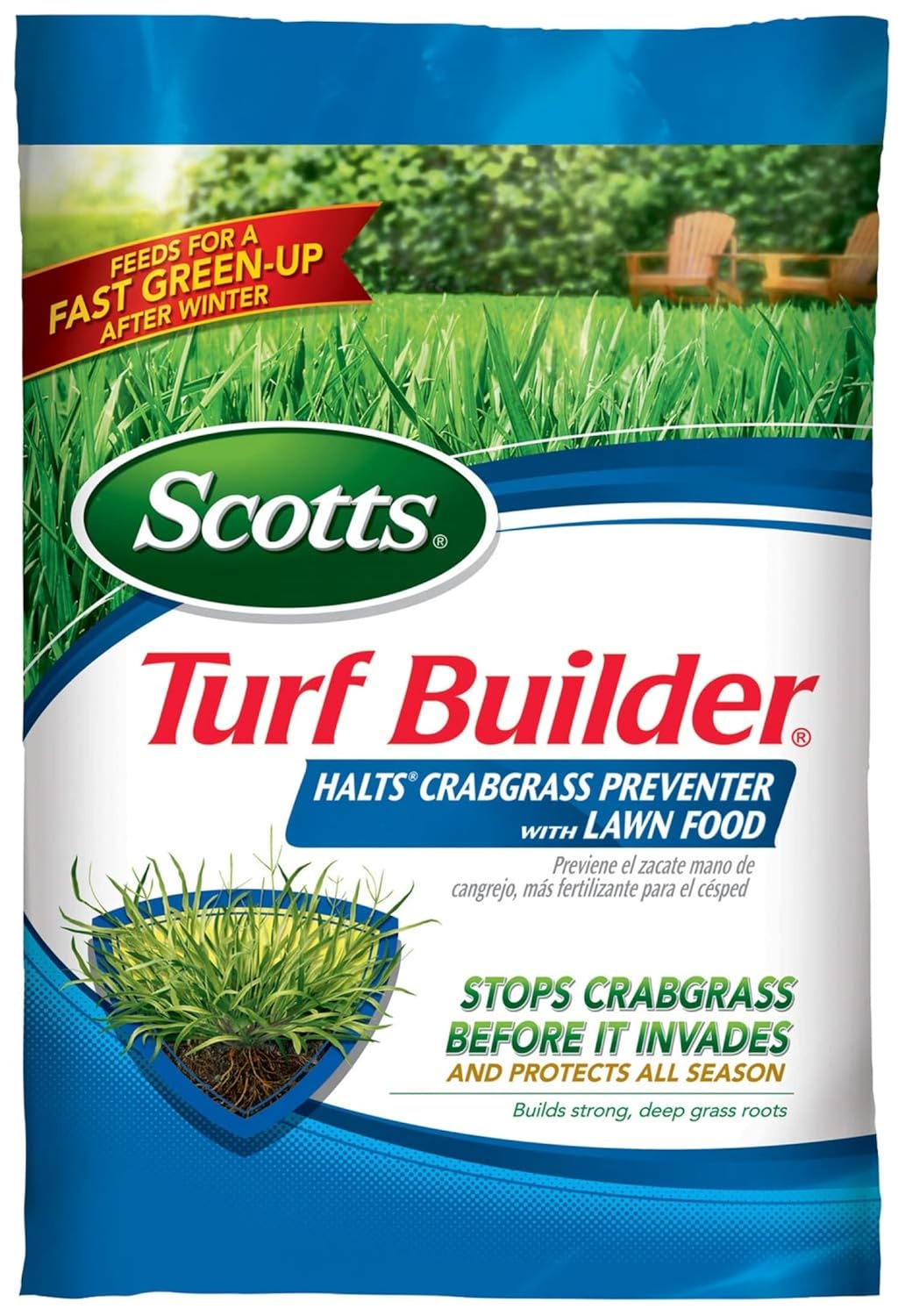
Scotts Turf Builder Halts Crabgrass Preventer with Lawn Food (covers 5,000 sq. ft.)
| Item Form | Granule |
|---|---|
| Coverage | 5000 square feet |
| Unit Count | 213.6 Ounce |
| Item Highlight | Pre-Emergent Weed Killer, Lawn Fertilizer |
Scotts Turf Builder Halts is a granular, single-application product that creates a protective barrier in early spring to stop crabgrass and several other listed grassy and broadleaf weeds from sprouting while also supplying fertilizer for quick green-up. You apply it to a dry, established lawn before the third or fourth mowing and then water lightly within 2 to 3 days; Scotts recommends using its broadcast or drop spreader and provides application settings. The added fertilizer helps thicken turf and build deeper roots, so you get both prevention and seasonal feeding in one step. It works best as a preventive measure and will not kill mature crabgrass or existing weeds, and it is not suitable for dichondra or bentgrass lawns. The 5,000 sq. ft. coverage and familiar spreader instructions make it convenient for small to mid-size yards following a standard spring maintenance routine.
Best for: Homeowners who want a straightforward spring treatment that prevents crabgrass while feeding the lawn and who follow seasonal maintenance schedules.
Less Ideal for: Do not choose this if you need to remove existing weeds, if your lawn is primarily dichondra or bentgrass, or if you prefer liquid or spot-treatment products.
- Combines pre-emergent crabgrass control with fertilizer for a two-in-one spring treatment
- Clear application guidance for Scotts spreaders simplifies accurate coverage
- Feeds turf for visible green-up and promotes stronger root development
- Granular formula is easy to store and apply with standard spreaders
- Pre-emergent actives only prevent new weeds and will not control established crabgrass
Verdict: Use this if you want a simple, reliable early-spring product that prevents crabgrass and feeds your lawn in one application.
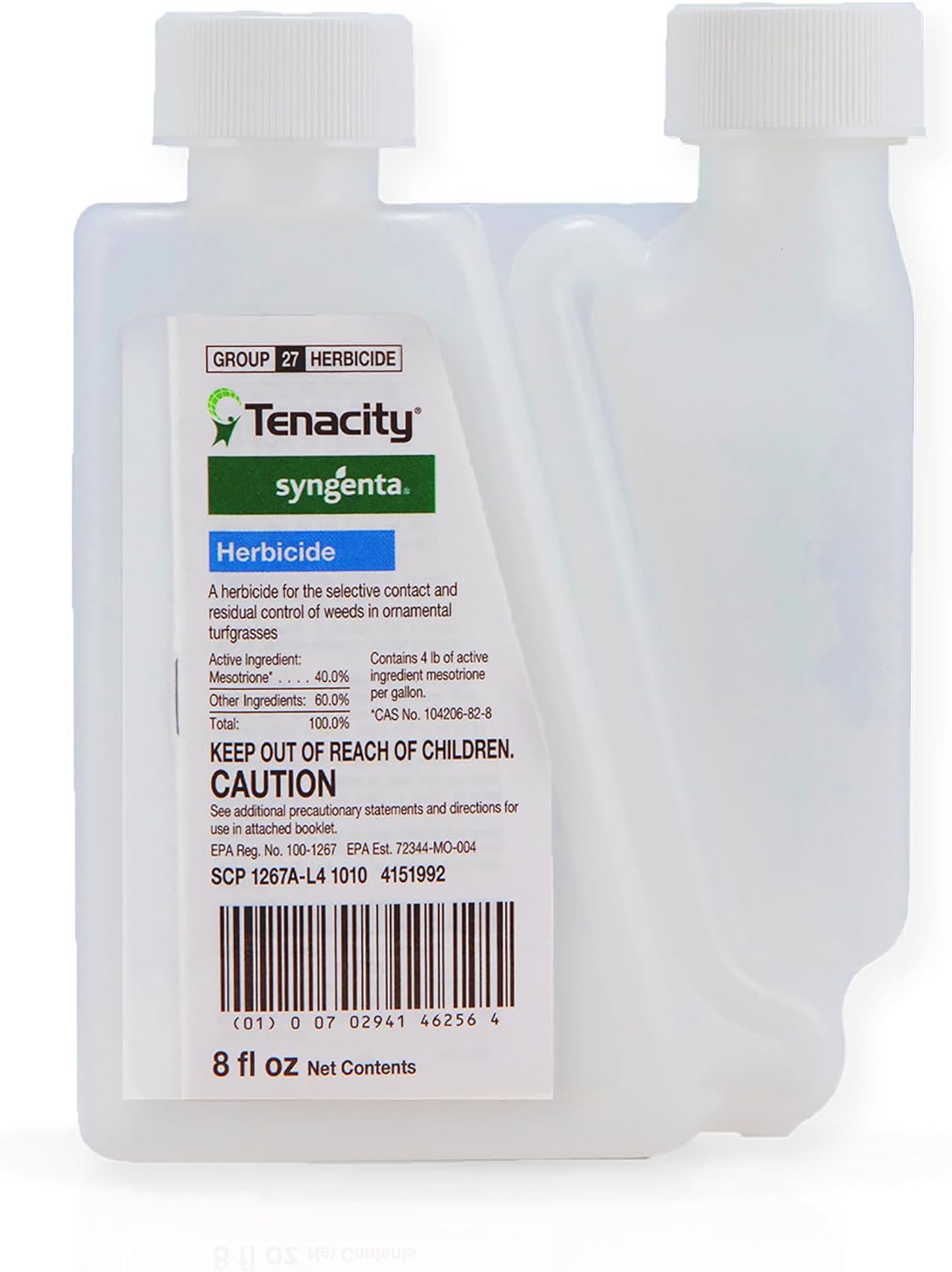
Tenacity Turf Herbicide, 8 fl oz (Mesotrione)
| Unit Count | 8 Fluid Ounces |
|---|---|
| Item Form | Liquid |
| Coverage | 2000 ft^2 per 1sp of product |
| Active Ingredients | Mesotrione |
Tenacity is a concentrated liquid herbicide formulated for selective weed control in turfgrass using the active ingredient mesotrione. It can be applied as a pre-emergent to stop weeds as they germinate or as a post-emergent to suppress existing broadleaf and grassy weeds, and one 8 fl oz bottle covers roughly 2000 sq ft per label directions. Notable features include systemic activity for both contact and residual control and a broad target list that covers common spring pests such as crabgrass, dandelion, clover, chickweed and several grassy weeds. In practice it is used with a handheld or tank sprayer diluted to label rates and works best when applied to actively growing weeds or incorporated in pre-emergent timing. Important limitations are that it is turf-selective and must be used according to turf species and timing to avoid injury, and effectiveness can vary by weed species and environmental conditions, so repeat or follow-up treatments may be necessary for heavy infestations. Proper storage and adherence to safety instructions are required.
Best for: Gardeners and lawn keepers focused on measurable weed control who want a versatile product for both pre- and post-emergent use on established turf in spring.
Less Ideal for: Homeowners who need a nonselective broad-area weed kill or who prefer granular, ready-to-use products for spot treatment should consider other options.
- Selective pre- and post-emergent activity allows both prevention and knockdown of many weeds.
- Contains mesotrione, a systemic ingredient that provides residual control.
- Single 8 fl oz bottle covers up to about 2000 sq ft when mixed per label.
- Works on a wide list of common spring lawn weeds including crabgrass, dandelion and clover.
- Requires careful following of turf-specific label directions to avoid grass injury.
- Performance varies by weed species and may need repeat applications for heavy pressure.
Verdict: Choose Tenacity if you need a professional-strength, turf-selective liquid that delivers both pre-emergent and post-emergent control for spring lawn weeds.
Spectracide Weed Stop for Lawns Concentrate, 40 oz

| Unit Count | 40 Fluid Ounces |
|---|---|
| Coverage | 20000 square_feet |
| Item Form | Liquid |
Spectracide Weed Stop for Lawns Concentrate is a liquid herbicide you mix with water and apply with a garden sprayer to spot-treat or blanket-spray lawns. It targets more than 200 listed broadleaf weeds, including dandelion, chickweed and clover, and works by contact to kill down to the root with visible results in hours. The bottle treats up to 20,000 sq ft when mixed at recommended rates, is rainproof after six hours, and is intended for use in spring when weeds are actively growing or in fall to reduce next season’s problems. Practical features include a concentrated formula for fewer refill purchases and clear label directions for mowing, mixing and timing. Limitations are that you need a separate sprayer, careful mixing to avoid turf damage, and some very tough weeds may require a repeat spot treatment after a few weeks. For spring use follow label temperature guidance and safety precautions to avoid skin or eye contact.
Best for: Homeowners who want an economical, garden-sprayer solution to clear broadleaf weeds from established lawns in spring and prefer a concentrated product that covers large areas.
Less Ideal for: People without any sprayer equipment or those looking for an all-in-one ready-to-use product for small lawns and patios.
- Concentrated formula treats up to 20,000 sq ft, reducing how often you buy replacement product
- Kills over 200 listed broadleaf weeds and works down to the root for durable control
- Rainproof in about six hours so light rain shortly after application is less likely to reduce effectiveness
- Visible results within hours when applied during the recommended temperature window
- Requires a separate garden sprayer and correct mixing, adding equipment and setup time
- May need repeat spot treatments on very persistent weeds
Verdict: A concentrated, rainproof herbicide that gives fast, broadleaf weed control across large lawns when mixed and applied with a sprayer.
Spectracide Weed Stop for Lawns Plus Crabgrass Killer, Ready-to-Use, 1 Gal

| Item Form | Spray |
|---|---|
| Coverage | Up to 5,000 sq ft |
| Liquid Volume | 1 gallons |
Spectracide Weed Stop for Lawns Plus Crabgrass Killer is a one-gallon, ready-to-use spray designed to remove common lawn weeds quickly. You use it by applying directly to weeds on a lawn that has been mowed two to three days prior and only when daytime temperatures are between 45°F and 90°F. The formula kills weeds by contact down to the root and claims visible results in about five hours, which makes it useful for spot-treating dandelions, clover, chickweed and crabgrass. Notable features include no mixing required and coverage rated up to 5,000 square feet per gallon. Practical benefits are simplicity of application, fast visible effect, and a broad listed weed spectrum so you can treat a variety of problem plants with a single product. Limitations to note are temperature restrictions for safe use, special caution for Bermudagrass to avoid temporary yellowing, and that control is by contact so dense or established weeds may need repeat applications or additional cultural practices to prevent reinfestation.
Best for: Homeowners looking for an affordable, easy-to-use lawn weed control they can apply themselves in spring to quickly knock back common weeds and crabgrass.
Less Ideal for: People managing heat-stressed turf, large commercial lawns, or those who need systemic long-term control of deeply established weeds should consider alternative approaches or professional services.
- Ready-to-use formula requires no mixing and is simple to apply
- Kills both broadleaf and grassy weeds including crabgrass and yellow nutsedge
- Produces visible results in about five hours for fast confirmation of effect
- Covers up to 5,000 sq ft per gallon for treating moderate lawn areas
- Not recommended for use in high temperatures and may cause temporary discoloration on Bermudagrass
- Kills by contact so very large or deeply rooted weeds may require multiple treatments
Verdict: A budget-friendly, ready-to-use option for quickly knocking down a wide range of common spring lawn weeds, including crabgrass.
Quali-Pro Prodiamine Pre-Emergent Herbicide, 5 lb Granules

| Item Form | Granule |
|---|---|
| Coverage | Pre-emergent grass and broadleaf weed control, season long crabgrass control |
| Active Ingredients | Herbicide (Prodiamine 65%) |
| Unit Count | 80 Ounce |
Quali-Pro Prodiamine is a granular pre-emergent herbicide designed to prevent annual grassy and broadleaf weeds before they emerge. Applied to lawns and turf areas in spring or fall, it creates a protective barrier in the soil that inhibits weed seed germination and provides season-long crabgrass control. The product contains 65% prodiamine, which is commonly used by professionals and is compatible with many fertilizer and iron tank mixes, making it easy to integrate into routine lawn treatments. Practical benefits include a straightforward broadcast application and reliable prevention of common weeds such as annual bluegrass, henbit, chickweed, and foxtail when applied at recommended timing and rates. Important limitations are that it will not kill established weeds and must be applied before germination for effectiveness, and care must be taken to follow label directions to avoid damage to newly seeded lawns. For gardeners who prioritize predictable, preventive control, this formulation offers a proven option.
Best for: Homeowners and groundskeepers who want a dependable preventive solution for spring crabgrass and annual weeds and prefer integrating a professional-grade pre-emergent into routine lawn care.
Less Ideal for: People needing a product to eradicate existing weeds or those planning to seed or overseed lawns immediately, since it will inhibit new grass seed germination.
- High concentration of prodiamine (65%) for season-long pre-emergent control
- Granular form works with standard broadcast spreaders for easy application
- Compatible with many fertilizer and iron tank mixes for combined treatments
- Effective against a wide range of annual grassy and broadleaf weeds
- Does not control weeds that are already established
- Must be applied before weed germination and timed correctly for best results
Verdict: Use this professional-strength pre-emergent for dependable, season-long prevention of spring crabgrass and other annual weeds.
Scotts Liquid Turf Builder Plus 2 Weed Control, 32 fl. oz.

| Liquid Volume | 32 fluid ounces |
|---|---|
| Item Form | Spray |
| Coverage | 6000 square_feet |
| Active Ingredients | Nitrogen |
This ready-to-spray Scotts liquid combines a quick nitrogen boost with broadleaf weed control for easy spring lawn treatment. You connect the bottle to a garden hose and spray across the lawn when weeds are actively growing; the spray formulation begins working on contact and labeled weeds typically curl within a few days. The product is formulated for both warm- and cool-season grasses and lists coverage of up to 6,000 sq ft for warm-season lawns and 4,000 sq ft for cool-season lawns, making it useful for small to medium yards. Practical benefits include fast application without separate spreaders and dual-action feeding plus weed control so you treat and feed in one step. Important limitations are that it only controls weeds listed on the label, some tough weeds may need a repeat treatment in 3 to 4 weeks, and you must avoid watering for 48 hours after application and not exceed recommended temperature conditions to prevent turf injury.
Best for: Homeowners who want a quick, low-effort spring treatment that feeds the lawn and controls common broadleaf weeds with a simple hose-on application and predictable results.
Less Ideal for: People needing selective control of grasses, treating large acreage beyond the stated coverage, or those who prefer granular programs or organic-only products.
- Ready-to-spray hose-end applicator for fast, tool-free application
- Provides quick nitrogen boost and weed control in a single step
- Covers a large area per bottle (up to 6,000 sq ft on warm-season lawns)
- Suitable for many common lawn grasses, both warm and cool season
- Controls only the broadleaf weeds listed on the label so stubborn or unlisted weeds may persist
- Requires no watering for 48 hours after application which needs planning around irrigation and weather
Verdict: If you want a fast, no-fuss spring spray that feeds lawns and knocks back common broadleaf weeds in one pass, this ready-to-spray Scotts bottle delivers.
Choosing the Right Lawn Weed Killer for Spring: Key Factors to Consider
Active Ingredients and Target Weeds
Knowing the active ingredient is crucial because different chemistries control different weed groups. Many spring weeds are broadleaf species such as dandelion, white clover, chickweed, and plantain. Products that list broadleaf control on the label and include proven actives for those species will give faster visible results.
Active ingredients also determine how long the product persists in the soil and whether it affects grass seedlings. If you plan to overseed after treatment, pick a formulation with low residual soil activity or follow label timing for reseeding to avoid poor grass establishment.
Turf Type Compatibility
Cool-season and warm-season grasses respond differently to herbicides. A product that is safe on Kentucky bluegrass or tall fescue in spring may stress bermudagrass or zoysia if used improperly. Check label recommendations for turf species and the suggested application windows.
Turf compatibility affects when you can apply treatments and how aggressively you can treat dense stands without causing brown spots. For lawns with mixed turf types, choose a broadly labeled option or limit applications to spot treatments where risk is higher.
Timing and Soil Temperature
Spring timing is about weed growth stage as much as calendar date. Many herbicides work best when weeds are actively growing and soil temperatures are rising but not yet at summer highs. Applying too early to dormant weeds reduces uptake, while applying in hot, stressed conditions can injure turf.
Observe plant growth: young, actively leafing weeds are easier to control. Also consider recent weather; avoid applications before heavy rain that could wash treatments away and reduce effectiveness.
Application Method and Coverage
Whether you need a spot-spray, whole-lawn hose-end sprayer, or granular spreader affects product choice. Liquid sprays give uniform coverage and work well for widespread infestations, while granules or selective spot treatments are convenient for isolated patches.
Coverage consistency matters. Overlap, poor mixing, or inadequate droplet size can leave untreated pockets that regrow. Match the product formulation to the equipment you are comfortable using and the size of the area to treat.
Residual Activity and Reseeding Plans
Some weed killers offer residual control that prevents new weed emergence for weeks, while others act only on plants present at application. Residual activity can be beneficial to limit reinfestation but may interfere with overseeding or planting new sod.
If you intend to reseed or repair bare patches after control, check the label for recommended waiting periods. For quick overseeding, choose an option with minimal soil persistence or schedule reseeding according to label guidance.
Safety, Pets, and Environmental Considerations
Spring is a time when people and pets spend more time on the lawn, so safety instructions are important. Different products require different re-entry intervals for foot traffic and pets. Some formulations have more stringent runoff or water-quality precautions.
Follow label guidance for storage, mixing, and disposal. Consider targeted spot treatment to reduce overall chemical use and limit exposure to pollinators by avoiding applications when flowers are present on desirable plants.
When To Treat in Spring
Start treatment when weeds are actively growing and the soil temperature is consistently above the label-recommended threshold for uptake. For many broadleaf weeds that means early to mid-spring as nights warm and daylight length increases. Avoid applying during dormancy or during heat spikes that stress turf.
- Look for new leaf growth on weeds as the trigger to treat
- Avoid spraying immediately before heavy rain to prevent runoff
- Delay treatment in lawns that will be overseeded within the label-specified waiting period
Spot Treatment Vs Whole-Lawn Applications
Spot treatment minimizes chemical use and risk to surrounding grass, making it a good first step for small or localized infestations. Whole-lawn applications are more efficient for widespread problems but require careful rate calibration and even coverage to avoid uneven control.
- Spot sprays for isolated patches reduce product volume and exposure
- Use a consistent swath and proper nozzle to avoid streaks during broadcast spraying
- Consider a mixed approach: spot-treat persistent patches and use a lower-rate broadcast application for background weed pressure
Post-Application Lawn Care
After treating, let the lawn rest from mowing for a few days to allow the herbicide to move into target weeds. Watering practices vary by product: some require a light irrigation to help uptake, others advise avoiding rain for a period to prevent wash-off. Follow label timings on mowing, irrigation, and pet re-entry to protect turf recovery and safety.
- Delay mowing 48 to 72 hours unless the label indicates otherwise
- Avoid overwatering immediately after application unless the product calls for activation by moisture
- Repair dead patches with seed or sod only after observing the label's reseeding interval
Integrating Chemical Control with Cultural Practices
Herbicides are most effective when paired with good lawn care. Improving soil health, correcting fertility, and adjusting mowing height make grass more competitive and reduce the chance of future weed outbreaks. Aeration and proper overseeding in recommended windows will help desirable turf reestablish where weeds were removed.
Enhancing lawn vigor reduces reliance on repeat chemical treatments and gives longer-term weed suppression without additional products.
- Raise mowing height to encourage deeper roots in spring
- Address persistent soil compaction with aeration before major overseeding
- Use targeted fertility to strengthen grass without overfeeding weeds
Environmental and Water-Quality Best Practices
Avoid applying herbicides before heavy rain events or to slopes where runoff can reach storm drains or waterways. Read and follow label restrictions on buffer zones and water-adjacent use. Consider non-chemical control for areas near pollinator plantings or when runoff risk is high.
Proper mixing and cleanup prevent accidental contamination of hoses and containers that could leach into the environment.
- Keep treated clippings away from flower beds to protect non-target plants
- Store concentrates in original containers and secure them from children and pets
- Apply during calm wind conditions to reduce drift
How We Chose the Best Lawn Weed Killer for Spring
We focused on treatments suited specifically for early-to-mid spring timing and the weed species that are active then. Selection criteria emphasized measurable, garden-relevant attributes: active-ingredient effectiveness on common spring broadleaf weeds, turf safety across cool- and warm-season grasses, application flexibility for spot-treating versus whole-lawn use, and residual activity that balances control with reseeding needs. We also considered ease of use in typical yard conditions, including ready-to-use versus concentrated formulations and compatibility with common spreader or sprayer equipment. Safety and environmental handling were evaluated by looking at label directions and typical precautions for pets and children. Exclusions: we did not include products intended exclusively for pre-emergent crabgrass control, handheld mechanical tools, or non-chemical cultural methods; nor did we include products formulated only for non-lawn landscapes. The final list contains options that align with spring timing, offer clear label guidance for application rates, and represent the main approaches gardeners use to treat active broadleaf weeds in spring.
FAQ
Can I seed my lawn right after using a spring herbicide?
It depends on the product. Many selective broadleaf herbicides require a waiting period before overseeding or sodding. Check the label for the specified interval, which can range from a few days to several weeks. If you need to reseed quickly, choose a product labeled for minimal residual activity.
Will a spring lawn weed killer harm nearby flower beds or vegetables?
Herbicides can drift or be transferred on tools and shoes. Avoid spraying on windy days, use targeted spot treatments near beds, and clean equipment after use. Keep a safe buffer and follow label instructions regarding proximity to desirable plants.
How soon will I see results after applying a broadleaf weed treatment?
Visible decline often appears within a few days for fast-acting chemistries, but full browning and death may take one to three weeks depending on weed species and growing conditions. Cooler temperatures can slow herbicide uptake and delay visible effects.
Can I use the same product across different grass types in spring?
Some formulations list multiple turf species on the label, but not all are safe on every grass. Confirm the product label for compatibility with your specific turf type, and when in doubt perform a small spot test to check for sensitivity.
Is spot treatment effective for widespread spring weed problems?
Spot treatment is effective for isolated patches and reduces overall chemical use, but it may be time consuming for large infestations. For widespread issues, a calibrated broadcast application provides more uniform control if applied at the correct rate.
Final Verdict
Choose a spring lawn weed killer that matches your lawn species, the scale of infestation, and your reseeding plans. Prioritize products with reliable broadleaf control, clear turf safety guidance for your grass type, and application methods you can execute accurately. Balance residual control against the need to overseed: low-residual options let you repair lawn faster, while longer-residual products reduce short-term reinfestation risk. With the right timing and follow-up cultural care, a carefully chosen spring treatment will shrink weed pressure and help desirable turf regain dominance.
