

Note: This article contains affiliate links. If you click on these links and make a purchase, I may earn a small commission at no extra cost to you. This helps support my research and content. Read my full affiliate disclosure here.
Picking the right liquid fertilizer for flowering plants makes a practical difference in how many blooms you get, how long they last, and how healthy the foliage stays. Whether you grow annuals in containers, perennials in mixed beds, or flowering shrubs, a targeted liquid feed can correct nutrient deficits quickly and keep bloom cycles strong. This guide covers seven shortlisted liquid fertilizers that suit a range of flowering plants and garden situations. We evaluate each option for nutrient formula, application ease, and how they behave in real garden conditions to help you choose the best fit.
Top Picks at a Glance
| Best Overall The best all-around choice for most situations | Farmer's Secret Fruit & Bloom Booster Liquid Fertilizer (32 oz) |  |
| Best Quality Built to a higher standard if you want something more solid | Neptune's Harvest Rose & Flowering Liquid Fertilizer (2-6-4), 36 oz |  |
| Best Value The sweet spot between price and what you get | FoxFarm Big Bloom Liquid Plant Food, 16 fl oz |  |
| Best Budget The cheapest option that still gets the job done reliably | TPS NUTRIENTS Liquid Phosphorus & Potassium Bloom Booster, 8 oz |  |
| Highest Rated A top-rated pick with lots of positive feedback | FoxFarm Tiger Bloom Liquid Plant Food (1 qt) |  |
| Most Popular A crowd favorite that many people choose with confidence | Miracle-Gro Pour & Feed Liquid Plant Food, 32 fl. oz. | 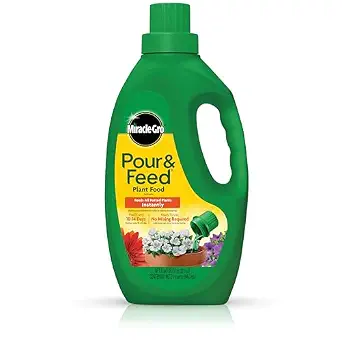 |
| Best Seller A high-volume bestseller chosen again and again | TPS Nutrients Orchid Fertilizer Bloom Boosting Liquid Plant Food, 8 oz |  |
Farmer's Secret Fruit & Bloom Booster Liquid Fertilizer (32 oz)

| Item Form | Liquid |
|---|---|
| Specific Uses For Product | Root Development, Seed Development |
| Application Method | pour or spray |
| Target Species | Fruit, vegetable, and flower producing plants |
| Mixing Ratio | 1 teaspoon:2 gallons |
Farmer's Secret Fruit & Bloom Booster is a super-concentrated liquid fertilizer designed for the bloom and fruiting stages of garden plants. You dilute it at the recommended rate and apply by watering can, sprayer, or through irrigation for either soil feeding or foliar feeding; the brand suggests starting applications when buds form and repeating every 1 to 2 weeks. The formula emphasizes higher phosphorus and potassium to encourage blooms and fruit set while supplying nitrogen and trace minerals that support root health and general vigor. Because it is liquid and concentrated, nutrients are immediately available to plants, which can produce visible improvements faster than granular feeds. Practical benefits include flexible application methods, suitability for a wide range of fruiting plants, and a long shelf life. Important limitations are that it requires careful dilution to avoid overfeeding and that optimal timing and results vary by crop and climate, so some trialing on a small number of plants is wise.
Best for: Home gardeners seeking a simple, proven boost for flowering and fruiting plants who prefer an easy-to-use, professional-style liquid feed and play it safe by following dilution instructions.
Less Ideal for: Gardeners who want dry granular feeds, slow-release long-season feeding, or need exact NPK ratios for fine-tuned fertilization plans.
- High phosphorus and potassium focus to support flowering and fruit set.
- Concentrated liquid formula makes nutrients immediately available and extends number of applications per bottle.
- Versatile application: pour, spray, foliar feed, or use with irrigation systems.
- Contains macronutrients plus trace minerals for balanced plant support.
- Long practical shelf life so unopened product can be stored for years.
- Requires precise dilution and schedule to avoid overfeeding sensitive plants.
- No guaranteed NPK numbers listed on the provided details for exact nutrient breakdown.
Verdict: A concentrated liquid bloom booster that reliably supports stronger roots and bigger yields for fruiting plants when used as directed.
Neptune's Harvest Rose & Flowering Liquid Fertilizer (2-6-4), 36 oz

| Item Form | Liquid |
|---|---|
| Specific Uses For Product | Plant Growth, Root Development, Seed Development, Soil Conditioning |
| Application Method | Liquid |
| Target Species | Flowers |
| Mixing Ratio | 1 tbsp/gal (houseplants), 1/8 cup/gal (outdoor) |
Neptune's Harvest Rose & Flowering is a ready-to-mix organic liquid fertilizer with an NPK of 2-6-4 designed to encourage stronger roots and fuller blooms on roses and flowering plants. You mix the concentrate into water and apply as a soil drench or foliar feed; the label gives separate ratios for houseplants and outdoor use so it is easy to dose. The formula blends fish, seaweed, molasses, humic acids, yucca extract, microbes, and liquid calcium, which supports soil biology, improves nutrient uptake, and can deepen flower color and bud set. For gardeners focused on performance it helps increase bud density and can be used throughout the growing season without synthetic salts. Expect gradual, steady improvements in vigor rather than an instant flush; because the N is low this is a bloom-focused feed, so it is best paired with a more balanced fertilizer when larger vegetative growth is needed. The 36 ounce bottle covers repeated applications for a season on small to medium beds or containers, and the liquid format makes foliar feeding and quick nutrient delivery straightforward.
Best for: Gardeners who prioritize stronger bloom performance and healthier flower set on roses and other ornamentals and who prefer organic, soil-building feeds over high-salt synthetic boosters.
Less Ideal for: Growers seeking rapid leafy growth or a single all-purpose fertilizer for large landscapes should consider higher-nitrogen or bulk options instead.
- Bloom-focused 2-6-4 NPK encourages bud set and richer flower production
- Organic blend of fish and seaweed plus microbes supports soil biology and nutrient uptake
- Usable as soil drench or foliar feed with clear mixing ratios for different uses
- Liquid concentrate allows quick uptake and easy application to containers and beds
- Low nitrogen content means it will not drive rapid leafy growth on its own
- Smaller 36 oz bottle may require frequent repurchase for large gardens
Verdict: Choose this organic liquid if you want a performance-focused bloom booster that improves bud set and flower quality for roses while feeding soil biology.
FoxFarm Big Bloom Liquid Plant Food, 16 fl oz

| Item Form | Liquid |
|---|---|
| Specific Uses For Product | Organic |
| Application Method | watering can, sprayer, or drip system |
| Unit Count | 16 Fluid Ounces |
| Mixing Ratio | 4 |
Big Bloom is a ready-to-mix liquid plant food intended for flowering and fruiting plants; you dilute 4 tablespoons per gallon of water and apply with a watering can, sprayer, or through drip systems. The formula centers on natural inputs such as bat guano and earthworm castings and is OMRI listed for organic gardening, so it supplies readily available nutrients that can boost blooms and help struggling plants recover quickly. Because it is a low-NPK, bloom-focused concentrate it is useful through multiple growth stages without overwhelming foliage with high nitrogen. Practical benefits include easy integration into existing irrigation, fast uptake for visible response, and suitability for organic beds, containers, and fruiting ornamentals. Important limits are that it contains phosphorus, which some local regulations restrict for turf or lawns, and the small 16 fl oz bottle means frequent refills for larger plantings. Users should follow dilution guidance and local rules to avoid runoff issues.
Best for: Buyers focused on maximizing blooms and fruit on ornamentals, container plants, and small fruiting crops who prefer organic, fast-acting feeding and want a product that fits existing watering systems.
Less Ideal for: People managing large turf areas, large-scale vegetable plots, or those who need a high-nitrogen general-purpose fertilizer should look for formulations designed specifically for those uses.
- Organic certified and OMRI listed, suitable for certified organic gardens
- Natural nutrient sources (bat guano and earthworm castings) that support flowering and fruit set
- Versatile application: watering can, sprayer, hose-end, or drip irrigation compatible
- Low-NPK bloom-focused formula that can be used throughout flowering stages without excessive foliage growth
- Contains phosphorus, which may be restricted by local regulations for some lawn or turf applications
- Smaller 16 fl oz bottle may require frequent repurchasing for medium to large gardens
Verdict: Choose Big Bloom if you want an OMRI-listed, easy-to-use liquid fertilizer that reliably boosts flowering and fruiting in small to medium organic gardens.
TPS NUTRIENTS Liquid Phosphorus & Potassium Bloom Booster, 8 oz

| Item Form | Liquid |
|---|---|
| Coverage | vegetable gardens, flowers, trees |
| Target Species | plants |
| Unit Count | 8 Fluid Ounces |
This 8 oz TPS NUTRIENTS liquid bloom booster supplies a concentrated dose of phosphorus and potassium intended to push flowering and fruit set while supporting root strength. It is typically used as a periodic feed during bloom or fruiting stages for vegetables, fruiting plants, and ornamentals; dilute according to label directions and apply to the soil or as a foliar feed where appropriate. Notable features are the 0-10-10 NPK ratio, liquid form for quick uptake, and a small concentrated bottle that is easy to store and mix. Practical benefits include faster response than granular feeds, targeted support for blooms and fruit, and suitability for small beds, containers, or trialing new varieties. Important limitations are the small 8 ounce volume, which means frequent repurchase for larger gardens, and the single nutrient focus that does not provide nitrogen or a full-spectrum feed for general growth needs. For gardeners seeking a short-term bloom boost this product is effective, but it works best when paired with a balanced baseline fertilizer.
Best for: Best for gardeners on a budget who want a focused, short-term bloom boost for container plants, small vegetable patches, or individual ornamentals and who already use a baseline fertilizer.
Less Ideal for: Not a good fit for gardeners managing large beds or those who need an all-in-one fertilizer to support both vegetative growth and flowering.
- High phosphorus and potassium ratio (0-10-10) targets blooms and fruit set
- Liquid formula allows faster nutrient uptake than granular products
- Concentrated 8 oz bottle is easy to store and suitable for spot treatments
- Labeled for use on vegetables, fruits, and flowering ornamentals
- Small volume may require frequent repurchase for medium to large gardens
- Does not contain nitrogen or a full-spectrum nutrient profile for general growth
Verdict: A compact, concentrated liquid bloom booster that delivers targeted phosphorus and potassium to increase flowers and fruit on small plots and containers.
FoxFarm Tiger Bloom Liquid Plant Food (1 qt)

| Item Form | Liquid |
|---|---|
| Specific Uses For Product | Hydroponic |
| Coverage | Medium |
| Mixing Ratio | 100:2 or 100:3 |
FoxFarm Tiger Bloom is a concentrated liquid bloom booster designed for use from the first signs of flowering through harvest. With a 2-8-4 N-P-K ratio and a low pH formulation, it supplies extra phosphorus and micronutrients that encourage larger flowers and better fruit set. Typical use is dilute feeding at 2 to 3 teaspoons per gallon every other watering, or foliar sprays applied early in the morning. Its liquid form makes it fast-acting and easy to mix for both soil and hydroponic setups, and the mixing ratio options let you adjust strength for heavier feeding. Important limitations are that it contains phosphorus, which may be restricted for lawn use in some areas, and that overuse can risk nutrient imbalance, so careful measuring is required. Safety precautions are recommended for handling and storage because it is a concentrated solution.
Best for: Growers focused on maximizing flower and fruit production who want a fast-acting, easy-to-dose bloom fertilizer for soil or hydroponic setups.
Less Ideal for: Casual gardeners who do not need high-phosphorus feedings or users who prefer slow-release granular fertilizers for low-maintenance lawns and beds.
- Phosphorus-rich 2-8-4 formula targets bud and bloom development
- Liquid concentrate mixes quickly for fast nutrient uptake
- Suitable for both soil and hydroponic systems
- Flexible mixing ratios allow light to heavy feeding schedules
- Contains phosphorus which may be restricted for non-agricultural turf in some jurisdictions
Verdict: Choose Tiger Bloom when you want a concentrated, phosphorus-focused liquid fertilizer to quickly boost buds and blooms.
Miracle-Gro Pour & Feed Liquid Plant Food, 32 fl. oz.

| Item Form | Liquid |
|---|---|
| Application Method | Directly to the soil |
| Target Species | potted plants |
| Unit Count | 32 Fluid Ounces |
Miracle-Gro Pour & Feed is a ready-to-use liquid fertilizer designed for container plants and houseplants. You apply it by measuring with the bottle cap and pouring the recommended amount directly onto the soil around each pot, so no mixing or watering-can prep is required. Its convenience makes it easy to maintain a regular 10–14 day feeding schedule for bedding plants like petunias in containers. The product is formulated for potted plants only, and the liquid form gives fairly quick nutrient availability compared with slow-release granules. Practical benefits include simple dosing with the cap, suitability for indoor and outdoor use, and a clearly stated application rhythm that helps keep flowering plants vigorous. Important limitations are that it is not intended for in-ground beds and that frequent applications mean you need to remember regular feedings; it is also a general all-purpose formula rather than a petunia-specific bloom booster.
Best for: A plant owner who prefers simple, low-effort care for container flowers and wants a dependable, easy-to-measure fertilizer to keep petunias and other potted ornamentals blooming.
Less Ideal for: Gardeners seeking a long-term, in-ground soil amendment or those who prefer an infrequent, slow-release feeding schedule should consider other products.
- Ready-to-use liquid requires no mixing so application is fast and low-effort
- Cap-measure dosing makes it easy to apply the correct amount for each container
- Suitable for both indoor and outdoor container plants so one product covers many uses
- Feeds on a 10–14 day schedule for consistent nutrient supply to flowering containers
- Not formulated for in-ground planting so unsuitable for garden beds
- Requires frequent application compared with slow-release fertilizers
Verdict: Use this if you want a no-mix, easy-to-measure liquid fertilizer to keep container petunias fed and blooming on a regular schedule.
TPS Nutrients Orchid Fertilizer Bloom Boosting Liquid Plant Food, 8 oz

| Item Form | Liquid |
|---|---|
| Application Method | foliar spray |
| Coverage | Medium |
| Target Species | orchids |
| Unit Count | 8 Fluid Ounces |
This 8 oz TPS Nutrients orchid fertilizer is a liquid, foliar-spray plant food designed specifically to support flowering and root health in indoor orchids. It delivers a kelp-enriched nutrient mix meant to encourage new bloom spikes and richer color in foliage, and the liquid form absorbs quickly when applied as a spray. Typical use is straightforward: dilute per the included mixing guidance and spray the leaves and growing medium on a routine schedule to support blooms and root uptake. Its compact bottle is convenient for hobbyists and small collections and the product focuses on flowering results rather than heavy vegetative growth. Limits to consider are the small unit size for larger collections and the lack of detailed NPK ratios on the main listing, so users who track exact fertilizer balance may want to supplement with a general-purpose orchid feed or test mixes first. For cautious growers, the foliar method reduces waste and can be spot-applied to individual plants.
Best for: Buyers who want a simple, bloom-focused foliar feed for indoor orchids and prefer a ready-to-use liquid that is easy to apply to individual plants.
Less Ideal for: Growers managing large collections, greenhouse operations, or those who require exact NPK ratios for strict fertilization schedules should consider bulk or fully specified alternatives.
- Formulated specifically for orchids to encourage bloom spikes and flowering.
- Kelp-enriched liquid promotes root health and nutrient uptake.
- Foliar spray application allows quick absorption and targeted feeding.
- Compact 8 fl oz bottle is easy to store and handy for small collections.
- Small 8 oz volume may require frequent repurchasing for multiple plants.
- Product listing does not provide a full NPK breakdown in the visible details.
Verdict: A convenient kelp-enriched foliar liquid that makes it easy to boost orchid blooms and support root health in small indoor collections.
Choosing the Right Liquid Fertilizer for Flowering Plants: Key Factors to Consider
Nutrient Balance and N-P-K
The ratio of nitrogen, phosphorus, and potassium determines what the fertilizer encourages. For flowering plants, a formula with moderate nitrogen, elevated phosphorus, and adequate potassium usually promotes bud set and bloom development. Too much nitrogen pushes leafy growth at the expense of flowers, while too little phosphorus can limit fruiting or large blooms.
Check the label for the N-P-K numbers and think about how often you plan to feed. Liquid fertilizers are applied more frequently than granulars, so a balanced formula designed for regular use helps avoid nutrient swings that stress flowering plants.
Micronutrients and Secondary Elements
Trace elements like magnesium, iron, boron, and manganese support color intensity, pollination success, and overall plant metabolism. A liquid fertilizer that includes these can correct common deficiencies faster than soil amendments alone.
Pay attention to whether micronutrients are chelated or in readily available forms. Chelated forms remain available in a wider range of soil pH levels, which matters if you grow a mix of acid- and neutral-loving flowering species.
Application Method and Ease
Liquids vary in how they are applied: some are pour-and-water, others measure into a watering can or spray bottle, and a few are designed for fertigation systems. Ease of measurement, clarity of dilution instructions, and whether the product mixes without settling will determine how consistently you can feed.
Consider how the feeding method fits your routine. If you maintain many containers or hanging baskets, a concentrate that dilutes cleanly into a watering can saves time. For small-scale or delicate applications, a weaker, repeatable dose reduces the risk of overfeeding.
Plant Safety and Burn Risk
Liquid feeds act quickly, which is an advantage but also raises burn risk if dosed too strongly. Products that provide clear dilution ranges for different situations-seedlings, established containers, or shrubs-help avoid scorch. Water-soluble, low-salt formulations are generally safer when you need to feed frequently.
Also consider whether the label warns about foliar contact. Some formulas can be applied as foliar sprays to correct deficiencies quickly, but others are intended only for soil application to avoid leaf spotting.
Solubility and Mixing Behavior
A good liquid fertilizer dissolves fully and stays stable in solution for the time you need to apply it. Poorly soluble concentrates can clog sprayers or leave residue in watering cans, making application inconsistent.
Look for products that state they are water-soluble and provide mixing guidance. If you use drip irrigation or hose-end applicators, solubility is essential to prevent blockages and uneven delivery.
Suitability for Containers Versus In-Ground Beds
Containers and raised beds cycle nutrients differently than in-ground soil. Pots have less buffering capacity, so they require gentler, more frequent feeding. A liquid fertilizer formulated or labeled for container plants will typically offer lower dilution strengths and guidance for weekly applications.
In-ground beds can tolerate slightly stronger feeds and less frequent applications, especially if the soil has organic matter. Check recommendations for both situations if you rotate plants between beds and containers during the season.
When to Start Feeding Flowering Plants
Begin liquid feeding after plants have established a healthy root system and are actively growing. For most annual bedding plants and perennials, that means waiting until after initial transplant shock has passed and new growth is evident.
Start with a weaker dilution for the first few applications to confirm plant tolerance, then increase to the recommended strength once you see steady growth. For spring-flowering bulbs or shrubs that bloom early, time the first feeds to support bud formation rather than leaf expansion.
- Containers: start 1-2 weeks after transplant
- Established perennials: begin when new shoots appear
- Potted shrubs: feed lightly during the first season after potting
How Often to Apply Liquid Feed
Application frequency depends on the product concentration, plant type, and container size. Most flowering plants do well with weekly to biweekly liquid feeds during the active bloom season. Lighter feeds are safer for containers; heavier soils can handle less frequent but slightly stronger applications.
Monitor plants visually. Pale leaves, small or sparse blooms, and weak stems are signs you may need to adjust feed strength or frequency. If you see leaf burn or sudden leaf drop, stop feeding and flush the soil with plain water to leach excess salts.
- Weekly light feed for containers and hanging baskets
- Biweekly to monthly feed for in-ground beds depending on soil fertility
- Reduce or stop feeding after peak bloom or before plant dormancy
Safe Foliar Feeding Practices
Some liquid fertilizers can be applied as foliar sprays to give a rapid nutrient boost. Foliar feeding is most effective for correcting micronutrient deficiencies and for quick greening of stressed foliage. Always follow label directions for spray concentrations and avoid spraying in hot sun to prevent leaf scorch.
Use foliar sprays in the cooler parts of the day and test on a small area first. Reserve foliar feeding for short-term correction rather than routine delivery of primary macronutrients.
- Spray in morning or late afternoon
- Test on a single leaf before whole-plant application
- Do not use undiluted concentrates on foliage
Mixing and Storing Liquid Concentrates
Measure carefully and mix with clean water to ensure proper concentration. Some concentrates require vigorous stirring to dissolve fully; others mix instantly. Always add fertilizer to water rather than water to concentrate to reduce foaming or splashing.
Store unopened containers in a cool, dry place away from direct sunlight. Once mixed, apply promptly; many solutions lose potency or change chemistry if left standing for long periods. Rinse applicators and watering cans after use to prevent residue buildup.
- Add concentrate to water when mixing
- Use mixed solution within a single day when possible
- Rinse equipment thoroughly after each use
Adjusting Feed for Bloom Stage
Plants have different nutrient needs at bud initiation, full bloom, and post-bloom. A slightly higher phosphorus focus during bud set can help with flower numbers, while balanced feeds during full bloom maintain color and longevity. After peak bloom, ease off fertilizing to let plants focus on setting next season's buds or preparing for dormancy.
Observe bloom performance and tweak feeding accordingly. Increased flower size or more frequent blooms over a few weeks indicates the feed is effective. If only foliage improves, consider shifting to a bloom-boosting ratio or checking for other limiting factors like light or water.
- Boost phosphorus slightly during bud set
- Use balanced feeds during full bloom
- Reduce feeding after flowering declines
How We Chose the Best Liquid Fertilizer for Flowering Plants
We focused on products that deliver clear, repeatable results for bloom production and plant vigor. Selection prioritized nutrient formula transparency, including N-P-K balance and presence of micronutrients that specifically support flowering. We also rated ease of use, covering dilution clarity, dosing flexibility, and suitability for both soil and container situations. Safety and plant tolerance were considered by looking for formulas that are unlikely to burn roots when used correctly and that provide guidance for weekly or biweekly feed schedules. Environmental and practical concerns were included by favoring water-soluble liquids that rinse clean from foliage and mix well with common watering routines. We excluded slow-release granular blends, straight nutrient salts without flower-focused blends, and any products primarily marketed for lawns or vegetables. The final shortlist reflects formulations and application styles gardeners are most likely to use on bedding plants, container displays, hanging baskets, and flowering shrubs. Scoring emphasized nutrient balance, application clarity, bloom response potential, and overall gardener convenience.
FAQ
Can I use one liquid fertilizer for all my flowering plants?
Often you can use a single, balanced liquid feed across many flowering species, but some plants have special needs. Acid-loving plants or heavy feeders may require specific nutrient balances. Adjust dilution and frequency rather than changing product for minor differences.
Will more frequent feeding produce more blooms?
Not necessarily. Frequent light feeding can support steady bloom cycles, but overfeeding risks leaf burn and reduced flowering. Follow dilution guidance and base frequency on plant response rather than a fixed schedule.
Is foliar feeding better than soil feeding for blooms?
Foliar feeding provides quick correction for micronutrient deficiencies and can improve leaf color, which indirectly supports flowering. It is not usually a substitute for regular root-zone feeding of macronutrients that drive bloom production.
How can I tell if a liquid fertilizer is burning my plants?
Signs of burn include brown leaf edges, sudden leaf drop, and scorched spots. If you suspect burn, flush the soil with plain water, reduce concentration, and space out applications. Always test on a small group before widespread use.
Can I mix a liquid fertilizer with other garden treatments?
Mixing is possible but depends on product compatibility. Check labels for compatibility warnings. When in doubt, avoid mixing with pesticides or biological treatments and apply separately to reduce risk of chemical interactions.
When should I stop feeding flowering plants for the season?
Stop or reduce feeding as flowering tapers and plants enter dormancy or cooler-season growth. For many perennials and shrubs, feeding ceases in late summer to allow plants to harden off. For tender annuals, continue light feeding while actively blooming.
Final Verdict
Choose a liquid fertilizer that matches how you grow flowering plants: pick a bloom-focused nutrient balance, include micronutrients if you see deficiency signs, and favor formulations that mix cleanly and supply clear dilution guidance. Prioritize application method and plant safety to avoid burn, and adapt feed strength between containers and in-ground beds. With modest trial and observation, you can find a feeding routine that reliably increases bloom size and frequency without stressing the plants.
