

Note: This article contains affiliate links. If you click on these links and make a purchase, I may earn a small commission at no extra cost to you. This helps support my research and content. Read my full affiliate disclosure here.
If you regularly shape shade trees, remove dead limbs, or reduce crowded canopy growth, the right loppers make those tasks faster and less tiring. Good tree loppers deliver clean cuts on larger-diameter wood, reduce bark tearing, and let you work from the ground where safe. This guide shortlists seven top loppers for trees that handle common backyard tree pruning jobs. We evaluated cut capacity, blade durability, handle reach and leverage, and ease of use to help you decide which type will suit the species and size of tree you maintain. Read on for practical tradeoffs and the features that matter for seasonal tree care.
Top Picks at a Glance
| Best Overall The best all-around choice for most situations | Corona Clipper AL 8482 MAXFORGED Orchard Loppers, 36-inch |  |
| Best Quality Built to a higher standard if you want something more solid | FELCO F22 33.1" Forged-Aluminium Heavy-Duty Loppers |  |
| Best Value The sweet spot between price and what you get | Fiskars PowerGear2 32" Bypass Lopper — 2" Cut Capacity |  |
| Best Budget The cheapest option that still gets the job done reliably | YRTSH 18-Inch Heavy Duty Compound-Action Loppers |  |
| Highest Rated A top-rated pick with lots of positive feedback | YACOO Telescopic Anvil Loppers with SK5 Carbon Steel Blade |  |
| Most Popular A crowd favorite that many people choose with confidence | Fiskars 28" Garden Bypass Loppers — 1.5" Cut Capacity |  |
| Best Seller A high-volume bestseller chosen again and again | Fiskars 32" PowerGear Bypass Lopper |  |
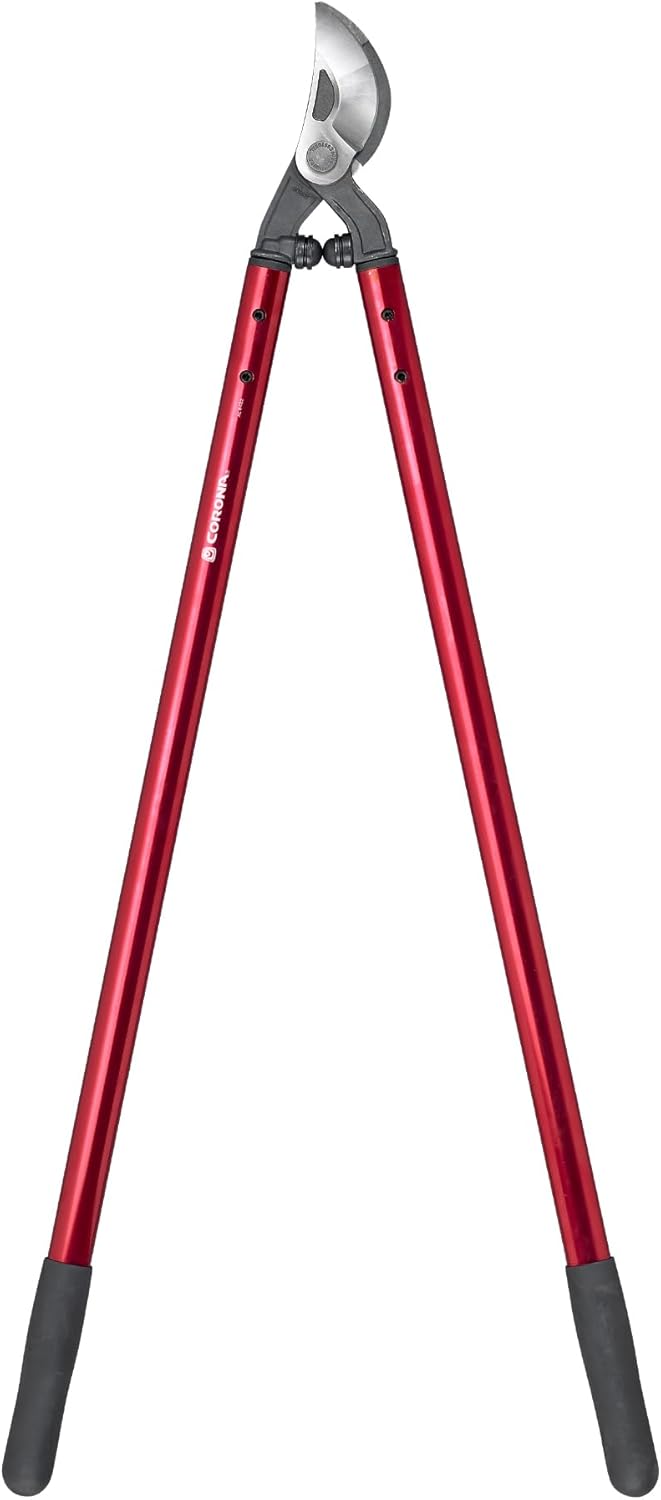
Corona Clipper AL 8482 MAXFORGED Orchard Loppers, 36-inch
| Cutting width | 2.5 inches |
|---|---|
| Blade Edge | Serrated |
| Blade Type | Bypass |
| Blade Material | Forged Steel |
| Handle Material | Aluminum |
The Corona AL 8482 MAXFORGED Orchard Loppers are a long‑handled bypass lopper built for serious tree pruning and orchard work. With 36‑inch aluminum handles and forged steel dual‑arc blades, it uses leverage and sharp, precision edges to make clean cuts on limbs up to about 2¼ inches across. The hooked anvil with a sap groove and a redesigned locking nut help keep the blade aligned and reduce binding during repetitive cutting. In practice this tool is most useful for tackling taller branches and thicker growth where extra reach and cutting power matter, and the blade design makes resharpening straightforward so it can stay serviceable for years. Expect noticeably less muscle strain than with shorter loppers, but the longer handles make it less maneuverable in tight spaces and it is bulkier to store. For balanced home gardeners and pros who need reliable power and clean cuts on medium branches, these loppers are a solid choice.
Best for: Gardeners and small‑scale orchardists who want a durable, high‑leverage lopper for routine tree and large‑branch pruning and value clean cuts and long service life.
Less Ideal for: People who primarily do fine pruning, hedge shaping, or work in very tight spaces should choose a shorter, lighter lopper instead.
- 36-inch aluminum handles provide strong leverage for cutting thicker branches with less effort
- MAXFORGED forged steel dual‑arc blades deliver precise, clean cuts and can be resharpened
- Hook with deep sap groove and improved locking nut reduces binding and keeps blade aligned
- Bypass blade type is designed to make clean pruning cuts that promote healthier regrowth
- Long 36‑inch length makes the tool bulky and harder to use in tight or densely planted areas
- Designed for medium to large branches so it is overkill for fine trimming or small shrubs
Verdict: Choose these Corona 36-inch orchard loppers when you need extra reach and powerful, resharpenable forged-steel blades for reliable medium‑branch tree pruning.
FELCO F22 33.1" Forged-Aluminium Heavy-Duty Loppers

| Cutting width | 1.8 inches |
|---|---|
| Blade Type | Anvil |
| Blade Material | Alloy Steel |
| Handle Material | Forged Aluminium; Rubberized Grip |
The FELCO F22 is built for demanding pruning and tree work where clean, powerful cuts matter. Its forged aluminium handles keep the tool relatively light while providing a stiff platform for the screw-mounted alloy-steel anvil blade that cuts up to about 1.8 inches in diameter. The curved cutting head, shock absorbers, and rubberized non-slip grips make repeated cuts easier on the wrists and improve control when working overhead or in tight positions. Micrometric adjustment and replaceable components mean you can keep the F22 in service for years with simple maintenance. Expect very precise, single-motion cuts on live and dead wood up to its stated capacity; very thick hardwoods beyond that will require a larger bypass lopper or a saw. The anvil-style cutting action is excellent for tough, fibrous branches but can crush some stems compared with a bypass shear, so for clean pruning on flowering shrubs you may prefer a bypass tool. Overall this is a durable, serviceable choice for serious gardeners and arborists who value cutting power and long-term repairability.
Best for: A buyer who prioritizes cutting performance and durability for regular tree pruning or property maintenance; ideal for experienced gardeners and arborists who plan to maintain and service their tools.
Less Ideal for: Casual gardeners who mainly prune delicate flowering shrubs or who need to cut very large trunk-sized limbs should consider a bypass pruner or a larger lopper respectively.
- Forged aluminium handles for strength with lower weight
- Replaceable screw-mounted alloy-steel blade and counter-blade for long service life
- Curved cutting head and shock absorbers reduce wrist strain during repetitive cuts
- Micrometric adjustment allows precise blade alignment and consistent cuts
- Anvil-style blade can crush softer stems compared with bypass loppers
- Cutting capacity limited to roughly 1.8 inches so not suited for very large branches
Verdict: Choose the FELCO F22 when you need a durable, high-performance lopper that delivers powerful, repairable cuts for regular tree pruning.
Fiskars PowerGear2 32" Bypass Lopper — 2" Cut Capacity

| Cutting width | 32 inches |
|---|---|
| Cut capacity | 2 inches |
| Blade Type | Bypass |
| Blade Material | Alloy Steel |
| Handle Material | Aluminum |
The Fiskars PowerGear2 32" bypass lopper is built for pruning medium-thick branches with less wrist and hand strain. Its patented PowerGear2 leverage multiplies cutting force so a single-handed pull slices through up to 2" green wood that would otherwise need much more effort. The hardened alloy-steel blades have a low-friction coating to resist gumming and rust and the serrated edge helps hold the branch while you cut. Long aluminum handles with SoftGrip touchpoints give comfortable control and reach for higher or deeper cuts. Practical benefits include cleaner cuts on live growth, better mechanical advantage compared with basic loppers, and durable construction backed by a lifetime warranty. Limitations are that it is a fixed-length, non-telescoping tool so reach is limited to 32" and it is intended for live branches up to 2" in diameter rather than heavy deadwood or very large limbs. Users should still use pruning judgment for branch size and safety when working above shoulder height.
Best for: Buyers who want a proven, lower-effort lopper for routine pruning and shaping of trees and shrubs where social proof and reliability matter.
Less Ideal for: If you need extended reach for tall limbs or a tool for cutting very large or dead hardwood branches, choose an extendable or higher-capacity cutter instead.
- PowerGear2 gearing multiplies leverage for easier cutting of up to 2" branches
- Hardened alloy-steel blades with low-friction coating reduce gumming and resist rust
- Serrated bypass blade provides cleaner cuts on live growth
- Long aluminum handles with SoftGrip points improve comfort and control
- Fixed 32" length limits reach compared with extendable loppers
- Not designed for very large or heavily dead wood beyond the 2" cut capacity
Verdict: A reliable, easy-to-use lopper that delivers significantly more cutting power for everyday tree and shrub pruning.
YRTSH 18-Inch Heavy Duty Compound-Action Loppers

| Cutting width | 1.6 inches |
|---|---|
| Blade Edge | Compound Action Technology |
| Blade Type | Anvil |
| Blade Material | Alloy Steel |
| Hand Orientation | Ambidextrous |
The YRTSH 18-inch loppers are a budget-friendly, heavy-duty pruning tool built to handle thicker branches around the yard. Its compound-action mechanism multiplies cutting force so the anvil-style alloy-steel blade can slice through up to about 1.6 inches of live or dead wood with less hand effort. Non-slip rubber handles make it comfortable to grip and the ambidextrous design suits left- or right-handed users. Practical uses include trimming fruit trees, pruning shrubs and removing stubborn twigs where extra leverage is needed. Expect a straightforward, no-frills tool that focuses on cutting power rather than premium finishes. Limitations are the fixed handle length and anvil blade type, which can crush soft stems rather than deliver the cleaner shear of bypass loppers, and the relatively compact 18-inch reach that may require a step stool or pole tool for high limbs. For routine heavy pruning where price and cutting force matter, this lopper is an effective choice.
Best for: Buyers who prioritize cutting performance on a tight budget and need a sturdy, no-frills tool for trimming fruit trees, shrubs, and medium-thick branches.
Less Ideal for: Gardners who need maximum reach for tall trees or who prefer the cleaner cuts of bypass blades for live, delicate stems should consider other options.
- Compound-action mechanism increases cutting power for thicker branches
- Alloy steel anvil blade designed to stay sharp through heavy use
- Non-slip rubber handles provide a secure, comfortable grip
- Ambidextrous design suits both left- and right-handed users
- Anvil blade can crush softer green growth compared with bypass blades
- Fixed 18-inch length limits reach for high or hard-to-reach branches
Verdict: A cost-conscious, power-focused lopper that makes cutting medium-thick branches easier thanks to its compound-action blades.
YACOO Telescopic Anvil Loppers with SK5 Carbon Steel Blade

| Blade Type | Anvil |
|---|---|
| Blade Material | Carbon Steel |
| Cutting width | 2.36 inches |
| Size | 27.6-37.4" |
These YACOO loppers are a long-reach anvil-style tool for cutting dry or woody branches up to about 2.36 inches (5 cm). They extend from 70 to 95 cm so you can trim higher limbs and inner canopy without a ladder. The SK5 high-carbon blade has a non-stick coating and combines with a compound lever mechanism to multiply your force, which reduces wrist strain when tackling thicker branches. Aluminium alloy handles keep the tool relatively light while still feeling sturdy, and ergonomic non-slip grips improve control during repetitive pruning. As an anvil cutter it excels on dead wood and tough growth but will crush green, fibrous stems more than a bypass shear would. The telescoping joint and compound pivot add moving parts that benefit reach and leverage but require occasional tightening and lubrication to stay reliable on a professional schedule. For landscapers or serious gardeners who need reach and power for woody pruning, this lopper is a practical, durable choice; those who primarily prune live, green shoots may prefer a bypass-style tool instead.
Best for: For professional gardeners or reliable-focused homeowners who need a strong long-reach lopper to tackle woody, dead, or thicker branches without frequent tool failure, and who prefer a tool built for power and repeated use.
Less Ideal for: Not the best choice for pruning mainly live, soft growth or for users who prefer the precise slicing action of bypass loppers.
- Telescopic aluminium handles extend reach for higher and hard-to-reach branches
- SK5 high-carbon steel blade with non-stick coating for cleaner cuts and corrosion resistance
- Compound lever action reduces user effort on thicker branches
- Lightweight construction balances strength and maneuverability
- Ergonomic non-slip grips improve control during extended use
- Anvil blade design can crush green, live stems rather than slicing cleanly
- Telescoping mechanism and pivots need periodic maintenance to retain smooth operation
Verdict: A sturdy telescopic anvil lopper that gives professionals reliable reach and powerful cutting for woody branches.
Fiskars 28" Garden Bypass Loppers — 1.5" Cut Capacity

| Cutting width | 1.5 inches |
|---|---|
| Blade Material | Stainless Steel |
| Blade Edge | Serrated |
| Hand Orientation | Ambidextrous |
The Fiskars 28" bypass loppers are built for regular pruning of small to medium tree branches and heavier yard cleanup. Its fully hardened stainless-steel blades with a low-friction nonstick coating slice through live wood up to 1.5 inches across, which helps reduce sap build-up and keeps cuts clean. The long steel handles and softgrip cushions with a shock-absorbing bumper make repetitive cutting less tiring and give more control when working higher or deeper into the canopy. The blades are replaceable, and the ambidextrous bypass design favors clean cuts on living stems rather than crushing. Practical limitations: the 1.5" cut capacity limits work on larger limbs and the all-steel handle design, while durable, is heavier than some aluminum models, so prolonged overhead work may be more tiring. For gardeners who value dependable, long-lasting gear, these loppers offer predictable cutting performance and a lifetime warranty for peace of mind.
Best for: Experienced home gardeners and property owners who prioritize durability and consistent cutting performance for routine pruning and tree maintenance.
Less Ideal for: People who need to cut large limbs regularly or who require a very lightweight lopper for extended overhead work should consider larger-capacity or lighter models.
- Hardened stainless-steel blades with non-stick coating for smoother, cleaner cuts and reduced sap buildup
- Replaceable blade design extends tool life and simplifies maintenance
- Softgrip handles and shock-absorbing bumper reduce hand fatigue during extended use
- Ambidextrous bypass blades produce precise cuts on living branches
- 1.5 inch maximum cut capacity prevents use on larger limbs
- All-steel handle construction is heavier than some lightweight alloy or composite alternatives
Verdict: A rugged, reliable bypass lopper that delivers clean cuts and long-term durability for routine pruning tasks.
Fiskars 32" PowerGear Bypass Lopper

| Cutting width | 2 inches |
|---|---|
| Blade Type | Bypass |
| Blade Material | Alloy Steel |
| Hand Orientation | Ambidextrous |
The Fiskars 32" PowerGear Bypass Lopper is built to make pruning larger live branches easier by multiplying your cutting force with a patented gearing mechanism. You use it like a traditional bypass lopper but the PowerGear system concentrates leverage near the middle of the cut, so pairs of long handles and a smooth action let you slice through up to 2-inch branches with noticeably less effort. The precision-ground alloy steel blades are bypass style and feature a low-friction coating to reduce gumming and resist corrosion, while SoftGrip handles and an ambidextrous design lower hand and wrist strain during longer jobs. The tool is relatively lightweight for its length thanks to reinforced composite handles, which helps prevent fatigue when trimming trees or large shrubs. Limitations are its 2-inch cutting capacity, which will not handle very thick limbs, and the fixed long handle length that may be awkward in tight spaces or for users who prefer telescoping reach. For routine yard maintenance and pruning of medium branches this lopper balances power, comfort, and durability.
Best for: A cautious buyer who wants a reliable, easy-to-use lopper for routine pruning of trees and medium shrubs and values ergonomic design and long-term durability.
Less Ideal for: Not the best choice for users who need to cut very large hardwood limbs or who primarily work in cramped spaces where a shorter or extendable tool is required.
- PowerGear mechanism multiplies leverage for easier cuts on medium branches
- Sharp, hardened alloy-steel bypass blades with low-friction coating for smoother, less gumming cuts
- SoftGrip, ambidextrous handles and lightweight composite construction reduce hand and arm fatigue
- Long 32" handles provide reach and mechanical advantage for tree and shrub pruning
- 2-inch maximum cutting capacity limits use on very thick limbs
- Fixed long handles can be cumbersome in tight or confined pruning spots
Verdict: Choose this lopper if you want a dependable, low-effort tool that reliably cuts up to 2-inch live branches while minimizing hand and arm strain.
Choosing the Right Loppers for Trees: Key Factors to Consider
Cut Capacity and Intended Branch Size
Cut capacity determines which branches you can remove safely from the ground. Loppers are made to cut anywhere from thin twigs up to multi-inch limbs; choosing a tool rated for the diameter you commonly face prevents abusing the tool and reduces the temptation to twist or saw with the handles.
If you routinely prune mature shade trees, prioritize a higher cut-capacity model and accept some extra weight. For seasonal light pruning or young fruit trees, a lower-capacity, lighter lopper increases accuracy and reduces fatigue.
Blade Type and Edge Retention
Bypass blades give a scissor-like shearing cut that is best for live branches because it produces a clean healing surface. Anvil-style blades crush and are more suitable for dead wood; they are not ideal for healthy tree branches because they can damage bark and slow healing.
Look for blades made from hardened steel with a good heat treatment and a finish that resists sap and corrosion. Better edge retention means fewer sharpening sessions and cleaner cuts after repeated use, which helps tree health by reducing ragged wounds.
Handle Length, Leverage, and Reach
Longer handles deliver more cutting force with less exertion, enabling you to tackle thicker branches from the ground. However, extra reach increases weight and can reduce control when making precise cuts on smaller growth.
Consider the typical height and placement of branches you prune. Telescoping or extendable handles add versatility for higher limbs but introduce moving joints that can require maintenance and may decrease stiffness compared with solid handles.
Weight, Balance, and Ergonomics
A lopper that feels balanced in your hands reduces wrist strain during repetitive cuts and keeps the blades aligned under load. Heavier models may be more durable and deliver greater leverage, but they also accelerate fatigue when pruning sustained sections of canopy.
Comfortable grips, non-slip coatings, and handles shaped to your hand size improve control. Test the tool's center of gravity if possible: a well-balanced lopper opens and closes smoothly without requiring a compensating grip.
Pivot Mechanism and Long-Term Durability
The pivot assembly transfers force from the handles to the blades; a robust pivot holds blade alignment under load and resists loosening over seasons. Look for sealed or serviceable pivots, bushings that reduce wear, and hardware that can be re-tightened or replaced.
A durable pivot reduces wobble and preserves cutting performance. If the pivot is plastic or poorly supported, expect faster wear that will shorten the tool's useful life and degrade cut quality.
Maintenance and Sharpening Ease
Regular maintenance keeps a lopper cutting smoothly and prevents corrosion. Tools that allow blade removal or have easily accessible edges simplify sharpening and replacement. Finishes that resist sap and rust reduce the frequency of cleaning.
Consider how comfortable you are with routine sharpening and occasional disassembly. Some loppers accept aftermarket replacement blades or have user-serviceable parts, which extends the tool's lifespan when properly cared for.
When to Use Loppers Instead of a Saw
Loppers are ideal for branches that are too large for pruning shears but do not require a pruning saw. They let you make single, clean cuts on limbs within the tool's rated capacity, which speeds work and produces wounds that heal more predictably than torn or jagged breaks.
Use loppers for deadwood removal, thinning small scaffold branches, and cutting back crossing limbs that are reachable from the ground. For branches beyond the tool's cut capacity or those high in the canopy, a pruning saw or professional help is safer and more effective.
- Best for branches within the tool's cut diameter
- Faster and cleaner than sawing small limbs
- Not suitable for very large or high canopy limbs
Bypass Vs Anvil Action and Tree Health
Bypass loppers slice with two sharp blades and leave a smoother wound on living wood. That makes them preferable for most tree care where you want quick healing and minimal bark damage.
Anvil loppers close a single blade onto a flat surface and can crush softer wood. They work well on dead branches but can damage live tissue. Match the blade action to the wood condition you most often cut to protect tree health.
- Choose bypass for live wood and cleaner cuts
- Choose anvil for dense dead wood only
- Consider blade maintenance needs for both types
Extendable Handles: Pros and Cons
Telescoping handles add reach and let you cut higher branches while staying on the ground, reducing ladder use. They are useful for occasional higher pruning without buying a separate pole pruner.
However, moving joints reduce stiffness and add weight. If you frequently prune high branches, a dedicated pole pruner or a solid long-handled lopper may be a better long-term choice because of improved rigidity and fewer failure points.
- Telescoping: more versatile reach, more maintenance
- Solid long handles: stiffer and more reliable under load
- Balance reach needs against frequency of use
Sharpening and Caring for Loppers
Clean blades after each use to remove sap and debris that accelerate corrosion. A light oiling of the pivot and blades prevents rust and keeps action smooth. Wipe handles dry and store the tool in a dry place to protect finishes and joints.
Sharpen bypass blades along the beveled cutting edge with a file or sharpening stone; maintain the factory bevel and avoid changing the blade angle. For anvil blades, keep the flat surface smooth to avoid crushing wood.
- Wipe and oil blades after use
- Sharpen bypass edges, flatten anvil faces
- Check and tighten pivot hardware periodically
Safety Tips for Tree Pruning With Loppers
Always wear eye protection and gloves when pruning. Keep your footing secure and never overreach; if a cut requires twisting or excessive force, stop and reconsider the method or tool. Position yourself so the branch will not fall toward you when released.
Inspect limbs for tension or weight that could cause a sudden snap. Cut incrementally on larger branches, make relief cuts when needed, and use a pruning saw for the final severing when the branch is too large for the lopper.
- Wear eye protection and gloves
- Avoid overreaching; work from stable ground
- Watch for bound or tensioned branches
How We Chose the Best Loppers for Trees
We focused selection on tools built for recurring tree pruning rather than light garden trimming. Primary evaluation criteria emphasized maximum safe cut diameter, blade metallurgy and edge retention, handle length and leverage, and overall user control when cutting above shoulder height. We also considered weight distribution for extended use and the durability of the pivot mechanism because both affect hand fatigue and long-term reliability. Excluded from consideration were short-handled bypass loppers sized for shrubs, specialty arborist rigging gear, and garden shears not intended for woody branches. We prioritized tools that let a homeowner or property manager make clean pruning cuts on small to medium branches while minimizing risk to bark and cambium. Each shortlisted lopper met minimum standards for a secure cutting action, replaceable or serviceable blades, and handles suitable for safe two-handed leverage when tackling thicker tree limbs.
FAQ
What diameter branch should I attempt with loppers for trees?
It depends on the lopper's rated cut capacity. Many homeowner loppers are safe up to about 1 to 1.5 inches, while heavy-duty models manage 2 inches or more. When a branch approaches the tool's limit, use a saw instead to avoid damaging the lopper.
Are bypass loppers always better for live tree branches?
Bypass loppers are generally preferable for live wood because they shear cleanly and promote faster healing. Anvil loppers can crush living tissue and are best reserved for dead or hard, dry branches.
How often do lopper blades need sharpening?
Frequency depends on use and wood type. With regular seasonal pruning, expect to sharpen bypass blades once or twice a year. Dull blades tear wood and increase effort, so sharpen sooner if cuts become ragged or require extra force.
Can I use extendable-handle loppers for everyday pruning?
Extendable handles are handy for occasional high cuts, but they add weight and may flex more than solid handles. For frequent pruning of high branches, a dedicated pole pruner or a solid long-handled lopper may be a better choice.
How do I maintain the pivot on my loppers?
Keep the pivot clean and lightly oiled, check for looseness, and tighten hardware as needed. If the pivot has replaceable bushings or a serviceable cartridge, follow the manufacturer's instructions for lubrication and replacement to keep blades aligned.
Final Verdict
Choose loppers that match the typical branch diameters and wood condition you prune most often. Prioritize blade type and steel quality if you need clean healing cuts on live branches, and favor longer handles when you need reach and leverage for thicker limbs. Accept tradeoffs between weight and cut capacity: heavier, longer-handle loppers increase power but also fatigue. Use the scoring criteria above to weigh cut capacity, blade durability, handle reach, and pivot reliability when selecting a lopper for trees so you get a safe, durable tool that fits how you work.
