

Note: This article contains affiliate links. If you click on these links and make a purchase, I may earn a small commission at no extra cost to you. This helps support my research and content. Read my full affiliate disclosure here.
Picking the right manure for hydrangeas matters because this shrub responds strongly to soil structure, steady nutrients, and modest acidity shifts. The wrong amendment can burn roots, shift bloom color unpredictably, or settle too quickly without improving long-term fertility. This guide focuses on manures suited for hydrangeas, from light potting mixes in containers to heavy garden beds. We shortlisted five top options commonly used by gardeners and evaluated them for nutrient balance, ease of application, and effects on soil texture and pH. Below you will find practical notes on using manure around hydrangeas, what to expect after application, and tips to avoid common mistakes before we present the product picks.
Top Picks at a Glance
| Best Overall The best all-around choice for most situations | Charlie's Compost Concentrated Organic Plant Fertilizer (10 lb) |  |
| Best Value The sweet spot between price and what you get | BRUT Worm Farms Cow Compost — 10 Quart Bag |  |
| Best Budget The cheapest option that still gets the job done reliably | Home and Country USA Organic Composted Cow Manure (1 Quart) |  |
| Highest Rated A top-rated pick with lots of positive feedback | Home & Country USA Organic Composted Cow Manure, 20 lb Pail |  |
| Best Seller A high-volume bestseller chosen again and again | Garden Magic Michigan Peat Compost & Manure Blend, 40 lb |  |
Charlie's Compost Concentrated Organic Plant Fertilizer (10 lb)

| Net weight | 10 pounds |
|---|---|
| Manufacturer | Charlie's Compost |
| Ingredients | Vegetarian chicken manure, biochar, organic grasses, crop residue |
| Certification | OMRI listed organic |
Charlie’s Compost is a concentrated, OMRI-listed organic compost intended to boost soil biology and nutrient content for vegetables, ornamentals and container plants. You apply it by working small amounts into garden soil or mixing with potting media to add organic matter, microorganisms and slow-release nutrients rather than relying on synthetic fertilizers. Notable features include a vegetarian, antibiotic-free chicken manure base, added biochar and crop-residue organics, and organic certification that makes it suitable for organic vegetable production. In practice a little goes a long way, so it is useful for improving tired beds, prepping new vegetable rows, or topdressing containers; the concentrated nature reduces the volume you need to handle compared with loose compost. Limitations are that this is a bagged, concentrated product so it will not replace large volumes of finished compost for major soil building and may require additional application or mixing for even distribution in large beds.
Best for: Gardeners who prioritize organic, low-risk inputs and want a ready-to-use concentrated amendment to improve vegetable beds or containers without synthetic chemicals.
Less Ideal for: Those needing large quantities of finished compost to rebuild soil structure across many beds or landscapers who prefer bulk, loose compost for large-scale projects.
- OMRI-listed organic formulation safe for certified organic vegetable production
- Concentrated formula delivers nutrients and microbes with smaller application volumes
- Contains biochar and diverse organic inputs to improve soil structure and biology
- Suitable for both in-ground beds and containers when mixed appropriately
- Not a bulk finished compost so larger soil-building projects will still need more volume
- Bagged form requires mixing or spreading to avoid uneven application
Verdict: Choose this concentrated, OMRI-listed compost when you want an organic, low-volume soil amendment to boost biology and nutrients in veggie beds and containers.
BRUT Worm Farms Cow Compost — 10 Quart Bag

| Unit Count | 192 Ounce |
|---|---|
| Volume | 10 quarts |
| Brand Name | BRUT WORM FARMS |
| UPC | 860000284295 |
Brut Cow Compost is a ready‑to‑use bagged cow manure compost aimed at improving soil fertility and structure. It is made from 100% composted cow manure that has been finely sifted, which makes it easy to mix into potting mixes, top‑dress containers, or incorporate into garden beds. Notable features include an OMRI listing for organic use, a nutrient profile with nitrogen, calcium and iron, and a low‑odor, non‑burning formula that is safe around seedlings and houseplants. In practice the compost increases microbial activity and helps retain moisture, so plants show healthier foliage and better growth when used regularly. The 10 quart bag is convenient for small gardens, potted plants, or spot treatments without handling bulk loads. Limitations are the modest volume per bag for larger beds and the product is a general amendment rather than a complete, balanced fertilizer, so heavier feeding or specific NPK management may still be needed for high‑demand crops.
Best for: Gardeners who want an easy, certified organic soil amendment to boost soil life and moisture retention in containers, small beds, or targeted spots without handling raw manure.
Less Ideal for: People establishing large garden plots or those seeking a complete NPK fertilizer for heavy feeding crops should consider bulk compost or supplemental fertilizers instead.
- OMRI‑listed organic compost safe for edible and ornamental plants
- Finely sifted, low‑odor formula suitable for indoor use and seedlings
- Adds organic matter and beneficial microbes to improve moisture retention and soil structure
- Versatile application as top dressing, mix‑in amendment, or container soil enhancer
- Small 10 quart volume requires multiple bags for larger garden projects
- Not formulated as a balanced complete fertilizer for high‑demand crops
Verdict: A compact, OMRI‑listed bag of finely composted cow manure that reliably adds organic matter and microbial life to containers and small garden beds.
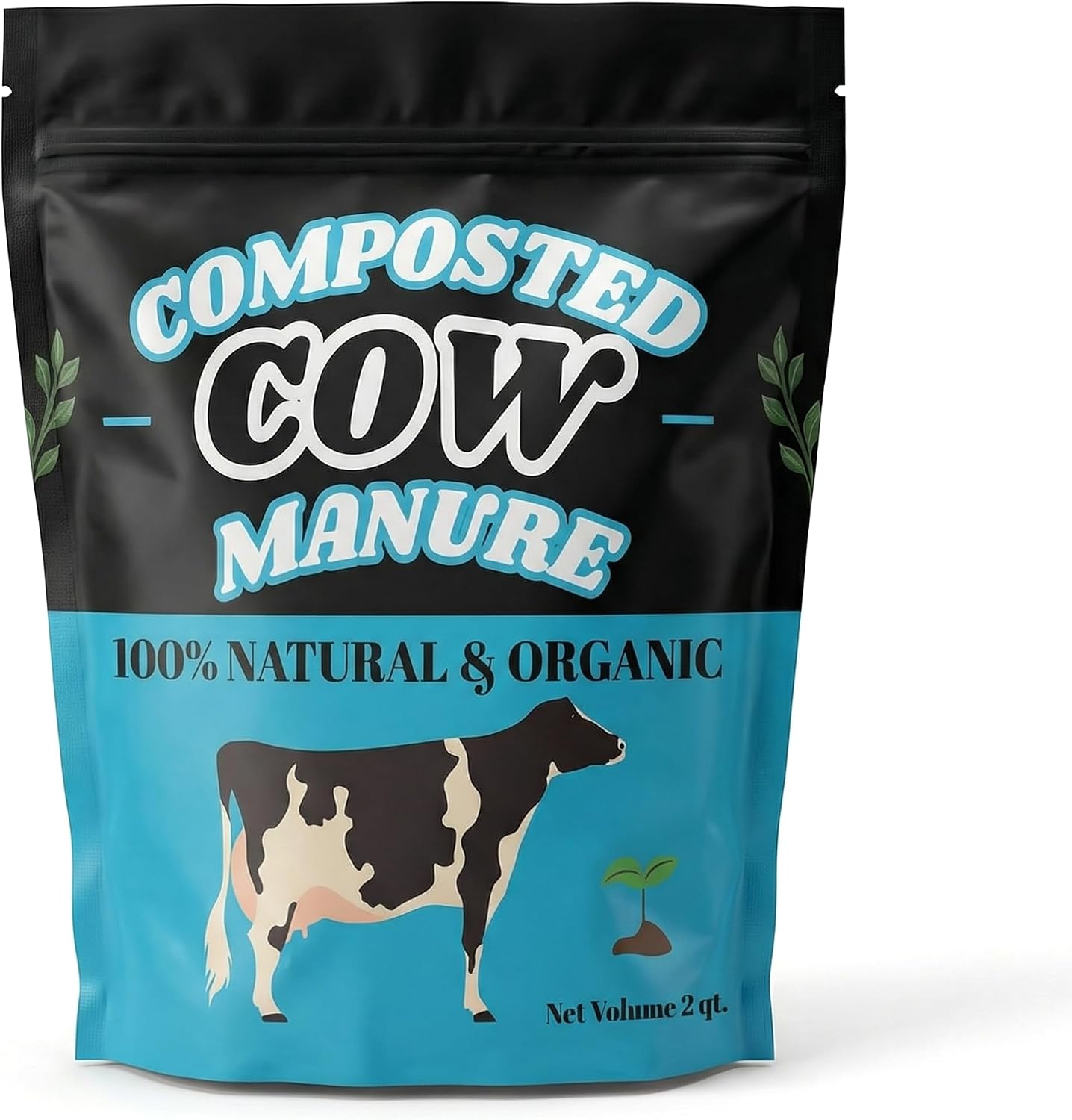
Home and Country USA Organic Composted Cow Manure (1 Quart)
| Item Form | Liquid |
|---|---|
| Application Method | Incorporate into soil |
| Target Species | vegetables, flowers, shrubs |
| Liquid Volume | 1 quarts |
| Mixing Ratio | 1:10 |
This 1-quart organic composted cow manure is a concentrated liquid fertilizer designed to be mixed and incorporated into garden soil. Typical use is blending the product at the recommended 1:10 ratio and applying it to raised beds, vegetable plots, potted plants or around shrubs to boost soil fertility and water retention. Notable features include an organic formulation from U.S. farms, a liquid form that makes even application and quick integration into soil, and guidance for full garden coverage. Practical benefits are faster distribution than bulky bagged manure, suitability for small-plot gardeners who want organic inputs, and an easy mixing ratio for dilute feeding. Limitations are the small container size, which means you will need multiple bottles for larger beds, and the liquid form may require more frequent applications than slow-release amendments. It is most useful as part of a regular feeding routine or to quickly refresh potted soils rather than as a sole long-term soil builder.
Best for: Gardeners working with small beds, containers or raised planters who want an easy-to-apply organic feed on a budget and prefer quick soil refreshes.
Less Ideal for: Large-scale vegetable growers or those seeking a single-product soil-building amendment for extensive beds should consider bulk compost or bagged manure instead.
- Certified organic composted manure sourced from U.S. farms
- Liquid form mixes easily with water for even application
- Targets vegetables, flowers and shrubs so it is versatile for garden beds and containers
- Small 1-quart volume requires multiple purchases for medium to large gardens
- Liquid feed works faster but does not provide long-term bulk organic matter
Verdict: A convenient, wallet-friendly organic liquid manure for quickly boosting soil fertility in small beds and containers.
Home & Country USA Organic Composted Cow Manure, 20 lb Pail

| Item Form | Solid |
|---|---|
| Application Method | Incorporate into soil |
| Coverage | Full |
| Target Species | general purpose |
This composted cow manure is a straightforward soil amendment for gardeners who want a reliable, organic source of nutrients. Packaged in a 20 pound pail, it is intended to be incorporated into soil to improve structure, water retention, and microbial activity across vegetables, flowers, shrubs, and lawns. Notable features include its fully composted, chemical-free formulation and USDA-sourced material that supports sustainable practices. In practical use you can mix it into garden beds at planting time or work it into topsoil to refresh established beds; it will add organic matter and help soils hold moisture in drier spells. Because it is fully composted, it is less likely to burn plants compared with raw manure, but the pail size means it is best for small beds, containers, or targeted applications rather than large-scale topdressing. If you prioritize consistent, organic soil improvement in small to medium garden areas, this product delivers predictable results with minimal handling fuss.
Best for: Gardeners who want a dependable, organic soil amendment for small to medium beds and container gardens and who prioritize predictable, low-risk results over bulk volume.
Less Ideal for: People managing large landscapes or seeking a bulk supply for repeated topdressing should look for larger commercial-size manure or bulk compost alternatives.
- Fully composted and chemical-free for safe use around vegetables and ornamentals
- Improves soil structure and water retention by adding organic matter
- Sustainably sourced from USA farms
- 20 lb pail is a limited quantity for larger gardens or multiple beds
Verdict: A dependable, fully composted organic cow manure that reliably improves soil health for small to medium garden applications.
Garden Magic Michigan Peat Compost & Manure Blend, 40 lb

| Unit Count | 640 Ounce |
|---|---|
| Included Components | Michigan Peat – 5240 – 40lb |
| Item Type Name | Manure |
| Manufacturer | Michigan Peat |
This 40 lb Garden Magic Michigan Peat Compost & Manure Blend is a pre-mixed, odor-reduced soil amendment intended to boost nutrients and organic matter in raised beds and containers. It combines reed sedge peat with composted animal manure so you can work it into existing bed soil or use it to refresh potting mixes without additional processing. The bag is easy to scoop and spread around planting holes, top-dress beds, or mix into the top few inches of soil for vegetables, flowers, and lawns. Notable features are the organic compost content, manure-derived nutrients, and the claim of being odor-free, which makes handling more pleasant than raw manure. Because it is a blend rather than a complete potting soil, expect it to act as an amendment that improves texture and fertility rather than a standalone, soilless potting mix. If you need large volumes for deep beds you will likely need multiple bags, but for small raised beds and container refreshes this provides a straightforward, no-mix option to add organic matter and feed plants.
Best for: Ideal for gardeners updating small raised beds or refreshing container soil who prioritize value and a simple, ready-to-use organic amendment.
Less Ideal for: Not the best choice for growers who need a full premium potting mix formulated for seed starting or for large-scale bed builds where bulk soil or compost deliveries are more economical.
- Ready-to-use blend that can be applied directly to raised beds and containers
- Contains composted animal manure for added nutrients to support plant growth
- Odor-reduced reed sedge peat makes handling more pleasant than raw manures
- 40 lb bag provides a manageable amount for small beds and planter refreshes
- Sold as a soil amendment rather than a complete soilless potting mix
- One 40 lb bag covers a limited volume so larger projects require multiple bags
Verdict: A convenient, budget-friendly organic amendment that quickly boosts fertility and structure in small raised beds and containers.
Choosing the Right Manure for Hydrangeas: Key Factors to Consider
Nutrient Balance and Release Pattern
Hydrangeas need a steady supply of nitrogen for healthy foliage and adequate phosphorus and potassium to support abundant flowering. Manure labels rarely list exact N-P-K ratios like commercial fertilizers, so understanding typical nutrient content matters. Well-composted manures release nutrients slowly over weeks to months, reducing the risk of foliage burn and encouraging sustained bloom production.
Fast-release, less stable manures can spike nitrogen and push excessive leafy growth at the expense of flowers. When selecting manure, prefer products described as composted or cured for gradual nutrient availability. If your soil test shows specific deficiencies, choose manure that complements a targeted feeding plan rather than relying on it as a sole source.
Compost Maturity and Pathogen Risk
Unfinished, raw manure can carry weed seeds, high ammonia levels, and potentially harmful microbes that stress hydrangea roots. Finished composting reduces these risks by stabilizing organic matter, lowering soluble salts, and killing many pathogens and seeds through sustained heat.
Look for manure that explicitly states it is composted, cured, or aged. For container-grown hydrangeas or recently planted shrubs, fully mature manure is especially important because young roots are more susceptible to chemical and biological stressors. If raw manure is the only option, allow sufficient aging off-site or compost it thoroughly before application.
Physical Form and Soil Texture Impact
Manure can come as loose compost, pelleted material, or blended in potting mixes. The physical form determines how it influences drainage and water retention. Hydrangeas prefer soils that hold moisture evenly but do not become waterlogged; heavy clay amended with well-rotted manure often gains better crumb structure and improved drainage.
Light, fibrous compost increases water-holding capacity in sandy soils, while denser manures can help add organic mass to loam. Pelleted manures offer convenience and controlled application but may take longer to integrate into soil. Consider how the manure will mix into existing soil and how often you plan to reapply when choosing a form.
pH Influence and Bloom Color Considerations
Some hydrangea varieties display color shifts depending on soil acidity. Manure generally has a modest effect on soil pH compared with sulfur or lime, but repeated applications of certain manures can slightly raise or lower pH over time by altering microbial activity and organic matter decomposition.
If you are managing blue tones in aluminum-responsive hydrangeas, use manure that is neutral to slightly acid and monitor pH after repeated use. Avoid manures that contain lime or strongly alkaline additives when you are intentionally keeping soil on the acid side. Regular soil testing will tell you whether the manure is affecting pH enough to warrant corrective measures.
Salt Content and Root Safety
High soluble salts in fresh or poorly composted manure can damage hydrangea roots and reduce water uptake. Symptoms include leaf browning, stunted growth, and reduced bloom set. Composted manures usually have lower salt levels, but not always.
Choose manures labeled as low-salt or that have been cured sufficiently. When using a new batch, test on a small area or mix it thoroughly with existing soil and monitor plants for a few weeks. For container hydrangeas, pre-mix manure into potting medium at safe rates rather than top-dressing straight manure onto the surface to avoid salt concentrations near roots.
Application Rate and Timing
How much and when you apply manure will change its effect on hydrangeas. Too much manure in spring can promote vegetative growth and fewer flowers; applied too late in the season, it may stimulate tender new growth vulnerable to winter damage.
A conservative approach is to apply composted manure in early spring or fall at moderate rates, incorporating it lightly into the topsoil. For established plants, top-dress annually with a thin layer rather than deep incorporation. For newly planted shrubs, mix a small portion of composted manure into the planting backfill but avoid placing concentrated pockets next to roots.
How Manure Changes Hydrangea Soil Over Seasons
Manure alters soil biology and structure gradually rather than delivering instant nutrient spikes. In the first season after application you may notice improved moisture retention and slightly greener foliage as microbes begin to mineralize organic nitrogen. Over subsequent seasons, continued organic matter inputs increase porosity in heavy soils and enhance water buffering in sandy soils.
- First season: gentle nutrient release and better moisture retention
- Second season: improved soil crumb and root expansion
- Long term: increased microbial activity and more stable fertility
Using Manure Safely in Containers and Small Beds
Containers magnify risks from salts and unfinished manure because roots sit close to concentrated amendments. For potted hydrangeas, use finished, well-screened compost or small quantities of pelleted manure blended into potting mix at low rates. Fresh manure should never be placed directly against roots in containers.
If you grow hydrangeas in small beds, pre-mix composted manure into the top 6 to 8 inches of soil at planting. For existing beds, a thin top-dressing applied in spring and lightly forked in will supply nutrients without overwhelming the root zone.
- Mix small amounts into potting media for containers
- Top-dress established beds with a thin layer in spring
- Avoid raw manure close to roots
Monitoring and Adjusting Soil pH for Color Control
If bloom color is important, plan to test soil pH annually in the planting area. Manure can nudge pH slowly, but decisive adjustments for blue or pink flowers still require targeted amendments. Record pH before you begin using manure regularly so you can spot trends over several seasons.
To preserve aluminum availability for blue flowers, avoid manures containing lime or high-ash content. If pH drifts, correct gradually and retest after several months rather than making rapid large changes that stress plants.
- Test pH annually to track changes
- Avoid lime-heavy manures when maintaining acid soils
- Make gradual corrections and retest after months
Combining Manure with Mulch and Fertilizers
Manure works best as part of a broader fertility and cultural plan. A layer of organic mulch helps retain the moisture that manure improves and suppresses weeds that compete with hydrangeas. If soil tests show micronutrient needs or quick-feed nitrogen is required, use small, targeted fertilizer applications in addition to manure rather than substituting one for the other.
When combining inputs, space applications so microbes have time to break down organic matter. Apply manure in spring or fall and reserve quick-release fertilizers for brief corrective treatments during the growing season.
- Use organic mulch to enhance manure benefits
- Supplement with targeted fertilizers only when tests indicate a need
- Space applications to allow microbial processing
How We Chose the Best Manure for Hydrangeas
We prioritized manures that deliver reliable, garden-ready benefits for hydrangeas while minimizing risks to root health and bloom quality. Selection started with suitability for shrubs and pH-sensitive plants, then narrowed by nutrient profile, maturity and processing, physical form, and practical application factors for home gardeners. We excluded raw, uncomposted manures that pose high burn or pathogen risk and products intended only for turf or field-scale agriculture. Key evaluation criteria included nutrient balance with emphasis on nitrogen, phosphorus, and potassium levels that support leaf growth and flowering without excessive vigor; degree of composting or curing to prevent root scorch; effect on soil texture and water-holding capacity; influence on soil pH and suitability for maintaining or gently acidifying soils favored by many hydrangea types; and ease of spreading, availability in small-bag formats, and odor during handling. We also checked for sources and consistency of supply to ensure predictable results for home gardeners.
FAQ
Can I use fresh stable manure around hydrangeas?
Fresh stable manure is usually too strong for hydrangeas because of high ammonia and soluble salts. It can burn roots and encourage excessive leafy growth. If you must use fresh manure, age or compost it until it is well-rotted before applying near shrubs.
How often should I apply manure to established hydrangeas?
Once a year is sufficient for most established hydrangeas when using composted manure. Apply a thin top-dress in spring or incorporate modest amounts into the planting bed every couple of years to maintain organic matter without overstimulating growth.
Will manure change the color of my hydrangea flowers?
Manure has a modest, gradual effect on soil pH and seldom causes dramatic color shifts on its own. If you are actively managing blue versus pink tones, monitor pH and choose manures that are neutral to slightly acid and avoid lime-rich products.
Is pelleted manure safe for potted hydrangeas?
Pelleted manure can be safe if it is fully composted and used at low rates mixed into potting media. Pellets offer convenient dosing but may release nutrients more slowly, so they are better as a background amendment than a quick fix.
Can I mix manure with other organic amendments?
Yes. Manure blends well with compost, leaf mold, and wood-based mulches to create a balanced organic profile. Be mindful of salt content and maturity when blending, and avoid combining multiple high-nitrogen sources at once to prevent excess vegetative growth.
Final Verdict
Choose manure for hydrangeas with an eye toward maturity, salt content, and how the material will affect soil texture and pH over time. Prioritize well-composted options that release nutrients steadily and improve moisture retention without overwhelming the root zone. For container plants use small, screened amounts blended into potting mix; for beds use conservative top-dressing or light incorporation. Overall, the best choice balances gentle fertility with improved soil structure and minimal pH disruption. Focus on matching the manure form and application timing to your soil type and bloom goals so you get fuller growth and more consistent flowers without unintended problems.
