

Note: This article contains affiliate links. If you click on these links and make a purchase, I may earn a small commission at no extra cost to you. This helps support my research and content. Read my full affiliate disclosure here.
Getting the right micronutrient fertilizer can make the difference between a struggling plant and one that thrives. Micronutrients like iron, zinc, manganese, and boron are needed in small amounts, but deficiencies show quickly as chlorosis, poor fruit set, or stunted growth. Choosing the appropriate product matters for container gardens, raised beds, and landscape plantings because application method and nutrient balance affect both plant response and the risk of overapplication. This guide covers seven top-rated micronutrient fertilizers shortlisted for typical home-garden situations. We evaluate products based on nutrient profile, ease of use, and suitability for common garden crops, so you can pick an option that corrects deficiencies without disrupting soil biology. Read on for practical buying guidance and care tips to get faster, safer results in the garden.
Top Picks at a Glance
| Best Overall The best all-around choice for most situations | Jack's Classic 20-20-20 All Purpose Water-Soluble Fertilizer (24 oz) | 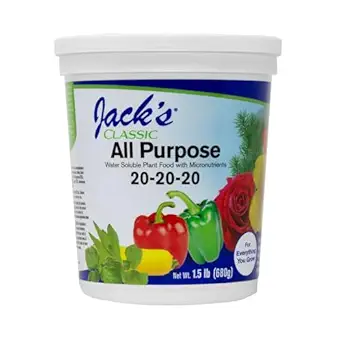 |
| Best Quality Built to a higher standard if you want something more solid | The Andersons PGF Balanced 10-10-10 Granular Fertilizer with Micronutrients and 2% Iron (18 lb, 5,000 sq ft) |  |
| Best Value The sweet spot between price and what you get | Pendelton Jackpot Micronutrient Liquid Fertilizer Mix (32 oz) |  |
| Best Budget The cheapest option that still gets the job done reliably | TPS NUTRIENTS Micronutrient Liquid Fertilizer, 8 oz |  |
| Highest Rated A top-rated pick with lots of positive feedback | AGROMAX Micronutrients Liquid Fertilizer, 2.5 Gallon |  |
| Most Popular A crowd favorite that many people choose with confidence | Simple Lawn Solutions Micro Booster Liquid Micronutrient Fertilizer (1 Gallon) |  |
| Best Seller A high-volume bestseller chosen again and again | TPS NUTRIENTS Indoor Plant Food Liquid Fertilizer, 8 fl oz |  |
Jack's Classic 20-20-20 All Purpose Water-Soluble Fertilizer (24 oz)

| Item Form | Powder |
|---|---|
| Specific Uses For Product | Plant Growth |
| Coverage | All |
| Mixing Ratio | 0.22 |
Jack's Classic 20-20-20 is a professional‑grade, water‑soluble powder fertilizer intended for general feeding of indoor and outdoor plants. You dissolve the measured spoonfuls in water and apply as a root drench or foliar spray every 7 to 14 days, or use weaker mixes for seedlings and cuttings. The even 20-20-20 NPK formula promotes quick green‑up and leaf expansion, while included micronutrients support overall plant health. Because it is a powder concentrate, a small tub makes multiple gallons of feed, which is convenient for regular maintenance across beds, containers, and ornamentals. The product ships with a measuring spoon and clear directions, so it is easy to dose consistently. Limitations to note are that it is a generalist formula rather than crop‑specific booster, so plants with specialized needs may do better with targeted blends, and it requires careful handling and dilution to avoid overfeeding. Protective handling is recommended since the powder can irritate skin and eyes.
Best for: Gardeners who want a reliable, easy-to-use all‑around fertilizer for regular maintenance of outdoor beds, containers, and ornamentals and who value predictable, balanced nutrition.
Less Ideal for: Growers seeking a specialized bloom booster or a fertilizer tailored to a single crop should choose a targeted formula instead.
- Balanced 20-20-20 NPK supports fast green-up and leaf growth across many plant types
- Water‑soluble powder stretches farther than comparable liquid feeds so one tub makes multiple gallons
- Usable as both foliar spray and root feed for flexible application
- Includes measuring spoon and clear mixing directions for consistent dosing
- Added micronutrients reduce need for separate supplements
- General all-purpose formula is not optimized for bloom or fruit boosting
- Requires accurate measuring and dilution to avoid fertilizer burn
Verdict: A straightforward, professional‑grade balanced fertilizer that delivers reliable, easy-to-dose nutrition for maintaining healthy outdoor plants.
The Andersons PGF Balanced 10-10-10 Granular Fertilizer with Micronutrients and 2% Iron (18 lb, 5,000 sq ft)

| Item Form | Granules |
|---|---|
| Application Method | spreader |
| Coverage | 5000 square feet |
| Mixing Ratio | 10-10-10 |
| Target Species | Lawns and Gardens |
The Andersons PGF Balanced 10-10-10 is a fine-particle granular fertilizer designed for broad, even coverage across lawns and garden beds. It is typically applied with a broadcast spreader and then watered in to activate the quick-release nutrients. The unusually small particle size means a single 18 lb bag claims coverage up to 5,000 sq ft and helps reduce patchy feeding compared with coarse granules. The formula is balanced for nitrogen, phosphorus and potassium and includes micronutrients plus 2% iron for enhanced greening. It works well for spring and fall applications, for establishing new turf or boosting established lawns, and can be worked into soil for vegetable or flower beds. Users should sweep or blow product off paved surfaces to avoid iron staining and store any leftover in a dry area. Because the fertilizer is quick-release, expect faster visible response but shorter duration between applications than slow-release products.
Best for: Homeowners who prioritize consistent, dependable feeding and want a straightforward granular option that gives quick visible results across lawns and planting beds.
Less Ideal for: Gardeners seeking a long-duration, slow-release feeding program or those who need a no-iron product to avoid any risk of surface staining.
- Very fine particle size for more even coverage and less patchy feeding
- Balanced 10-10-10 formula with added micronutrients and 2% iron for deeper greening
- Suitable for lawns, gardens, trees and shrubs and can be applied at planting or during the season
- Covers up to 5,000 sq ft from a single 18 lb bag when applied as directed
- Quick-release nutrients mean results appear sooner but may require more frequent reapplication versus slow-release formulas
- Contains iron that can stain sidewalks and driveways if not cleaned off immediately
Verdict: Choose this fine-particle 10-10-10 if you want a reliable, fast-acting granular fertilizer that delivers even coverage and deeper greening for summer lawn care.
Pendelton Jackpot Micronutrient Liquid Fertilizer Mix (32 oz)

| Item Form | Liquid |
|---|---|
| Specific Uses For Product | Lawns, Plant Growth |
| Coverage | Medium |
| Target Species | plants, flowers, vegetable gardens, trees, shrubs & lawns |
| Mixing Ratio | 1 ounce per gallon |
This 32 oz Jackpot Micronutrient Liquid Mix supplies plants with a broad spectrum of trace elements — boron, calcium, copper, iron, magnesium, manganese, and zinc — to complement standard NPK feeding. It is sold as a high-concentrate liquid that dilutes at the provided 1 ounce per gallon ratio, so a single bottle can make up to about 32 gallons of feed. Typical use is weekly foliar or soil feeding for houseplants, ornamentals, vegetables, trees, shrubs, and lawns; the pour-cap container makes measuring straightforward. The formula is useful when soil tests or plant symptoms indicate micronutrient deficiencies, and it can help improve color, vigor, and fruiting when used as a supplement to a balanced fertilizer program. Limitations are that it does not replace a complete NPK fertilizer and users should follow dilution directions to avoid overapplication; also there are no explicit application rates by plant type so beginners may need to proceed conservatively. For gardeners focused on maintaining balanced soil nutrition this product is a compact, flexible way to add missing trace elements to feed routines.
Best for: Gardeners who prioritize efficient, targeted soil nutrition and want a concentrated add-on to correct or prevent micronutrient deficiencies across a range of plants.
Less Ideal for: Buyers looking for an all-in-one complete fertilizer or those who prefer pre-mixed granular feeds designed for single-step feeding.
- Contains a broad set of micronutrients (B, Ca, Cu, Fe, Mg, Mn, Zn) to address trace element needs
- High concentrate formula that dilutes to make up to 32 gallons, reducing storage and purchase frequency
- Simple 1 ounce per gallon mixing ratio and pour-cap container for easy measuring
- Suitable for indoor and outdoor use across many plant types including vegetables, ornamentals, trees, shrubs and lawns
- Does not include primary NPK values so it must be used alongside a base fertilizer
- No detailed crop- or species-specific application rates provided in the listing
Verdict: A compact, high-concentrate micronutrient supplement that efficiently adds essential trace elements to a regular feeding program.
TPS NUTRIENTS Micronutrient Liquid Fertilizer, 8 oz

| Item Form | Liquid |
|---|---|
| Application Method | watering can, hose-end sprayer |
| Target Species | plants |
| Liquid Volume | 8 fluid ounces |
This 8 oz liquid micronutrient from TPS NUTRIENTS is a concentrated plant food designed to be mixed into a watering can or used via a hose-end sprayer to supply trace elements that support root development and vigorous foliage. It is intended for routine feeding of container plants, raised beds, flowers, vegetables and shrubs, and integrates easily into regular watering schedules. The product’s liquid form makes it easy to apply and distribute evenly, and the packaging size is convenient for hobby gardeners and small gardens. Because it focuses on micronutrients rather than being a full-strength macronutrient formula, you should use it alongside your regular NPK feed or according to a feeding plan to avoid nutrient gaps. The small 8 oz bottle is portable and low-waste for occasional use but means frequent repurchase for larger gardens. Overall this is a practical, easy-to-use supplement for maintaining plant vigor when used as part of a broader fertilizing routine.
Best for: Budget-minded home gardeners who want an easy-to-apply micronutrient boost for containers, small beds, and potted plants and prefer simple, low-fuss feeding routines.
Less Ideal for: Large-scale vegetable growers or landscapers who need bulk fertilizer or a complete NPK formula for foundational feeding of many plants.
- Liquid formula for easy mixing and even application with watering cans or hose-end sprayers
- Suitable for both indoor and outdoor use across containers, raised beds, flowers and vegetables
- Compact 8 oz bottle is convenient and low-waste for small-scale gardeners
- Small 8 oz volume means more frequent repurchase for medium to large gardens
- Product lists NPK but does not provide a full detailed nutrient analysis on the label
Verdict: A compact, easy-to-use liquid micronutrient supplement that makes it simple and affordable to support healthier foliage and stronger roots in small gardens.
AGROMAX Micronutrients Liquid Fertilizer, 2.5 Gallon

| Unit Count | 320 Fluid Ounces |
|---|---|
| Item Form | Liquid |
| Contains | Seaweed extract and fulvic acid |
| Directions | 3-6 oz per 1,000 sq ft every 2-4 weeks |
This 2.5 gallon jug of AGROMAX Micronutrients is a concentrated liquid designed to correct micronutrient deficiencies and improve turf color and vigor. It supplies iron, manganese, magnesium, sulfur and other trace elements, plus 3% seaweed extract and 1% fulvic acid to aid uptake and root health. Typical use is a foliar or tank application at 3 to 6 ounces per 1,000 sq ft every 2 to 4 weeks, mixed with water and applied so foliage can dry. The product is practical for repeated summer or recovery applications where chlorosis or slow growth suggests micronutrient shortfalls. Notable features include chelated manganese and a formulation that omits nitrogen so you can add it separately if desired. Important limitations are the need to follow label rates and compatibility testing before mixing, safety precautions for handling concentrated material, and that coverage details are given on the label rather than on the container itself. This is a focused micronutrient supplement rather than an all-in-one fertilizer, so plan it into an overall nutrient program.
Best for: Buyers who prioritize dependable, targeted correction of micronutrient deficiencies for lawns or landscape plants and who follow label directions and routine nutrient programs.
Less Ideal for: Casual gardeners seeking an all-in-one granular feed or those unwilling to handle concentrated liquids and follow safety and dilution instructions.
- Provides a broad spectrum of micronutrients including chelated manganese and iron for correcting chlorosis
- Includes seaweed extract and fulvic acid to improve nutrient uptake and root vigor
- Concentrated 2.5 gallon volume suits repeated applications for medium to large lawns or landscapes
- Liquid form mixes into spray tanks for foliar or soil-applied use
- Label directs coverage and rates so you must consult instructions for proper dilution and application
- Contains concentrated chemicals requiring protective equipment and careful storage
Verdict: A reliable, concentrated liquid micronutrient supplement ideal for consistently correcting turf and plant deficiencies when used as directed.
Simple Lawn Solutions Micro Booster Liquid Micronutrient Fertilizer (1 Gallon)

| Item Form | Liquid |
|---|---|
| Specific Uses For Product | Lawn,Organic |
| Application Method | Sprayer |
| Coverage | Full |
| Mixing Ratio | 1:100 |
Micro Booster is a concentrated, liquid micronutrient supplement designed to quickly correct and prevent mineral deficiencies in lawns, ornamentals, vegetables, and trees. You mix the concentrate at the labeled 1:100 ratio and apply it with a hose-end sprayer, backpack sprayer, or pump-up sprayer; one gallon of mixed solution covers roughly 12,800 sq ft with hose-end application. The formula supplies iron, manganese, and zinc plus magnesium and sulfur to support chlorophyll production and immediate greening. In practice it is most useful as a corrective or periodic foliar feed when plants show interveinal chlorosis or slow color recovery. The product is versatile across grass types and garden plants and is simple to integrate into routine maintenance. Limitations to note are that it is a micronutrient supplement rather than a complete fertilizer so it will not replace a balanced NPK program, and correct diagnosis and proper dilution are important to avoid overapplication and uneven results.
Best for: Gardeners and lawn keepers who want a targeted product to correct visible micronutrient deficiencies and quickly improve color, and who prefer solutions supported by existing customer use and clear application guidelines.
Less Ideal for: People seeking an all-in-one primary fertilizer for growth or those who want granular slow-release feeding; novices who do not want to mix or measure concentrates might prefer ready-to-use products.
- Concentrated liquid formula provides immediately available iron, manganese, and zinc for rapid greening
- Includes secondary nutrients magnesium and sulfur to support broader metabolic functions
- Covers large areas when mixed and applied with common sprayers, making it efficient for lawns
- Usable on a wide range of plants including all grass types, flowers, vegetables, and trees
- Not a complete NPK fertilizer so it does not supply significant nitrogen, phosphorus, or potassium
- Requires correct dilution and application equipment to achieve even coverage
- Ingredients list is limited and may require soil testing to confirm specific deficiencies before use
Verdict: Choose this concentrated liquid micronutrient booster when you need a fast, foliar-fed solution to correct and prevent iron, manganese, or zinc deficiencies across lawns and garden plants.
TPS NUTRIENTS Indoor Plant Food Liquid Fertilizer, 8 fl oz

| Item Form | Liquid |
|---|---|
| Specific Uses For Product | Plant Food |
| Application Method | Watering can |
| Mixing Ratio | 2:1 (oz/gallon) or 1:64 (tbsp/gallon) |
TPS NUTRIENTS Indoor Plant Food is a concentrated liquid fertilizer made for regular use with houseplants. You mix the measured dose into water and apply it with your usual watering can; the label gives an easy mixing ratio for household use. Its kelp-enriched formula is pitched at improving leaf color, encouraging steady new growth, and supporting root health, so expect glossier foliage and more frequent leaf production when plants are fed consistently. The 8 fl oz bottle is portable and fits on a plant shelf or utility area, and the liquid form dissolves readily for even application. It is intended for medium coverage and labeled as gentle for weekly feeding, which simplifies care for busy owners. Important limitations are that this is a small bottle meant for regular top-up feedings rather than long-term bulk use, and it assumes you will follow dilution directions to avoid overfeeding. Keep it away from children and pets and avoid skin or eye contact when handling.
Best for: Plant owners who want a simple, low-effort weekly fertilizer to keep indoor foliage vibrant and encourage steady new leaf growth. Good for people who prefer an easy liquid mix applied during regular watering routines.
Less Ideal for: Gardeners needing a bulk or multi-season fertilizer for outdoor beds or large collections should consider larger-capacity or specialized products instead.
- Liquid concentrate mixes easily for even application with a watering can
- Kelp-enriched formula aimed at improving foliage color and encouraging new growth
- Gentle enough for weekly feedings according to product guidance
- Clear mixing instructions for home use
- Small 8 fl oz volume limits how many plants you can feed before repurchasing
- Not formulated or labeled for outdoor or large-scale garden use
Verdict: A convenient kelp-enriched liquid concentrate that makes weekly feeding easy for anyone who wants healthier, more vibrant indoor foliage.
Choosing the Right Micronutrient Fertilizer: Key Factors to Consider
Nutrient Profile and Completeness
A clear nutrient profile tells you exactly which micronutrients are present and at what concentrations. For addressing deficiency symptoms, you need to know whether iron, zinc, manganese, boron, copper, or molybdenum are included and whether any one element is provided in excess. An incomplete profile can correct one problem while creating another imbalance.
Completeness matters because different crops have different micronutrient demands. Leafy greens and brassicas often benefit from iron and manganese, while legumes can be more sensitive to boron. Choose a product that matches the elements missing in your soil test or visual diagnosis rather than relying on generic promises.
Formulation Type and Solubility
Micronutrients come in chelated, sulfate, oxide, or complexed forms, and solubility affects how quickly plants can absorb them. Chelated forms and fully water-soluble formulations generally provide faster correction of deficiency symptoms, especially when applied as foliar sprays. Less soluble forms can still be useful in the long term but may act slowly in cold or compacted soils.
Consider how you plan to apply the product. For foliar correction, choose a formulation that lists solubility and mixing instructions. For soil amendment, look for guidance on incorporation and any notes about compatibility with compost or other soil conditioners.
Application Method and Flexibility
Different garden situations need different application methods. Container gardens and hydroponic setups often require water-soluble mixes, while in-ground beds may accept granular or liquid drenches. A product that offers clear instructions for both foliar and soil applications gives you more flexibility when switching crops or planting locations.
Ease of application also affects safety and accuracy. Measured liquid concentrates or pre-mixed soluble powders reduce guesswork. If you use sprayers or irrigation systems, check whether the product can be safely injected or will clog nozzles.
Dosage Guidance and Label Clarity
Accurate dosing prevents under-treatment and toxicity. Micronutrients are effective in small amounts and can cause damage if over-applied. Choose products with precise concentration data and clear, crop-specific dosage charts. Instructions that specify mixing rates per gallon or liter and frequency for different plant types make it easier to follow a safe schedule.
Label clarity also includes warnings about foliar application under high light or heat, re-entry intervals, and storage instructions. Good labels reduce the risk of accidental overdose and give gardeners actionable steps for both corrective and maintenance applications.
Compatibility With Soil Conditions
Soil pH, organic matter, and existing fertility influence micronutrient availability. For example, iron often becomes unavailable in alkaline soils, while manganese can be locked up in dry, depleted soils. A micronutrient fertilizer that is formulated to release under a range of pH conditions or that includes chelating agents can be more reliable across different garden soils.
Think about how the product fits into your broader soil management plan. If you routinely lime or acidify beds, choose a formulation that remains effective under those practices. Also consider interactions with compost and organic amendments that may alter nutrient availability.
Plant Response Time and Observability
Different formulations produce visible plant responses on different timelines. Foliar-applied, water-soluble products often show leaf greening within days for severe deficiencies, while soil applications may require several weeks before symptoms improve. Knowing expected response time helps set realistic expectations and avoid reapplying too quickly.
Observe treated plants and allow enough time to see whether symptoms resolve before changing your approach. Rapid response is not always better if it risks foliar burn; slower, steady improvement may be safer for sensitive species.
When to Test Soil Versus Treat Symptoms
Visual deficiency signs like yellowing between leaf veins, interveinal chlorosis, poor flowering, or distorted growth often point to micronutrient shortages. A soil test identifies total available nutrients and pH, which helps distinguish between a true deficiency and a nutrient that is present but unavailable due to pH or compaction.
If you need a quick fix for a small number of plants, a targeted foliar treatment can relieve symptoms rapidly. For larger beds or long-term correction, pair foliar correction with a soil test and a soil-applied product that addresses systemic availability.
- Use foliar sprays for immediate symptom relief on a limited number of plants.
- Use soil tests to plan long-term corrections across a bed or landscape.
- Match treatment speed to the severity of symptoms and crop value.
Safe Foliar Application Practices
Foliar feeding can be very effective because nutrients go directly to the leaves, but it must be done carefully. Apply in the early morning or evening to avoid direct midday sun, and follow label dilution rates to reduce the risk of leaf burn. Test on a small area first when using a new product.
Avoid applying foliar micronutrients when plants are water-stressed or when temperatures are extreme. Repeat applications should be spaced according to label guidance to prevent accumulation that could harm leaf tissue.
- Spray during cool periods of the day.
- Do a small patch test before full application.
- Follow labeled concentration and frequency exactly.
Using Micronutrients in Containers and Raised Beds
Containers and raised beds have limited soil volume, so micronutrient availability can change quickly and deficiencies can appear sooner than in open ground. Water-soluble, measured products are usually the best choice for containers because they distribute evenly and can be applied with each watering if needed.
Monitor container soil regularly for salt buildup from repeated feeding. Flush pots occasionally and consider integrating a balanced micronutrient product into your regular feeding schedule rather than relying solely on corrections.
- Prefer water-soluble formulations for containers.
- Watch for salt accumulation and flush pots periodically.
- Reduce concentration for small or sensitive plants.
Integrating Micronutrients Into Your Fertility Plan
Micronutrient applications should complement, not replace, your primary fertility program. Incorporate trace elements into a seasonal schedule based on crop needs and soil test results. Some gardeners alternate micronutrient drenches or foliar feeds with regular NPK applications to maintain balance.
Keep records of treatments and plant responses so you can adapt frequency and concentration over time. Avoid overlapping multiple micronutrient products without confirming total element loads to prevent toxicity.
- Schedule micronutrient feeds around major growth phases.
- Keep treatment records to track improvements or issues.
- Avoid stacking products that deliver the same elements in high doses.
Recognizing Over-Application and Toxicity
Too much of a micronutrient can cause leaf scorch, nutrient antagonism, or stunted growth. Symptoms sometimes mimic other problems, so correlate application history with symptom onset. If symptoms appear after treatment, stop applications and flush soil where possible.
Prevention is the best approach. Use the lowest effective concentration and follow intervals on the label. When in doubt, repeat lower-strength applications rather than applying a single high-dose treatment.
- Watch for sudden decline after treatment as a sign of overdose.
- Flush container substrates or irrigate beds deeply to dilute excess where feasible.
- Rely on soil tests to confirm whether symptoms are deficiency or toxicity related.
How We Chose the Best Micronutrient Fertilizer
Our selection process focused on the properties that matter most when correcting trace element deficiencies in home gardens and small plots. We prioritized clear nutrient labeling and balanced micronutrient mixes that list concentrations for elements like iron, zinc, manganese, boron, copper, and molybdenum. Application flexibility was another filter, so we included products that work for foliar sprays, soil drenches, and container use. Solubility and formulation type were evaluated because chelated or water-soluble forms often deliver faster plant uptake with lower risk of foliar burn. We also assessed compatibility with common soil pH ranges and existing fertilization routines, favoring options that can be used with routine NPK feeds. Safety and handling considerations were applied to exclude products with confusing directions or unusually hazardous labeling for typical home use. Finally, we checked for transparent instructions on dosage and frequency so gardeners can target deficiencies precisely. Exclusions included broad NPK blends that do not specify micronutrient concentrations and products intended solely for commercial agriculture without home-garden guidance.
FAQ
How quickly will plants respond to a micronutrient foliar spray?
Plants often show visual improvement within a few days to two weeks after a proper foliar application, especially with chelated or water-soluble forms. Response time depends on severity of deficiency, weather, and plant species.
Can I mix micronutrient fertilizers with my regular liquid feed?
Often you can, but compatibility varies by formulation. Check the product label for mixing instructions and conduct a jar test or small patch trial before tank-mixing to avoid precipitation or foliar damage.
Are chelated micronutrients always better than sulfates or oxides?
Chelates are generally more available to plants across a wider pH range and can act faster, but non-chelated forms can be effective in the right soil conditions. Choice depends on soil pH, urgency of correction, and crop sensitivity.
How often should I apply a soil micronutrient treatment?
Frequency depends on product concentration and the crop. Many soil treatments are applied once per season or at planting, while lighter soil drenches may be repeated every few weeks if a deficiency persists. Follow label guidance and base repetition on observed plant response.
Will organic compost supply enough micronutrients for my garden?
Compost contributes a broad range of trace elements and improves soil biology, but it may not correct specific acute deficiencies quickly. Use compost as part of long-term fertility building and add targeted micronutrient products when tests or symptoms show specific shortfalls.
Can over-liming cause micronutrient deficiencies?
Yes. Raising soil pH with lime can reduce availability of iron, manganese, and other trace elements. If you limed recently and see deficiency symptoms, test soil pH and consider a chelated micronutrient product or pH adjustments.
Final Verdict
Prioritize a product that matches the specific micronutrient gaps you find in soil tests or through clear visual symptoms. Favor formulations with clear labels, measurable dosing, and application flexibility for foliar and soil use. Remember that quick foliar fixes are useful for urgent corrections, but combining those with soil-focused strategies delivers more stable, long-term results. Balance speed and safety: choose slower soil corrections for broad bed improvements and reserve foliar, water-soluble applications for targeted or time-sensitive needs. With the right approach, you can correct deficiencies without overdoing it and keep plants productive across the season.
