

Note: This article contains affiliate links. If you click on these links and make a purchase, I may earn a small commission at no extra cost to you. This helps support my research and content. Read my full affiliate disclosure here.
Indoor plants respond differently to fertilizers than outdoor beds. The right organic indoor plant food supplies steady, biologically available nutrients without sudden salt spikes or harsh chemicals that can scorch foliage or disrupt potting soil biology. In this guide we shortlisted the top organic formulations and application styles suitable for common houseplants, evaluating how they feed roots, affect soil life, and fit everyday watering routines. Use the evaluation notes and practical tips below to match a product to your plants, pot size, and watering habits before you pick a bottle or bag.
Top Picks at a Glance
| Best Overall The best all-around choice for most situations | Liqui-Dirt Organic Concentrated Plant Food (8 oz) |  |
| Best Quality Built to a higher standard if you want something more solid | Purived All-Purpose Liquid Houseplant Fertilizer, 16 fl oz (Makes 50 Gallons) |  |
| Best Budget The cheapest option that still gets the job done reliably | True Organic All Purpose Liquid Plant Food (16 fl oz) |  |
| Highest Rated A top-rated pick with lots of positive feedback | Wiggle Worm Pure Worm Castings Organic Fertilizer, 4.5 lb |  |
| Most Popular A crowd favorite that many people choose with confidence | Grow Queen Organic Liquid Indoor Plant Food 5-5-5 with Sea Kelp, 8 oz | 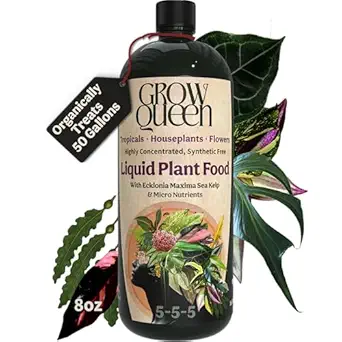 |
| Best Seller A high-volume bestseller chosen again and again | Miracle-Gro Organic Liquid Plant Food, 32 fl. oz. |  |
Liqui-Dirt Organic Concentrated Plant Food (8 oz)

| Item Form | Powder into Liquid |
|---|---|
| Application Method | Add 1 mL per gallon of water |
| Specific Uses For Product | Container Gardening, Houseplants, Indoor Plants, Vegetable Garden |
| Mixing Ratio | 1 mL per gallon |
| Coverage | Full |
Liqui-Dirt is an all-purpose organic plant food sold as a powdered concentrate that you turn into a liquid and add to your normal watering routine. One 8 oz bottle is mixed with a cup of water to make a concentrate; use 1 mL of that concentrate per gallon of water (or one cap per 5 gallons) so the bottle can make up to 250 gallons of ready-to-use feed. The formula lists bio-digested ingredients such as kelp, alfalfa, humic and fulvic acids, worm castings, bat guano and a mineral blend so nutrients are immediately available without synthetic salts. That makes it suitable for houseplants, container vegetables, propagation, and simple hydroponic setups where a gentle, non-burning feed is preferred. It dissolves fully, is described as non-clogging for sprayers and irrigation, and the low dose simplifies feeding across a mixed collection. Limitations: specific N-P-K numbers are not presented on the listing so you must accept it as a holistic, biological feed rather than a targeted macronutrient program, and very fastidious hydroponic growers may prefer measured synthetic formulas for strict EC control.
Best for: Buyers who want a single, easy-to-use organic feed for a broad indoor plant collection and prefer a biologically based nutrient approach over juggling multiple specialty products.
Less Ideal for: Growers who need precise, labeled N-P-K values and strict electrical conductivity control for advanced hydroponic or commercial setups should consider a measured synthetic nutrient instead.
- Highly concentrated so one small bottle treats many waterings
- Organic, bio-digested ingredients designed for immediate plant uptake
- Low, simple dosing (1 mL per gallon) that works for mixed collections
- Safe for propagation and described as non-burning to roots
- Fully water soluble and unlikely to clog sprayers or emitters
- No explicit N-P-K label or exact nutrient breakdown shown in the listing
- Not a precision synthetic formula for growers who track EC or ppm rigorously
Verdict: A compact, organic concentrate that simplifies feeding an entire indoor plant collection with one low-dose, non-burning formula.
Purived All-Purpose Liquid Houseplant Fertilizer, 16 fl oz (Makes 50 Gallons)

| Item Form | Liquid |
|---|---|
| Application Method | soil drench, foliar feed, full & semi hydroponics |
| Target Species | Houseplants |
| Mixing Ratio | 320:1 |
Purived All-Purpose Liquid Houseplant Fertilizer is a concentrated 16 fl oz bottle that mixes 1 cap per gallon to treat up to 50 gallons of water. It is formulated for indoor potted plants and supports multiple application methods including soil drench, foliar spray, and full or semi-hydroponics, so you can use the same product whether you water, mist, or run nutrient solutions. The formula lists primary macronutrients and a range of micronutrients, which helps correct common deficiencies and supports steady growth when used at the recommended dilution. Practical benefits include an easy-to-follow mixing ratio, an odorless solution that is simple to store, and broad compatibility with different feeding routines. Important limits are that the label gives no N-P-K percentages, so precise nutrient planning for sensitive seedlings or specialty plants is not possible, and safety precautions mean you must handle and store it carefully. For new plants, start at or below the recommended dilution and observe growth before increasing frequency.
Best for: Buyers who want a versatile, no-fuss fertilizer for establishing and maintaining new houseplants and who value a single product that works across watering, misting, and basic hydroponic setups.
Less Ideal for: Growers who need exact N-P-K formulations for seedlings, specialty plants, or strict hydroponic nutrient regimens should consider a product with full nutrient breakdown and concentration details.
- Very concentrated so one bottle treats up to 50 gallons, reducing repurchase frequency
- Suitable for multiple application methods: soil drench, foliar feed, and hydroponics
- Includes a range of micronutrients in addition to primary NPK components
- Simple, clear mixing ratio (320:1) that is easy to follow
- No N-P-K ratio listed on the product information, limiting precise nutrient management
- Requires careful handling and storage due to safety warnings
Verdict: A concentrated, easy-to-use all-purpose fertilizer that covers feeding, foliar, and basic hydroponic needs for new houseplants.
True Organic All Purpose Liquid Plant Food (16 fl oz)

| Item Form | Liquid |
|---|---|
| Specific Uses For Product | Agriculture, Gardening |
| Coverage | Full |
| Mixing Ratio | 2 fl oz per gallon, every two weeks |
True Organic All Purpose Liquid Plant Food is a ready-to-mix liquid fertilizer intended for regular feeding of vegetables, herbs, flowers and houseplants. You shake and dilute 2 fl oz per gallon of water and soak the soil every two weeks during the growing season, which makes it easy to add into an existing watering routine. The formula uses farm-grade organic inputs such as fish solubles, kelp extract and molasses designed to supply macronutrients and support microbial activity in soil rather than synthetic salts. The bottle size and mixing rate suit small beds, containers or indoor collections where you need frequent light feedings. Because it is concentrated and OMRI listed for organic gardening, it is a good choice for gardeners who prioritize organic inputs. Expect slower, steadier nutrient release compared with fast-release synthetic fertilizers and plan for repeated applications to see sustained results across a season.
Best for: Gardeners who want an easy-to-use, certified organic liquid fertilizer for containers, small beds, or indoor plants and who prefer steady, biology-friendly feeding.
Less Ideal for: Large-scale vegetable plots or landscapers who need bulk, fast-release fertilizers for one-off applications should consider higher-volume or synthetic options.
- OMRI listed and made with organic inputs suitable for organic gardens
- Concentrated liquid formula is easy to mix and apply with a regular watering schedule
- Contains multiple nutrient sources and kelp to support both plants and soil biology
- Made in the USA with farm-grade ingredients and clear mixing instructions
- Smaller 16 fl oz bottle requires frequent repurchasing for larger gardens
Verdict: A concentrated, OMRI-listed liquid fertilizer that makes regular organic feeding simple for containers and small garden plots.
Wiggle Worm Pure Worm Castings Organic Fertilizer, 4.5 lb

| Item Form | Granules |
|---|---|
| Specific Uses For Product | Soil Conditioning |
| Target Species | Houseplants, vegetables, flowers |
| Unit Count | 72 Ounce |
Wiggle Worm Pure Worm Castings are finely screened, 100% worm castings sold in a resealable 4.5 lb pouch for easy use around the garden or in containers. You sprinkle a small handful or up to a half cup around transplants, work a bit into planting holes, or mix one part castings to four parts potting soil for container plants. The material is odorless and non-burning so it is safe for vegetables, flowers, houseplants, and established perennials. Notable features include OMRI listing for organic use, a mineral-dense formula that supports microbial activity, and a multi-screened product that is free of debris and worm eggs. Practically, that means faster nutrient uptake from water-soluble forms, improved soil aeration and water retention, and a low-risk way to boost root health without synthetic fertilizers. Limitations are mostly practical: the 4.5 lb bag is small for larger beds or repeated top-dressing on lawns, and results are gradual rather than instant like some high-N synthetic feeds. The pouch is convenient for storage but you will need larger quantities for expansive gardens.
Best for: Buyers who prefer low-risk, natural soil amendments and want an easy-to-use organic option for containers, vegetables, and ornamental beds that supports long-term soil health.
Less Ideal for: Gardeners who need a quick, high-nitrogen boost or those with large lawns and beds who would prefer bulk-sized amendments for cost efficiency.
- OMRI listed organic product safe for certified organic gardens
- 100% pure, finely screened castings with minimal debris
- Odorless and non-burning so safe for seedlings and houseplants
- Improves soil structure, microbial activity, and water retention
- Small bag size may not be economical for large beds or frequent top-dressing
- Provides gradual, long-term nutrition rather than a fast-acting nutrient spike
Verdict: Choose this product if you want a proven, OMRI-listed pure worm casting that's safe and effective for building healthy soil in containers and small to medium garden beds.
Grow Queen Organic Liquid Indoor Plant Food 5-5-5 with Sea Kelp, 8 oz

| Item Form | Liquid |
|---|---|
| Mixing Ratio | 1:1 |
| Specific Uses For Product | Plant Growth |
| Application Method | Watering |
| Target Species | Plants |
Grow Queen's 8 oz concentrated liquid plant food is a balanced 5-5-5 organic fertilizer designed for regular use on houseplants, tropicals and container gardens. You mix one capful (about 4 ml) per gallon of water and either drench the soil or apply as a foliar mist every one to three weeks, which makes it straightforward to fold into a weekly watering routine. The formula includes Ecklonia maxima sea kelp and trace micronutrients, which help support greener foliage, stronger stems and root development without the burning risk of high-strength synthetic feeds. At the stated dilution the bottle treats up to 50 gallons so it will last a small collection for months. It is also labeled safe for aerated hydroponic systems when reservoirs are changed regularly, though it can form a film in stagnant water so fresh mixes are recommended. The product has an earthy ocean scent from real kelp and excludes perfumes and dyes, but that natural smell may bother some users. Directions are simple and the fertilizer pairs well with slow-release feeds for longer-term nutrition.
Best for: Buyers who want a simple, one-bottle solution to feed a mixed collection of houseplants regularly and prefer organic ingredients and seaweed benefits.
Less Ideal for: Growers who need precision nutrient formulas for specific flowering or high-yield vegetable crops or those who require ready-to-use sprays without mixing.
- Balanced 5-5-5 NPK suitable for general indoor plant feeding
- Concentrated formula stretches up to 50 gallons from an 8 oz bottle
- Contains sea kelp and micronutrients to promote foliage color and root strength
- Safe for regular use at recommended dilution with low burn risk
- Natural kelp scent may be noticeable indoors
- Can form a film in standing water so not ideal for non-aerated reservoirs
Verdict: A concentrated, easy-to-use organic 5-5-5 liquid fertilizer with sea kelp that provides straightforward, all-purpose nutrition for indoor plant collections.
Miracle-Gro Organic Liquid Plant Food, 32 fl. oz.

| Item Form | Liquid |
|---|---|
| Application Method | Soak the soil around each plant |
| Liquid Volume | 32 |
| Mixing Ratio | 2:1 |
| Ingredients | 1(N)-0.5(P)-1(K) |
Miracle-Gro Organic Liquid Plant Food is a ready-to-mix, plant-based fertilizer designed for regular feeding of houseplants, container plants and in-ground garden beds. The concentrate is diluted with water (manufacturer directions call for 2 capfuls per gallon for outdoor use and 1 capful per gallon for some indoor uses) and applied by soaking the soil around each plant. It is OMRI listed and made from about 94% plant-based ingredients, which makes it suitable for gardeners looking for an organic option that acts quickly. Practical benefits include easy mixing, clear dosing lines on the cap, and broad compatibility with flowers, vegetables, herbs and potted plants. Because it is a liquid feed you can see effects faster than slow-release granules and it is convenient for regular fortnightly or weekly feedings during the growing season. Limitations are that you must mix and apply frequently to maintain results and a single 32 fl. oz. bottle yields a finite amount of diluted solution, so heavier feeders or larger plots may need multiple bottles over a season.
Best for: Gardeners who want an affordable, certified organic liquid fertilizer that is simple to mix and use regularly on houseplants, containers, and small vegetable or flower beds.
Less Ideal for: People managing large landscape areas or heavy-feeding vegetable plots who prefer low-maintenance, slow-release options that require fewer applications.
- OMRI listed and made with about 94% plant-based ingredients
- Liquid concentrate mixes easily and feeds plants quickly when watered in
- Clear dosing instructions and cap markings simplify dilution
- Suitable for indoor and outdoor use across flowers, vegetables, herbs and shrubs
- Requires frequent reapplication compared with slow-release fertilizers
- A single 32 fl. oz. bottle may not be economical for large gardens
Verdict: A practical, OMRI-listed liquid concentrate that delivers plant-based nutrition quickly and is best for gardeners who will feed regularly on containers and small beds.
Choosing the Right Organic Indoor Plant Food: Key Factors to Consider
Nutrient Balance and Ratios
The ratio of nitrogen, phosphorus, and potassium determines growth focus. Higher nitrogen favors leaf production, while balanced or slightly lower nitrogen with adequate phosphorus supports root development and flowering. Micronutrients like iron, magnesium, and manganese are crucial for indoor plants that have limited access to outdoor soil reserves.
Look for formulations that state N-P-K clearly and list micronutrients. Organic sources often release nutrients more slowly, so expect gentler, longer-lasting effects than with synthetic feeds. Consider the plant types you grow-foliage-heavy species need more steady nitrogen, while blooming types benefit from a feed with available phosphorus and potassium.
Application Method and Dosing Flexibility
Indoor gardeners use different schedules, from weekly waterings to monthly top-dressings. Liquid concentrates offer precise dilution control for smaller pots and frequent feedings. Water-soluble powders are useful when you want to tailor strength, while granular or slow-release organic options reduce the risk of overfeeding but can be harder to adjust once applied.
Assess how easy the label makes measuring and adjusting doses. Products that provide ranges for different pot sizes or plant stages help prevent common indoor mistakes like fertilizing at full strength for small pots. Compatibility with regular watering tools and watering-through methods is also important for consistent results.
Salt Buildup and Residue
Salt accumulation is a leading cause of brown leaf edges, root stress, and stunted growth in container plants. Organic feeds tend to have lower soluble salt content but not always. Frequent light feedings without occasional flushing can concentrate salts in potting mix, so choose a formulation with lower conductivity or one designed for regular use.
Consider how often you can repot or flush containers. If you keep plants in the same soil for long stretches, prefer products marketed for low-salt buildup. Also factor in water quality, since hard water increases total soluble salts when combined with fertilizer.
Soil Microbiology and Beneficial Organisms
Many indoor potting soils benefit from microbial activity that helps break down organic nutrients and make them plant-available. Organic plant foods that include composted materials, kelp, or beneficial microbes support that biology. Conversely, some inputs can temporarily suppress microbial activity if they are too concentrated or contain certain preservatives.
If you rely on biological soil life to cycle nutrients, pick a product that complements, not disrupts, microbial communities. Also consider pairing feeds with occasional organic amendments like compost tea or worm castings to maintain a healthy soil ecosystem in containers.
Pest and Disease Considerations
Fertilizer choice can influence plant vigor and susceptibility to pests. Overfertilized plants may produce soft, lush growth that attracts aphids or spider mites. Some organic feeds include humectants or sugars that, if misapplied, can attract fungus gnats in small pots.
Match feed strength to plant growth stage and watch for pest signs after starting a new regimen. When using organic blends that include compost or humates, avoid overapplication in seedling trays or very small containers to reduce the risk of pest problems.
Safety, Labeling, and Indoor Use Practicalities
Indoor products need clear dosing instructions to prevent accidental overfeeding or indoor mess. Child and pet safety information is especially important in household settings. Look for clear storage guidance and whether the product is liquid, powder, or granular to anticipate spills and cleanup.
Also consider scent and odor. Some organic ingredients have noticeable smells that can be stronger in enclosed spaces. If you keep plants in living areas, choose low-odor formulations and ensure proper storage to avoid attracting pests or causing discomfort.
How Often to Feed Different Houseplants
Feeding frequency depends on plant type, growth rate, and pot size. Fast-growing tropical foliage plants often benefit from a light feed every two to four weeks during the active season, while slow growers and mature specimens usually need less frequent inputs.
Smaller pots concentrate salts faster, so reduce dose or frequency for compact containers and increase flushing. For winter dormancy, cut back significantly or stop feeding until growth resumes.
- Succulents and cacti: feed sparingly, often once or twice during the growing season.
- Foliage houseplants: light feeding every 2-4 weeks when actively growing.
- Flowering indoor plants: follow a schedule that boosts phosphorus during bloom periods.
Mixing and Applying Organic Feeds Safely
Always follow the low end of label dilution for smaller pots and young plants. Mix concentrates into room-temperature water and apply evenly around the root ball to avoid localized hot spots.
When using powders or granules, distribute evenly on the soil surface and water in thoroughly. Periodic deep watering to leach accumulated salts helps maintain a healthy root environment.
- Measure carefully with provided scoops or standard kitchen measures.
- Avoid applying dry organic granules directly to foliage.
- Flush pots every few months if you feed regularly.
Adjusting Feed During Repotting and Soil Refresh
Repotting is a good opportunity to refresh nutrients and reset salt levels. If you add fresh potting mix, reduce initial feeding for a month since new mixes often contain starter nutrients. For long-term containers, top-dressing with a light organic amendment can extend time between full repots.
When repotting stressed plants, focus first on root health and use a gentler feed schedule to avoid compounding transplant shock.
- Wait several weeks after repotting before resuming full-strength feeding.
- Use light top-dressings of compost or worm castings for sustained nutrition.
Managing Common Indoor Plant Problems Linked to Feeding
Yellowing leaves, brown leaf tips, and stunted growth can all relate to feeding issues. Brown tips often indicate salt buildup or inconsistent watering. Pale leaves with intact veins usually point to nutrient deficiency such as iron chlorosis, while overall slow growth can be caused by both low nutrients and compacted potting mix.
Diagnose by checking root condition, feeling the soil, and reviewing your feeding schedule. When in doubt, reduce concentration and flush the pot to see if symptoms improve before changing products.
- Salt buildup signs: brown leaf edges, crust on soil surface.
- Deficiency signs: interveinal chlorosis, stunted new growth.
- Immediate steps: flush, reduce feed strength, inspect roots.
Sustainable Practices for Indoor Fertilizing
Choose organic options with responsibly sourced ingredients and minimal packaging waste where possible. Use measured doses to avoid excess runoff and reduce the need for frequent repotting.
Composting small amounts of kitchen scraps for use in potting mixes, or integrating worm castings as a supplemental amendment, can reduce reliance on packaged feeds and support soil life.
- Collect and reuse rinse water from vegetables for dilution when appropriate.
- Consider concentrated products to reduce packaging per application.
How We Chose the Best Organic Indoor Plant Food
We focused on products formulated specifically for indoor container-grown plants and evaluated each option across concrete, gardener-facing dimensions. Criteria included nutrient balance and bioavailability to assess whether formulations supply the right N-P-K ratios and essential micronutrients for foliage and root health. We reviewed application method and dosing flexibility to judge how easily a product adapts to different pot sizes and watering schedules. We checked salt and residue risk by considering reported electrical conductivity and ingredient lists that reduce soluble salts. Soil and microbiome compatibility was assessed by looking for ingredients that support beneficial microbes and avoid broad-spectrum biocides. Finally, label clarity and safety guidance were evaluated to ensure gardeners can dose accurately for common houseplants. We excluded products intended for outdoor soils, slow-release lawn fertilizers, and formulations that rely primarily on synthetic chelates or high-salt mineral concentrates. The shortlist favors formulations that perform well in small volumes of potting mix, show clear dosing instructions, and present lower risk of buildup with regular use. These filters helped narrow the field to options that work in real indoor growing situations and align with common houseplant care routines.
FAQ
How soon will I see results after switching to organic indoor plant food?
Results are usually gradual. Expect subtle improvements in leaf color and vigor within a few weeks. Organic feeds release nutrients more slowly than synthetic fertilizers, so full effects may take longer but often lead to steadier growth.
Can I use organic outdoor fertilizers on houseplants?
It depends. Many outdoor fertilizers are formulated for soil volumes and conditions not present in pots and may have higher salt content. Choose products specified for container or indoor use, or reduce dose substantially and monitor plant response.
Will organic feeds attract pests indoors?
Some organic amendments with high organic matter or sugars can attract fungus gnats if overapplied in small containers. Use sparing amounts, avoid piling organic material on the surface of small pots, and allow the soil to dry appropriately between waterings to reduce pest risk.
How do I prevent salt buildup when feeding regularly?
Leach pots periodically by watering thoroughly until excess runs from drain holes, then allow to drain. Use lower-strength dilutions for small pots and occasionally repot with fresh mix to reset salt levels. Monitoring soil surface for crusting helps catch buildup early.
Are liquid or granular organic feeds better for beginners?
Liquid feeds are generally easier to dose precisely for small pots and often offer more predictable results for novices. Granular or slow-release products require less frequent attention but are harder to adjust quickly if a problem arises.
Final Verdict
Pick an organic indoor plant food based on how you water, the sizes of your pots, and the plants you grow. Prioritize low salt risk and clear dosing instructions for small containers, and choose nutrient profiles that match foliage or flowering goals. Balance feeding with good watering and occasional repotting to avoid buildup and support long-term soil health. With those tradeoffs in mind, you can select a formulation that keeps houseplants vigorous without creating extra maintenance.
