

Note: This article contains affiliate links. If you click on these links and make a purchase, I may earn a small commission at no extra cost to you. This helps support my research and content. Read my full affiliate disclosure here.
If you have north-facing windows, a hallway without direct sun, or artificial light only, choosing plants that tolerate minimal light makes the difference between a thriving indoor garden and a string of failures. The right minimal sunlight indoor plants will survive-and often look attractive-without bright sun, while demanding less frequent watering and gentler placement. This guide shortlists six top options suited to dim rooms and low-light corners and explains the traits that matter for long-term success. Below we summarize how we evaluated light tolerance, watering needs, growth habit, and ease of care so you can pick plants that fit your space and schedule.
Top Picks at a Glance
| Best Overall The best all-around choice for most situations | Tropical Plants of Florida ZZ Plant (Zamioculcas zamiifolia) in 6" Nursery Pot |  |
| Best Quality Built to a higher standard if you want something more solid | Altman Plants Essential House Plant Collection, 4-Pack (4" Pots) |  |
| Best Value The sweet spot between price and what you get | Plants for Pets Sansevieria Superba (Snake Plant) – Fully Rooted Houseplant |  |
| Highest Rated A top-rated pick with lots of positive feedback | Janet Craig Compacta Dracaena (Live, 4" Pot) |  |
| Most Popular A crowd favorite that many people choose with confidence | Costa Farms Snake Plant 3-Pack (Live Indoor Plants, 8–12 in, in Grower Pots) |  |
| Best Seller A high-volume bestseller chosen again and again | Plants for Pets Marble Queen Pothos in 4" Nursery Pot |  |
Tropical Plants of Florida ZZ Plant (Zamioculcas zamiifolia) in 6" Nursery Pot

| Indoor Outdoor Usage | Indoor, Outdoor |
|---|---|
| Other Special Features of the Product | Air Purification, Compact, Drought Tolerant, Low Maintenance |
| Sunlight Exposure | Partial Sun |
| USDA Hardiness Zone | 9, 10, 11 |
| Moisture Needs | Little To No Watering |
The ZZ Plant (Zamioculcas zamiifolia) is a resilient, performance-focused houseplant suited to low- or no-sun interiors like offices, bathrooms, and windowless rooms. Arriving in a 6-inch grower pot, it produces upright stems of glossy green leaflets that keep their shape with minimal intervention. Care is straightforward: place in low to bright indirect light and water only when the top inch of soil is dry so the pot drains fully. Notable features include drought tolerance, low maintenance needs, and reported air-purifying qualities, which make it forgiving for busy owners or frequent travelers. Because it tolerates low light better than many houseplants, it functions well as a decorative, long-lived green accent where light is limited. Important limitations are that it prefers indirect light for best growth and is susceptible to overwatering, which causes yellowing; it is not a fast grower, so you should not expect rapid size gains. For someone prioritizing dependable, low-effort greenery in low-light spaces, the ZZ Plant delivers consistent, attractive results.
Best for: Buyers who want a dependable, low-effort green accent for low-light rooms and prioritize a plant that survives neglect while still looking polished.
Less Ideal for: People seeking a fast-growing statement plant or someone who wants flowering houseplants or bright direct-sun lovers.
- Tolerates low to bright indirect light making it suitable for windowless or dim spaces
- Very drought tolerant and forgiving of infrequent watering
- Compact size from the 6-inch nursery pot fits desks, shelves, and small corners
- Glossy, upright foliage provides year-round decorative interest and air-purifying benefits
- Slow grower compared with faster houseplants
- Sensitive to overwatering and root rot if not allowed to dry between waterings
Verdict: If you need a low-light, low-maintenance plant that stays healthy with minimal care, the ZZ Plant is a top practical choice.
Altman Plants Essential House Plant Collection, 4-Pack (4" Pots)

| Indoor Outdoor Usage | Indoor |
|---|---|
| Other Special Features of the Product | Air Purification, Low Maintenance |
| Sunlight Exposure | Indirect Light |
| Moisture Needs | Regular Watering |
This four-pack from Altman Plants delivers a surprise assortment of popular, low-maintenance houseplants in 4-inch nursery pots, making it an easy way to add greenery to dim rooms. Each order contains a grower-selected mix that may include pothos, snake plant, peperomia, calathea and similar varieties that tolerate indirect or low light. Plants arrive potted and rooted, ready to unbox and place on shelves, desks or hanging spots; they are intended for regular watering and basic indoor care rather than specialized attention. The practical benefits are convenience and variety: you get multiple hardy starters at once and can match individual plants to different corners of the home. Limitations are the unknown assortment and small nursery pot size at delivery, so expect to repot sooner for long-term growth and check care needs for any included species with specific humidity or watering requirements. Also avoid ordering during extreme heat advisories to prevent shipping stress on the plants.
Best for: Buyers who want a practical, low-effort way to green darker indoor spaces and prefer value through a ready-to-place starter set rather than picking individual species.
Less Ideal for: Plant collectors who need specific varieties or mature specimens and people seeking fully grown decorative plants ready for display without repotting.
- Includes four live, rooted plants ready to display or repot
- Rotating assortment of popular, low-light tolerant houseplants
- Plants come in 4" nursery pots that are easy to handle and place indoors
- Low-maintenance selections suitable for beginners and busy owners
- Assortment is randomized so you cannot pick specific species
- Plants arrive in small pots and will likely need repotting for long-term growth
Verdict: An easy, cost-effective starter pack for adding several low-light tolerant houseplants to indoor spaces quickly.
Plants for Pets Sansevieria Superba (Snake Plant) – Fully Rooted Houseplant

| Indoor Outdoor Usage | Indoor, Outdoor |
|---|---|
| Other Special Features of the Product | Air Purification, Compact, Drought Tolerant, Low Maintenance |
| Sunlight Exposure | Partial Sun |
| USDA Hardiness Zone | 10, 11, 9 |
| Moisture Needs | Little To No Watering |
The Plants for Pets Sansevieria Superba is a compact, fully rooted snake plant that delivers the classic, nearly indestructible qualities buyers expect from this species. It is typically kept in a small grower pot on a windowsill, shelf, or office desk and prefers bright indirect light but tolerates low light, making placement flexible. Notable features include drought tolerance, variegated upright leaves with chartreuse margins, and claims of air-purifying benefits. Practical benefits are straightforward: infrequent watering needs, low attention requirements, and a sculptural look that suits modern interiors. Because it ships fully rooted, it is ready to go into a decorative cachepot or remain in its grower pot with minimal setup. Limitations are minimal for most owners but include the plant's suitability mainly for indoor use in mild climates and the typical size cap of a compact variety, which may not satisfy someone wanting a large specimen quickly. Occasional overwatering or very cold conditions will be the main care pitfalls to avoid.
Best for: A buyer who values a dependable, low-maintenance houseplant that survives occasional neglect and fits small indoor spaces; ideal for busy households, offices, or first-time plant owners who want a reliable decorative plant.
Less Ideal for: Not ideal for gardeners seeking rapid growth into a large floor plant or those who need a cold-hardy outdoor specimen for harsh climates.
- Fully rooted and ready to display or repot upon arrival
- Tolerates low light and infrequent watering, ideal for low-effort care
- Compact, upright variegated foliage provides decorative interest indoors
- Described as drought tolerant and low maintenance, suitable for busy owners
- Best suited to indoor or mild outdoor conditions rather than harsh climates
- Compact size may not meet buyers seeking an immediate large specimen
Verdict: Buy this fully rooted Sansevieria Superba when you want a near-indestructible, low-effort houseplant that reliably looks good in small indoor spaces.
Janet Craig Compacta Dracaena (Live, 4" Pot)

| Indoor Outdoor Usage | Indoor |
|---|---|
| Other Special Features of the Product | Air Purification |
| Sunlight Exposure | Partial Shade |
| Moisture Needs | Moderate Watering |
| Soil Type | Peat Soil |
The Janet Craig Compacta Dracaena is a small, low-maintenance houseplant built for spots with limited light. It ships pre-potted in a plastic grower pot with drainage and arrives ready to sit in a corner, on a shelf, or near an office window. The plant’s deep green foliage contributes to indoor air purification and it prefers partial shade and moderate watering, so you only need to water when the soil is about half dry. Practical features include peat-based potting soil and straightforward care instructions that suit busy owners. Because it is compact and slow-growing, the plant is useful where space or height is limited, but it will not tolerate bright direct sun and needs consistent but light watering. If you want a resilient, low-effort green accent for very low-light rooms, this Dracaena does the job reliably; expect modest size and slow vertical growth rather than a dramatic focal specimen.
Best for: A buyer who wants a tough, low-effort houseplant that performs well in very low light and requires minimal hands-on care. Ideal for busy owners or office settings where reliability and easy placement matter more than rapid growth or size.
Less Ideal for: Not a good choice for someone seeking a large, dramatic focal plant or rapid vertical growth in a light-filled room.
- Tolerates low and partial shade, making it reliable in dim rooms
- Ships pre-potted and ready to display with drainage in place
- Low maintenance watering needs suited to infrequent care
- Deep green foliage helps with indoor air purification
- Small expected mature height limits use as a large statement plant
- Comes in a plastic grower pot so repotting may be needed for decorative display
Verdict: A compact, low-light performer that delivers reliable, low-effort greenery for dim rooms and busy owners.
Costa Farms Snake Plant 3-Pack (Live Indoor Plants, 8–12 in, in Grower Pots)

| Indoor Outdoor Usage | Indoor |
|---|---|
| Other Special Features of the Product | Air Purification, Drought Tolerant, Low Maintenance |
| Sunlight Exposure | Partial Sun |
| Moisture Needs | Little To No Watering |
| Product Care Instructions | Bright, Indirect Sunlight; Water 2-3 cups once a week |
These Costa Farms snake plants are a practical choice when you want low-maintenance greenery that still makes a visual impact. The 3-pack arrives in grower pots with plants sized about 8 to 12 inches tall, ready to place on shelves, desks, or narrow corners. Snake plants tolerate a wide range of light and require very little water, so they work well in dim bedrooms, windowless offices, or busy homes where regular care is unlikely. Notable features include drought tolerance, air-purifying qualities, and packaging designed to protect upright leaves during transit. The main benefits are instant decor with architectural vertical foliage, ease of care for beginner plant owners, and the flexibility to split the trio across rooms or give individual plants as gifts. Limitations are inherent to small potted plants: they are starter-size rather than mature floor specimens and come in plain grower pots so you may want to repot into decorative containers for long-term display.
Best for: Buyers who want reliable, low-effort houseplants to brighten low-light rooms or busy spaces and who value proven, widely purchased varieties with straightforward care.
Less Ideal for: People seeking large, mature statement floor plants or those who want decorative pots included out of the box.
- Very low water needs and tolerant of neglected watering
- Performs well in low to partial sun, suitable for dim indoor spots
- Arrives in a coordinated 3-pack for consistent styling across multiple areas
- Small, vertical growth habit fits narrow shelves and desks
- Advertised air-purifying benefit for healthier indoor air
- Ships in basic grower pots, so repotting or decorative containers are needed for long-term display
- Plants are starter-size (8–12 inches) rather than fully mature floor specimens
Verdict: Choose this 3-pack if you want dependable, nearly indestructible plants that add vertical greenery to low-light rooms with minimal care required.
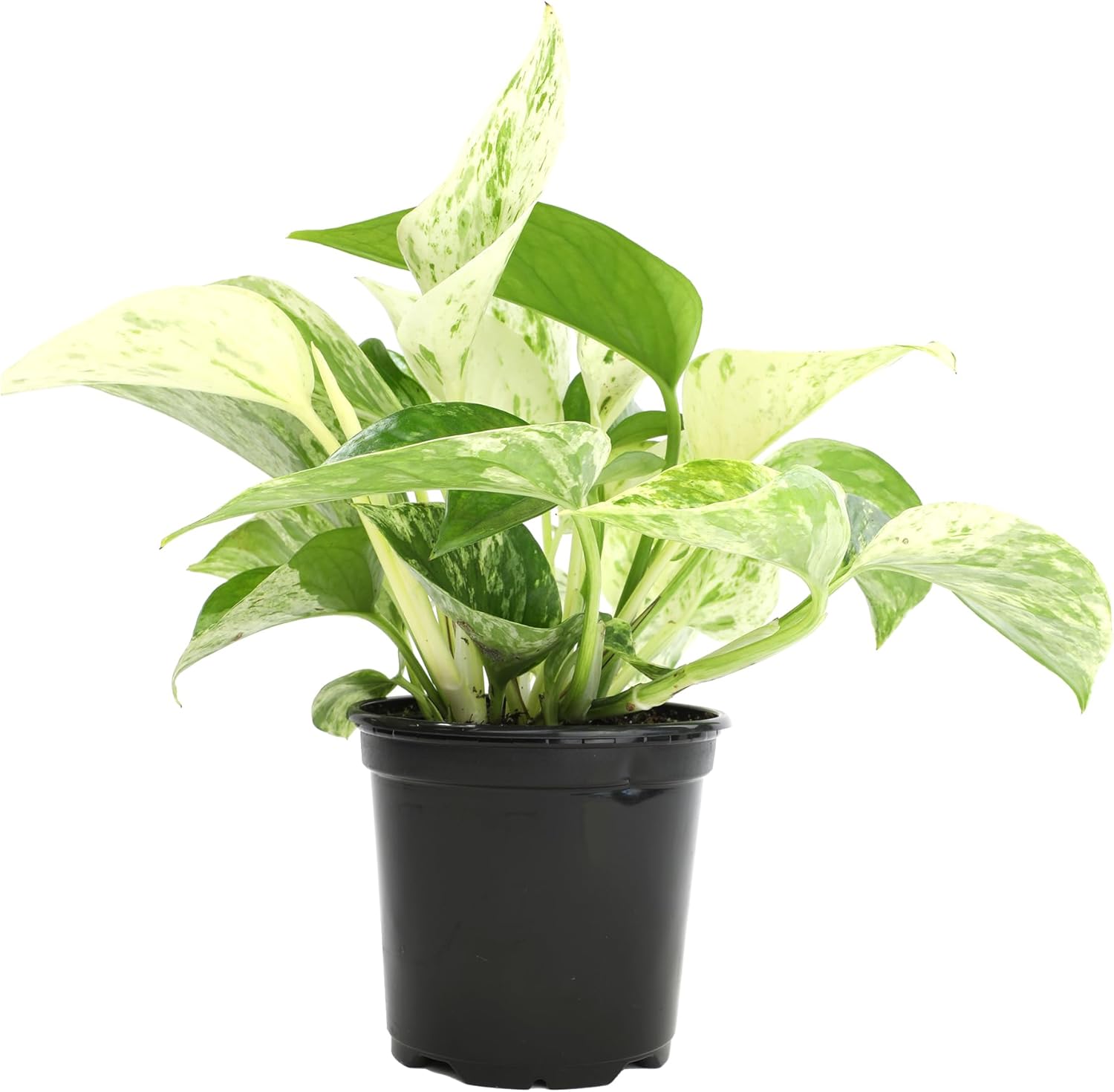
Plants for Pets Marble Queen Pothos in 4" Nursery Pot
| Indoor Outdoor Usage | Indoor |
|---|---|
| Other Special Features of the Product | Air Purification |
| Moisture Needs | Moderate Watering |
| Material Features | Natural |
The Marble Queen pothos is a compact, easy-care vining houseplant that arrives fully rooted in a 4" nursery pot and is suited for indoor spaces with limited light. Typical use is as a hanging plant, shelf specimen, or trailing accent where it can receive bright, indirect light or tolerate lower light levels. Notable features from the listing include variegated green-and-cream foliage, moderate watering needs, and an air-purifying benefit. Practically, this means the plant adds visual interest without demanding daily attention and recovers well if watering is occasionally missed, provided you avoid prolonged saturation that can cause root rot. It also responds to occasional feeding during spring and summer to keep new growth colorful. Limitations are its small nursery pot size on arrival, so taller or fuller displays will require repotting over time, and the plant is toxic to pets so it should be kept out of reach of cats and dogs. Buyers seeking a low-fuss, attractive trailing houseplant will find this an easy add to bedrooms, offices, and shaded living rooms.
Best for: Buyers who want an attractive, low-maintenance trailing houseplant for shaded rooms, shelves, or hanging displays and prefer a reliable plant that tolerates occasional care lapses.
Less Ideal for: People who need instant tall or full specimens without repotting or those who have curious pets that access plant foliage.
- Variegated, decorative foliage that brightens low-light spaces
- Tolerant of low to bright indirect light, making placement flexible
- Arrives fully rooted and ready to display in a nursery pot
- Low care: moderate watering and occasional feeding are sufficient
- Ships in a small 4" nursery pot so repotting is likely for faster growth
- Not pet friendly and should be kept away from cats and dogs
Verdict: A forgiving, variegated pothos that brings low-light rooms life with minimal maintenance and easy placement.
Choosing the Right Minimal Sunlight Indoor Plants: Key Factors to Consider
Actual Light Conditions
Not all "low light" spaces are the same. A north-facing window that receives several hours of bright but indirect light is different from an interior room with no windows at all. Observe the space through a full day to judge how much ambient light arrives and whether artificial lights are used regularly. Many Minimal Sunlight Indoor Plants tolerate low light but still need some indirect illumination to maintain leaf color and slow growth.
Understanding the specific light profile of a spot determines which species will remain healthy and which will become leggy, pale, or drop leaves. If you plan to rely on ceiling lights or lamps, note the bulbs and how close they will be to the plants because that affects effective light intensity.
Watering Rhythm and Soil Drainage
Plants adapted to low light often use less water because slower photosynthesis reduces demand. Choose plants whose water needs match how often you will realistically water. Soil mix and pot drainage are critical: dense soils can hold too much moisture around roots in dim spaces and lead to rot. A well-draining potting mix and a container with drainage holes help prevent sitting water even if you water infrequently.
Consider whether you want to use saucers, self-watering pots, or in-pot moisture sensors. Those can help keep consistent moisture levels, but also can hide overwatering problems if not monitored. Match the plant to your desired watering effort rather than forcing a plant into a care routine you will not maintain.
Growth Habit and Space Planning
Plants that tolerate minimal light come in a range of sizes and habits, from compact tabletop forms to upright floor specimens. Think about vertical space, floor footprints, and whether you prefer trailing plants for shelves or upright plants for corners. Growth rate matters: some low-light plants grow slowly and stay compact for years, while others will eventually become large and require pruning or repotting even in dim conditions.
Plan for the long-term size at maturity and whether the plant will need occasional trimming. Consider portability if you may want to move plants seasonally to brighter spots for a growth boost.
Temperature and Humidity Tolerance
Indoor temperature swings and dry winter air affect low-light plants differently. Many low-light tolerant species are tropical understory plants that appreciate stable warm temperatures and moderate humidity. However, some are robust enough to handle typical home heating and cooling cycles.
If your indoor air is very dry, pick plants that tolerate low humidity or plan for occasional misting, pebble trays, or a nearby humidifier. Matching a plant's humidity tolerance to your home environment reduces stress-related leaf drop and browning.
Pest Susceptibility and Maintenance Needs
Low-light indoor plants are not pest-proof. Mealybugs, scale, and spider mites are the most common pests encountered under indoor conditions. Choose plants that are known to resist infestation or that are easy to inspect and treat. Routine maintenance such as wiping leaves, checking undersides for pests, and removing dead growth will keep most problems in check.
Also consider how easy a plant is to propagate or replace. Plants that are simple to divide or root from cuttings are useful if a section becomes infested or if you want to expand your collection without buying more stock.
Toxicity and Pet Safety
If you share your home with pets or small children, toxicity is an important factor. Some popular low-light plants contain compounds that can irritate or be toxic if ingested. Consider placement high off the ground, on shelves, or in rooms your pets cannot access if you choose species with known toxicity. Alternatively, select non-toxic options when safety is a priority.
Read up on a plant's risk profile and weigh that against the plant's other benefits so you can create a safe indoor display without sacrificing durability.
How Low Light Affects Plant Appearance
In dim environments plants typically slow growth, produce smaller leaves, and may exhibit paler coloration. Legginess is common when plants stretch toward the nearest light source, creating long internodes and sparse foliage. Understanding these visual changes helps set realistic expectations for how attractive a low-light plant will look over time.
You can reduce negative visual effects by rotating pots regularly, placing plants near reflective surfaces, and choosing naturally compact species. Occasional relocation to a brighter spot during the growing season can restore fuller growth without exposing the plant to damaging direct sun.
- Leaves may grow larger but thinner in very low light, making them more fragile.
- Legginess indicates the plant wants more light and can often be corrected with pruning and repositioning.
- Color variegation often fades in dim conditions, making solid green varieties a safer choice for true low-light rooms.
Using Artificial Light Successfully
Supplemental lighting is an effective solution when natural light is minimal or inconsistent. Full-spectrum LED fixtures provide usable light for many low-light tolerant plants without producing excessive heat. Position lights a comfortable distance above the canopy and run them on a daily schedule that mimics daylight hours to support steady, balanced growth.
Not all artificial lights are equal. General room lamps may not emit the wavelengths plants use most efficiently. Choose fixtures designed for plant growth or LED bulbs with a broad spectrum. Timers simplify care by creating a consistent light routine that reduces stress from irregular exposure.
- Aim for 10 to 12 hours of supplemental light when relying mainly on artificial sources.
- Keep fixtures at recommended distances to avoid leaf burn or weak, elongated growth.
- Combine indirect natural light with timed artificial light for the most natural result.
Potting and Repotting in Low-Light Situations
Repotting frequency for low-light plants is generally less than for sun-loving species because slower growth means roots fill containers more slowly. Choose slightly tight pots to help avoid overwatering and use a lightweight, well-draining mix. Avoid oversized pots that retain too much moisture and increase rot risk.
When you do repot, check roots for health and trim any that look mushy. Fresh potting mix can reinvigorate a sluggish plant, but be cautious with fertilizer after repotting; low-light plants usually need less frequent feeding than their high-light counterparts.
- Use pots with drainage holes and breathable media.
- Repot only when roots are actively circling the container or growth has become visibly constrained.
- Delay heavy fertilization until plants show new, healthy growth after repotting.
Design Ideas for Dim Rooms
Low-light tolerant plants can bring life to hallways, bathrooms, and offices with minimal natural light. Choose combinations of upright floor plants for corners and trailing varieties on high shelves to add layers and visual interest. Grouping plants raises local humidity slightly and creates a more natural microclimate.
Use decorative pots and varied heights to compensate for reduced foliage color. Mirrors and light-colored walls can help bounce available light and make plants appear lusher. Keep placement practical so plants are accessible for routine checks and maintenance.
- Place trailing plants on elevated shelves out of reach of pets.
- Combine different leaf textures rather than relying on variegation, which may fade in low light.
- Group plants to form a single maintenance routine for watering and pest checks.
Troubleshooting Common Low-Light Issues
Yellowing leaves, droop, and leaf drop are common issues that stem from overwatering, insufficient light, or both. Before changing fertilization or introducing treatments, check soil moisture and the plant's exposure to light. Often the fix is adjusting watering frequency or moving the plant slightly closer to illumination.
If pests appear, treat promptly with appropriate, pet-safe methods and isolate affected plants to prevent spread. Pruning away leggy stems encourages fuller regrowth when light conditions improve. Small, consistent interventions usually restore health more effectively than large, infrequent corrections.
- Test soil moisture with a finger or moisture meter before watering.
- Prune leggy growth to stimulate denser foliage.
- Isolate and treat infested plants immediately to protect the rest of your collection.
How We Chose the Best Minimal Sunlight Indoor Plants
We selected entries based on real-world indoor conditions rather than idealized greenhouse setups. Primary evaluation criteria were light tolerance, water and humidity needs, growth habit and space efficiency, ease of routine care, and resistance to common indoor pests and disease. We favored plants that reliably survive under low ambient light, including indirect or artificial lighting, and that do not demand frequent, precise watering schedules. To narrow the list we excluded species that require full sun, high humidity that only greenhouses provide, or complex propagation to remain healthy. Plants known for toxic sap that pose clear risks to common household pets or children were deprioritized unless their risk is manageable through placement. We also considered how forgiving each plant is to common indoor-care mistakes such as irregular watering, low humidity, and low fertilizer input. The result is a curated set of Minimal Sunlight Indoor Plants that cover a range of sizes, growth forms, and long-term maintenance profiles suitable for casual and committed indoor gardeners alike.
FAQ
Can Minimal Sunlight Indoor Plants survive without any natural light?
Some species will survive under only artificial lighting, but absolute zero natural light can make long-term health more difficult. Use full-spectrum artificial lights on a consistent schedule to substitute for natural daylight when necessary.
How often should I water plants that tolerate minimal light?
Typically less often than sun-loving plants because growth and evaporation are slower. Check soil moisture before watering and allow the top layer to dry in many low-light species. Frequency depends on pot size, soil mix, and indoor humidity.
Will variegated plants lose their variegation in low light?
Variegation often becomes less pronounced in dim conditions because the parts of the leaf with less chlorophyll struggle to photosynthesize. Solid green varieties are generally more reliable in consistently low-light rooms.
Are low-light plants suitable for bathrooms?
Bathrooms can be excellent for certain low-light plants due to higher humidity from showers. Ensure there is at least some indirect light or add a small grow light if the bathroom has no windows.
How can I prevent leggy growth in low-light plants?
Rotate plants regularly, prune elongated stems, and use supplemental lighting when possible. Keeping plants closer to their light source within their tolerance range also helps maintain compact growth.
Do low-light plants need special fertilizers?
Not usually. They benefit from light feeding during the active growing season but require fertilizer less frequently than plants in bright light. Use a balanced, diluted fertilizer and follow a conservative schedule.
Final Verdict
Choosing Minimal Sunlight Indoor Plants comes down to matching plant tolerance to the actual light, humidity, and care you can provide. Prioritize species with strong low-light tolerance, forgiving watering needs, and a growth habit that fits your space. Expect tradeoffs such as slower growth and less vivid variegation, but with careful placement and simple maintenance you can enjoy healthy indoor greenery in even dim rooms. Focus on durable, easy-care options and routine checks to keep plants thriving long term.
