

Note: This article contains affiliate links. If you click on these links and make a purchase, I may earn a small commission at no extra cost to you. This helps support my research and content. Read my full affiliate disclosure here.
Picking the right mulch for a chicken run matters for bird health, run cleanliness, and ease of daily maintenance. The wrong material can trap moisture, create dust, or harbor pests, while a well-chosen mulch reduces ammonia buildup, improves footing, and helps control mud during wet seasons. This guide covers seven top mulch options suited for chicken runs, shortlisted for real-world garden use. We evaluate each option for dust control, moisture handling, odor suppression, durability under scratching, and ease of removal so you can find the best match for your coop and climate. Read on to see the practical tradeoffs of each mulch type before you pick one for your birds.
Top Picks at a Glance
| Best Overall The best all-around choice for most situations | Premium Chicken Sand 50 lb (2-Pack) — Dust-Free Poultry Bedding |  |
| Best Quality Built to a higher standard if you want something more solid | Eaton Pet and Pasture Hemp Bedding, 8 lb |  |
| Best Value The sweet spot between price and what you get | HealthiStraw FarmStraw Coarse-Cut 3 cu ft Compressed Wheat Straw Bedding |  |
| Best Budget The cheapest option that still gets the job done reliably | WNJ Natural Dried Wheat Straw for Chicken Coop Bedding and Garden Mulch |  |
| Highest Rated A top-rated pick with lots of positive feedback | CoreFirm Natural Wheat Straw Bedding Bale, 3 lb |  |
| Most Popular A crowd favorite that many people choose with confidence | DOMINION HEMP Premium Hemp Bedding for Chicken Coops, 10+ cu ft (285L) – 30 lb |  |
Premium Chicken Sand 50 lb (2-Pack) — Dust-Free Poultry Bedding

| Item Form | Granules |
|---|---|
| Unit Count | 2 Count |
| Capacity | 50 pounds |
| Material Type | Sand |
| Scent Name | Unscented |
Premium Chicken Sand is a coarse, dust-reduced sand bedding sold as two 50 lb bags intended for use in chicken coops, nesting boxes, and runs. You lay it down like other loose bedding and periodically rake or sift to remove droppings; its uniform granular size makes sifting and spot-cleaning straightforward. The product emphasizes moisture absorption and odor control, so in practice it helps keep runs drier and reduces ammonia buildup compared with some organic litters. Because it is washed and described as dust-free, it is easier on birds and keepers with respiratory sensitivities and makes monitoring foot health simpler. The sand is reusable after screening which lowers ongoing supply needs, but it does not compost like straw or wood shavings and can be heavier to move when wet. Also, sand does not provide insulation in cold climates the way deeper organic bedding can, so you may need supplemental bedding or winter adjustments in colder regions.
Best for: Suitable for backyard keepers who want a low-dust, low-maintenance bedding that simplifies daily cleaning and controls odors in runs and coops.
Less Ideal for: Not the best choice for gardeners wanting a bedding that can be composted into soil amendment or for keepers who rely on bedding for winter insulation.
- High moisture absorption to keep coop and run drier
- Uniform, screened granules that make sifting and spot-cleaning easier
- Low dust formulation that reduces respiratory irritation for birds and handlers
- Reusable after screening which reduces long-term bedding costs
- Does not compost or break down for garden use
- Provides minimal insulation in cold weather compared with organic bedding
Verdict: Choose this sand if you want a low-dust, highly absorbent bedding that makes coop and run cleaning faster and reduces odors.
Eaton Pet and Pasture Hemp Bedding, 8 lb

| Item Form | Flake |
|---|---|
| Special Ingredients | Hemp |
| Specific Uses For Product | Pet Habitat Bedding |
| Unit Count | 128 Ounce |
This hemp hurd bedding is built for practical coop performance: the flake material soaks up moisture and helps control odors, making nesting boxes and runs drier between cleanings. Use it in nesting boxes, brooders, hutches, or directly in a chicken run layer where you want better absorbency than traditional pine shavings. Notable features include a low-dust composition for cleaner air around birds and pets, a soft texture that cushions eggs and small animals, and paper bag packaging sourced and packed in the USA. In use you can expect fewer wet spots and reduced ammonia smell, which extends the interval between full bedding changes and eases daily maintenance. The bag size is convenient for testers who want to evaluate hemp bedding without committing to bulk, but you will need to replenish regularly in larger runs since an 8 pound bag covers a modest area. Also the product is sold as loose flake rather than compressed pellet, so spreading and spot-cleaning are manual tasks. Overall this is a high-performance bedding option for keepers prioritizing absorbency and low dust in coop or small-animal setups.
Best for: Keepers who prioritize coop performance and cleaner air and want a bedding that absorbs moisture and controls odor with minimal dust. Good for people testing hemp bedding in nesting boxes, brooders, or small to medium runs.
Less Ideal for: Large-flock owners who need bulk coverage or caretakers who prefer compressed pellets or bedding that can be mechanically handled rather than manually spread.
- Higher absorbency than typical wood shavings for better moisture control
- Low-dust formulation reduces airborne particulates in the coop
- Soft hemp flakes provide comfortable cushioning for eggs and small animals
- Paper packaging and USA-sourced hemp support traceability and recyclable packaging
- 8 lb bag is modest for large chicken runs so requires more frequent restocking
- Loose flake form requires manual spreading and spot-cleaning rather than fast vacuuming
Verdict: Choose this hemp bedding when you want a low-dust, highly absorbent bedding that keeps nesting boxes and small runs drier and fresher.
HealthiStraw FarmStraw Coarse-Cut 3 cu ft Compressed Wheat Straw Bedding
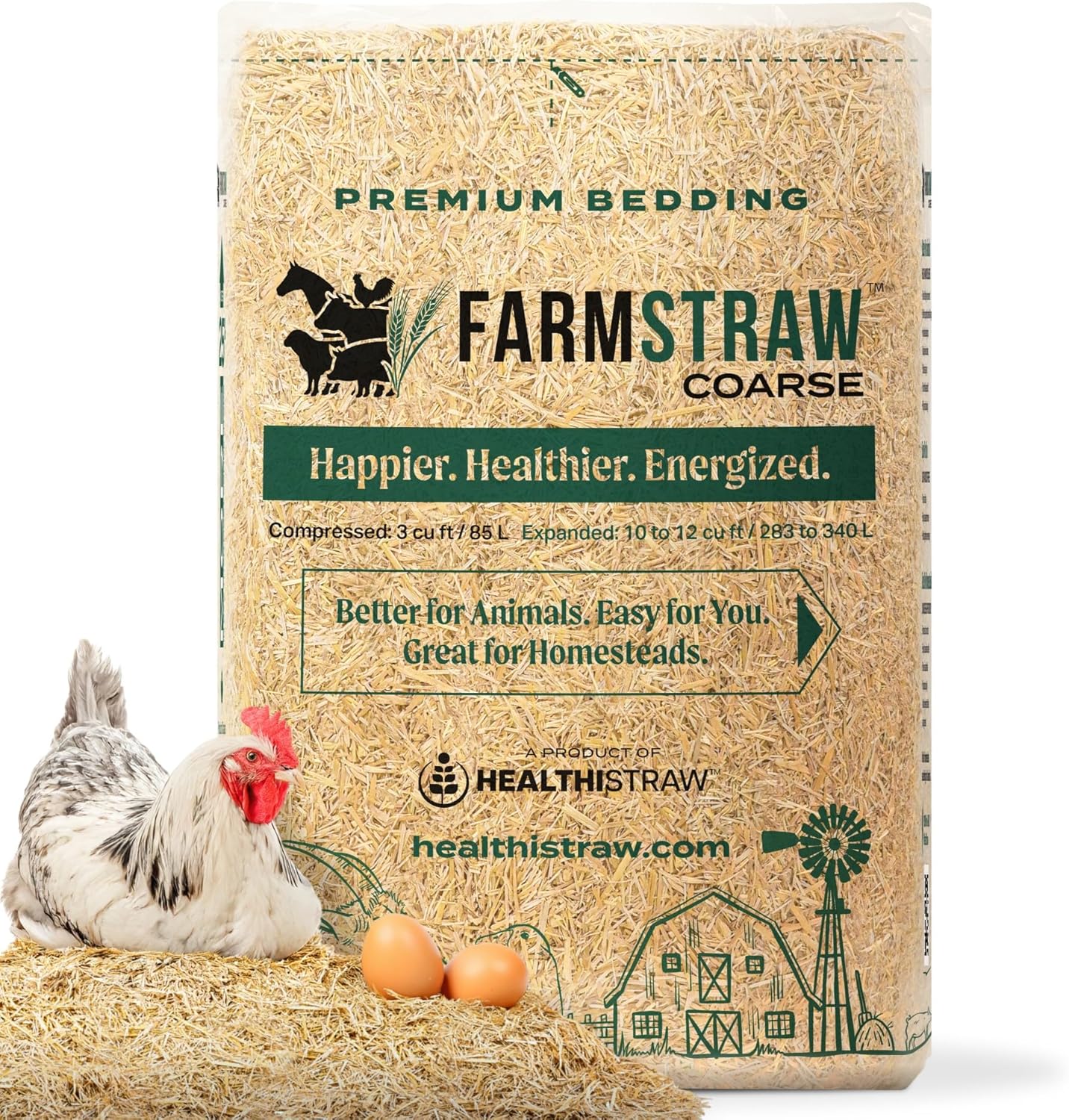
| Material Type | 100% Non-GMO Wheat Straw |
|---|---|
| Included Components | FarmStraw Fine Cut Chicken Bedding, 3 cu ft (25lb) |
| Specific Uses For Product | Chicken coops, nesting boxes, chick brooders, chicken runs and hen houses |
| Additional Features | Biodegradable, Eco-Friendly, Lightweight |
HealthiStraw FarmStraw is a compressed 3 cu ft bale of coarse 2–3 inch non-GMO wheat straw that expands to more than 10 cu ft for use as bedding and mulch in chicken coops, runs, and nesting boxes. The coarse cut produces a fluffy, insulative layer that cushions birds and helps protect eggs while wicking moisture and controlling odors by pulling dampness down into the straw. The product is cleaned to be low-dust, making it easier on flock respiratory health compared with dusty alternatives. It is lightweight to move when compressed and decomposes faster than wood-based bedding, so spent material can be composted to enrich garden soil. Important limitations are that a single 3 cu ft bale is modest coverage for larger runs and straw can mat in very wet climates, so occasional turning or replacement will be required to keep the run dry and clean. For run mulching, expect to top up periodically and monitor for compaction in high-traffic zones.
Best for: Buyers who want a practical, easy-to-store bedding and mulch that improves coop dryness and compostability while minimizing dust exposure for their flock. Good fit for owners who rotate and manage bedding regularly to optimize coop hygiene.
Less Ideal for: Not the best choice for owners who need a one-time, long-term ground cover for very large outdoor runs without regular maintenance or for extremely wet climates where straw will stay soggy.
- Expands from a compressed 3 cu ft bale to cover 10+ cu ft for easy storage and deployment
- Coarse 2–3 inch cut offers insulation and cushioning for birds and eggs
- Low-dust, all-natural cleaning process supports better respiratory conditions
- Wicks moisture and helps control odors by absorbing from the bottom up
- Biodegradable and decomposes faster than wood alternatives for composting use
- Single bale provides limited coverage for large runs so frequent top-ups may be needed
- Can compact or mat in persistently wet conditions requiring more maintenance
Verdict: A compact, low-dust wheat straw bale that expands into a fluffy, insulative bedding and mulch ideal for practical coop owners who prioritize dryness and easy composting.
WNJ Natural Dried Wheat Straw for Chicken Coop Bedding and Garden Mulch

| Net weight | 1 pound |
|---|---|
| Material | Wheat straw |
| Packaged | Sealed plastic, ready to use |
This 1-pound bag of WNJ natural wheat straw provides lightweight, chemical-free bedding for chicken nesting boxes and small pet habitats or as a light mulch for small garden beds. The straw is cleaned, sifted to remove dust and hard stems, and packaged dry in clear plastic so it is ready to use without cutting or processing. In practical use one bag is best for lining 2 to 3 nesting boxes or mulching one to two small beds; the loose, fluffy texture helps insulate, absorb some moisture and odors, and gives hens a soft layer that can reduce egg breakage. For gardeners it will help retain soil moisture and eventually break down to add organic matter. Important limitations are the small bag size and modest absorption compared with heavier bedding options, so you will need multiple bags for larger coops or deeper bedding and more frequent replacement in wet conditions. The product is simple, natural, and easy to handle for small-scale chicken keeps and hobby gardeners who want a low-cost, biodegradable option.
Best for: Buyers who keep a few hens or small pets and want an inexpensive, natural bedding or mulch option for occasional use and easy handling.
Less Ideal for: Large backyard flocks, commercial keepers, or anyone needing deep, highly absorbent bedding for prolonged wet conditions should choose bulk or more absorbent materials instead.
- 100% natural, sun-dried wheat straw with no chemical treatments
- Cleaned and sifted to reduce dust and hard stems for safer bedding
- Lightweight, ready-to-use packaging that stays dry during storage
- Versatile uses: nesting bedding for poultry and small pets plus light garden mulch
- Small 1-pound quantity makes it impractical as a sole bedding source for medium or large coops
Verdict: A low-cost, chemical-free one-pound starter bag of cleaned wheat straw that suits small flocks and hobby gardeners needing an easy, biodegradable bedding or light mulch option.
CoreFirm Natural Wheat Straw Bedding Bale, 3 lb

| Material Type | Wheat Straw |
|---|---|
| Fill Material | Straw |
| Recommended Uses For Product | Outdoor |
| Other Special Features of the Product | Breathable |
| Unit Count | 1 Count |
This CoreFirm wheat straw bale is a loose, clean, dry straw product intended primarily as bedding for outdoor cats, dog houses, chicken coops and as garden mulch. In practice it is easy to break apart by hand and spread into nest boxes or shallow bedding layers, providing a soft insulating layer between animals and cold floors. The straw is breathable and lightweight, so it drains and dries fairly quickly in covered or well-ventilated runs, and it can double as a seasonal decorative element around porches or planting beds. Because the product is sold in a 3 pound bale it is convenient for topping up small shelters or spot-mulching raised beds, but you will need multiple bales for an entire chicken run. Expect to replace sections that become damp or soiled since loose straw does not compost in place as quickly as some mulches. Overall the product performs well as a simple, natural bedding and mulch option when used in covered or well-maintained outdoor animal areas.
Best for: Buyers who want a simple, natural bedding or mulch solution for small shelters, chicken coops, or spot garden use and prioritize reliable, breathable material that is easy to apply and refresh.
Less Ideal for: People needing an economical, large-coverage mulch for whole runs or those who prefer long-lasting composting mulches that require less frequent replacement should consider larger-format or different materials.
- Made from natural wheat straw that is clean and easy to loosen by hand
- Breathable texture helps areas dry faster when used in covered or ventilated spaces
- Versatile for bedding, chicken coops, garden mulch, and seasonal decor
- Small 3 lb bale size is easy to handle and useful for topping up shelters
- 3 pound bale is small so multiple bales are needed to cover a full chicken run
- Loose straw requires regular replacement when it becomes damp or soiled
Verdict: A handy, breathable wheat straw bale that reliably provides clean, easy-to-apply bedding or spot mulch for small chicken coops and shelters.
DOMINION HEMP Premium Hemp Bedding for Chicken Coops, 10+ cu ft (285L) – 30 lb

| Unit Count | 10 Square Feet |
|---|---|
| Weight | 30 pounds |
| Material | USA-grown hemp |
| Absorbency | Absorbs up to 4X its weight |
This 10+ cubic foot bag of Dominion Hemp bedding is made from USA-grown hemp hurd and is intended as a bedding or mulch-style base for chicken coops, runs, and small animal cages. In use it absorbs moisture well—the brand claims up to four times its weight—so it helps keep coop floors drier and controls ammonia odors longer than many wood shavings. The material is low dust, which reduces airborne particulates around birds and small pets and is gentler for respiratory health. It is also biodegradable and compostable, so used bedding can be incorporated into garden compost or spread on flower beds after processing. Practical limitations are that this is a loose, bulk material that requires periodic turning and replenishing (the brand suggests one bag for an 8×6 coop with top-ups about every 60 days), and handling a 30 pound bag can be cumbersome. For fenced outdoor runs you may need a thicker layer or containment method to keep the hemp in place and prevent scattering.
Best for: Buyers who prioritize a cleaner, low-dust bedding that controls moisture and can be composted, and who prefer a premium, sustainable option for coop floors and nesting boxes.
Less Ideal for: People who need a ready-made mat or interlocking flooring solution or who cannot handle moving and managing large, loose bulk bags frequently.
- High absorbency claimed to soak up to 4× its weight, helping reduce wet spots and odor
- Low dust formulation reduces airborne particulates for better coop air quality
- Biodegradable and compostable so spent bedding can be reused in compost or garden
- Long-lasting fiber structure means fewer full bedding changes compared with some wood shavings
- Comes as a heavy 30 lb bulk bag that can be awkward to lift and distribute
- Loose material can scatter in open runs without an edge or containment
Verdict: A sustainable, low-dust, highly absorbent hemp bedding that keeps chicken coops drier and composts back into the garden.
Choosing the Right Mulch for Chicken Run: Key Factors to Consider
Moisture Management and Drainage
Chicken runs concentrate droppings and water from drinkers, so a mulch that sheds surface water while allowing liquid to drain matters. Materials that retain too much moisture become compacted and anaerobic, which drives ammonia and attracts flies. Good drainage reduces time the run stays wet after rain and lowers the frequency of full bedding replacement.
Consider how the mulch layers with the native soil beneath. Loose, chunky materials create air pockets that speed drying, while fine, compacting materials trap moisture. In wet climates prioritize free-draining mulches; in arid areas prioritize materials that moderate dust while maintaining some moisture retention.
Dust Control and Respiratory Safety
Dust affects both birds and people, increasing respiratory irritation and the chance of dusty dust-bathing that drives pathogens. Choose mulches that are naturally low-dust or become less dusty when dampened. Fine powders and sawdust create persistent airborne particles whenever birds scratch or humans sweep the run.
If young chicks or birds with respiratory histories use the run, select coarser mulch or pair dusty materials with a top layer of coarser media. Regular dampening can reduce dust in dry seasons, but repeated wet-dry cycles can degrade some materials and change their dust profile over time.
Odor Suppression and Composting Behavior
Chicken droppings produce ammonia as they decompose. Some mulches help bind nitrogen and promote aerobic composting, reducing strong odors between cleanouts. Materials with carbon-rich structure encourage microbial activity that processes droppings into less pungent matter, while inert materials simply dry the droppings without biological breakdown.
Think about whether you intend to compost removed bedding. Some mulches break down quickly and can be reused in garden beds after composting, offering a circular benefit. Others are best disposed of or used as rough mulch in less sensitive areas.
Durability Under Scratching and Bird Behavior
Chickens actively scratch and scatter bedding. A durable mulch resists rapid breakdown and excessive scatter so you replace it less often and keep the run tidier. Fluffy or very light materials often end up buried or pushed out of the run perimeter, creating maintenance headaches.
Durability also affects bird footing. Materials that compact into a slick surface can cause slipping, while those that maintain loose texture give better traction. Observe typical flock behavior: heavier breeds or highly active flocks need different textures than light, flighty birds.
Ease of Cleaning, Replacement, and Disposal
Practical maintenance matters more than theoretical benefits. Consider how easy it is to rake, scoop, or screen the mulch during routine cleaning. Some mulches separate droppings easily for spot-cleaning; others require full replacement. The effort and tools required to remove old material dictate how often you will realistically manage the run.
Also weigh disposal or reuse options. Materials that compost cleanly can be recycled into garden beds, while chemically treated or contaminated mulches will need safe disposal. Choose based on how much time and space you have for composting or storing used bedding.
How Climate Shapes Your Best Choice
Regional weather alters how a mulch performs inside a chicken run. In rainy climates focus on mulches that drain and resist compaction so the run dries quickly between storms. In hot, dry regions prioritize materials that suppress dust and do not become a respiratory hazard when birds scratch.
Seasonal changes also matter. A mulch that works well in summer may need more frequent turning or replacement in winter. Plan for a backup material or a layered approach if your climate swings between very wet and very dry conditions.
- Wet climates: prioritize coarse, absorbent materials with good drainage.
- Dry climates: favor low-dust, heavier materials that resist being blown or scattered.
- Cold climates: avoid materials that freeze into a compact mass underfoot.
Layering and Run Management Techniques
Using layered mulches can combine benefits. A coarse base layer improves drainage while a finer top layer cushions feet and controls light odors. Layers also make spot-cleaning easier: remove the top layer where droppings concentrate and leave the lower layer to buffer moisture.
Simple management practices extend mulch life. Regularly rake to redistribute material and break up compacted spots, rotate sections of the run if space allows, and locate drinkers and feeders over mats or concrete to reduce concentrated wet spots.
- Place waterers over a hard surface or mat to limit pooling.
- Move feeders periodically to reduce manure hotspots.
- Rake and turn the mulch weekly during active seasons.
Health and Safety Considerations
Avoid mulches that sometimes contain molds, toxins, or contaminants harmful to poultry. Some organic mulches may support mold growth when kept persistently wet, which poses risks for birds with compromised immune systems. Regular inspection and replacement prevent long-term buildup of pathogens.
Consider parasite control. Deep, well-managed bedding can reduce lice and mite exposure if it stays dry and is turned occasionally. For runs with predator risks, avoid materials that offer hiding places for rodents or that easily form dense cover where pests can nest.
- Inspect bedding for mold or foul odors; replace if present.
- Keep droppings concentrated in removable areas for faster cleanup.
- Store replacement mulch dry and protected from rodents.
Composting and Reuse Options
Many mulches from chicken runs become valuable compost if managed aerobically. High-carbon mulches mixed with droppings can be composted to create garden fertilizer, but ensure pile temperatures reach safe ranges to kill pathogens. Turn the pile regularly and monitor moisture to keep it aerobic.
If you plan to reuse bedding as garden compost, avoid mulches that contain treated wood, persistent dyes, or other contaminants. Label and set aside used bedding for proper composting rather than applying it fresh to edible beds.
- Mix used bedding with high-carbon brown material for balanced composting.
- Monitor temperature to ensure safe pathogen reduction.
- Do not apply raw used bedding directly to vegetable beds.
Practical Tools and Accessories That Help
A few simple tools make managing mulch in a chicken run far easier. A sturdy rake and a scoop for spot removal speed daily maintenance, while a wheelbarrow or bin simplifies transport and composting. Protective gloves and dust masks are useful when handling dusty materials.
Small investments in run infrastructure reduce mulch wear. Feeders and waterers with drip trays, raised roosts to keep birds off wet ground, and portable fencing for rotation all prolong mulch life and reduce required replacement frequency.
- Use a covered bin for storing clean mulch to keep it dry.
- Consider mats or gravel under frequent-use stations to limit saturation.
- Keep a hand broom or leaf rake near the coop for quick tidying.
How We Chose the Best Mulch for Chicken Run
We focused on how each mulch performs in the unique conditions of a chicken run where birds scratch, dust-bathe, and concentrate droppings. Key evaluation criteria included moisture management and drainage, because wet bedding drives ammonia and mud; dust and respiratory safety, since dusty materials stress birds and handlers; odor control and composting ability to limit ammonia buildup; durability under scratching and replacement frequency expected in daily use; and ease of cleaning and disposal to match common coop-maintenance routines. We excluded any materials known to be toxic to poultry or that commonly contain persistent chemicals. We also filtered out options that create excessive slippery surfaces or those requiring specialized handling that most small-scale keepers cannot manage. The resulting shortlist prioritizes materials that balance bird comfort, sanitary control, and manageable maintenance intervals. Where relevant we considered regional availability and typical cost of replacement without using price as the primary selection driver.
FAQ
What mulch is safest for chicks in a run?
For young birds choose a low-dust, coarse material that provides good traction and will not be easily ingested. Avoid fine powders and small particles that chicks can inhale or swallow. Change bedding more often for chicks because their droppings and moisture levels are concentrated.
How often should I replace mulch in a chicken run?
Replacement frequency depends on flock size, material, and climate. In dry regions some mulches can last months with spot-cleaning, while wet climates may require full replacement every few weeks. Monitor moisture, odor, and compaction to decide when to replace.
Can used chicken run mulch be composted for the garden?
Yes, many used mulches compost well when mixed and managed to maintain aerobic conditions. Avoid using bedding containing treated wood or contaminants in vegetable gardens until it is fully composted and heat-treated. Turn and monitor the pile to reach safe temperatures.
Will mulch reduce flies and odor in my run?
A good mulch that promotes drying and aerobic breakdown of droppings reduces flies and ammonia odors. However, no mulch eliminates pests entirely. Combine mulch choice with timely cleaning and keeping feed and water areas tidy to minimize fly attraction.
Is it okay to use wood-based mulch in the chicken run?
Many wood-based mulches can work well because they absorb moisture and are coarse enough to limit dust. Avoid fresh sawdust from treated lumber or wood with persistent chemicals. Monitor for mold in wet conditions, as some wood materials break down and compact quickly.
Final Verdict
Choosing the best mulch for a chicken run comes down to balancing moisture control, dust management, and how much maintenance you can commit to. Prioritize materials that stay loose underfoot, drain or dry quickly, and allow straightforward spot-cleaning. Remember tradeoffs: highly absorbent materials may require more frequent removal but reduce odor, while heavier, low-dust materials cut airborne particles but may not compost as quickly. Decide based on your climate, flock behavior, and whether you plan to compost used bedding. With the right mulch and simple management routines, you can reduce odors, improve flock comfort, and make run maintenance faster and less frequent.
