

Note: This article contains affiliate links. If you click on these links and make a purchase, I may earn a small commission at no extra cost to you. This helps support my research and content. Read my full affiliate disclosure here.
Picking the right mulch for herbs changes how well your plants perform over a season. Herbs tend to prefer slightly drier, well-draining soil near the crown while still needing consistent surface moisture and protection from weeds and heat. The wrong mulch can hold too much water, create disease-prone conditions, or bury tender stems. This guide covers the top shortlisted mulches suited for herb beds, patio containers, and raised plots. We evaluated materials for moisture control, soil compatibility, and ease of use so you can choose a mulch that supports flavor, vigor, and simple maintenance. Read on for practical guidance and the criteria we used to select these top options.
Top Picks at a Glance
| Best Overall The best all-around choice for most situations | Legigo Coco Coir Chips, 2-Pack Organic Coconut Husk Potting Mix |  |
| Best Value The sweet spot between price and what you get | Riare Organic Coco Coir Chips, 10 lb |  |
| Best Budget The cheapest option that still gets the job done reliably | Miuwauer Compressed Coco Coir Brick (1-Pack) |  |
| Highest Rated A top-rated pick with lots of positive feedback | Tender Tropicals Coconut Husk Fiber Mulch for Potted Plants |  |
| Most Popular A crowd favorite that many people choose with confidence | HealthiStraw GardenStraw Premium Garden Mulch, 3 cu ft |  |
| Best Seller A high-volume bestseller chosen again and again | Mosser Lee Spanish Moss, 250 Cubic Inches |  |
Legigo Coco Coir Chips, 2-Pack Organic Coconut Husk Potting Mix
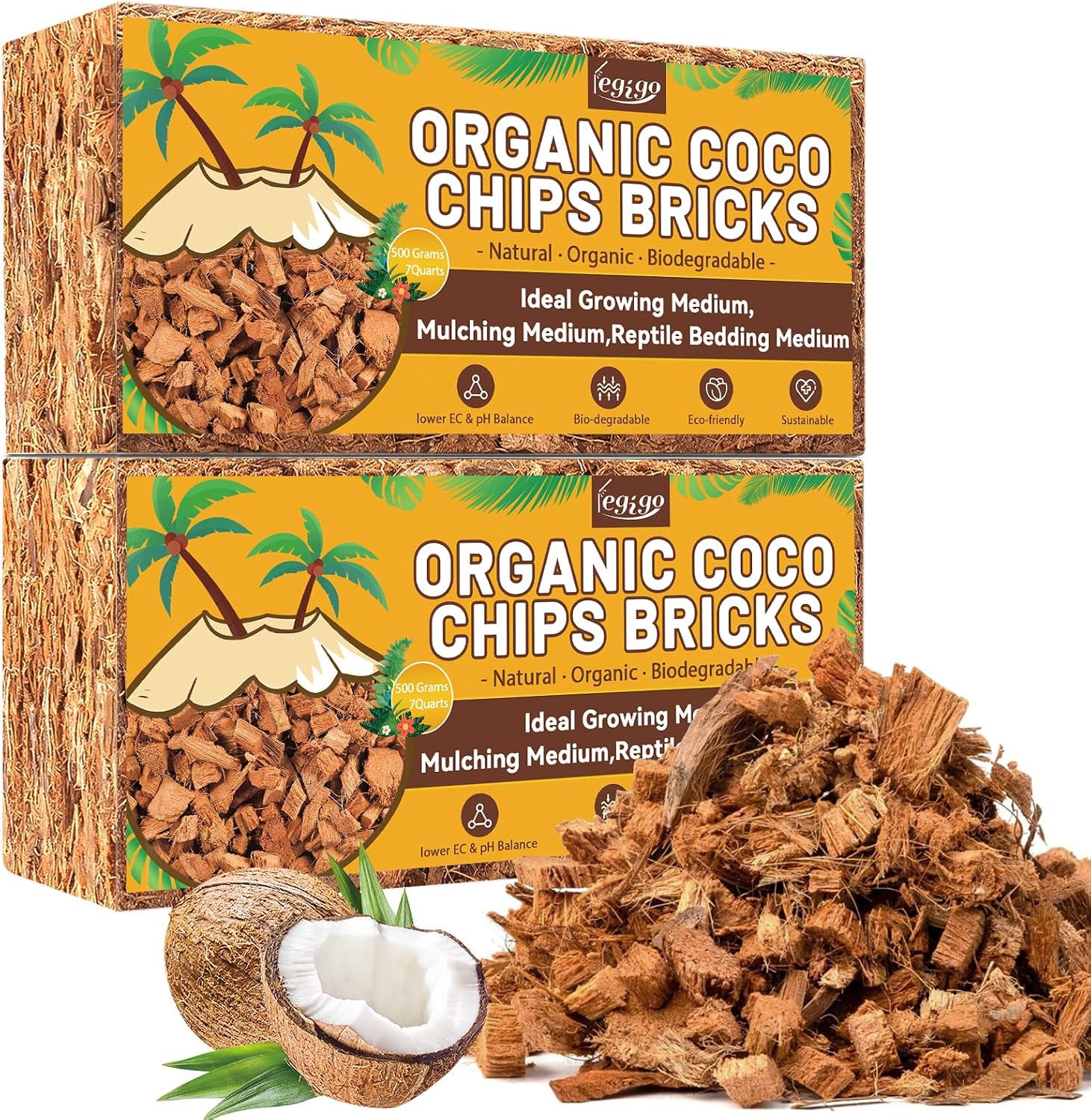
| Brand | Legigo |
|---|---|
| Material | Coconut Coir |
| Number of Packs | 2 |
| Volume | 7 quarts |
These Legigo coco coir chips come as two compressed bricks that soak and expand into a chunky coconut-husk substrate useful as a soil amendment, orchid mix, or mulch. Use them by rehydrating the bricks with water, then mixing the expanded chips into potting soil or applying a layer as mulch around plants. The material holds 4–6 times its weight in water while maintaining porosity, so it helps retain moisture for berries without compacting and also improves drainage to reduce root rot risk. Low electrical conductivity and a near-neutral pH make it safe to mix with fertilizers and other media. Because the chips are chunky and fibrous they are long lasting as a mulch and suppress weeds while letting oxygen reach roots. The product is lightweight and compact to store when dry, but you do need to plan for soaking and expansion and buy enough volume for larger beds since two bricks expand to a limited amount. For heavy-feeding or high-nutrient crops you will still want to blend with compost or fertilizer rather than rely on coir for fertility.
Best for: Gardeners looking for an affordable, easy-to-store soil amendment or mulch that improves moisture retention and drainage for small berry patches or container berries.
Less Ideal for: Large-scale plantings or growers who need a complete, nutrient-rich growing medium rather than a moisture-retentive amendment.
- High water retention while remaining porous, so it supplies steady moisture without waterlogging
- Low EC and mildly acidic pH suitable for most plants and safe to mix with fertilizers
- Chunky fibrous texture improves drainage and aeration when mixed into potting media
- Compressed bricks store compactly and expand 5–7× after soaking for easy handling
- No inherent nutrients so it must be combined with compost or fertilizer for fruiting plants
- Two bricks expand to a limited volume, requiring additional purchases for larger beds
Verdict: A budget-friendly, long‑lasting coco coir mulch and soil amendment that holds moisture and improves aeration for small berry plantings when mixed with compost or fertilizer.
Riare Organic Coco Coir Chips, 10 lb

| Unit Count | 160 Fluid Ounces |
|---|---|
| Material | Coco Chips |
| Volume | 10 liters |
| Style Name | Garden |
| Item Highlight | Low EC & pH Balanced, Superior Drainage & Aeration, High Expansion & Moisture Retention |
This 10 lb compressed bag of coco coir chips expands into a loose, airy substrate useful as a mulch or mixed into potting mixes for herbs. After soaking the compressed brick it rehydrates into a lightweight, porous medium that improves drainage while holding moisture so you can water less often. Its low electrical conductivity and near-neutral pH make it safe to use directly with seedlings and established herbs, and it mixes well with perlite, compost, or potting soil to open up compacted mixes. The chips also work as a top mulch to reduce surface evaporation and suppress weeds without compacting like bark. Expect to rinse or pre-soak to remove any dust and follow basic handling precautions to avoid skin or respiratory irritation. The product is organic and renewable, but because it is a fibrous amendment rather than a complete soil it should be blended with nutrient sources for long-term container-grown herbs.
Best for: Herb gardeners who want a reliable, low-maintenance soil amendment to improve potting mixes or use as a moisture-retaining mulch and who prefer renewable, easy-to-store materials.
Less Ideal for: Gardeners looking for a ready-to-use, nutrient-rich potting soil or those who prefer heavy organic mulches that break down quickly to add bulk to beds.
- Improves drainage and aeration when mixed into potting soil
- High moisture retention reduces watering frequency
- Low EC and pH balanced, safe for seedlings and herb roots
- Compressed brick is easy to store and expands after soaking
- Does not supply significant nutrients and needs to be combined with fertilizer or compost
- May produce dust and can irritate skin or lungs if not handled or rinsed properly
Verdict: A practical, renewable amendment and mulch that improves aeration and moisture retention for healthier potted and garden herbs.
Miuwauer Compressed Coco Coir Brick (1-Pack)

| Brand Name | Miuwauer |
|---|---|
| Number of Packs | 1 |
| Unit Count | 1 Count |
| Style Name | Brick,Coco Coir |
This 1-pack compressed coco coir brick is a compact, budget-friendly way to get organic mulch and a reusable growing medium for seed starting, potting mixes, and garden beds. The brick hydrates quickly and expands into a fluffy, water-retentive substrate that improves aeration around roots and reduces the need for frequent watering. It is pH neutral and contains naturally occurring minerals that support plant growth, making it suitable for flowers, vegetables, succulents, and foliage. Practical benefits include easy storage and transport while compressed, low mess when hydrated, and versatility as a soil amendment or top dressing. Important limitations are the single small brick size and the need to premix or combine with compost or potting soil for long-term container plants, since coco coir lacks substantial nutrient content on its own. Also take care to add water slowly to avoid dust and to rehydrate fully before use to reach the advertised volume.
Best for: Gardeners on a tight budget who want an affordable, organic mulch alternative or a lightweight seed-starting and potting substrate; good for small beds, containers, and starting transplants.
Less Ideal for: Large-scale landscapers or gardeners who need ready-to-use, nutrient-rich potting mixes for many containers without additional amendments.
- Expands rapidly with water into a lightweight, easy-to-handle growing medium
- Good water retention while maintaining aeration to reduce root rot risk
- pH neutral and contains natural minerals useful for a range of plants
- Compact compressed form saves storage space and shipping bulk
- Sold as a single small brick so you may need multiple packs for larger projects
- Not a complete fertilizer and should be mixed with compost or feed for long-term nutrient needs
Verdict: A low-cost, space-saving organic coco coir brick that expands into a versatile mulch and seed-starting medium ideal for budget-focused small-scale gardeners.
Tender Tropicals Coconut Husk Fiber Mulch for Potted Plants

| Item Weight | 1.13 ounces |
|---|---|
| Manufacturer | Tender Tropicals |
| Product Dimensions | 7 x 5 x 0.5 inches |
| ASIN | B0H8J2SZFQ |
This coconut husk fiber mulch is a simple, natural surface layer for potted plants and hanging baskets. You spread the loose fibers over the soil, leaving a small gap around stems; the fibers help reduce surface evaporation and give containers a finished look while remaining airy enough to avoid compacting. It is easy to apply for routine care, repotting or when refreshing the top layer on herbs, succulents or houseplants. Because the product is pure coconut fiber it is lightweight, biodegradable, and usable in small decorative projects or as nesting material. The package is small, so you will need multiple packs for numerous or large pots. Also, because the fibers are loose they can shift during heavy watering or outdoors in wind, so occasional smoothing or replacement may be necessary. For growers who want a low-maintenance, natural-looking top dressing for herb pots, this mulch delivers consistent, straightforward performance.
Best for: For herb gardeners who want a reliable, natural top dressing to conserve moisture and keep small pots neat without changing soil mix or adding chemicals.
Less Ideal for: Not the best choice for large-scale beds or gardeners who need a long-lasting, compacted mulch layer for heavy rainfall or high-wind exposure.
- Made from natural coconut fiber so it is biodegradable and plant-safe
- Helps reduce soil surface moisture loss and keeps pots looking tidy
- Lightweight and easy to spread over small containers and hanging baskets
- Versatile for indoor and outdoor potted plants and creative projects
- Small 2.1 ounce package requires multiple bags for several or large pots
- Loose fibers can shift with heavy watering or wind and may need occasional rearranging
Verdict: A simple, natural coconut fiber topper that reliably conserves moisture and tidies small herb pots.
HealthiStraw GardenStraw Premium Garden Mulch, 3 cu ft

| Net volume | 3 cu ft |
|---|---|
| Intended use | Garden mulch, lawn seeding, compost-friendly |
| Material | 100% wheat straw |
| Source | Sustainably sourced, non-GMO |
HealthiStraw GardenStraw is a 3 cubic foot compressed bale of cleaned wheat straw formulated for use as garden mulch and seed protection. It is designed for vegetable, herb, flower and shrub beds where you want a lightweight, compostable mulch that retains soil moisture and suppresses weeds. The straw is processed to reduce dust and stray seeds and the short, specially cut fibers interlock when watered so the mulch stays in place without chemical tackifiers. For bushes you can apply a 2 to 3 inch layer around the drip line to cut evaporation, reduce compaction and gradually add organic matter as it breaks down. Practical benefits include easy spreading from a compressed bale, fast composting into the soil, and reduced watering needs. Limitations are that straw is less decorative than bark or wood chips and will decompose faster, so it requires periodic replenishing; it also provides less long-term weed barrier than heavier mulches. For gardeners focused on soil health and moisture conservation, it is a straightforward, low-risk choice.
Best for: Gardeners who prioritize soil health and want an easy-to-apply, compostable mulch for shrubs and mixed beds that reduces watering and improves organic matter over time.
Less Ideal for: People seeking a long-lasting, decorative mulch or a heavy-duty weed barrier for high-traffic beds should consider wood chips or stone instead.
- Cleaned, non-GMO wheat straw with reduced dust and seeds
- Fibers interlock when wetted so the mulch stays in place without binders
- Helps retain soil moisture and can reduce watering needs substantially
- Composts quickly and adds organic carbon to improve soil structure
- Decomposes faster than wood mulches so it needs topping up more often
- Less decorative and provides a lighter-duty weed barrier compared with heavier bark or rock mulches
Verdict: A clean, fast-composting straw mulch that conserves moisture and improves soil health, making it a safe, practical choice for mulching bushes.
Mosser Lee Spanish Moss, 250 Cubic Inches

| Item Weight | 4.6 ounces |
|---|---|
| Manufacturer | Mosser Lee Company |
| ASIN | B000QTO78Q |
| Item model number | ML0560 |
Mosser Lee Spanish Moss is a lightweight natural moss sold in a 250 cubic inch bag for use as a decorative soil cover and craft filler. It is typically spread over potting soil, used in terrariums, hanging baskets, or woven into artificial arrangements to conceal soil and give a finished look. The product preserves moisture around the root zone without forming a water-impermeable layer, so plants can still be watered and fertilized normally. As a natural material it is renewable and easy to work with: fluff it up, spread it, or trim to fit. Limitations are that it is purely decorative and will eventually break down outdoors or with heavy watering, so it is best for indoor pots, displays, or short-term outdoor use; it also does not provide the insulating or long-term weed-suppressing benefits of heavier mulches. For cautious buyers this offers a predictable, widely used option that improves presentation with minimal risk to plant health.
Best for: Buyers who want a low-risk, decorative top layer for indoor pots, terrariums, and floral arrangements that improves appearance without altering watering routines.
Less Ideal for: Gardeners looking for a durable outdoor mulch that suppresses weeds or provides long-term soil insulation should choose a heavier organic or inorganic mulch instead.
- Natural, renewable material suitable for indoor plant displays and craft projects
- Lightweight and easy to spread or trim to fit pots and arrangements
- Helps retain surface moisture without blocking watering or fertilization
- Breaks down over time and needs periodic replacement in moist conditions
Verdict: Choose this Spanish moss when you want an easy, natural topper that improves the look of pots and arrangements without changing how you water or care for plants.
Choosing the Right Mulch for Herbs: Key Factors to Consider
Moisture Control and Evaporation
How a mulch holds and releases water affects herb vigor. Many herbs like steady surface moisture without saturated crowns, so choose a mulch that evens out irrigation cycles by reducing evaporation while still allowing quick drainage after heavy rain. Organic mulches such as shredded bark or straw moderate temperature and moisture but vary in how quickly they wick water to the soil.
In containers or raised beds, a thinner layer often works best so the root zone stays aerated. In ground beds with sandy soil, a more moisture-retentive mulch helps; in heavy clay, choose a looser, breathable option to prevent prolonged wetness near crowns.
Soil Interaction and Nutrient Contribution
Some mulches break down and add organic matter, slowly improving soil structure and fertility. That can benefit herbs over time, particularly in poor soils. However, high-carbon materials may temporarily tie up nitrogen as they decompose, which can be a concern for fast-growing culinary herbs unless you amend or top-dress appropriately.
Inert mulches do not change soil chemistry and are useful when you want predictable conditions or when growing herbs for a single season. Consider how often you want to refresh soil and whether you prefer a mulch that contributes to long-term soil health.
Weed Suppression and Light Exclusion
Mulch reduces weed pressure by blocking light and preventing seed contact with soil. Dense, uniform mulches give the best immediate suppression, which saves time on hand weeding around delicate herb stems. Lighter materials may require a thicker application to achieve the same effect and can be prone to displacement by wind.
For small, closely spaced herb rows or mixed perennial herbs, select a mulch that stays put and does not allow weed seedlings to establish at the mulch-soil interface.
Pest and Disease Considerations
Some mulches create damp, cool microclimates that attract slugs, snails, or root-rotting fungi, especially when placed against low-growing foliage. Choose a material and application method that reduces contact between the mulch and herb crowns: leave a small bare soil ring around stems where appropriate, or use coarser mulches that dry faster.
Also consider whether the mulch can harbor pest eggs or disease residues from previous plantings. Sterile or processed mulches are preferable for annual herb beds or new container mixes.
Application, Maintenance, and Harvest Access
Herbs are often harvested frequently, so the ease of moving or refreshing mulch matters. Lightweight loose materials can be brushed aside quickly, while heavy wood chips may interfere with easy snipping. Consider how often you prune, divide, or rotate herbs and choose a mulch that supports that workflow.
Maintenance also includes reapplication intervals, settling behavior, and how much the mulch blends with soil or creates a need for top-dressing. Gardeners who prefer low-effort beds will favor long-lasting, low-settling mulches.
Aesthetics and Heat Management
Mulch color and texture influence garden appearance and soil temperature. Darker mulches can warm soil earlier in spring, useful for some Mediterranean herbs that prefer warmer root zones, while lighter mulches reflect heat and keep roots cooler during hot summers.
Visual compatibility with the garden style is a practical consideration for patio plantings and ornamental herb borders. Choose a mulch that balances thermal behavior with the look you want.
Mulch Options by Herb Location
Location matters: mulches that work well in in-ground beds might be inappropriate for containers. In raised beds or garden borders you can use thicker organic layers to build soil over time. For patio pots and planters, lean toward lighter, non-staining options that allow quick access for harvesting.
For small, dense herbings you may prefer a thin, tidy layer so stems and soil remain visible. In larger perennial herb patches, coarser materials that persist and improve structure are more practical.
- In-ground beds: opt for mulches that both suppress weeds and slowly improve soil.
- Containers and window boxes: prioritize breathability and easy removal.
- Raised beds: choose mulches that contribute organic matter without compaction.
How to Apply Mulch Around Tender Stems
Apply mulch in a careful band rather than piling it against stems. Leave a small gap of exposed soil around the crown or base of woody herbs to prevent moisture trapping against stems. A 1 to 2 inch gap is usually sufficient for annuals and many perennials.
Spread mulch to a recommended depth that matches the material type. Too thin a layer will not suppress weeds; too thick a layer can suffocate soil life or promote slug habitat. Monitor and adjust in the first season to find the right balance for your garden microclimate.
- Avoid piling mulch against woody stems to reduce rot.
- Reapply thin layers rather than a single very deep layer to maintain aeration.
Seasonal Timing and Renewal
Timing mulch application matters. Apply in late spring after soil has warmed for warm-loving herbs, or in autumn to protect roots through winter if your climate has cold, wet winters. For many herb beds, a light renewal each spring keeps material from compacting and lets you inspect crowns.
Some materials break down quickly and need more frequent top-ups. Plan refresh intervals into your garden calendar so beds stay tidy and effective.
- Spring application warms soil and reduces early-season weeds.
- Autumn layers can protect roots but avoid fresh heavy mulches that hold moisture in cold climates.
Mulch and Soil Testing
A quick soil check can guide mulch choice. In poor, sandy soils select mulches that add organic matter. In heavy clay, choose mulches that improve structure without trapping extra moisture at the surface. If pH-sensitive herbs are in the garden, be mindful of materials that may alter soil chemistry as they decompose.
Regularly observe soil moisture and plant response after applying mulch and adjust material or depth if herbs show stress.
- Sandy soil benefits from nutrient-contributing mulches.
- Clay soil benefits from coarse, well-draining materials.
Eco and Sourcing Considerations
Consider the origin and processing of mulch materials. Locally sourced organic mulches reduce transport impacts and often integrate better with the existing soil biota. Avoid materials treated with chemicals or dyes that could affect edible crops.
When possible, choose renewable materials or those that support on-site composting practices to close nutrient cycles in your garden.
- Prefer untreated, local organic materials for edible beds.
- Avoid colored or chemically treated bark in herb planting areas.
How We Chose the Best Mulch for Herbs
We focused on attributes that directly affect herb health and gardener workflow. Key evaluation criteria included moisture management, because herbs need even surface moisture without waterlogging around crowns; drainage and aeration, to prevent root rot in shallow-rooted species; soil compatibility, meaning mulches that either break down into beneficial organic matter or are inert where needed; weed suppression and light exclusion to cut maintenance time; and ease of application and removal for frequent harvesting or seasonal bed changes. We also considered longevity and maintenance needs so gardeners understand reapplication intervals, and pest or disease risk because some mulches can attract slugs or hold fungal spores against low-growing foliage. Exclusions included decorative-only products that offer poor breathability or heavy chemical treatments and any material unsuitable near edible herbs. The shortlist favors materials with clear use instructions and predictable effects in herb-scale plantings.
FAQ
Can I use compost as a mulch for herbs?
Compost can work as a thin mulch that supplies nutrients and improves soil, but use it sparingly as a surface layer because thick applications can compact and restrict airflow. Mixing compost into the topsoil and using a lighter surface mulch often gives the best balance.
How deep should mulch be for herb beds?
Aim for about 1 to 2 inches for most herbs to suppress weeds without smothering shallow roots. Some coarse materials may be applied slightly thicker, while fine, dense mulches should be used more thinly.
Will mulch change the flavor of culinary herbs?
Mulch itself does not directly change flavor, but it influences soil moisture and nutrient availability, which affect plant vigor and essential oil concentration. Choose a mulch that provides stable moisture and supports healthy root function to maintain flavor.
Is there a mulch that prevents slug or snail problems?
No mulch completely prevents slugs, but coarse, dry materials and good spacing between mulch and plant crowns reduce slug habitat. Combining mulching choices with cultural controls helps manage these pests.
When should I remove mulch from potted herbs?
Remove or disturb mulch in pots if it becomes compacted, water-repellent, or prevents quick access for harvesting. Refresh the top layer each season and inspect for root crowding or moisture issues.
Can mulch be used around woody perennial herbs?
Yes, but leave a small exposed ring at the base of woody herbs to avoid trapping moisture against stems. Use longer-lasting, coarser mulches for perennial beds to reduce how often you need to refresh the surface.
Final Verdict
Choose a mulch that matches your herb location, harvest habits, and the soil you are working with. Prioritize steady surface moisture, breathable structure around shallow roots, and manageable maintenance cycles when deciding what to use. Tradeoffs are inevitable: longer-lasting mulches reduce labor but may be harder to move for frequent harvesting, while fine, fast-breaking materials improve soil faster but need more frequent refreshes. Make a small trial patch if you are unsure, monitor herb health and soil moisture, and adjust material or depth as needed. With attention to moisture control and soil compatibility, you can select a mulch that protects herbs and supports flavorful, vigorous growth.
