

Note: This article contains affiliate links. If you click on these links and make a purchase, I may earn a small commission at no extra cost to you. This helps support my research and content. Read my full affiliate disclosure here.
A mulching gas lawn mower changes how you manage clippings and soil nutrition. In many yards a mower that finely chops and redistributes grass returns moisture and nutrients, reduces the need for bagging, and speeds up weekly maintenance. Choosing the right unit matters because engine power, blade design, deck shape, and cutting-width options all affect how evenly clippings are recycled into the turf. This guide looks at seven top mulching gas lawn mowers shortlisted for real garden performance. We evaluated machines on cutting consistency, mulching efficiency, maneuverability, durability, and maintenance needs so you can pick the model that fits your lawn size and care style.
Top Picks at a Glance
| Best Overall The best all-around choice for most situations | SENIX 22-inch 201cc Rear-Wheel Self-Propelled Gas Lawn Mower |  |
| Best Quality Built to a higher standard if you want something more solid | PowerSmart 22-Inch Gas Self-Propelled Lawn Mower with 150cc Briggs & Stratton Engine |  |
| Best Value The sweet spot between price and what you get | SENIX 21" 144cc 3‑in‑1 Gas Push Lawn Mower |  |
| Best Budget The cheapest option that still gets the job done reliably | YOXIER 131cc 4‑Cycle 3‑in‑1 Gas Push Lawn Mower |  |
| Highest Rated A top-rated pick with lots of positive feedback | Bdujhit 20" Self-Propelled Gas Lawn Mower with 140cc OHV Engine, 3-in-1 Mulch/Bag/Rear Discharge |  |
| Most Popular A crowd favorite that many people choose with confidence | SENIX 201cc 22" 3-in-1 Variable Speed Self-Propelled Gas Lawn Mower |  |
| Best Seller A high-volume bestseller chosen again and again | BILT HARD 21-inch 3-in-1 Push Lawn Mower with 201cc Engine |  |
SENIX 22-inch 201cc Rear-Wheel Self-Propelled Gas Lawn Mower
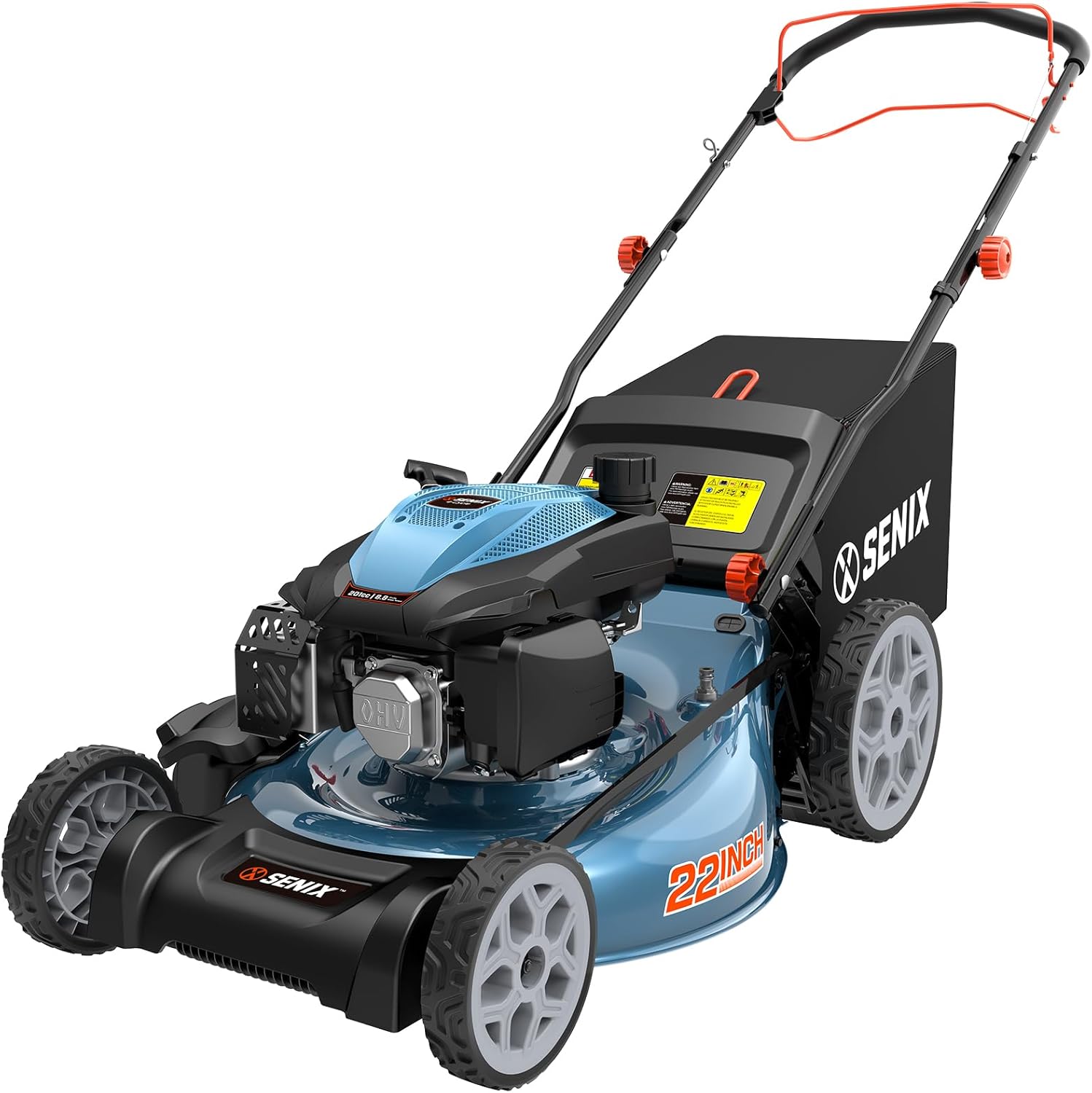
| Power Source | Gas Powered |
|---|---|
| Cutting width | 22 inches |
| Operation Mode | Automatic |
| Number of Positions | 6 |
| Material Type | Metal |
This SENIX mower is built for homeowners who want gas-powered performance without complexity. Its 201cc OHV 4-cycle engine produces enough torque for thick grass while the rear-wheel single-speed self-propelled drive (up to about 2.9 MPH) reduces fatigue on larger yards. The 22-inch steel deck and hardened manganese blades give efficient coverage and clean cuts, and the mower supports three modes — mulching, side discharge, and rear bagging — so you can adapt to seasonal conditions. Central six-position height adjustment (1.25 to 4 inches) makes switching cutting heights quick. The steel deck and vortex-style airflow aim to improve discharge and collection, and the folding handle helps store the mower in tighter spaces. Expect routine gas-engine upkeep and occasional tuneups, and note the single-speed drive limits control on steep slopes compared with variable-speed models. Assembly and break-in will be required before peak performance is realized.
Best for: Buyers who prioritize strong, gas-powered cutting performance and want a low-complexity self-propelled mower for medium to larger suburban lawns.
Less Ideal for: People who need very fine speed control for steep or highly uneven terrain or those who prefer battery-electric zero-emission options.
- Powerful 201cc OHV 4-cycle engine for consistent cutting through thicker turf
- 22-inch cutting deck covers ground quickly for medium to large yards
- 3-in-1 mowing (mulch, bag, side discharge) for seasonal versatility
- Durable steel deck and hardened manganese blades for long wear and reliable grass flow
- Central 6-position height adjustment for fast changes to cutting height
- Single-speed self-propelled drive offers less speed control than variable-speed models
- Gas engine requires regular maintenance and fuel storage
Verdict: Choose this mower if you want a solid, gas-powered 22-inch self-propelled machine that delivers reliable cutting power and 3-in-1 versatility for performance-focused lawn care.
PowerSmart 22-Inch Gas Self-Propelled Lawn Mower with 150cc Briggs & Stratton Engine

| Cutting width | 22 inches |
|---|---|
| Engine displacement | 150cc |
| Cutting height range | 1.5 to 3.9 inches |
| Drive type | Rear-wheel drive |
| Bagger capacity | 1.4 bushels |
This PowerSmart 22-inch self-propelled mower is built for straightforward home lawn care, driven by a 150cc Briggs & Stratton engine with ReadyStart for easy pull-cord starts. It is typically used on small to medium yards up to about a half acre where the rear-wheel drive helps maintain traction on gentle slopes and uneven ground. The steel 22-inch deck and heavy-duty blade support consistent, fine cuts and the 3-in-1 system lets you mulch, bag, or rear-discharge clippings; the included 1.4-bushel bag is easy to remove and empty. A single-lever 6-position height adjuster covers 1.5 to 3.9 inches so you can adapt to seasonal needs. Practical benefits include reliable, proven engine technology, foldable storage to save space, and wheels sized to improve maneuverability. Limits to consider are the pull-start only system and the 0.21 gallon fuel tank that require regular refueling and starting effort; at 72 pounds it is heavier than simpler push mowers, which affects lifting or moving for storage and maintenance.
Best for: A buyer who prioritizes dependable, proven engine performance and wants a low-risk, capable gas mower for routine care of a small to medium yard. Ideal for homeowners who prefer familiar mechanical systems and straightforward operation over newer battery alternatives.
Less Ideal for: Not the best choice for buyers who need lightweight, easily lifted equipment or who prefer electric push-button starts and zero-emission battery operation.
- Reliable Briggs & Stratton 150cc engine with ReadyStart for easier starting
- Self-propelled rear-wheel drive improves traction on slopes and uneven terrain
- 22-inch steel deck with 3-in-1 mulching, bagging, and rear discharge options
- Single-lever, 6-position height adjustment for quick cutting-height changes
- Foldable design saves storage space and the 1.4-bushel bag is simple to empty
- Pull cord start only rather than electric or key start
- Relatively heavy at 72 pounds which makes lifting and transporting harder
- Small fuel tank requires more frequent refilling for longer jobs
Verdict: A dependable, no-surprises gas self-propelled mower that delivers familiar Briggs & Stratton power and versatile 3-in-1 cutting for homeowners who value reliability.
SENIX 21" 144cc 3‑in‑1 Gas Push Lawn Mower

| Power Source | Gas Powered |
|---|---|
| Engine Size | 144 cc |
| Cutting width | 21 inches |
| Number of Positions | 6 |
| Maximum Adjustable Cutting Height | 3.75 inches |
The SENIX 21" 144cc 3‑in‑1 push mower is a straightforward gas-powered mower aimed at everyday lawn maintenance. It uses a 144cc 4-stroke OHV engine that ships pre-filled with oil for quick startup and delivers about 3.4 HP for cutting medium to thick grass. The steel deck supports rear bagging, side discharge, and mulching; a 1.7-bushel catcher is included to reduce how often you stop to empty clippings. Height is adjusted with dual levers across six positions from 1.25 to 3.75 inches to match seasonal needs. Rugged wheels and a vortex-style deck help reduce grass buildup and improve maneuverability on uneven yards. For buyers watching costs, this model gives core features without premium extras, and the ready-to-mow package is convenient. Expect typical gas-mower responsibilities such as fuel, periodic oil and spark-plug maintenance, and louder operation compared with electric alternatives.
Best for: Homeowners who want a capable, no-frills gas mower that handles medium to large suburban lawns on a tighter budget and prefer a proven 3-in-1 cutting setup.
Less Ideal for: People who need a self-propelled mower for steep or very large properties or those seeking a quieter, low-maintenance battery-electric alternative.
- Powerful 144cc 4-stroke engine for reliable cutting performance
- Three mowing modes (bag, mulch, side discharge) for seasonal flexibility
- Pre-filled oil and ready-to-mow kit reduces setup time
- Six-position height adjustment adapts to different grass lengths
- Included 1.7-bushel bagger lowers frequency of stops to empty clippings
- Requires regular gas and engine maintenance typical of small gas mowers
- No self-propelled drive so pushing is required on larger or hilly yards
Verdict: A budget-minded 21" gas push mower that delivers reliable power and 3‑in‑1 versatility for typical suburban lawns.
YOXIER 131cc 4‑Cycle 3‑in‑1 Gas Push Lawn Mower

| Engine | 131cc 4‑cycle |
|---|---|
| Grass bag capacity | 50L |
| Drive type | Rear‑wheel self‑propelled |
| Cutting modes | Mulch, side discharge, rear bag |
This YOXIER gas mower is a basic, budget‑focused 3‑in‑1 machine intended for homeowners who need a straightforward way to cut thick grass and light brush. The 131cc 4‑cycle engine and heavy‑duty blade let it handle overgrowth and tougher turf more confidently than small electric models. You can switch between mulching, side discharge, and rear bagging depending on how you want to manage clippings, and the supplied 50L bag with a wide opening makes emptying quicker. Large wheels and a rear‑wheel self‑propel system improve traction on slopes and uneven lawns, reducing the effort required to push across rough terrain. The mower is marketed as lightweight with a push‑button start for easier use, but buyers should expect the typical maintenance of a gas engine such as oil, spark plugs, and seasonal storage needs. This is not a premium commercial machine, so build and long‑term durability may not match higher‑end brands, but it delivers core cutting versatility at a lower entry cost for small to medium yards.
Best for: Buyers who want the cutting power and versatility of a gas mower without paying for premium brand features and who need a practical tool for small to medium yards.
Less Ideal for: Those who prefer near‑silent, low‑maintenance electric or battery mowers or homeowners with very large properties who need commercial‑grade durability.
- 3‑in‑1 cutting options: mulching, side discharge, and rear bagging for flexible grass management
- 131cc 4‑cycle engine and heavy‑duty blade handle thicker grass and light brush better than small electric mowers
- Rear‑wheel self‑propel and large wheels improve traction on slopes and uneven terrain
- 50L grass bag with wide opening for higher capacity and easier emptying
- As a budget model, long‑term durability and fit‑and‑finish may be lower than premium mowers
- Requires regular gas‑engine maintenance and winter storage care
Verdict: A low‑cost, gas‑powered 3‑in‑1 mower that gives budget buyers real cutting power and versatile clipping management for small to medium lawns.
Bdujhit 20" Self-Propelled Gas Lawn Mower with 140cc OHV Engine, 3-in-1 Mulch/Bag/Rear Discharge

| Power Source | Gas Powered |
|---|---|
| Engine | 140CC 4-stroke OHV |
| Cutting width | 20 inches |
| Number of Positions | 8 |
| Maximum Adjustable Cutting Height | 3.2 inches |
This walk-behind mower pairs a 140cc 4-stroke OHV engine with a 20-inch steel deck and a self-propelled drive to make regular lawn care quicker and less tiring. It is typically used for medium residential lawns where the 20-inch cutting width and up to 2800 RPM blade speed cover ground efficiently while producing a clean cut. The 3-in-1 steel deck lets you switch between mulching, rear discharge, and bagging; the included 1.7-bushel bag and larger onboard collection capacity reduce trips to empty clippings. An 8-position single-lever height adjustment from 1 to 3.2 inches helps dial in turf height across conditions. Practical benefits include a powerful starting engine for thicker grass, a self-propelled system that eases operation on gentle slopes, and a robust steel construction for routine use. Important limitations are its manual operation and fuel requirement, which need regular maintenance and storage care, and the 20-inch cut is best for small to medium lots rather than very large properties.
Best for: Buyers who prioritize dependable, gas-powered performance for routine lawn maintenance and want a self-propelled mower that reduces physical effort while offering mulching and bagging options.
Less Ideal for: Those wanting a cordless, low-maintenance electric mower or owners with very large properties who need a wider cutting width or commercial-grade equipment.
- Powerful 140cc OHV engine providing reliable starting and enough torque for thick grass
- Self-propelled drive reduces operator fatigue on longer walks and slight slopes
- 3-in-1 steel deck (mulch, bag, rear discharge) for flexible clipping management
- Single-lever 8-position height adjustment for quick deck changes
- Larger grass collection capacity to cut longer between emptying
- Requires regular gasoline and basic engine maintenance unlike electric alternatives
- Manual operation and weight make it less suitable for users seeking ultra-light or battery-powered mowers
Verdict: A reliable, gas-powered self-propelled mower that delivers robust cutting performance and flexible mulching or bagging for homeowners who want dependable routine lawn care.
SENIX 201cc 22" 3-in-1 Variable Speed Self-Propelled Gas Lawn Mower

| Power Source | Gas Powered |
|---|---|
| Cutting width | 22 inches |
| Operation Mode | Automatic |
| Number of Positions | 6 |
| Material Type | Stainless Steel |
This SENIX mower pairs a 201cc four-cycle OHV engine with a 22-inch steel deck to tackle medium to large lawns efficiently. It is self-propelled with large 11-inch rear wheels, so it eases forward motion on slopes and thicker turf while letting you control pace with variable drive. The mower offers a 3-in-1 system so you can bag clippings, mulch them back into the lawn, or side-discharge depending on grass conditions. Height is adjusted quickly with a single lever across six positions from 1.25 to 4 inches to suit seasonal needs. The steel construction and sizeable cutting width help you finish jobs faster than a typical 20-inch push mower. Expect routine maintenance typical of gas machines such as fuel, oil, spark plug checks, and occasional blade sharpening; it is heavier and louder than electric models and needs winter storage to avoid carburetor issues. For buyers prioritizing proven mechanical performance and versatility, this mower delivers a substantial, practical package for regular lawn care.
Best for: Homeowners who value reliable gas power and versatility for maintaining medium to large yards and who prefer equipment with established mechanical performance and visible user feedback.
Less Ideal for: People who prioritize low-noise, low-maintenance electric options or have very small yards where a lighter push mower or battery model would be more convenient.
- Powerful 201cc OHV engine provides consistent cutting performance for medium to large lawns
- 22-inch steel cutting deck covers more ground per pass than 20-inch mowers
- Rear-wheel self-propelled drive with 11-inch wheels improves traction and handling on slopes
- 3-in-1 cutting system (bag, mulch, side discharge) adapts to different lawn care needs
- Single-lever, six-position height adjustment lets you change cutting height quickly
- Gas engine requires regular maintenance and winter storage to avoid fuel system issues
- Heavier and louder than electric alternatives which may affect maneuverability and noise sensitivity
Verdict: Choose this mower if you want a tough, gas-powered 22-inch self-propelled machine that handles larger lawns and offers bagging, mulching, and side-discharge versatility.
BILT HARD 21-inch 3-in-1 Push Lawn Mower with 201cc Engine

| Cutting width | 21 inches |
|---|---|
| Operation Mode | Automatic |
| Maximum Adjustable Cutting Height | 3.75 inches |
| Minimum Adjustable Cutting Height | 1.2 inches |
| Number of Positions | 10 |
The BILT HARD 21-inch push mower is built for straightforward gas mowing with a 201cc 4-cycle OHV engine and a 3-in-1 steel deck that mulches, side-discharges, or collects clippings in the rear bag. It is typically used for regular suburban lawns where a reliable, non‑electric power source and a full-sized cutting width speed up work. Notable features include a single-lever synchronized height adjustment across multiple positions, foam-wrapped angled handle for comfort, and double ball-bearing wheels that help it roll smoothly over typical yard surfaces. Practical benefits are strong engine torque for consistent cutting, flexible clipping management depending on lawn needs, and easy starting thanks to a no-choke, no-primer design. Important limitations are that it is a push mower rather than self-propelled and is not recommended for steep slopes over 15 degrees, so it demands more physical effort on larger or hilly properties. Assembly and routine maintenance are required as with any gas mower.
Best for: Buyers who want a dependable gas mower for routine mulching and clipping management on small to medium flat lawns and who prefer simple, proven mechanics over advanced features.
Less Ideal for: Owners of large properties, steep or uneven terrain, or those who need a self-propelled or battery-powered mower for quieter, lower-maintenance operation.
- 201cc 4-cycle OHV engine provides steady power and good torque for regular lawns
- 3-in-1 steel deck lets you choose mulching, side discharge, or rear bagging
- Single-lever height adjustment with multiple positions for consistent cut height
- No-choke no-primer starting design simplifies seasonal starts
- Foam-wrapped handle and ball-bearing wheels improve comfort and maneuverability
- Push-only operation requires more effort than self-propelled models
- Not designed for slopes steeper than 15 degrees
Verdict: A straightforward, gas-powered 21-inch mower that gives reliable mulching and clipping options for buyers who value dependable, easy-to-start performance.
Choosing the Right Mulching Gas Lawn Mower: Key Factors to Consider
Cutting Consistency and Blade Design
How cleanly a mower slices grass affects both appearance and how well clippings are mulched. A sharp, properly pitched blade produces even cuts and avoids tearing grass, which reduces stress on turf and lowers disease risk. Blade geometry also influences how clippings are directed under the deck; mulching blades are often curved to keep clippings circulating until finely chopped.
For mixed-height or coarse grasses you will want a blade and deck combination that maintains speed and keeps material airborne long enough to cut repeatedly. Consider blade balance and the ability to easily sharpen or replace blades because a dull blade quickly degrades mulching performance.
Mulching Efficiency and Clipping Size
Mulching efficiency is about how small the clippings are and how evenly they are returned to the turf. Finer particles break down faster and release nutrients while avoiding matting that can smother grass crowns. Deck airflow, blade type, and RPM at load determine whether clippings are repeatedly cut or spit out in larger pieces.
If you frequently mow tall or wet grass, look for designs known to keep clippings circulating rather than ejecting them. A mower that consistently produces short, uniform clippings reduces the need to bag and lowers yard cleanup time.
Engine Power and Torque Delivery
A gas engine must maintain sufficient RPM when the blade encounters thick or damp material. Torque delivery matters more than peak horsepower for sustained mulching: engines that bog down let clippings pass through only once, resulting in long pieces. Choose engines with reserve torque so the blade keeps cutting without laboring.
Also consider starting reliability and fuel access. For many homeowners an easy-pull or electric-start design reduces frustration, while simple choke and throttle layouts make cold-weather starts predictable.
Deck Construction and Airflow
Deck shape, height, and material determine how air moves beneath the mower and how clippings circulate. A well-contoured deck helps create the suction and turbulence needed for effective mulching. Steel decks are common for ruggedness, while stamped or fabricated designs affect cleaning and longevity differently.
Look at deck height range and how ramping between heights is handled. Adjustable decks let you choose shorter cuts for frequent mulching or higher settings for stress periods in summer. Easy access for deck cleaning matters because buildup reduces airflow and mulching quality over time.
Maneuverability and Cutting Width
Maneuverability influences how quickly you can mow different lawn shapes. Narrower cutting widths and responsive wheels help in tight gardens with beds and trees, while wider decks reduce runtime on larger lawns. Balance cutting width against engine power and mulching expectations: wider decks need stronger airflow and blade speed to mulch effectively across the span.
Consider wheel size, steering feel, and whether the drive is self-propelled. Self-propelled units reduce physical strain on slopes and long runs, but the drive system adds maintenance points and weight.
Maintenance Access and Serviceability
Regular maintenance keeps mulching performance consistent. Easy access to the blade, spindle, and deck interior simplifies sharpening, cleaning, and inspection. Mowers with tool-free height adjustments, accessible oil and air filter locations, and straightforward belt or wheel replacement save time and lower ownership frustration.
Also factor in the availability of common replacement parts and how simple routine tasks are for a typical homeowner. A design that reduces buildup under the deck and allows quick washouts will keep mulching efficiency high without frequent shop visits.
When Mulching Works Best
Mulching works well on lawns that are mowed regularly and not allowed to get excessively tall between cuts. Short, frequent cuts produce small clippings that the mower can chop repeatedly until they are fine enough to settle into the turf and decompose.
Avoid mulching when grass is very wet or after a heavy fertilization because clippings can clump and create thatch-like layers. In those cases bagging or brooming may be better until conditions normalize.
- Aim to remove no more than one-third of leaf height per session for best results
- Mow more often during rapid growth to keep clippings small
- Pause mulching during prolonged wet periods to prevent clumping
Matching Mower Type to Lawn Size
Smaller yards usually benefit from a compact, nimble mulching mower with a narrower cutting width and easy handling around obstacles. For medium to larger lawns, a wider deck reduces time spent mowing but requires sufficient engine power to maintain blade speed and mulching action across the whole deck.
Think about storage and transport as well. Heavier, wider units may be harder to move to storage or onto a trailer, while lighter walk-behinds are easier to handle but may take longer to finish a large property.
- Narrow decks excel in tight, ornamental landscapes
- Wider decks are efficient for open lawns but need stronger engines
- Self-propelled drive helps on slopes and long runs
Seasonal Mulching Tips
Adjust your approach through the seasons. In spring, grass grows quickly so mow more frequently and consider a slightly higher deck to prevent scalping. Summer often calls for higher cuts to protect roots and conserve moisture, while fall mulching can help return nutrients before dormancy.
Use a clean, sharp blade each season and check the deck for buildup after wet weather. Switching to a bag or side-discharge temporarily can help manage large piles of clippings during peak growth or lawn renovations.
- Raise deck during heat waves to reduce stress
- Sharpen blades at the start of the season and as needed
- Remove heavy clippings if you have a particularly thick cut or after dethatching
Safe Operation and Routine Checks
Safety affects both mower longevity and garden protection. Always disconnect spark plug or follow the manufacturer safety procedure before servicing blades. Inspect for debris, rocks, and toys before mowing to avoid damaging the blade and deck.
Check oil, air filter, and fuel condition regularly. Vibration, unusual noise, or a change in cutting pattern often means a blade imbalance or dull edge, so stop and fix the issue promptly rather than continuing to mow.
- Clear obstacles from the mowing path
- Follow safe refueling practices and store fuel properly
- Address blade imbalance immediately to protect bearings and deck
Environmental and Lawn Health Considerations
Mulching returns organic matter and small amounts of nutrients to the soil, which can reduce fertilizer needs over time. It also helps retain soil moisture and moderates temperature fluctuations at the turf level. However, excessive buildup of coarse clippings over time can contribute to thatch, so balance mulch frequency with periodic raking or aeration.
If you have disease issues or persistent thatch, alternate between mulching and bagging during the season, and consider aeration to encourage decomposition of returned clippings.
- Use mulching as part of an integrated lawn care plan
- Combine with occasional aeration for compacted lawns
- Monitor thatch depth and adjust practices if buildup occurs
How We Chose the Best Mulching Gas Lawn Mower
We focused on attributes that matter to everyday lawn care and mulching performance. Key evaluation criteria included cutting quality under varied grass heights and moisture, true mulching efficiency (how finely and evenly clippings are reduced and redistributed), engine and power delivery for maintaining blade speed at load, deck and blade design that influence clipping flow, and usability factors such as starting, steering, and height adjustment. Durability and maintenance were weighted by typical homeowner usage: how easy it is to access the blade and deck for cleaning, whether common parts are replaceable, and overall build choices that affect service life. Noise and emissions received attention in terms of real-world comfort and local restrictions, though precise compliance details were not a deciding factor. We excluded models aimed only at bagging, electric-only powertrains, and commercial-grade walk-behind machines designed for heavy daily use. The final shortlist contains mowers balanced for residential mulching performance across small and medium lawns, with clear tradeoffs called out when a unit favors maneuverability over heavy-duty mulching capacity.
FAQ
Can I mulch if my grass is wet?
Mulching wet grass usually creates clumps and can clog the deck, so it is often best to wait until turf dries. If you must mow damp grass, use a higher deck setting and a very sharp blade to minimize clumping.
How often should I sharpen mulching blades?
Sharpening frequency depends on use and ground conditions, but many homeowners sharpen once or twice per season. If you notice tearing, ragged tips, or increased fuel use, sharpen the blade sooner.
Will mulching reduce my fertilizer needs?
Mulching returns organic matter and some nutrients, which can lower fertilizer needs over time. The effect is gradual and depends on clipping size, lawn condition, and soil fertility, so monitor turf color and growth before cutting fertilizer applications dramatically.
Is a self-propelled mower necessary for mulching?
Self-propelled drive is not required for mulching but can make mowing large or sloped yards easier and less tiring. The important factors for mulching are deck and blade design plus engine torque, not the presence of a drive system.
How do I prevent thatch when mulching regularly?
To avoid thatch buildup, keep clippings short and finely chopped, perform periodic raking or dethatching as needed, and aerate compacted soils so returned clippings can decompose. Alternating with bagging sessions during heavy growth also helps.
Final Verdict
Prioritize cutting consistency, mulching efficiency, and sufficient engine torque when selecting a mulching gas lawn mower for your yard. Think about deck width and maneuverability relative to lawn size, and choose a design that provides easy maintenance access so performance stays consistent. Accept the tradeoffs: wider decks save time but demand more power, and self-propelled drives add convenience at the cost of weight and extra service points. Focus on the criteria that match your mowing routine and lawn conditions to choose confidently.
