

Note: This article contains affiliate links. If you click on these links and make a purchase, I may earn a small commission at no extra cost to you. This helps support my research and content. Read my full affiliate disclosure here.
If you want a greener, healthier lawn without synthetic salts, an organic liquid lawn fertilizer can deliver nutrients quickly while supporting soil biology. Choosing the right liquid formula matters because concentration, nutrient mix, and how it interacts with your soil will determine green-up speed, disease resistance, and how often you need to reapply. This guide presents seven shortlisted organic liquid lawn fertilizer options that suit common turf needs. We focus on practical things gardeners notice: nutrient balance, whether products promote soil microbes, and how easy they are to apply. Below you will find clear evaluation criteria and guidance to help you pick the best fit for your lawn care routine.
Top Picks at a Glance
| Best Overall The best all-around choice for most situations | GS Plant Foods Liquid Fish Fertilizer (1 Gallon) | 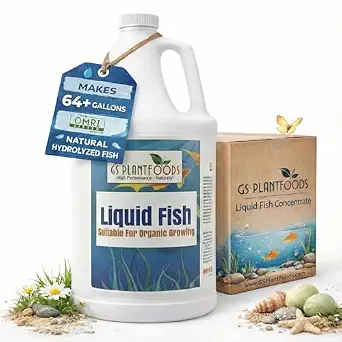 |
| Best Quality Built to a higher standard if you want something more solid | GS Plant Foods Liquid Fish & Kelp Fertilizer (1 Gallon) |  |
| Best Value The sweet spot between price and what you get | GS Plant Foods Liquid Kelp Fertilizer (1 Gallon) |  |
| Best Budget The cheapest option that still gets the job done reliably | FOOP Organic Liquid Lawn & Turf Food Concentrate (32 oz) |  |
| Highest Rated A top-rated pick with lots of positive feedback | Ocean's Bounty Organic Seaweed Liquid Kelp Concentrate, 16 oz |  |
| Most Popular A crowd favorite that many people choose with confidence | Neptune's Harvest Fish & Seaweed Liquid Fertilizer (2-3-1) 1 Gallon |  |
| Best Seller A high-volume bestseller chosen again and again | Neptune's Harvest Fish & Seaweed Liquid Fertilizer (2-3-1) 36 oz |  |
GS Plant Foods Liquid Fish Fertilizer (1 Gallon)

| Item Form | Liquid |
|---|---|
| Specific Uses For Product | Plant Growth, Root Development |
| Application Method | watering can, sprayer, or hose-end applicator |
| Mixing Ratio | 1:32 |
GS Plant Foods Liquid Fish Fertilizer is a concentrated, hydrolyzed fish emulsion designed for routine feeding of gardens, container plants, and landscape beds. It supplies a 2-3-1 balance of nitrogen, phosphorus, and potassium plus organic compounds that help soil biology and steady plant nutrition across the season. You mix at the recommended 1:32 ratio (about 4 oz per gallon) and apply with a watering can, sprayer, or hose-end applicator, which makes it easy to use on everything from vegetables and herbs to shrubs and houseplants. The product is OMRI-listed for organic growing and made in the USA, so it fits gardeners who prefer organic inputs. Because it is a liquid concentrate, it works quickly compared with dry fertilizers, but it does require regular applications and careful mixing to avoid smell and potential foliar spotting if overapplied. This gallon size balances economy and convenience for small to medium gardens, though users who want an odorless or synthetic option may look elsewhere.
Best for: Gardeners who prioritize straightforward, organic feeding and want a flexible concentrate that works across vegetables, ornamentals, containers, and beds while supporting soil life.
Less Ideal for: Users seeking a completely odor-free fertilizer or those who prefer slow-release granular products that require less frequent application.
- OMRI-listed for organic production, suitable for certified organic gardens
- Concentrated hydrolyzed fish formula (2-3-1) that supports balanced nutrition and soil biology
- Flexible application methods: watering can, sprayer, or hose-end applicator
- Made in the USA by a dedicated plant-food manufacturer
- Strong natural fish odor typical of fish emulsions
- Requires regular mixing and repeated applications to maintain results
Verdict: A reliable OMRI-listed fish emulsion concentrate that gives practical, organic nutrition for a wide range of garden plants when you want flexible, repeatable liquid feeding.
GS Plant Foods Liquid Fish & Kelp Fertilizer (1 Gallon)

| Item Form | Liquid |
|---|---|
| Application Method | foliar spray or soil drench |
| Liquid Volume | 128 fluid ounces |
| Mixing Ratio | 1:128 (Indoor), 1:64 (Outdoor) |
GS Plant Foods Liquid Fish & Kelp is an organic, cold-processed concentrate intended to feed garden plants via soil drenches or foliar sprays. It mixes at recommended rates (about 2 fl oz per gallon for outdoor use) and supplies natural compounds from fresh fish hydrolysate and Ascophyllum nodosum kelp that support root strength, microbial activity, and nutrient uptake. Typical use is every 2–4 weeks on vegetables, flowers, shrubs, lawns, and even houseplants at a weaker indoor dilution. Notable features are its OMRI listing for organic growing, dual application method (foliar or drench), and a large 1 gallon volume that covers multiple feedings. Because it is a biological product, results accumulate over weeks as soil life and plant physiology respond rather than giving an immediate synthetic nutrient spike. Some gardeners may notice an initial odor and will need to follow mixing and application rates carefully to avoid overapplication. The product is straightforward to handle and pairs well with a regular feeding schedule for growers focused on improving soil biology and long-term plant performance.
Best for: Gardeners who prioritize plant performance through soil biology and want an organic, repeatable feeding program for vegetables, ornamentals, and turf.
Less Ideal for: People seeking rapid, high-analysis synthetic nutrient boosts or immediate visible change after a single application should consider a different product.
- OMRI-listed organic formula suitable for certified organic gardens
- Dual application as foliar spray or soil drench for flexible use
- Made from fish hydrolysate and North Atlantic kelp to support soil biology and root development
- Large 1 gallon concentrate provides many feedings for home gardens and hobby farms
- Biological, slow-acting nutrition that does not provide immediate synthetic nutrient spikes
- May have a noticeable fishy odor on mixing
Verdict: Buy this if you want an OMRI-listed, kelp-and-fish concentrate that builds soil biology and long-term plant performance rather than quick synthetic results.
GS Plant Foods Liquid Kelp Fertilizer (1 Gallon)

| Unit Count | 128 Fluid Ounces |
|---|---|
| Item Form | Liquid |
| Application Method | Spray |
| Mixing Ratio | 2 ounces: 1 gallon |
| Specific Uses For Product | Lawns,Organic,Plant Food |
GS Plant Foods Liquid Kelp is a concentrated seaweed extract made from Ascophyllum nodosum that gardeners mix into water and apply by spray to lawns, shrubs, vegetables, and ornamentals. Designed for organic growing, the product is mixed at 2 ounces per gallon and the one-gallon jug claims enough concentrate to make hundreds of gallons of feed solution, which makes it practical for regular turf and landscape applications. Users will notice the fertilizer is low in synthetic nutrients and instead delivers trace minerals and carbohydrates that support root development, nutrient uptake, and stress resilience during heat or drought. Because it is a foliar and soil drench-compatible liquid, it can be used as part of a regular maintenance program or to revive stressed areas. Limitations are that it is not a complete NPK fertilizer so it should be paired with a balanced feed when plants need significant nitrogen or phosphorus for rapid growth, and application requires measuring and mixing rather than a ready-to-use spray.
Best for: Buyers who prioritize plant performance and resilience using organic inputs and who want a concentrated seaweed feed to support root health and stress tolerance across lawns and landscape plants.
Less Ideal for: Gardeners seeking a single-product, high-nitrogen fertilizer for rapid greening or heavy feeding needs should choose a balanced NPK product instead.
- OMRI listed and suitable for certified organic production
- Concentrated formula with a 2 oz per gallon mixing ratio for long-lasting supply
- Contains Ascophyllum nodosum seaweed extract plus trace minerals to support roots and stress tolerance
- Versatile application by foliar spray or soil drench for lawns, vegetables, and ornamentals
- Low macronutrient content so it is not a standalone NPK solution for aggressive growth
Verdict: Choose this concentrated, OMRI-listed kelp extract if you want an organic performance boost that strengthens roots and improves lawn and plant stress resilience.
FOOP Organic Liquid Lawn & Turf Food Concentrate (32 oz)

| Net volume | 32 oz |
|---|---|
| Certified organic | Yes |
| Coverage claim | Up to 5,000 Sq Ft |
| Formulation highlights | Fish emulsion, sea kelp, volcanic ash, mycorrhizal fungi |
This 32 oz FOOP organic liquid lawn concentrate is designed to quickly revive tired turf and support long-term soil health. It combines fish emulsion, fish manure, sea kelp, volcanic ash, and mycorrhizal fungi to supply a broad spectrum of nutrients and beneficial microbes; applied as a foliar or soil drench it helps lawns green up and can be used on new seed, sod, or established turf. The concentrate covers a large area when diluted, and its organic formulation means it is non-toxic to children and pets and suitable for organic-minded yards. Practical benefits include faster visible greening compared with water alone and improved soil biology over repeated use. Limitations are that organic concentrates typically act more slowly than synthetic quick-release fertilizers and results can vary with application rate, soil condition, and weather. Users should also measure dilution carefully to avoid uneven feeding and remember that a single bottle treats many square feet only when mixed correctly.
Best for: Gardeners who prioritize organic, family-safe lawn care and want an economical concentrate that improves turf color and soil life over time.
Less Ideal for: Homeowners who need an immediate, dramatic green-up for events or who prefer fast-acting synthetic fertilizers for rapid results.
- Organic ingredient blend (fish emulsion, sea kelp, volcanic ash, mycorrhizal fungi) supports soil biology
- Kid- and pet-friendly formula suitable for family lawns
- Can be applied to new seed, sod, or existing lawns for versatile use
- Concentrated 32 oz bottle dilutes to cover large areas, reducing per-application cost
- Slower visible results than synthetic quick-release fertilizers
- Effectiveness depends on correct dilution and repeated applications
Verdict: A budget-friendly organic concentrate that safely greens lawns and builds soil health when applied correctly and consistently.
Ocean's Bounty Organic Seaweed Liquid Kelp Concentrate, 16 oz

| Item Form | Liquid |
|---|---|
| Target Species | plants |
| Liquid Volume | 16 fluid ounces |
This organic liquid kelp concentrate is a seaweed-based fertilizer meant to give plants a nutrient-rich tonic that supports deeper roots and stronger stems. It is typically diluted and applied as a drench or foliar feed for container plants, garden beds, lawns, and indoor plants to encourage greener leaves and improved vigor. Notable features include OMRI certification and a blend of tropical red and brown seaweeds harvested for micronutrients, which makes it appealing for growers who prefer organic inputs. Practical benefits for potato growers include improved root development and stress resilience during tuber formation when used as a supplement to a balanced NPK program. Limitations are that it is not a complete fertilizer by itself and provides primarily micronutrients and biostimulants rather than the higher nitrogen or potassium potatoes need for vigorous foliage and tuber bulking. Expect to use it regularly as a complementary treatment rather than a sole source of fertility.
Best for: Gardeners who prioritize reliable organic inputs and want a consistent, certified seaweed biostimulant to support root health and plant resilience alongside their regular potato fertilization routine.
Less Ideal for: Growers looking for a single product to meet primary nitrogen or potassium needs for high-yield potato production should choose a balanced NPK fertilizer instead.
- OMRI certified organic seaweed concentrate suitable for organic gardening
- Formulated to stimulate root development and strengthen stems
- Works as a foliar spray or soil drench for versatile application
- Sustainably sourced seaweed with community support in harvesting regions
- Not a complete NPK fertilizer so additional fertilization is required for crops like potatoes
- 16 oz bottle may require frequent repurchases for larger gardens
Verdict: Use this OMRI‑certified liquid kelp as a dependable organic root and vigor booster alongside a proper NPK program for healthier potato plants.
Neptune's Harvest Fish & Seaweed Liquid Fertilizer (2-3-1) 1 Gallon

| Item Form | Liquid |
|---|---|
| Specific Uses For Product | Plant Growth, Root Development, Seed Development, Soil Conditioning |
| Coverage | Medium |
| Mixing Ratio | 1 ounce per gallon |
| Unit Count | 128 Fluid Ounces |
Neptune's Harvest Fish & Seaweed is a concentrated liquid fertilizer that combines hydrolyzed fish with seaweed to provide a balanced, readily available nutrient boost for garden and houseplants. It is typically diluted (manufacturer mixing ratio 1 ounce per gallon) and applied as a soil drench or foliar feed every one to three weeks depending on the plant and setting. Notable features include an all-purpose 2-3-1 NPK profile, organic ingredients that feed soil biology, and suitability for vegetables, ornamentals, trees and lawns. In practice the product supports greener foliage, stronger roots and improved flowering or fruit quality when used regularly, and the seaweed component can help plants better tolerate stress. The concentrate is easy to store and measures out for many applications, but it does require careful dilution and can have a noticeable fish odor during application. This fertilizer is best for gardeners who want an organic, broad-use feed that improves both plant growth and soil health rather than a quick chemical fix.
Best for: Gardeners seeking a single organic fertilizer they can use across vegetables, ornamentals and indoor plants who value soil health and consistent seasonal feeding.
Less Ideal for: Buyers who need a scentless product or who prefer fast-acting synthetic fertilizers for one-off quick greening.
- Organic concentrate combining hydrolyzed fish and seaweed for a balanced nutrient source
- Useful for many planting situations including vegetables, flowers, trees, lawns and houseplants
- Feeds soil microbes and can improve soil structure and long-term fertility
- Simple dilution and flexible application as soil drench or foliar feed
- Noticeable fish odor during mixing and application
- Requires regular, careful dilution which adds a small time cost
Verdict: A versatile organic fish-and-seaweed concentrate that reliably feeds plants and improves soil health across garden and indoor uses.
Neptune's Harvest Fish & Seaweed Liquid Fertilizer (2-3-1) 36 oz

| Item Form | Liquid |
|---|---|
| Mixing Ratio | 2:3 |
| Specific Uses For Product | Plant Growth |
| Liquid Volume | 946 ml |
Neptune's Harvest Fish & Seaweed Liquid Fertilizer is a concentrated organic plant food that mixes with water for use as a soil drench or foliar feed. It is typically diluted (manufacturer directions give roughly 1 fl oz per gallon for outdoor use and 1 tablespoon per gallon for houseplants) and applied every 1 to 3 weeks depending on the crop. The formula combines hydrolyzed fish and seaweed to deliver nitrogen, micronutrients, and seaweed-derived growth compounds in a plant-ready form, which helps green growth, flowering color, and vegetable flavor. Because it is a liquid concentrate it is easy to measure and applies evenly, and regular use can improve soil biology and structure over time. Limitations are that it is low in phosphorus and potassium relative to some specialty bloom or fruit formulas and it has an odor typical of fish-based fertilizers that some users may find strong. This product suits gardeners who want an effective, organic regular feed that supports both potted houseplants and garden beds.
Best for: Gardeners seeking a reliable, organic everyday fertilizer that simplifies feeding for a mixture of houseplants, vegetables, flowers and shrubs and who value soil health as well as plant vigor.
Less Ideal for: Growers who need a high-phosphorus bloom booster or a fertilizer formulated specifically for fruit set or lawns should look for a targeted specialty product instead.
- Organic concentrate blending hydrolyzed fish and seaweed for plant-ready nutrients
- Versatile application as soil drench or foliar feed for indoor and outdoor plants
- Supports soil biology and structure with regular use
- Easy-to-measure mixing ratios for routine feeding
- Has a strong fish odor that some users may find unpleasant
- Lower phosphorus and potassium compared with specialized bloom or fruit formulas
Verdict: A dependable organic liquid concentrate that provides balanced, plant-ready nutrients and improves soil health for routine feeding of mixed garden and houseplants.
Choosing the Right Organic Liquid Lawn Fertilizer: Key Factors to Consider
Nutrient Profile and Ratio
The primary nutrients in a liquid lawn fertilizer are nitrogen, phosphorus, and potassium. For established lawns, nitrogen is most important for green color and shoot growth, but too much fast-acting nitrogen can force weak, disease-prone growth. Look for balanced formulations with a clear N-P-K statement and an explanation of how much of the nitrogen is readily available versus organically bound.
Micronutrients and organic compounds matter too. Iron and magnesium can correct specific deficiencies and quickly improve color without excessive growth. Organic carriers like kelp or compost extracts can provide trace elements and support soil life. Understanding the nutrient profile helps you match the product to your lawn goals and the results of any soil test you may have.
Bioactivity and Soil Microbial Support
One advantage of organic liquids is their potential to feed soil biology as well as turf. Ingredients such as humic acids, kelp extracts, compost teas, and other organic amendments can stimulate beneficial microbes that improve nutrient cycling and soil structure. A product that supports microbes can reduce reliance on frequent feeding and improve drought resilience over time.
Check product literature for mentions of microbial stimulants or organic matter content. While claims vary, prioritize formulas that list natural extracts or humates rather than only soluble salts. Feeding the soil community matters if you want cumulative improvement in soil tilth and root development rather than just a short green-up.
Application Concentration and Flexibility
Liquid fertilizers vary widely in concentration. Some are ready-to-spray at low dilution rates, while others are concentrated and require careful measurement. Application flexibility affects how easy it is to treat small patches, large lawns, or to tank-mix with other foliar feeds. Too strong a concentrate raises scorch risk; too weak requires frequent repeat applications.
Consider whether the product allows for hose-end, pump sprayer, or backpack application and whether instructions provide clear dilution charts. A formula that offers a range of recommended rates for maintenance, recovery, and first application is more useful in varied garden situations.
Turf Safety and Plant Tolerance
Liquid fertilizers make contact with leaf blades and roots, so turf safety is important. High salt indexes or undiluted concentrates can scorch new grass or thin turf. Organic options are often gentler, but not all are equally safe under hot, dry conditions. Look for guidance about use during heat, watering before or after application, and recommended mowing windows.
Also consider safety around children, pets, and pollinators. Products that are low in harsh chemicals and that list clear re-entry or pet-safe instructions reduce worry for typical household use. Tolerance on nearby ornamentals is another practical concern when spraying across lawn edges.
Speed of Results and Feed Frequency
Home gardeners want to know how quickly a product will green up the lawn and how often they need to reapply. Some organic liquids give a noticeable color change within days because of soluble iron or fast-acting nitrogen from plant-based sources. Others work more gradually by improving soil biology and nutrient uptake over weeks.
A program that requires weekly spraying may be impractical for many homeowners, while monthly or seasonal applications fit standard maintenance rhythms. Match expected return timing to how quickly you want visible results and how much time you can commit to feeding.
Best Practices for Applying Organic Liquid Lawn Fertilizer
Apply in the cool part of the day, either early morning or late afternoon, to reduce evaporation and leaf scorch. Avoid spraying under mid-day heat or when heavy sun is expected immediately after application.
Watering before or after application depends on the label. A light irrigation after applying can move nutrients into the root zone, but heavy rainfall immediately after a concentrated spray can wash away nutrients. Follow the product instructions for ideal timing.
Calibrate your sprayer with a measured test area so you know how much product and dilution you are applying per 1,000 square feet. Accurate application prevents underfeeding or burning and helps you compare performance between options.
- Test a small area first when trying a new product to check for turf sensitivity.
- Avoid mowing right before or immediately after application; leave at least a day when possible.
- Store concentrated liquids in a cool, shaded place and shake or mix per label directions before use.
When to Use Liquid Fertilizer Vs Granular
Use liquid fertilizers when you want quicker foliar uptake, targeted spot treatment, or to feed during the growing season between granular applications. Liquids can be helpful for addressing short-term deficiencies or giving a quick color boost for events.
Granular options tend to provide longer residual feeding and require less frequent handling. If you prefer low-maintenance seasonal applications, granular products may be more convenient, while liquid feeds fit gardeners who adjust nutrition more proactively.
- Liquid: fast uptake, flexible rates, useful for spot treatments.
- Granular: longer-lasting, less frequent, better for slow-release maintenance.
Interpreting Label Claims and Organic Certifications
Labels often highlight natural-sounding ingredients and organic phrases. Look for clear ingredient lists and third-party organic certifications if a fully organic input is important to you. Certifications can vary in scope, so check what is covered.
Beware of vague marketing language. Useful labels explain source materials, N-P-K by weight, and recommended application rates for common lawn sizes. If a product references microbial activity, the label should indicate whether microbes are live inoculants or microbial stimulants like humates.
- Verify active ingredient percentages rather than relying on buzzwords.
- Check dilution charts and recommended application frequency for your turf type.
Managing Common Turf Issues With Organic Liquids
Thin or pale turf often responds first to nitrogen and iron. An organic liquid that supplies both can improve color quickly without encouraging overly rapid top growth.
For drought-stressed lawns, choose products that support roots and soil moisture retention through humic substances rather than high immediate-growth nitrogen. Those amendments help the soil hold water and feed deeper rooting over time.
Disease-prone lawns benefit from moderate feeding and attention to turf density and thatch. Overapplication of any fertilizer can exacerbate disease, so balance feed rates with aeration and proper mowing practices.
- Spot-treat thin areas with a lighter spray to avoid overfeeding robust patches.
- Combine cultural practices such as aeration and correct mowing height with feeding for best results.
Seasonal Feeding Schedules for Cool-Season and Warm-Season Lawns
Cool-season grasses typically respond best to applications in early spring and fall when growth is active. Use lighter maintenance feeds through summer and stronger restorative feeds in autumn to support root recovery.
Warm-season grasses green up later in spring and benefit from regular feeding through summer with reduced applications in fall and winter. Match application timing to your grass growth cycle rather than calendar dates alone.
Adjust feed frequency down during drought or heat stress. Organic liquids that promote soil health can help maintain turf during marginal conditions but are not a substitute for adequate irrigation.
- Early spring: focus on moderate nitrogen and microbial support for root growth.
- Summer: use maintenance rates and avoid heavy feeding during heat waves.
- Fall: prioritize root-building formulations and reduced high-nitrogen treatments.
How We Chose the Best Organic Liquid Lawn Fertilizer
We evaluated Organic Liquid Lawn Fertilizers using criteria that reflect everyday lawn care needs. Key dimensions included nutrient profile and bioavailability, because the right balance of nitrogen, phosphorus, and potassium plus available micronutrients determines green-up and long-term turf health. We also assessed feed timing and release characteristics to understand how often applications are needed and how they match seasonal lawn cycles. Soil biology support was important, so we favored formulas that include humic substances, kelp, or other microbial stimulants. Application practicality was another filter, looking at dilution flexibility, compatibility with hose-end sprayers, and whether the product runs or sprays cleanly. Finally, safety and turf tolerance were considered to minimize scorch risk and protect children, pets, and nearby plants. We excluded granular-only products and concentrated synthetic fertilizers that do not fit the organic liquid scope. We also filtered out any formulations that require specialized equipment beyond common consumer sprayers. The shortlisted products passed these filters and were compared against the concrete dimensions above to produce the final set of recommendations.
FAQ
How soon will I see results after applying an organic liquid lawn fertilizer?
Often you can see a color change within a few days if the formula contains soluble nitrogen or iron. Broader soil improvements from microbial stimulants usually take several weeks of regular applications to become noticeable.
Can I mix organic liquid fertilizer with herbicides or pesticides in the same tank?
It depends. Some products are labeled as tank-mix compatible, but many are not. Always check the label for compatibility guidance and test a small area first to avoid unexpected turf damage.
Will organic liquid fertilizers reduce thatch or fix compacted soil?
They can help indirectly by promoting microbial activity that breaks down organic matter, but they will not physically remove compacted layers. Aeration and cultural practices are necessary to address compaction directly.
How often should I apply an organic liquid feed during the growing season?
Feed frequency varies by product concentration and turf needs. Many organic liquids are applied every 3 to 6 weeks during active growth, while some maintenance programs use monthly applications. Follow label guidance and adjust based on lawn response.
Are organic liquid fertilizers safe around pets and children?
Many organic formulas are gentler than synthetic concentrates, but safety instructions differ. Look for products with clear re-entry guidance and avoid using any fertilizer on surfaces where pets or children play until the product has dried or the label indicates it is safe.
Final Verdict
Pick an organic liquid lawn fertilizer based on how quickly you need results, whether you want to feed soil biology, and how often you want to apply. Prioritize nutrient balance and application instructions that match your sprayer and lawn size. Accept tradeoffs: faster-acting liquids give quick color but may require more frequent feeds, while biologically focused formulas build soil health over time. If you want fast greening for events, choose a product with soluble nutrients and clear dilution guidance. If long-term soil improvement is the goal, favor formulations that include humic substances or kelp and plan for repeated, gentler applications. Either approach can work well when combined with proper mowing, watering, and soil care.
