

Note: This article contains affiliate links. If you click on these links and make a purchase, I may earn a small commission at no extra cost to you. This helps support my research and content. Read my full affiliate disclosure here.
A good organic lawn fertilizer in fall sets the stage for healthier turf next year. As grass shifts from summer growth to winter dormancy, fall feeding strengthens roots, replenishes nutrients, and helps the lawn store energy for spring green-up. You want a product that releases nutrients at the right pace, is simple to apply in cooler weather, and fits your lawn care routine. This guide shortlists seven top options suited specifically for fall use. We evaluated each pick on how their nutrient profiles support root building, how they behave in cool soil, and how easy they are to spread and water in real gardens. Read on to see the criteria we used and practical notes to help you choose the best organic fall fertilizer for your yard.
Top Picks at a Glance
| Best Overall The best all-around choice for most situations | Espoma Turf-Tone Fall Winterizer 8-0-5 Organic Lawn Food, 30 lb | 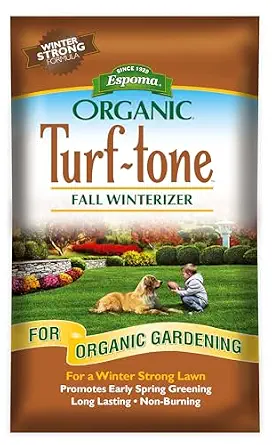 |
| Best Quality Built to a higher standard if you want something more solid | Suståne 8-0-4 Organic Fall/Winter Lawn Fertilizer, 30 lb |  |
| Best Value The sweet spot between price and what you get | Espoma Turf-Tone All Season Organic Lawn Food, 14 lb |  |
| Best Budget The cheapest option that still gets the job done reliably | Down To Earth Bio-Turf Organic Lawn Fertilizer, 8-3-5, 4 lb |  |
| Highest Rated A top-rated pick with lots of positive feedback | lawnbright Cold Snap Liquid Lawn Winterizer, 32 oz |  |
| Most Popular A crowd favorite that many people choose with confidence | Espoma Organic All Season Lawn Food, 28 lb |  |
| Best Seller A high-volume bestseller chosen again and again | Milorganite 6-4-0 Slow-Release Fertilizer, 32 lb (with Feeding Tips Brochure) |  |
Espoma Turf-Tone Fall Winterizer 8-0-5 Organic Lawn Food, 30 lb

| Mixing Ratio | 8-0-5 |
|---|---|
| Item Form | Granules |
| Specific Uses For Product | Lawns (Fescues, Bluegrass, Rye Grass, St. Augustine, Zoysia) |
| Coverage | Full |
| Ingredients | Feather Meal, Poultry Manure, Potash |
Espoma Turf-Tone Fall Winterizer is an 8-0-5 granular lawn fertilizer made from natural ingredients such as feather meal, poultry manure, and potash, designed for fall application. It is applied with a drop or broadcast spreader to lawns like fescue, bluegrass, rye, St. Augustine, and zoysia to build root strength before winter dormancy and help recovery after summer stress. The higher potassium content supports hardiness and winter survival while the organic nitrogen sources feed more slowly for steadier uptake and reduced burn risk. A single 30 lb bag covers up to 5,000 sq ft, making it practical for medium to large yards. Because it is organic, results are generally slower than synthetic granules, so expect gradual improvement rather than an immediate green-up. For gardeners prioritizing long-term turf health and reduced synthetic inputs, this product delivers seasonally targeted nutrition with low leaching potential.
Best for: Gardeners focused on long-term lawn performance who want an organic, season-specific fertilizer to strengthen turf going into winter.
Less Ideal for: Users seeking a rapid, immediate green-up or a full-spectrum synthetic fertilizer program for quick correction of specific nutrient deficiencies.
- Organic formula with feather meal and poultry manure for slow, steady nitrogen release
- Higher potassium (8-0-5) to improve winter hardiness and root strength
- Covers up to 5,000 sq ft per 30 lb bag, suitable for medium to large lawns
- Won't burn when applied as directed and is less likely to leach than soluble fertilizers
- Slower visible results compared with synthetic fast-release fertilizers
- Single formulation may not address specific nutrient deficiencies beyond N and K
Verdict: Choose this organic fall winterizer if you want a potassium-rich, slow-release fertilizer that strengthens turf for winter and supports healthier spring recovery.
Suståne 8-0-4 Organic Fall/Winter Lawn Fertilizer, 30 lb

| Item Form | Granules, Powder |
|---|---|
| Specific Uses For Product | Lawns,Organic |
| Application Method | Broadcast Spreader |
| Target Species | Lawn Grass |
| Mixing Ratio | 8-0-4 |
This Suståne 8-0-4 winterizer is an organic granular fertilizer intended for a September or October broadcast application to lawns. It combines aerobically composted turkey litter, green waste compost, feather meal and sulfate of potash to deliver slow-release nitrogen plus potassium for root development and soil improvement. In practice you spread it with a broadcast spreader over a 30 (unit) coverage to feed grass through dormancy and promote a quicker, thicker spring green-up. The product is easy to use, supports soil biology because of its compost-based ingredients, and reduces the need for frequent feeding compared with fast-release synthetics. Expect gradual results rather than immediate greening, and plan to apply in the recommended fall window for best effect. The main limitations are the seasonal timing requirement and the bulk weight that makes handling and storage more cumbersome than smaller bags.
Best for: Homeowners who want an all-purpose, organic fall lawn treatment that improves soil and builds root strength with a single seasonal application.
Less Ideal for: Gardeners who need quick visible results or who prefer frequent small-dose liquid feedings; also not ideal for those who cannot handle or store a large, heavy bag.
- Organic, compost-based formula that supports soil biology
- Slow-release nutrients for sustained feeding through winter
- Specifically balanced for fall use to encourage root development and spring green-up
- Formulated for broadcast spreader application for even coverage
- Bulk 30-pound packaging can be heavy to lift and store
- Effects are gradual and not suited for instant greening
Verdict: A reliable organic fall fertilizer that builds root strength and soil health for a thicker, earlier spring lawn.
Espoma Turf-Tone All Season Organic Lawn Food, 14 lb

| Item Form | Granules |
|---|---|
| Specific Uses For Product | Lawn Feeding |
| Application Method | Spread |
| Target Species | Lawn Grass |
| Unit Count | 224 Ounce |
Espoma Turf-Tone All Season is a granular organic lawn fertilizer intended for routine feeding of home lawns. It applies with a drop or broadcast spreader to a dry, mowed lawn and is formulated with slow-release nitrogen (9-0-1) plus a Bio-tone microbial formula to encourage deeper, longer-lasting greening without harsh chemicals. The product lists feather meal and poultry manure among ingredients and is advertised as safe for spring, summer, or fall use on common grasses like fescue, bluegrass, rye, St. Augustine, and zoysia. A single 14 lb bag covers up to about 2,500 sq ft, so it is practical for small to medium yards or as a spot treatment on larger areas. Because it is organic and slow-release, it reduces burn risk and tends to feed steadily rather than causing a quick flush of growth, but it will act more slowly than synthetic high-nitrogen fertilizers and may require repeat applications for rapid greening. Expect reliable, gradual improvement in color and turf health when used as part of regular seasonal feeding.
Best for: Buyers who prioritize organic, low-risk lawn care and want steady, long-term improvement in turf color and soil health rather than rapid, high-growth results.
Less Ideal for: People who need fast, dramatic greening after lawn damage or who manage large acreage on a tight budget should consider faster-acting or bulk synthetic options instead.
- Certified organic ingredients and no synthetic sludges or harsh chemicals listed
- Slow-release nitrogen (9-0-1) promotes longer-lasting greening
- Includes Bio-tone microbial formula to support soil and root health
- Suitable for use in spring, summer, or fall on a wide range of common turfgrasses
- 14 lb bag covers up to 2,500 sq ft, convenient for small to medium lawns
- Lower immediate nitrogen availability than synthetic fertilizers, so results are slower to appear
- Single 14 lb bag may be insufficient for large properties without multiple purchases
Verdict: Choose this product if you want a dependable, purely organic slow-release fertilizer that improves lawn color and soil health over the season.
Down To Earth Bio-Turf Organic Lawn Fertilizer, 8-3-5, 4 lb

| Item Form | Granules |
|---|---|
| Specific Uses For Product | Root development in lawns and vegetable gardens |
| Target Species | Lawns and Vegetable Gardens |
| Unit Count | 64 Ounce |
Down To Earth Bio-Turf is an OMRI-listed granular organic lawn fertilizer with an 8-3-5 formula designed for early season root development and stress reduction heading into fall. You apply it with a spreader or by hand across lawns and can also use it on heavy-feeding vegetable beds; the nitrogen sources are animal and marine meals while potash comes from langbeinite. In practice it encourages quick green-up and helps lawns develop deeper roots that hold moisture better during cooler, drier months. Packaging and safety notes recommend protective gear and following the mixing/application directions on the box. Because it is an organic, slow-release blend, results appear over weeks rather than overnight and you will need repeat applications for continuous feeding through the season. The 4 lb box is convenient for small yards or spot treatments but may require multiple boxes for larger lawns. If you want an organic option that supports fall root-building and lower watering needs, this formula performs as expected, though it is best suited to smaller areas or gardeners prepared for periodic reapplication.
Best for: Home gardeners who want an OMRI-listed organic fertilizer to build fall root strength and improve drought resilience on small lawns or garden beds while prioritizing natural ingredients and budget-friendly, modest-sized packaging.
Less Ideal for: Those managing large turf areas who need fast, high-impact greening or who prefer single-application, long-coverage commercial formulas should consider larger-capacity or synthetic alternatives.
- OMRI-listed organic formulation suitable for organic lawns and vegetable gardens
- 8-3-5 N-P-K blend targets early growth and potassium-rich stress resistance
- Slow-release natural nutrients promote deeper root development and improved moisture retention
- Granular form works with broadcast or handheld spreaders for even application
- Small 4 lb package requires multiple boxes for medium to large lawns
- Slow-release organic ingredients deliver results gradually rather than immediately
Verdict: A compact OMRI-listed granular fertilizer that builds fall root strength and drought resilience for small lawns and garden beds.
lawnbright Cold Snap Liquid Lawn Winterizer, 32 oz

| Item Form | Liquid |
|---|---|
| Application Method | hose-on |
| Target Species | Lawn Grass |
| Unit Count | 32 Fluid Ounces |
| Item Highlight | Covers 2,500 sq ft — Late-fall root feeding for cool-season lawns |
This 32 oz Cold Snap liquid winterizer is a hose-end fertilizer designed for a quick late-fall root feeding on cool-season grasses. You attach the bottle to a garden hose and spray — the manufacturer says one bottle covers up to 2,500 sq ft and application takes about 15 minutes, so it removes the need for a spreader or granular handling. The formula combines low-rate nitrogen with phosphate, potassium, hydrolyzed fish and sea kelp to support root strength and carbohydrate storage before dormancy. In practice that means an easy, even application that is kid- and pet-safe once dry and aims to promote quicker spring green-up and denser turf. Limitations are that nutrient levels are relatively low compared with concentrated granular winterizers, so heavier-feeding lawns or large properties may need multiple bottles or supplemental products, and the hose-on delivery requires access to a water source and even spraying technique to avoid missed spots. For homeowners who want a simple, low-fuss fall feed, it does the job without specialized equipment.
Best for: Homeowners who prioritize an easy, reliable late-fall treatment and want a no-spreader, low-fuss way to boost cold hardiness for cool-season turf.
Less Ideal for: Large properties, professional landscapers, or lawns needing a high-rate nutrient program should consider concentrated granular products or commercial options instead.
- Hose-on liquid makes application fast and removes need for a broadcast spreader
- Includes potassium and sea kelp to support cold hardiness and root development
- Kid- and pet-safe formula once dried, suitable for family yards
- Covers up to 2,500 sq ft per 32 oz bottle for small to medium lawns
- Lower nutrient concentrations than concentrated granular winterizers, so may require multiple bottles for larger or nutrient-depleted lawns
- Requires a hose and even spraying technique to ensure full coverage
Verdict: If you want a fast, no-spreader late-fall feed to strengthen cool-season lawns, this hose-on liquid winterizer delivers simple, reliable application.
Espoma Organic All Season Lawn Food, 28 lb

| Item Form | Granules |
|---|---|
| Application Method | Apply with a drop or broadcast spreader |
| Coverage | Annual |
| Target Species | All lawns including fescues, bluegrass, rye grass, St. Augustine and zoysia |
Espoma Organic All Season Lawn Food is a granular, certified organic fertilizer formulated to give lawns a steady supply of nitrogen without synthetic inputs. It is applied with a drop or broadcast spreader in early and late spring and again in fall, and the manufacturer recommends reapplying every 6 to 8 weeks during the growing season. The 9-0-0 analysis focuses on nitrogen for greening and growth and the product is labeled for both cool-season and warm-season grasses including fescue, bluegrass, rye, St. Augustine and zoysia. Practical benefits include a low burn risk typical of organic sources, a long-lasting release that reduces the need for frequent spot treatments, and coverage sufficient for medium-to-large yards when applied at the recommended rate. Limitations are the single-nutrient focus — there is no phosphorus or potassium in this blend — and the need to follow a schedule of repeat applications for best results rather than a single-season quick fix.
Best for: Buyers who prioritize organic inputs and predictable, low-risk feeding for a full-season lawn program and who prefer products backed by established brand reputation and clear usage guidance.
Less Ideal for: People who want an all-in-one fertilizer with NPK balance or a single application quick fix for nutrient deficiencies should consider other formulations.
- Certified organic formulation suitable for organic gardening
- Granular form works with drop or broadcast spreaders for even application
- Long-lasting organic nitrogen supports steady greening with low burn risk
- Labeled for both cool- and warm-season grasses including common turf types
- Contains nitrogen only (9-0-0) so it does not supply phosphorus or potassium
- Requires reapplication every 6–8 weeks rather than a single-season concentrated treatment
Verdict: Choose this product if you want a proven organic granular fertilizer to maintain steady, low-risk green-up for fall and throughout the growing season.
Milorganite 6-4-0 Slow-Release Fertilizer, 32 lb (with Feeding Tips Brochure)

| Item Form | Pelletized |
|---|---|
| Application Method | Broadcast, Rotary or Manual |
| Coverage | 2,500 Square Feet |
| Specific Uses For Product | Lawns, Flowers and Gardens, Education |
Milorganite 6-4-0 is an organic, pelletized slow-release fertilizer intended for routine lawn and garden feeding. It is typically broadcast with a rotary or manual spreader and provides nitrogen slowly over 8 to 10 weeks, which reduces the need for frequent applications and lowers burn risk. The product contains organically complex iron for greening without the strong staining associated with iron salts and is low in soluble salts, so it performs well in warm or drier conditions. The 32 lb bag covers roughly 2,500 square feet and comes with a printed feeding and spreader tips brochure to simplify seasonal timing and application rates. Because it is made from heat-dried microbes, it also adds organic matter to improve soil structure in heavy clay or sandy soils. Limitations are that nutrient release is gradual so it is not suited to quick color fixes or rapid turf recovery, and users seeking tightly controlled N-P-K ratios or fast-acting synthetic performance may prefer a different product.
Best for: Buyers who want a low-maintenance, environmentally minded fertilizer that steadily feeds established lawns and mixed garden beds with minimal risk of burn and fewer repeat applications.
Less Ideal for: If you need rapid turf recovery, immediate color correction, or precise synthetic nutrient control for athletic fields or newly sodded lawns, choose a fast-release or specialty fertilizer instead.
- Slow-release nitrogen feeds lawns and plants for 8–10 weeks, reducing application frequency
- Low-salt formulation minimizes fertilizer burn and streaking in hot or dry conditions
- Organically complex iron promotes deep greening without heavy staining of concrete
- Pelletized form works with broadcast, rotary, or manual spreaders for easy application
- Adds organic matter that can improve drainage and soil structure in clay or sandy soils
- Not fast-acting, so it will not deliver an immediate green-up after application
- Contains biosolids which some buyers may prefer to avoid for personal or local reasons
Verdict: Pick this if you want a reliable, low-salt slow-release fertilizer that feeds lawns and gardens for weeks with minimal maintenance.
Choosing the Right Organic Lawn Fertilizer for Fall: Key Factors to Consider
Nutrient Balance and Forms
The specific nutrients and how they are bound matter for fall feeding. A fall-focused organic fertilizer should provide forms of nitrogen that encourage root development rather than top growth, such as slow-release ammonium or organic nitrogen sources that mineralize slowly as soil cools. Potassium is important for stress tolerance and winter hardiness, while phosphorus helps root establishment in some soils.
Analyze guaranteed analysis labels to understand relative proportions. Because organic fertilizers often list total organic matter rather than immediately-available nutrients, expect slower nutrient delivery. That slower release is usually beneficial in fall, but make sure the product supplies enough of the key elements to be effective by spring.
Release Timing and Soil Temperature
Microbial breakdown controls nutrient availability for many organic fertilizers, and microbe activity drops as soil temperature falls. Choose products formulated to release over the cooler months or those with a portion of more readily available nutrients to kick-start root feeding before dormancy.
Consider local climate and typical first frost dates. In regions with an early hard freeze, a product with some faster-acting components helps; in milder zones, long-lasting organics can mineralize slowly through winter. Understanding these dynamics helps match application timing to when the lawn can actually use the nutrients.
Formulation Type and Handling
Organic lawn fertilizers come as granules, pellets, powders, liquids, or compost blends, and each behaves differently in a fall lawn. Granules and coated pellets tend to spread cleanly and resist wind; powders can be dusty and uneven unless mixed with a carrier. Liquids are useful for smaller areas or spot treatments but require a sprayer and may not persist as long.
Handling also affects how well the product contacts soil and turf. Granular organics designed for broadcast spreaders give the most uniform coverage on larger lawns. If your yard has a lot of trees or uneven ground, consider a formulation that is less prone to blowing or clumping in damp fall conditions.
Application Equipment and Ease
Ease of application is a practical concern in fall when weather windows can be short. Check whether the fertilizer is compatible with common broadcast spreaders, drop spreaders, or typical hose-end sprayers. Some organic granules are lightweight and require special spreader settings to avoid overapplication, while heavier coated pellets track better through a spreader.
Also consider cleanup, storage, and how the product behaves if rain arrives after application. Products that require even watering in cool soil may need a short watering window to move nutrients into the root zone. If you plan to do the work yourself, prioritize formulations that match the equipment you already own.
Residue, Odor, and Lawn Appearance
Some organic fertilizers leave visible residues, darkened patches, or temporary odors that matter in residential settings. Compost-based or manure-derived products can darken turf or leave small particles that take time to break down in cooler weather. While these residues are often harmless, they affect curb appeal and may stain driveways or walkways if not applied carefully.
If appearance matters in the short term, choose a product described as low-residue or formulated for minimal visible fallout. Also evaluate odor strength if you have close neighbors or plan to apply fertilizer near outdoor living spaces in fall.
Environmental Impact and Safety
Organic inputs generally reduce risks of synthetic runoff, but not all organic fertilizers are equally benign. Look for transparent ingredient lists and avoid products with undisclosed sludge or unknown additives. Nutrient runoff is still possible, especially in late fall when heavy rains follow application, so follow label guidance on timing and buffer zones around water features.
Consider child and pet safety. Many organic amendments are safe once worked into the turf, but some can attract animals or contain salts that irritate paws. Proper application rates and storage reduce hazards and lessen environmental impact.
When to Apply Organic Fertilizer in Fall
Timing affects how effectively nutrients support root growth. Aim to apply organic fall fertilizer several weeks before the lawn's typical first hard freeze or dormancy period so microbes and roots can begin exchanging nutrients while soils are still temperate.
In cooler climates, that window is often early to mid-fall; in milder zones, later fall applications can still mineralize slowly over winter. If you miss the ideal window, a properly balanced organic product applied later may still help root reserves going into spring.
- Apply 4 to 6 weeks before average first hard freeze where you live.
- Adjust timing by region: earlier in cold climates, later in mild coastal areas.
- Light watering after application helps move nutrients into the root zone.
How Soil Test Results Should Guide Your Choice
A basic soil test tells you whether your lawn actually needs phosphorus or potassium in addition to nitrogen. Many soils already have adequate phosphorus; unnecessary phosphorus can be wasteful or cause environmental issues. Use test results to choose a fall fertilizer that addresses real deficiencies rather than adding unneeded nutrients.
If pH adjustment is also needed, prioritize amendments that correct pH first or select a fertilizer compatible with your planned liming schedule so nutrients remain available to roots.
- Test every 2 to 4 years for a typical lawn.
- Match product nutrient ratios to test recommendations rather than guessing.
Preparing Your Lawn for a Fall Application
Mow to a slightly lower height before fall feeding so the fertilizer reaches the soil surface more easily. Rake out excessive thatch if it is thicker than a half inch; heavy thatch can block contact between granules and soil and slow nutrient release.
Repair bare spots with seed and a compatible starter fertilizer if needed, but avoid heavy nitrogen top-dressing late in the season. Clean up turf clippings and debris so application is even and follow label instructions for any pre- or post-application watering.
- Mow short one to two times before applying, but do not scalpe the lawn.
- Remove excessive thatch to improve soil contact.
- Seed bare patches early enough for seedlings to establish before frost.
Combining Organic Fertilizer With Other Fall Practices
Fall is also the time for aeration, overseeding, and weed control. Aeration improves soil contact for granular organics and speeds microbial access to organic matter, making fertilizer more effective. If you plan to overseed, choose a fertilizer whose release timing supports both seedling establishment and root building for existing turf.
Avoid applying herbicides immediately before or after applying organic fertilizers unless the product label explicitly allows it. Integrated fall programs that sequence aeration, overseeding, and organic feeding tend to yield better long-term results than doing each task haphazardly.
- Core aerate before applying granular organics for best soil contact.
- Overseed within a week of fertilizer application when conditions permit.
Storage, Handling, and Safety Tips for Gardeners
Store organic fertilizers in a cool, dry place away from moisture and pests. Many organics absorb water and clump if left in damp conditions, reducing spreader performance. Keep products in sealed containers if possible and mark the purchase date for rotation.
Wear gloves when spreading materials that contain manures or composted inputs, and keep children and pets off treated areas until any required re-entry interval is past or the material has been watered in and dried.
- Keep bags elevated and dry; use pallets or shelves.
- Clean spreaders after use to prevent cross-contamination with other lawn products.
How We Chose the Best Organic Lawn Fertilizer for Fall
We focused on factors that actually affect fall lawn performance. Evaluation emphasized nutrient balance and release timing, since a fall-specific fertilizer should favor root-building nitrogen forms and include phosphorus or potassium when lawns need them. We also assessed formulation type and soil contact behavior because granular, pellet, and liquid organics differ in how quickly microbes release nutrients in cool soils. Application practicality was another key filter. Ease of spreading, dust control, and compatibility with common spreaders or sprayers matter to gardeners who apply fertilizer in windy or wet fall conditions. Safety and environmental impact were considered, giving preference to products with clear organic inputs and minimal synthetic additives. We examined longevity and residual effect so a single fall application can still benefit spring growth. Finally, we applied exclusions: products designed solely for immediate green-up without root benefits, turf dressings that are not nutrient sources, and items lacking transparent ingredient listings were not considered. The chosen criteria align with nutrient profile, release timing, formulation behavior, application ease, and environmental safety.
FAQ
Is fall the best time to apply organic fertilizer to my lawn?
Often yes. Fall feeding focuses on root development and nutrient storage for spring. Organic fertilizers that release slowly during cooler months support those processes better than high-nitrogen summer feeds.
Can I use the same organic fertilizer in spring and fall?
It depends. Some formulations are balanced for maintenance and work year-round, but fall-specific products prioritize root-building nutrients and slower release. Check nutrient ratios and release claims to match seasonal goals.
How long after application will an organic fall fertilizer take to show benefits?
Organic products usually take longer to affect visible turf color because they rely on microbial mineralization. Root development and improved spring vigor are the main benefits and may be most noticeable months after application rather than immediately.
Should I water after applying an organic granule in fall?
Light watering helps move granules into the root zone and jumpstarts microbial activity. Heavy irrigation is generally unnecessary; follow product directions for watering amounts to avoid runoff.
Are there environmental risks with using organic fertilizers in fall?
There can be risks, especially if heavy rain follows application and nutrients wash toward waterways. Use label guidance, avoid application before heavy storms, and maintain buffer zones near streams and drains.
Will compost tea or straight compost replace a fall fertilizer?
Compost and compost tea contribute organic matter and micronutrients but may not supply targeted nutrient ratios that a fall fertilizer provides. They are useful as part of a broader program but often do not fully replace a balanced fall feeding.
Final Verdict
Prioritize products that promote root development, release nutrients on a cooler schedule, and match your soil test recommendations. Balance practical concerns such as formulation handling and application equipment with environmental safety and appearance. Choose a fall organic fertilizer based on how it fits your climate, lawn condition, and maintenance plan. Focus on nutrient forms and timing rather than quick green-up; doing so will set your lawn up for stronger root systems and a healthier spring recovery.
