

Note: This article contains affiliate links. If you click on these links and make a purchase, I may earn a small commission at no extra cost to you. This helps support my research and content. Read my full affiliate disclosure here.
If you want attractive, forgiving houseplants that also help improve indoor air, peace lily pot plants are a smart choice. These plants tolerate lower light than many flowering houseplants and give you visible glossy foliage and periodic white blooms with relatively simple care. This guide walks through our top six peace lily pot plants for a range of indoor situations and skill levels. We evaluated each option for light tolerance, watering needs, and ease of maintenance so you can pick the plant that best fits your room, schedule, and pet-safety concerns. Read on to find a peace lily that will thrive in your space.
Top Picks at a Glance
| Best Overall The best all-around choice for most situations | Costa Farms Peace Lily Live Indoor Plant in Decorative Pot |  |
| Best Quality Built to a higher standard if you want something more solid | Friendship Foliage Peace Lily (10" Pot, ~30–34" Tall) |  |
| Best Value The sweet spot between price and what you get | Costa Farms Peace Lily Live Indoor Plant in Nursery Grower Pot |  |
| Best Budget The cheapest option that still gets the job done reliably | American Plant Exchange Peace Lily (3-Inch) |  |
| Highest Rated A top-rated pick with lots of positive feedback | Thorsen's Greenhouse Live Peace Lily (Spathiphyllum) — 6" Grower Pot |  |
| Most Popular A crowd favorite that many people choose with confidence | Costa Farms Peace Lily Live Indoor Plant in Decorative Pot (6-in) |  |
Costa Farms Peace Lily Live Indoor Plant in Decorative Pot

| Indoor Outdoor Usage | Indoor |
|---|---|
| Other Special Features of the Product | Air Purification, Flowers |
| Sunlight Exposure | Partial Sun |
| Moisture Needs | Regular Watering |
| USDA Hardiness Zone | 10b-11 |
This Costa Farms Peace Lily arrives already potted in a decorative plastic container and is intended as an easy-care statement houseplant for living rooms, offices, or entryways. It produces broad green foliage and the familiar white Spathiphyllum flowers that do best in bright, indirect light but will tolerate lower-light rooms. Care is straightforward: bright indirect sun, moderate weekly watering (about 2 to 3 cups) with good drainage, and occasional fertilizer in the growing season. The plant is presented at about 2 to 3 feet tall and is described as hardy and adaptable, making it useful for adding height and softness to a plant grouping or as a standalone centerpiece. Practical benefits include low maintenance for beginners, immediate decorative impact with the pot included, and some indoor air-filtering properties. Keep in mind the included planter has no drainage holes so you must avoid overwatering or repot into a container with drainage when needed, and the plant can cause skin irritation for sensitive people on contact.
Best for: Buyers who want a low-effort, attractive indoor plant that makes an immediate decorative statement and fits a range of home or office locations without demanding advanced care.
Less Ideal for: People seeking pet-safe or edible plants, or those who prefer plants sold with drainage-ready containers out of the box should consider alternatives.
- Arrives pre-potted in a decorative container for instant display
- Easy-care variety that tolerates lower light while blooming best in brighter indirect light
- Simple watering routine recommended (2–3 cups about once a week)
- Provides visual height and air-purifying benefits for indoor spaces
- Decorative pot does not have drainage holes, requiring careful watering or repotting
- Contains sap that may irritate people or pets sensitive to plant toxins
Verdict: A ready-to-display, low-maintenance Peace Lily that adds height, white blooms, and basic air-purifying benefits to indoor spaces.
Friendship Foliage Peace Lily (10" Pot, ~30–34" Tall)

| Indoor Outdoor Usage | Indoor |
|---|---|
| Expected Blooming Period | Year Round |
| Sunlight Exposure | Partial Shade |
| Moisture Needs | Regular Watering |
| Plant or Animal Product Type | peace lily |
This Friendship Foliage peace lily is a ready-to-place indoor plant sold in a 10-inch pot that reaches roughly 30–34 inches tall and blooms throughout the year. It is typically used as a low-to-moderate care houseplant for living rooms, offices, or lobbies where indirect light is available. Notable features include compact nursery quality, consistent white spathes that rise above dark green foliage, and air-purifying claims that make it suited for improving indoor ambience. Practical benefits are straightforward care instructions and regular watering needs that fit owners who prefer a predictable maintenance routine rather than fussy plants. Important limitations: the plant cannot tolerate direct sun so placement options are limited to shaded or bright indirect light areas, and recommended watering guidance is frequent for this size which may be too hands-on for very forgetful owners. Overall this is a solid choice when you want an attractive, bloom-producing peace lily that performs reliably in typical indoor shaded settings.
Best for: Buyers who want a low-to-moderate care flowering houseplant that reliably produces white blooms and improves indoor air quality in shaded rooms or offices.
Less Ideal for: People seeking a very low-maintenance or drought-tolerant houseplant, or those who only have sunny, south-facing windows where direct sun cannot be avoided.
- Ready-to-display size with blooms already produced
- Advertised as nursery-grown quality from a small family operation
- Performs in low to bright indirect light common in homes and offices
- Listed as air-purifying which adds functional indoor benefit
- Cannot tolerate direct sunlight which restricts placement options
- Requires regular watering schedule that may be frequent for a 10-inch potted plant
Verdict: Choose this Friendship Foliage peace lily when you want a reliable, nursery-grown potted plant that flowers year-round and suits shaded indoor spaces.
Costa Farms Peace Lily Live Indoor Plant in Nursery Grower Pot

| Indoor Outdoor Usage | Indoor |
|---|---|
| Other Special Features of the Product | Air Purification |
| Expected Blooming Period | Year Round |
| Sunlight Exposure | Partial Sun |
| Moisture Needs | Regular Watering |
This Costa Farms Peace Lily arrives ready to display in its 6-inch grower pot and is aimed at buyers who want a low-maintenance flowering houseplant. It produces glossy, dark green leaves and occasional white spathes when placed in medium to bright indirect light, though it will tolerate lower-light spots with less blooming. Care is straightforward: weekly watering to keep the potting mix lightly moist and bright indirect light for best flowers. The plant is described as humidity-loving, so it performs best in kitchens, bathrooms, or grouped with other plants. Practical benefits include its compact, gift-ready presentation and documented air-purifying qualities that remove common VOCs. Limitations are that blooms are light-dependent and the plant will wilt noticeably if allowed to dry out, so it is not a zero-attention choice. Also it ships in a plastic grow pot, so buyers who want a decorative container should plan to repot or use a decorative cache.
Best for: Buyers who want an attractive, easy-care flowering houseplant they can place immediately in a home or office and who value documented air-quality benefits and social proof from a well-known grower.
Less Ideal for: People seeking a hands-off plant that tolerates long periods without watering or buyers who need a decorative planter included with the purchase.
- Arrives pre-potted and ready to display or gift
- Tolerates lower light while blooming more in brighter indirect light
- Simple weekly watering routine suitable for beginners
- Reported air-purifying properties that reduce common indoor VOCs
- Will wilt dramatically if allowed to dry out and needs prompt watering
- Comes in a basic plastic grower pot rather than a decorative container
Verdict: Choose this Costa Farms Peace Lily if you want a beginner-friendly, gift-ready flowering houseplant that also helps improve indoor air quality.
American Plant Exchange Peace Lily (3-Inch)

| Indoor Outdoor Usage | Indoor, Outdoor |
|---|---|
| Other Special Features of the Product | Air Purification, Compact, Disease Resistant, Drought Tolerant, Low Maintenance |
| Sunlight Exposure | Partial Sun |
| Moisture Needs | Moderate Watering |
| Material Features | Live Plant, Nursery Pot, Potting Soil |
This 3-inch Peace Lily is a small, low-maintenance houseplant well suited to desks, shelves, and windowsills. It produces glossy, lance-shaped green leaves and occasional white spathes when given bright indirect light, though it tolerates lower-light locations too. The plant ships in a plastic nursery pot with potting soil and prefers moderately moist, well-draining loam; leaves will droop when the soil needs water, which makes care straightforward for beginners. Its compact size and modest footprint make it easy to move around as light conditions change and to style in small spaces. Notable features include air-purifying foliage and tolerance for brief droughts, but the 3-inch container limits long-term growth without repotting into a larger pot. Also keep it away from pets since Peace Lilies are toxic if chewed. For buyers focused on an inexpensive starter plant, this delivers the look and low-effort care of a classic Peace Lily in a convenient small size.
Best for: Buyers who want an affordable, easy-care starter Peace Lily to add immediate greenery to small indoor spaces and who prefer a low-effort plant they can repot later as it grows.
Less Ideal for: Gardeners looking for a mature, large specimen or a fully potted decorative planter ready for long-term display should consider larger sizes or pre-potted options.
- Compact 3-inch size fits small surfaces and tight spaces
- Tolerates low to bright indirect light so placement is flexible
- Provides air-purifying foliage that enhances indoor ambience
- Ships in a nursery pot with potting soil ready for display or easy repotting
- Small nursery pot restricts mature growth and will require repotting for long-term health
- Contains calcium oxalate crystals and is toxic to pets if ingested
Verdict: A budget-friendly, low-maintenance starter Peace Lily that brings easy indoor greenery to small spaces and is ideal for first-time plant owners.
Thorsen's Greenhouse Live Peace Lily (Spathiphyllum) — 6" Grower Pot
| Indoor Outdoor Usage | Indoor |
|---|---|
| Other Special Features of the Product | Air Purification, Extended Bloom Time, Fragrant, Low Maintenance, Shade Resistant |
| Sunlight Exposure | Partial Shade |
| Soil Type | Peat Soil |
| Moisture Needs | Moderate Watering |
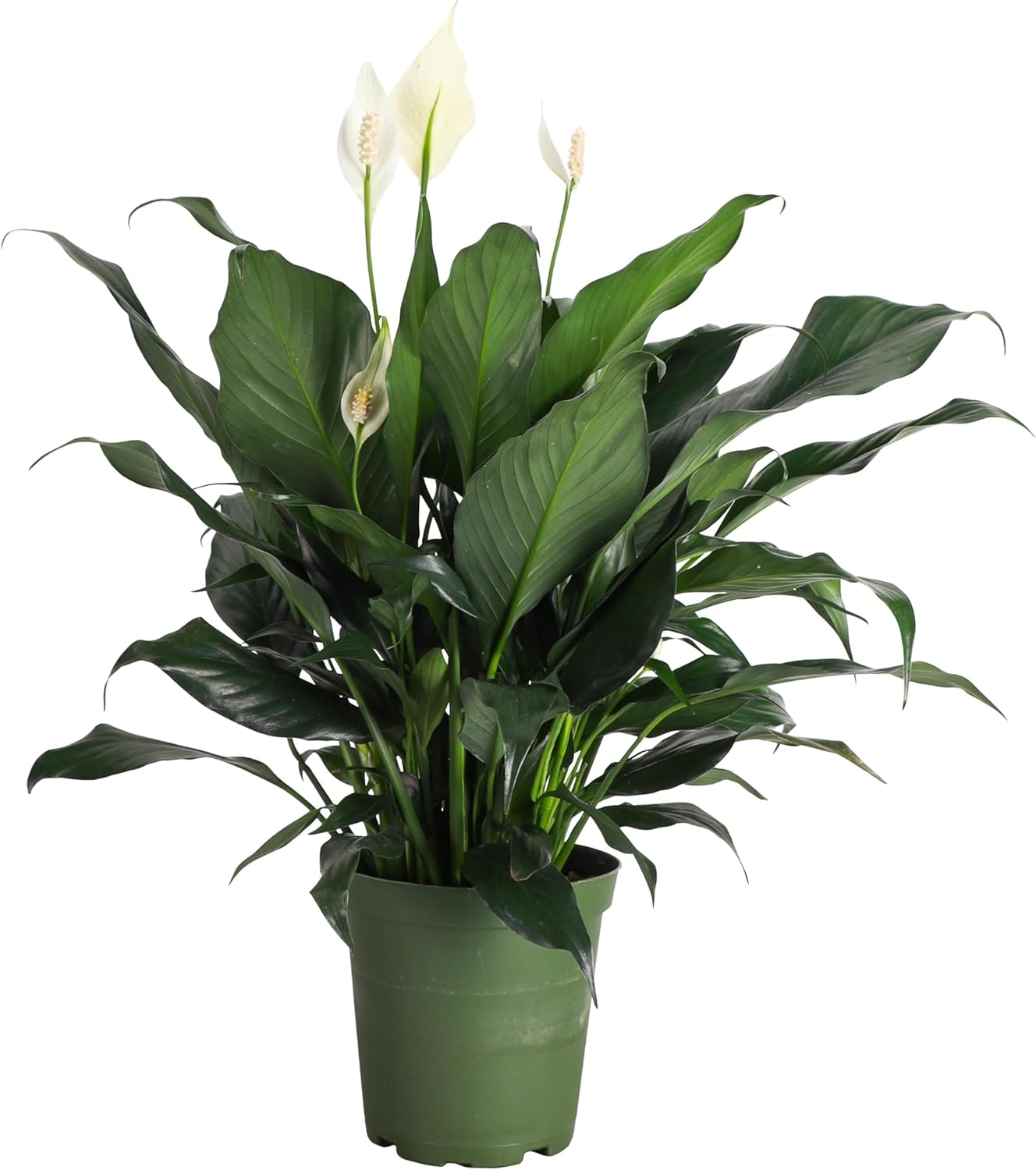
This Thorsen's Greenhouse Peace Lily arrives in a 6 inch grower pot and is intended as an easy, low-light houseplant for improving indoor air and adding a touch of green and white blooms. It is typically placed on a windowsill, shelf, or small table in partial shade and needs only moderate watering and peat-based soil to stay healthy. Notable features listed include air-purifying properties, extended bloom time, a fragrant bloom, and general low maintenance, so it works well for busy homes or entryways where regular plant care is limited. The plastic grower pot with drainage makes it straightforward to water without waterlogging, though the plant may arrive without open blooms since each specimen varies. Limitations are that no decorative container is included and expected height is modest, so you will need a decorative planter if presentation matters and should check for blooms if a flowering display is required immediately. Overall it is a practical, reliable choice for someone who wants a low-effort flowering houseplant that tolerates low light.
Best for: Buyers who prioritize a dependable, low-maintenance flowering houseplant for low-light indoor spaces and want a plant that improves air quality with minimal fuss.
Less Ideal for: People seeking an immediate showy floral centerpiece, a fully potted decorative plant, or those who want a large statement plant for a big room.
- Low-light tolerant so it thrives in shaded indoor spots
- Air-purifying plant historically recommended for indoor air quality
- Low maintenance with moderate watering needs and peat soil preference
- Comes in a grower pot with drainage to reduce overwatering risk
- No decorative pot included so you must purchase or use a cover pot for display
- Plant may ship without blooms so you might not receive flowers immediately
Verdict: A dependable, low-light, low-maintenance Peace Lily that reliably adds green foliage and occasional white blooms with minimal upkeep.
Costa Farms Peace Lily Live Indoor Plant in Decorative Pot (6-in)

| Indoor Outdoor Usage | Indoor |
|---|---|
| Other Special Features of the Product | Air Purification, Flowers |
| Sunlight Exposure | Partial Sun |
| Moisture Needs | Regular Watering |
| Product Care Instructions | Bright, Indirect Sunlight; Water 1 cup once a week |
This Costa Farms Peace Lily arrives potted and ready to display, offering broad dark green leaves and the white, calla-like blooms peace lilies are known for. It is typically used as a tabletop or corner plant where it receives bright, indirect light but will tolerate lower-light rooms, making it suitable for living rooms, offices, or bedrooms. Notable features include its air-purifying reputation and low-maintenance care routine of roughly one cup of water once a week and bright indirect sun; the decorative bamboo-style pot is non-draining to avoid spills during shipping. Practical benefits include an instant decorative statement without repotting, straightforward weekly watering cues from leaf droop, and moderate growth that does not demand frequent intervention. Important limitations are that the shipped container has no drainage holes so repotting is needed for long-term health, and it prefers higher humidity and bright indirect light to bloom best, so truly dark rooms will limit flowering. The plant is hardy only in warm USDA zones and, as a living product, individual specimens may vary in size and appearance.
Best for: Buyers who want an easy-care, attractive indoor plant that adds greenery and occasional blooms to lower-light rooms without complex maintenance.
Less Ideal for: People seeking a plant that will reliably flower in dim rooms or those unwilling to repot into a draining container for long-term health.
- Arrives pre-potted and display-ready for immediate use indoors
- Tolerates lower light while performing best in bright, indirect light which helps blooms
- Simple weekly watering routine with visible leaf cues for watering needs
- Decorative pot and foliage provide instant visual impact without extra styling
- Shipping pot lacks drainage holes so repotting is recommended for long-term growth
- Performs best with higher humidity and may not bloom in very low-light or dry indoor conditions
Verdict: A low-effort, decorative houseplant that brings green foliage and occasional white blooms to lower-light interiors while requiring only simple weekly care.
Choosing the Right Peace Lily Pot Plants: Key Factors to Consider
Light Levels and Placement
Peace lilies vary in how they respond to room light. Some will flower in bright, indirect light while others will tolerate lower-light corners but rarely bloom. Consider where you plan to place the pot: a north-facing room may call for a more shade-tolerant selection, while east- or west-facing windows can support better bloom frequency.
Intensity and duration both matter. Even shade-tolerant types need bright, indirect light for several hours to produce flowers. Avoid direct midday sun that can scorch leaves. Also account for seasonal changes: a location that is bright in summer may be dimmer in winter, which will affect both growth and flowering.
Watering Schedule and Soil
Peace lilies prefer evenly moist but well-draining potting mix; however, different cultivars show different tolerance for missed waterings. If you travel or forget to water regularly, choose a selection that tolerates short dry periods without dropping leaves.
Soil composition affects how quickly a pot dries out. A mix with good aeration and organic matter will hold moisture but still drain. Make sure containers have drainage holes so roots do not sit in water, which increases the risk of root rot. Match your watering routine to the plant's moisture needs rather than forcing a single schedule for every pot.
Pot Size and Root Space
The pot size controls how quickly soil dries and how much root growth the plant can support. Smaller pots dry faster and may require more frequent watering, while oversized pots keep the substrate wet longer and can encourage root problems.
Choose a container that gives the plant room to grow for at least a year without being rootbound. Consider whether you want a decorative outer cachepot; if so, ensure it does not trap excess water. Repotting every year or two into a slightly larger pot maintains vigor and supports consistent flowering.
Pet Safety and Placement
Many gardeners place peace lilies in shared living areas where children or pets roam. Some peace lily varieties contain compounds that can irritate mouths and digestive tracts if chewed, so placement out of reach is wise when pets are present.
If pets or small children are a concern, prioritize elevated stands, hanging displays, or rooms with restricted access. Also evaluate leaf texture and growth habit: plants with lower, spreading leaves are more accessible to pets than upright, narrow varieties.
Maintenance and Grooming
Routine tasks for peace lilies include rinsing leaves to remove dust, removing spent blooms, and trimming damaged foliage. Some varieties need more frequent grooming to stay attractive in a home setting because they produce more spent leaves or are more prone to brown tips.
Factor in how much time you want to spend on upkeep. If low-maintenance care is important, choose selections that resist leaf blemishes and tolerate occasional neglect. Consider whether you will need to boost humidity during dry winters and whether you are prepared to address occasional pest issues like spider mites or scale.
Best Placements by Room and Light
Match your peace lily to the room's light profile rather than forcing the room to suit the plant. In low-light bedrooms and hallways, choose the most shade-tolerant options and keep them away from drafts. Brighter living rooms and sunlit offices can support plants that flower more reliably.
Bathrooms with indirect light can be excellent for peace lilies because higher humidity reduces brown leaf tips and stresses from dry air. Kitchens often provide bright, indirect light if kept away from direct sun. Consider rotating pots periodically so all sides receive light and growth remains balanced.
- Low light: place near north-facing windows or in interiors with bright, indirect light.
- Medium light: east- or west-facing windows with filtered sun are ideal for blooms.
- High indirect light: bright rooms with sheer curtains support more frequent flowering.
Seasonal Care and Bloom Timing
Peace lilies commonly flower in spring and summer but will respond to overall growing conditions. Increased light and slightly longer days encourage bloom initiation. Reduce repotting and heavy pruning during active flowering to avoid stress.
Adjust watering as seasons change. Plants usually need less water in cooler months when growth slows. Watch leaves for signs of under- or overwatering instead of following a strict calendar-leaf droop is often the fastest indicator that the plant needs attention.
- Increase light exposure gradually before expected bloom season.
- Cut back on fertilizing late in the season to avoid new growth that may not harden before winter.
Dealing with Common Pests and Problems
Indoor peace lilies can encounter pests such as spider mites, mealybugs, and scale. Regularly inspect the undersides of leaves and the crown area for early signs. A simple leaf rinse and targeted removal of affected leaves often stops infestations before they spread.
Brown leaf tips are frequently caused by low humidity, fluoride in tap water, or inconsistent watering. Improve humidity with room-level measures like grouping plants or using a pebble tray. If tap water is a problem, use filtered or distilled water for sensitive varieties.
- Inspect plants weekly during warm months for pest activity.
- Isolate and treat affected plants promptly to protect the rest of your collection.
Styling Peace Lilies in Pots and Containers
Peace lilies adapt to a range of container styles, from glazed ceramic pots to simple plastic nursery containers hidden inside decorative cachepots. Choose materials that suit indoor humidity: terra cotta breathes but dries faster, while glazed pots retain moisture longer.
Balance aesthetics with function. Ensure every container has drainage or that inner nursery pots can be removed easily for watering. Consider combinations with companion plants that enjoy similar light and moisture if you want a fuller tabletop display.
- Use saucers or cachepots to protect surfaces from drips.
- Select potting mix formulated for indoor tropicals with good drainage and organic matter.
Propagation and Dividing for Larger Displays
Many peace lilies can be divided to create new plants or to refresh an overcrowded pot. Division is best done during active growth and with careful handling to preserve root integrity. Use clean tools and a well-draining potting mix for each new section.
When dividing, look for natural clumps and separate so each new plant has several healthy leaves and a good portion of roots. After division, keep moisture consistent and avoid direct sun while the plants recover to reduce transplant stress.
- Plan divisions in spring or early summer for best recovery.
- Allow newly divided plants a few weeks in a bright, protected spot before moving them to final locations.
How We Chose the Best Peace Lily Pot Plants
We shortlisted candidates that demonstrate strong survival in typical indoor conditions and that are widely available in standard nursery sizes. Key filters included documented light tolerance for indoor rooms, straightforward watering needs suitable for busy households, and evidence of reliable foliage and bloom performance under basic care. Evaluation criteria emphasized practical gardener concerns: ability to tolerate low to bright indirect light, resilience to common indoor watering mistakes, susceptibility to pests and disease, and ease of repotting and maintenance. We also considered container adaptability so plants perform well in standard pot sizes and mixes. Plants were excluded if they require specialized greenhouse conditions, strict humidity control, or frequent chemical treatments to stay healthy. Varieties that are known to be highly finicky, or that need unusual soil types or constant misting, were not included. The final list focuses on options that balance attractive foliage and bloom potential with forgiving care.
FAQ
How often should I water a peace lily in a pot?
Water when the top inch of soil feels slightly dry to the touch. Frequency depends on pot size, soil mix, and indoor climate, but most potted peace lilies need water roughly every 7 to 14 days. Look for drooping leaves as an early sign the plant needs moisture.
Will a peace lily bloom in low light?
Some varieties will tolerate low light but may bloom less often. If regular flowering matters, place the plant in bright, indirect light for several hours a day. Supplementing with a grow light can help in very dim rooms.
What causes brown tips on peace lily leaves?
Brown tips commonly result from low humidity, inconsistent watering, or salt buildup from tap water and fertilizers. Increase humidity, water with filtered or distilled water if necessary, and flush the potting mix occasionally to remove excess salts.
Can I keep peace lilies in bathrooms?
Yes, bathrooms with indirect light are often good because higher humidity reduces leaf browning. Ensure there is enough light and that the plant is not exposed to constant drafts or hot, direct steam from showers.
When should I repot a peace lily?
Repot when the plant becomes rootbound, usually every 12 to 24 months depending on growth rate. Signs include roots growing through drainage holes, slowed growth, or soil that dries out very quickly. Move up one pot size to avoid stalled moisture dynamics.
Final Verdict
Choose a peace lily pot plant that matches the light and watering reality of your space. Prioritize selections that tolerate your typical indoor light levels and that fit the pot size and maintenance rhythm you can sustain. If you want blooms, favor placements with brighter indirect light and consistent moisture; if low maintenance is the priority, focus on more shade-tolerant, watering-forgiving options. Balancing these tradeoffs will help you pick a peace lily that looks healthy and flowers when you want it to. With proper placement, routine grooming, and attention to moisture, a well-chosen peace lily can be a long-lived, attractive houseplant in many indoor situations.
