

Note: This article contains affiliate links. If you click on these links and make a purchase, I may earn a small commission at no extra cost to you. This helps support my research and content. Read my full affiliate disclosure here.
If you grow Bird of Paradise, the right plant food makes the difference between stunted growth and dramatic tropical foliage with reliable blooms. These plants respond to steady, balanced feeding that supplies both macronutrients and key micronutrients for flower production, leaf color, and root health. This guide covers seven shortlisted plant foods selected for common Bird of Paradise needs in containers and garden beds. We evaluate options by nutrient profile, ease of application, and how well they support bloom set and vigor across typical home-garden conditions. Read on for practical feeding advice and the criteria that guided our picks.
Top Picks at a Glance
| Best Overall The best all-around choice for most situations | TPS NUTRIENTS Bird of Paradise Liquid Fertilizer, 8 oz |  |
| Best Quality Built to a higher standard if you want something more solid | Exotica Tropicals Professional Nursery Heliconia (Bird of Paradise) Slow-Release Fertilizer, 4 lb |  |
| Best Value The sweet spot between price and what you get | Cz Garden BloomBiscus Hibiscus Plant Food 10-4-12 (4 lb) |  |
| Best Budget The cheapest option that still gets the job done reliably | Jobe's Organics Houseplant Fertilizer Spikes, 50 Count |  |
| Highest Rated A top-rated pick with lots of positive feedback | TATAWORM Organic Bird of Paradise Seaweed Powder Fertilizer, 2 oz |  |
| Most Popular A crowd favorite that many people choose with confidence | EarthPods Tropical Flower Fertilizer Spikes, 100 Count |  |
| Best Seller A high-volume bestseller chosen again and again | Miracle-Gro Shake 'N Feed Palm Plant Food, 4.5 lb |  |
TPS NUTRIENTS Bird of Paradise Liquid Fertilizer, 8 oz

| Item Form | Liquid |
|---|---|
| Coverage | A few square feet or 1-3 plants |
| Target Species | Bird of Paradise |
| Mixing Ratio | 1:128 |
| Unit Count | 8 Fluid Ounces |
This 8 oz liquid formula is designed specifically to support Bird of Paradise and other tropical plants by encouraging fuller foliage, stronger stems, and better root development. It is used as a concentrate mixed at 1:128 for regular feedings with clear directions: watering-can feed every 1 to 2 weeks in spring and summer and monthly in fall and winter, plus a lighter leaf-misting option. Notable features include a kelp and micronutrient blend aimed at promoting blooms and a small coverage suited to a few square feet or up to three plants, which makes it convenient for container specimens and patio plants. The compact bottle is easy to store and the mixing ratio is straightforward, but the 8 oz size means frequent buyers with multiple plants will need to replenish more often. Practical benefits are targeted nutrition for tropical species and flexible application methods; limitations are the small unit volume and that it is formulated for a narrow set of tropical plants rather than general-purpose use.
Best for: Buyers with one to a few Bird of Paradise or tropical container plants who want a targeted, easy-to-mix monthly feed to promote foliage and blooms.
Less Ideal for: Gardeners with large collections, mixed-species beds, or those who prefer an all-purpose fertilizer should consider larger or broader-spectrum options.
- Formulated specifically for Bird of Paradise and tropical plants to encourage foliage and blooms
- Includes kelp and micronutrients to support root health and nutrient uptake
- Clear mixing ratio and seasonal feeding schedule for easy use
- Suitable for both soil feeding and leaf misting for flexible application
- Small 8 oz bottle covers only a few plants so frequent repurchasing is likely for larger collections
- Targeted formulation may not be ideal for non-tropical or general-purpose feeding
Verdict: A compact, easy-to-use liquid fertilizer tailored to promote lush foliage and blooms on Bird of Paradise and similar tropical plants.
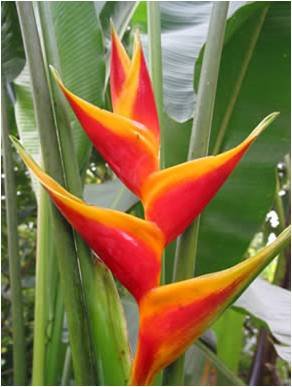
Exotica Tropicals Professional Nursery Heliconia (Bird of Paradise) Slow-Release Fertilizer, 4 lb
| Item Form | Granules |
|---|---|
| Application Method | Sprinkle |
| Coverage | Medium |
| Target Species | Heliconia / Bird of Paradise Plants |
| Mixing Ratio | 5:1 |
This granular fertilizer is designed for heliconia and bird of paradise growers who want steady, long-lasting nutrition. It combines slow-release coated pellets that feed plants for about 5 to 6 months with a small instant-release fraction to deliver an initial green-up after application. Use it by sprinkling into the root zone according to the product mixing ratio and schedule; because it is nursery-grade, a little goes a long way and it is suitable for periodic seasonal feedings rather than weekly liquid applications. Notable features include a full complement of micronutrients such as magnesium, manganese and iron and a formulation that commercial growers use for consistent growth. Practical benefits are reduced feeding frequency, more even nutrient availability, and easier maintenance for larger specimens. Limitations are that it is a granular product requiring correct placement and rate for best results and it is not a foliar or quick-corrective treatment for acute deficiencies.
Best for: Serious gardeners and owners of bird of paradise or heliconia who prioritize steady, low-maintenance nutrition and predictable growth for larger or specimen plants.
Less Ideal for: People who need fast corrective feeding, prefer liquid or foliar treatments, or grow only small container plants that need very frequent, dilute feedings.
- Professional nursery-grade slow-release coated pellets provide steady feeding for 5–6 months
- Includes some instant-release nutrients for initial green-up after application
- Contains micronutrients (magnesium, manganese, iron) important for tropical foliage health
- Granular form makes it easy to apply to root zones and reduces the need for frequent feedings
- Requires correct placement and dosing since granular feed is not systemic or foliar
- Not suitable as a rapid corrective for severe nutrient deficiencies
Verdict: Buy this if you want a professional nursery-grade, low-frequency granular fertilizer that delivers steady 5–6 month nutrition for bird of paradise and heliconia.
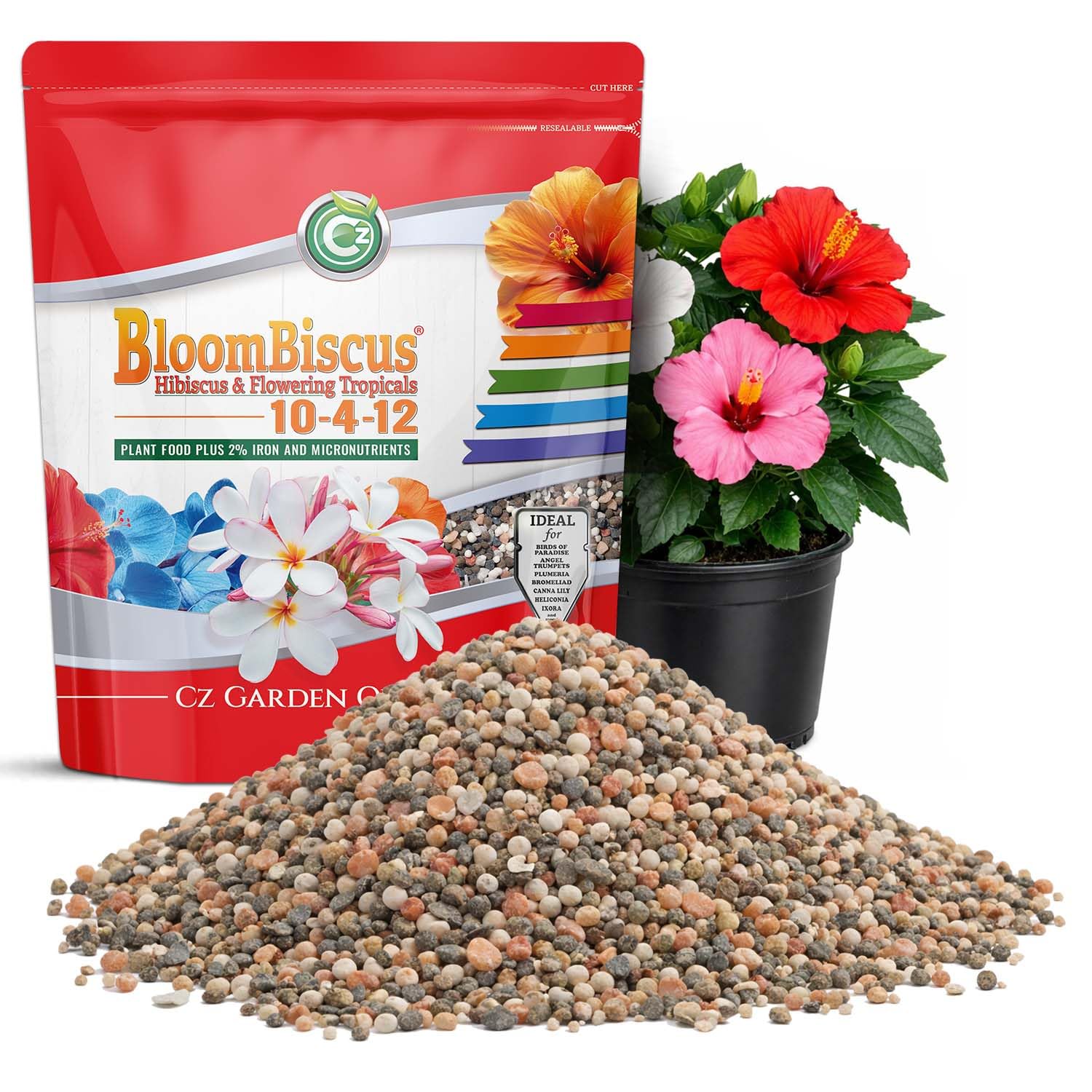
Cz Garden BloomBiscus Hibiscus Plant Food 10-4-12 (4 lb)
| Item Form | Granules |
|---|---|
| Specific Uses For Product | Plant Growth, Root Development, Seed Development, Soil Conditioning |
| Target Species | Flowering Tropicals |
| Unit Count | 64 Ounce |
| Mixing Ratio | 10-4-12 |
This granular BloomBiscus formula is designed to boost blooms and overall vigor in hibiscus and similar tropical flowering plants. It is typically worked into potting mix or applied around the root zone and watered in according to package directions. The 10-4-12 NPK delivers higher potassium for flowering and fruiting while the modest nitrogen supports leaf growth without excessive lushness that can reduce blooms. The added 2% iron and micronutrients help correct common deficiencies that dull flower color. Packaging comes in a resealable pouch for easy pouring and storage. Practical benefits include targeted nutrition for bloom production, broad suitability across many tropical species, and US-made ingredient sourcing. Limitations are that the product is a general granular feed rather than a slow-release or time-release formula so it may require regular reapplication and careful dosing for container-grown plants. Directions are brief on the label so growers who want a feeding schedule may need to follow common hibiscus fertilizing guidelines or consult extension recommendations.
Best for: A gardener focused on getting bigger, more consistent blooms from hibiscus and other tropical flowering plants who prefers a targeted, performance-oriented fertilizer.
Less Ideal for: Those who want a long-term slow-release feed or a liquid program for weekly foliar feeding should consider alternative formulations.
- NPK ratio (10-4-12) concentrated toward flowering and fruiting
- Includes 2% iron plus micronutrients to address common deficiencies
- Resealable heavy-duty pouch for easy pouring and storage
- Formulated specifically for hibiscus and other flowering tropicals
- Not specified as slow-release so it may need more frequent reapplication
Verdict: Choose this 10-4-12 granular with 2% iron when your main goal is stronger, more reliable hibiscus blooms.
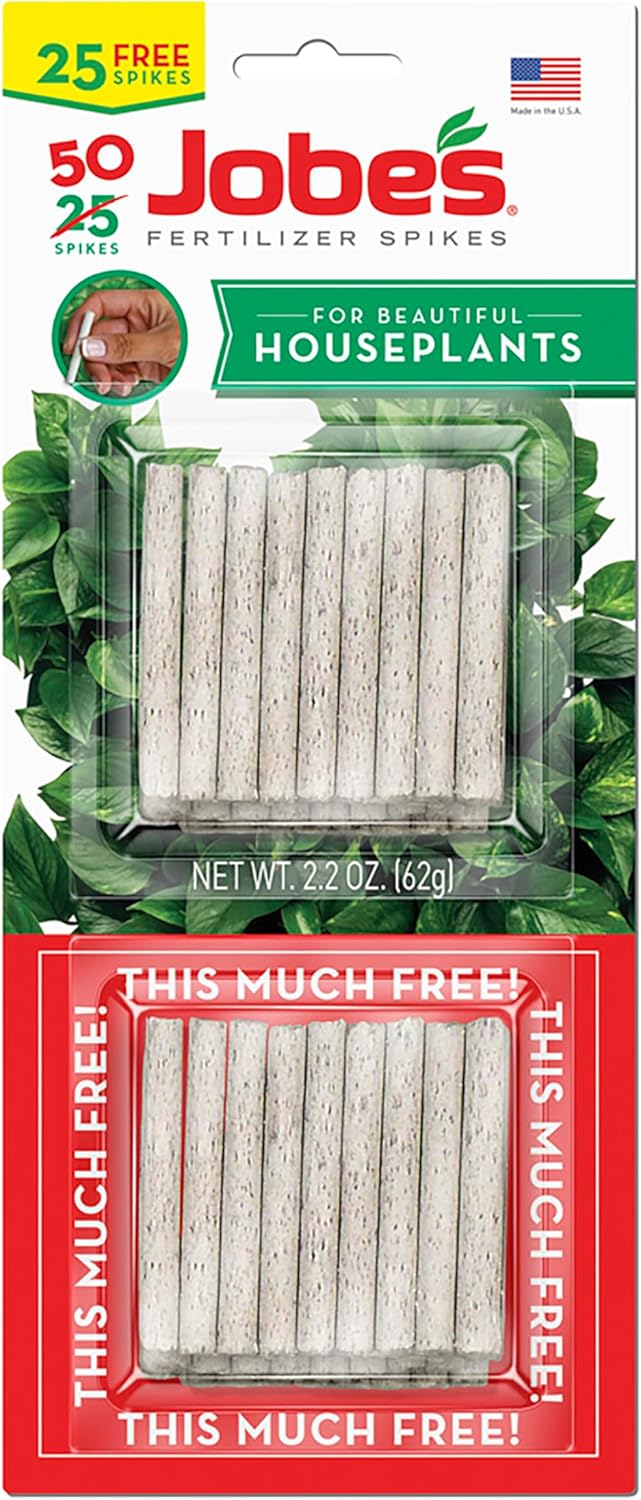
Jobe's Organics Houseplant Fertilizer Spikes, 50 Count
| Unit Count | 50 Count |
|---|---|
| Application Method | Insert spikes into soil |
| Item Form | Granules, Liquid, Sticks |
| Target Species | Houseplant |
| Mixing Ratio | 13-4-5 |
Jobe's Organics fertilizer spikes are pre-measured, slow-release sticks you insert directly into potting soil to feed indoor flowering and foliage houseplants. Each pack includes 50 spikes formulated at 13-4-5 NPK, designed to supply nutrients at the roots for roughly 60 days before replacement. Use is straightforward: push the recommended number of spikes into the soil around the root zone and forget them until the next application. The spikes eliminate mixing, reduce mess and runoff, and help prevent accidental overfeeding because each spike contains a set dose. For small pots and casual plant owners this delivers consistent feeding with minimal effort, especially where you want steady bloom and leaf color without daily attention. Limitations are the fixed nutrient ratio and dosing schedule so you cannot fine-tune feeding for specific species or correct nutrient imbalances quickly, and spikes may be less practical for very large containers or heavy feeders that need more frequent or soluble feeding.
Best for: A practical, budget-minded houseplant owner who prefers low-effort, scheduled feeding and wants reliable bloom and foliage maintenance without mixing fertilizers.
Less Ideal for: Enthusiasts who need customizable nutrient ratios, rapid corrective feeding, or who primarily care for very large or heavy-feeding plants.
- Pre-measured slow-release spikes remove mixing and reduce mess
- Continuous root-zone feeding for about 60 days per application
- Formulated 13-4-5 NPK suited to flowering and foliage development
- Pack of 50 provides multiple applications for several small plants
- Fixed NPK ratio and dose cannot be adjusted for individual plant needs
- Not ideal for very large pots or plants requiring frequent soluble feeding
Verdict: If you want an inexpensive, no-mess way to provide steady root-zone nutrition to multiple houseplants, these pre-measured spikes are a simple and reliable choice.
TATAWORM Organic Bird of Paradise Seaweed Powder Fertilizer, 2 oz

| Item Form | Powder |
|---|---|
| Application Method | soil drench |
| Target Species | bird of paradise, strelitzia |
| Mixing Ratio | 1/4 tsp per gallon of water |
| Formula | 0-0-18 |
This 2 oz TATAWORM seaweed powder is a concentrated, high-potassium plant food made for Bird of Paradise and related tropical species. It mixes easily with water (manufacturer recommends 1/4 tsp per gallon) and is applied as a soil drench every 2 to 3 weeks during active growth. The formula is OMRI listed, uses Maine-harvested Ascophyllum nodosum, and emphasizes gentle, organic nutrient support rather than fast-release chemicals. In practice that means steadier nutrient uptake, improved stress tolerance, and fuller foliage and blooms over weeks of consistent use. The included scoop and small container make dosing straightforward for potted plants and small landscape specimens. Important limitations are the small pack size and concentrated nature: a single 2 oz container covers up to 24 gallons when mixed so it is economical for individual plants but may not be convenient for larger gardens without repeat purchases. Also results are gradual, so this is best for growers who want reliable, organic support rather than immediate, dramatic changes.
Best for: Steady-minded plant owners who prioritize organic, low-risk nutrition for individual Bird of Paradise or tropical potted plants and want a simple, repeatable feeding routine.
Less Ideal for: Gardeners who need rapid, high-feeding solutions for large beds or those who prefer one-time bulk fertilizer for many plants should consider larger-size or different formulations.
- Organic seaweed formula (Ascophyllum nodosum) that supports root strength and bloom development
- Concentrated powder covers up to 24 gallons, so small doses go a long way
- OMRI listed and made without synthetic additives for organic gardening
- Easy to mix and apply with included scoop and simple soil drench instructions
- Small 2 oz package may require frequent repurchasing for multiple or larger plants
- Effects are gradual and require consistent use rather than delivering immediate results
Verdict: A reliable organic seaweed booster for Bird of Paradise growers who want gentle, consistent support for better roots and blooms.
EarthPods Tropical Flower Fertilizer Spikes, 100 Count

| Item Form | Capsules |
|---|---|
| Specific Uses For Product | Bougainvillea, Hibiscus, Plumeria, Tropical flowers |
| Unit Count | 100 Count |
| Coverage | Compact |
| Target Species | Tropical flowers | Hibiscus | Bougainvillea | Plumeria | Anthurium | Bird of paradise |
These EarthPods come as 100 push-in capsules formulated for tropical flowering plants like plumeria, hibiscus and bougainvillea. You insert the recommended number of capsules into moist soil near the stem and water; nutrients and trace minerals release slowly for roughly two to three weeks so you can avoid frequent liquid feeding. The capsules are organic and intended for pots or garden beds, which makes them convenient for container plumerias and patio specimens. Directions give clear dosing by plant size and a repeat schedule during active growth, so a cautious gardener can follow simple steps without measuring liquids. The product is compact and mess-free, but it is a repeat-application style fertilizer rather than a one-time long-season feed, so you will need to reapply every 14 to 21 days during bloom periods. Also the label emphasizes garden use only, so it is not a multi-purpose household product.
Best for: A gardener who prefers low-mess, easy-to-follow feeding for plumerias and other tropical flowering plants and values organic ingredients and predictable, short-term nutrient release.
Less Ideal for: People seeking a single, long-season fertilizer or a multiuse product for lawns, vegetables, or non-garden purposes should look elsewhere.
- Organic slow-release formula tailored for tropical flowering plants
- Simple push-in capsules eliminate liquid measuring and reduce mess
- Clear dosing guidance for small, medium and large plants
- Suitable for both containers and in-ground tropical specimens
- Requires regular reapplication every 14 to 21 days during active growth
- Not intended for uses outside garden plant feeding
Verdict: An easy, low-mess organic spike system that reliably feeds plumerias and other tropical flowering plants on a 14–21 day schedule.
Miracle-Gro Shake 'N Feed Palm Plant Food, 4.5 lb

| Item Form | Powder |
|---|---|
| Application Method | shake onto soil |
| Target Species | Palm plants |
| Unit Count | 72 Ounce |
| Mixing Ratio | 8:2:12 |
Miracle-Gro Shake 'N Feed Palm Plant Food is a shake-on granular fertilizer designed to supply steady nutrition to palms, cycads, and other tropical plants for up to three months per application. You apply it by shaking the powder evenly onto soil beneath the fronds, working it into the top 1–3 inches of soil, then watering to activate the feed; it can also be mixed into new potting soil at planting. The formulation includes nitrogen, phosphorus and potassium plus magnesium, iron and manganese to help reduce yellowing and promote greener fronds, and the product contains compost to support root health. The main practical benefits are simple application without measuring equipment, slow-release feeding that reduces application frequency, and targeted nutrients for palm health. Limitations are that it is a general palm formula rather than tailored to specific palm species and you must avoid contact with trunks and foliage to prevent damage; correct application rates are important to avoid overfeeding. This is a straightforward option if you want low-effort, periodic feeding for established palms in containers or in-ground beds.
Best for: Gardeners who want a low-effort, reliable palm fertilizer that requires infrequent applications and straightforward shake-on use for established container or in-ground palms.
Less Ideal for: Growers needing a species-specific nutrient program or precise, frequent feeding schedules for high-value or finicky palms.
- Continuous-release formula that feeds up to three months reducing application frequency
- Includes micronutrients (magnesium, iron, manganese) to help prevent yellowing of fronds
- Easy shake-on application for in-ground and container palms without mixing equipment
- Contains compost to support root health and improve water efficiency
- Not species-specific so it may not address unique nutrient needs of all palm varieties
Verdict: A no-fuss, slow-release palm fertilizer that delivers targeted micronutrients and three months of feeding with simple shake-on application.
Choosing the Right Plant Food for Bird of Paradise: Key Factors to Consider
Nutrient Ratio and Flower Support
Bird of Paradise plants benefit from a balanced macronutrient profile with slightly elevated phosphorus during bloom initiation. A formula with an NPK ratio that does not starve phosphorus while keeping nitrogen moderate helps the plant produce strong stems and leaves without suppressing flowers.
Excessive nitrogen can promote lush foliage at the cost of blooms. Look for feeds that either offer a bloom-boosting phase or a steady balanced ratio that includes available phosphorus. For potted plants, consider lower-strength regular feedings rather than high-concentration single applications to avoid nutrient shocks.
Micronutrients and Trace Elements
Trace elements such as iron, magnesium, manganese, and zinc affect leaf color, chlorophyll production, and enzyme functions critical to flowering. Iron deficiency can show as yellowing between leaf veins, while low magnesium often presents as older-leaf chlorosis that reduces vigor.
A complete plant food lists these micronutrients and, ideally, their chelated or readily available forms for faster uptake in a range of soil pH. For Bird of Paradise grown in alkaline potting mixes or hard water, chelated iron and readily available magnesium can prevent common nutrient lockups.
Formulation and Application Method
Plant foods come as soluble concentrates, water-soluble powders, granular slow-release, or spikes. Each delivery method changes how often you need to fertilize and how quickly the plant responds. Liquids give fast correction and are useful during active growth and bloom cycles. Slow-release granules reduce maintenance and provide steadier feeding over months.
Consider how often you want to feed, whether you can flush pots to avoid salt buildup, and whether the feed mixes cleanly without clogging sprayers or irrigation lines. For large landscape specimens, granular options may be easier; for container-grown Birds of Paradise, soluble feeds allow finer control and lower risk of overfertilizing.
Salt Index and Safety for Containers
Concentration and salt index determine the risk of fertilizer burn, which is especially important in containers with limited soil volume. High-salt formulations or overconcentrated applications quickly damage roots and leaf margins.
Choose feeds with clear dilution instructions and consider lower-strength, more frequent feedings for potted plants. Periodic flushing of container media and observation for leaf scorch help prevent buildup. For indoor or conservatory specimens, select products labeled safe for containers and sensitive roots.
Timing and Seasonal Feeding Strategy
Bird of Paradise has seasonal growth and bloom periods, so timing feeds to active growth and bud formation improves results. Start with a steady regimen in spring, maintain through summer, and reduce or pause feeding in the plant's dormant or slower growth months.
Some feeds include bloom-boost phases or higher phosphorus mixes intended for pre-bloom use. Align the product's recommended schedule with your local climate and the plant's phenology to avoid wasted inputs and to encourage reliable flowering cycles.
Compatibility With Soil and Water Conditions
Soil pH, organic matter, and water quality affect nutrient availability. High pH soils can lock up iron and manganese, while very soft or very hard water changes how nutrients behave in solution. The right plant food for Bird of Paradise should account for these variables, either via chelated micronutrients or by offering guidance for soil amendments.
If you use reclaimed or hard water, look for feeds with clear instructions on adjusting concentrations or supplementing with chelated iron. For plants in heavy organic mixes, nutrient release dynamics differ from mineral soils, so feeding frequency may need adjustment.
Feeding Frequency for Containers and Beds
Container-grown Bird of Paradise need more frequent, lower-strength feedings than plants in garden beds because pots have limited soil volume and nutrients wash out with regular watering. For soluble liquids, a common approach is a half-strength application every two to four weeks during active growth, with monthly maintenance in larger pots.
In-ground specimens tend to tolerate granular slow-release products applied once or twice a season. Monitor new growth and flower bud development to fine-tune timing rather than sticking rigidly to a calendar.
- Use lower concentration more often for containers to reduce burn risk
- Apply granular feeds around drip line for landscape plants
- Flush container media occasionally to prevent salt buildup
Correcting Common Deficiencies
Yellowing between veins, stunted new growth, or reddish leaf margins can indicate specific nutrient shortfalls. Iron and magnesium deficiencies are common in alkaline mixes and show up as interveinal chlorosis. A targeted foliar feed or chelated micronutrient supplement corrects issues faster than bulk granular amendments.
For overall sluggishness, a balanced liquid feed can provide quick uptake. Avoid repeated heavy nitrogen corrections if flowering is your main goal; instead, use a bloom-support feed with adequate phosphorus during bud set.
- Diagnose symptoms before changing a feed regimen
- Use chelated forms for trace element corrections in high pH soils
- Prefer foliar sprays for rapid symptom relief when safe for the plant
Mixing and Applying Liquid Feeds Safely
Always follow label dilution rates and mix thoroughly to avoid concentrated pockets that can burn roots or leave residue on foliage. Mix in clean water at the recommended strength and apply to moist soil whenever possible to reduce osmotic stress.
When using sprayers for foliar applications, test a small area first and avoid spraying in direct midday sun to reduce leaf scorch. Rinse sprayer equipment after use to prevent cross-contamination between products.
- Dilute feeds as directed and apply to moist soil
- Avoid foliar spraying in hot, sunny conditions
- Clean equipment after each use
Organic Vs Synthetic Options
Organic plant foods release nutrients more slowly and often improve soil biology, which benefits long-term root health. They can be gentler in containers but may not supply an immediate phosphorus boost needed for flowering. Synthetic feeds give predictable NPK ratios and quick uptake, which is helpful when you need quick correction or consistent bloom support.
Many gardeners use a hybrid approach: steady organic base fertility with targeted synthetic or soluble phosphorus during bud formation. Choose based on your maintenance preferences and whether you prioritize soil health or immediate flower production.
- Organics support soil life and slow nutrient release
- Synthetics offer precise ratios and faster correction
- Combine approaches for steady health plus targeted bloom support
Adjusting Feed for Different Growing Environments
Bird of Paradise in bright indoor light, conservatories, or shaded outdoor spots need slightly different feeding strategies. Indoor plants often need lighter, more frequent feeding because they are grown in smaller pots and receive less natural nutrient replenishment. Outdoor, well-established garden plants tolerate less frequent, higher-volume applications.
Account for temperature and light levels. Cooler or lower-light conditions reduce nutrient uptake, so reduce feeding frequency in those periods to avoid buildup. Conversely, during warm, sunny stretches, plants take up nutrients rapidly and can handle more regular feeding.
- Feed indoor plants more frequently at lower strength
- Scale back feeding in low-light or cool periods
- Increase frequency during active warm-season growth
How We Chose the Best Plant Food for Bird of Paradise
We focused on formulas and application styles that suit the biology and seasonal needs of Bird of Paradise. Key filters included nutrient ratios targeted at flowering plants, the presence and bioavailability of micronutrients like iron and magnesium, and the delivery method compatibility for both potted and in-ground specimens. We also assessed solubility and mixing clarity for liquid feeds, slow-release longevity for granular options, and label clarity about feeding rates. Products that were excluded include general-purpose blends lacking phosphorus or trace elements, formulations intended only for lawns or annuals, and any items with vague nutrient guarantees. Practical usability mattered: we favored feeds with clear directions for houseplant and landscape use, safe concentration ranges to avoid fertilizer burn, and options that fit routine maintenance schedules. These filters align with the scoring criteria below and reflect what gardeners need to reproduce healthy growth and consistent bloom cycles.
FAQ
How often should I feed my Bird of Paradise during active growth?
Often a light liquid feed every two to four weeks keeps container plants vigorous during active growth. For garden plants, a slow-release application once in spring and a follow-up in mid-season is usually sufficient.
Can I use a general houseplant fertilizer on Bird of Paradise?
Sometimes general houseplant fertilizers work but they may not prioritize phosphorus and trace elements needed for strong flower development. If using a general feed, apply at lower strength and supplement with a bloom-focused product when buds form.
What signs show my Bird of Paradise needs a micronutrient boost?
Interveinal yellowing, pale new leaves, or reddish leaf edges can indicate deficiencies such as iron or magnesium. A chelated micronutrient supplement or targeted foliar feed often corrects symptoms more quickly than bulk granular feeds.
Are slow-release granules safe for potted Bird of Paradise?
Slow-release granules can be safe if chosen at the correct dosage for the container size. They reduce maintenance but can build up salts in small pots, so use conservative amounts and flush the potting mix periodically.
Should I change my feeding schedule in winter?
Yes. Reduce or pause feeding during the plant's slower growth periods to avoid nutrient buildup and salt stress. Resume regular feeding as new growth and warmer conditions return.
Final Verdict
Focus on nutrient balance, micronutrient availability, and a delivery method that fits how you grow Bird of Paradise. Containers need gentler, more frequent feeding with attention to salt buildup, while garden specimens tolerate less frequent granular applications. Prioritize clear NPK ratios that support flowering, chelated trace elements for reliable leaf color, and products with straightforward instructions. With a feeding plan matched to your environment and seasonal cycles, you can encourage stronger foliage and more consistent blooms.
