

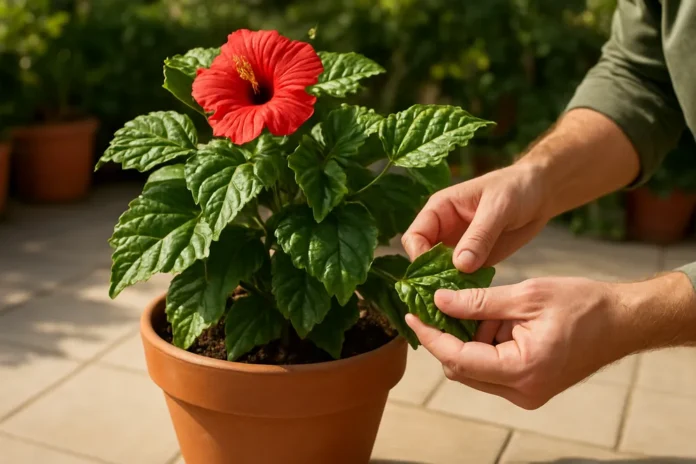
Hibiscus leaves usually curl because the plant is stressed by uneven watering, sucking pests, heat or cold, root problems, or nutrient imbalance. The exact cause depends on whether the leaves are curling with yellowing, spotting, drooping, or visible insect damage.
When a hibiscus starts curling its leaves, it is usually telling you something is off in its growing conditions rather than pointing to one single disease. I see this a lot with both tropical hibiscus on patios and hardy hibiscus in the ground, and the cause is often a stress issue that has been building for days or weeks.
Curled foliage can show up as leaves cupping upward, rolling inward, twisting, puckering, or folding along the edges. Leaves curling on hibiscus may come from watering problems, pest feeding, temperature stress, fertilizer mistakes, or root trouble. The key is to look at the whole plant, not just one leaf, because the pattern usually gives the best clue.
The good news is that hibiscus often bounces back well once you correct the underlying problem. If you catch it early, new growth can return to normal even when older leaves stay curled or scarred.
What Leaf Curl on Hibiscus Is Really Telling You
Leaf curling is a symptom, not a diagnosis. Hibiscus leaves curl when the plant is trying to conserve moisture, react to tissue damage, or cope with stress that disrupts normal growth. That is why the same symptom can come from several very different causes.
Before you assume the worst, look for companion symptoms. A hibiscus with curled leaves and dry soil points in a different direction than one with curled leaves, sticky residue, and ants on the stems. Yellowing, spots, crispy edges, wilt, stunted buds, and insect activity all help narrow down the problem.
- Upward cupping often suggests heat, drought, or low humidity stress
- Twisted or puckered new growth often points to aphids, mites, or other sap-sucking pests
- Curling with yellow leaves may indicate overwatering, poor drainage, or nutrient imbalance
- Curling with brown edges or scorch usually suggests water stress, salt buildup, or sun and heat exposure
- Sudden curling after a weather change can be linked to cold snaps, hot wind, or transplant shock
When I diagnose hibiscus, I look at the newest leaves first. If the newest growth is distorted while older leaves look fairly normal, I usually suspect pests or a growth-related stress. If the whole plant is curling more evenly, watering or root conditions are more likely.
Watering Problems Are the Most Common Cause
Underwatering and Dry Soil
Hibiscus likes consistent moisture, especially tropical types grown in containers. If the soil dries too far between waterings, leaves may curl inward or downward to reduce moisture loss. You may also notice drooping, bud drop, or edges that feel thin and papery.
Container hibiscus can dry out surprisingly fast in hot, breezy weather. A plant that looked fine yesterday may show curled leaves today if the root ball got too dry. This happens even more often in dark pots, small pots, or hanging baskets.
Overwatering and Soggy Roots
Too much water can also curl hibiscus leaves. When roots sit in soggy soil, they lose access to oxygen and cannot take up water properly. That creates a confusing situation where the plant looks stressed and curled even though the soil is wet.
Overwatered hibiscus often develops yellowing leaves, leaf drop, and soft growth. The soil may stay damp for several days, and the pot may feel heavy all the time. In garden beds, poor drainage after rain can create the same problem.
- Water when the top inch of soil feels dry for potted hibiscus
- Water deeply so the entire root zone is moistened, then let excess drain away
- Never leave pots standing in saucers full of water for long periods
- Use a potting mix that drains well but still holds some moisture
- In-ground hibiscus may need less frequent watering, but they still prefer even moisture
If you are unsure whether the plant is too wet or too dry, do not guess from the leaf curl alone. Check the root zone with your finger or a moisture meter, because the fix for underwatering is the opposite of the fix for overwatering.
Pests That Distort Hibiscus Leaves
Aphids on Soft New Growth
Aphids are one of the top reasons hibiscus leaves curl, especially tender new leaves and flower buds. These tiny insects feed by sucking sap, which distorts developing tissue. Leaves may twist, pucker, or curl tightly, and buds may fail to open properly.
You might also see sticky honeydew on leaves or nearby surfaces. Ants often show up too, because they are attracted to that sugary residue.
Spider Mites in Hot, Dry Conditions
Spider mites are another frequent culprit, especially during hot, dry weather or when hibiscus is growing in sheltered patio spots. Their feeding can make leaves curl, stipple, bronze, or look dusty. Fine webbing may appear on the undersides of leaves or between stems.
Thrips, Whiteflies, and Other Sap-suckers
Thrips, whiteflies, and occasionally mealybugs can also cause curled or misshapen growth. Thrips often scar petals and young leaves. Whiteflies flutter up in a small cloud when the plant is disturbed. These pests weaken the plant over time and can keep new growth coming in distorted.
- Inspect the undersides of leaves and the tips of new shoots
- Rinse minor infestations off with a firm spray of water
- Use insecticidal soap or horticultural oil for aphids, mites, and whiteflies when coverage is thorough
- Treat in the cooler part of the day to reduce leaf burn
- Repeat treatments as needed because eggs and hidden pests often survive the first spray
If only the newest leaves are crumpled and the plant was healthy a week ago, I nearly always inspect for pests before I touch fertilizer. Hibiscus responds fast to insect feeding, and distorted new growth is one of the earliest clues.
Heat, Cold, Wind, and Humidity Stress
Hibiscus is sensitive to environmental swings. Tropical hibiscus in particular reacts quickly to hot afternoon sun, reflected heat from walls or pavement, dry wind, cold drafts, or a sudden move from indoors to full sun. Any of these can trigger curling, cupping, or drooping leaves.
High heat can make leaves curl upward to reduce sun exposure and moisture loss. Low humidity may worsen that response, especially in containers. On the other hand, a chilly night or cold snap can cause leaves to curl, wilt, or become limp and damaged by morning.
Indoor hibiscus often struggles near heating vents, air conditioners, or drafty windows. Outdoor plants may show stress after a sudden weather shift even when watering is otherwise fine.
- Protect potted hibiscus from intense late afternoon heat if leaves scorch or curl repeatedly
- Avoid placing the plant where hot wind dries the soil rapidly
- Bring tropical hibiscus indoors before temperatures dip too low
- Acclimate indoor-grown or greenhouse-grown plants gradually before moving them into stronger sun
- Increase humidity modestly indoors if air is very dry, but do not rely on misting alone to solve major stress
Nutrient Imbalance and Fertilizer Mistakes
Hibiscus is a fairly hungry flowering plant, but more fertilizer is not always better. Excess fertilizer salts can damage roots and lead to curled leaves, brown edges, and general stress. This is especially common in potted hibiscus fed too often with strong liquid fertilizer.
On the other side, nutrient deficiencies can contribute to weak, pale, or small leaves that curl or fail to expand normally. Magnesium, potassium, or micronutrient problems sometimes show up alongside yellowing or interveinal chlorosis. The curling itself is usually part of a bigger pattern rather than the only symptom.
How to Tell if Fertilizer Is Involved
- White crust on the soil surface or pot rim suggests salt buildup
- Leaf edge burn after feeding often points to overfertilization
- Uniform pale growth may indicate the plant needs nutrition, especially during active growth
- A rootbound plant may show deficiency symptoms even when fertilizer is present because roots cannot function well
If you suspect fertilizer burn, flush the potting mix thoroughly so water runs freely through the container several times. Then pause feeding until the plant stabilizes. If you suspect deficiency, use a balanced fertilizer labeled for flowering plants and follow the label rate carefully rather than trying to force a quick recovery.
Root Stress, Pot Issues, and Transplant Shock
When hibiscus roots are cramped, damaged, or struggling in poor soil, leaves often curl because the top growth is not getting steady moisture and nutrients. Rootbound hibiscus may dry out quickly, wilt between waterings, and produce smaller, curled leaves. If roots circle tightly inside the pot, the plant may need more space.
Transplant shock can also cause temporary curling. After repotting or planting out, hibiscus may react to root disturbance, changed light exposure, and uneven moisture while it adjusts. This type of curl usually affects several leaves at once and improves gradually if conditions stay stable.
Poor drainage in heavy soil creates another form of root stress. If the planting hole acts like a basin and holds water, roots stay too wet and leaf curl follows. In containers, compacted or old potting mix can become hard to wet evenly or stay soggy too long, both of which stress the plant.
After repotting hibiscus, I avoid the temptation to fertilize immediately unless the plant clearly needs it. I would rather let the roots reestablish under steady moisture first, because stressed roots plus fertilizer salts can set recovery back.
Disease and Herbicide Damage Are Less Common but Possible
Most hibiscus leaf curl problems come from culture or pests, not serious disease. Still, fungal leaf spots, root rot, and some viral issues can contribute to distorted foliage, especially if the plant is already weak. Disease-related curl is more likely when you also see spotting, cankers, mushy roots, or widespread decline.
Herbicide drift is another possibility that gardeners sometimes miss. If a lawn weed killer or broadleaf herbicide drifted onto your hibiscus, new leaves may emerge cupped, twisted, narrow, or strangely strap-like. This often happens after spraying nearby on a breezy day.
- Remove badly damaged leaves only if the plant still has plenty of healthy foliage left
- Improve air flow and avoid wetting leaves late in the day if leaf disease is present
- Discard badly rotted roots and repot into fresh mix if root rot is caught early in a container
- Keep herbicides far from ornamental beds and never spray on windy days
How to Figure Out the Cause on Your Plant
If your hibiscus leaves are curling and you want the fastest path to an answer, inspect the plant in a simple order. Start with the soil, then the newest growth, then the environment around the plant. That sequence rules out the most common problems first.
- Feel the soil several inches down or check the root zone in the pot
- Look underneath curled leaves for aphids, mites, whiteflies, webbing, or sticky residue
- Compare new leaves with older leaves to see where the distortion started
- Think about recent changes such as heat waves, cold nights, repotting, moving the plant, or fertilizer application
- Check drainage, pot size, and whether the plant has become rootbound
Try not to change five things at once. If you water differently, spray for pests, repot, and fertilize all in the same weekend, it becomes much harder to tell what helped or what caused additional stress. Hibiscus recovery is best judged by how the new growth looks over the next couple of weeks.
How to Help Hibiscus Recover
Once you identify the most likely cause, focus on steady care rather than quick fixes. Hibiscus can replace damaged foliage, but old curled leaves may not flatten out again. What matters is whether new leaves emerge normal, green, and flexible.
- Correct watering so the root zone stays evenly moist but never swampy
- Treat active pests thoroughly and repeat as needed
- Move the plant away from stressors like harsh reflected heat or cold drafts
- Flush excess fertilizer salts from containers if overfeeding is suspected
- Repot rootbound plants into a slightly larger container with fresh, well-draining mix
- Prune only lightly until the plant is actively growing again
Give the plant a little time after you make corrections. If the stems stay green and buds continue forming, the hibiscus still has a strong chance of bouncing back. I usually judge progress by the next flush of leaves rather than by trying to rescue every damaged one.
FAQ
Will Curled Hibiscus Leaves Uncurl on Their Own?
Usually not completely. Once a leaf is distorted, it often stays that way, but healthy new growth should come in normally after you fix the underlying stress.
Can Too Much Sun Make Hibiscus Leaves Curl?
Yes. Intense afternoon sun, reflected heat, and hot wind can make leaves cup or curl, especially if the soil dries quickly or the plant was not acclimated gradually.
Do Aphids Really Cause Hibiscus Leaves to Curl?
Yes. Aphids feed on tender new growth and can make leaves twist, pucker, and curl, often along with sticky honeydew and deformed flower buds.
Why Are My Hibiscus Leaves Curling and Turning Yellow?
That combination often points to overwatering, poor drainage, root stress, or nutrient imbalance. It can also happen when pests weaken the plant over time.
Should I Cut Off Curled Leaves From My Hibiscus?
Only remove them if they are badly damaged or if you need better access to inspect for pests. If the plant is already stressed, leaving some older leaves in place helps it keep making energy.
How Often Should I Water Hibiscus to Prevent Leaf Curl?
There is no single schedule because temperature, pot size, and soil all matter. Water when the top inch of potting mix feels dry, and keep the soil consistently moist but not saturated.
Can Hibiscus Recover From Rootbound Stress?
Yes. If the roots are crowded but still healthy, repotting into fresh mix and maintaining steady moisture usually helps the plant produce better new growth.
Need the right fix fast? Explore our hibiscus care guides and top-rated pest control and fertilizer picks to get your plant back to healthy growth and better blooms.
