

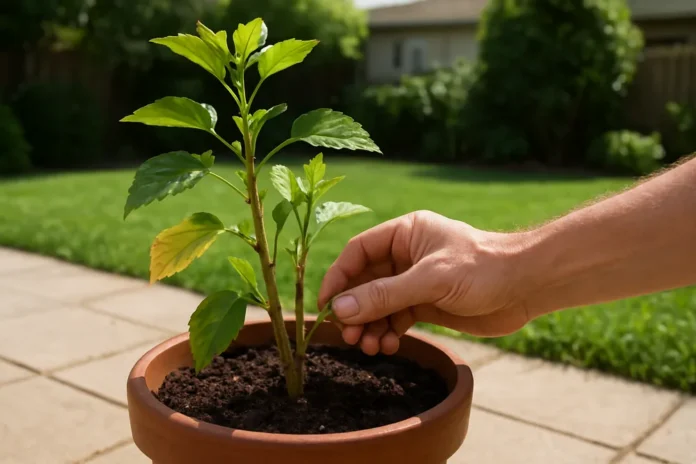
A hibiscus usually stops growing because it is not getting enough sun, warmth, root space, or balanced moisture. Slow growth can also come from poor soil, nutrient problems, transplant stress, pests, or seasonal dormancy.
When a hibiscus not growing sits in the same spot for weeks, it can be frustrating because these plants are usually eager, fast growers in warm weather. Whether you are growing tropical hibiscus in a patio pot or hardy hibiscus in the ground, stalled growth is a sign that one or more basic needs are not being met.
In my experience, hibiscus rarely quits for just one mysterious reason. More often, growth slows because of a mix of issues like too little sun, cool nights, uneven watering, tired potting soil, or roots that have simply run out of room. The good news is that once you find the bottleneck, hibiscus growth problems are often very fixable.
What Normal Hibiscus Growth Should Look Like
Before assuming something is wrong, it helps to know how hibiscus behaves. Tropical hibiscus grows most actively in warm, bright conditions from spring through summer. Hardy hibiscus emerges later than many perennials and may look slow early in the season, especially in cooler regions. A healthy plant should eventually put out fresh leaves, extend stems, and form buds during its active period.
If your plant is holding its size, producing tiny new leaves, or dropping older foliage without replacing it, that points to stress rather than a naturally slow phase. Growth can also pause after repotting, after being moved outdoors, or when weather swings sharply.
- Tropical hibiscus prefers long stretches of warm weather and bright direct sun.
- Hardy hibiscus often wakes up late in spring and should not be written off too early.
- Potted plants usually show stress faster than in-ground plants because roots, water, and nutrients are more limited.
- New growth matters more than old leaves when judging recovery.
Too Little Sunlight Is One of the Most Common Causes
Hibiscus is a sun-loving plant. If it is tucked onto a shaded porch, planted near a fence, or blocked by trees for most of the day, it may stay alive but barely grow. A hibiscus can tolerate partial sun, but it usually performs best with at least 6 hours of direct light, and many tropical types prefer even more.
Low light often causes lanky stems, long gaps between leaves, fewer buds, and pale or undersized foliage. The plant is essentially trying to survive instead of pushing vigorous growth. Indoors, this problem is especially common because window light is often much weaker than gardeners expect.
When I am diagnosing a slow hibiscus, I look first at the newest stems. If they are stretching thin toward the brightest side of the plant, I treat that as a light problem before I change fertilizer or watering.
- Move container hibiscus gradually into a brighter location to avoid sun scorch.
- Trim back nearby plants that are casting heavy shade.
- Use the sunniest south- or west-facing exposure available for potted tropical hibiscus.
- If growing indoors, supplement with a strong grow light rather than relying on a dim room.
Cool Temperatures Can Stall Growth Fast
Hibiscus loves warmth. Tropical types especially slow down when daytime temperatures are mild and nights dip too low. They may hold leaves and look decent, but they will not grow much until the plant feels consistently warm. If nights are regularly below about 55°F, growth often becomes sluggish.
Hardy hibiscus can handle winter cold once established, but even it wants warm soil to really get moving. In spring, gardeners often worry that the plant is failing when it is simply waiting for heat. That delay is normal, especially after a cool, wet start to the season.
- Tropical hibiscus slows sharply in cool nights and chilly wind.
- Cold snaps after spring planting can set growth back for weeks.
- Hardy hibiscus may not show strong top growth until late spring or early summer.
- Container plants on exposed patios often experience more temperature stress than those near a warm wall.
Watering Mistakes Can Lead to Stalled, Weak Growth
Both underwatering and overwatering can make a hibiscus stop growing. When the soil gets bone dry too often, the plant conserves energy, drops buds, and stops pushing fresh stems. When the soil stays soggy, roots cannot breathe well, and the plant often responds with yellowing leaves, limp growth, and a general lack of vigor.
This is especially tricky in containers. A large pot with dense mix may stay wet much longer than the surface suggests, while a root-packed pot in midsummer can dry out by the next afternoon. Hibiscus likes evenly moist soil, not a cycle of drought followed by drenching.
- Dry, crispy edges and wilted leaves often point to missed watering or rapid drying.
- Yellow leaves, mushy roots, and sour-smelling soil suggest overwatering or poor drainage.
- Plants in black nursery pots heat up and dry out faster in full sun.
- Saucer water left under pots can keep roots too wet.
I prefer to judge hibiscus watering by the root zone, not the top inch alone. If the pot feels heavy for days and the plant still looks dull, I suspect drainage trouble more than thirst.
Poor Drainage and Root Problems Can Shut the Plant Down
If a hibiscus is planted in compacted clay or sitting in a container without good drainage, roots can struggle even when the foliage does not look terrible at first. Roots need moisture, but they also need oxygen. Waterlogged soil leads to weak roots, root rot, and slow or nonexistent top growth.
At the other extreme, rootbound hibiscus often slows because there is very little fresh soil left to hold water and nutrients. The plant may dry out quickly, produce smaller leaves, and stop gaining size. If roots circle densely around the pot or push through drainage holes, it has likely outgrown its container.
- Compacted garden soil can act like a bowl and trap excess moisture around roots.
- A badly rootbound plant may need repotting even if the top still looks green.
- Brown, mushy roots indicate rot, while firm pale roots are healthier.
- Fresh, well-draining potting mix supports stronger regrowth than tired, broken-down mix.
Nutrient Issues Can Hold Back Leaves, Stems, and Flowers
Hibiscus is a fairly hungry plant during active growth, especially in containers where nutrients wash out quickly. If it has been in the same soil for a long time without feeding, the plant may simply lack what it needs to build new stems and leaves. Nitrogen shortage often shows up as pale older leaves and slow leafy growth, while broader nutrient imbalances can cause weak performance overall.
That said, more fertilizer is not always better. Heavy feeding with the wrong product can burn roots, push soft weak growth, or create a nutrient imbalance that makes the plant stall in a different way. A balanced fertilizer program during active growth works better than random strong doses.
- Pale foliage and minimal new growth can point to low fertility.
- Too much fertilizer can scorch roots and damage leaf edges.
- Container hibiscus usually needs more regular feeding than in-ground plants.
- Very alkaline soil can limit nutrient uptake even when fertilizer is present.
If new leaves are yellowing while veins stay greener, especially in high-pH soils, iron or micronutrient availability may be part of the problem. In that case, adding more general fertilizer may not solve much until the soil chemistry is addressed.
Soil Quality and pH Affect How Well Hibiscus Can Use Water and Nutrients
Healthy hibiscus roots want loose, fertile soil that drains well but does not dry instantly. Poor soil structure can make every other care issue worse. Sandy soil may drain so quickly that the plant stays stressed, while dense clay can stay wet too long and limit root spread.
Hibiscus also tends to perform best in slightly acidic to neutral soil. If the soil is too alkaline, nutrient uptake can drop even if you are watering and feeding correctly. This is one reason gardeners sometimes see a hibiscus sit still despite otherwise decent care.
- Amending heavy soil with compost can improve structure over time.
- A quality potting mix usually outperforms bagged topsoil in containers.
- Mulch helps stabilize soil moisture and temperature around in-ground hibiscus.
- If chlorosis keeps returning, a soil test is often more useful than guessing.
Pests Can Quietly Sap Energy From New Growth
A hibiscus does not need to be covered in obvious insects to stop growing. Spider mites, aphids, whiteflies, and scale can all drain plant energy, especially on stressed or indoor plants. These pests often target tender growth first, which is exactly where you want the plant investing energy.
Look for sticky residue, speckled leaves, fine webbing, distorted new growth, or clusters of tiny insects under leaves and along stems. A plant under pest pressure may not die quickly, but it often stays stalled and unproductive.
Spider mites are one of the easiest hibiscus problems to miss early. If the leaves look dusty or faintly stippled and growth has slowed for no clear reason, I always inspect the undersides before assuming the issue is fertilizer.
- Aphids gather on soft tips and buds.
- Spider mites thrive in hot, dry conditions and are common indoors.
- Whiteflies flutter up when the plant is disturbed.
- Scale can look like small bumps on stems rather than moving insects.
Transplant Stress, Pruning Mistakes, and Recent Moves Can Pause Growth
If your hibiscus was recently repotted, planted out, brought indoors, or moved from shade to sun, some slowdown is normal. The plant has to adjust its roots and leaves to a new environment, and that takes energy. During that transition, growth may pause even if the eventual location is better.
Pruning can also affect timing. A thoughtful trim usually encourages branching, but heavy pruning at the wrong time can temporarily reduce the plant's ability to photosynthesize and rebound. If too much top growth is removed while the plant is already stressed, recovery can be slow.
- Recently repotted plants often spend time rebuilding roots before top growth resumes.
- Sudden moves from indoors to full outdoor sun can shock leaves and slow growth.
- Heavy pruning is best done when the plant is healthy and actively growing.
- Repeatedly moving a container plant around the yard creates unnecessary stress.
Seasonal Dormancy or Normal Slowdown May Be the Real Answer
Sometimes a hibiscus is not growing because it is simply out of season. Tropical hibiscus often slows dramatically in fall and winter when light levels drop, even if you keep it indoors. Hardy hibiscus dies back and rests, then re-emerges late. In both cases, expecting midsummer performance year-round leads to unnecessary worry.
This matters because pushing a resting plant with extra water or fertilizer can create secondary problems. When the plant is in a low-growth phase, care should be adjusted to match that slower pace.
How to Narrow Down the Real Cause
The quickest way to solve a stalled hibiscus is to look at the whole pattern instead of one symptom in isolation. Light, temperature, water, roots, and nutrition all interact. A shaded plant in a cool spot with soggy soil will not respond much to fertilizer alone.
- Check whether the plant is in active growing season for your hibiscus type.
- Count actual hours of direct sun rather than estimating.
- Inspect soil moisture deeper in the pot or root zone, not just at the surface.
- Examine the pot for crowding roots or poor drainage.
- Look closely under leaves and on stem tips for pests.
- Review what has changed recently, including repotting, moving, pruning, or temperature swings.
Once you identify the most likely limiting factor, make one or two corrections and then judge success by fresh new growth. Old damaged leaves may not improve much, but a recovering hibiscus should start producing healthier tips.
What Helps Hibiscus Start Growing Again
To get a hibiscus moving again, focus on basics rather than quick fixes. Give it stronger sun, warmer conditions, evenly moist but well-drained soil, and a sensible feeding routine during active growth. If roots are crowded or unhealthy, correcting the root environment usually matters more than anything you spray on the foliage.
- Provide at least 6 hours of direct sun, with more for tropical types if possible.
- Keep tropical hibiscus warm and protect it from chilly nights.
- Water thoroughly, then let excess drain away instead of keeping soil constantly soaked.
- Repot rootbound plants into a slightly larger container with fresh potting mix.
- Feed regularly but moderately during active growth.
- Treat pests promptly before they weaken new stems and buds.
Be patient after making changes. Hibiscus often needs a couple of weeks of stable conditions before it responds with stronger growth. I have found that consistency is what turns a stalled plant around, not constant tinkering.
FAQ
Will a Hibiscus Recover After Not Growing for Months?
Yes, if the roots are still healthy and the plant is in the right season to grow. Recovery is most likely when you correct the main issue, such as low light, cold temperatures, poor drainage, or a rootbound pot.
Does Hibiscus Grow Better in Pots or in the Ground?
Either can work well. In the ground, hibiscus usually has more stable moisture and root room. In pots, growth can be excellent too, but watering, feeding, and repotting need closer attention.
Why Does My Hibiscus Have Leaves but No New Stems?
That often points to insufficient light, cool weather, root stress, or a plant that is conserving energy after a recent move or repotting. It can also happen during seasonal slowdown.
Should I Fertilize a Hibiscus That Is Not Growing?
Only if low fertility is the likely cause and the plant is in active growth. Fertilizing a stressed, cold, waterlogged, or dormant hibiscus can make problems worse instead of better.
How Do I Know if My Hibiscus Is Rootbound?
Check for roots circling heavily inside the pot, roots emerging from drainage holes, very fast drying, and smaller-than-normal new leaves. A rootbound hibiscus often stalls even when watered regularly.
Can Indoor Hibiscus Stop Growing Because of Low Humidity?
Low humidity alone is not usually the only cause, but it can add stress, especially when combined with poor light and spider mites. Indoor tropical hibiscus often struggles most when several conditions are less than ideal.
Is It Normal for Hardy Hibiscus to Be Slow in Spring?
Yes. Hardy hibiscus is famously late to emerge and may look inactive while other plants are already growing. Give it time until the weather and soil are consistently warm.
Need the right fertilizer, potting mix, or pest treatment for a stalled hibiscus? Check our recommended hibiscus care products and recovery guides to help your plant start growing again.
