

Note: This article contains affiliate links. If you click on these links and make a purchase, I may earn a small commission at no extra cost to you. This helps support my research and content. Read my full affiliate disclosure here.
Growing tomatoes in a planter box changes how you manage soil, water, and pruning. The right planter keeps roots healthy, avoids waterlogging, and makes harvests easier whether you have a balcony, patio, or tiny backyard. This guide looks at seven top planter boxes for tomatoes chosen for their depth, drainage, and ease of use. We shortlisted planter boxes that suit container-grown tomatoes and assessed them on practical gardener-focused criteria like usable soil volume, drainage, durability, and maintenance. Read on to understand which features matter most for setting up a productive tomato planter and which tradeoffs to expect.
Top Picks at a Glance
| Best Overall The best all-around choice for most situations | GREEN MOUNT 56.7" Raised Garden Bed with Trellis and Wheels |  |
| Best Quality Built to a higher standard if you want something more solid | EarthBox Garden Kit (Standard) – Terracotta |  |
| Best Value The sweet spot between price and what you get | LINEX Raised Garden Bed Planter Box with Trellis and Self-Watering Reservoir |  |
| Best Budget The cheapest option that still gets the job done reliably | Lazzmonk 2-Pack 58" Raised Tomato Planter Box with Trellis (Self-Watering) |  |
| Highest Rated A top-rated pick with lots of positive feedback | Trygoal Metal Planter Box with Trellis (Galvanized Steel) |  |
| Most Popular A crowd favorite that many people choose with confidence | SnugNiture Galvanized Oval Raised Garden Bed, 2-Pack (4×2×1 ft) |  |
| Best Seller A high-volume bestseller chosen again and again | Land Guard Galvanized Oval Raised Garden Bed Kit (4×2×1 ft) |  |
GREEN MOUNT 56.7" Raised Garden Bed with Trellis and Wheels

| Capacity | 6.1 gallons |
|---|---|
| Material Type | Metal, Polypropylene (PP) |
| Other Special Features of the Product | Drainage Hole, Self Watering |
| Mounting Type | Floor Standing |
| Indoor Outdoor Usage | Indoor, Outdoor |
This GREEN MOUNT raised garden bed is a compact, vertical planter built to support a single large tomato plant plus a few low-growing companions. It combines a powder-coated metal trellis frame and food-grade polypropylene planting box, giving sturdy support for heavy vines while resisting outdoor wear. The built-in siphon-style self-watering reservoir reduces watering frequency and has drain plugs to avoid waterlogging. Assembly is tool-free and quick, and the included lockable swivel casters make it easy to move the unit for sun or shade. Practical uses are patio or deck tomato growing, small-space container vegetable beds, or an accessible option for balcony gardeners. Watch for limited soil volume compared with ground beds, so plan for concentrated feeding and more frequent fertilizer applications if you want larger yields. The vertical form works well for indeterminate tomatoes but only fits one main stem comfortably, so growers who want multiple big plants will need larger containers or multiples of this unit.
Best for: Gardeners who want a compact, low-maintenance solution for growing a single tomato plant on a patio, deck, or balcony and value easy mobility and built-in support.
Less Ideal for: Vegetable gardeners who plan to grow several large tomato plants or who need deep root volume for oversized varieties should consider larger planters or in-ground beds.
- Integrated metal trellis provides strong support for heavy tomato vines
- Self-watering reservoir with drain plugs reduces watering frequency and helps prevent overwatering
- Tool-free assembly and included connectors speed setup
- Lockable swivel casters make it easy to move for light or weather management
- Made from food-grade polypropylene and powder-coated metal for outdoor durability
- Soil capacity is limited compared with in-ground beds, which can restrict root volume and ultimate plant size
- Designed for one main tomato plant so not ideal if you want multiple large plants in the same box
Verdict: If you want a compact, mobile planter that supports and waters a single tomato plant with minimal fuss, this trellis-equipped raised bed is a smart pick.
EarthBox Garden Kit (Standard) – Terracotta

| Capacity | 3 gallons |
|---|---|
| Included Components | Planter, aeration screen, water fill tube, mulch covers, fertilizer, dolomite, casters |
| Material Type | Plastic |
| Other Special Features | Drainage Hole |
| Indoor Outdoor Usage | Indoor |
The EarthBox Garden Kit is a ready-to-use container system that simplifies growing vegetables like tomatoes by combining a plastic planter, aeration screen, water fill tube, and mulch covers with starter fertilizer and dolomite. It is typically set up with a soilless or prepared mix, filled to the indicated level, and watered through the reservoir tube so roots get moisture from below while the aeration screen prevents compaction. The included fertilizer and dolomite supply initial nutrients and pH buffering, and the casters make it easy to move a heavy, planted box for sun or shelter. For tomato growers this kit reduces watering frequency, helps prevent overwatering, and focuses nutrients near the root zone to improve fruit set. Important limitations are the relatively small soil volume compared with large raised beds and that long-term fertility management still requires adding nutrients after the included pound of fertilizer is used. The rigid plastic construction is durable but not breathable the way wood can be, so root temperature management may require placement in partial shade in hot climates.
Best for: Gardeners seeking a performance‑focused, low‑maintenance container that boosts yield and reduces watering for tomatoes grown on patios, balconies, or small yards.
Less Ideal for: Growers who want very large root volumes for multiple indeterminate tomato plants or who prefer natural materials like wood for aesthetic or thermal reasons.
- Integrated water reservoir and fill tube reduce watering frequency and help prevent overwatering
- Aeration screen limits soil compaction and promotes healthy root growth
- Includes starter fertilizer and dolomite so the kit is ready to plant out of the box
- Casters allow easy repositioning for optimal sun exposure
- Limited soil capacity compared with large raised beds, which can restrict large indeterminate tomato root systems
- Rigid plastic construction can heat up in full sun, potentially stressing roots in hot climates
Verdict: Choose the EarthBox if you want a compact, high‑yielding, low‑maintenance planter that simplifies watering and nutrient delivery for container tomatoes.
LINEX Raised Garden Bed Planter Box with Trellis and Self-Watering Reservoir

| Capacity | 4 gallons |
|---|---|
| Material Type | Metal and reinforced PP |
| Other Special Features of the Product | Drainage Hole, Self Watering |
| Mounting Type | Floor Standing |
| Indoor Outdoor Usage | Indoor, Outdoor |
The LINEX raised garden bed is a narrow, tall planter designed to support vining plants like tomatoes, peas, and peppers while saving ground space. It pairs a metal trellis frame with a plastic planter box that includes a built-in water reservoir and drainage holes, so the planter will wick water to roots for several days between fills and prevent overwatering. Assembly is tool-free and quick, and the trellis sections are detachable so you can expand or reconfigure multiple units to fit a patio rail or balcony. Because it is floor-standing and made from reinforced PP plus alloy-steel trellis, it is weather-resistant and low maintenance. The planter holds a small soil volume, so plants will need more frequent fertilizing and monitoring in hot weather, and the narrow footprint limits large root development and multi-plant spacing. Wheels and included connectors make moving and linking units convenient but expect modest capacity compared with full raised beds.
Best for: Buyers who want a compact, low-maintenance solution for growing tomatoes or other vining vegetables in limited outdoor spaces and who prioritize easy setup and minimal daily watering.
Less Ideal for: Gardeners who need large soil volume for big or multiple plants or those planning to grow heavy-producing indeterminate tomato varieties in ground-equivalent conditions.
- Integrated self-watering reservoir reduces daily watering frequency
- Tall trellis provides sturdy vertical support for climbing vegetables
- Tool-free assembly and modular sections let you expand or reconfigure quickly
- Lightweight, weather-resistant materials suited for balcony or patio use
- Small soil capacity limits plant size and may require more frequent feeding
- Narrow footprint restricts how many plants can be grown in a single unit
Verdict: A space-saving, self-watering trellis planter ideal for growers who want easy setup and low-maintenance vertical tomato production on patios or balconies.
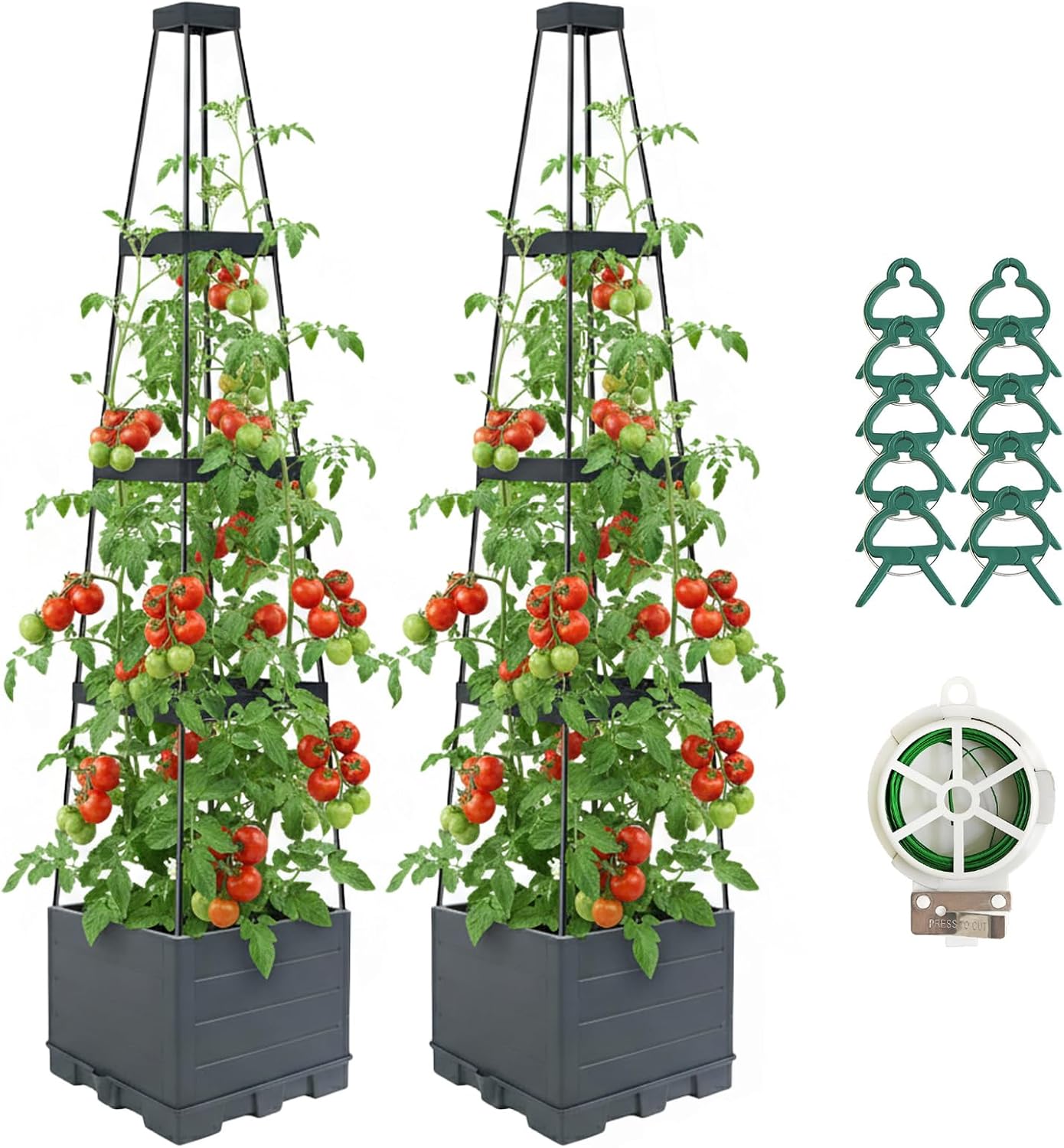
Lazzmonk 2-Pack 58" Raised Tomato Planter Box with Trellis (Self-Watering)
| Capacity | 16 liters |
|---|---|
| Number of Levels | 1 |
| Other Special Features of the Product | Self Watering |
| Material Type | Stainless Steel |
This Lazzmonk two-pack combines narrow raised planter boxes with built-in corner trellises to support tomatoes, cucumbers, and other climbing vegetables in small yards or patios. Each 58-inch planter uses a grid bottom and side fill port to create a siphon-style self-watering reservoir that keeps soil evenly moist for several days while drainage holes prevent waterlogging. The stainless steel core trellis provides vertical support so heavy fruiting branches are less likely to sag or break, and the polypropylene planters are weather-resistant and easy to wipe clean. Assembly is tool-free and straightforward, and the units disassemble for storage. Limitations to know: the capacity is modest so you will need quality potting mix and frequent feeding for heavy-producing tomato varieties, and the triangular/narrow footprint is best for one plant per planter rather than a full multi-plant bed.
Best for: Gardeners on a limited budget who need a space-saving, low-maintenance solution for growing one or two tomato plants on a balcony, patio, or small yard.
Less Ideal for: Growers who want to cultivate multiple large indeterminate tomato plants or build a deep raised bed for extensive soil volume should look for larger planters or bed systems.
- Integrated stainless-steel trellis offers sturdy vertical support for vining plants
- Self-watering reservoir with side fill port reduces daily watering chores
- Tool-free assembly and disassembly for quick setup and compact storage
- Weather-resistant polypropylene construction suitable for outdoor use
- Relatively small soil capacity limits long-term nutrient and water storage for large indeterminate tomato varieties
Verdict: A budget-friendly, space-saving self-watering planter with built-in trellis support that simplifies growing one or two tomato plants on small patios or balconies.
Trygoal Metal Planter Box with Trellis (Galvanized Steel)

| Material Type | Metal |
|---|---|
| Finish Types | Galvanized Steel |
| Mounting Type | Floor Standing |
| Other Special Features of the Product | Weather Resistant |
| Indoor Outdoor Usage | Outdoor |
This Trygoal metal planter box combines a raised planting bed with a built-in geometric trellis, making it a practical choice for growing indeterminate tomatoes and other vining vegetables on a patio or balcony. Constructed from galvanized steel, the freestanding unit is weather resistant and designed to resist rust and corrosion through seasons. The planter includes integrated drainage holes and a removable base to improve root aeration and prevent waterlogging, which helps keep tomato roots healthy in containers. It arrives with pre-drilled holes and step-by-step instructions so assembly is straightforward for one person. The tall trellis provides reliable support for staking or weaving vines and doubles as a visual privacy screen. Limitations to consider are the metal construction can heat up in full sun so placement and soil insulation matter, and the planting volume is fixed so very large tomato varieties will need frequent watering and feeding or supplemental containers for heavier yields.
Best for: Gardeners who prioritize a long-lasting, low-maintenance container for growing vining vegetables like tomatoes and want a tidy, freestanding support integrated into the planter.
Less Ideal for: Those who need very large soil volume for big tomato varieties or gardeners who prefer lightweight or purely decorative planters for indoor use.
- Galvanized steel construction offers strong weather and corrosion resistance for multi-season outdoor use
- Integrated trellis provides sturdy vertical support for climbing tomatoes and vines
- Built-in drainage holes and removable base improve root aeration and reduce risk of waterlogging
- Freestanding floor-mounted design works on patios, balconies, and hard surfaces and doubles as a privacy screen
- Fixed planting volume may require more frequent watering and feeding for heavy-feeding tomato varieties
- Metal sides can conduct heat in hot, sunny locations which may stress roots without insulation or shade
Verdict: Buy this if you want a durable, weather-resistant raised planter that includes built-in trellis support for reliable tomato growing on patios or balconies.
SnugNiture Galvanized Oval Raised Garden Bed, 2-Pack (4×2×1 ft)

| Material Type | Metal |
|---|---|
| Finish Types | Powder Coated |
| Indoor Outdoor Usage | Outdoor |
| Other Special Features of the Product | Drainage Hole |
| Number of Pieces | 2 |
These SnugNiture raised garden beds come as a two-piece kit of oval, powder-coated galvanized steel planters designed to sit directly on soil. They assemble with included stability rods and a protective rubber rim, and the open-bottom frame lets roots extend into native soil for better drainage and nutrient access. At 1 foot deep each, the beds suit shallow-rooted vegetables and herbs and can be placed side-by-side or separated for flexible layouts. The metal construction and powder coating offer corrosion resistance for season-long use, and the built-in drainage hole and bottomless design simplify watering and soil renewal. Expect straightforward, tool-light assembly but plan to add weed barrier fabric if you want to block weeds from the open base. Also, the 12-inch depth limits very deep-rooted crops and the metal sides can warm quickly in full sun, so monitor moisture for tomatoes during heat waves. For gardeners who value durable, space-efficient containers that connect to native soil, these beds are a practical option.
Best for: Gardeners who want low-maintenance, durable raised beds to grow tomatoes, herbs, and shallow-rooted vegetables while keeping a compact, attractive layout and relying on proven product quality.
Less Ideal for: Growers planning large, deep-rooted tomato systems or heavy feeders who need taller beds or planters with contained soil volumes should consider deeper or larger raised beds.
- Open-bottom design lets roots access native soil for improved drainage and nutrient uptake
- Galvanized steel with powder coating resists rust and holds up outdoors
- Two-pack provides flexibility to group or spread beds for multiple crops
- Includes stability rods and protective rubber edging for safer assembly and durability
- One-foot depth is shallow for deep-rooted varieties like indeterminate tomatoes grown in large systems
- Open bottom requires a weed barrier if weeds are a concern
Verdict: Choose this two-pack of galvanized, open-bottom raised beds if you want durable, space-efficient planters that let tomato roots tap native soil for better drainage and growth.
Land Guard Galvanized Oval Raised Garden Bed Kit (4×2×1 ft)

| Material Type | Metal |
|---|---|
| Finish Types | Double-layer galvanized |
| Capacity | 7.14 cubic feet |
| Mounting Type | Floor Standing |
This Land Guard raised garden bed is a simple, durable option for planting vegetables, herbs, or mixed annuals in a compact outdoor space. The kit arrives as flat panels that assemble into an oval planter about 4 by 2 feet and 1 foot deep, and setup is straightforward so you can fill and plant in minutes. Its double-layer galvanized steel construction and wave-shaped panels are intended to resist corrosion and add rigidity, and the manufacturer states thicker panels at stress points to reduce deformation. An open base design lets excess water drain and helps avoid root rot if placed on soil or lawn. Practical benefits include low maintenance, a tidy planted border that keeps soil contained, and a metal finish that lasts longer than untreated steel. Limitations are the shallow depth for deep-rooted crops and the likelihood the metal will warm quickly in hot sun, which may require more frequent watering or shade management. It is best used as a portable, long-lasting planter for raised-bed style container gardening rather than a full replacement for deeper in-ground beds.
Best for: Gardeners who want a quick-to-assemble, durable raised planter to grow vegetables or herbs in small outdoor spaces and who prioritize evidence of longevity over decorative complexity.
Less Ideal for: Growers who need deep soil for large root crops, or those looking for insulated or fully enclosed beds to control soil temperature and moisture long-term.
- Galvanized double-layer steel resists corrosion for multi-season outdoor use
- Oval, interlocking panel design assembles quickly with included tools
- Open base allows natural drainage to reduce standing water and root rot
- Compact footprint fits small patios, balconies, and tight garden beds
- Only 12 inches deep which limits planting of larger, deep-rooted vegetables or shrubs
- Metal surface can heat up in full sun and increase watering needs
Verdict: A tough, easy-to-assemble galvanized oval raised bed that gives small-space gardeners a durable, low-maintenance container for vegetables and herbs.
Choosing the Right Planter Box for Tomatoes: Key Factors to Consider
Soil Depth and Root Volume
Tomatoes develop substantial root systems that need several inches of loose, well-aerated soil to anchor plants and access nutrients. A planter box that advertises depth can still lose usable volume to drainage layers or false bottoms, so consider the effective soil depth after those features are in place.
Shallow containers restrict root growth and lead to faster drying and nutrient depletion. For determinate and compact varieties you can get away with somewhat less depth, but indeterminate and larger tomatoes perform best in boxes that provide generous root volume to support sustained fruiting.
Drainage and Water Management
Good drainage is essential to avoid waterlogged roots and blossom end rot risks tied to uneven moisture. Look for boxes with multiple drainage holes, removable plugs for bottom watering, or integrated overflow channels that prevent standing water.
Consider whether the planter allows for a drainage layer or wick systems and how easy it is to monitor moisture. A design that channels excess water away from the root zone will reduce disease problems and make feeding and watering more predictable.
Material and Weather Resistance
Planter materials dramatically affect lifespan and soil temperature. Wood can insulate roots but may rot without treatment; composite materials resist decay but can retain heat. Metal boxes are durable but can overheat or corrode unless coated.
UV resistance, fastener quality, and how the material handles freeze-thaw cycles all matter if you plan to leave boxes outdoors year-round. Think about whether the material will leach into the soil or need periodic maintenance like sealing or repainting.
Accessibility for Pruning and Harvesting
Tomato care requires regular pruning, tying, and harvesting, so planter configuration should allow comfortable access to stems and fruit. Taller boxes or those with narrow tops can make reaching the center plants difficult, while wide, shallow boxes can improve reachability.
Also consider how staking or cages will attach: a planter that allows you to drive stakes into the ground or securely fix a trellis simplifies training indeterminate varieties. Ease of access reduces damage during routine tasks and speeds up seasonal chores.
Maintenance and Soil Replacement
Container-grown tomatoes need periodic soil renewal and cleaning between seasons to reduce pests and salt buildup. Choose boxes that permit easy soil removal, have smooth interior surfaces for washing, or include removable liners to simplify turn-over.
If fertilizer salts concentrate quickly in a small volume of soil, the ability to flush or replace media without dismantling the whole unit is a big advantage. Consider how fast the box can be emptied and cleaned at season end.
Weight, Portability, and Stability
A full planter box filled with soil is heavy, so decide whether you need a portable solution or a permanent, stable fixture. Lightweight materials and wheels make relocation easier but may reduce overall stability in wind or when plants become top-heavy.
Anchoring options, base width, and whether the box sits directly on the ground or a stand affect both stability and airflow around the container. For rooftop or balcony growers, transferability and load-bearing limits are important safety considerations.
Choosing Depth by Tomato Type
Match planter depth to the growth habit of the tomato variety. Determinate or patio varieties do well in shallower boxes that still provide 8 to 12 inches of usable soil, while indeterminate vines benefit from 14 inches or more of root space to support heavy fruit loads.
If you prefer to grow large-fruited varieties, prioritize boxes with extra soil volume rather than relying on deeper pots alone. More soil moderates temperature swings and stores water and nutrients between feedings.
- Shallow boxes: good for small, determinate plants and tight spaces
- Deeper boxes: better for indeterminate and heavy-fruiting varieties
- Measure usable depth after any liners or drainage layers are added
Managing Watering in Planter Boxes
Establish a consistent watering routine and use features like built-in reservoirs or wicking trays to reduce daily watering needs. Containers dry out faster than in-ground beds, especially in hot weather, so look for designs that make bottom watering or reservoir access simple.
Mulching the surface and using soil mixes with good water-holding capacity will extend the time between waterings and stabilize moisture for developing fruit.
- Mulch to slow evaporation
- Consider bottom-watering options for even moisture
- Ensure overflow prevents standing water
Supporting Plants: Stakes, Cages, and Trellises
Planter boxes should accommodate whatever support system you prefer. A deep, wide box offers space for multiple sturdy stakes or an internal trellis. Some designs include built-in trellis attachments or reinforced corners to accept pole fastenings.
Think about how and where you will secure supports before planting. Attaching supports to the planter is often easier than forcing them through potting mix after the plant is established.
- Use durable stakes for indeterminate varieties
- Pre-drill attachment points if needed
- Ensure supports do not obstruct access for pruning
Soil Mix and Fertility Strategy
A lighter, well-draining soil mix with ample organic matter is best for tomatoes in containers. Potting mixes designed for vegetables hold nutrients and drain quickly compared with garden soil, which can compact in a box.
Fertilize on a schedule appropriate for container tomatoes. Slow-release granules or regular liquid feeding both work; the key is maintaining consistent nutrition because the limited soil volume can exhaust quickly during peak fruiting.
- Choose mixes labeled for vegetables
- Blend in compost for long-term fertility
- Monitor salt buildup and flush if necessary
Placement and Sun Exposure
Tomatoes need full sun for best fruit production, so position planter boxes where they receive at least six to eight hours of direct sunlight. Consider how shadows from buildings or trees move across your space during the day.
Also account for airflow: good air movement reduces disease pressure and helps flowers set. Avoid placing planters in completely enclosed corners where humidity can stay high.
- Aim for morning sun on fruits to dry dew
- Avoid areas with stagnant air
- Rotate containers periodically when possible
How We Chose the Best Planter Box for Tomatoes
We focused on attributes that matter to gardeners growing tomatoes in containers rather than decorative planters. Key criteria included usable soil depth and root volume, because tomatoes need enough soil to develop strong root systems and support fruiting. We also evaluated drainage design and overflow control to reduce root rot risk in frequent-watering tomato cultures. Durability and material suitability were counted heavily, with attention to rot resistance, UV stability, and whether materials tolerate repeated wet-dry cycles. Ease of planting and maintenance was another filter: boxes that allow easy access for staking, pruning, and harvesting scored higher. Portability and weight were considered for gardeners who might move containers seasonally or need to winterize them. We excluded purely decorative or very shallow containers that cannot hold recommended soil depth for tomato varieties. Smaller seedling trays and vertical systems were omitted unless they provided comparable soil volume and drainage. The final list balances practical growing needs with accessibility and longevity for everyday garden use.
FAQ
How deep should a planter box be for healthy tomatoes?
Depth depends on variety. Many determinate varieties do fine in 8 to 12 inches of usable soil, while indeterminate tomatoes benefit from 14 inches or more. Always measure effective depth after liners or drainage layers are added.
Can I grow tomatoes in a small planter box on a balcony?
Yes, compact or patio tomato varieties can thrive in smaller boxes if they get enough sun and consistent watering. Choose boxes with good drainage and consider using self-watering or reservoir-equipped designs to reduce daily attention.
What is the best way to water tomatoes in planter boxes?
Water deeply and consistently to keep moisture even. Bottom-watering or using a reservoir reduces surface drying. Mulch the soil surface and monitor moisture by hand or with a probe to avoid both drought stress and overwatering.
Do planter boxes need liners or pots inside them?
Liners can prolong the life of wooden boxes and make soil changes easier, but they reduce usable soil volume. Use breathable liners that allow drainage or choose designs with removable panels to balance longevity and root volume.
How often should I replace potting mix in a tomato planter box?
Replace or refresh the top portion of the mix every season and consider a full replacement every one to three years depending on pest, disease, and salt buildup. Replenishing organic matter and nutrients annually supports productive container crops.
Will a metal planter box make tomatoes too hot?
Metal can heat more than wood or composite, potentially stressing roots on very hot days. Use insulation, shade the container base, or choose a lighter-colored metal finish to moderate temperature. Monitor soil moisture more closely with metal containers.
Final Verdict
Choose a planter box that provides adequate soil depth for the tomato types you want to grow and prioritize reliable drainage to prevent root problems. Balance material durability with heat behavior and maintenance needs so the box stays productive season after season. Focus on usable soil volume, access for staking and pruning, and whether the box suits your site conditions. When you match those priorities to your growing space and variety, you can confidently select a planter box that supports healthy, productive tomato plants.
