

Note: This article contains affiliate links. If you click on these links and make a purchase, I may earn a small commission at no extra cost to you. This helps support my research and content. Read my full affiliate disclosure here.
Picking the right planter for houseplants matters more than many indoor gardeners realize. The wrong pot can stunt growth, cause root rot, or make routine watering and repotting harder. This guide focuses specifically on planters for houseplants and walks you through well-chosen options that suit common indoor situations such as low-light corners, limited floor space, and decorative shelving. Each shortlisted planter below was chosen for real indoor-garden performance. We evaluated drainage, material, and size options so you can match a pot to a specific plant and care style. Read on for the decision factors we used and concise guidance to help you pick the best planter for your houseplants.
Top Picks at a Glance
| Best Overall The best all-around choice for most situations | Fielda 8/10/12 Inch Self-Watering Planter Set (3‑Pack) |  |
| Best Quality Built to a higher standard if you want something more solid | Gepege 10-Inch Ceramic Plant Pot with Drainage and Saucer |  |
| Best Value The sweet spot between price and what you get | Gepege 6-Inch Ceramic Plant Pots with Drainage and Saucers (Set of 2) |  |
| Best Budget The cheapest option that still gets the job done reliably | WSMKSZ 4-inch Self-Watering Plant Pots, 6-Pack |  |
| Highest Rated A top-rated pick with lots of positive feedback | Xiaan Jiaju Cottagecore Ceramic 6" Planter with Drainage |  |
| Most Popular A crowd favorite that many people choose with confidence | Utopia Home Indoor Plant Pots with Drainage, 5‑Pack |  |
| Best Seller A high-volume bestseller chosen again and again | Bluepro Clear Nursery Pots 36-Pack (3.5, 4, 5, 7 in) with Drainage Holes |  |
Fielda 8/10/12 Inch Self-Watering Planter Set (3‑Pack)

| Included Components | Tray, Saucer |
|---|---|
| Unit Count | 3 Count |
| Material Type | Plastic |
| Other Special Features of the Product | Breathable, Drainage Hole, Lightweight, Self Watering |
| Indoor Outdoor Usage | Indoor, Outdoor |
These Fielda planters are a practical, no-fuss solution for everyday houseplants. The set includes 8, 10 and 12 inch pots that use a bottom reservoir and cotton wick to feed roots evenly, while a clear water-level window shows when to refill. Each pot has drainage holes plus a removable saucer so you can manage excess water and protect surfaces. Made from thick, high-temperature-resistant plastic, the pots are lightweight yet sturdy for balconies, living rooms, or covered patios and resist fading or cracking in normal outdoor conditions. The design reduces how often you need to water—useful for busy people or short trips—though the self-watering reservoir reduces usable planting depth compared with a plain pot, so you should check nursery-pot fit if you plan to transplant larger root balls. Overall the planters simplify routine care, promote healthy roots with improved aeration, and come with the practical extras you expect from a versatile houseplant set.
Best for: Buyers who want low-maintenance, reliable planters that cut down on frequent watering and work across living rooms, balconies, and patios while still looking neat.
Less Ideal for: Growers who need maximum soil depth for large, deep-rooted specimens or those who prefer traditional single-compartment pots for custom soil mixes.
- Integrated self-watering reservoir with cotton wick and visible water-level window for easy monitoring
- Drainage holes and removable saucer protect surfaces and promote healthy root drainage
- Thick, heat-resistant plastic construction designed to resist cracking and fading outdoors
- Lightweight set of three sizes that works across indoor and covered outdoor locations
- Reservoir reduces usable planting depth compared with standard pots so larger root balls may not fit
Verdict: Choose this set if you want an easy-care trio of durable self-watering planters that keep houseplants hydrated with minimal fuss.
Gepege 10-Inch Ceramic Plant Pot with Drainage and Saucer

| Material Type | Ceramic |
|---|---|
| Other Special Features of the Product | Drainage Hole, Durable, Rust Resistant |
| Included Components | Mesh, Saucer |
| Finish Types | Matte |
| Indoor Outdoor Usage | Indoor |
This 10-inch Gepege ceramic pot is built for indoor houseplants that need reliable drainage and a finished look. It has a built-in drainage hole plus a mesh pad that prevents soil from washing out while allowing excess water to escape into the included saucer. The matte ceramic construction feels sturdy and steady, so it works well on tabletops, windowsills, and floors without tipping. Typical use is for orchids, succulents, cacti, and medium houseplants where you want to avoid root rot from overwatering and keep surfaces clean. The removable saucer offers two placement options for display and water management. The main limitations are the indoor-only recommendation and the weight of ceramic when moving pots or repotting, which can be cumbersome with larger plants. If you want a durable, attractive planter that prioritizes proper drainage and a tidy appearance, this performs consistently for everyday houseplant care.
Best for: Plant owners who prioritize consistent drainage and healthy roots and who want an attractive, low-fuss pot for indoor houseplants.
Less Ideal for: People who need lightweight, portable containers for frequent rearranging or who plan to keep plants outdoors where ceramic may be exposed to the elements.
- Built-in drainage hole plus mesh pad prevents soil loss while allowing excess water to escape
- Included removable saucer lets you manage runoff and keeps surfaces clean
- Sturdy ceramic construction and matte finish provide stable support and a refined look
- Designed for common indoor plant types such as succulents, cacti, and orchids
- Ceramic material makes the pot relatively heavy and less convenient to move when filled
- Labeled for indoor use only, limiting outdoor placement or exposure to weather
Verdict: Choose this pot when you want a sturdy, attractive indoor planter that prioritizes reliable drainage and a clean display.
Gepege 6-Inch Ceramic Plant Pots with Drainage and Saucers (Set of 2)

| Material Type | Ceramic |
|---|---|
| Finish Types | Glazed |
| Included Components | Mesh, Saucer, Tray |
| Indoor Outdoor Usage | Indoor, Outdoor |
| Unit Count | 2 Count |
These Gepege ceramic pots are a straightforward, no-frills option for houseplants that need reliable drainage and an attractive finish. Each set includes two glazed ceramic pots, matching saucers that can be placed in two configurations, and mesh pads to keep soil from washing out of the drain hole. In practice the large drainage holes plus the saucer make it easy to water freely without worrying about standing water on furniture, and the mesh pads help contain soil and speed up repotting. The retro rounded shape and neutral glaze work on tabletops, windowsills, or small floor groupings. Because they are ceramic they feel sturdy and upscale but are heavier and more fragile than plastic, so handle carefully and avoid freezing temperatures outdoors. These pots are best for small to medium houseplants such as succulents, orchids, and compact foliage where fitting a 5-inch inner pot is desired.
Best for: Buyers who prioritize practical, attractive planters that make watering and cleanup easier and who prefer durable-looking ceramic on indoor displays.
Less Ideal for: People who need ultra-lightweight or unbreakable planters for travel, child- or pet-proof areas, or those who grow very large plants that need bigger containers.
- Built-in drainage holes with saucers let you water freely without damaging surfaces
- Glazed ceramic finish looks attractive on tabletops and windowsills
- Includes mesh pads to prevent soil loss and simplify repotting
- Two saucer placement options add flexibility for display or drainage
- Ceramic construction is heavy and can crack if dropped or left outside in freezing conditions
- Size fits smaller pots only, limiting use to small and medium houseplants
Verdict: A practical glazed ceramic two-pack that simplifies watering and keeps tabletops clean while presenting houseplants attractively.
WSMKSZ 4-inch Self-Watering Plant Pots, 6-Pack

| Capacity | 0.82 liters |
|---|---|
| Unit Count | 6 Count |
| Material Type | Plastic |
| Other Special Features of the Product | Drainage Hole, Lightweight, Self Watering |
| Indoor Outdoor Usage | Indoor, Outdoor |
These WSMKSZ 4-inch self-watering pots are a practical set for small houseplants and seedlings. Each pot uses a wick rope to draw water from a bottom reservoir, so you can leave windowsills or shelves unattended for longer without overwatering. The set includes detachable saucers and built-in drainage that direct excess water into the tray, which helps protect roots from waterlogging while keeping surfaces cleaner. Made from matte-finish PP plastic, the pots are lightweight, durable, and sun-resistant, making them easy to move or rearrange for displays around the home. They work well for succulents, cacti, herbs and other small houseplants, and the simple design is easy to personalize with paint or labels. Limitations to note are the small 4-inch capacity, which means frequent repotting as plants grow, and the plastic construction may not appeal to buyers wanting ceramic or premium finishes. Also the self-watering system is best suited to plants that tolerate consistent moisture rather than those requiring very dry cycles.
Best for: Buyers who want an affordable, low-maintenance solution for small indoor plants and seedlings and prefer practical multiples for windowsills, desks, or kitchen counters.
Less Ideal for: People seeking large containers, decorative ceramic planters, or growers who need very dry soil cycles for sensitive species.
- Self-watering wick and reservoir reduce frequent watering needs
- Detachable saucers and drainage reduce mess and protect surfaces
- Lightweight, durable PP plastic that resists sun damage
- Pack of six provides immediate multiples for grouping or propagation
- Small 0.82 L capacity requires repotting as plants mature
- Plastic finish is basic compared with ceramic or decorative options
Verdict: A budget-friendly six-pack of small self-watering pots that makes caring for multiple houseplants easier and more forgiving.
Xiaan Jiaju Cottagecore Ceramic 6" Planter with Drainage

| Material Type | Ceramic |
|---|---|
| Mounting Type | Tabletop |
| Other Special Features of the Product | with Drainage Hole, Crackle Glaze Finish |
| Indoor Outdoor Usage | Indoor |
| Size | 6 Inch |
This 6 inch ceramic planter is built for everyday indoor plant care with a vintage cottage look. It has a functional drainage hole so you can pot succulents, small houseplants or herbs and water without worrying about root rot, and the crackle glaze gives a decorative, lived-in finish that works well on windowsills and tabletops. Typical use is potting a small specimen into a saucer or placing it on a nonporous tray to catch drainage; the tabletop mounting and compact footprint make it easy to group multiples for a cohesive display. Practical benefits include durable ceramic construction that holds soil and moisture steadily and a classic aesthetic that masks light wear. Limitations are its small 6 inch size, which restricts it to smaller plants and short-term growth before repotting, and ceramic can chip if handled roughly. For reliability-minded plant owners it performs predictably as a daily-use indoor planter so long as you match it to appropriately sized plants.
Best for: Buyers who prioritize a dependable, easy-to-care-for planter for small houseplants and want a classic, low-fuss decorative pot for daily indoor use.
Less Ideal for: Gardeners who need large containers for fast-growing or root-heavy plants or who want lightweight, unbreakable materials for outdoor or high-traffic areas.
- Built-in drainage hole reduces risk of overwatering and root rot
- Durable ceramic body provides steady support and a stable base for small plants
- Crackle glaze finish offers attractive vintage styling that hides minor wear
- Compact tabletop shape makes it easy to group or place on windowsills
- 6 inch size limits use to small plants and requires repotting as plants grow
- Ceramic is breakable and can chip if dropped or knocked over
Verdict: A reliable, decorative 6 inch ceramic planter that makes everyday indoor plant care easier thanks to its drainage and sturdy construction.
Utopia Home Indoor Plant Pots with Drainage, 5‑Pack

| Material Type | Plastic |
|---|---|
| Included Components | Saucers Tray |
| Unit Count | 5 Count |
| Other Special Features of the Product | Frost Resistant, Lightweight, Portable, Rot Resistant, Rust Resistant |
| Mounting Type | Tabletop |
These Utopia Home planters are a practical, budget-friendly set for growing or displaying houseplants. The five pots come in graduated sizes and include saucers and drainage plugs, which makes them useful for seedlings, small tropicals, succulents, and decorative grouping on shelves or windowsills. Made from reinforced polypropylene, the pots are lightweight, frost and rot resistant and easy to move for repositioning or seasonal changes. The polished finish and simple round shape keep the look minimal so plants remain the focal point. The drainage system and removable plugs help prevent overwatering and are convenient for indoor use where excess water needs to be controlled. Limitations are typical of plastic planters: they offer less insulation than ceramic for root temperature stability and will show scratches over time. Also the listed sizes are small to medium so larger houseplants will quickly outgrow the set. For everyday indoor potting and propagating, these are dependable and low‑maintenance containers.
Best for: Buyers who want an affordable, low‑maintenance set for indoor houseplants, propagation, or creating a coordinated display across shelves and windowsills.
Less Ideal for: Gardeners needing large pots for mature plants or those who prefer heavy, decorative materials like ceramic or clay for temperature stability and long-term display.
- Includes five graduated pot sizes with matching saucers for tidy indoor watering
- Drainage plugs and a design that helps prevent overwatering
- Lightweight, reinforced PP plastic that is frost, rot and rust resistant
- Minimal polished finish that fits varied home decor and is easy to clean
- Plastic provides less thermal insulation for roots compared with ceramic or terracotta
- Small to medium sizes limit use to seedlings, small houseplants and pots that will need repotting sooner
Verdict: A practical, easy-care five‑pack of indoor plastic planters that makes watering and staging small houseplants simple and low risk.
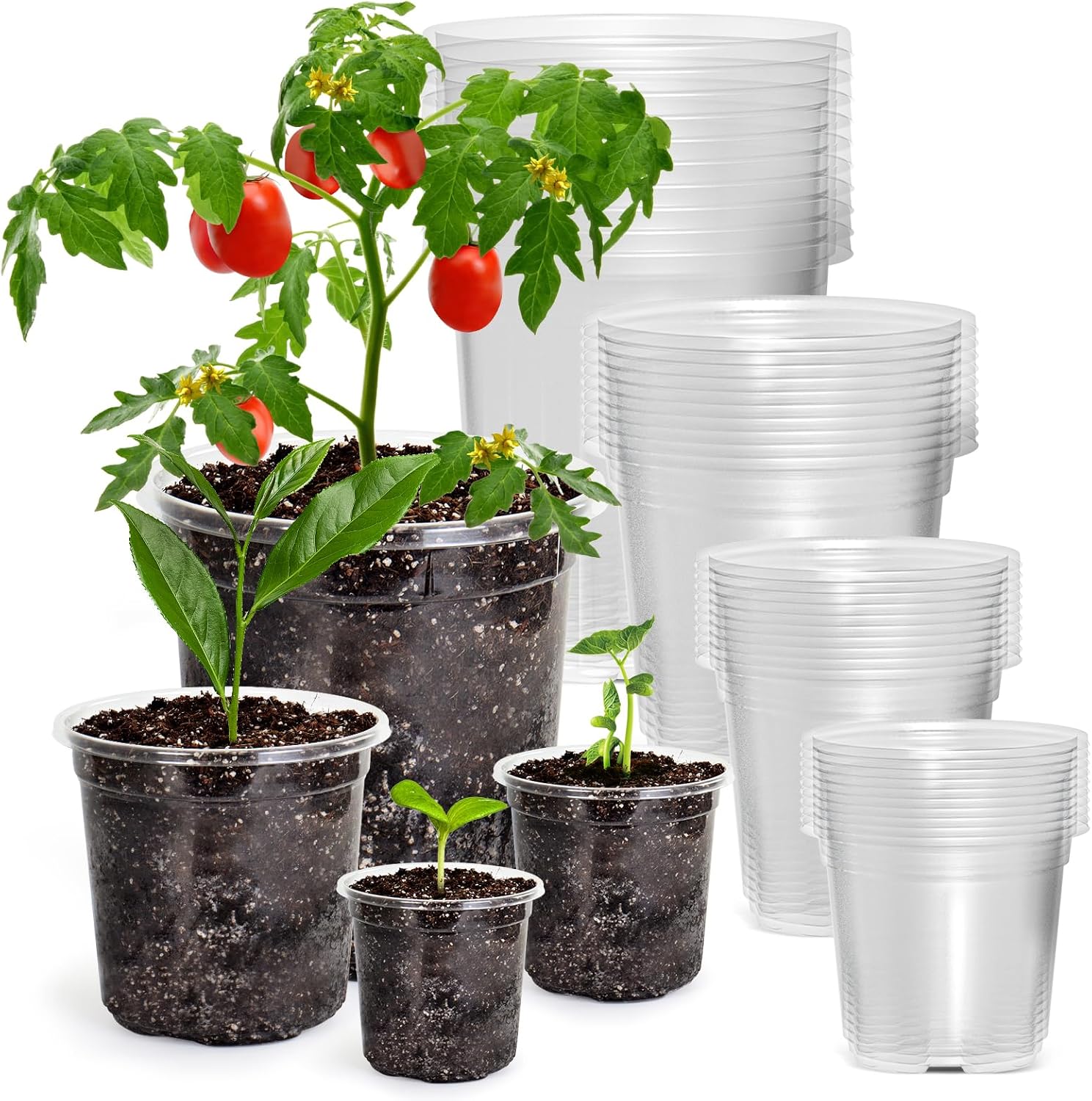
Bluepro Clear Nursery Pots 36-Pack (3.5, 4, 5, 7 in) with Drainage Holes
| Unit Count | 36 Count |
|---|---|
| Material Type | PET |
| Drainage Hole | Yes |
| Indoor Outdoor Usage | Indoor |
These Bluepro clear nursery pots are a practical starter kit for indoor houseplant care, propagation, and seed starting. The set includes nine pots each of 3.5, 4, 5 and 7 inch sizes so you can match pot size to cuttings, seedlings, or young houseplants without hunting for individual pots. Transparent PET construction makes it easy to monitor root development and soil moisture without disturbing plants, and the molded drainage openings help prevent overwatering when used with a tray or saucer. The plastic is flexible enough to ease transplanting by gently flexing the pot to release root balls, and because the material is lightweight and reusable these pots are convenient to store and move around. Limitations are that the set does not include saucers or humidity domes and the clear plastic shows soil stains over time, so plan to use trays for drainage and occasional cleaning if you want them to look tidy on display.
Best for: Buyers who want a low-risk, ready-to-use kit for propagating and raising indoor plants and who prioritize visible root monitoring and straightforward, no-fuss care.
Less Ideal for: Those wanting finished decorative pots for long-term display or outdoor heavy-duty containers should consider decorative planters or heavier materials instead.
- Assortment of four common nursery sizes suitable for seedlings through young houseplants
- Clear PET walls let you observe roots and soil moisture without disturbing plants
- Molded drainage holes reduce risk of waterlogged soil when paired with a tray
- Flexible, reusable plastic that eases transplanting and storage
- No saucers or humidity domes included so you must provide trays for drainage
- Clear plastic will show soil and water marks and may need regular cleaning
Verdict: A versatile, low-effort starter kit for indoor propagation and young houseplants that makes root and moisture monitoring simple.
Choosing the Right Planter for Houseplants: Key Factors to Consider
Drainage and Water Management
Proper drainage prevents waterlogged soil and root rot. For houseplants, look for pots with built-in drain holes or planters designed to be used with inner nursery pots that allow excess water to escape. A clear overflow path and a saucer or reservoir can protect furniture while letting roots dry between waterings.
Water management affects how often you need to water, how much potting mix you should use, and whether you can safely use moisture-retentive soils. For plants that prefer drier conditions, choose a pot that promotes quick drainage. For moisture-loving plants, a pot with a removable reservoir or a deep well can keep humidity near the roots without saturating the crown.
Pot Material and Longevity
Material affects weight, insulation, and how the pot ages indoors. Terracotta breathes and helps soil dry but can crack in cold or if left wet for long periods. Ceramic glazes are attractive and easy to wipe clean, but chips can expose the base material. Lightweight plastics are forgiving in small spaces and reduce breakage risks, but lower-quality plastics can warp or discolor.
Consider how the material interacts with indoor light and temperature swings. Heavy materials like stone or thick ceramics stabilize top-heavy plants, while lighter materials simplify moving pots for grooming and seasonal rearrangements. Also evaluate whether the material can tolerate routine scrubbing and repotting without degrading.
Size Options and Root Space
Choosing the right size is about giving roots enough room without creating excessive soil volume that stays wet. A planter should match your plant's current root ball with a bit of room for growth. Deep pots suit plants with long taproots or bulbs, while wider, shallower pots are better for trailing or surface-rooting species.
Also consider scalability: smaller pots are easier to group on shelves, while larger pots provide stability for tall plants. If you plan to repot periodically, look for planters with sizes that correspond to standard nursery pot increments so you can move plants up one or two sizes as they grow.
Ease of Cleaning and Maintenance
Indoor planters need occasional cleaning to remove salts, algae, and pest residues. Smooth glazes and nonporous plastics are easiest to wipe down. Designs with narrow bases or integrated trays can make thorough cleaning difficult and harbor pests. Removable inner pots or liners simplify root inspection and repotting tasks.
Think about how often you will access the plant for pruning, fertilizing, or checking soil moisture. Choose pots that allow you to lift or slide the plant without damaging surfaces. For renters or those who rearrange often, lightweight, easy-clean planters reduce time spent on maintenance.
Aesthetics and Indoor Compatibility
A planter is part of room decor as much as a horticultural tool. Finish, color, and shape should complement your space while remaining practical for the plant's needs. Matte and textured finishes hide dirt but can be harder to clean; glossy surfaces show water marks but wipe clean quickly.
Also consider stability and tipping risk. Narrow-based decorative pots can look elegant but may not support top-heavy plants. If you keep plants near windows or in high-traffic areas, choose shapes and finishes that balance looks with durability.
Matching Planter Size to Plant Type
Measure the root ball before buying a new pot. The ideal planter gives roots 1 to 3 inches of extra space around the root ball for small to medium houseplants. For plants that grow slowly or prefer snug conditions, err toward the smaller end of that range so soil does not retain too much moisture.
For trailing plants and shallow-rooted herbs, pick wider, shallower pots to encourage horizontal growth. For tall or cane-type houseplants, prioritize deeper pots with a wider base for stability.
- Succulents and cacti: shallow pots with good drainage
- Foliage plants: medium-deep pots with balanced width
- Tall plants: deep pots with heavy or weighted bases
Using Inner Pots and Cachepots Effectively
Inner nursery pots inside a decorative cachepot combine practicality with style. The inner pot handles drainage and makes repotting easier, while the outer pot keeps water away from surfaces. Ensure the cachepot is slightly larger than the inner pot to allow airflow and to catch overflow without saturating the decorative outer shell.
When using a cachepot without a drain hole, remove the plant to water or use a separate watering tray to avoid standing water at the base of the root ball. Label inner pots where you keep multiple species to track watering and fertilizing needs.
- Leave space between inner and outer pot for airflow
- Use a liner if the outer pot will hold moisture for extended periods
- Avoid permanently sealing the inner pot if drainage is required
Indoor Plant Safety and Placement
Consider how planters affect household safety. Heavy ceramic or stone pots are stable but risky if bumped in a home with pets or children. Lightweight, unbreakable planters are better for high-traffic zones. If you place plants on elevated surfaces, use pots with lip edges or non-slip pads to prevent sliding.
Place plants and their pots according to light needs and humidity. For example, moisture-loving plants often do well on trays or saucers near humidifiers or in bathrooms, while sun-loving species should be in shallow pots that dry faster between waterings.
- Use non-slip feet for pots on slick surfaces
- Group plants with similar water needs to simplify care
- Avoid heavy pots on thin shelves unless rated for weight
Material Care Tips
For terracotta, occasionally soak and allow to dry to reduce salt buildup. If a terracotta pot develops white mineral stains, scrub gently with a stiff brush and mild vinegar solution, then rinse thoroughly. Avoid prolonged exposure to very cold indoor windowsills that could cause cracking in clay pots.
For glazed ceramics and plastic, wipe with a damp cloth and mild detergent as needed. Avoid harsh abrasives that can dull finishes. If a pot is used outdoors seasonally, store it dry to prevent freeze damage and to keep finishes intact for indoor use later.
- Clean saucers regularly to prevent mosquito breeding and algae
- Inspect pot rims and bases for chips that could trap moisture
- Rotate plants occasionally to even out light exposure and wear
Repotting Frequency and Signs You Need a Bigger Pot
Most houseplants benefit from repotting every 12 to 24 months, but signs such as roots growing out of drainage holes, soil that dries very quickly after watering, or toppling when moved indicate it is time for a larger pot. When you move up a size, increase pot diameter modestly to avoid overwhelming the root system.
If you prefer to keep plants slightly root-bound for slower growth, choose a planter that provides stability while keeping the plant comfortable. Mark the date of repotting on the pot base or in a care journal to track future needs.
- Repot during active growth season for best recovery
- Loosen roots gently before placing into fresh soil
- Use appropriate fresh potting mix designed for the plant type
How We Chose the Best Planter for Houseplants
We prioritized attributes that matter in everyday indoor gardening and used them as hard filters when assembling the shortlist. The primary criteria were drainage performance, pot material durability, size and root room options, and ease of routine care such as re-potting and cleaning. We also considered indoor-stable finishes and how well pots stack visually in common home settings. Products were excluded if they lacked practical drainage solutions or if material choices tended to trap moisture and encourage rot in typical home conditions. We removed options with very limited size ranges that do not accommodate standard houseplant root systems and pots with finishes that are prone to flaking indoors. Editorial filters included evidence of consistent manufacturing tolerances, a range of sizes to fit common houseplant pots from small succulents to medium foliage plants, and straightforward maintenance. The criteria in this section align with the scoring labels used for each product so readers can compare drainage, material longevity, size fit, and everyday handling at a glance.
FAQ
Do all houseplants need pots with drainage holes?
Most houseplants do best with drainage because excess water can quickly cause root rot. Some decorative cachepots without holes are fine if you water in an inner pot and allow excess water to drain away. Choose an approach that matches your watering routine and plant species.
Can I use any indoor planter for succulents and cacti?
Succulents and cacti prefer fast-draining, shallow pots. Avoid deep, water-retentive planters unless you use a very free-draining mix and are confident about watering sparingly. Material that breathes, like unglazed clay, often helps these plants.
How do I prevent mineral buildup on indoor pots?
Wipe pots and saucers regularly and flush soil occasionally with clear water to leach salts. For visible mineral deposits on pots, a gentle vinegar solution and scrubbing can remove residues without harming most finishes.
Are heavy ceramic pots always better for tall houseplants?
Heavier pots add stability but are not the only solution. You can use lighter pots with added weight at the bottom, such as gravel, or place pots in heavier planters to anchor tall specimens while keeping the option to move plants when needed.
How do I choose the right saucer or tray for a planter?
Pick a saucer that fully catches overflow without pooling water against the pot base. Rigid trays are easier to clean and less likely to tip. If you need a reservoir, select trays that separate water from the pot base or allow the pot to sit on raised feet above the water level.
Final Verdict
Choose a planter by matching drainage, material, and size to the plant's growth habit and your indoor care routine. Prioritize drainage and easy cleaning for busy households, and pick material and finish that will endure your home conditions and styling needs. Balancing these tradeoffs-root room versus soil volume, stability versus portability, and breathability versus decorative finish-lets you select planters that help houseplants thrive. Focus on the criteria above to make a confident choice for your indoor collection.
