

Note: This article contains affiliate links. If you click on these links and make a purchase, I may earn a small commission at no extra cost to you. This helps support my research and content. Read my full affiliate disclosure here.
A good self watering planter can free you from daily watering while keeping roots consistently moist and reducing drought stress. Whether you grow herbs on a sunny balcony or orchids indoors, the right design affects how much water reaches roots, how quickly soil dries, and how easily salts are flushed. This guide covers seven shortlisted self watering planters selected for different garden situations and container crops. We evaluate reservoir capacity, drainage and overflow control, material durability, and how each planter behaves in real outdoor and indoor conditions. Read on to find which style matches your space and maintenance routine.
Top Picks at a Glance
| Best Overall The best all-around choice for most situations | Fielda Self-Watering Planter Set (8/10/12 inch) with Water Level Indicator |  |
| Best Quality Built to a higher standard if you want something more solid | LECHUZA Classico LS 21 Self-Watering Planter |  |
| Best Value The sweet spot between price and what you get | Bluepro Clear Self-Watering Nursery Pots, 18-Pack (4/5/6.5 in) |  |
| Best Budget The cheapest option that still gets the job done reliably | Lyellfe 6-Pack 4" Self-Watering Plastic Planters |  |
| Highest Rated A top-rated pick with lots of positive feedback | montresor 10" Self-Watering Hanging Planter — Set of 2 |  |
| Most Popular A crowd favorite that many people choose with confidence | YNNICO 6‑Piece Self‑Watering Planter Set (5–8 inch) |  |
| Best Seller A high-volume bestseller chosen again and again | Fielda 8 Inch Self-Watering Plastic Planter — 2‑Pack with Tray and Saucer |  |
Fielda Self-Watering Planter Set (8/10/12 inch) with Water Level Indicator

| Included Components | Saucer, Water Level Indicator Window |
|---|---|
| Capacity | 2.5 gallons |
| Material Type | Plastic |
| Indoor Outdoor Usage | Indoor, Outdoor |
These Fielda planters combine a deep reservoir and cotton-wick self-watering system with a visible water-level window to keep soil evenly moist for up to about a week. The set includes three sizes so you can pot smaller houseplants, mid-size foliage, and larger specimens; each pot has a removable saucer tray and multiple drainage holes for healthier roots and easy cleaning. Built from thick, heat-resistant plastic the pots are lightweight, weather-tolerant, and simple to move between balcony and living room. Practical details like the measurement markings in the water window and the elevated base reduce guesswork and help prevent overwatering. The main limitations are the reduced usable planting depth because of the reservoir and the fact that very thirsty large plants or high-heat outdoor conditions may still require more frequent topping up than the advertised 7 to 10 days.
Best for: Buyers who want an easy, low-maintenance option for a range of indoor and balcony plants and value visible water monitoring and tidy trays that protect floors.
Less Ideal for: People who need very deep planting space for large root-bound trees or who prefer porous materials like terracotta for rapid drying.
- Self-watering reservoir with absorbent cotton wick and transparent water-level window for easy monitoring
- Removable saucer tray and multiple drainage holes for straightforward cleaning and improved root health
- Durable, thick high-temperature-resistant plastic suitable for indoor and outdoor use
- Three-size set covers a range of plant sizes from small herbs to larger houseplants
- Reservoir reduces usable planting depth compared with a standard pot of the same outer height
- May require more frequent refilling than claimed for very thirsty plants or in hot outdoor conditions
Verdict: A practical three-size self-watering planter set that simplifies plant care with a visible reservoir and easy-clean trays, ideal for busy plant owners.
LECHUZA Classico LS 21 Self-Watering Planter

| Capacity | 3 liters |
|---|---|
| Material Type | Polypropylene (PP) |
| Other Special Features of the Product | Drainage Hole, Fade Resistant, Frost Resistant, Self Watering |
| Indoor Outdoor Usage | Indoor, Outdoor |
The LECHUZA Classico LS 21 is a performance-focused tabletop planter that combines a removable plant liner, integrated sub-irrigation and a water level indicator to simplify watering and plant care. Typical use is potted ornamentals and small houseplants where consistent moisture is important; plant roots access a water reservoir via drainage holes in the inner pot while the indicator shows when to top up. Notable features include the exchangeable plant insert with a retractable handle for easy repotting, included PON substrate that acts as a drainage layer, and weather-resistant glossy polypropylene construction suited to indoor and outdoor display. In practical terms it reduces watering frequency, limits overwatering, and makes maintenance easier for busy owners or those who travel. The main limitation is its small 3 liter capacity and reduced usable planting volume because of the irrigation system, so it fits smaller plants only and will need more frequent top-ups than larger sizes in hot conditions.
Best for: Buyers who want a low-maintenance, reliable self-watering solution for small indoor or patio plants and prioritize consistent moisture and easy care.
Less Ideal for: People who need planters for large or fast-growing plants that require deep root space or long dry periods between waterings.
- Integrated self-watering reservoir with visible water level indicator for straightforward maintenance
- Removable plant liner with handle makes repotting and cleaning easy
- Durable, UV-resistant polypropylene construction suits indoor and outdoor use
- Includes PON substrate and sub-irrigation set so planter is ready to use
- 3 liter capacity and internal irrigation parts reduce usable soil volume for larger-rooted plants
- Glossy finish shows dirt and may require occasional cleaning to maintain appearance
Verdict: If you want a compact, ready-to-use self-watering planter that keeps small houseplants consistently hydrated with minimal fuss, the Classico LS 21 delivers.
Bluepro Clear Self-Watering Nursery Pots, 18-Pack (4/5/6.5 in)

| Material Type | High Density Polyethylene (HDPE) |
|---|---|
| Other Special Features | Breathable, Drainage Hole, Self Watering, Variety Pack |
| Indoor Outdoor Usage | Indoor, Outdoor |
| Included Components | Tray, Watering Rope |
| Unit Count | 18 Count |
These Bluepro clear self-watering nursery pots are a practical kit for seed starting, propagation and transitioning small plants between sizes. The 18-piece set contains six pots each of 4, 5 and 6.5 inches with matching reservoir trays and a wick that pulls water from the bottom reservoir into the soil. In real use the wick system evens out moisture and can keep plants supplied for up to about a week under favorable conditions, reducing daily watering. The transparent walls let you monitor roots, soil moisture and reservoir level without disturbing plants, and multiple drainage openings plus flexible walls make transplanting and root release easier. Made from HDPE with reinforced rims, the pots are reusable and easy to clean. Limitations are that actual reservoir duration depends on potting mix and environment and the clear plastic aesthetic may need an outer decorative pot for display indoors. These perform best for growers who want low-effort, visible propagation and staged repotting rather than decorative single-use containers.
Best for: Buyers who prioritize efficient, low-maintenance propagation and staged repotting and who want to monitor roots and moisture without disturbing plants.
Less Ideal for: Those seeking decorative single-display planters or larger pots for mature plants should look for finished planters or bigger self-watering containers.
- Three sizes included (4, 5, 6.5 in) cover common propagation and repotting stages
- Wick-based reservoir reduces how often you need to water and promotes consistent moisture
- Clear walls allow easy monitoring of root development and reservoir level
- Flexible walls and drainage holes simplify transplanting and prevent waterlogging
- Made from durable HDPE and reusable for multiple planting cycles
- Reservoir run-time varies widely with soil type, plant size and ambient conditions so plan for checks
- Clear plastic is utilitarian and may require an outer decorative pot for display
Verdict: A practical, reuse-friendly self-watering nursery pot set that simplifies propagation and staged repotting by combining wick-fed reservoirs with clear walls for easy monitoring.
Lyellfe 6-Pack 4" Self-Watering Plastic Planters

| Unit Count | 6 Count |
|---|---|
| Capacity | 0.79 liters |
| Material Type | Polypropylene (PP) |
| Indoor Outdoor Usage | Indoor |
| Other Special Features of the Product | Drainage Hole |
These Lyellfe planters are a budget-friendly six-pack of 4-inch self-watering pots aimed at indoor growers of African violets, succulents and other small houseplants. Each pot uses a double-layer design with an internal reservoir and a wick rope to draw water up into the soil, and the clear outer shell makes it easy to monitor water level. They are lightweight polypropylene, which keeps them durable and easy to move for windowsills or desks. Practical touches include a pour spout for refilling and a drainage hole for occasional watering or repotting. Limitations are their small size and shallow capacity so they suit only seedlings or small plants, and the plastic finish is basic compared with ceramic options. For everyday low-maintenance watering and displaying several small plants, these pots deliver a straightforward, no-frills solution at a low cost.
Best for: Buyers who want an inexpensive, low-maintenance way to keep several small indoor plants watered and displayed on windowsills or desks.
Less Ideal for: Gardeners who need larger containers for established houseplants or who prefer premium ceramic planters for decor and weight.
- Includes six pots so you can start multiple plants or replace nursery pots at once
- Clear outer shell makes reservoir and water level easy to check
- Self-wicking reservoir with pour spout reduces frequent watering
- Lightweight and durable polypropylene construction suitable for indoor windowsills
- Small 4" size limits use to seedlings, succulents or very small houseplants
- Basic plastic finish lacks the aesthetic weight of ceramic or terracotta
Verdict: A cheap, practical six-pack of clear self-watering 4" pots that keeps small indoor plants watered with minimal fuss.
montresor 10" Self-Watering Hanging Planter — Set of 2

| Material Type | Polypropylene (PP) |
|---|---|
| Mounting Type | Hanging |
| Other Special Features of the Product | Breathable, Drainage Hole, Fade Resistant, Lightweight, Self Watering |
| Indoor Outdoor Usage | Indoor, Outdoor |
These montresor 10" hanging planters are designed to keep hanging plants healthy with a recessed reservoir and removable saucer that create a simple self-watering system. You use them by potting plants into the upper pot while the lower tray holds extra water; the aperture between pot and tray plus the mesh-like base promotes drainage and root aeration so soils stay less waterlogged. The set includes two mounting options — a metal chain/hook for outdoor strength and a decorative bohemian-style hanger for indoor displays — and arrives as a lightweight, weather-resistant polypropylene pair that resists fading and cracking. For a reliability-focused gardener the clear advantage is reduced daily watering and lower risk of overwatering during travel or busy weeks. Limitations are that the reservoir is modest compared with large dedicated self-watering containers and very large, heavy plants may not be suited to a 10" hanging pot, so plan selection and periodic checking of water level remain important.
Best for: Buyers who prioritize dependable, low-maintenance plant displays and want a hanging solution that reduces daily watering and survives indoor or sheltered outdoor conditions.
Less Ideal for: Gardeners building large-scale container systems or those who need large reservoirs for long-term unattended watering should choose bigger self-watering planters instead.
- Built-in removable saucer creates a simple reservoir for consistent self-watering
- Mesh-like base and aperture promote drainage and root aeration to reduce waterlogging
- Includes two hanger styles: a sturdy metal chain/hook for outdoor use and a decorative indoor hanger
- Made from fade-resistant polypropylene designed to withstand outdoor conditions
- Reservoir capacity is limited compared with larger self-watering containers
- Not intended for very large or heavy plants that exceed typical hanging pot loads
Verdict: A reliable, low-maintenance set of 10" self-watering hanging planters that cut down routine watering while fitting both indoor and sheltered outdoor displays.
YNNICO 6‑Piece Self‑Watering Planter Set (5–8 inch)
| Included Components | Tray |
|---|---|
| Unit Count | 6 Count |
| Other Special Features of the Product | Drainage Hole, Self Watering |
| Material Type | Plastic |
| Finish Types | Matte |
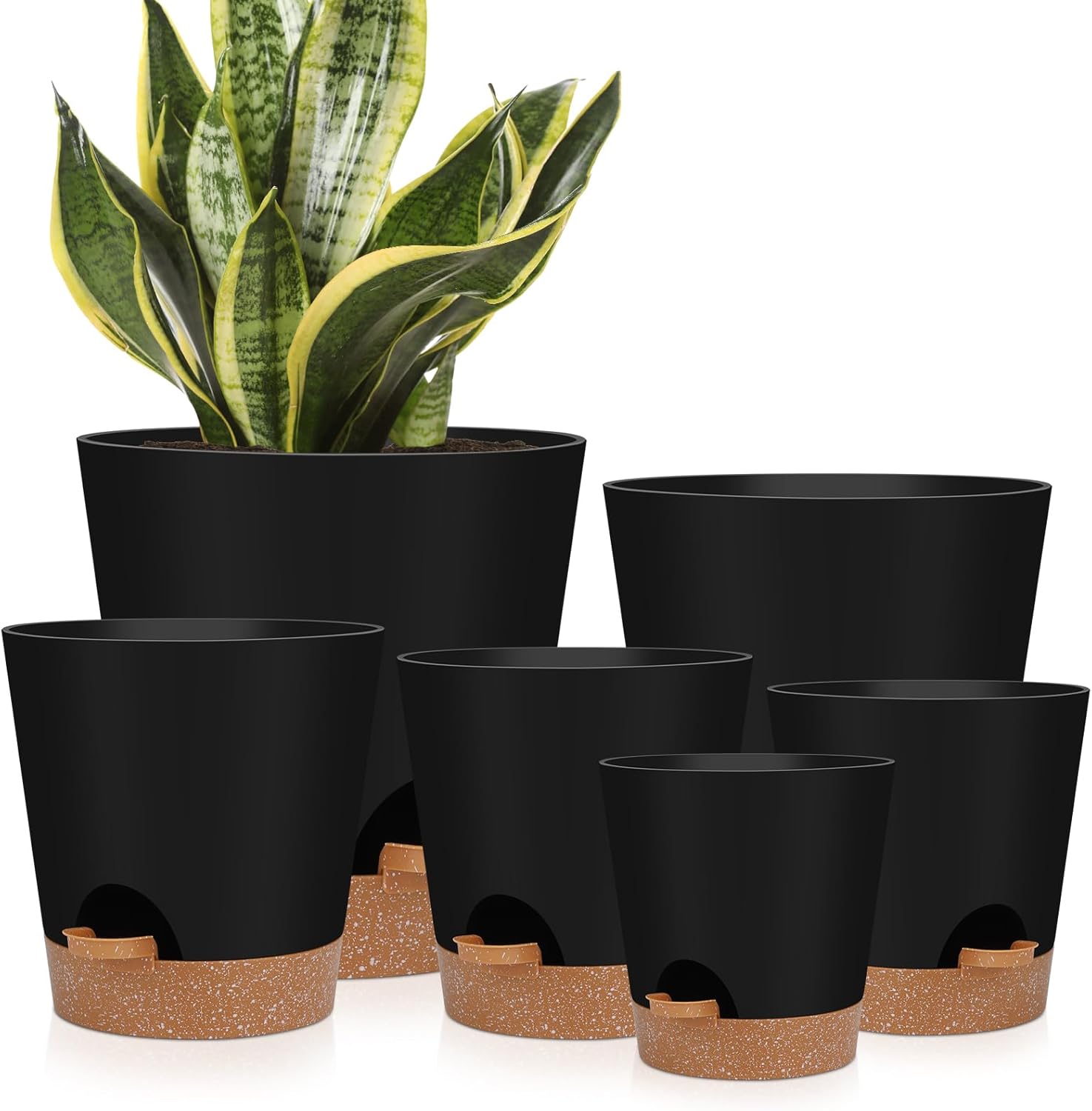
These YNNICO planters are a practical set for people who want low‑maintenance container gardening. The kit includes six nested sizes (8, 7, 6.5, 6, 5.5 and 5 inches) made from durable polypropylene with a matte finish. Each pot has multi drainage holes, a large bottom tray and a wick for bottom watering so you can use the separate reservoir for self watering or remove the tray for conventional drainage. The lightweight construction makes them easy to move between a windowsill, desk or small balcony, and the simple modern look fits most interiors. Because they are plastic they tolerate temperature swings and are less likely to crack than thin ceramic, but they are not decorative focal pieces and the finish can scratch if handled roughly. The set is best for small to medium houseplants, starting cuttings or creating a coordinated group of pots where consistent watering control matters.
Best for: Buyers who prioritize reliable, low‑maintenance watering and want a matched set of pots for multiple indoor plants or a coordinated display.
Less Ideal for: If you need heavy decorative planters or large outdoor containers for big plants, choose thicker ceramic or large garden pots instead.
- Includes six common planter sizes for a range of small to medium plants
- Built‑in drainage holes plus separate reservoir and wick for bottom self watering
- Durable, lightweight polypropylene construction suitable for indoor and sheltered outdoor use
- Plastic finish is utilitarian and can show scratches or scuffs over time
- Not intended as a decorative statement pot for high‑end styling
Verdict: A practical, matched six‑pot set that makes bottom self‑watering simple for small to medium indoor plants.
Fielda 8 Inch Self-Watering Plastic Planter — 2‑Pack with Tray and Saucer

| Capacity | 6.6 liters |
|---|---|
| Material Type | Plastic |
| Other Special Features of the Product | Breathable, Drainage Hole, Portable, Self Watering |
| Included Components | Tray, Saucer |
| Indoor Outdoor Usage | Indoor, Outdoor |
These Fielda 8-inch planters are designed to simplify everyday plant care with a built-in self-watering system and a clear water-level window that shows when the reservoir needs topping up. Typical use is potting houseplants, small patio specimens, or moving nursery pots into a slightly larger container; the included saucers make them easy to place on furniture or a balcony. Notable features are the cotton-wick feed that can sustain plants for several days, multiple drainage holes and a breathable mesh that help prevent waterlogging, and a thick, UV-resistant plastic body that withstands light outdoor exposure. In practice the clear indicator and removable tray save time and reduce guesswork about watering frequency, which is helpful for busy or cautious plant owners. Important limitations are that these are plastic planters so they retain heat in full sun and they suit small to medium plants rather than large specimens. Also the self-watering reservoir requires occasional cleaning to avoid algae buildup.
Best for: Buyers who want a low-effort, reliable planter that prevents over- and underwatering and suits everyday houseplants or small balcony containers with minimal fuss.
Less Ideal for: Gardeners seeking heavy-duty decorative pots for large outdoor plants or those who prefer porous materials like terra cotta for moisture-sensitive species should consider other options.
- Self-watering reservoir with cotton-wick feed reduces daily watering tasks
- Visible water level window makes hydration status easy to monitor
- Multiple drainage holes and breathable design help prevent root rot
- Durable thick plastic with UV resistance for indoor or light outdoor use
- Removable saucer tray simplifies mess-free placement and cleaning
- Plastic construction can heat up in strong direct sun and is less insulating than ceramic or clay
- Reservoir and wick need occasional cleaning to prevent algae or blockages
Verdict: If you want a fuss‑free, visible self‑watering system for everyday houseplants or small balcony containers, these 8‑inch Fielda planters make plant care much simpler.
Choosing the Right Self Watering Planter: Key Factors to Consider
Reservoir Size and Shape
Reservoir volume determines how long the planter will supply water between refills. Larger reservoirs extend time between maintenance, which is helpful for busy gardeners or vacation absences. However, too large a reservoir in a small container can reduce soil volume available for roots, so balance capacity against planting depth and the water needs of the chosen crop.
Shape matters as well. Shallow, wide reservoirs behave differently than narrow, deep ones in how they wick moisture into the soil. Deep reservoirs can keep the lower root zone wet longer, while wide reservoirs offer more stable water levels. Consider the typical weather in your location: high heat and wind increase evapotranspiration, which favors bigger capacity.
Wicking System and Soil Contact
How the planter transfers water from the reservoir to the potting mix affects moisture distribution and root health. Some systems use a separate wicking column or fiber rope while others rely on a porous divider or soil that makes direct contact with the reservoir. Direct-contact designs can keep a larger portion of the root ball moist, which benefits thirsty vegetables, while wick-based systems tend to wet more gradually and can reduce surface saturation.
Evaluate whether the wicking approach is suitable for your plants. Seedlings and plants that like consistently moist but not saturated soil do best with steady, even wicking. For plants that need drier surface conditions at times, look for systems with a clear wet/dry zone separation.
Drainage, Overflow Protection, and Salt Flushing
Good self watering planters include a reliable overflow outlet so excess water can escape during heavy rain or accidental overfilling. Without overflow protection, roots can remain waterlogged and develop rot. Equally important is the ability to flush salts and mineral buildup from the root zone; some planters allow you to water from the top and let excess leach out, while others trap water above a barrier.
For long-term container gardening, choose a design that permits periodic top-watering to leach accumulated salts or that includes a simple way to empty and refresh reservoir water. If you plan to use fertilizer regularly, factor in how easily the system can be rinsed to prevent salt concentration.
Planting Depth and Root Development
The available soil depth above the reservoir determines which plants will thrive. Many self watering planters have limited planting depth, which suits herbs, lettuce, and compact ornamentals but not deeper-rooted vegetables. If you want tomatoes, peppers, or larger perennials, prioritize planters with deeper soil profiles or modular designs that increase depth.
Also check whether the planter design allows roots to access the reservoir over time. Some systems intentionally create a dry upper layer for oxygenation while keeping lower roots moist. That balance supports healthy root architecture and reduces the risk of anaerobic conditions.
Material and UV Resistance
Material choice influences longevity, weight, and suitability for different exposures. Plastic planters are lightweight and often have integrated reservoirs but vary widely in UV resistance. Poor UV stability leads to cracking and brittleness in a few seasons on a sunny balcony. Terracotta and ceramic styles can be heavier and may fracture if waterlogged and frozen in cold climates.
Consider whether the planter will sit in direct sun, on a rooftop, or indoors. Look for materials rated for outdoor use and designs that provide drainage paths that remain clear as materials age.
Refill Access and Maintenance
Ease of refilling the reservoir and accessing it for cleaning determines how likely you are to keep the system functioning over time. Top-fill ports with a visible water level indicator simplify regular checks. Removable inner pots or access panels make it easier to replace soil, inspect roots, and scrub the reservoir to prevent algae and bacterial buildup.
Think about your routine: if you prefer low-touch systems, choose planters that require minimal cleaning and let you top up without disturbing plants. If you rotate crops frequently, a design that disassembles quickly will save time.
Best Uses by Garden Situation
Different self watering planter designs suit distinct growing scenarios. Small, shallow reservoir planters work well for indoor houseplants and balcony herb windowsills where space is limited and you want compact, tidy containers. Larger, deeper reservoir planters are better for patio vegetables and container fruiting crops that need more root volume and consistent moisture.
Consider exposure and seasonality. For apartments where you cannot water daily, aim for higher-capacity reservoirs. For seasonal outdoor beds that receive rain, prioritize overflow protection and drainage to avoid waterlogging during storms.
- Indoor ornamental plants: compact reservoirs with clean aesthetics and easy top-fill.
- Balcony herbs and salad greens: moderate depth planters with steady wicking.
- Patio vegetables: deep soil volume and large reservoirs with good overflow.
- Vacation or minimal-care scenarios: high-capacity reservoirs and clear level indicators.
Planting and Soil Tips for Self Watering Planters
Use a well-draining, moisture-retentive potting mix that contains organic material plus perlite or pumice to keep pore space open. Avoid heavy garden soils that compact and block wicking. Start with a clean reservoir and rinse new potting mix to remove dust that can clog wicking channels.
When placing plants, position the root ball so that feeder roots can locate the moisture source without being submerged completely. For newly potted transplants, water from the top the first few times to encourage root spread before relying solely on reservoir watering.
- Mixes with 10 to 30 percent inorganic aggregate improve aeration.
- Top-water occasionally to flush salts, especially if you fertilize frequently.
- Allow the top inch of soil to dry slightly for plants that dislike constant surface wetness.
Seasonal Care and Troubleshooting
Adjust watering strategy with seasonal changes. Plants use more water in hot, windy weather and less in cool, humid periods. Increase refill frequency in summer and reduce it in winter when growth slows. If the reservoir freezes in cold climates, drain it before freezing weather to avoid cracking and root damage.
Common issues include algae in exposed reservoirs, clogged wicks, and salt buildup. Prevent algae by keeping refill openings covered and using opaque reservoirs. If wicking slows, remove the potting mix around the wick, clean components, and replace exhausted wicking material.
- Drain and store cold-sensitive planters indoors or insulated before frost.
- Clean reservoirs and wicks annually to restore performance.
- If plants show yellowing or stunted growth, check for poor drainage or salt accumulation.
Placement and Microclimate Considerations
Where you place a self watering planter affects how the reservoir behaves. Direct sun increases evaporation from the soil surface and can warm the reservoir, accelerating water loss. Sheltered locations reduce evaporation but may also slow salt leaching. Use saucers or trays only when they allow overflow to escape; standing water under pots negates drainage benefits.
Group containers with similar water needs together to streamline refill schedules. For rooftop or exposed sites, choose sturdier materials and anchor larger planters against wind to prevent tipping when partially full.
- Avoid placing planters where splash from roof eaves will constantly overfill reservoirs.
- Consider wind and reflection from nearby walls that can increase evaporative demand.
- Match planter material to exposure: UV-stable plastics for sun, glazed ceramics for sheltered patios.
Common Myths About Self Watering Planters
Self watering planters are sometimes thought to cause root rot. In reality, systems that create a wet lower zone and a drier upper root zone actually promote oxygen exchange when designed correctly. Root rot usually results from poor drainage, lack of overflow, or using heavy soils that prevent aeration.
Another misconception is that reservoirs eliminate all maintenance. While they reduce daily tasks, you still need periodic top-watering to flush salts, cleaning, and monitoring water level indicators. Proper selection and simple seasonal care keep plants healthy with less hands-on work.
- Well-designed systems maintain oxygenated upper soil despite a moist lower zone.
- Periodic maintenance prevents salt buildup and keeps wicks functioning.
- Understanding plant-specific moisture preferences is essential for success.
How We Chose the Best Self Watering Planter
We prioritized features that matter in practical container gardening. Key criteria included reservoir capacity and refill access because reservoir volume determines how long a planter can go between top-ups and how often you need to monitor water level. Drainage and overflow control were assessed to avoid root rot and surface salt buildup in different watering regimes. Soil access and planting depth were considered to ensure plants can root into the wet zone without becoming waterlogged. Material durability and UV resistance were evaluated for use on patios or balconies where sun and temperature swings accelerate wear. Ease of setup, cleaning, and refill simplicity were included because busy gardeners prefer low-fuss systems. We excluded designs that rely on unsealed liners that cannot be cleaned, planters with no measurable reservoir, or that require complex assembly tools. We also filtered out novelty containers that impede proper root development or lack basic overflow protection. The final shortlist balances reservoir performance, drainage design, practical planting depth, and long-term durability for everyday garden use.
FAQ
How often should I refill a self watering planter?
It depends on reservoir capacity, plant size, and weather. Small containers may need topping every few days in hot weather, while large reservoirs can last one to several weeks. Check the indicator regularly and adjust frequency seasonally.
Can I use any potting mix in a self watering planter?
Not any mix. Choose a well-draining, moisture-retentive potting mix with some inorganic material like perlite. Heavy garden soils can compact and block wicking, reducing effectiveness.
Will a self watering planter prevent root rot?
A correctly designed planter with overflow and an oxygenated upper soil layer reduces the risk of root rot. Root rot risk increases when drainage is poor, the reservoir has no overflow, or the soil becomes compacted.
Are self watering planters suitable for vegetables?
Yes for many vegetables, especially leafy greens, herbs, and compact fruiting varieties. For deep-rooted crops, choose planters with sufficient soil depth and larger reservoirs to support the root system.
How do I clean and maintain the reservoir?
Empty the reservoir, remove the inner pot or access panel, and scrub with a mild solution of water and vinegar if needed. Rinse thoroughly to remove residues and replace any degraded wicking material annually or when performance drops.
Can I top-dress or fertilize in a self watering planter?
You can, but frequent liquid fertilizing can concentrate salts in the reservoir. Periodically top-water to flush excess salts or use slow-release granular fertilizers applied sparingly to reduce buildup.
Final Verdict
When choosing a self watering planter, balance reservoir size, planting depth, and drainage to match the plants you want to grow and the level of maintenance you prefer. Prioritize overflow protection and easy access for cleaning to prevent salt buildup and ensure long-term performance. By matching planter design to your microclimate and crop needs, you can reduce daily chores while maintaining healthy roots and steady growth.
