

Note: This article contains affiliate links. If you click on these links and make a purchase, I may earn a small commission at no extra cost to you. This helps support my research and content. Read my full affiliate disclosure here.
When rats move into a home, garage, shed, or garden structure, acting quickly matters to limit property damage and disease risk. Selecting the right rat rodent poison affects how fast you reduce numbers, how safe the treatment is for children and pets nearby, and how much follow-up work you will have to do. This guide covers seven top-rated options shortlisted for common home scenarios, and explains how we evaluated bait effectiveness, placement safety, and cleanup needs. Use the evaluation notes to match a product to your access restrictions, pet exposure concerns, and preferred cleanup approach.
Top Picks at a Glance
| Best Overall The best all-around choice for most situations | Farnam Just One Bite II Rat & Mouse Bait Bars, 8-pack |  |
| Best Quality Built to a higher standard if you want something more solid | First Strike Soft Bait Rodenticide 16 lb Bucket |  |
| Best Value The sweet spot between price and what you get | Victor M925 Rodent Killer, 4 lb Fish‑Flavored Bait | 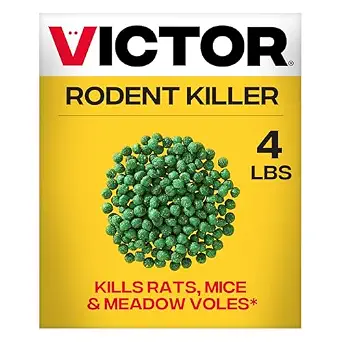 |
| Best Budget The cheapest option that still gets the job done reliably | Tomcat Rat & Mouse Killer Disposable Bait Station, Child & Dog Resistant, 2-Pack |  |
| Highest Rated A top-rated pick with lots of positive feedback | Neogen Ramik Green Rodenticide Pellets, 20 lb Bucket |  |
| Most Popular A crowd favorite that many people choose with confidence | Tomcat Bromethalin Bait Chunx Pail, 4.25 lb. |  |
| Best Seller A high-volume bestseller chosen again and again | Tomcat Bromethalin Place Pacs Rodent Bait, 4.1 lb. |  |
Farnam Just One Bite II Rat & Mouse Bait Bars, 8-pack

| Unit Count | 128 Ounce |
|---|---|
| Item Form | Bar |
| Target Species | Rat,Mouse |
| Active Ingredients | Bromadiolone |
Farnam Just One Bite II is a bromadiolone-based bait bar designed for targeted control of Norway rats, roof rats, and house mice. The product is sold as eight individually wrapped one-pound bars with nibble ridges to encourage chewing; the formulation is intended to deliver a lethal dose in a single night's feeding, with death delayed four to five days to reduce bait shyness. Typical use is placing bars in secure bait stations or out-of-reach locations around agricultural buildings or other outdoor perimeters where rodent activity is present. The individually wrapped bars make handling and placement cleaner and help preserve unused bait. Because it uses a second-generation active ingredient, it is effective against warfarin-resistant rodents. Important limitations are that this is a toxic anticoagulant requiring careful, restricted placement to protect children, pets, and non-target wildlife, and it is labeled for use in and around agricultural buildings which limits some residential applications.
Best for: Buyers who need a strong, no-nonsense rodent control product for barns, outbuildings, or agricultural perimeters and who are comfortable following strict safety and placement rules.
Less Ideal for: Homeowners looking for general indoor household rodent control or pet-safe solutions should consider less restricted or non-toxic options instead.
- Formulated with bromadiolone to kill rodents in a single feeding including warfarin-resistant rats
- Nibble ridges on bars encourage chewing for reliable uptake
- Individually wrapped 1 lb bars simplify handling and reduce contamination
- Delayed action (4–5 days) reduces bait shyness and improves strike effectiveness
- Contains a potent anticoagulant that poses significant risk to children, pets, and wildlife if misused
- Label restricts use to in and around agricultural buildings which may limit residential placement options
Verdict: Choose this product when you need a potent, single-feed bait for controlling rats and mice around agricultural buildings and can follow strict safety placement guidelines.
First Strike Soft Bait Rodenticide 16 lb Bucket

| Target Species | Rodents |
|---|---|
| Liquid Volume | 16000 ml |
First Strike Soft Bait is a concentrated, ready-to-use rodenticide presented as a soft bait in a large bucket for treating heavy infestations. Install it in tamper-resistant bait stations or along active runways where rats frequent; the soft consistency makes it easy for rodents to feed and for technicians to portion into stations. The product is formulated for targeted rodent control and the bulk 16-pound pail suits commercial or large-property use, reducing the need for frequent reorders. Because it is a potent pesticide, it should be handled and applied only by familiar users following label directions and placed where non-target animals and children cannot access it. The bucket format is efficient for multi-point treatments but is less convenient for casual home users who need smaller, pre-baited blocks. If you run a farm, warehouse, or professional pest program and prioritize effective, sustained takes by rodents, this product delivers a practical, serviceable option for heavy-duty control programs.
Best for: People managing significant or recurring rodent problems who need a professional-strength product and prefer bulk packaging to supply multiple bait stations or service visits.
Less Ideal for: Casual homeowners with a single indoor infestation or those who prefer pre-measured consumer bait products and minimal handling should consider smaller, user-friendly alternatives.
- Large 16 lb bucket reduces refill frequency for large properties or commercial use
- Soft bait formulation encourages consistent feeding behavior from rodents
- Designed for targeted placement in bait stations or runways for effective control
- Bulk packaging supports professional pest management workflows
- Potent pesticide that requires careful handling and strict compliance with label directions
- Large bulk size is inconvenient for small households or single-point problems
Verdict: Choose this bucketed soft bait when you need a professional, bulk rodenticide that supports heavy-duty or recurring control programs.
Victor M925 Rodent Killer, 4 lb Fish‑Flavored Bait

| Item Form | Soft Bait |
|---|---|
| Target Species | Rodents |
| Active Ingredients | Diphacinone 0.005% |
| Specification Met | EPA |
| Included Components | 4lb Bag |
Victor M925 is a ready-to-use soft bait rodenticide designed for straightforward placement in tamper-resistant bait stations or along rodent travel paths. The fish-flavored pellets are formulated to be highly palatable so rodents continue feeding until they ingest a lethal dose, and the EPA-listed active ingredient (diphacinone) provides a conventional anticoagulant mode of action. Being weather-resistant lets you deploy it indoors or outside without rapid loss of potency, and the 4 lb bag supplies enough bait for multiple placements across a large property or a prolonged treatment program. Practical users will appreciate the lack of mixing or preparation and the compatibility with common refillable stations. Important limitations are the toxicity risk to children, pets, and non-target wildlife, so secure placement is essential, and the bait is not suitable for all species in some jurisdictions, so check local restrictions and label directions before use.
Best for: Buyers who want a no-fuss, supply-heavy rodenticide for practical, repeated placements around a property and who plan to use tamper-resistant stations or secure indoor spots.
Less Ideal for: Households with unsupervised children, pets, or frequent access by non-target wildlife where secure baiting cannot be guaranteed should choose non-toxic control methods or alternatives.
- Ready-to-use soft bait requires no mixing or prep so you can deploy quickly
- Fish-flavored formula encourages repeated feeding for effective control
- Weather-resistant formulation works in wet or dry outdoor locations as well as indoors
- Large 4 lb bag provides ample supply for treating large areas or extended treatments
- Contains an anticoagulant active ingredient and is hazardous to children, pets, and non-target wildlife
- Not approved for use against certain species in some regions so label restrictions apply
Verdict: If you need a large, ready-to-use, weather-resistant bait for practical, station-based rodent control, this 4 lb Victor formula delivers reliable, repeatable results.
Tomcat Rat & Mouse Killer Disposable Bait Station, Child & Dog Resistant, 2-Pack

| Unit Count | 2 Count |
|---|---|
| Target Species | Mouse |
| Item Type Name | Resistant, Pre-Filled, Easy Monitoring |
| Material Type | Plastic |
This Tomcat disposable bait station is a ready-to-use rodent control option that comes prefilled with a bait block meant to kill rats and mice. You place the weather-resistant station where you see rodent activity—along walls, in basements, garages, behind appliances, or near exterior entry points—and the clear lid lets you check bait consumption without opening the unit. The station is designed to resist tampering by children and dogs and can be used vertically or horizontally. Because each block is sized to treat multiple rodents according to lab testing, a two-pack offers straightforward coverage for a small infestation and simplifies monitoring and disposal when activity stops. Limitations are that these are single-use disposable units so ongoing problems will require buying replacements or switching to refillable stations, and the product description does not list active ingredient details on the exterior so users who need explicit bait chemistry or application specifics will need to consult labeling.
Best for: Buyers who want a low-effort, affordable way to tackle a small to moderate rat or mouse problem with something ready to deploy and easy to monitor.
Less Ideal for: Those managing large or chronic infestations who prefer refillable long-term systems or need full transparency about bait chemistry for integrated pest management.
- Prefilled and ready to use for immediate rodent control
- Child- and dog-resistant design reduces accidental access
- Weather resistant for indoor or outdoor placement
- Clear lid allows easy visual monitoring of bait consumption
- Disposable single-use stations require repurchasing for ongoing infestations
- Active ingredient details are not prominent in the product summary
Verdict: A simple, low-cost prefilled bait station that lets you quickly deploy and monitor rodent control with minimal setup.
Neogen Ramik Green Rodenticide Pellets, 20 lb Bucket

| Item Form | Pellets |
|---|---|
| Target Species | Rodents |
| Included Components | 20 lb Pail of Bait |
| Active Ingredient | Diphacinone (.005%) |
Ramik Green pellets use a first‑generation anticoagulant (diphacinone) in a food‑quality, fish‑flavored grain mix to attract rats, mice, and several other rodent species. The pellets are hot‑extruded, which makes them weather‑resistant without wax and suitable for placing in bait stations or protected locations indoors and in damp outdoor areas like barns and under eaves. Typical use is to distribute the bait in secure bait stations or tamper‑resistant containers as part of a broader control plan; the product is not for broadcast scattering in open areas. Practical benefits include high palatability for rodents, a large 20‑pound pail for extended coverage of heavy infestations, and formulation suited to wet conditions. Important limitations are that it contains a first‑generation anticoagulant so control can be slower than with some second‑generation products, and it is a toxic rodenticide that requires careful placement to avoid non‑target exposure. Follow local regulations and label directions for permitted targets and restricted uses in certain states.
Best for: Buyers who prioritize dependable, established rodent baits for long‑running control efforts around structures, barns, or poultry operations and who plan to use bait stations and follow label directions.
Less Ideal for: People seeking a very fast‑acting or single‑feed solution or those who cannot ensure secure placement away from pets and wildlife should consider different control options.
- Hot‑extruded pellets are weather‑resistant and perform in wet or damp areas without wax coating
- Fish‑flavored, food‑quality grain mix increases palatability to rodents
- Large 20‑pound pail supplies sustained treatment for large or recurring infestations
- Contains a first‑generation anticoagulant which can act more slowly than some alternatives
- Requires secure placement and careful handling to prevent non‑target exposure
Verdict: Choose Ramik Green when you need a weather‑resistant, highly palatable pellet bait in a large bucket for reliable, ongoing rodent control.
Tomcat Bromethalin Bait Chunx Pail, 4.25 lb.

| Item Form | Bar |
|---|---|
| Target Species | Rodents |
Tomcat Bromethalin Bait Chunx is a bulk rodenticide supplied as 1 oz. bait blocks intended for use by professional applicators and homeowners who follow label directions. The blocks are formulated with bromethalin and are effective against Norway rats, roof rats, house mice, and meadow voles, including many anti-coagulant resistant rodents. You place individual blocks inside tamper-resistant bait stations for indoor or outdoor, above-ground use and maintain bait for at least a week; in lab testing a single 1 oz. block can kill multiple mice and animals typically die within a day or two after feeding. The pail contains a large quantity, which is convenient for sustained baiting around garages, basements, and building perimeters, but the product requires mandatory use of tamper-resistant stations outdoors and careful handling to keep children, pets, and non-target wildlife safe. Also note there are regional use restrictions for certain species in California and the product should be applied only within 100 feet of man-made structures per label instructions.
Best for: Buyers who prioritize proven, fast-acting chemical control and need a bulk professional-grade bait to treat persistent infestations around buildings while following safety rules.
Less Ideal for: People seeking nonchemical or pet-safe prevention methods, or those who cannot or will not use tamper-resistant bait stations and follow label restrictions.
- Contains bromethalin effective on anti-coagulant resistant rats and mice
- Sold in a large 4.25 lb. pail for extended or repeated treatments
- Preformed 1 oz. blocks are easy to place in tamper-resistant bait stations
- Lethal dose can take effect after a single night of feeding, speeding control
- Requires tamper-resistant bait stations for safe outdoor or accessible use
- Not authorized for some rodent species in California
Verdict: Choose this bulk bromethalin bait when you need a professional-strength, fast-acting rodenticide for persistent infestations near structures and will use tamper-resistant stations.
Tomcat Bromethalin Place Pacs Rodent Bait, 4.1 lb.

| Item Form | Other |
|---|---|
| Target Species | Mouse |
| Unit Count | 1 Count |
| Included Components | Pest Control; home-pest-repellents |
Tomcat Bromethalin Place Pacs are a ready-to-use rodenticide supplied as pre-measured bait packs in a resealable 4.1 pound pail. The product is formulated with bromethalin and intended to control Norway rats, roof rats, and house mice; packs can be placed indoors or in tamper-resistant bait stations outdoors. Typical use is along walls, in corners, near gnawed openings, or inside bait stations around structures, and the manufacturer gives clear placement and monitoring guidance so you can check and replenish bait where activity continues. The pre-portioned pacs simplify dosing and reduce handling compared with loose bait, and the pail format stores multiple packs for ongoing control. Important limitations are safety and legal restrictions: protective gloves and basic PPE are required during handling, tamper-resistant stations are required for above-ground outdoor use, and some rodent species are excluded in California. This product is best when combined with exclusion and sanitation for an integrated control approach rather than as a stand-alone, long-term prevention method.
Best for: Buyers who prioritize a straightforward, pre-measured rodenticide for targeted treatments around buildings and who plan to follow label safety instructions and use tamper-resistant stations when needed.
Less Ideal for: People who need non-toxic, pet-safe repellents or who prefer mechanical trapping and exclusion methods as their primary control strategy.
- Pre-measured packs reduce direct bait handling and simplify placement
- Effective active ingredient (bromethalin) against anticoagulant-resistant rodents
- Can be used indoors or in tamper-resistant outdoor stations
- 4.1 lb. pail stores multiple packs for repeated treatments and monitoring
- Requires personal protective equipment and careful handling to protect people and pets
- Not permitted for use on certain rodent species in California
Verdict: A convenient, pre-measured bromethalin bait solution for decisive indoor and bait-station outdoor control of rats and mice when used according to label safety requirements.
Choosing the Right Rat Rodent Poison: Key Factors to Consider
Active Ingredient and Mode of Action
Different active ingredients work in distinct ways and have different safety profiles. Anticoagulant poisons cause internal bleeding over days and may require multiple feedings, while acute toxicants act faster but can be more hazardous if picked up by non-target animals. Knowing the active ingredient helps you anticipate how long bait will need to remain in place and what secondary risks exist for pets and wildlife.
Regulatory classification and label directions determine whether a formulation is appropriate for residential indoor use. Always check the active ingredient concentration and whether the product requires repeat feeding. That information affects how long you should expect to monitor bait stations and whether additional exclusion and sanitation measures will be needed to prevent reinfestation.
Bait Formulation and Palatability
Rats can be picky, so formulation matters. Blocks, pellets, paste, and wax formulations each have pros and cons: blocks are durable and suitable for protected stations, pellets are easy to scatter in enclosed bait trays, and pastes can be effective where dry food is scarce. Highly palatable baits reduce the time to control because rats will consume lethal doses sooner.
Consider local food sources that might compete with bait attractiveness. In a pantry or compost area where food scraps are abundant, you may need a stronger bait formulation or a baiting strategy that isolates the bait in enclosed stations to ensure consumption.
Placement Safety and Tamper-Resistant Options
Where you put bait determines both effectiveness and safety. Tamper-resistant bait stations protect people, pets, and non-target wildlife while guiding rats to feed inside an enclosed space. For indoor use, place stations along walls and in areas rats travel, such as behind appliances or in attics. Outdoors, secure stations against weather and disturbance.
If tamper-resistant stations are not feasible, prioritize baits with lower secondary risk and strong labeling for supervised placement. Always follow local regulations about outdoor placement and avoid placing loose bait where pets or children can access it.
Label Instructions and Legal Use
Labels carry legally required instructions that affect how a product should be used and what safety precautions to take. They include specifics on application rates, frequency of inspection, how long to leave bait in place, and required warning language for households with pets or children. Clear labels make correct use more likely and reduce accidental exposure.
Products that lack concise, easy-to-follow instructions often lead to misuse. Confirm that the label addresses disposal of spent bait and carcasses and that it provides contact information for reporting adverse events.
Carcass Management and Cleanup
When rats die away from bait stations, find and remove carcasses promptly to reduce odors and secondary scavenger risk. Some poisons produce delayed mortality that increases the chance of hidden carcasses. Having a clear plan for safe retrieval, use of gloves, and disinfecting surfaces reduces disease transmission and lingering odor problems.
Consider whether the product guidance requires wearing protective equipment, double-bagging carcasses, or contacting waste authorities for disposal. Products that minimize concealed deaths, or that include clear carcass-handling instructions, reduce the gardener's follow-up workload.
Environmental and Non-Target Risk
Rodent poisons can affect predators and scavengers through secondary exposure. In areas with active wildlife, barn cats, or outdoor pets, selecting a product with lower secondary risk and using secured baiting methods lowers the chance of unintended harm. Placement, timing, and station security all play roles in reducing environmental impact.
Also consider where runoff or heavy rain could move loose bait into non-target areas. Choose formulations and deployment methods that limit dispersal and always follow label guidance about outdoor use near water or in sensitive habitats.
When to Use Poison Versus Other Control Methods
Poison is a tool best suited to reducing established rat populations where exclusion and trapping alone are not practical or have failed. For small, early infestations, traps and sanitation can be effective without the risks associated with toxicants. Consider poison when you need to treat multiple animals quickly or when rats are inaccessible to traps.
Before deploying poison, assess whether you can improve sanitation, seal entry points, and reduce food and water sources. Combining those measures with targeted baiting improves long-term success and reduces the total amount of toxicant needed.
- Use bait where rats have established runways or feeding sites
- Prioritize traps in areas with high pet or child activity
- Combine poison with exclusion and sanitation for lasting control
Setting Up Tamper-Resistant Bait Stations
Place stations along walls and near likely entry points because rats tend to follow edges rather than cross open spaces. Position stations so rats must enter and feed inside, which reduces the chance of spilled bait. Anchor stations to the ground or a structure when outdoors to prevent tipping.
Inspect stations frequently during the first weeks and move or add stations if you see little bait uptake. Replace wet or soiled bait promptly and log consumption to determine whether the active ingredient is being accepted.
- Check stations at least twice weekly when first deployed
- Wear gloves when handling bait and stations
- Keep a record of bait consumption to evaluate effectiveness
Safe Handling and Personal Protective Steps
Treat all rodent poisons as hazardous materials. Wear disposable gloves when handling bait and wash hands thoroughly after work. Avoid touching your face, food, or utensils while baiting and keep bait containers sealed when not in use.
Store unused product in a locked area away from children and pets, and keep the original label for reference. If accidental exposure occurs, follow label first-aid instructions and seek medical advice promptly.
- Use gloves and avoid inhaling dust from powdered formulations
- Secure unused product in original packaging and locked storage
- Keep emergency contact info and label instructions accessible
Monitoring Results and Knowing When to Stop
Monitor bait consumption and signs of activity such as droppings, tracks, and fresh gnaw marks. A decline in bait uptake coupled with reduced activity suggests the treatment is effective. Continue monitoring for several weeks after bait disappearance to confirm control because surviving survivors can repopulate.
Stop using poison once activity indicators remain low and exclusion and sanitation are complete. Removing bait when it is no longer needed reduces secondary exposure risk and prevents non-target animals from encountering leftover toxicant.
- Keep bait in place until consecutive inspections show minimal consumption
- After control, remove all bait and disinfect stations
- Maintain exclusion work to prevent re-entry
What to Do About Outdoor Use and Wildlife
Outdoor baiting increases the chance of encounters with non-target wildlife. Use locked, wildlife-resistant stations and place them in sheltered, predictable locations where rats are active. Avoid loose bait outdoors unless the product is specifically labeled for that use and your placement prevents access by non-targets.
Consider altering timing to reduce exposure, such as baiting during periods of lower wildlife activity. Check local regulations about outdoor rodenticide use and follow any restrictions designed to protect wildlife and water bodies.
- Use secure stations and anchor them to prevent disturbance
- Avoid placing bait near known wildlife travel routes
- Follow label directions for outdoor application and weather exposure
How We Chose the Best Rat Rodent Poison
We shortlisted products that provide clear instructions for residential rat control and demonstrated consistent bait acceptance in common rodent scenarios. Our emphasis was on practical, verifiable attributes that matter in home use: active ingredient type and required dose, bait formulation and palatability, instructions for secure placement or tamper-resistant use, and guidance for carcass handling and disposal. We also weighted packaging and labeling clarity so home users can follow safety directions without ambiguity. Exclusions included products intended only for agricultural or professional-use settings, airborne fumigants not labeled for domestic rat control, and any formulations lacking concrete safety instructions for households with children or pets. The final selection balances fast knockdown potential with documented safety controls and clear user guidance. Scoring focused on bait effectiveness, domestic safety measures, ease of deployment, and follow-up cleanup procedures.
FAQ
How long does it take for Rat rodent poison to work?
It depends on the active ingredient. Some acute toxicants can kill within hours, while anticoagulants may take several days and require multiple feedings. Expect monitoring for one to two weeks to assess effectiveness.
Can my pet be poisoned by these baits?
Pets can be at risk, especially if they access loose bait or consume a poisoned carcass. Using tamper-resistant stations, selecting lower secondary risk formulations, and removing bait after control reduces exposure. Always follow label safety guidance and contact a veterinarian if exposure occurs.
Should I remove bait once activity seems reduced?
Yes. Remove and safely dispose of unused bait and clean bait stations once monitoring shows sustained low activity. Leaving bait in place unnecessarily increases the chance of non-target exposure.
What precautions are recommended for handling dead rats?
Wear disposable gloves, use a scoop or shovel to avoid direct contact, double-bag the carcass, and disinfect the area afterward. Follow the product label for specific disposal recommendations.
Is baiting effective without sealing entry points?
Baiting can reduce numbers, but without sealing entry points and improving sanitation, reinfestation is likely. Combine baiting with exclusion work to achieve lasting results.
Final Verdict
Choose a rat rodent poison by balancing how quickly you need control against household safety and environmental risk. Prioritize products with clear label instructions, effective bait formulations, and secure placement options to protect children, pets, and wildlife. Pair any baiting program with exclusion and sanitation so fewer repeat treatments are necessary. When in doubt, select a strategy that reduces secondary exposure and includes a plan for safe carcass retrieval and cleanup.
