

Note: This article contains affiliate links. If you click on these links and make a purchase, I may earn a small commission at no extra cost to you. This helps support my research and content. Read my full affiliate disclosure here.
Root rot can quietly undermine container plants, raised beds, and landscape specimens by attacking roots before symptoms appear above ground. Choosing the right Root Rot fungicide matters because some treatments are formulated for soil drenches while others suit transplants or irrigation systems, and their effects on soil organisms and application safety vary. This guide covers a short list of the top picks for Best Root Rot Fungicide across common garden situations. We evaluated products on disease control, application flexibility, and impacts on soil health so you can pick an option that matches your planting style and site needs.
Top Picks at a Glance
| Best Overall The best all-around choice for most situations | Houseplant Resource Center Root Rot Repair Drops, 8 oz |  |
| Best Quality Built to a higher standard if you want something more solid | VivaGrow Quest Reliant Systemic Fungicide 32 oz (Liquid) |  |
| Best Value The sweet spot between price and what you get | Arber Organic Bio Fungicide Concentrate, 16 fl oz |  |
| Best Budget The cheapest option that still gets the job done reliably | Grower's Ally Fungicide Concentrate, 8 oz (Makes 5 Gallons) |  |
| Highest Rated A top-rated pick with lots of positive feedback | Monterey Fungi-Max Systemic Fungicide, 16 oz (with Measuring Spoon) |  |
Houseplant Resource Center Root Rot Repair Drops, 8 oz

| Item Form | Liquid |
|---|---|
| Specific Uses For Product | Root rot treatment for houseplants |
| Application Method | Watering |
| Mixing Ratio | 1 tsp in 2 cups of water |
This 8-ounce Root Rot Repair formula is a liquid supplement meant to be diluted and applied with normal watering to help damaged roots recover. It is formulated around potassium phosphite and targets common houseplant problems such as brown mushy roots, yellowing leaves, and soggy soil by improving nutrient movement and strengthening root tissue. Typical use is simple: dilute 1 teaspoon per 2 cups of water and apply every two weeks or as directed during regular watering. The product is compatible with standard plant foods, so you can pair it with your fertilizer routine while treating stressed plants. Practical benefits include focused support after overwatering, pruning, or repotting, and the small bottle is easy to store and use for a range of indoor species like fiddle leaf figs, pothos, and philodendrons. Important limitations are the concentrated size, which may require repeated purchases for larger collections, and that it addresses root recovery rather than acting as a broad-spectrum fungicide for severe soil-borne infections. Users should follow safety guidance and keep it away from children and pets.
Best for: Houseplant owners who want a targeted, easy-to-use recovery treatment for overwatered or shocked plants and who prioritize practical, repeatable care steps over heavy-duty chemical treatments.
Less Ideal for: Growers managing large-scale outbreaks of aggressive soil pathogens or commercial operations that need broad-spectrum fungicides and bulk treatment volumes.
- Formulated with potassium phosphite to support root tissue strength and nutrient movement
- Easy application by diluting 1 tsp per 2 cups of water and applying during normal watering
- Compatible with regular fertilizers so it can be used alongside feeding schedules
- Targeted for common houseplants such as fiddle leaf figs, pothos, and philodendrons
- Small 8 oz bottle may be consumed quickly for multi-plant collections
- Designed for root recovery support rather than as a comprehensive fungicide for severe infections
Verdict: An easy, targeted liquid treatment to help household plants recover root health after overwatering or transplant shock.
VivaGrow Quest Reliant Systemic Fungicide 32 oz (Liquid)

| Item Form | Liquid |
|---|---|
| Special Features | organic |
Reliant is a concentrated systemic fungicide formulated to control root rots, blights, mildews and many foliar and soilborne pathogens in landscapes, ornamentals, turf and greenhouse crops. It is quickly absorbed through foliage and roots and moves throughout the plant to activate natural defense responses, offering both curative action on existing infections and protective coverage for new growth. In practice you mix the concentrate with water and apply as a foliar spray or drench; that versatility makes it useful for treating infected root zones as well as above‑ground disease. Notable features include broad-spectrum activity against Phytophthora, Pythium and other common root rot pathogens and an EPA Biopesticide Division approval indicating reduced environmental impact compared with many conventional fungicides. Important limitations are that it must be applied according to label directions for timing and rates and it is not a one‑time cure for severely compromised plants; advanced infections may need repeat treatments and cultural controls alongside chemical control.
Best for: Gardeners and professional growers who prioritize reliable control of root rots and other fungal diseases and who are willing to follow label directions for repeated, targeted applications.
Less Ideal for: Casual gardeners unwilling to follow specific application rates or those seeking an immediate fix for plants already beyond recovery; homeowners looking for a general household cleaner or nonplant use should look elsewhere.
- Systemic action distributes active ingredient through foliage and roots for whole‑plant protection
- Works as both curative and protective treatment against common root rot pathogens including Phytophthora and Pythium
- Concentrated liquid mixes readily with water for foliar spray or soil drench applications
- Approved by EPA Biopesticide Division and labeled as having minimal environmental impact
- Requires correct mixing and application timing per label to be effective
- May need repeat treatments and complementary cultural measures for severe or advanced infections
Verdict: Choose Reliant when you need a concentrated systemic treatment that provides both curative and protective control against root rots and other fungal diseases.
Arber Organic Bio Fungicide Concentrate, 16 fl oz

| Form | Liquid concentrate |
|---|---|
| Net volume | 16 fl oz |
| Coverage | Makes up to 16 gallons finished spray |
| Intended use | Indoor and outdoor plants |
Arber Bio Fungicide is a liquid concentrate formulated from beneficial microbes that you dilute and apply as a foliar spray to prevent fungal diseases on houseplants and landscape plants. You mix the concentrate per label directions, shake, then spray leaves and stems with a pump or trigger sprayer every 7–10 days or during high disease pressure. Notable features include organic biological ingredients that leave no visible residue, coverage that protects both foliage and root surfaces, and compatibility with indoor use on houseplants and greenhouse environments. Practical benefits are preventative disease control for powdery mildew, botrytis, rust and leaf spots, plus a long shelf life and enough concentrate to make multiple gallons of spray. Important limitations are that it works best as a preventive measure rather than a cure for heavy active infections and requires repeated applications and dry weather after spraying for best efficacy. Users should follow label directions and spray in calm conditions to allow the biologicals to establish on plant surfaces.
Best for: Houseplant owners and indoor gardeners who prioritize biological, preventive disease control and are willing to schedule regular weekly treatments during the growing season.
Less Ideal for: People looking for a fast-acting cure for heavy, established fungal outbreaks or users who need a single-shot chemical solution.
- Uses beneficial microbes so no visible residue on foliage
- Concentrate makes up to about 16 gallons of finished spray, suitable for repeated preventive treatments
- Labeled for indoor use on houseplants and for a wide range of plant types
- Long shelf life when stored properly
- Designed primarily for prevention and less effective at reversing severe established infections
- Requires regular reapplication and spraying in calm, dry conditions to be effective
Verdict: Choose this biological concentrate if you want an organic, preventive spray for houseplants that protects leaves and roots without leaving a visible residue.
Grower's Ally Fungicide Concentrate, 8 oz (Makes 5 Gallons)

| Unit Count | 8 Fluid Ounces |
|---|---|
| Item Form | Liquid |
| Target Species | Insects |
| Specification Met | OMRI |
| Active Ingredients | Citric Acid |
Grower’s Ally Fungicide Concentrate is a citric-acid based treatment designed to prevent and control common plant pathogens such as powdery mildew, alternaria and root rot. You dilute the 8 oz concentrate to make multiple gallons of spray and apply it to leaves, stems and soil as part of a regular prevention or treatment routine. Notable features include OMRI listing for organic gardening, FIFRA 25(b) exempt status, and a formula that the brand states leaves no residue so it can be used up to harvest. In practice this makes it a straightforward choice for hobby growers who want an organic, low-toxicity option for greenhouse, indoor or outdoor beds. The concentrate format stretches supply for multiple treatments, which is helpful for ongoing root-rot prevention. Limitations are that active ingredient is citric acid, so it works as a broad-spectrum disinfectant rather than a systemic chemical fungicide, and very severe infections may require a stronger or targeted product alongside cultural controls like improved drainage.
Best for: Gardeners who need an affordable, organic-friendly preventive fungicide for routine use across small outdoor beds, containers and indoor grows and who prioritize low-toxicity solutions.
Less Ideal for: Growers facing aggressive, widespread root rot or systemic fungal infections who require a specialized chemical treatment or fungicide with systemic action.
- OMRI listed and FIFRA 25(b) exempt, suitable for organic gardens
- Concentrate format dilutes to several gallons, extending value per bottle
- Citric acid formula leaves minimal residue so it can be applied up to harvest
- Marketed for use in indoor, outdoor, greenhouse and hydroponic settings
- Citric acid acts as a contact disinfectant rather than a systemic fungicide so it may not stop advanced infections
- Not formulated for fast knockdown of heavily established fungal colonies
Verdict: A budget-friendly, OMRI-listed citric-acid concentrate that stretches across multiple treatments for routine prevention and mild root-rot control.
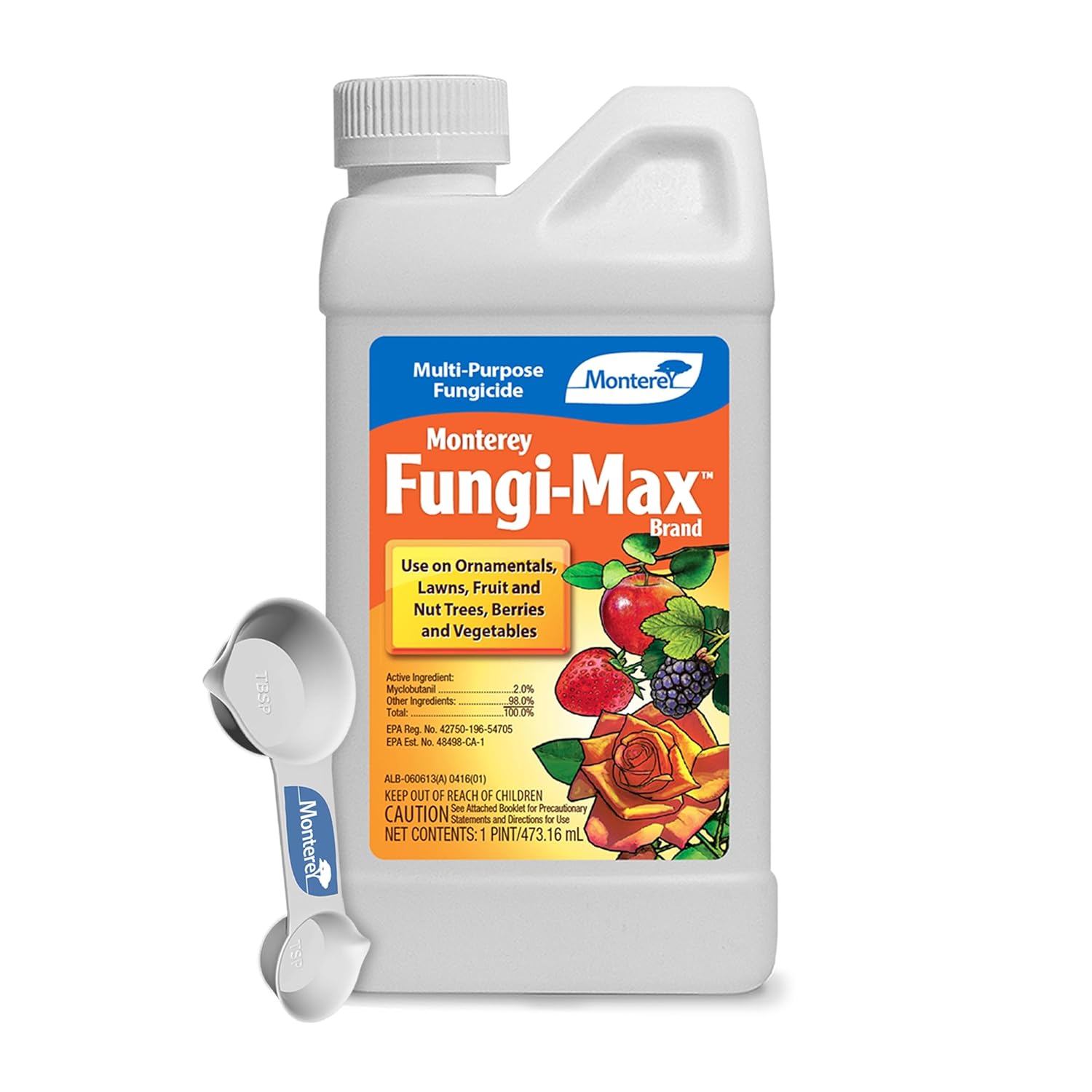
Monterey Fungi-Max Systemic Fungicide, 16 oz (with Measuring Spoon)
| Item Form | Liquid |
|---|---|
| Application Method | Spray |
| Coverage | Wide range of plants and plant types |
| Target Species | Flowers, Vegetables, Trees, Lawn Grass |
| Liquid Volume | 16 fluid ounces |
Monterey Fungi-Max is a concentrated liquid fungicide that you dilute and apply with a sprayer to prevent and control many common plant diseases. It is used outdoors on flowers, shrubs, trees, lawns and edible plants including vegetables and fruiting trees; for tomato growers it is intended to control leaf spots, blights and powdery mildew when applied at the first sign of disease. The product’s systemic action means it is absorbed and provides residual protection for up to two weeks, which reduces how often you need to spray during an outbreak. A measuring spoon is included to help with mixing and the spray application method works with standard pump or backpack sprayers. Important limitations are that it must be mixed and applied correctly according to the label and it is not listed as organic, so it may not suit organic-certified operations; also coverage on large plantings requires multiple bottles. For gardeners who want a reliable, easy-to-use fungicide to protect tomatoes and other outdoor plants, Fungi-Max delivers predictable, short-term disease control when applied promptly.
Best for: Gardeners who prioritize reliable, fast-acting disease control for outdoor tomato beds and mixed orchards and who want a product that gives measurable residual protection between applications.
Less Ideal for: Growers who require organic-certified products or those managing very large commercial tomato plantings where bulk coverage and cost per acre are primary concerns.
- Systemic action provides plant uptake and up to two weeks of protection per application.
- Broad labeled coverage for many plant types including vegetables and fruit trees.
- Liquid concentrate mixes for use with standard spray equipment for even coverage.
- Includes a measuring spoon to simplify accurate dilution amounts.
- Not listed as organic so unsuitable for certified organic production.
- One bottle may not cover large tomato plantings without repeated purchases.
Verdict: For home tomato growers seeking dependable, systemic disease control that reduces spray frequency, Monterey Fungi-Max is a practical, easy-to-use choice.
Choosing the Right Root Rot Fungicide: Key Factors to Consider
Target Pathogens and Spectrum
Root rots can be caused by a range of fungi and fungus-like organisms, including Pythium, Phytophthora, Rhizoctonia, and Fusarium. Whether a fungicide is labeled for one or several of these pathogens matters because some materials are specific to oomycetes while others control true fungi. Choosing a product with the correct spectrum improves your chances of arresting the disease rather than applying an ineffective agent.
If you are unsure which organism is present, consider products with broader activity that list the common root pathogens relevant to garden ornamentals and vegetables. In propagation or greenhouse settings where waterborne oomycetes are common, prioritize treatments known to suppress Pythium and Phytophthora.
Application Method and Timing
Root rot treatments are most effective when applied to the root zone as a drench, dip, or via irrigation; foliar sprays rarely reach the pathogen. Check whether the product is formulated for soil drenches, root dips for transplants, incorporation into irrigation, or for use at planting. Ease of measuring and mixing concentrate into a drench solution affects whether you will apply the product consistently and at safe concentrations.
Timing is crucial. Preventive drenches at transplant or during wet periods often protect roots better than waiting for visible wilting. For curative use, repeated applications at recommended intervals may be necessary to reduce pathogen load in the potting mix or planting hole.
Compatibility With Container Media and Plants
Soil-less mixes, heavy clay, and organic beds each interact differently with active ingredients. Some fungicides bind tightly to organic matter and lose mobility, while others remain available in the water phase to contact pathogens. Consider the type of media you use and whether the product has guidance for potting mixes versus in-ground beds.
Delicate seedlings and newly rooted cuttings can be sensitive to concentrated treatments. A product labeled for use on transplants and seeds is preferable for propagation, while more robust landscape shrubs may tolerate stronger curative drenches.
Impact on Beneficial Soil Life
Healthy roots depend on mycorrhizal fungi, nitrogen-fixing bacteria, and general microbial activity in the rooting zone. Some systemic or long-residual fungicides can reduce beneficial organisms along with pathogens. If you rely on compost, inoculants, or biological controls, choose treatments with lower non-target impact or use them as a short-term corrective measure rather than a regular maintenance input.
When preserving soil biology is a priority, consider shorter-residual products, biological fungicides, or integrating cultural controls such as improving drainage and avoiding overwatering to reduce reliance on chemical treatments.
Residue and Persistence in the Root Zone
Persistence determines how long the active ingredient remains effective after application. A longer residual can protect roots over several weeks but may also limit subsequent planting or harm beneficial microbes. Shorter persistence reduces non-target exposure but may require more frequent applications to manage recurring infections.
Read labels for environmental persistence and replanting intervals. For containers and nursery pots that will be repotted, a product with moderate persistence and clear guidance on reapplication intervals is often most practical.
Label Safety, Environmental Restrictions, and PPE
Follow label directions carefully because they define safe use, personal protective equipment, re-entry periods, and any restrictions for edible crops. Some root-targeted products may require gloves and eye protection, while others need respirators for concentrated handling. There may also be restrictions for use near bodies of water or in certain soil types.
Safety requirements affect whether a product is suitable for casual gardeners or only for experienced applicators. Check re-entry and pre-harvest intervals when treating edible plants or herbs destined for the kitchen.
Cultural Steps That Reduce Need for Fungicide
Good cultural practices are your first defense against root rot and can reduce the frequency or intensity of chemical treatments. Improve drainage, avoid overwatering, and use well-draining potting mixes to keep roots aerobic and less hospitable to root rot organisms.
Sanitation of tools and containers, rotating planting locations, and starting with disease-free transplants limit pathogen introduction. When persistent problems occur, combine cultural changes with targeted root zone treatments rather than relying on repeated blanket applications.
- Use raised beds or mounded rows in poorly drained soils
- Sterilize propagation trays between batches
- Inspect root systems when repotting to catch infections early
Using Biological Alternatives and Integrations
Biological products can suppress root pathogens by outcompeting them or by stimulating plant defenses. These options are often gentler on beneficial soil organisms and fit well into organic or low-chemical approaches.
For best results, apply biologicals to a stable, well-draining medium and avoid simultaneous use of strongly residual chemical fungicides that could negate the biological agent.
- Beneficial microbes can be used preventively at transplant
- Combine biologicals with cultural controls for longer-term disease management
Treating Seedlings and Propagations Safely
Young plants are especially vulnerable to phytotoxicity from concentrated treatments. When treating seedlings, dilute to lower labeled rates and consider shorter contact times or root dips designed for propagation media.
Observe treated batches for signs of stress and allow adequate drying and drainage after application to minimize damage to tender roots.
- Use gentle drench volumes and ensure excess solution drains away
- Test a small group before treating an entire tray
Integrating Treatments With Irrigation
Some root-targeted fungicides are formulated to be applied through irrigation systems, which can simplify application for larger beds or nursery blocks. Confirm compatibility with emitters and follow label dilution and flushing recommendations to avoid clogged lines.
Timing applications to follow a dry period can help carry the active ingredient to the active root zone rather than being immediately leached away by heavy rain or excessive irrigation.
- Flush lines after application to prevent buildup
- Schedule drenches when soil surface is slightly dry so solution moves into the root zone
Monitoring and When to Reapply
After treating, monitor plants for recovery signs such as new root growth, reduced wilting, and improved vigor. Reapplication intervals are set on labels and should be followed strictly. If symptoms persist after recommended cycles, revisit cultural causes like drainage and soil compaction.
Keep notes on application dates and environmental conditions to refine your approach for future seasons and avoid unnecessary repeat treatments.
- Record application date, rate, and observed plant response
- Combine follow-up applications with cultural adjustments for persistent issues
How We Chose the Best Root Rot Fungicide
We focused on tools that reliably reduce root-infecting fungi while fitting typical garden practices. Our selection criteria prioritized products with demonstrated curative or protective activity against common root pathogens, versatile application methods for soil drench or root dips, and clear guidance on safe use around ornamentals, edibles, and container media. We also considered persistence in soil and potential effects on beneficial microbes, since long-lasting soil residues can harm mycorrhizae and compost organisms. Excluded were broad-spectrum sprays that only treat foliage, home remedies lacking documented fungal control, and products without clear application rates for soil treatment. We favored options with straightforward labeling, measured concentration ranges for different crop types, and materials compatible with irrigation systems or propagation trays. Safety equipment needs, re-entry intervals, and compatibility with organic practices were additional filters to reflect real‑world garden constraints. Evaluation dimensions included efficacy against root pathogens, application flexibility, soil and microbial impact, user safety and labeling clarity, and persistence in the rooting zone. These same dimensions informed the scoring criteria used for each product in the roundup.
FAQ
Can I use a root rot fungicide on edible plants and herbs?
It depends on the product label. Some root treatments are approved for edible crops with specified pre-harvest intervals, while others are restricted to ornamentals. Always follow label directions for edible uses and observe any harvest withholding times.
How soon will plants recover after a root zone treatment?
Recovery time varies by species and the extent of root damage. You may see reduced wilting within a week for minor infections, but significant root regeneration can take several weeks. Improving drainage and reducing stress speeds recovery.
Are biological root treatments as effective as chemical fungicides?
Biologicals often provide preventive suppression and can reduce pathogen levels, but they may act more slowly and be less immediately curative than some chemical options. They are valuable in integrated programs and where preserving soil biology is important.
How often should I apply a soil drench for root rot prevention?
Application frequency depends on the product's residual persistence and label instructions. Preventive drenches are commonly applied at transplant or during vulnerable periods, with follow-ups only as recommended to avoid overuse and non-target impacts.
Will treating the soil kill beneficial microbes?
Some products can reduce non-target organisms, especially those with long persistence or broad activity. Choosing shorter-residual options, using targeted spot treatments, or favoring biologicals helps protect beneficial soil life.
Should I repot plants after treating for root rot?
Repotting can remove infected media and improve outcomes, but handle roots gently and ensure the new mix drains well. If you repot immediately after a chemical drench, check label guidance on replanting intervals to avoid interfering with efficacy or safety.
Final Verdict
Prioritize matching the treatment to the pathogen type, application method, and planting situation. Combine targeted root drenches or dips with cultural fixes such as improving drainage and sanitation to reduce repeat infections. Balance efficacy with potential impacts on beneficial soil life and follow label safety guidance so you choose an approach that controls disease while preserving long-term soil health.
