

Note: This article contains affiliate links. If you click on these links and make a purchase, I may earn a small commission at no extra cost to you. This helps support my research and content. Read my full affiliate disclosure here.
Choosing the right seed starting soil mix makes a big difference in how quickly and evenly seeds sprout and how robust seedlings become. The wrong mix can hold too much water, compact around delicate roots, or lack the aeration young plants need. This guide covers seven shortlisted seed starting mixes selected for common garden setups, from windowsills and cold frames to greenhouse benches. We evaluated texture, moisture retention, drainage, and sterility so you can pick a mix that matches your sowing style and crops. Read on for practical guidance on matching mixes to seed size, watering habit, and transplant needs before the product list below.
Top Picks at a Glance
| Best Overall The best all-around choice for most situations | Miracle-Gro Seed Starting Potting Mix, 8-Quart |  |
| Best Quality Built to a higher standard if you want something more solid | Premier Horticulture Pro-Mix HP Mycorrhizae High Porosity Growing Medium |  |
| Best Value The sweet spot between price and what you get | Burpee Organic Coconut Coir Seed Starting Mix (Coir Brick, expands to 8 qt) |  |
| Best Budget The cheapest option that still gets the job done reliably | Back to the Roots 3-in-1 Seed Starting Mix, 6 Quart, Organic Peat-Free |  |
| Highest Rated A top-rated pick with lots of positive feedback | Sol Soils Seedling & Propagation Mix (1 gal) |  |
| Most Popular A crowd favorite that many people choose with confidence | Miracle-Gro Indoor Potting Mix for Seed Starting, 8 qt. (2-Pack) |  |
| Best Seller A high-volume bestseller chosen again and again | Back to the Roots Organic Seed Starting Mix — Expanding 12 Quart Block |  |
Miracle-Gro Seed Starting Potting Mix, 8-Quart

| Brand | Miracle-Gro |
|---|---|
| Volume | 8 quarts |
| Intended use | Seed starting |
This Miracle-Gro Seed Starting Potting Mix is a lightweight, ready-to-use soil blend designed for germinating vegetable, flower, and herb seeds. Gardeners use it straight from the bag in trays, cell packs, or small pots where fast root development and easy transplanting matter. The mix is formulated to feed instantly with added plant food and MicroMax nutrients, which supports vigorous early growth and reduces the need for immediate fertilizing. Its light texture makes watering and root penetration easier than heavier garden soils, and it produces healthy seedlings that transplant cleanly. Limitations are that it is a starting mix rather than an all-purpose potting soil, so mature plants will need richer mixes or additional nutrients later, and the 8-quart size covers only a small number of trays. Safety notes advise avoiding skin and eye contact and keeping it away from children. For a balanced gardener wanting reliable germination without custom mixing, this is a convenient, effective option.
Best for: Gardeners who want a convenient, ready-made mix to start vegetables, herbs, and flowers reliably without blending their own soils.
Less Ideal for: Growers who need large volumes for many trays at once or those seeking a long-term potting medium for mature plants should consider bulk or all-purpose potting soils instead.
- Lightweight texture that eases seedling root penetration and watering
- Formulated to feed instantly with added plant food for early growth
- Enriched with MicroMax nutrients to support vigorous seedlings
- Ready to use straight from the bag for quick seed starting
- Small 8-quart volume limits how many trays or pots you can fill per bag
- Not formulated for long-term growth of mature plants without additional feeding or transplanting into richer soil
Verdict: A convenient, nutrient-enriched starter mix that makes reliable seed germination and early root development simple for home gardeners.
Premier Horticulture Pro-Mix HP Mycorrhizae High Porosity Growing Medium

| Item Form | Loose Fill |
|---|---|
| Specific Uses For Product | Plant Growth, Root Development |
| Coverage | Medium |
| Target Species | crops, plants |
| Mixing Ratio | 75:25 |
This Pro-Mix HP with mycorrhizae is a loose, high-porosity peat-based medium designed for seed starting, rooting cuttings, and water-sensitive or low-light crops. You use it like a standard potting mix: fill trays or containers, water thoroughly, and plant seeds or transplants. Notable features include added Glomus intraradices mycorrhizal inoculum to support early root establishment and a formulation that emphasizes air capacity and extra drainage, which helps prevent damping off in overwatered starts. The mix is practical for small-scale greenhouse or indoor seed starting where reliable drainage and oxygenation at the root zone matter. Limitations are that it is peat-based, so it will dry out faster than heavier mixes and requires regular monitoring of moisture and feeding since it is not a complete long-term potting soil. Also the package size is large, so it is best for gardeners who will use it across many flats rather than a single small project.
Best for: Growers who prioritize reliable, fast-rooting starts and need a consistent, well-draining medium for seed trays, cuttings, or low-light seedlings.
Less Ideal for: Casual gardeners who want a low-maintenance all-in-one potting soil for long-term container plants or those who prefer peat-free blends.
- Contains mycorrhizal inoculum to support early root growth
- High porosity provides excellent air capacity and extra drainage
- Formulated for water-sensitive crops and rooting cuttings
- Peat-based mix dries faster and needs more frequent watering
- Not a complete long-term potting soil so requires supplemental fertilization
Verdict: Choose this high-porosity, mycorrhizae-enhanced mix when you need a dependable, well-draining medium that promotes fast, healthy root development for seed starting and cuttings.
Burpee Organic Coconut Coir Seed Starting Mix (Coir Brick, expands to 8 qt)

| Brand Name | Burpee |
|---|---|
| Item Highlight | OMRI Listed coconut coir expands with water to 16 qts of growing mix; ideal for seed starting and seedlings. |
| Included Components | Coir |
| Ingredients | Coconut Coir |
Burpee’s compressed coconut coir brick is a simple, space-saving seed starting medium: add water and the brick expands into about 8 quarts of loose coir suitable for sowing seeds and potting seedlings. It is OMRI listed and made from recycled coconut husks, so it holds moisture well while maintaining good aeration around roots, which helps germination and early root development for vegetables, herbs, and flowers. The dehydrated brick is easy to store and transport compared with bulky bagged mixes, and it mixes readily with compost or a small amount of fertilizer when you need extra nutrients. Because it is essentially pure coir, you should plan to add starter nutrients or blend with organic potting mix for longer-term growth since it contains no built-in fertilizer. Some gardeners may find it slower to rehydrate if not broken apart first, and the product is a single concentrated brick so you must expand a full unit even when you need less volume. For someone optimizing space and wanting a reliable, low-mess seed-start medium, this is a practical choice.
Best for: Gardeners who value compact storage and a reliable, sterile medium for starting vegetable and herb seeds and who plan to amend or feed seedlings after germination.
Less Ideal for: Those who want an all-in-one potting mix with built-in fertilizer or growers who need small precise single-use portions without expanding a whole brick.
- OMRI listed organic coir made from recycled coconut husks
- Expands with water to about 8 quarts per brick for compact storage
- Good moisture retention with improved aeration for seed germination
- Mixes easily with compost or potting soil to tailor nutrient levels
- Contains no nutrients so you must add starter fertilizer for sustained growth
- Sold as a concentrated brick so you may over-expand when only a small amount is needed
Verdict: A compact, organic coir brick that gives practical gardeners an easy-to-store, moisture-retentive seed starting medium they can amend as needed.
Back to the Roots 3-in-1 Seed Starting Mix, 6 Quart, Organic Peat-Free

| Unit Count | 192 Fluid Ounces |
|---|---|
| Style Name | 3-in-1 Seed Starting Mix |
| Brand Name | Back to the Roots |
| UPC | 810667035822 |
This 6-quart Back to the Roots 3-in-1 Seed Starting Mix is a peat-free, organic blend aimed at making seed starting and early potting simple. You use it straight from the bag to fill trays, small pots, or starter cells; the mix includes coconut coir for water retention, dolomitic limestone to balance pH, mycorrhizae to support root uptake, and yucca extract for moisture control. Practically, that means fewer extra amendments for a new gardener and a more forgiving environment for delicate seedlings. The formula is designed to drain well while retaining enough moisture for even watering, and the included nutrients and worm castings can reduce early feeding. Limits to note are the small 6-quart volume, which is best for hobby-scale starting rather than large beds, and a lighter texture that may dry faster in very hot, exposed conditions. For budget growers who want an all-in-one starter mix without experimenting with multiple additives, this is a convenient choice.
Best for: Great for budget-minded home gardeners who want a single, ready-to-use seed starting mix that reduces extra amendments and simplifies starting herbs, vegetables, and flowers.
Less Ideal for: Not the best fit for landscapers or gardeners starting large numbers of plants or filling large containers where bulk bagged mixes would be more economical.
- Peat-free organic formula with coconut coir for moisture retention and aeration
- Includes mycorrhizae and worm castings to support early root development and nutrient uptake
- pH balancing with dolomitic limestone reduces the need for corrective amendments
- Ready-to-use blend suitable for seed trays, small pots, and indoor container starts
- Only 6 quarts per bag, so multiple bags are needed for larger projects
- Light, fast-draining texture can require more frequent watering in hot or windy conditions
Verdict: A convenient, peat-free all-in-one starter mix that saves time and extra purchases for home gardeners starting small batches of seeds.
Sol Soils Seedling & Propagation Mix (1 gal)

| Brand Name | sol soils |
|---|---|
| Style Name | Seedling & Propagation Mix |
| Unit Count | 128 Ounce |
| Volume | 1 gallons |
This Seedling & Propagation Mix is designed specifically for starting seeds and rooting cuttings. It combines calcined clay for moisture buffering and aeration, hardwood biochar to improve structure and microbial activity, coconut husk as a peat-free moisture-retentive medium, and earthworm castings to supply gentle nutrients. In practice the mix is fine-textured and holds water without becoming soggy, which helps delicate roots establish while reducing the risk of damping-off. It is sterile out of the bag and compatible with most plant types, so you can use it in trays, small pots, or plug cells for both indoor seed starting and greenhouse propagation. Bags are hand-mixed in small batches so texture varies slightly between bags, but the ingredients are chosen to extend time between waterings and resist compaction over a single growing cycle. Important limitations: the bag is one gallon so larger or repeated projects will require multiple bags, and users should soak coconut husk as recommended to remove tannins before heavy use.
Best for: Buyers who prioritize reliable, low-maintenance seed starting want a consistent, sterile medium that reduces overwatering risk and helps fragile roots establish. Ideal for hobbyists and small greenhouse growers focused on dependable results.
Less Ideal for: Not a good fit for growers who need large volumes for broadscale sowing or those who prefer DIY mixes tailored to specific crop nutrient profiles.
- Blend formulated for seedlings with calcined clay for moisture consistency and aeration
- Hardwood biochar and castings support beneficial microbes and gentle nutrient supply
- Peat-free coconut husk improves moisture retention while providing aeration
- Fine texture and sterile mix suitable for trays, small pots, and cuttings
- Small 1 gallon volume may be insufficient for larger seed-starting projects
- Batch-to-batch texture variability due to small-batch mixing
Verdict: A dependable, fine-textured peat-free propagation mix that helps seedlings and cuttings establish with less risk of overwatering.
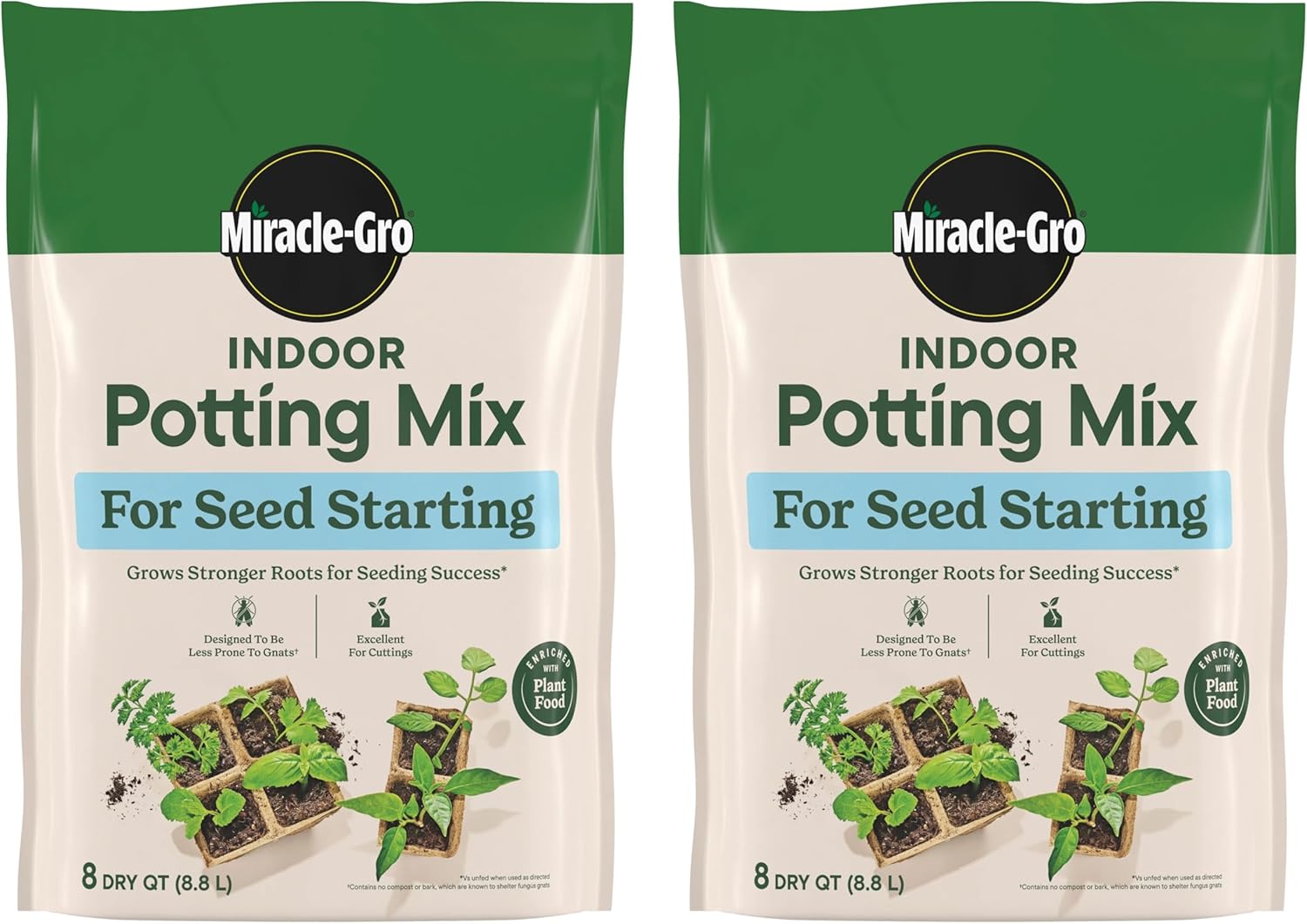
Miracle-Gro Indoor Potting Mix for Seed Starting, 8 qt. (2-Pack)
| Brand Name | Miracle-Gro |
|---|---|
| Item Type Name | Potting Mix |
| Number of Packs | 2 |
| Volume | 8 quarts |
This two-pack of Miracle-Gro Indoor Potting Mix is designed specifically for starting seeds and rooting cuttings indoors. The blend is lightweight and pre-enriched with plant food so seedlings get a nutrient boost during early root development, and the manufacturer says it yields stronger roots compared with unfed mixes when used as directed. It is intended for vegetables, flowers, and herbs and works well in cell trays and small containers; one 8 qt. bag will fill roughly three 72-cell trays. Notably, the formula omits compost and bark, which helps lower the chance of fungus gnat infestations in damp seed-starting setups. Use it by filling trays or pots, keeping the mix evenly moist, and shielding newly sown seeds from direct sun until germination. Important limitations are standard for enriched mixes: it contains fertilizer (so handle carefully) and it is a seed-starting medium rather than an all-purpose potting soil for mature plants, so you will likely transplant seedlings into a different mix or amend soil later.
Best for: Buyers who want a low-effort, indoor seed-starting medium that supports faster root development and reduces common pest risks while following proven seed-starting practices.
Less Ideal for: Gardeners who need a permanent potting soil for mature container plants or who prefer fully organic, compost-rich mixes should consider alternatives.
- Lightweight, ready-to-use formula tailored for seed germination and cuttings
- Pre-enriched with plant food to support early root and seedling growth
- Excludes compost and bark to reduce habitat for fungus gnats
- Comes as a two-pack so you have enough mix for multiple trays
- Contains fertilizer which requires careful handling and storage
- Intended for seed starting so not formulated as long-term potting soil for mature plants
Verdict: A practical, low-risk seed-starting mix that boosts early root growth and reduces fungus gnat risk, making it a reliable choice for indoor vegetable seedlings.
Back to the Roots Organic Seed Starting Mix — Expanding 12 Quart Block

| Volume | 12 quarts |
|---|---|
| Item Type Name | Seed Starting Mix |
| Unit Count | 384 Fluid Ounces |
| OMRI Listed | Yes |
| Peat Free | Yes |
This compressed seed starting mix is a coir-based block that expands to 12 quarts of loose, ready-to-use seedling soil after adding water. It is designed for starting seeds, potting up seedlings, and amending small pots for herbs, vegetables, and flowers. Notable features include an OMRI-listed organic formulation, balanced pH and low electrical conductivity to support nutrient uptake, and compact storage compared with bulky soil bags. In practice the block is easy to hydrate and fluffs up quickly, producing a light, airy medium with good water retention and aeration for root development. The convenience of a single expanding block and beginner-friendly handling makes it a reliable choice for cautious gardeners who want predictable results without mixing multiple ingredients. Limitations are that it is a single-purpose starter mix rather than an all-in-one fertilized potting soil and larger projects will need multiple blocks, so plan quantities ahead.
Best for: Practical gardeners who want a reliable, easy-to-use organic starter medium for small-scale seed trays, pots, and indoor seedlings and who prioritize predictable, low-fuss results.
Less Ideal for: Gardeners needing a ready-to-use, fertilized all-purpose potting soil for large container gardens or immediate long-term container plantings should consider an enriched potting mix instead.
- Expands to 12 quarts from a compact compressed block for easy storage and transport
- OMRI-listed organic and peat-free formulation suitable for organic growing
- Neutral pH and low electrical conductivity support seedling nutrient uptake
- Light, fluffy texture promotes good aeration and root development
- Simple to hydrate and use, friendly for beginners and low-effort setups
- Sold as a bare starting mix without added fertilizer for later stages
- Single block size requires purchasing multiple units for larger seed batches
Verdict: A compact, OMRI-listed organic seed starter that reliably expands into a light, neutral-pH medium for predictable, beginner-friendly seed starting.
Choosing the Right Seed Starting Soil Mix: Key Factors to Consider
Particle Texture and Size
Fine, uniform particle texture matters because most seeds and tiny roots need a gentle medium to push through and to contact moisture. Very coarse mixes can leave small seeds too dry between particles, while overly fine, compacting mixes can form crusts that impede sprout emergence.
Pay attention to how the mix feels when you rub it between your fingers – it should be noticeably fine but not powdery. Texture also affects air space; consistent particle size helps maintain the small pockets of oxygen seedlings require for healthy root development.
Drainage Versus Moisture Retention
Seed starting mixes must strike a balance between draining excess water and holding enough moisture for steady germination. Too much drainage dries out small seeds quickly, causing variable germination. Too little drainage leads to waterlogged conditions that encourage damping-off and root rot.
Look for mixes that contain light porous materials such as perlite or vermiculite to improve drainage while including a moisture-holding component. Consider your watering routine and the environment: drier, warm rooms need mixes with higher water-holding capacity, while cool, humid spaces can use mixes that drain more freely.
Sterility and Disease Control
A clean, sterile mix reduces the chance of fungal problems and soil-borne pests during the vulnerable seedling stage. Seed starting mixes are often pasteurized or made from soilless components to limit weed seeds and pathogens.
Even with a sterile mix, good sanitation of flats and gentle watering practices are important. Sterility does not eliminate poor cultural practices, but it lowers baseline risk and can dramatically improve germination success, especially for slow-germinating or high-value seeds.
Nutrient Baseline and Fertility Approach
Seedlings require only modest nutrition until they develop true leaves and begin faster growth. Many seed starting mixes are low in soluble fertilizer by design to avoid burning tiny roots and to encourage development of a healthy root system.
Consider whether you prefer a mix with a light starter charge that supports the first few weeks or a lean, soilless medium intended to be fed with dilute fertilizer after the first true leaves appear. Your choice should match how often you plan to fertilize and the vigor you expect from your seedlings.
Physical Stability and Ease of Transplanting
The mix should hold together enough to allow lifting or pricking out seedlings without falling apart, yet still loosen easily at transplant. Excessively friable mixes can crumble and damage roots during handling, while very cohesive mixes can cling to roots and slow root extension.
Assess how the medium behaves when moist at the level you keep it for germination. A good seed starting mix provides gentle support for stems and crowns while releasing roots cleanly at transplant time.
Environmental Impact and Ingredient Preferences
Many gardeners now weigh the sustainability of components such as peat moss against alternatives like coir or composted bark. Peat-based mixes often excel at water retention and fine texture, but coir provides a renewable alternative that performs similarly in many cases.
Think about long-term garden practices and whether you favor peat-free blends or mixes with certified composted materials. Ingredient choice affects moisture behavior, pH, and the need for additional amendments as seedlings mature.
Matching Mix to Seed Size and Species
Small seeds like lettuce, petunia, and many herbs need a very fine, shallow mix that keeps them reliably moist without burying them too deep. Larger seeds such as beans, peas, and squash tolerate coarser seedbeds and can handle mixes with slightly larger particle fractions for better air exchange.
- Fine-textured mixes for very small seeds and surface sowing.
- Coarser, more open mixes for larger seeds and deeper sowing depths.
Watering Techniques for Seed Starting
Watering method is as important as mix choice. Bottom-watering or using a fine mister reduces surface disturbance and helps avoid crusting on fine mixes. Allow the medium surface to remain consistently moist but not saturated; frequent shallow watering will dry small seeds out more quickly than deeper, gentle watering.
- Use bottom-watering for uniform moisture without washing seeds.
- Avoid heavy overhead streams that compact fine mixes.
Temperature and Light Considerations
Soil temperature influences germination speed and uniformity. A warm base is beneficial for many warm-season crops, while cool-season seeds may prefer ambient or slightly cooler conditions. Once seedlings emerge, provide bright light close to the plants to prevent legginess – the right mix will support upright stems without excessive leaning.
- Use heat mats selectively for warm-germinating species.
- Keep lights close and consistent after emergence.
Preparing Transplants for the Garden
When seedlings reach transplant size, choose a mix that eases root transition into garden soil. Gentle hardening off and using a small amount of root-safe starter nutrient helps seedlings adapt. If your mix is very light and soilless, mix a little garden soil or aged compost into the planting hole at transplant time to reduce shock.
- Harden off gradually over a week to ten days.
- Add a small amount of native soil in the planting hole for better microbial transition.
Peat Alternatives and Sustainable Choices
If you prefer to avoid peat, coir-based and bark-based mixes can replicate many desirable properties of peat while being more sustainable. Expect subtle differences in water retention and pH; coir often needs a small pH or mineral adjustment when first used.
- Look for labeled coir or composted materials if avoiding peat.
- Adjust watering slightly when switching to alternative components.
How We Chose the Best Seed Starting Soil Mix
Our shortlist focused on mixes suited specifically for beginning seeds and small transplants rather than general potting soil. We prioritized components and performance characteristics gardeners encounter when starting seeds indoors or in protected outdoor spaces. Evaluation criteria included particle texture, drainage versus moisture retention balance, disease and weed-free sterility, nutrient baseline appropriate for seedlings, and physical stability during handling and transplanting. We excluded heavy garden loam blends and large-fraction potting soils meant for mature plants. We also filtered out mixes that rely on high soluble fertilizer charges intended only for long-term containers, since seedlings need a gentler nutrient start. Sources consulted included manufacturer ingredient listings, component proportions, and common horticultural practice for seed starting. The result is a set of options that cover fine-textured, peat-reduced, and soilless choices for different watering habits and seed sizes.
FAQ
How often should I water newly sown seeds?
Often depends on seed size and environment. Small seeds in fine mix typically need the surface kept evenly moist, which may mean light watering once or twice daily in warm, dry rooms. Bottom-watering or a gentle mister reduces disturbance and promotes even moisture.
Can I use garden soil for seed starting?
Garden soil is usually too heavy and may contain weed seeds and pathogens. It can compact around tiny roots and increase damping-off risk. A sterile or soilless seed starting mix is usually a better choice for reliable germination.
Do I need to fertilize seedlings started in a seed mix?
Most seed starting mixes provide minimal nutrients by design. Seedlings usually do not need fertilization until after true leaves form. At that point, a diluted balanced fertilizer applied sparingly will support healthy growth.
Is peat-free seed mix as effective as peat-based mixes?
Peat-free mixes can be just as effective but may behave slightly differently, especially in water retention and pH. Coir and composted bark are common alternatives that perform well if you adjust watering and pH as needed.
How do I prevent damping-off in seed trays?
Use a clean, sterile mix, avoid overwatering, provide adequate air circulation, and do not keep trays in dark, stagnant conditions. Removing excess moisture and ensuring good hygiene of flats and tools reduces fungal pressure.
When is the best time to transplant seedlings started in mix?
Transplant when seedlings have developed a healthy root system and at least one set of true leaves, and when outdoor conditions match the crop's temperature needs. Handle roots gently and harden plants off before planting outdoors.
Final Verdict
Choose a seed starting soil mix that matches your typical seed sizes, watering habits, and environmental control. Prioritize a mix with the right texture for your seeds, balanced drainage and water-holding ability, and a clean, low-nutrient starting point that lets roots establish without burns. Tradeoffs are inevitable: mixes that hold more water reduce monitoring but can increase disease risk, while very light mixes dry faster but improve aeration. Use the criteria above to match a mix to your workflow and you will increase germination success and produce sturdier transplants.
