

Note: This article contains affiliate links. If you click on these links and make a purchase, I may earn a small commission at no extra cost to you. This helps support my research and content. Read my full affiliate disclosure here.
Choosing the right soil amendment for flower beds changes how plants establish, bloom, and resist stress. The wrong amendment can hold water, lock up nutrients, or shift pH in ways that slow growth. This guide focuses on options suited specifically to flower beds and how they perform in real garden conditions. We shortlisted seven strong candidates and evaluated each for nutrient contribution, effect on soil texture and drainage, longevity, and ease of use. Read on for practical notes that help you match an amendment to your garden soil and planting goals.
Top Picks at a Glance
| Best Overall The best all-around choice for most situations | Wiggle Worm Pure Worm Castings Organic Fertilizer, 15 lb |  |
| Best Quality Built to a higher standard if you want something more solid | BuildASoil Build-A-Flower Organic Top Dress Kit — 1 cu ft |  |
| Best Value The sweet spot between price and what you get | Back to the Roots Organic Worm Castings, 5 lb |  |
| Best Budget The cheapest option that still gets the job done reliably | Sukh Organic Vermiculite, 14.6 oz (Fine 1–3 mm) |  |
| Highest Rated A top-rated pick with lots of positive feedback | Azomite Micronized Soil Amendment, 44 lb |  |
| Most Popular A crowd favorite that many people choose with confidence | Brut Organic Worm Castings, 5 lb |  |
| Best Seller A high-volume bestseller chosen again and again | Back to the Roots Organic Expanding Coco Coir Potting Soil Brick (10 lb) |  |
Wiggle Worm Pure Worm Castings Organic Fertilizer, 15 lb

| Item Form | Pure earthworm castings |
|---|---|
| Specific Uses For Product | Soil Conditioning |
| Unit Count | 240 Ounce |
| OMRI Listed | Yes |
Wiggle Worm Pure Worm Castings is a straightforward organic soil amendment that supplies water-soluble nutrients and a boost of beneficial microbes to garden beds, containers, and lawns. It is used by mixing a portion into potting mixes, adding a thin top dressing to established plants, working into planting holes for transplants, or brewing into a quick casting tea for fast uptake. Notable features include its pure castings formulation with screening to remove debris and worm eggs and an OMRI listing that makes it suitable for organic gardens. Practical benefits are improved soil aeration and water retention, enhanced root development, and slow-release nutrition that reduces the need for frequent feeding. The product is non-burning and odorless, so it is safe for use around seedlings and mature plants. Limitations are that a single 15 lb bag covers a modest area so larger lawns or multiple raised beds will require multiple bags, and because it is an amendment rather than a complete fertilizer you may still need to supplement specific nutrients depending on soil test results.
Best for: Gardeners seeking an all-purpose organic soil builder to improve soil health and root development across flower beds, vegetables, and containers who prefer low-risk, easy-to-use amendments.
Less Ideal for: People who need large-scale bulk fertilizer for extensive lawns or those looking for a single product to meet precise N-P-K requirements without soil testing.
- 100% pure worm castings that add beneficial microbes and plant-ready nutrients
- OMRI listed for organic use and safe around seedlings due to non-burning formula
- Versatile application methods: top dressing, soil mix-in, planting hole amendment, or tea
- Improves soil aeration and water retention to support stronger root growth
- 15 lb bag provides only modest coverage for larger gardens or lawns
- Not a complete fertilizer so specific nutrient gaps may still require testing and supplementation
Verdict: A safe, OMRI-listed organic soil amendment that reliably improves soil structure and root health for gardeners who want an easy, low-risk way to boost plant vigor.
BuildASoil Build-A-Flower Organic Top Dress Kit — 1 cu ft

| Item Form | Granules |
|---|---|
| Specific Uses For Product | Flower Growth, Soil Conditioning |
| Application Method | Top dress |
| Target Species | Flowers |
BuildASoil Build-A-Flower is a ready-to-use organic top dress designed specifically for flowering plants and garden beds. You apply handfuls across the soil surface before or during bloom and water it in, so it works as a quick way to add phosphorus, potassium, and living organic matter without digging or complicated mixing. The product combines two composts and a range of macro and micronutrients to stimulate beneficial soil biology, improve nutrient uptake, and support stronger blooms and root health. Practical benefits include simple application for raised beds, containers, and in-ground plantings, and an all-natural formula with no synthetic fertilizers, which suits growers who prefer organic inputs. Limitations are that it is a surface amendment rather than a complete potting mix replacement and the 1 cubic foot bag is best for top-dressing several plants rather than large landscape areas, so multiple bags are needed for bigger jobs.
Best for: Gardeners focused on maximizing bloom performance who want an easy organic boost applied at flowering time; good for raised beds, borders, and container flower plantings.
Less Ideal for: Those preparing large landscape areas or replacing potting mix should consider bulk amendments or a formulated potting soil instead.
- Formulated specifically to support flowering with added phosphorus and potassium
- Contains living organic compost to stimulate beneficial soil microbes
- Easy top-dress application requires no mixing or soil replacement
- All-natural ingredients with no synthetic fertilizers
- Small 1 cubic foot bag limits coverage for larger beds
- Intended as a surface amendment rather than a full potting soil substitute
Verdict: A convenient organic top-dress that delivers bloom-focused nutrients and living compost for gardeners who want a simple, performance-oriented boost during flowering.
Back to the Roots Organic Worm Castings, 5 lb

| Item Form | Granules |
|---|---|
| Specific Uses For Product | Plant Growth, Root Development, Seed Development, Soil Conditioning |
| Target Species | all plants |
| Included Components | Resealable Bag |
| Ingredients | Vermicompost |
These worm castings are a straightforward organic soil amendment you sprinkle into flower beds, potting mixes, or around established plants to boost soil life and root development. The product is pure vermicompost in granules, so it adds beneficial microbes and organic matter without burning seedlings or producing strong odors. Use it as a top dressing, mix a light amount into planting holes, or blend with potting soil for container-grown flowers; directions are simply to sprinkle and water. The resealable bag keeps the granules dry between uses and the ingredient list is just vermicompost, which makes this an easy, low-maintenance way to improve soil structure and long-term fertility. Limitations are that it is not a complete fertilizer with measurable NPK values, so for rapid nutrient correction or specific feed schedules you will still need a balanced fertilizer. Also the five pound bag covers modest area, so larger beds will require multiple bags or bulk sourcing.
Best for: Gardeners who want a low-effort, organic way to improve soil biology and structure in flower beds or containers without strong smells or risk of burning plants.
Less Ideal for: People needing a precise, high-nitrogen feed or immediate nutrient correction for large-scale beds should consider formulated fertilizers or bulk amendments instead.
- Pure vermicompost adds beneficial microbes and improves soil structure
- Odor-free, non-burning formula safe for seedlings and established plants
- Versatile use as top dressing, soil mix amendment, or in containers
- Resealable bag preserves product between uses
- Does not list NPK or act as a standalone, fast-acting fertilizer
- Five pound bag provides limited coverage for larger flower beds
Verdict: A simple, odor-free organic amendment that boosts soil life and is ideal for gardeners wanting an easy way to improve flower bed and container soil health.
Sukh Organic Vermiculite, 14.6 oz (Fine 1–3 mm)

| Unit Count | 14.6 Ounce |
|---|---|
| Granule Size | 1-3MM |
| Volume | 14.6 quarts |
| Item Highlight | Soil Amendment for Seed Starting, Indoor Potting, Gardening |
This small bag of fine (1–3 mm) vermiculite is a straightforward soil amendment for seed starting, propagation and improving container or garden soil. Gardeners typically mix a scoop into seed-starting mixes or potting media to hold moisture around delicate roots while still improving aeration compared with straight soil. The product is stable and does not break down quickly, so it helps loosen dense soils and retain water between waterings without becoming compacted. It also mixes well with perlite, coco coir, peat, or potting soil to tune moisture and drainage for seedlings, cuttings, bonsai and potted vegetables. Important limitations are the small pack size and light weight, which means frequent repurchases for active gardeners or larger beds, and the product can irritate skin or eyes so basic precautions are advised when handling. For budget-focused gardeners this offers a low-cost way to test vermiculite in mixes before buying larger quantities.
Best for: Buyers who want an inexpensive way to improve seed starting and container mixes and who prefer trying small quantities before committing to bulk amendments.
Less Ideal for: Large-scale gardeners or landscapers who need bulk volumes for beds and raised planters should choose larger commercial bags instead.
- Fine 1–3 mm granule size suited for seed starting and propagation
- Improves moisture retention while adding aeration to potting mixes
- Stable material that resists rapid breakdown in soil
- Versatile: mixes easily with perlite, coco coir, peat, or potting soil
- Small 14.6 oz package may be insufficient for larger gardens or repeated use
- Can cause skin and eye irritation if handled without protection
Verdict: An affordable small-pack vermiculite that lets budget-minded gardeners boost seed starting and container mixes without buying bulk.
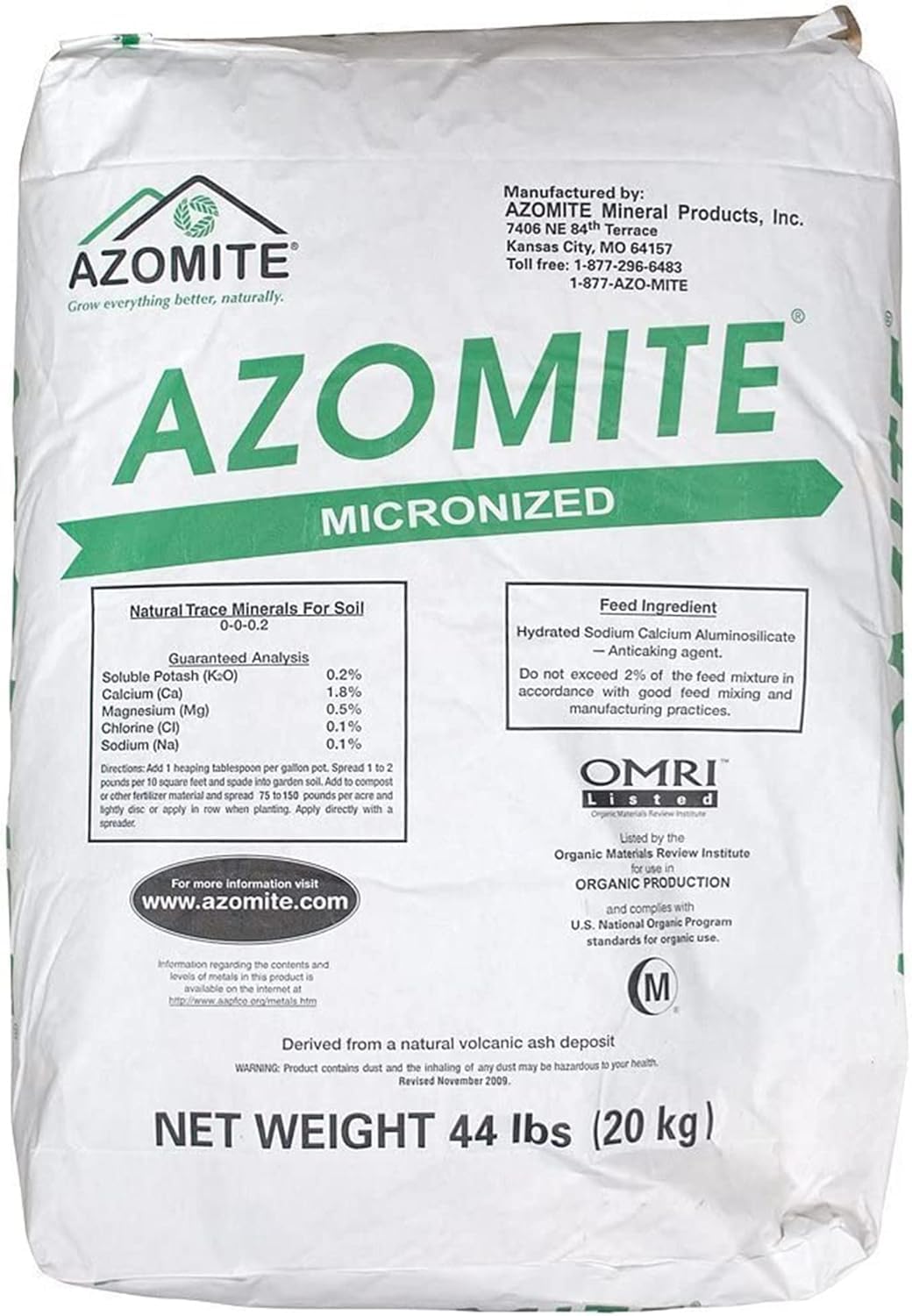
Azomite Micronized Soil Amendment, 44 lb
| Item Form | Powder |
|---|---|
| Specific Uses For Product | Soil Conditioning |
| Application Method | Mix with Soil, Hydroponics with mesh and agitation |
| Target Species | plants |
Azomite Micronized is a naturally mined, ultra-fine mineral amendment intended to reintroduce a broad range of trace elements to garden soils and growing media. You typically mix a small amount into potting mix at planting, rake it into flower beds, or top-dress established plants and water it in; it also dissolves for use in liquid feeds and hydroponic applications. Notable features include an extremely fine powder (most passes a 200‑mesh screen), OMRI listing for organic use, and a long history of agricultural use, which makes it easy to blend evenly and compatible with existing fertilizer programs. Practical benefits for flower beds include supporting microbial balance, preventing gradual mineral depletion, and providing a safe, filler-free option that will not burn plants when used as directed. Important limitations are that it is a trace mineral supplement rather than a complete fertilizer so it will not supply significant nitrogen, phosphorus, or potassium, and the powdered form produces dust that requires care during handling and application.
Best for: Gardeners who prioritize reliable, proven soil health inputs and want an organic, low‑risk way to restore trace minerals in flower beds and container plantings.
Less Ideal for: Gardeners who need an all‑in‑one fertilizer for immediate nutrient correction or who prefer granular products to avoid dust during application.
- OMRI Listed for certified organic production, so it fits organic flower bed programs
- Ultra-fine micronized powder blends quickly into soil and dissolves for liquid applications
- Contains a broad spectrum of naturally occurring trace minerals to remineralize depleted soils
- Versatile use across beds, containers, compost, and hydroponics
- Not a complete fertilizer and does not provide significant N‑P‑K macronutrients
- Powder creates inhalable dust so respiratory precautions are recommended
Verdict: Choose Azomite Micronized when you want a proven, OMRI‑listed mineral amendment that reliably remineralizes flower bed soils without synthetic additives.
Brut Organic Worm Castings, 5 lb

| Item Form | Granules |
|---|---|
| Specific Uses For Product | Gardening,Organic |
| Target Species | All plants |
| Mixing Ratio | 1:5 |
Brut Organic Worm Castings function as a concentrated, natural soil amendment you mix into potting mixes or top-dress garden beds and raised beds. Typical use is mixing at the recommended 1:5 ratio for new indoor plants, sprinkling a cup around established houseplants, or working into outdoor planting holes and beds according to the brand directions. The product is OMRI/CDFA listed and produced in controlled conditions, which supports consistent nutrient content and beneficial microbial life that help roots establish, improve soil structure, and increase moisture retention without burning plants. Practical benefits for raised garden beds include improved aeration, slow-release nutrients, and a boost in microbial activity that supports long-term fertility. Limitations are that it is not a complete NPK fertilizer for immediate heavy feeding needs and larger beds require significant quantities to hit the suggested per-square-foot rates, so frequent applications or bulk purchases may be needed for big projects.
Best for: Gardeners who prioritize dependable, organic soil improvement for raised beds and container gardens and prefer predictable, low-risk amendments that support long-term soil health.
Less Ideal for: Those needing immediate, high-NPK feeding for heavy-feeding crops or gardeners who want to amend very large beds without buying supplemental bulk material.
- Certified organic and produced indoors for consistent purity
- Rich in beneficial microbes that improve soil structure and plant vigor
- Easy-to-use granular form suitable for mixing or top-dressing
- Not a standalone high-NPK fertilizer for rapid nutrient correction
- Five-pound bag may be small for large raised beds and repeated seasonal use
Verdict: Use this OMRI/CDFA-listed worm castings product to reliably build long-term fertility and microbial health in raised beds and containers.
Back to the Roots Organic Expanding Coco Coir Potting Soil Brick (10 lb)

| Item Highlight | 10 lb compressed coco coir brick; peat-free; OMRI Listed |
|---|---|
| Item Type Name | Coconut Coir |
| Volume | 2 cubic feet |
| Ingredients | Coconut Coir |
| Style Name | Expanding Potting Soil |
This compressed coco coir brick provides a lightweight, peat-free potting medium that expands when you add water to create loose, airy substrate for containers and seed flats. It is typically used by hydrating the 10 lb block to about 2 cubic feet of coir and then using it alone for potted plants, mixing it into garden soil to improve drainage and aeration, or blending with compost for starting seeds. Notable features include OMRI listing for organic use, a balanced pH suited to a wide range of plants, and compact storage before expansion which saves space. Practical benefits are improved root aeration and water retention compared with heavy garden loam, easier handling than bulky bags, and versatility across vegetables, herbs, and ornamentals. Important limitations are that coco coir is a soilless substrate and does not supply significant nutrients on its own so you will need to add fertilizer or compost for long-term potted herbs like rosemary, and the product requires time and a water source to expand before use.
Best for: Buyers who prioritize low-risk, easy-to-handle, organic potting media and want a versatile base for container herbs and seed starting without dealing with heavy bags.
Less Ideal for: Gardeners who want a ready-to-plant, nutrient-rich potting mix out of the box or those who prefer soil with built-in slow-release fertilizer.
- Peat-free OMRI listed organic coco coir suitable for organic growing
- Expands from a compact brick to about 2 cubic feet for easy storage and transport
- pH balanced and airy texture that improves drainage and root aeration
- Versatile use: can be used alone, for seed starting, or mixed into existing soil
- Provides little inherent fertility so supplemental feeding or compost is needed for nutrient-hungry plants
Verdict: A compact, peat-free coco coir brick that expands into an airy, pH-balanced base ideal for low-risk organic container gardening and seed starting when paired with fertilizer or compost.
Choosing the Right Soil Amendment for Flower Beds: Key Factors to Consider
Nutrient Contribution and Release Pattern
Flower beds need a steady supply of macronutrients and micronutrients, but the pattern of release matters as much as the amount. Fast-release amendments provide a quick greening effect but can burn tender roots or cause a flush of leafy growth at the expense of blooms. Slow-release organic sources feed over weeks to months and support root development without dramatic swings in growth.
When choosing, think about the planting schedule. If you are planting immediately, a modest fast-release boost combined with a slower-release base works well. For established beds, prioritize amendments that steadily replenish nutrients to avoid repeated disturbance.
Effect on Soil Texture and Structure
Many flower beds suffer from compacted clay or overly quick-draining sandy soil. Amendments that add stable organic matter improve aggregation, increase water retention in sandy soils, and open clay for better root penetration. Some materials create a long-lasting improvement while others decompose quickly and need repeat applications.
Consider how much digging you want to do. If you plan to topdress and minimize disturbance, select amendments that provide visible benefits when worked lightly into the top few inches. For deeper renovation, choose materials that integrate well when tilled or double-dug.
Drainage, Aeration, and Water Management
Proper drainage prevents root rot and helps flowers access oxygen. Amendments that improve porosity are essential in heavy soils, while water-holding materials can keep pots and dry beds healthy. Matching amendment choice to existing moisture conditions prevents creating a new set of problems, such as waterlogging an already wet site.
Think about seasonal rainfall patterns and irrigation. In regions with heavy rain, prioritize materials that enhance drainage and structure. In dry climates, favor amendments that increase moisture retention without compaction.
pH Influence and Mineral Balance
Many flowering plants prefer a slightly acid to neutral pH. Some amendments shift soil pH over time, which can alter nutrient availability. Lime or wood ash raises pH while sulfur and some organic acids lower it. Organic amendments often have a mild buffering effect and change pH slowly.
If you have a recent soil test, choose amendments that move you toward the target pH rather than away. Avoid large one-time pH shifts unless you plan to monitor soil chemistry and adjust over the season.
Longevity and Maintenance Frequency
Different amendments persist for different lengths of time. Fast-decomposing materials need reapplication each season, while more durable organic matter and mineral amendments can benefit beds for several years. Longevity affects workload and cost over time and also determines how often you disturb plant roots to reapply.
Match the amendment lifespan to your maintenance rhythm. If you prefer low-effort beds, choose longer-lasting materials that improve structure with minimal repeat work. If you enjoy seasonal bed refreshes, faster-working amendments let you tailor nutrients to bloom cycles.
Ease of Application and Safety
Practical application matters. Bulky amendments that require wheelbarrows and heavy mixing are less appropriate for small raised beds or steep sites. Some materials create dust or odors that require protective gear. Others may contain weed seeds or high soluble salts that can harm young plants if not used correctly.
Consider the tools you own, the physical effort you want to expend, and any safety precautions for pets or children. Look for materials that are easy to store, spread, and integrate with common garden tools if simplicity matters.
When To Amend Flower Bed Soil
Timing amendment work to the planting schedule reduces stress on established plants and improves results for new transplants. Fall is ideal for many organic, slow-decomposing materials because they integrate over winter, improving structure for spring planting. Early spring works for fast-acting nutrients if you need a quick start to the season.
- Amend deeply when renovating or creating new beds.
- Topdress or lightly fork in amendments for established plantings to avoid root disturbance.
- Apply moisture-retentive materials before hot, dry periods and drainage-improving materials before rainy seasons.
How Much To Apply and How To Incorporate It
Application rates depend on the amendment type and current soil condition. A soil test will guide the amount, but general practice is to work generous but not excessive amounts of organic matter into the top 6 to 12 inches for new beds. For smaller improvements, a 1 to 3 inch topdressing incorporated into the top few inches is usually sufficient. Use a garden fork, broadfork, or hand tools for small beds. For no-dig beds, spread material on the surface and let biological activity incorporate it slowly. Avoid burying uncomposted materials too deeply where they can rob nitrogen during decomposition.
- Measure your bed area to calculate volumes before buying or mixing amendments.
- Rotate amendments seasonally if you rely on quick-release materials to avoid nutrient imbalances.
Using Amendments With Mulch and Fertilizers
Amendments change how mulch and fertilizers behave. Organic amendments increase microbial activity that helps release nutrients from mulch and compost, while mineral amendments change nutrient availability directly. Coordinate amendments and fertilizer timing to avoid overapplication that can stress flowers. Apply fertilizers based on plant need and soil test rather than on a fixed schedule that ignores what the amendment already supplies.
- Apply mulch after amendments have been incorporated or settled.
- Avoid applying high nitrogen fertilizer immediately after adding large amounts of fresh carbon-rich material.
Small-Space and Container Flower Beds
Containers and narrow beds need different amendment choices because of limited soil volume and faster nutrient turnover. Lightweight, well-draining mixes that incorporate stable organic matter and a slow-release fertilizer are usually best. Heavy mineral amendments can overload container weight and reduce porosity. For small beds, focus on amendments that offer clear benefits in a single season and are easy to mix to a uniform depth without heavy tools.
- Use measured, small-batch mixes for containers to maintain consistent moisture and nutrient levels.
- Topdress containers mid-season with a thin layer of compost or a dilute fertilizer if growth slows.
How We Chose the Best Soil Amendment for Flower Beds
To build this list we focused on the features that actually matter when improving flower bed soil, then applied filters to remove options that are impractical for home gardeners. We prioritized amendments that demonstrably change soil physical properties or nutrient availability rather than single-use additives with marginal benefit. Evaluation criteria included nutrient profile and release pattern, impact on soil structure and drainage, pH influence and buffering, longevity in the bed, and ease of incorporation for typical backyard tools. We also considered safety for ornamental plants and common pests or weed seeds in organic materials. Products were excluded if they require specialized equipment to apply, are intended only for agricultural scale, or introduce persistent contaminants. The final shortlist balances short-term feeding needs with longer-term soil building so the recommended amendments fit different soil tests, planting timelines, and maintenance preferences.
FAQ
How do I know which amendment my flower bed needs?
Start with a basic soil test that reports texture, pH, and nutrient levels. Observe drainage and plant vigor over a season. Match amendments to the biggest limiting factor: poor structure, low organic matter, incorrect pH, or nutrient deficiencies.
Can I add amendments around established perennials without harming roots?
Yes, when done gently. Light topdressing and careful forking into the top few inches usually avoids root damage. Avoid deep digging close to established crowns during the growing season.
Will adding organic matter change my soil pH quickly?
Most organic materials change pH slowly over months to years. Some mineral or alkaline materials can shift pH faster. If pH is critical, make changes gradually and re-test before making large adjustments.
How often should I reapply soil amendments in a flower bed?
It depends on the amendment. Fast-decomposing materials may benefit from annual reapplication, while more durable amendments and mineral conditioners can last several years. Revisit beds after a season to judge effects.
Are there amendments I should avoid in flower beds?
Avoid materials that contain excessive salts, persistent contaminants, or weed seeds. Uncomposted manures applied directly can burn plants or introduce pathogens. Exclude any amendment that requires specialized application equipment you do not have.
Final Verdict
Choose an amendment that fixes the specific limitation in your flower beds rather than chasing a single ideal. Prioritize materials that improve structure and drainage if soil is compacted, or ones that supply steady nutrients if blooms are weak. Balance short-term feeding with long-term soil building to reduce repeat disturbance. Focus on ease of application and the amendment lifespan that fits your maintenance habits. With a clear soil test and a modest plan, you can improve bloom health and bed performance without excess work or risk.
