

Note: This article contains affiliate links. If you click on these links and make a purchase, I may earn a small commission at no extra cost to you. This helps support my research and content. Read my full affiliate disclosure here.
Picking the right self watering planter matters when you keep plants indoors. The wrong container can trap moisture, stress roots, or force frequent refills. This guide looks at a short list of seven top self watering planters for houseplants that suit apartments, offices, and busy households. We evaluate reservoir capacity, wicking performance, materials, and how each planter behaves in real indoor light and humidity conditions. Read on to find a low-maintenance container that fits your space and watering routine.
Top Picks at a Glance
| Best Overall The best all-around choice for most situations | Vandorelle 4" Self-Watering Indoor Planter 8-Pack with Clear Inner Cup and Wick |  |
| Best Quality Built to a higher standard if you want something more solid | Lechuza Cubi Premium Mini Self-Watering Planter |  |
| Best Value The sweet spot between price and what you get | GARDIFE 6‑Piece Self‑Watering Plant Pots Set (4–7 inch) |  |
| Best Budget The cheapest option that still gets the job done reliably | OJYUDD 8-Pack 4" Self-Watering Plastic Planters with Inner Pots |  |
| Highest Rated A top-rated pick with lots of positive feedback | YASIMIA Self-Watering Planter Set (12, 10, 9, 8 in) |  |
| Most Popular A crowd favorite that many people choose with confidence | Fielda 8/10/12 Inch Self-Watering Planter Set |  |
| Best Seller A high-volume bestseller chosen again and again | QRRICA Self-Watering Plastic Planter Set (5-Pack, 10/9/8/7.5/7 in) |  |
Vandorelle 4" Self-Watering Indoor Planter 8-Pack with Clear Inner Cup and Wick
| Unit Count | 8 Count |
|---|---|
| Capacity | 0.81 liters |
| Material Type | Plastic |
| Mounting Type | Tabletop |
| Indoor Outdoor Usage | Indoor |
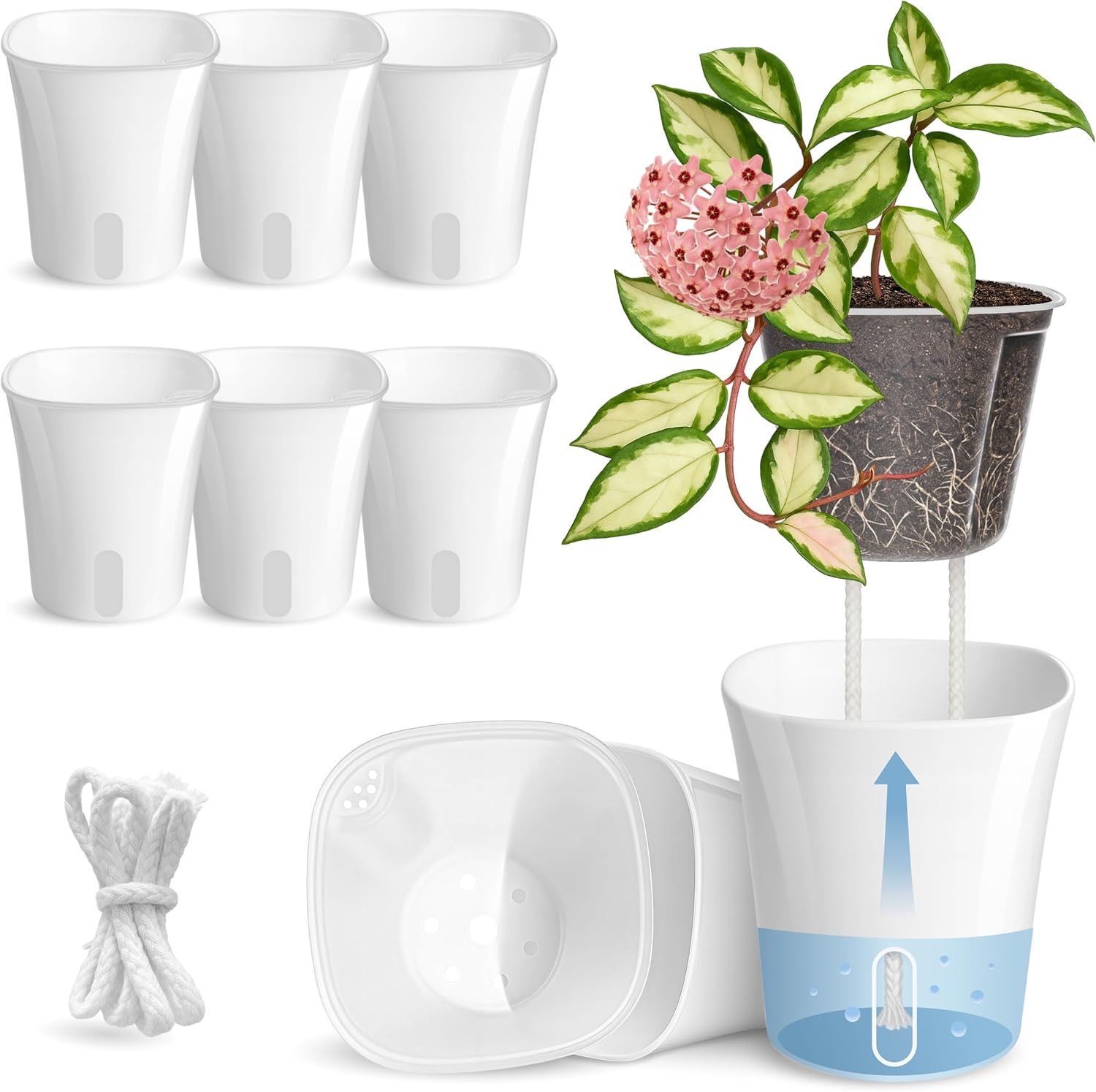
These Vandorelle 4" self-watering pots are a practical kit for hobbyist houseplant growers who want low-maintenance propagation and small-container care. Each pot uses a semi-transparent inner cup inside a white outer shell; the inner cup and side water window make it simple to monitor root growth and reservoir level. A bottom reservoir combined with a cotton wick supplies consistent moisture to seedlings, cuttings and compact houseplants without frequent top watering, and the top ventilation/watering holes let you refill the reservoir without disassembly. The lightweight plastic construction keeps the set portable and the included extra 3 ft wick makes replacements easy. Ideal for semi-hydro or soil setups and for plants like African violets, peperomias and herbs, these pots reduce overwatering and free you from daily attention. Limitations are the small 4" size and plastic material, which suit only small roots and tabletop displays rather than larger specimens or heavy-duty outdoor use.
Best for: Houseplant owners who want a reliable, low-effort solution for propagations, seedlings and small tabletop plants and who value easy monitoring and infrequent watering.
Less Ideal for: Collectors of large or mature plants, outdoor container gardeners, or anyone needing heavy-duty or decorative long-term planters for big root systems.
- Clear inner cup and side water window let you check root health and reservoir level without disturbing the plant
- Built-in reservoir with wick provides steady bottom-up moisture to reduce overwatering
- Top ventilation/watering holes allow refilling without removing the inner cup
- Includes eight matching pots plus an extra 3 ft wick for replacements
- Lightweight, tabletop-friendly design that is easy to move and arrange indoors
- 4" size limits these to seedlings, cuttings and small houseplants rather than larger or deep-rooted plants
- Plastic construction is less durable and less attractive than ceramic or terracotta alternatives
Verdict: If you want an easy, low-maintenance way to propagate and keep small houseplants happily watered, this 8-pack of clear-inner, wick-fed self-watering pots is an efficient, beginner-friendly choice.
Lechuza Cubi Premium Mini Self-Watering Planter

| Capacity | 0.8 liters |
|---|---|
| Material Type | Plastic |
| Other Special Features of the Product | Drainage Hole |
| Indoor Outdoor Usage | Indoor |
The Lechuza Cubi Premium Mini is a small, performance-focused self-watering planter designed for foliage and small blooming houseplants such as mini orchids. It uses an internal reservoir, wick system, and inorganic substrate to deliver water to roots on demand, while the visible water-level indicator removes guesswork about when to top up. The removable inner liner makes potting and cleaning easy and lets you lift plants out without disturbing the outer glossy shell. Made of durable plastic with a high-gloss finish, the Mini is suitable for tabletop use and is rated for indoor placements. Its 0.8 liter capacity and single-level reservoir extend time between watering, which benefits owners who prefer reliable, low-maintenance watering performance. Limitations are its small capacity and compact size, which restrict the planter to small plants and shorter watering intervals than larger self-watering models, and the glossy finish can show dust or fingerprints indoors.
Best for: Buyers who prioritize reliable, low-maintenance watering and want a compact, performance-oriented planter for tabletop foliage or small flowering houseplants.
Less Ideal for: People who need large-capacity containers for bigger plants or long multiweek absences should choose a larger self-watering model instead.
- Self-watering reservoir with visible water-level indicator reduces watering guesswork
- Removable inner liner simplifies planting, cleaning, and transporting plants
- Includes Lechuza-PON substrate and wick system to improve root aeration and water regulation
- Durable frost- and UV-resistant plastic with glossy finish for long-lasting indoor use
- Small 0.8 liter reservoir limits suitability to only small houseplants
- Glossy surface shows dust and fingerprints and may require frequent wiping
Verdict: Choose the Lechuza Mini Cubi if you want a compact, dependable self-watering tabletop planter that cuts watering chores for small houseplants.
GARDIFE 6‑Piece Self‑Watering Plant Pots Set (4–7 inch)

| Material Type | Polypropylene (PP) |
|---|---|
| Unit Count | 6 Count |
| Set Name | 6-Piece Self-Watering Planter Set |
| Indoor Outdoor Usage | Indoor |
| Other Special Features of the Product | Drainage Hole |
These GARDIFE planters are a practical self‑watering set for houseplants that pairs a built‑in reservoir with a drainage hole to simplify moisture management. The kit contains six nested sizes (4, 5, 5.5, 6, 6.5 and 7 inches) so you can pot a range of small to medium houseplants, succulents, African violets and herbs. Made of lightweight polypropylene, the pots are easy to move and the reservoir helps maintain consistent soil moisture so you can water less often and reduce the risk of overwatering. The drainage hole lets excess water escape when needed, which helps keep roots healthy compared with sealed self‑watering containers. Because the set covers multiple sizes, it works well for repotting or grouping plants together. Expect typical plastic planter limits: they are not decorative ceramics and will show scuffs over time, and larger or heavier plants will need sturdier containers. For growers who prefer low‑maintenance indoor plant care, this set balances convenience, size variety and basic drainage features effectively.
Best for: Buyers who want a low‑maintenance, practical planter set for indoor plants and prefer consistent watering with a range of pot sizes to reuse across seedlings, succulents and small houseplants.
Less Ideal for: Those seeking decorative, heavy stone or ceramic pots for display or gardeners who grow large, top‑heavy plants that need substantial support should look elsewhere.
- Built‑in self‑watering reservoir maintains steadier soil moisture
- Includes six graduated sizes to fit a wide range of small to medium houseplants
- Drainage hole reduces risk of root rot compared with fully sealed pots
- Lightweight polypropylene construction is easy to handle and clean
- Plastic material is not as heavy or decorative as ceramic or terracotta
- Not intended for large, heavy plants that need more robust support
Verdict: A practical multi‑size self‑watering set that simplifies indoor plant care by keeping soil moisture steady while offering drainage for healthy roots.
OJYUDD 8-Pack 4" Self-Watering Plastic Planters with Inner Pots

| Material Type | Plastic |
|---|---|
| Unit Count | 8 Count |
| Mounting Type | Floor Standing, Tabletop, Window Mount |
| Indoor Outdoor Usage | Indoor |
These OJYUDD planters are a budget-friendly set of eight small self-watering pots intended for indoor use with plants like succulents, African violets, and small herbs. Each pot uses a double-layer design: an outer reservoir and an inner pot with three hollow pillars that extend into the water chamber so soil can wick moisture up to the roots. That setup reduces how often you need to water and makes the set useful for short trips or busy household routines. The pots are lightweight matte plastic, easy to move and wipe clean, and the uniform white finish works well on windowsills or tabletops. Limitations are obvious from the size: these are very small containers intended for young plants or small species, so they will require more frequent repotting as plants grow and offer limited soil volume for water retention. The simple plastic construction is durable for indoor use but not decorative enough if you want ceramics or textured planters for display.
Best for: Buyers looking for an inexpensive, low-maintenance way to keep multiple small houseplants watered during busy weeks or short trips away.
Less Ideal for: Not a good choice for growers who need larger containers for established plants or those seeking high-end decorative materials and finishes.
- Self-watering double-layer design that reduces daily watering
- Sold as an eight-piece set for good value per pot
- Lightweight and easy to clean plastic construction
- Suitable for windowsill, tabletop, or small-space displays
- Very small capacity suited only to seedlings, succulents, or small houseplants
- Plain plastic look may not satisfy buyers seeking decorative planters
Verdict: A very affordable eight-piece self-watering set that keeps small houseplants watered with minimal fuss.
YASIMIA Self-Watering Planter Set (12, 10, 9, 8 in)

| Material Type | Plastic |
|---|---|
| Other Special Features of the Product | Lightweight, Self Watering |
| Mounting Type | Floor Standing |
| Indoor Outdoor Usage | Indoor, Outdoor |
| Included Components | Tray |
These YASIMIA planters are designed to simplify routine care by combining a reservoir, wick system, and clear water-level window so plants get steady moisture without daily attention. Typical use is potting houseplants—large sizes for monstera or fiddle-leaf figs and smaller pots for herbs or succulents—then filling the reservoir and letting the wick deliver water to roots for roughly a week or more. Notable features include the removable tray and drainage holes that allow both top and bottom watering, a breathable drainage design to reduce root rot risk, and a matte high-density plastic build that is lightweight and easy to move. The practical benefits are reduced watering frequency, easier monitoring via the indicator, and lower breakage risk compared with ceramic. Limitations are that the plastic finish is not decorative enough for formal interiors and the reservoir capacity means very thirsty large specimens may still need supplemental watering on long absences. Expect dependable, low-effort moisture control rather than soil moisture perfection for every plant type.
Best for: Buyers who prioritize reliable, low-maintenance moisture control for common houseplants and want fewer missed waterings while away.
Less Ideal for: People seeking decorative, high-end ceramic planters or those with very large, high-demand tropical specimens that need daily watering.
- Built-in reservoir with wick system reduces watering frequency for up to 7–14 days
- Clear water-level indicator for quick visual checks
- Drainage holes plus removable tray allow flexible top or bottom watering and easier cleaning
- Lightweight, high-density plastic is durable and easy to move without risk of breaking
- Plastic matte finish is utilitarian and may not suit decorative needs of formal interiors
- Reservoir size may be insufficient for very large, high-water-use plants on extended trips
Verdict: A practical, low-maintenance self-watering planter set that keeps common houseplants consistently hydrated with minimal effort.
Fielda 8/10/12 Inch Self-Watering Planter Set

| Included Components | Saucer, Water Level Indicator Window |
|---|---|
| Capacity | 2.5 gallons |
| Material Type | Plastic |
| Indoor Outdoor Usage | Indoor, Outdoor |
These Fielda planters are a practical self-watering set for anyone who wants lower-maintenance container gardening. Each pot has a deep reservoir and an absorbent cotton wick that draws water up to the root zone, while a transparent water-level window lets you check reservoir volume without disturbing the plant. Detachable saucers and multiple drainage holes simplify cleaning and prevent overwatering, and the thicker plastic walls make the pots durable for both indoor and outdoor placement. In real use they keep soil evenly moist for roughly a week for typical houseplants, which is convenient for busy schedules or short trips. Limitations to note are the reduced usable planting depth because of the reservoir and the lightweight plastic construction, which can tip with very top-heavy plants in windy outdoor spots. The design is straightforward to set up and maintain, and the visible indicator and removable tray make it easy to avoid waterlogging while reducing daily watering chores.
Best for: Buyers who want a low-maintenance, reliable self-watering solution that visibly shows reservoir status and simplifies weekly care for common houseplants and balcony pots.
Less Ideal for: Growers needing maximum root depth for large specimen plants or those who prefer heavy, terracotta-style pots for stability and aesthetic weight.
- Self-watering reservoir with cotton wick delivers consistent moisture to roots for up to 7–10 days
- Transparent water-level window provides easy visual monitoring without moving the pot
- Removable saucer tray and multiple drainage holes simplify cleaning and prevent waterlogging
- Durable, high-temperature-resistant plastic resists fading and cracking for indoor or outdoor use
- Reservoir reduces usable planting depth compared with a regular pot of the same outer size
- Lightweight plastic can be prone to tipping with large, top-heavy plants in windy conditions
Verdict: A convenient, visible self-watering planter set that cuts down weekly watering while working reliably for typical houseplants and balcony containers.
QRRICA Self-Watering Plastic Planter Set (5-Pack, 10/9/8/7.5/7 in)

| Material | Plastic |
|---|---|
| Set count | 5 Count |
| Special features | Drainage Hole, Self Watering |
| Included components | Saucer |
| Indoor usage | Indoor |
These QRRICA planters are a straightforward self-watering solution for houseplants. Each pot has a separate reservoir and a removable wick that delivers moisture to the soil so plants draw water as needed, which can keep a full reservoir lasting about one to two weeks depending on conditions. The set includes five nested sizes useful for repotting a range of indoor plants from succulents and herbs to larger foliage like pothos or small monsteras. Built-in mesh drainage and included saucers help protect surfaces and reduce the chance of standing water at the roots. Made from matte plastic, the pots are lightweight and easy to move while the manufacturer says they are UV resistant for occasional outdoor use. Limitations to note are the plastic construction, which some buyers may find less premium than ceramic, and the lack of a visible water-level window on this specific set, so you will need to check the reservoir to avoid running dry. For predictable, low-effort indoor watering the design works well, but those wanting heavier-duty or decorative materials should consider alternatives.
Best for: Home plant owners who want a low-maintenance, reliable watering system that reduces daily watering chores and supports a variety of common houseplants.
Less Ideal for: Buyers seeking premium decorative planters or heavier materials for showpiece plants in formal interiors should look at ceramic or stone options instead.
- Effective wick-based reservoir system that can supply water for about one to two weeks
- Built-in mesh drainage holes plus saucers to prevent surface damage and reduce root saturation
- Five sizes included cover a wide range of common houseplants and repotting needs
- Lightweight, recyclable plastic construction makes pots easy to move and position
- Plastic finish is less decorative and feels cheaper than ceramic or terracotta
- No visible external water-level window on this set, so reservoir level must be checked manually
Verdict: Choose this set if you want a dependable, low-effort self-watering solution that simplifies indoor plant care across multiple pot sizes.
Choosing the Right Self Watering Planter for Houseplants: Key Factors to Consider
Reservoir Size and Refill Frequency
Reservoir volume determines how long a planter will supply water between refills. Larger reservoirs reduce refill frequency, which is helpful if you travel or have many pots, but very large reservoirs can hold excess water for long periods and increase risk of over-saturation in low-light homes.
Think about how often you want to top up and choose a capacity that matches your schedule. Also check how easy it is to refill: top-fill ports or removable inner pots are quicker and less likely to spill than awkward side openings.
Wicking System and Soil Contact
How water moves from the reservoir to the root zone is the core function of these planters. Wick-based systems pull moisture gradually through a fabric or rope that must maintain good contact with the potting mix. Passive standpipe or inner-saucer designs rely on capillary action and require consistent soil mix to work reliably.
If you use chunky mixes or add perlite, test for continuity between wick and soil. A poorly seated wick or incompatible media can leave roots dry despite a full reservoir.
Drainage, Overflow Protection, and Root Health
Indoor planters still need a way to shed excess water. Good self watering designs include overflow channels, risers that separate soil from standing water, or clear indicators showing reservoir level. Without these features, standing water can cause root rot and salt buildup.
Consider how the planter handles heavy watering or accidental overfilling. An overflow outlet that directs excess away from the root zone and a built-in spacing system to keep roots above the reservoir are practical safeguards.
Material, Finish, and Indoor Compatibility
Materials affect weight, durability, appearance, and how the planter performs over time. Hard plastics are lightweight and easy to clean but can fade or scratch; ceramics look better in living spaces but can be heavy and brittle. Glazes and paints should resist water stains and mineral rings in the reservoir area.
Also factor in breathability and thermal behavior. Some materials retain heat or cold differently, which can affect moisture evaporation and root temperature in sun-filled windows.
Fit for Plant Type and Potting Mix
Different houseplants have different moisture needs. Succulents and cacti prefer a drier root zone and often need planters that let water drain quickly away from roots, while tropical foliage plants tolerate steadier moisture. The planter design should match the plant's watering profile and the expected potting mix.
Confirm that the planter accommodates a suitable potting medium and allows you to adjust soil depth or insert drainage layers if needed.
Maintenance, Cleaning, and Long-Term Use
Ease of cleaning affects long-term performance and plant health. Reservoirs that are hard to access trap algae, salts, and debris, which can clog wicks or create odors. Removable inner pots, wide access ports, and smooth, non-porous surfaces simplify cleaning.
Plan for periodic flushing of the reservoir and occasional wick replacement. Choose a planter whose maintenance steps you can realistically perform in your living space.
Which Houseplants Benefit Most From Self Watering Planters
Self watering planters are especially helpful for plants that prefer steady moisture and for owners who cannot water daily. Tropical foliage plants, many ferns, and some herb varieties do well because they use water consistently and respond positively to even soil moisture.
Plants that require a dry cycle, like most succulents, can still be grown in self watering containers if you use a fast-draining mix and smaller reservoirs. Assess each plant's natural water rhythm and match it to a planter design that can be tuned with soil choice or reservoir management.
- Good fit: tropical houseplants that need steady humidity
- Adjustable fit: herbs and some perennials with proper soil
- Poor fit without modification: true succulents and cacti
Placement and Light Considerations for Indoor Reservoirs
Where you set the planter affects evaporation and how fast the reservoir empties. South- or west-facing windows will draw moisture faster than shaded corners, so a planter that works in low light may need more frequent refills in bright spots.
Avoid placing reservoirs where repeated condensation or splashing might damage furniture. Use saucers or trays under decorative outer pots, and consider grouping plants with similar light and humidity needs to make reservoir management consistent.
- Bright windows increase refill rate
- Low-light rooms extend time between refills
- Protect wood and textiles from overflow or spills
Potting Mix and Setup Tips for Reliable Wicking
A consistent, well-aggregated potting mix helps wicks maintain contact and move moisture predictably. Avoid mixes with large, dry chunks right at the wick interface. If you use perlite heavily, ensure the wick is embedded in wetter portions of the mix or add a finer layer around the wick.
When planting, firm the soil lightly around the wick or inner riser and water once from the top to settle the mix. That initial contact prevents dry pockets that slow capillary action.
- Use a balanced potting mix for most houseplants
- Embed the wick in the mix and pre-wet after planting
- Consider a thin separation layer for plants that dislike constant wet feet
Refilling Strategies and Vacation Care
Plan a refill routine based on reservoir size and site conditions. Mark the refill interval on your calendar until you know how long a full reservoir lasts in your space. For longer absences, combine a larger reservoir with a moisture-monitoring check or use external top-up bottles that fit reservoir ports.
If you expect to be away for extended periods, test the planter with the specific plant and soil before leaving. Some gardeners use temporary wicks or capillary hoses to extend watering duration safely.
- Track refill frequency for two weeks to establish a baseline
- Use top-fill ports to simplify quick refills
- Test any vacation setup ahead of time
Aesthetic and Indoor Styling Tips
Self watering planters come in a wide range of finishes; choose one that complements your decor but also hides mineral stains near the reservoir. Matte finishes can show less water ring buildup than glossy glazes. Consider color and silhouette relative to window sills and shelving.
If visibility of the reservoir bothers you, select a decorative outer pot that conceals the water chamber or choose planters with integrated liners that lift out for service.
- Select finishes resistant to mineral staining
- Match planter scale to plant size for balanced aesthetics
- Use decorative covers or liners to hide reservoirs
How We Chose the Best Self Watering Planter for Houseplants
We focused on features that directly affect how well a self watering planter performs in an indoor setting. Key evaluation criteria were reservoir capacity and refill ergonomics, wicking or soil delivery effectiveness, drainage and overflow protection, material and finish durability, and ease of cleaning and maintenance. We tested how design choices influence root health and moisture consistency across typical houseplant potting mixes and light conditions. Products that relied solely on unclear reservoir access, or that lacked meaningful overflow safeguards, were excluded. We also filtered out planters whose materials were prone to staining or that had thin, fragile construction that shortens usable life. The final shortlist favors planters that make refilling straightforward, deliver water evenly to the root zone, let excess drain away safely, and that are simple to clean without disturbing the plant.
FAQ
Can I use a self watering planter for succulents?
Sometimes. Succulents prefer dry conditions, so choose a planter with a small reservoir, fast-draining mix, and a clear way to keep roots from sitting in water. Many gardeners prefer traditional pots for true cacti, but modified self watering setups can work with careful soil and reservoir management.
How often should I refill the reservoir?
It depends on reservoir size, plant water use, and light. Many indoor setups need refilling every one to three weeks. Monitor the reservoir level for a couple of refill cycles to establish a routine for your specific placement and plants.
Will salts and minerals build up in the reservoir?
Often salts collect over time, especially with hard water or fertilized soil. Periodically empty and rinse the reservoir and flush the soil with plain water to reduce buildup. Removable liners or wide access ports make this task easier.
Do self watering planters prevent root rot?
Not automatically. Proper design features like overflow channels, root risers, and air space between soil and standing water reduce risk. However, incorrect soil or blocked wicking can still create overly wet conditions that lead to rot.
Can I repot into a self watering planter myself?
Yes. Repotting into a self watering container follows the same steps as a normal pot but you should ensure the wick and reservoir components are correctly seated and that the soil makes good contact with the delivery system. Water lightly after planting to settle the mix and confirm wicking.
Final Verdict
Choose the self watering planter that matches how you actually care for houseplants rather than the flashiest design. Prioritize reservoir access and capacity that fits your refill rhythm, reliable wicking that suits your potting mix, and drainage features that protect roots from standing water. Balance material and style with ease of cleaning so the planter performs well over time. With those tradeoffs in mind, you can pick a low-maintenance indoor container that keeps plants healthier and reduces day-to-day watering chores.
