

Note: This article contains affiliate links. If you click on these links and make a purchase, I may earn a small commission at no extra cost to you. This helps support my research and content. Read my full affiliate disclosure here.
If you garden organically, your irrigation choices affect soil life, nutrient availability, and plant health. A soaker hose for organic gardening can deliver slow, deep moisture to roots while minimizing foliar wetting that spreads disease. The right hose balances gentle, consistent flow with materials that do not leach harmful chemicals into beds or containers. This guide shortlists the top five options suited to organic beds and containers and explains how we evaluated them for material safety, emit pattern, and ease of seasonal care. Read on to compare the traits that matter most for organic growing situations.
Top Picks at a Glance
| Best Overall The best all-around choice for most situations | Rocky Mountain Goods Heavy-Duty Rubber Soaker Hose, 50 ft |  |
| Best Quality Built to a higher standard if you want something more solid | Water Right 700 Series Polyurethane Soaker Hose, 25 ft (1/2" ID) |  |
| Best Value The sweet spot between price and what you get | Hourleey Flat Soaker Hose 100 ft – Linkable Dual-Layer Drip Hose |  |
| Best Budget The cheapest option that still gets the job done reliably | Raindrip 1/4-Inch x 50-Foot Soaker Hose Tubing |  |
| Highest Rated A top-rated pick with lots of positive feedback | New England Garden Tools 25 ft Flat Soaker Hose for Drip Irrigation |  |
Rocky Mountain Goods Heavy-Duty Rubber Soaker Hose, 50 ft

| Material Type | Rubber |
|---|---|
| Item Length | 50 Feet |
| Nominal Wall Thickness | 0.125 inches |
| Outside Diameter | 0.5 inches |
This Rocky Mountain Goods soaker hose is a basic, durable option for delivering slow, deep watering to trees, shrubs, and flower beds. Made from recycled rubber, the hose lays along a planting root zone and seeps water evenly through its porous wall, which helps reduce evaporation and encourages deeper root growth. Reinforced quick‑attach fittings let you join additional lengths without special tools, and the included end cap keeps water flow contained when a line is not extended. The nominal wall thickness and rubber construction should resist kinking and hold up seasonally better than thin vinyl alternatives, although heavy clay or shifting soil can abrade any porous hose over time. It is not a pressurized dripper system so you should plan layout and run times manually to avoid overwatering small plants. For trees, place the hose in a ring or spoke pattern to encourage root spread and run it on a timer for consistent soak cycles.
Best for: Buyers who value a low‑risk, sturdy watering solution for established trees and beds and prefer a simple, reliable product that minimizes fuss and maintenance.
Less Ideal for: Those who need precise, adjustable drip emitters for young saplings or potted plants or who want a factory‑built pressureregulated irrigation system.
- Heavy recycled rubber construction for greater durability versus thin vinyl soaker hoses
- Porous wall provides slow, even seepage that promotes deep root watering
- Reinforced quick‑attach fittings allow straightforward extension of multiple lengths
- Includes end cap so unused ends can be closed without extra parts
- Porous soaker design requires manual timing or a separate timer to avoid overwatering
- Will eventually wear from abrasion or long seasonal exposure and may need replacement after several seasons
Verdict: A tough, no‑frills rubber soaker hose that reliably delivers slow, deep watering for trees and beds with easy extension using reinforced fittings.
Water Right 700 Series Polyurethane Soaker Hose, 25 ft (1/2" ID)

| Material Type | Polyurethane |
|---|---|
| Unit Count | 25 Feet |
| Inner Diameter | 1/2" |
| Maximum Pressure | 150 psi |
| Included Components | End cap, fittings, strain reliefs |
The Water Right 700 Series soaker hose is built for steady, root-level irrigation in vegetable beds and compact garden plots. Install it along rows or weave it through raised beds and connect to a faucet or timer for long, low-pressure runs that soak soil rather than spray foliage. Its 1/2" inner diameter and porous wall produce a consistent weep from end to end, which reduces runoff and promotes deep root growth for vegetables. Polyurethane construction makes the hose light to handle, resistant to kinks and UV damage, and safe for edible gardens because it is free of lead, phthalates, and BPA. The hose comes with end fittings and an end cap so you can section beds and control flow, and the manufacturer recommends a filter if you have hard water to avoid mineral clogging. The main limitations are that a 25 ft length suits small to medium beds only and soaker hoses require careful placement and occasional unclogging compared with emitters or drip tubing for very long runs or precision single-plant feeding.
Best for: Gardeners who prioritize reliable, plant-safe irrigation and want a simple low-pressure solution for small to medium vegetable beds that promotes deep root watering.
Less Ideal for: Large-scale vegetable plots or gardeners who need precise per-plant emitters or very long continuous runs without connectors should consider alternative drip systems.
- Consistent end-to-end seep for even root-zone watering
- Made from drinking-water-safe polyurethane with no lead, phthalates, or BPA
- Resists kinking, cracking, and UV damage for season-to-season durability
- Includes end cap, fittings, and strain reliefs for straightforward installation
- 25-foot length may be too short for larger gardens without joining multiple sections
- Porous wall can clog with hard water minerals if an inline filter is not used
Verdict: Choose this hose if you want a durable, drinking-water-safe soaker hose that delivers consistent, root-focused watering for small to medium vegetable beds.
Hourleey Flat Soaker Hose 100 ft – Linkable Dual-Layer Drip Hose

| Material Type | Nylon |
|---|---|
| Item Length | 100 feet |
| Maximum Pressure | 150 psi |
| Included Components | Soaker Hose, Stake |
The Hourleey Flat Soaker Hose is a 100 foot, linkable drip hose intended for garden beds and landscaped rows where steady, low-volume watering is needed. It delivers water through evenly spaced holes along a dual-layer PVC and nylon construction so moisture soaks into the root zone instead of spraying the surface. Typical use is laying the hose along beds, staking it in place, connecting multiple lengths end-to-end, and running at the recommended working pressure for even output. Notable features include a kink-resistant flat profile that tucks under mulch, a fabric cover to resist clogging, and stakes for straightforward placement. Practical benefits are clear water savings when compared with open hoses and less hand-watering for seedlings and vegetables. Important limitations are that it is meant for cold water only and performs best within the suggested 60–80 PSI range; pressure outside that range can affect drip consistency. Also the flat profile may be harder to repair than standard round soaker hoses if punctured.
Best for: Gardeners who prioritize efficient, low-maintenance irrigation for beds or vegetable rows and want a product that can be extended and tucked under mulch for consistent root watering.
Less Ideal for: People who need a hose for frequent high-pressure or hot-water tasks or who prefer a round, easily repairable soaker hose for heavy-duty rough use.
- Delivers water directly to roots for efficient irrigation and reduced evaporation
- Linkable end-to-end design makes it easy to extend coverage across beds
- Dual-layer PVC and nylon construction offers kink resistance and durability
- Fabric-covered design helps reduce clogging and allows under-mulch placement
- Requires appropriate water pressure to maintain even drip performance
- Not rated for use with hot water
Verdict: Choose this hose if you want a water-saving, linkable soaker system that delivers steady root-zone irrigation across long garden beds.
Raindrip 1/4-Inch x 50-Foot Soaker Hose Tubing

| Material Type | Recycled rubber |
|---|---|
| Nominal Wall Thickness | 0.080 inches |
| Outside Diameter | 0.25 inches |
| Unit Count | 50 Feet |
This Raindrip 1/4-inch by 50-foot soaker hose is a simple, flexible option for delivering low-pressure, even moisture to vegetable beds and small planting areas. The recycled rubber tubing is porous and non-pressure-compensating so water gently seeps out along the whole length, which helps keep root zones uniformly moist on flat runs and curved layouts. It connects to common supply lines using 1/4-inch micro fittings or barbed connectors and can be cut to fit specific bed lengths. Practical benefits include easy handling for short runs, compatibility with standard drip- irrigation parts, and the ability to leave it buried under mulch or soil in cold climates without winterizing. Limitations are its small 1/4-inch diameter, which makes it best for short to moderate runs rather than high-flow or long-distance systems, and the non-pressure-compensating construction means output can vary with supply pressure and elevation changes. Expect occasional checks for pinhole leaks or damage over seasons, but for straightforward vegetable garden watering this hose is a low-effort, water-efficient choice.
Best for: Gardeners who want a low-maintenance, water-efficient way to keep vegetable beds and small borders evenly moist without building a complex irrigation system.
Less Ideal for: People planning long-distance irrigation, heavy clay soils that block pores, or systems that require precise pressure-compensated emitters should consider other solutions.
- Porous recycled rubber construction provides gentle, continuous seepage for even root-zone watering
- Flexible tubing that can be cut to fit curved beds and short runs
- Compatible with common 1/4-inch micro fittings and barbed connectors for easy integration into drip systems
- Can be left in place under mulch or soil in cold climates without mandatory winterizing
- Non-pressure-compensating design can produce uneven output if supply pressure varies or on sloped terrain
- Small 1/4-inch diameter limits flow for long runs or high-demand installations
Verdict: A simple, flexible 50-foot soaker hose that delivers gentle, whole-line watering ideal for vegetable beds and small garden runs.
New England Garden Tools 25 ft Flat Soaker Hose for Drip Irrigation
| Item Length | 25 feet |
|---|---|
| Material Type | Synthetic Polymer |
| Maximum Pressure | 60 psi |
| Unit Count | 1 Count |
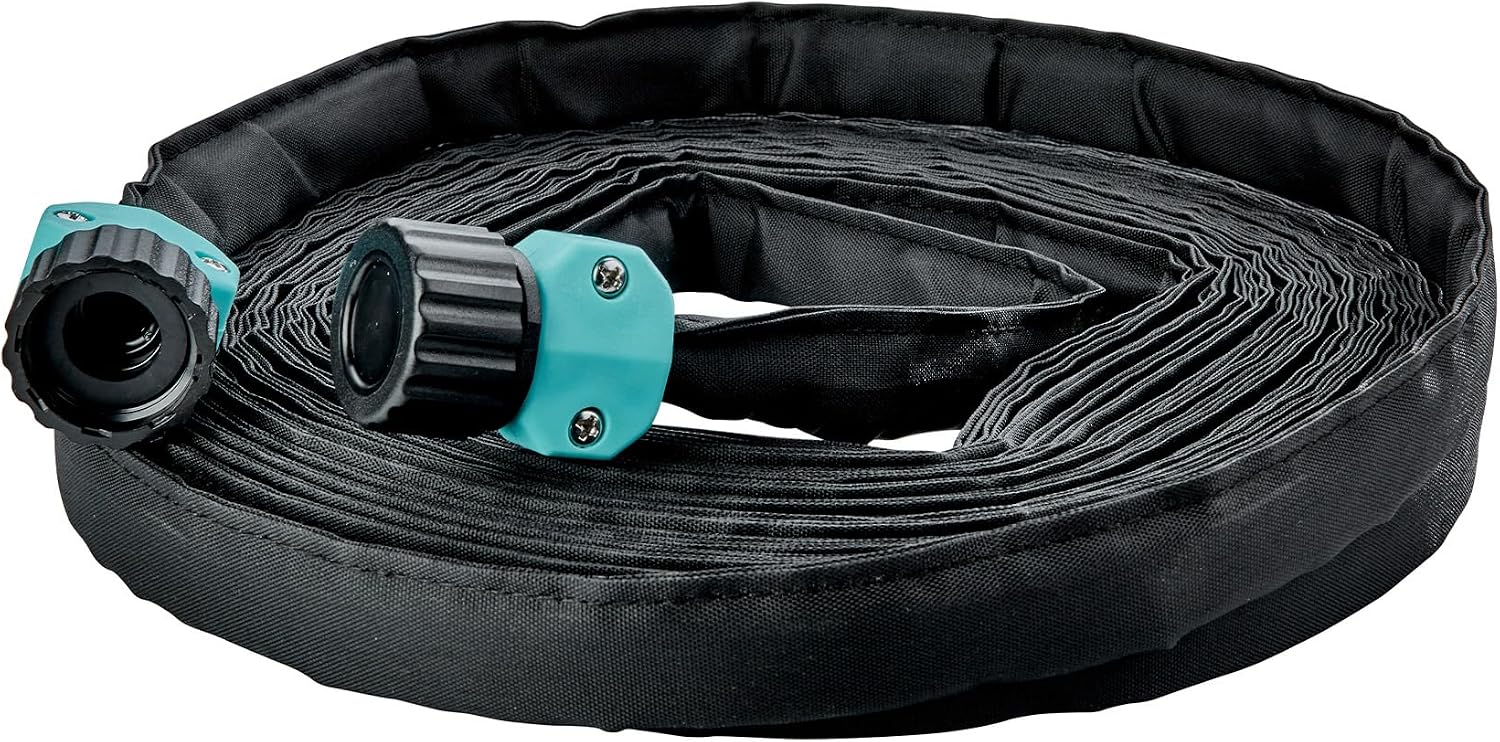
This New England Garden Tools 25 ft flat soaker hose is built for steady, low-pressure watering of vegetable beds and focused root-zone irrigation. The hose uses a double-layer construction with a nylon fabric jacket that resists UV exposure and helps prevent abrasion when laid on soil or mulch. It connects with anti-corrosive male and female couplings so you can link additional 25 ft sections or attach a timer for automated watering. Rated to 60 psi and delivering a measured low flow, it supplies consistent seepage along its length to keep root zones moist without surface runoff. Practical benefits include lightweight handling for easy placement and storage and the ability to shape the hose to fit irregular bed layouts. Important limitations are that it is non-expandable and depends on proper pressure and placement for even distribution, so very long runs or heavily compacted soil may need additional sections or adjustments to avoid dry spots. For vegetable gardeners looking for a durable, low-maintenance drip option this soaker hose provides reliable, targeted watering.
Best for: Vegetable gardeners who prioritize a dependable, low-maintenance irrigation method for raised beds and small plots and want a hose that resists UV damage and links easily to timers or additional sections.
Less Ideal for: People who need a fully automatic drip system with adjustable emitters per plant or who plan to water very large beds from a single long run without breaks.
- Double-layer construction with nylon fabric jacket for UV and abrasion resistance
- Anti-corrosive male and female couplings allow linking multiple sections
- Lightweight and flexible for easy placement and winter storage
- Delivers low steady flow for targeted root-zone watering and water conservation
- Non-expandable flat design can produce uneven seepage over very long runs without additional sections
- Flow distribution depends on correct pressure and placement so setup may need adjustments
Verdict: A rugged, linkable 25 ft soaker hose built for steady, water-efficient irrigation of vegetable beds.
Choosing the Right Soaker Hose for Organic Gardening: Key Factors to Consider
Material Safety and Chemical Leaching
Organic gardeners prioritize hoses that will not introduce harmful compounds to soil or plant tissues. Hoses made from food-grade or low-toxicity polymers reduce the risk of contaminating compost, vegetable roots, or drip zones where earthworms and microbes are active.
Ask whether the hose manufacturer discloses the base polymers and plasticizers used. Even if a hose is marketed as "garden safe," look for clearer statements about BPA, phthalates, or lead absence. Over time UV exposure and heat can accelerate breakdown, so material stability matters for long-term soil health.
Water Distribution Uniformity
Uniform seepage along the hose ensures all plants in a run receive similar moisture. Uneven flow creates dry spots and overwatered pockets that stress roots and encourage disease.
Check whether the hose uses a porous matrix, built-in emitters, or spaced holes. Porous soaker hoses often provide more even seepage without pressure compensation, but installation slope and water pressure still affect uniformity. For long runs consider layout strategies or multiple zones to preserve even distribution.
Durability and Resistance to Garden Wear
Garden hoses are exposed to sun, soil, foot traffic, tools, and shifting plants. A durable hose resists abrasion from mulch and roots, stands up to UV without becoming brittle, and tolerates occasional snags.
Durability also affects long-term cost and waste. Reinforced wall construction, thicker profiles, or braided layers increase longevity but may reduce flexibility. Balance the need for toughness with the ease of routing a hose through dense beds or around trellises.
Clog Resistance and Maintenance Needs
Soaker hoses can clog from mineral buildup, organic debris, or silt. Designs with larger pores, self-flushing operation at higher flow, or accessible end-to-end flushing make maintenance simpler.
Consider local water quality. Hard water will accelerate mineral plugs, requiring periodic flushing or soaking with safe cleaners. Hoses that are easy to disconnect and run water through are more practical for organic gardeners who prefer simple, chemical-free maintenance.
Flexibility and Ease of Installation
A flexible hose is easier to snake around plants, tuck under mulch, or coil for storage. Stiffer hoses may resist kinking but are harder to position in tight beds.
Also consider connector compatibility, available lengths, and whether the hose can be cut and joined with common fittings. Simple installation reduces time spent adjusting irrigation and lets you optimize placement for plant root zones.
Water Efficiency and Suitability for Root Zones
Efficient water delivery targets root zones and minimizes evaporation and runoff. Soaker hoses that deliver low-volume, slow seepage encourage roots to grow deeper and reduce surface algal growth.
Match output to plant needs. Shallow-rooted herbs and seedlings need shorter on-times and lighter seepage, while established vegetables and shrubs benefit from longer, deeper watering. Consider how easy it is to time and zone the hose with your existing valves or watering schedule.
Planning Hose Layout for Raised Beds and Rows
Place the hose along the root line to maximize moisture uptake without wetting foliage. For narrow beds run a single line down the center; for wider beds use two offset runs spaced to reach root zones evenly.
Leave a small gap between the hose and crowns or stems to prevent constant collar wetting. When running hoses along rows, use stakes or shallow staples to hold the hose in place and prevent movement from irrigation pressure or animals.
- Center-run layout for narrow beds
- Offset pairs for beds wider than 2 feet
- Stabilize lines with stakes to avoid displacement
Using Mulch and Soil Cover with Soaker Hoses
Covering hoses with 1 to 2 inches of mulch reduces evaporation and protects hoses from sun damage. Organic mulches like straw or shredded bark also hide the lines so the garden looks tidier and minimizes accidental snags.
Avoid burying hoses deeply. Shallow coverage preserves seepage pattern and makes maintenance like flushing or replacement easier. If you must bury, choose a hose rated for sub-surface use and leave access points for flushing.
- Light mulch conserves water and protects hose
- Deep burial can reduce seepage and complicate maintenance
- Keep access points for end-to-end flushing
Managing Water Pressure and Zone Length
Soaker hoses work best at low to moderate household pressure. High pressure forces water out unevenly and can cause hose blowouts. Use a pressure regulator or set up shorter runs to maintain gentle seepage.
When planning long runs, split the garden into zones that match hose output and water source capability. Zones let you keep each run at appropriate pressure and avoid the uneven wetting that results from long single-line layouts.
- Use a pressure regulator for consistent seepage
- Divide large gardens into multiple zones
- Shorter runs give more uniform moisture
Winter Care and Seasonal Storage
Before the first hard freeze, drain and store hoses that are not rated for freeze exposure. Standing water inside porous hoses can cause cracking. Remove hoses from beds or coil and store them in a dry shed if possible.
If the hose will remain in place, disconnect it from water and open both ends to allow residual moisture to escape. Inspect for splits and repair small holes with waterproof tape or a compatible repair kit before the next season.
- Drain and store hoses to prevent freeze damage
- Open ends if leaving in place to let water escape
- Repair small leaks promptly to maintain efficiency
Adapting Soaker Hose Use for Containers and Small Spaces
In containers use short lengths or looped runs to avoid overwatering. Vertical or stacked planters benefit from individual short lines to control supply per pot. Small spaces often need more precise flow control to prevent shallow flooding.
Use quick-connect fittings and small shutoff valves to fine-tune flow to delicate seedlings or densely planted pots. Short runs are easier to flush and adjust when transplanting or changing crop layout.
- Short loops for container groups
- Individual control for stacked planters
- Quick-connects for flexible repositioning
How We Chose the Best Soaker Hose for Organic Gardening
We focused on criteria that matter specifically to organic gardeners and to practical irrigation of beds and containers. Primary evaluation points were material safety and construction, measured by whether hoses use food-safe or low-toxicity compounds and durable blends that resist UV breakdown. Water distribution was assessed by the consistency of seepage along the length, uniformity of output, and adaptability to flow-rate adjustments. Durability and maintenance covered kink resistance, abrasion tolerance, and whether hoses can be buried, mulched over, or winterized without rapid failure. Ease of installation and customization considered flexibility, available lengths and connector compatibility, and how simple the hose is to route through raised beds or around perennials. Finally, water efficiency and clog resistance were judged by pore design and ability to handle local water quality without frequent flushing. We excluded hoses that are designed only for high-pressure sprinkler systems or that require specialized, proprietary fittings incompatible with common garden connectors. We also omitted options with unclear material disclosures or known issues with rapid chemical leaching. The shortlisted products met the above filters and scored well across the practical gardener-focused dimensions listed.
FAQ
Can I use a soaker hose directly under mulch in organic beds?
Yes, light mulch over a soaker hose reduces evaporation and protects the line. Keep the mulch shallow so seepage still reaches the soil surface and leave end access for periodic flushing.
How long should I run a soaker hose for vegetables?
Run time depends on soil type and plant maturity. Sandy soils need shorter, more frequent runs while heavier soils need longer but less frequent cycles. Start with 30 to 60 minutes and adjust based on soil moisture tests.
Will hard water clog a soaker hose?
Hard water can contribute to mineral buildup and reduce flow over time. Regular flushing and occasional soaking with a safe, mild acid rinse can help. Choosing a hose with larger pores also reduces clogging risk.
Can soaker hoses be used with drip tubing or emitters?
Yes, soaker hoses can be combined with drip tubing in a hybrid layout. Use drip lines or emitters for individual plants and reserve soaker hoses for continuous bed coverage to get both precision and broad wetting.
How do I prevent animals or tools from damaging the hose?
Protect hoses with a light mulch layer and route them away from high-traffic areas. Use stakes to secure lines and consider protective edging where people or machinery pass frequently.
Final Verdict
For organic gardening the best soaker hose is the one that balances soil-safe materials, steady seepage, and practical durability. Prioritize hoses with clear material disclosures and a pore design suited to your water quality and bed layout. Expect tradeoffs between robustness and flexibility: heavier hoses last longer but can be harder to route through tight spaces. Focus on even water distribution, easy maintenance, and compatibility with your zoning strategy so you can deliver consistent moisture without adding chemical risks to your soil.
